Serce – najgłębsza tajemnica, dom duszy, esencja życia i źródło sił duchowych. Przez tysiące lat pozostawało niedostępne dla medyków zarówno ze względu na kulturowe i religijne tabu, jak i ze względów praktycznych: skoro pacjent miał pozostać żywy, serce nie mogło przestać bić – a jak operować organ pozostający w ciągłym ruchu?
Thomas Morris, ceniony dziennikarz BBC, relacjonując jedenaście przełomowych operacji, opowiada historię kardiochirurgii – dzieje porażek i triumfów, brawury, zazdrości i rywalizacji.
Od 1872 roku i zabiegu wyjęcia igły wbitej przypadkiem w pierś londyńskiego blacharza, poprzez historyczną operację usunięcia odłamka szrapnela z serca żołnierza rannego w Normandii, po hodowlę organów w bioreaktorze i protezy z drukarki 3D – opowiadana przez Thomasa Morrisa historia ludzkiego geniuszu nie jest zamknięta, a ludzkie serce wciąż kryje tajemnice i co najmniej kilka przełomów w kardiochirurgii jest jeszcze przed nami.
There is a well known cautionary dynamic about physicians and surgeons. Morris states the traits that are considered Machiavellian and classifications as eccentric are common to high IQ individuals (commonly found in this profession). Having the skills and consistent performance to mend clogged arteries, install stents, use of radio-frequency ablation to solve arrhythmias is not something a larger percentage of people know how to do in the general population. The heart is sacrosanct.
"...Aristotle pointed out that it was the first organ to form, and the last to die; it occupied a central position; it moved; and it communicated with all other parts of the body." ---Thomas Morris
An investigation into the author (Morris) turned up titles like Journalist, TV Producer and Historian. Morris helps us to understand how for millennia, the heart was always surrounded by mystery; and was presumed to be a sacred vessel housing the soul, not to be touched or violated via operations. In this review of eleven operations spanning over a century of advancement, he recalls that advances in heart surgery were beyond anticipation. His retelling of the cases covers the procedures used, presented in a lively way (eliciting wonder in the reader). Necessary read--lively and not flashy.
I work in cardiology and found the human stories behind the development of these important procedures really fascinating. Easy to read and so interesting
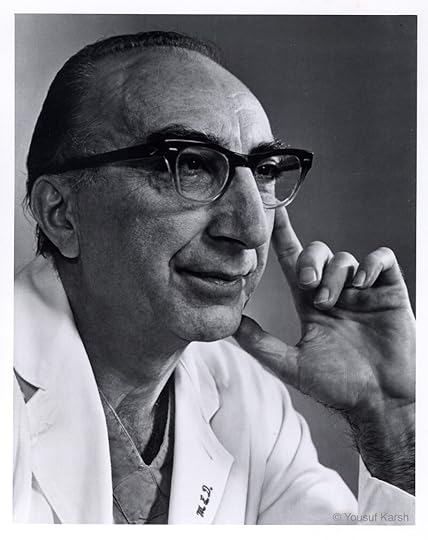
Michael DeBakey, one of the most innovative and prominent figures in cardiac surgery, whose extraordinary surgical career spanned more than six decades.
In 1980 DeBakey was a consultant in the care of Mohammad Reza Pahlavi, the exiled Shah of Iran, who was in the terminal stages of lymphoma. Due to hypersplenism, the Shah underwent splenectomy in Cairo on March 28, 1980, with DeBakey supervising a team of surgeons. At operation, the Shah was found to be harboring widely metastatic disease. Several complications developed in the postoperative period, including a subphrenic abscess and pneumonia. Although these were successfully treated, the Shah succumbed from his malignancy on July 27.
When I purchased this book I was expecting similarity to 'Do no harm' by Henry Marsh. Instead what I got was a confusing historical account, Morris has a tendency to jump frequently between time periods and places, and an overly descriptive play-by-play of the pissing contests between cardiac surgeons in the last century. Boring. Morris' knowledge on anatomy and physiology is shaky at times, it is obvious through his descriptions that he is not a healthcare professional, though it cannot be suggested that he had not thoroughly researched the topic. Ultimately the biggest issue I had with this piece of work is that in focusing so much on the volatile relationships and petty arguments between the surgeons Morris had a tendency to overlook the most important person in all of these procedures, the patient. He will introduce the person, give their age and occupation and then kill them off in the next sentence, he gives the impression that this loss of life was no different to the dogs/cows/pigs who perished due to the experimental surgeries outlined in this book as he shows no more regard for the life of the patient than for these animals.
A fascinating book. Each chapter opens with an anecdote around one of the 11 surgeries mentioned in the title, e.g., Chapter 2 recounts the first Blalock-Taussig-Thomas procedure operation. Author Thomas Morris then goes on to recounts the history behind this medical innovation to provide context to the challenges doctors and technicians faced in developing it. There were a couple of times these incidents were repeated because some innovations were significant to more than one of the surgeries.
As someone with Tetralogy of Fallot, I found the book intriguing and informative since many of the surgeries and medical innovations have had a direct impact on my life. I frequently found myself reading sections to my wife, noting my amazement at how it seemed like I was reading my own biography.
If I had one quibble with the book, it's with the copy editing. There were a number of times Dr. Alfred Blalock was referred to as "Albert." It may seem minor, but accuracy does count.
I'd recommend this book for anyone who has been affected by heart issue, whether as a patient or as a family member or friend. It's a real eye opener.
“The road to the heart is only two or three centimeters in a direct line, but it has taken surgery nearly 2,400 years to travel it.” One of the last sentences of the book, probably the best to describe it. As a cardiovascular surgeon myself, I found myself amazed, shocked, emotional and admiring while reading. These were the times when every single step mattered, with or without knowing such researches could some day save millions of lives. This is a book about not just a history of experiments, but also about the lives of dedicated people, including their rivalries, arguments, personal and professional lives. It was as if I was on a historical journey of pretty much everything I do in the OR on a regular basis. It is breathtaking that how many people and how much work and sacrifices were made behind them, how many years were spent, to achieve where we stand; and continuing to do so. I see this book as a medical historical resource. Definitely worth reading twice.
This entire review has been hidden because of spoilers.
Wow, po przeczytaniu tej książki naprawdę chylę czoła osobom, które świadomie chcą zostać kardiologami/kardiochirurgami/chirurgami. Książka obejmuje 11 opowiadań o najważniejszych operacjach w dziejach kardiochirurgii. Autor trzyma w napięciu- to czy operacja się powiedzie nigdy nie jest wiadomo, liczne przypisy, cytaty i nawiązania do poszczególnych chorób poruszanych w poprzednich rozdziałach ułatwiają czytanie. Nie jest to łatwa książka- polecam osobom myślącym o medycynie/znających podstawy mechanizmu funkcjonowania układu krwionośnego- mimo obecności rysunków serca uważam, ze jest taka znajomosci potrzebna. Nie mniej jednak dla zainteresowanych postępem medycyny i jej historia jest to pozycja obowiązkowa!❣️
Niesamowite dzieje kardiochirurgii i kardiologii opisane na przestrzeni lat. Wiele inspirujących historii, a przede wszystkim bardzo ciekawy ostatni rozdział na temat najnowszych technologii i tego co może na nas czekać w przyszłości. Książka zdecydowanie zachęciła mnie do pogłębiania wiedzy na temat serca i chirurgii. Czasami brakowało mi schematów lub bardziej zrozumiałych opisów pewnych zabiegów (bardziej medycznego niż historycznego podejścia), plus przeskoki między różnymi postaciami i wydarzeniami na przestrzeni lat bywały mylące.
Bardzo sympatyczna książka popularnonaukowa, która nie tylko opisuje historię leczenia serca, ale również informuje o dzisiejszym stanie badań. Chyba najbardziej spodobał mi się wyważony ton, bo w natłoku technologicznego huraoptymizmu stanowi powiew świeżosci i otrzeźwienia.
The idea of the book is great, but the author did not make use of the idea. Some ideas were repeated unnecessarily, others were unrelated to the book subject in the first place and some true stories have been overlooked for no obvious reason. A book exploring cardiac history could have been much more interesting.
Представьте, что вы инженер-механик. Один крайне трудный клиент предлагает вам много денег за разработку некоего устройства. ТЗ такое: «Требуется небольшой прибор, размером с кулак, способный перекачивать жидкость под высоким давлением со скоростью пять литров в минуту, но при первой необходимости он должен пропускать через себя уже до двадцати литров в минуту. В нём не должно быть движущихся деталей, и он должен обеспечивать непрерывную работу в течение восьмидесяти лет». Скорее всего вы откажетесь: пока никому так и не удалось создать столь надёжный насос. Однако подобная идеальная машина уже существует – это человеческое сердце. За восемьдесят лет жизни человека оно совершает порядка трёх миллиардов ударов, и перекачивая 7 200 л крови в день за 90 лет способно наполнить 90 олимпийских бассейнов.
Пенсионный возраст сейчас увеличивается, но смерть поджидает даже молодых — тут и там люди падают и умирают во цвете лет из-за инфарктов. Именно поэтому появление книги, выигравшей к тому же престижную английскую литературную премию, как нельзя кстати. В отличие от многих других сюжетов, воспеваемых писателями набирающего популярность жанра нонфикшна, от этого точно нельзя отмахнуться. Вас может не заинтересовать мир деревьев или галактика судов-контейнеровозов, сделавших современную цивилизацию возможной, но сердце есть у каждого. И без него вообще никак. Даже без мозга, звезды полок с научпопом, можно. Так что со своим сердцем желательно познакомиться поближе. Тем более, что нечасто встретишь такое структурированное и самое главное захватывающее изложение какого-то вопроса. Предложенный формат – решение 11 проблем – не хуже ТРИЗ демонстрирует неожиданные примеры креативного мышления и дает представление об устройстве и работе сердца. Если другие книги просто рассказывают об органах и частях тела, то эта убивает двух зайцев разом, заодно знакомя с прогрессом в медицине и технологиях вообще. Пожалуй, только увидев и поняв, как что-то не работает, можно подлинно оценить наш неутомимый орган.
И это не только история – мы узнаем, что там готовит медицинская наука: 3D-принтеры, выращивание из клеток и даже ...отсутствие пульса. Оказывается, привычный «тук-тук» – издержка эволюции, непрерывный ток крови от моторчика тело абсолютно устраивает! Ну, а кроме того, после книги Морриса слова миокард, инфаркт, шунтирование и ишемия перестанут выглядеть абракадаброй, а лирическая аллюзия «на разрыв аорты» для вас станет верным признаком плохой поэзии.
Biological sciences are not my forte, so The Matter of the Heart was an interesting insight into this field that I am not well-versed in. Certainly, my eyes glazed over a little when it came to the details of the heart, like some of the explanations of how exactly surgeries were conducted. And I'm fine with that. I could grasp enough of what Morris was saying, and could certainly comprehend the impressively rapid expansion of heart surgery in the 20th century. It was especially fascinating to me, given all our rules and ethics that govern innovation, to understand how some surgical processes came to be, and especially how many people volunteered to put their hearts and lives on the line.
Wow. An amazing tour of heart surgery from antiquity to the age of robot surgery: aneurysms, Blue baby syndrome (cyanosis), artificial hearts valves, catheterization, pacemakers... Wow, people committing suicide due to the Chinese torture of their early, clicking pacemakers and artificial valves. Also, note to self, Charles Lindberg emerged from reclusion not with an artificial heart, but having a had a hand in developing the first perfusion pump, precursor of the heart lung machine.
Wow. Vladimir Demikhov, Soviet scientist and organ transplant pioneer, did the two-headed dog experiment. Shocking and seemingly pointless and unnecessary. Still, it was not the point of this book, but I think it changed my attitude about vivisection. I never looked into it and previously thought only of vivisection as cruel, unnecessary, and pain-inducing surgery on live animals resulting in crimes like Demikhov's two-headed dog. Actually, 'vivisection' (from Latin vivus, meaning "alive", and sectio, meaning "cutting") is surgery conducted for experimental purposes on a living organism, typically animals. It does not mean anesthesia was not used, suffering was not minimized, life was invariably shortened, and - importantly here - that many human lives were not saved or improved. It does feel like reading this history that important heart surgery advances for children and those cardiologically impaired could not have gotten to where it is today without early experimentation on animals, mostly dogs. Some children got to meet the dogs upon which the experiments were done to benefit them.
[I received an ARC of this book through Goodreads Giveaways.]
A very well written and detailed history of heart operations, from transplantation to valve replacement to bypass surgery. If you're not interested in heart surgery, I'd say leave well alone as I don't feel its the type of book you can just "dip into"; you have to invest intellectually into a chapter. I was stunned by the amount of people and animals who have been "sacrificed" over the years in the quest for perfecting techniques and fine tuning procedure. There's a lot of "the patient/pig/dog/rat/cat did well...... for the first hour then rapidly died"!!! Harsh!! Interesting stuff though, very factual, very intriguing, and often quite sad.
Having been born with CHD, as soon as I saw this book I knew I needed to read it. It had such beautiful illustrations of the heart at the front, and one of the first chapters talked about the procedure which saved my life twice as a baby. There's so much history behind procedures which are taken for granted now or seen as routine.
Throughout most of the chapters I went on a bit of a journey from intrigued to a bit queasy to disappointed to impressed to relieved it's now 2018.
Anyone interested in cardiology should give this a read!
As a first year medical student, I found this book very interesting. Just wish there was more effort put into the presentation of the work. Perhaps stop jumping from one time period to another and don't repeat things mentioned previously. Asides from that, it was fascinating to learn how far knowledge of the heart has advanced in such a short space of time.
This is a fascinating dive into the history of cardiac surgery and I'm so glad I got around to reading it. I've read about scientific discoveries and immunology/virology development, but I believe this is the first surgical advancement-focused work I've read.
I really appreciated structuring the book with each chapter about a different operation's development (first open heart surgery, etc.). There's a good balance between discussing the surgeons involved, describing their patients and outcomes, and detailing how the surgeries actually took place.
I do wish the chapter titles were more clear than going for clever phrases, however. For example, I think "Ice Baths and Monkey Lungs" is about the Heart-Lung Machine, but I can't remember for sure. The 11th chapter, and thus 11th operation being discussed as advertised by the subtitle, is titled "I, Robot (Surgeon)" and thus is supposed to be about robotic cardiovascular surgery. But then half the chapter ends up being about artificial hearts again for some reason, xenotransplantation, growing cardiac muscle grafts in vitro, 3D printing heart tissue, etc. The last chapter thus should've been named something like "Cardiac Futures", or the conclusionary discussion separated from the robotic operations content, but as currently formatted it was a misleading and confusing last chapter.
Nonetheless, all of the book's content is extremely interesting. It is a lot of information to take in, so I wouldn't advise anyone to read more than 0.5-1.0 chapter a day. I am not a medical professional, but I do have a biology degree and my dad is an interventional cardiologist (shoutout to chapter #10, "A Fantastic Voyage"!), so comprehending the medical/surgical terminology was less of a lift for this than perhaps it would be for me reading about neurology or oncology. Though with the popularity of medically/surgically accurate shows like "The Pitt" (highly recommend, btw), and the prevalence of cardiovascular disease, I can see a lot of people wanting to read this, not just those already versed or immersed in hospital systems.
"Historia kardiochirurgii obfituje w przełomy, których nikt nie przewidział, więc dopóki istnieją chirurdzy obdarzeni talentem i wyobraźnią, istnieje także szansa, że nie przestaną nas zadziwiać" ~~~ Kardiochirurgia to dziedzina medycyny, która od dawna jest bliska mojemu sercu. Osiągnięcia na tym polu są dla mnie jednymi z największych w całej historii zabiegów medycznych. Z góry więc wiedziałam, że "Sprawy sercowe" Thomasa Morissa przypadną mi do gustu. Gdy tylko zobaczyłam tytuł, od razu wpisałam go na listę do przeczytania. Domyśleć się też można, że byłam bardzo szczęśliwa, że otrzymałam ją w prezencie. To jakim prezentem była jest nie do opisania. Dlaczego? Spieszę z wytłumaczeniem. "Sprawy sercowe" to pokaźna książka z gatunku literatury faktu, która w jedenastu rozdziałach prezentuje nam jedenaście postępów w leczeniu różnych schorzeń. Mowa jest zarówno o zabiegach pomagających w konkretnych wadach, aż po transplantologię. Wszystko opięte w bardzo bogatą treść, mającą na celu przedstawienie w jak najlepszy sposób cały rozwój i historię kardiochirurgii na przestrzeni lat. Książka była naprawdę wspaniała. Autor postarał się aby wszystko było opisane jak najdokładniej, co zresztą tłumaczą aż 73 strony samej bibliografii. Wow, po prostu wielkie wow. Jestem pod ogromnym wrażeniem tego w jak prosty, ale zarazem nieprzeciętny i profesjonalny sposób można przedstawić tak skomplikowane działania, jak niektóre z opisywanych operacji. Opisy są dosyć szczegółowe. Moriss dba także o to, aby czytelnik zobaczył wiele powiązań i zrozumiał jak najwięcej, nawet jeżeli z samymi naukami medycznymi niewiele go łączy. Wspomina o kluczowych doświadczeniach i eksperymentach wykonywanych w rożnych częściach świata, które przyczyniły się do tego, że w obecnych czasach można liczyć na profesjonalną pomoc w tak wielu sytuacjach "bez wyjścia". Mamy tu między innymi nawiązanie do badań Demichowa czy Schumwaya na psach, które były wielkim krokiem w transplantologii. Informacji jest bardzo dużo i są zebrane w solidną całość. Nie zawiodłam się i bardzo, ale to bardzo ją polecam.
Książka bez wątpienia pobudza ciekawość, chęć myślenia i rozwiązywania zagadek związanych oczywiście z sercem- narządem będącym już według Galena siedzibą uczuć. Rozdziały są ułożone w bloki tematyczne poruszające dany problem, gdzie można dostrzec prężny rozwój kardiochirurgii (zwłaszcza od czasów II wojny światowej), a później już odrębnej chirurgii naczyniowej i rozwijającej się równolegle anestezjologii. Chronologia nie jest do końca zachowana (ale to niczemu nie przeszkadza)- nawet nie wiem, czy byłoby możliwe uporządkowanie wszystkiego w odpowiedniej kolejności, gdyż wiele eksperymentów odbywało się w tym samym czasie. Operacje są opisane w sposób szczegółowy, a zarazem dynamiczny - większość opisów czytałam z zapartym tchem. Również dostrzegamy wyścig wśród chirurgów o pierwszeństwo ich odkryć, co nadaje rozdziałom szybszy zwrot akcji. Serce i „majsterkowanie” stanowiło także inspirację dla artystów, dzięki czemu powstały m.in takie dzieła kultury jak Frankenstein czy album Atomic Heart Mother zespołu Pink Floyd. Najbardziej jednak zapadło mi w pamięć porównanie węzła zatokowo- przedsionkowego serca do dyrygenta wielkiej orkiestry, w której muzykami są włókna mięśniowe tego organu. Jak to pięknie ze sobą współgra - pomyślałam. Po tym fragmencie wiedziałam, że doczytam „Sprawy Sercowe” do samego końca <3
Z anatomii najbardziej zapadły mi w pamięć ćwiczenia dotyczące serca. Nie wiem dlaczego, powodów może być mnóstwo - byłam na nie wyjątkowo dobrze przygotowana, serca to najprzyjemniejsze wizualnie preparaty, może nawet przyczynił się do tego kult tego narządu. Pamiętam z tych zajęć wiele rzeczy - zakonserwowane w formalinie serca były zaskakująco twarde i ciężkie, zastawki zdawały się wyjątkowo delikatne, a wnętrze serca nie jest gładkie, przypomina raczej labirynt. Albo jednak jaskinię. Pamiętam, że z jakiegoś powodu zmarzły mi palce, bo preparaty były wyjątkowo zimne. Pamiętam też, że w głowie zaświtała mi taka myśl: "właśnie to chcę robić w przyszłości". Zapomniałam o tym na jakieś pół roku. Przypomniała mi dopiero ta książka. Wiem, że nie spodoba się każdemu. Faktów, dat i postaci jest bardzo dużo. Autor często przeskakuje w czasie, co nieco utrudnia śledzienie wydarzeń w porządku chronologicznym. Dodatkowo osoby, które nie miały nigdy styczności z anatomią mogą mieć problem z wizualizacją opisanych procedur i defektów. Jednak dla mnie nie miało to znaczenia. Dla mnie była to fascynująca lektura. Kilka razy miałam nawet ochotę płakać, co zdarza mi się raczej rzadko. Co stronę myślałam: "Właśnie to chcę robić za kilka lat".
Very interesting well researched read. The way the material was presented, however, made this book a little more difficult to get through. Each chapter is related to a particular procedure and how it was developed. So for each chapter, Morris takes the reader back in time to describe its origins and advancement to present. I understand the reasoning for this (making it less like a linear timeline textbook, and more digestible chunks of information for those not in the medical field), but it made it a little more difficult to really get feel for the time periods, and how different procedures effected further development in other cardiac advancements. So just for the 'jumbled' presentation I subtracted a star, otherwise, I enjoyed this book and not only learned quite a bit about the history of cardiology and the many inventive minds that it took to get us to the less invasive procedures that are performed today, but also the countless sacrifices (both human and animal) that were made along the way. If you are interested in the medical field, or just want a well researched read, I would recommend this book.
A book that I very much enjoyed, but that simultaneously made me quite anxious: if I had a heart condition it would have been unreadable, I suspect.
The operations chosen are all milestones, ranging from the very first surgeries up to heart transplants, stents, and other modern semi-miracles. The most interesting thing to me was the degree to which a lot of the action was performed in very small communities of doctors, often with very varying degrees of commitment and risk appetite: the same surgeons often re-appear in later innovations.
The part that was most anxiety-inducing was that the translation from idea to successful implementation (or from science to engineering) was frequently log, drawn-out, and filled with dashed hopes and dead patients. I don't think it could be any other way given the complexities of the procedures being honed, but the names of the early subjects deserve to be at least as well-known as those of the surgeons, for their willingness to take a risk with their own lives in the interests of saving themselves, but also of eventually saving others eben if their own surgery failed.
When I saw The Matter of the Heart on the shelf in a bookstore, I picked it up, read the blurb, then quickly left the store so I wouldn't be tempted with buying yet another book when I'm trying to limit the amount of book piles in my room. Or was it my intuition? Because when I got this book for my birthday and immediately dunked into it, I certainly didn't expect it to be the longest and the most tiresome reading ever.
At first I suspected it was all Jurgen Thorwald's fault, for spoiling other medicine-based history books. The Matter of the Heart is not poorly-written. In fact, I can't pinpoint what it was, but this book worked better than a sleeping-pill. Ten pages in, and I'd doze off in the middle of the day, when normally I'm unable to nap after a sleepless night.
On the bright side, the bibliography list is very long. It means the book is well-researched, AND it's actually half the book's size.
This is a quite-entertaining tour through the history of cardiovascular surgery. Morris balances just the right amount of emphasis on the science, physicians, and patients, so as not to bog the reader down on any one topic for too long. He is rather inconsistent in the depth he delves into the science of each breakthrough, but that's fine when the purpose of the book is to be a leisurely read for the layman. The one frustrating element is the complete disregard for chronology which can make certain sections disorienting. It is a valiant attempt to stitch seemingly-disparate storylines together in a logical fashion, but it ends up just being confusing as he jumps from decade to decade within a chapter. Overall, Morris does a commendable job. Through a medically stringent lens, I would give this three stars, but the broad appeal of the book is its best feature, and so I think four stars is appropriate.
I liked this book..separate chapters detailing the development of different heart problems and the solution of it..I am amazed that each problem was being addressed in two separate locations with somewhat similar results..it was interesting to find out how much of an ego boost it was to be the "first" to find a solution to a problem..also found that Denton Cooley was at the first blue baby surgery and then went to Houston and did many life changing surgeries there...thank goodness for the development of heparin because that seemed to be one of the most important elements for changing heart surgery..hats off to all the seriously ill people who were first to have new techniques tried on them...overall it is amazing to see the steady walk of progress of heart care in such a short time..
An interesting history of heart surgery, this is a very readable book for the layperson about how the current therapeutic innovations came about. Using the eleven landmark operations, Morris traces the evolution from believing that man will never be able to touch the heart surgically to the present invasive and non-invasive procedures done to improve patient quality of life. Along the way, many very ill patients allowed themselves to be used as guinea pigs, knowing the experimental operation would probably kill them, but also knowing they would likely die soon anyway, and by allowing the surgeons to test new procedures or hardware they would make valuable contributions to future medical knowledge.
(ENG) Interesting book. For me it was a soft introduction to the problems of cardiology; even if book is classified as a popular-science genre I found it very useful for the fast learning about heart diseases for R&D project preparation (Diagnosis and Treatment Support Systems in Cardiology). I like author style of writing and his frequent digressions in the text.
(PL) Książka bardzo interesująca. Dla mnie była lekkim i przyjemnym wstępem do zrozumienia problemów kardiologii. Używałem jej przy przygotowywaniu wniosku B+R na temat systemów wspomagania diagnozy i leczenia dla kardiologów żeby zrozumieć, z czym mniej więcej będą wiązały się późniejsze badania. Podoba mi się styl autora i częste dygresje.