

What do you think?

The Poems of Nakahara Chuya
Born in 1907, Nakahara Chuya was one of the most gifted and colourful of Japan’s early modern poets. A bohemian romantic, his death at the early age of thirty, coupled with the delicacy of his imagery, have led to him being compared to the greatest of French symbolist poets.
Since the Second World War Nakahara’s stature has risen, and his poetry is now ranked among the finest Japanese verse of the 20th century. Influenced by both Symbolism and Dada, he created lyrics renowned for their songlike eloquence, their personal imagery and their poignant charm.
This selection of poems from throughout Nakahara’s creative life includes collected and uncollected work and draws on recent scholarship to give a full account of this extraordinary figure.
Since the Second World War Nakahara’s stature has risen, and his poetry is now ranked among the finest Japanese verse of the 20th century. Influenced by both Symbolism and Dada, he created lyrics renowned for their songlike eloquence, their personal imagery and their poignant charm.
This selection of poems from throughout Nakahara’s creative life includes collected and uncollected work and draws on recent scholarship to give a full account of this extraordinary figure.
146 pages, Paperback
First published January 1, 1993
About the author
Chūya Nakahara
90 books329 followersChūya Nakahara (1907 - 1937) was a Japanese poet active during the early Showa era.
His name is written in Japanese as 中原 中也 (Nakahara Chūya).
His name is written in Japanese as 中原 中也 (Nakahara Chūya).
Ratings & Reviews
Friends & Following
Create a free account to discover what your friends think of this book!
Community Reviews
Displaying 1 - 30 of 226 reviews

July 25, 2021
reading these between bsd episodes did feel so right!

May 5, 2020
Take your time with this one!! You’re going to want to reread some of these and just take in how beautiful they are. Wow.
I’ve never cried reading poetry before. It’s kind of amazing. The poems are so pretty in English; it makes me want to learn Japanese more fluently so I can read them in the original language.
The book comes with an introduction to the poet and a bunch of footnotes explaining the history or imagery of the poems, which are really helpful and specific. There’s even a weird tidbit about Tanizaki in there that was almost TMI. But it’s a well-produced book and I’ll definitely be reading it again at some point.
(And if you’re here because you love BSD, just shoot your shot and read these poems. Hella worth it.)
I’ve never cried reading poetry before. It’s kind of amazing. The poems are so pretty in English; it makes me want to learn Japanese more fluently so I can read them in the original language.
The book comes with an introduction to the poet and a bunch of footnotes explaining the history or imagery of the poems, which are really helpful and specific. There’s even a weird tidbit about Tanizaki in there that was almost TMI. But it’s a well-produced book and I’ll definitely be reading it again at some point.
(And if you’re here because you love BSD, just shoot your shot and read these poems. Hella worth it.)

August 6, 2022
He wrote this after the death of his son:
Spring will come again
“ spring will come again,people say.
Yet i am heartsick.
Nothing will happen when spring comes;
That child will not come again “
I found this one beautiful:
Self portrait on a cold night 2
“ Oh Lover, stop that sad song;
since your soul is fretful.
you sing such a song.
What's more, you're wilfully
singing to our closest friends.
Ah, you shouldn't do that!
Don't catch the sadness as it falls;
feeling easy imaginary rapture is happiness, and
running around looking for shops that sell yourself;
what a sad sadness that is.. “
One of my favorites:
Song without words
“ It's in a faraway place, but
here I must wait.
Here the air is thin and blue,
softly pale like a leek root.
I must never hurry,
I must wait here long enough;
I musn't gaze distantly like a girl;
certainly, I should wait here.
Nonetheless, it loomed far off in the evening sun,
thick and thin as a whistle's sound;
but I mustn't dash off that way;
certainly, I must wait here.
If I do that, sometime my burden will ease;
certainly, I will be able to get there for sure,
though it was like chimney smoke
far, far away, forever trailing in the glowing sky.”
Spring will come again
“ spring will come again,people say.
Yet i am heartsick.
Nothing will happen when spring comes;
That child will not come again “
I found this one beautiful:
Self portrait on a cold night 2
“ Oh Lover, stop that sad song;
since your soul is fretful.
you sing such a song.
What's more, you're wilfully
singing to our closest friends.
Ah, you shouldn't do that!
Don't catch the sadness as it falls;
feeling easy imaginary rapture is happiness, and
running around looking for shops that sell yourself;
what a sad sadness that is.. “
One of my favorites:
Song without words
“ It's in a faraway place, but
here I must wait.
Here the air is thin and blue,
softly pale like a leek root.
I must never hurry,
I must wait here long enough;
I musn't gaze distantly like a girl;
certainly, I should wait here.
Nonetheless, it loomed far off in the evening sun,
thick and thin as a whistle's sound;
but I mustn't dash off that way;
certainly, I must wait here.
If I do that, sometime my burden will ease;
certainly, I will be able to get there for sure,
though it was like chimney smoke
far, far away, forever trailing in the glowing sky.”

November 30, 2021
it was like reading paintings but sometimes also like reading memes
Read
July 8, 2024maybe i wasnt meant for poetry

February 21, 2022
I don't usually do poetry reviews but I almost feel like I am obliged to inform people just how terrible, incorrect and tone deaf this translation is. Reading Chuya Nakahara in japanese is like having an orgasm of lights and sounds and at the same time, like gazing at white birds in the night sky. It's memorable, engaging, the imagery gently unfolds and forms a picture. The sounds are sweet, fun to read again and again. And I fully understand that it is impossible to fully recreate those sounds in English but that does not mean you shouldn't even attempt to write a poem.
Every translated poem here is one ugly sentence after another. They even manage to ruin the imagery by deliberately using broken English, why? These are not haiku. Why are you conserving syllables? Now i understand why this collection is not available to read online. Anybody that reads a sample will not buy it. It's almost as if they used DeepL to translate. I have asked many GR friends here to read Chuya Nakahara but I have to explicitly warn you guys to NOT read this particular translation. These translators make Nakahara's poems seem as if they were written by a child.
Here's an example, this is how this book's translators render the poem "Moon".
This evening the moon, more and more sad,
Opens its eyes wide with a foster-father's mistrust,
Time flows, a silver wave in the desert;
an old man's earlobes glow phosphorescent.
Ah, a forgotten canal bank,
left in my heart, a tank's rumbling;
taking a cigarette from a rusty can,
the moon smokes lugburiously.
"The moon smokes lugburiously" is a very clear indication the translators do not read or like poetry.
And below is a version I found online translated by someone named Christian Nagel
More solitary than ever tonight, the moon
wonders at her doubting foster father.
Time hauls a silver tide away to the desert.
An old man’s earlobes glow like fireflies.
Ah, forgotten embankments of canals,
tanks, the earth resounding in my chest…
The moon pulls out a rusty silver case
and languidly smokes a cigarette.
And in this way, somehow a random guy submitting to a literary magazine can write a better poem than these official translators.
Every translated poem here is one ugly sentence after another. They even manage to ruin the imagery by deliberately using broken English, why? These are not haiku. Why are you conserving syllables? Now i understand why this collection is not available to read online. Anybody that reads a sample will not buy it. It's almost as if they used DeepL to translate. I have asked many GR friends here to read Chuya Nakahara but I have to explicitly warn you guys to NOT read this particular translation. These translators make Nakahara's poems seem as if they were written by a child.
Here's an example, this is how this book's translators render the poem "Moon".
This evening the moon, more and more sad,
Opens its eyes wide with a foster-father's mistrust,
Time flows, a silver wave in the desert;
an old man's earlobes glow phosphorescent.
Ah, a forgotten canal bank,
left in my heart, a tank's rumbling;
taking a cigarette from a rusty can,
the moon smokes lugburiously.
"The moon smokes lugburiously" is a very clear indication the translators do not read or like poetry.
And below is a version I found online translated by someone named Christian Nagel
More solitary than ever tonight, the moon
wonders at her doubting foster father.
Time hauls a silver tide away to the desert.
An old man’s earlobes glow like fireflies.
Ah, forgotten embankments of canals,
tanks, the earth resounding in my chest…
The moon pulls out a rusty silver case
and languidly smokes a cigarette.
And in this way, somehow a random guy submitting to a literary magazine can write a better poem than these official translators.

October 9, 2024
5 ★
5/29/2026 update: wonderful as always!
┊✧ ↻ ◁ || ▷🎶 Here is the playlist I listened to while reading: https://open.spotify.com/playlist/6UM...
︵‿︵‿︵‿︵
“Sometimes I want to explain it briefly, but / since it’s inexplicable, indescribable, I believe my life is / worth living.”
︵‿︵‿︵‿︵
┊ ➶ 。˚ I annotated these poems to analyze figurative language, imagery, and influences of Dadaism and realism. While studying them, I noticed that Nakahara used scenes of nature and interactions with other people to write poems that seemed like memories. I especially liked this quality about his writing because it was nostalgic, and nearly every poem was applicable to something I have experienced or felt before. These personal poems were able to portray universal emotions that most writers could never put into words.
Most of the poems describe grief, internal reflection, longing, or a sense of isolation, while also exploring the meaning of life. Nakahara’s idea of life seemed to center around the relationships we build and our place within nature, rather than following a specific goal. I highly recommend that you read these poems if you need to see your own feelings written into words or if you’re struggling with the loss of someone close to you.
︵‿︵‿︵‿︵
*̩̩̥͙ -•̩̩͙- My favorite poems from the collection:
✦ Homecoming (p. 14)
✦ Autumn (pp. 30-31)
✦ A Song of Childhood (pp. 35-36)
✦ The Voice of Life (pp. 41-42)
✦ On the Lake (p. 63)
I hope you all have a lovely day •°. *࿐
5/29/2026 update: wonderful as always!
┊✧ ↻ ◁ || ▷🎶 Here is the playlist I listened to while reading: https://open.spotify.com/playlist/6UM...
︵‿︵‿︵‿︵
“Sometimes I want to explain it briefly, but / since it’s inexplicable, indescribable, I believe my life is / worth living.”
︵‿︵‿︵‿︵
┊ ➶ 。˚ I annotated these poems to analyze figurative language, imagery, and influences of Dadaism and realism. While studying them, I noticed that Nakahara used scenes of nature and interactions with other people to write poems that seemed like memories. I especially liked this quality about his writing because it was nostalgic, and nearly every poem was applicable to something I have experienced or felt before. These personal poems were able to portray universal emotions that most writers could never put into words.
Most of the poems describe grief, internal reflection, longing, or a sense of isolation, while also exploring the meaning of life. Nakahara’s idea of life seemed to center around the relationships we build and our place within nature, rather than following a specific goal. I highly recommend that you read these poems if you need to see your own feelings written into words or if you’re struggling with the loss of someone close to you.
︵‿︵‿︵‿︵
*̩̩̥͙ -•̩̩͙- My favorite poems from the collection:
✦ Homecoming (p. 14)
✦ Autumn (pp. 30-31)
✦ A Song of Childhood (pp. 35-36)
✦ The Voice of Life (pp. 41-42)
✦ On the Lake (p. 63)
I hope you all have a lovely day •°. *࿐
December 9, 2023
An absolute masterpiece!
I want to express my deepest gratitude to Nakahara Chuya for penning this incredible collection of poetry. Thanks to him, I now wholeheartedly believe in the power of good poetry. Describing the sheer amazingness of these poems is a challenge in itself!
The poet skillfully navigates through emotions, from sadness and misery to a glimmer of hope. The way he paints these feelings with nature and symbolism is truly enchanting. As a nature lover, I feel exceptionally fortunate that this book resonated with me in such a special way. It's not just a poetry book; it's everything I could wish for.
This collection goes beyond mere verses. It captures the essence of human experience through the lens of melancholy and the beauty of nature. I'm at a loss for words to fully convey how much I adore this poetry book, but it transcends ordinary expectations.
If you have a fondness for poetry and seek something both atmospheric and melancholic, I recommend you pick up this book. Nakahara Chuya has created more than just poetry; he has woven a tapestry of emotions and nature that is truly extraordinary. Please, please read this – it's a literary gem that shouldn't be missed!
I want to express my deepest gratitude to Nakahara Chuya for penning this incredible collection of poetry. Thanks to him, I now wholeheartedly believe in the power of good poetry. Describing the sheer amazingness of these poems is a challenge in itself!
The poet skillfully navigates through emotions, from sadness and misery to a glimmer of hope. The way he paints these feelings with nature and symbolism is truly enchanting. As a nature lover, I feel exceptionally fortunate that this book resonated with me in such a special way. It's not just a poetry book; it's everything I could wish for.
This collection goes beyond mere verses. It captures the essence of human experience through the lens of melancholy and the beauty of nature. I'm at a loss for words to fully convey how much I adore this poetry book, but it transcends ordinary expectations.
If you have a fondness for poetry and seek something both atmospheric and melancholic, I recommend you pick up this book. Nakahara Chuya has created more than just poetry; he has woven a tapestry of emotions and nature that is truly extraordinary. Please, please read this – it's a literary gem that shouldn't be missed!

August 15, 2020
A sad, mournful collection of poems. There is something lovely and lyrical about Nakahara's words, and I can see how several of them could have been set to music. Particularly enjoyed the themes of loss, regret, and ennui that permeated multiple poems throughout this collection, especially in the older works that dealt heavily with the loss of his child and his youth. It really does seem like he was sure he would die early, and was already in deep mourning about the life he could have lived.
Absolutely not a fault of the book itself nor of the translator, as it is just a quirk of language, but there were definitely moments I know I was missing because I was not reading the original. Japanese is a highly symbolic language especially in poetry, and combined with Nakahara's use of pattern and rhythm and repetition, a lot of the meaning was unfortunately obscured by my reading of this in English. Something to definitely reread, as I will probably enjoy it more a second or even third time, and see if there are other translations floating around for some of these poems.
Absolutely not a fault of the book itself nor of the translator, as it is just a quirk of language, but there were definitely moments I know I was missing because I was not reading the original. Japanese is a highly symbolic language especially in poetry, and combined with Nakahara's use of pattern and rhythm and repetition, a lot of the meaning was unfortunately obscured by my reading of this in English. Something to definitely reread, as I will probably enjoy it more a second or even third time, and see if there are other translations floating around for some of these poems.

August 8, 2021
“So human beings, each and every one,
feeling so in their hearts, when they meet each other
smile sweetly, and such a thing
is life, which will pass away, won’t it?”
Sad but beautiful imagery from a deeply lonely man. I didn’t think I would enjoy it as much as I did.
feeling so in their hearts, when they meet each other
smile sweetly, and such a thing
is life, which will pass away, won’t it?”
Sad but beautiful imagery from a deeply lonely man. I didn’t think I would enjoy it as much as I did.

Read
December 12, 2022“O expectations, stale and dismal airs, leave, leave this body of mine!
I enjoy nothing anymore but my wretched dreams.”
Poignant, filled with pain, lament and distant sadness. This collection of Nakahara Chuya contains poems in the Dadaist where the language should have been broken into syllables and individual letters, and then reconfigured as meaningless sounds. As I am reading it in the translated form, it may not do the justice but I can grasp the concept and the beauty of it. It's like a free style. I also like the few quotes that have been chosen at the start of each part. Has now left me to ruminate over.
I enjoy nothing anymore but my wretched dreams.”
Poignant, filled with pain, lament and distant sadness. This collection of Nakahara Chuya contains poems in the Dadaist where the language should have been broken into syllables and individual letters, and then reconfigured as meaningless sounds. As I am reading it in the translated form, it may not do the justice but I can grasp the concept and the beauty of it. It's like a free style. I also like the few quotes that have been chosen at the start of each part. Has now left me to ruminate over.
January 2, 2021
Can't quite find the words to describe what I felt reading these all I can say is that I re read some even after just reading them, like one puts a song on repeat.

December 8, 2022
i don’t get poetry idk what i expected but those were all definitely words

June 6, 2023
This review has nothing to do with the poems of Nakahara Chuuya himself; rather it is a testament to the low quality of translation that they have received. Not only do these poems misinterpret the original Japanese, but they also lack any sort of poetic flourish that Nakahara had. For example:
Take their translation of "また来ん春":
Spring will come again, people say.
Yet I am heartsick.
Nothing will happen when spring comes;
That child will not come again.
First of all "Spring will come again" is a slightly inaccurate way to translate "また来ん春". "来ん" is an abbreviated way of saying the verb "来る" - in this case meaning "will come". A more loyal (and more rhythmic) way of translating the above phrase would be "Spring'll come again". Now, if this were the only error that the translators committed in the poem, I would still regard this as a fairly solid translation. But this is not the case.
In the second line, the translators fumble again when translating しかし私は辛いのだ as "Yet I am heartsick¹". First of all, though these translators boldly proclaimed at the beginning of the book that they attempted to adhere to the prosody and syllable counts Nakahara was famous for, this sentence's translation shows no regard for either. Whereas in the original text, each line contains 12 syllables - an equal distribution of sound - this translation completely ignores that and doesn't even try to prolong the sentence here in any way. Any rhythm the poem had established in the first sentence falls apart here.
To make matters worse, the third line 春が来たって何になろ is completely mistranslated as "Nothing will happen when spring comes".
Literally translated the line would be:
Spring | came | as they say | any case/even if²
And I would translate it this way:
Even if spring came back as they say
In their translation, the authors not only cleave a sentence in two but also misinterpret half of it. It just boggles the mind how such an inaccuracy can be made by two (I assume, but I have my doubts now) professional translators. Maybe I'm missing something - I don't know.
As for the fourth line, this is the one I have the least qualms with. As far as I can tell, nothing is translated inaccurately - it's a bit stiff but passable. Lines like these are rare in this translation.
Now I understand that it is near impossible to retain all the nuance and prosody of the original Japanese text, but the attempt to do so here is lackluster at best. And it saddens me, too, because Nakahara is a wonderful poet and this is the only way to experience his poems in English at the moment :(
Now for anybody curious, here's how I would translate "また来ん春":
“Spring’ll come again,” people say.
Even so, my heart - still pains me.
Even if spring came back as they say,
That child of mine won’t come back again.
He is a nice poet, see?
***
¹ Though I understand that 辛い (a word with a wide range of definitions, ranging from spicy to pungent to strict etc) is a difficult word to translate, I feel like heartsick is a bit too ornate of a word for a line so simple in the original text.
² To be fair, I couldn't find an exact translation for this, but my intuition definitely tells me it's not anywhere close to "Nothing will happen" - that is unless なろ is somehow an archaic form of ならん, but this doesn't seem likely because なろ seems to be in 命令形. If anything 何になろ seems more like 何にしろ which means "in any case" or "at any rate"
Take their translation of "また来ん春":
Spring will come again, people say.
Yet I am heartsick.
Nothing will happen when spring comes;
That child will not come again.
First of all "Spring will come again" is a slightly inaccurate way to translate "また来ん春". "来ん" is an abbreviated way of saying the verb "来る" - in this case meaning "will come". A more loyal (and more rhythmic) way of translating the above phrase would be "Spring'll come again". Now, if this were the only error that the translators committed in the poem, I would still regard this as a fairly solid translation. But this is not the case.
In the second line, the translators fumble again when translating しかし私は辛いのだ as "Yet I am heartsick¹". First of all, though these translators boldly proclaimed at the beginning of the book that they attempted to adhere to the prosody and syllable counts Nakahara was famous for, this sentence's translation shows no regard for either. Whereas in the original text, each line contains 12 syllables - an equal distribution of sound - this translation completely ignores that and doesn't even try to prolong the sentence here in any way. Any rhythm the poem had established in the first sentence falls apart here.
To make matters worse, the third line 春が来たって何になろ is completely mistranslated as "Nothing will happen when spring comes".
Literally translated the line would be:
Spring | came | as they say | any case/even if²
And I would translate it this way:
Even if spring came back as they say
In their translation, the authors not only cleave a sentence in two but also misinterpret half of it. It just boggles the mind how such an inaccuracy can be made by two (I assume, but I have my doubts now) professional translators. Maybe I'm missing something - I don't know.
As for the fourth line, this is the one I have the least qualms with. As far as I can tell, nothing is translated inaccurately - it's a bit stiff but passable. Lines like these are rare in this translation.
Now I understand that it is near impossible to retain all the nuance and prosody of the original Japanese text, but the attempt to do so here is lackluster at best. And it saddens me, too, because Nakahara is a wonderful poet and this is the only way to experience his poems in English at the moment :(
Now for anybody curious, here's how I would translate "また来ん春":
“Spring’ll come again,” people say.
Even so, my heart - still pains me.
Even if spring came back as they say,
That child of mine won’t come back again.
He is a nice poet, see?
***
¹ Though I understand that 辛い (a word with a wide range of definitions, ranging from spicy to pungent to strict etc) is a difficult word to translate, I feel like heartsick is a bit too ornate of a word for a line so simple in the original text.
² To be fair, I couldn't find an exact translation for this, but my intuition definitely tells me it's not anywhere close to "Nothing will happen" - that is unless なろ is somehow an archaic form of ならん, but this doesn't seem likely because なろ seems to be in 命令形. If anything 何になろ seems more like 何にしろ which means "in any case" or "at any rate"

June 20, 2023
Muy bonita la edición bilingüe y muy enternecedores algunos de los poemas.
August 20, 2022
very sorrowful and beautiful, I especially enjoyed "songs of past days"

January 30, 2024
chuuya nakahara invento la poesía, antes de él no había nada
qué precioso escribe
y después de haberlo leído en inglés y en español sólo tengo algo que decir
su traductor en español es infinitamente superior en todo sentido
qué precioso escribe
y después de haberlo leído en inglés y en español sólo tengo algo que decir
su traductor en español es infinitamente superior en todo sentido

April 15, 2023
Before the poems start there is this absolute gem of a note: "a note on translation: some of Nakahara's images and metaphors may strike the Western reader as strange. Notes have been provided wherever helpful, but in general this strangeness is not a product of any culture gap, nor of the translation process. It is Nakahara's own."
This alone makes it worth the read to be honest. Someone else compared this to reading both paintings and memes, and I can't agree more. There are some painfully beautiful poems in here, and when you turn the page there is something that very well could have been a tumblr shitpost.
(Reread nr. 2: still losing my mind, nothing changed)
This alone makes it worth the read to be honest. Someone else compared this to reading both paintings and memes, and I can't agree more. There are some painfully beautiful poems in here, and when you turn the page there is something that very well could have been a tumblr shitpost.
(Reread nr. 2: still losing my mind, nothing changed)
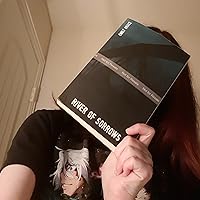
March 11, 2024
Everything was truly poetic (no pun intended).
You could definitely feel a shift in tone about halfway through, through the latter half when things got darker and more depressing. Nevertheless, I've wanted to read this for a while now and I don't regret reading it.
You could definitely feel a shift in tone about halfway through, through the latter half when things got darker and more depressing. Nevertheless, I've wanted to read this for a while now and I don't regret reading it.

October 10, 2022
I was never a poetry kind of person but I really enjoyed reading this
my favourites were the hour of death, lost hope, autumn, cloudy sky, half my life and phantasm (especially the last two)
my favourites were the hour of death, lost hope, autumn, cloudy sky, half my life and phantasm (especially the last two)

December 14, 2022
3.9 stars

January 11, 2022
Precioso. La huella que deja es imborrable.
February 27, 2021
This entire collection was absolutely stunning. I didn’t want it to end. Definitely one of my favourite poets. He tells you a story with few words, and it’s all that is needed to crush you.

April 12, 2022
a beautiful, mournful insight into the mind of yet another starving artist
January 5, 2024
“A decir verdad, ha pasado mucho tiempo
desde aquella noche invernal con doce años;
¿Dónde estará hoy el vapor de la sirena
que reverberaba en el cielo del puerto?
La Luna asomaba entre las nubes:
al escuchar mis oídos esa sirena,
me encogí de hombros asustado
mientras la Luna lucía en el cielo.
¿Cuántos años habrán transcurrido?
¿Dónde estará ese yo de entonces?
Aquel que con tristeza y mirada desinteresada
seguía el vapor de la sirena.
Ahora, con mujer e hijos...
A decir verdad, ha pasado mucho tiempo.
¿Cuántos años más seguiré viviendo?
Sé que serán unos cuántos.
Sé que serán unos cuantos,
pero esta nostalgia
de días y noches distantes
me hace perder la certeza.
Más mientras siga viviendo,
por mi naturaleza seguiré luchando!
pero, al pensar en ello,
me entristezco de mí mismo.
A fin de cuentas, qué más da,
siento que por mucho que luche
hubo unos tiempos en que añoré al pasado;
pero, qué importa, seguiré avanzando.
A fin de cuentas, resulta sencillo,
no es más que un problema de voluntad,
si, no hay más que hacer algo,
hacer algo bastará.
Es verdad, pero no es menos cierto:
aquella tarde invernal con doce años...
¿Dónde estará hoy el vapor de la sirena
que reverberaba en el cielo del puerto?”
Después de una lectura como esta, se te enternece el corazon, se te endulza el alma y es cuando uno se da cuenta del poder y de la relevancia de la poesia al perdurar los años.
No habia otra mejor manera de empezar la lectura de este año que con esta maravillosa obra de arte que Chuya Nakahara dejó atras.
Por supuesto, tambien agradecida por el increíble trabajo del traductor, David Taranco, quien ha sabido plasmar a la perfección la esencia de Chuya, siguiendo con su legado.
Sólo la luna y las estrellas, mencionadas aquí en reiteradas ocasiones por Chuya, sabrán cuánto ha significado para mí y lo mucho que la poesia de Chuya me ha marcado.
Chuya era conocido por recitar o canturrear sus poemas en público, pese a no gozar del reconocimiento y del éxito en vida, Chuya se ha convertido en el poeta japonés más influyente del siglo XX.
Pienso que es altamente recomendado. Chuya hace de su sufrimiento, de su soledad, de su corazon vacío y lejano, la más sutil de la poesia.
Me veo con la obligación de dejar otro poema, que se rumora que Chuya al escribirlo, estaba anticipando su propia muerte, pese a que acababa de contraer matrimonio y aún no había llegado a la etapa más oscura de su vida, que tambien ha significado para mí un revuelco en lo más profundo de mi ser.
“Mira, mira, estos son mis huesos
rasgando la carne indigna
y llena de sufrimiento que padecí en vida;
clareados por la lluvia,
salen de punta y erguidos.
Pero no, no brillan,
clarear es todo cuánto hacen:
absorbe la lluvia,
les sopla el viento encima
y tímidamente reflejan el cielo.
Pensar que cuando vivía,
en medio del barullo de un comedor,
a veces estaba sentado,
a veces comía tallos de angélica hervidos,
pensar todo eso se me hace extraño.
Mira, mira, estos son mis huesos;
pero, que yo los vea, eso sí es extraño.
¿El alma que subsiste
habrá vuelto al lugar de los huesos
y los estará contemplando?
A la orilla del río que pasa por mi tierra,
entre el herbaje medio seo,
¿soy yo quien lo está contemplando?
A la misma altura que una señal,
los huesos clarean afilados”.
Gracias Chuya, gracias. ❤️🩹
desde aquella noche invernal con doce años;
¿Dónde estará hoy el vapor de la sirena
que reverberaba en el cielo del puerto?
La Luna asomaba entre las nubes:
al escuchar mis oídos esa sirena,
me encogí de hombros asustado
mientras la Luna lucía en el cielo.
¿Cuántos años habrán transcurrido?
¿Dónde estará ese yo de entonces?
Aquel que con tristeza y mirada desinteresada
seguía el vapor de la sirena.
Ahora, con mujer e hijos...
A decir verdad, ha pasado mucho tiempo.
¿Cuántos años más seguiré viviendo?
Sé que serán unos cuántos.
Sé que serán unos cuantos,
pero esta nostalgia
de días y noches distantes
me hace perder la certeza.
Más mientras siga viviendo,
por mi naturaleza seguiré luchando!
pero, al pensar en ello,
me entristezco de mí mismo.
A fin de cuentas, qué más da,
siento que por mucho que luche
hubo unos tiempos en que añoré al pasado;
pero, qué importa, seguiré avanzando.
A fin de cuentas, resulta sencillo,
no es más que un problema de voluntad,
si, no hay más que hacer algo,
hacer algo bastará.
Es verdad, pero no es menos cierto:
aquella tarde invernal con doce años...
¿Dónde estará hoy el vapor de la sirena
que reverberaba en el cielo del puerto?”
Después de una lectura como esta, se te enternece el corazon, se te endulza el alma y es cuando uno se da cuenta del poder y de la relevancia de la poesia al perdurar los años.
No habia otra mejor manera de empezar la lectura de este año que con esta maravillosa obra de arte que Chuya Nakahara dejó atras.
Por supuesto, tambien agradecida por el increíble trabajo del traductor, David Taranco, quien ha sabido plasmar a la perfección la esencia de Chuya, siguiendo con su legado.
Sólo la luna y las estrellas, mencionadas aquí en reiteradas ocasiones por Chuya, sabrán cuánto ha significado para mí y lo mucho que la poesia de Chuya me ha marcado.
Chuya era conocido por recitar o canturrear sus poemas en público, pese a no gozar del reconocimiento y del éxito en vida, Chuya se ha convertido en el poeta japonés más influyente del siglo XX.
Pienso que es altamente recomendado. Chuya hace de su sufrimiento, de su soledad, de su corazon vacío y lejano, la más sutil de la poesia.
Me veo con la obligación de dejar otro poema, que se rumora que Chuya al escribirlo, estaba anticipando su propia muerte, pese a que acababa de contraer matrimonio y aún no había llegado a la etapa más oscura de su vida, que tambien ha significado para mí un revuelco en lo más profundo de mi ser.
“Mira, mira, estos son mis huesos
rasgando la carne indigna
y llena de sufrimiento que padecí en vida;
clareados por la lluvia,
salen de punta y erguidos.
Pero no, no brillan,
clarear es todo cuánto hacen:
absorbe la lluvia,
les sopla el viento encima
y tímidamente reflejan el cielo.
Pensar que cuando vivía,
en medio del barullo de un comedor,
a veces estaba sentado,
a veces comía tallos de angélica hervidos,
pensar todo eso se me hace extraño.
Mira, mira, estos son mis huesos;
pero, que yo los vea, eso sí es extraño.
¿El alma que subsiste
habrá vuelto al lugar de los huesos
y los estará contemplando?
A la orilla del río que pasa por mi tierra,
entre el herbaje medio seo,
¿soy yo quien lo está contemplando?
A la misma altura que una señal,
los huesos clarean afilados”.
Gracias Chuya, gracias. ❤️🩹

July 13, 2025
"La historia del corazón como tormenta
parece llegar a su fin y acabarse"
Chuya es el poeta de la nostalgia. No hace falta que sea un poema más triste o retorcido para transmitir ese sentimiento, hasta en lo más simple se ve una melancolía, lo cual es bastante lógico debido a la vida que vivió, muriendo a los treinta años tras haberse alejado de su familia, haber perdido a su hermano e hijo, haber sido abandonado por su amante y casado por obligación; y todo para acabar muriendo enfermo. Te queremos, Chuyi 🤧🤧
Pretendo leer ahora la edición en inglés, ya que me interesa ver una versión que mantenga la rima, porque en esta edición es la traducción para la comprensión en lo que se enfoca.
"Y a la luz lunera, abrazado a las estrellas" 💘
parece llegar a su fin y acabarse"
Chuya es el poeta de la nostalgia. No hace falta que sea un poema más triste o retorcido para transmitir ese sentimiento, hasta en lo más simple se ve una melancolía, lo cual es bastante lógico debido a la vida que vivió, muriendo a los treinta años tras haberse alejado de su familia, haber perdido a su hermano e hijo, haber sido abandonado por su amante y casado por obligación; y todo para acabar muriendo enfermo. Te queremos, Chuyi 🤧🤧
Pretendo leer ahora la edición en inglés, ya que me interesa ver una versión que mantenga la rima, porque en esta edición es la traducción para la comprensión en lo que se enfoca.
"Y a la luz lunera, abrazado a las estrellas" 💘

March 8, 2021
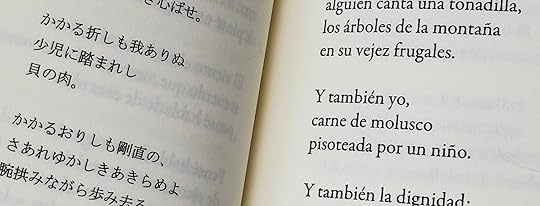
Leída otra de las grandes almas en pena de la literatura japonesa (¡ahora en forma de poeta!). La edición de Satori está cuidadísima, y agradecí mucho el contexto que aporta David Taranco para entender la obra. Y oye qué trabajo el de traducción, espero que se le reconozca con algún premio (porque también se ha ocupado de la compilación del poemario; los primeros poemas que se traen al español de la obra de Chūya, pretty big deal). Aunque no soy de leer poesía a menudo, conociendo la vida de Chūya el poemario se hace muy interesante. En especial me gustó esta estrofa, que me hizo mucha gracia:

December 9, 2022
Soiled sorrow:
today too snow falls on it;
soiled sorrow:
today too wind blows on it
i always thought that i’m too dumb and lacking depth to read poetry and tbh i was most definitely right. but that didn't stop me from enjoying this very very much. i just love how Nakahara paints the picture, love.
(im so mad, cause i had a ranking of my fav's ones but ofc i deleted that note and now it's lost forever)
(me and chūya are alike, we are both annoying, clingy and cant handle alcohol (but are alcoholics))
today too snow falls on it;
soiled sorrow:
today too wind blows on it
i always thought that i’m too dumb and lacking depth to read poetry and tbh i was most definitely right. but that didn't stop me from enjoying this very very much. i just love how Nakahara paints the picture, love.
(im so mad, cause i had a ranking of my fav's ones but ofc i deleted that note and now it's lost forever)
(me and chūya are alike, we are both annoying, clingy and cant handle alcohol (but are alcoholics))

December 23, 2023
3.5
Yet again, translated work could never live up to the whole embodiment of the original work. However, some of the poems were just strange (in a good way) and haunting.
“My heart thinks thoughtless thoughts,
shut up, like a box gathering must;
whitened lips, dry cheeks
in this cold-hearted dead silence become sodden…
Because I am used to this, I can endure;
since this loneliness is distressing, without
knowing, in a way accidentally,
come flowing tears, not the tears of love…”
Yet again, translated work could never live up to the whole embodiment of the original work. However, some of the poems were just strange (in a good way) and haunting.
“My heart thinks thoughtless thoughts,
shut up, like a box gathering must;
whitened lips, dry cheeks
in this cold-hearted dead silence become sodden…
Because I am used to this, I can endure;
since this loneliness is distressing, without
knowing, in a way accidentally,
come flowing tears, not the tears of love…”
March 8, 2023
Ustedes no sabían cuánto tiempo llevaba leyendo este libro 💀💀💀
Me gusta la propuesta de Nakahara aunque de repente la traducción me hacia sentir medio uncanny valley. Y digo, no sé nada de japones, no es como si pudiera comprobar por qué, no más es un comentario.
En fin, mi favorito es el poema qué escribe después de que muere su hijo. That shit is very sad.
Me gusta la propuesta de Nakahara aunque de repente la traducción me hacia sentir medio uncanny valley. Y digo, no sé nada de japones, no es como si pudiera comprobar por qué, no más es un comentario.
En fin, mi favorito es el poema qué escribe después de que muere su hijo. That shit is very sad.
Displaying 1 - 30 of 226 reviews