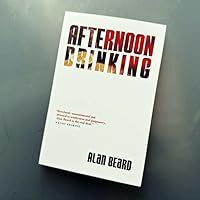
None of the writing's heavy-handed. The age, gender and name of the main character is disclosed late if at all. Children seem very grown up. Siblings/best-friends are temporarily replaced by newcomers. The characters don't reveal much. The elements fill the resulting void - dogs bark in the distance, sand gets everywhere, winters are harsh.
I wasn't keen on the shorter pieces. Most of the longer stories are well worth a read, their final sentence often alluding to the theme which is often to do with transience/permanence.
Home Scar - 3 kids (11 or 14 years old; about to go to the big school) break into vacant houses on the coast line. I like the dialogue, the description of the scenery. At the end they try staying the night in a house, planning to leave hardly a trace of their stay.
The Dishes - Jay looks after the baby while Lorna works. The couple see little of each other. She says nothing in the story, and the baby can only babble, echoing noises from next door. Desperate for words, he listens to the noises and voices from next door, a house he'd thought empty. He sneaks into their garden to peer through a window. All he hears, finally, is "Going." At the end he notices that their door's ajar. As he goes in holding the baby, the phone rings. The house seems uninhabited, like the couple's relationship.
Dreckly - 1st person female narrator plus Freya and Joey (all 26 years old, all casual workers) are metal detecting when the tide's especially low, looking for fabled treasure. The narrator, parted from others, finds a part-buried metal box, but because the tide's coming in fast, she buries it. She's unable to find it subsequently.
There's a lot about people acting through habit rather than reason, most significantly " people get certain ideas in their heads about you, and they never let you forget them. After a while, you find yourself doing exactly what they expect because mostly it's just easier"
Salthouse - The narrator, Evie, and Gina have just started secondary school. As they drag an xmas tree to contribute to a coastal defences project they reminisce. Passing a fair, they decide to go in. They meet a teacher from their old school. Evie goes off with a boy. Evie's alone. As the teacher's about to discover Gina with the boy, Evie's last milk tooth dramatically comes out, causing a distraction. Evie wins Gina back and they continue to the dunes alone. I guess the story's about not wanting to let go of childhood. At the end, the sand never changes.
Flotsam, Jetsam, Lagan, Derelict - About a retired couple who've moved to a cliff top house. Theme: The onset of dementia - litter as an analogy for aging.
The Sing of the Shore - Bryce visits sister Kensa at the campsite where they grew up. They're both about 40. It's run-down, about to be sold. Kensa's living in a caravan. All isn't well with her, though there are no details. . There's a parallel time-line comprising flashbacks of when they were 9 (Bryce) and 12, when a 17 year-old, Nate, camped alone for a while then disappeared. Kensa had liked him, wanting to search in dangerous caves for him. At the end of the story Byrce leads Kensa to the caves. He goes in, gets lost, and she's about to find him.
By-the-Wind Sailors - Theme: Re-possession (by land-lords, and by returning families).