

What do you think?

The Sweetest Fruits
A Greek woman tells of how she willed herself out of her father's cloistered house, married an Irish officer in the British Army, and came to Ireland with her two-year-old son in 1852, only to be forced to leave without him soon after. An African American woman, born into slavery on a Kentucky plantation, makes her way to Cincinnati after the Civil War to work as a boarding house cook, where in 1872 she meets and marries an up-and-coming newspaper reporter. In Matsue, Japan, in 1891, a former samurai's daughter is introduced to a newly arrived English teacher, and becomes the mother of his four children and his unsung literary collaborator.
The lives of writers can often best be understood through the eyes of those who nurtured them and made their work possible. In The Sweetest Fruits , these three women tell the story of their time with Lafcadio Hearn, a globetrotting writer best known for his books about Meiji-era Japan. In their own unorthodox ways, these women are also intrepid travelers and explorers. Their accounts witness Hearn's remarkable life but also seek to witness their own existence and luminous will to live unbounded by gender, race, and the mores of their time. Each is a gifted storyteller with her own precise reason for sharing her story, and together their voices offer a revealing, often contradictory portrait of Hearn. With brilliant sensitivity and an unstinting eye, Truong illuminates the women's tenacity and their struggles in a novel that circumnavigates the globe in the search for love, family, home, and belonging.
The lives of writers can often best be understood through the eyes of those who nurtured them and made their work possible. In The Sweetest Fruits , these three women tell the story of their time with Lafcadio Hearn, a globetrotting writer best known for his books about Meiji-era Japan. In their own unorthodox ways, these women are also intrepid travelers and explorers. Their accounts witness Hearn's remarkable life but also seek to witness their own existence and luminous will to live unbounded by gender, race, and the mores of their time. Each is a gifted storyteller with her own precise reason for sharing her story, and together their voices offer a revealing, often contradictory portrait of Hearn. With brilliant sensitivity and an unstinting eye, Truong illuminates the women's tenacity and their struggles in a novel that circumnavigates the globe in the search for love, family, home, and belonging.
304 pages, Hardcover
First published September 3, 2019
About the author
Monique Truong
15 books219 followersBorn in Saigon, South Vietnam, Monique Truong came to the U.S. as a refugee in 1975. She is a writer based now in Brooklyn, New York. Her award-winning novels are The Sweetest Fruits (Viking Books, 2019), Bitter in the Mouth (Random House, 2010), and the national bestseller The Book of Salt (Houghton Mifflin, 2003). She is the co-editor of Watermark: Vietnamese American Poetry & Prose, 25th Anniversary Edition (DVAN Series, Texas Tech University Press, 2023). With fashion designer Thai Nguyen and New York Times bestselling illustrator Dung Ho, Truong is the co-author of Mai's Áo Dài, a children's picture book (Atheneum/Caitlyn Dlouhy Books, 2025).
A Guggenheim Fellow, U.S.-Japan Creative Artists Fellow in Tokyo, Visiting Writer at the Helsinki Collegium for Advanced Studies, Princeton University’s Hodder Fellow, Kirk Writer-in-Residence at Ages Scott College, Sidney Harman Writer-in-Residence at Baruch College (CUNY), and Frank B. Hanes Writer-in-Residence at UNC-Chapel Hill, Truong was most recently awarded a John Gardner Fiction Book Award and a John Dos Passos Prize for Literature. Truong received her BA in Literature from Yale and her JD from Columbia Law School.
A Guggenheim Fellow, U.S.-Japan Creative Artists Fellow in Tokyo, Visiting Writer at the Helsinki Collegium for Advanced Studies, Princeton University’s Hodder Fellow, Kirk Writer-in-Residence at Ages Scott College, Sidney Harman Writer-in-Residence at Baruch College (CUNY), and Frank B. Hanes Writer-in-Residence at UNC-Chapel Hill, Truong was most recently awarded a John Gardner Fiction Book Award and a John Dos Passos Prize for Literature. Truong received her BA in Literature from Yale and her JD from Columbia Law School.
Ratings & Reviews
Friends & Following
Create a free account to discover what your friends think of this book!
Community Reviews
Displaying 1 - 30 of 115 reviews

abandoned-by-stacia
January 5, 2020I should have liked it. I did like it. But I got halfway through & never really felt the urge to pick it up again. Shrug.

August 11, 2019
At one point in Monique Truong’s novel, The Sweetest Fruits, one of the narrators tells her interviewer that it’s not enough to just get the story of one person: you have to also get the stories of the people around them. And that’s exactly what we get in this novel based on the life of author Lafcadio Hearn and three of the women in his life. (Technically four, if you count the excerpts from Elizabeth Bisland‘s biography of her friend.) While we learn a lot about Hearn, I was more fascinated by the lives of the women who loved him than I was about a man who often struck me as selfish and fussy. The women tell us about love, sacrifice, abandonment, difficult choices, compatibility, and so much more. This book is an amazing piece of writing that, while it hews very close to actual history, amplifies it in ways that only faction can do...
Read the rest of my review at A Bookish Type. I received a free copy of this book from the publisher via NetGalley, for review consideration.
Read the rest of my review at A Bookish Type. I received a free copy of this book from the publisher via NetGalley, for review consideration.

September 14, 2019
I think Truong is a stunningly brilliant writer. Her Bitter in the Mouth is one of my favorite books, and I teach the luminous and melancholy The Book of Salt. Her gift with understated yet indelible narrative voices is displayed to full effect in The Sweetest Fruits, the story of Greek-Irish writer Lafcadio Hearn, whom I did not know at all, told by three women who loved him. That synopsis is accurate and yet utterly misleading; that summary sounds like an exhausting "Great Man" history, and indeed, the New Yorker, mentioning Truong's new book in a recent article, takes up that invitation and starts trying to define what it is that made Lafcadio's voice so memorable, his achievement great. But for me, this book was more about what Virginia Woolf famously called the tale of Judith Shakespeare, the women's stories that fall by the wayside in the construction of the Great Man narrative, and particularly the women of color. Truong does not villainize Hearn, and indeed, she implies that his disability (a childhood eye injury leading to partial blindness) and his dark skin gave him the negative capability to relate to marginalized peoples. He drinks and carouses in black neighborhoods in the US; he takes on a Japanese name and citizenship when he moves to Japan; he cherishes the Caribbean islands and mourns the hurricanes they face.
In spite of this receptivity and charm in Hearn, Truong also charts the sinister power of white masculinity. In the first section, narrated by Hearn's mother, the gradual dismissal of her by her Irish lover and his aunt's bribe to be rid of this inconvenient mother and gifted her boy child who could be the family heir are deeply disturbing. At first, she lives in veritable confinement as a young girl, and then when she seeks companionship and intimacy, her pregnancy launches her into a life of estrangement and isolation with little consolation from the Irish man who loved sleeping with a passionate young virgin in a barn but cherished far less the prospect of a dark-skinned, non-English speaking wife back home. You see the immediate physical and social costs of being a woman in this patriarchal, Anglophilic society, no matter the sympathies the Irishman initially has with languages and identities repressed by colonial powers.
In the second section, it is not Hearn's father who is the embodiment of white masculinity's privilege and cruelty, but rather Hearn himself. An African-American book named Althea describes her courtship by this unusual young man, the drawings he would make for her, casting himself as a crow alighting on her branch. Hearn devotes himself to Alethea and to her foster child, but after marrying her, resents the limits that her color places on his career and status. He internalizes the shame of a white supremacist society, and he ultimately abandons her. But Truong makes it clear that Hearn is not merely responding to external pressures; he imagines himself her author and instructor: he renames her, never calling her Alethea; he rejects her Southern cooking and insists that she prepare European fare (and then denigrates what she comes up with). The sweetness of the man who scribbled her drawings and insisted that color was no object to their love gives way to the autocratism of unearned arrogance. She is disillusioned when she realizes the full extent of his alcoholism and philandering. The whole section is also cast as a letter defending her legal rights to claim him as a husband, which underscores how she has been erased from the official narrative. (Truong extensively quotes Hearn's first biographer, which is a beautifully pointed reflection on historiography's power.)
Finally, the last section of the novel is narrated by Setsu, Hearn's Japanese wife. She is the mother of his children and his ambassador to a new world, which he would become famous in the West for documenting and preserving. Setsu's section establishes Hearn's figuratively blindness, which comes from his own sense of himself as a European explorer in a quaint, Oriental, authentic land. He blunders into rural regions and insists on viewing their folk traditions; Setsu lies to him in order to protect him from the villagers' rage and violence. Hearn cannot imagine that any of these religious and ritual observances should not belong to him. He coopts Setsu's personal stories in his literary works, rarely referring to her (as his son resentfully realizes). He also overlooks the blossoming love between his wife and his best friend and translator, who dies young of tuberculosis. Setsu skillfully allows her husband to believe in her unwavering and exclusive devotion, a loyalty that he both counts upon and discounts as he sees her as a tool establishing his own authorship and paternity.
Because I don't know Hearn's work at all, my overwhelming impression from the novel was of his arrogance and unwitting cruelty. I suspect that Truong has more sympathy with Hearn than I ended up feeling. Men get to tell the story and reap the rewards; Hearn writes a Creole cookbook (claiming Alethea's territory) and Japanese ghost stories (claiming Setsu's). Maybe there will be a point in my life where I see more pathos in the condition of the white dude caught between imperialism and alterity, nationalism and expatriatism, privilege and marginalization. But for now, I was much more taken--thanks to Truong's artistry--with these women and their stories of survival and insight.
In spite of this receptivity and charm in Hearn, Truong also charts the sinister power of white masculinity. In the first section, narrated by Hearn's mother, the gradual dismissal of her by her Irish lover and his aunt's bribe to be rid of this inconvenient mother and gifted her boy child who could be the family heir are deeply disturbing. At first, she lives in veritable confinement as a young girl, and then when she seeks companionship and intimacy, her pregnancy launches her into a life of estrangement and isolation with little consolation from the Irish man who loved sleeping with a passionate young virgin in a barn but cherished far less the prospect of a dark-skinned, non-English speaking wife back home. You see the immediate physical and social costs of being a woman in this patriarchal, Anglophilic society, no matter the sympathies the Irishman initially has with languages and identities repressed by colonial powers.
In the second section, it is not Hearn's father who is the embodiment of white masculinity's privilege and cruelty, but rather Hearn himself. An African-American book named Althea describes her courtship by this unusual young man, the drawings he would make for her, casting himself as a crow alighting on her branch. Hearn devotes himself to Alethea and to her foster child, but after marrying her, resents the limits that her color places on his career and status. He internalizes the shame of a white supremacist society, and he ultimately abandons her. But Truong makes it clear that Hearn is not merely responding to external pressures; he imagines himself her author and instructor: he renames her, never calling her Alethea; he rejects her Southern cooking and insists that she prepare European fare (and then denigrates what she comes up with). The sweetness of the man who scribbled her drawings and insisted that color was no object to their love gives way to the autocratism of unearned arrogance. She is disillusioned when she realizes the full extent of his alcoholism and philandering. The whole section is also cast as a letter defending her legal rights to claim him as a husband, which underscores how she has been erased from the official narrative. (Truong extensively quotes Hearn's first biographer, which is a beautifully pointed reflection on historiography's power.)
Finally, the last section of the novel is narrated by Setsu, Hearn's Japanese wife. She is the mother of his children and his ambassador to a new world, which he would become famous in the West for documenting and preserving. Setsu's section establishes Hearn's figuratively blindness, which comes from his own sense of himself as a European explorer in a quaint, Oriental, authentic land. He blunders into rural regions and insists on viewing their folk traditions; Setsu lies to him in order to protect him from the villagers' rage and violence. Hearn cannot imagine that any of these religious and ritual observances should not belong to him. He coopts Setsu's personal stories in his literary works, rarely referring to her (as his son resentfully realizes). He also overlooks the blossoming love between his wife and his best friend and translator, who dies young of tuberculosis. Setsu skillfully allows her husband to believe in her unwavering and exclusive devotion, a loyalty that he both counts upon and discounts as he sees her as a tool establishing his own authorship and paternity.
Because I don't know Hearn's work at all, my overwhelming impression from the novel was of his arrogance and unwitting cruelty. I suspect that Truong has more sympathy with Hearn than I ended up feeling. Men get to tell the story and reap the rewards; Hearn writes a Creole cookbook (claiming Alethea's territory) and Japanese ghost stories (claiming Setsu's). Maybe there will be a point in my life where I see more pathos in the condition of the white dude caught between imperialism and alterity, nationalism and expatriatism, privilege and marginalization. But for now, I was much more taken--thanks to Truong's artistry--with these women and their stories of survival and insight.

November 10, 2019
I loved the first 2/3rds of this book so much! I found the last third, the final narrator, impenetrable. It took me weeks to get through that last section. I can appreciate the monumental task of this book and the first sections were truly great.

January 11, 2020
1.5 stars. I admit I was ignorant about Hearn. I liked the beginning chapters about his mother (what a sad and lonely childhood Lafcadio had) and then it went downhill from there. The sections of the book were not seamless and I was confused by who was who with all the different Japanese names. I especially did not like the biographical parts of Elizabeth. I found myself skimming towards the end and wanting to just finish it.

December 21, 2019
SO BUMMED! Her novel the Book of Salt was one of my favorite books and I was incredibly excited to read this one. Nope. I can see how others may love it, and she is obviously an incredibly talented writer, but I could barely make myself care enough to finish the book. This is probably the saddest review of the year for me. I had such expectations. Both of her other novels won rave reviews from me and I recommended them to everyone I know, and then this book, which I could not connect with at all. Seriously bummed AND still excited for anything else she writes...

June 8, 2019
This is a reimagined life of Patricio Lafcaido Hearn, a Greek-Irish writer with a storied life as told by three women. The first is his mom, a Greek woman who was later forced to abandon Hearn when he was 2. The second is Hearn’s first wife, a black cook whom he married while he was a young reporter in Cincinatti. The third is his second wife, a high-ranking Samurai’s daughter who was half Hearn’s age whom he married while living as a teacher for boys in Japan. Majestic and lyrical. Great for fans of Ernest Van der Kwast.
Thanks to the publisher for the advance copy.
Thanks to the publisher for the advance copy.

October 14, 2020
I did not like the man. I liked those around him. You can tell that this story was meticulously researched and I really enjoyed the range of voices.
December 25, 2019
"Wait, are we talking about the same person?" Ever hear that when two or more people compare notes about a supposed "common" other who is unrecognizable to each.
In three sections, women in different countries and cultures describe Lafcadio at different spans of his life. Each depiction could not be more distinct from the other two. The constants are food and an Elizabeth character. Each section is actually the story about a woman than the man they had in common. He, the professional storyteller, is used as an instrument in the service of the women with the stories.
Truong's writing is beautiful and clever; and her imagined perspectives on Lafcadio sharp and witty. She performs, in writing, a kind of channeling, rich with the flaws of humanity and insights into its irony and contradictions. There's an affectionate acuity in Truong's writing. (And I often think about her book, Bitter in the Mouth, the only book I reread immediately after turning the last page on the first go. And thus, I anticipated this book and will eagerly wait for more from her.)
Several quotes:
...When my father was not an echo, he spoke in circles, a snake swallowing its tail.
At midmorning, the aromas , which hung like damp laundry over the street of villas, were the same as those coming from Kanella's kitchen. Onions and olive oil. The whole island by noon was a pan of sweet onions melting....
I was spare with my words when I was with Charles, as the fewer that I used, the better we understood each other.
....We understood one another. I understood them so well that I soon despised them both....
Believing a man doesn't mean making a fool of yourself. that was Aunt Sweetie talking. Molly taught me my kitchen skills but Aunt Sweetie taught me--or she tried to--what I would need to know in the other rooms of the house. She never married, and she told me that made her wiser than most women.
Religion, Pat had said to me and then I had repeated it to Charlotte, was for people who needed to believe that death was better than life. I was afraid to tell her what else Pat had said, but I did. Heaven is a good story, Mattie, and good stories get retold....
...Pat was a terrible storyteller, and I told him so. Pat looked up, his eye aglow. On the contrary, he said. He was a very good storyteller, as the listener wanted to know more, which was the point of storytelling.
When you've been taught that you are lesser, there was another way to empty yourself of anger, the stubborn kind, the kind closer to shame. It was cheaper than drink, but it cost those around you more. I didn't tell Pat about this other way. he came to it on his own.
...I don't know what Creole cooking is, but if these are colored folks, then I know a thing or two about what's on their tables. What I want to know is whether these were the dishes that they cooked in their own kitchens or whether these were dishes that they cooked in the kitchens of others. The two aren't the same. The first is what they hunger for, and the second is what their hunger make them do.
..."Facts are akin to fish bones," he said. "If what you want is to serve the flesh, then the bones can be discarded," he suggested.
In three sections, women in different countries and cultures describe Lafcadio at different spans of his life. Each depiction could not be more distinct from the other two. The constants are food and an Elizabeth character. Each section is actually the story about a woman than the man they had in common. He, the professional storyteller, is used as an instrument in the service of the women with the stories.
Truong's writing is beautiful and clever; and her imagined perspectives on Lafcadio sharp and witty. She performs, in writing, a kind of channeling, rich with the flaws of humanity and insights into its irony and contradictions. There's an affectionate acuity in Truong's writing. (And I often think about her book, Bitter in the Mouth, the only book I reread immediately after turning the last page on the first go. And thus, I anticipated this book and will eagerly wait for more from her.)
Several quotes:
...When my father was not an echo, he spoke in circles, a snake swallowing its tail.
At midmorning, the aromas , which hung like damp laundry over the street of villas, were the same as those coming from Kanella's kitchen. Onions and olive oil. The whole island by noon was a pan of sweet onions melting....
I was spare with my words when I was with Charles, as the fewer that I used, the better we understood each other.
....We understood one another. I understood them so well that I soon despised them both....
Believing a man doesn't mean making a fool of yourself. that was Aunt Sweetie talking. Molly taught me my kitchen skills but Aunt Sweetie taught me--or she tried to--what I would need to know in the other rooms of the house. She never married, and she told me that made her wiser than most women.
Religion, Pat had said to me and then I had repeated it to Charlotte, was for people who needed to believe that death was better than life. I was afraid to tell her what else Pat had said, but I did. Heaven is a good story, Mattie, and good stories get retold....
...Pat was a terrible storyteller, and I told him so. Pat looked up, his eye aglow. On the contrary, he said. He was a very good storyteller, as the listener wanted to know more, which was the point of storytelling.
When you've been taught that you are lesser, there was another way to empty yourself of anger, the stubborn kind, the kind closer to shame. It was cheaper than drink, but it cost those around you more. I didn't tell Pat about this other way. he came to it on his own.
...I don't know what Creole cooking is, but if these are colored folks, then I know a thing or two about what's on their tables. What I want to know is whether these were the dishes that they cooked in their own kitchens or whether these were dishes that they cooked in the kitchens of others. The two aren't the same. The first is what they hunger for, and the second is what their hunger make them do.
..."Facts are akin to fish bones," he said. "If what you want is to serve the flesh, then the bones can be discarded," he suggested.

September 11, 2020
Barely 2 stars!
OMG it took reading almost 1/2 of the story before the line of writing became evident and made some sort of sense (that a journalist was taking the story of three women and their life connections to Patrick Hearn). Google Patrick Hearn to learn who he was; that's what I had to do in order to understand this story. I actually got more about the story from the GoodReads synopsis than from the book itself!
Truong has a very unorthodox writing style; I didn't particularly enjoy it. The beginning of the story and the end alike 9the stories of Casi and Setsu - mother and wife 2 ) were very confusing. Plus the interjections of Elizabeth (the journalist) only added to the confusion. It was like putting together a tough jigsaw puzzle.
SOOOOOOOOOOOOOOOO - I give Althea's story and almost 3 stars and the rest of the book I can only give one star which averages out to barely two stars! I wouldn't consider reading other books by Tuong.
OMG it took reading almost 1/2 of the story before the line of writing became evident and made some sort of sense (that a journalist was taking the story of three women and their life connections to Patrick Hearn). Google Patrick Hearn to learn who he was; that's what I had to do in order to understand this story. I actually got more about the story from the GoodReads synopsis than from the book itself!
Truong has a very unorthodox writing style; I didn't particularly enjoy it. The beginning of the story and the end alike 9the stories of Casi and Setsu - mother and wife 2 ) were very confusing. Plus the interjections of Elizabeth (the journalist) only added to the confusion. It was like putting together a tough jigsaw puzzle.
SOOOOOOOOOOOOOOOO - I give Althea's story and almost 3 stars and the rest of the book I can only give one star which averages out to barely two stars! I wouldn't consider reading other books by Tuong.

May 6, 2024
I’ve wanted to read this book since forever. I really liked The Book of Salt by this author, and I was ecstatic when I heard that she had written a book about Lafcadio Hearn. I’m familiar with him, have read his Japanese ghost stories and at least one non-fiction book about Japan (Glimpses of Unfamiliar Japan , I think?), and I always thought that he had a very interesting life. This book though is less about him and more about the women in his life, and while that is an interesting approach also, it was not quite satisfying for me.
The part about whom I’d considered the least interesting person – his mother Rose – was the one I ultimately enjoyed the most, maybe because poor Hearn was not yet on the stage. In retrospect, one might say that the relationship of Rose, a poorly educated and neglected, albeit well-off Greek girl, with a much older Irish military doctor, is supposed to serve as a foreshadowing of the way her own son would treat women in his life. He uses them, he puts their stories in his books and eats the food they cook, and then he… vanishes? Is that what the book is trying to tell me?
I’m not sure what happened, really, between Hearn and his first (African American) wife Alethea, and his second (Japanese) wife Setsu. How did they met? Why did he leave Alethea? (That was the part of his biography I truly hoped to get more insight into.) Why did he marry Alethea – or Setsu, for that matter? Everything felt muddled; the only thing I got out of the story was that he eventually was a jerk to them both. But was he really? I don’t know. His presence in the book was incredibly thin, twice-filtered through the very stylistically similar narration of his wives; he was just a tiny distant figure on the horizon.
Last but not least, the constant repetition of his name(s) got on my nerves. Alethea kept calling him Pat in every second sentence, and Setsu did the same, only she called him Yakumo (his Japanese name). And despite Setsu boldly lampshading the unnaturalness of it (because a wife in that time and place would not call her husband by his first name), I still found it horribly grating and distracting.
I’m glad I finally read this book, but it was a disappointment.

September 5, 2023
3,5 dan 4, yarım puan son bölüm için kırmış olabilirim :)
Lefcadio Hearn adında bir yazarı ne okumuş, ne duymuştum. Hatta kitaba başladığımda sözkonusu kişinin Truong'un kurguladığı bir karakter olduğunu düşünmüştüm ancak araştırınca gerçekten böyle bir yazar olduğunu, İon denizindeki adalardan-ki ismini vermiş ada ona-birinde doğduğunu, çocukluğunun İrlanda'da geçtiğini, bir gözünü kaybetmesine neden olan ağır disiplinli yatılı okullarda okuduğunu ve sonunda Amerika'ya göçtüğünü öğrenecektim. Gerçi kitap zaten bunları anlatıyor ama araştırma konum kişinin gerçekliği idi. İlginç bir kişilik Lefcadio, çeşitli işlerde çalışıp epey yoksulluk çektikten sonra gazetelere yazı yazmaya başlar, ilk evliliğini afro Amerikan bir kadın ile yapar, daha sonra Japonya'ya göçüp Japon bir kadınla evlenerek hayatını bir Japon gibi sürdürür, hatta ismini değiştirip Japon adı alır, Yakumo. Orada da ölecektir. İşte bu yazarın yaşam öyküsünü hayatına giren üç kadının ağzından anlatmış Monique Truong; annesi, ilk eşi ve son eşi. Japon eşin anlattıklarına kadar ilgiyle okumuştum ama o bölüm ilgimi biraz dağıttı. "Dilimdeki Acı" kadar olmasa da ilginç bir kitap...
Lefcadio Hearn adında bir yazarı ne okumuş, ne duymuştum. Hatta kitaba başladığımda sözkonusu kişinin Truong'un kurguladığı bir karakter olduğunu düşünmüştüm ancak araştırınca gerçekten böyle bir yazar olduğunu, İon denizindeki adalardan-ki ismini vermiş ada ona-birinde doğduğunu, çocukluğunun İrlanda'da geçtiğini, bir gözünü kaybetmesine neden olan ağır disiplinli yatılı okullarda okuduğunu ve sonunda Amerika'ya göçtüğünü öğrenecektim. Gerçi kitap zaten bunları anlatıyor ama araştırma konum kişinin gerçekliği idi. İlginç bir kişilik Lefcadio, çeşitli işlerde çalışıp epey yoksulluk çektikten sonra gazetelere yazı yazmaya başlar, ilk evliliğini afro Amerikan bir kadın ile yapar, daha sonra Japonya'ya göçüp Japon bir kadınla evlenerek hayatını bir Japon gibi sürdürür, hatta ismini değiştirip Japon adı alır, Yakumo. Orada da ölecektir. İşte bu yazarın yaşam öyküsünü hayatına giren üç kadının ağzından anlatmış Monique Truong; annesi, ilk eşi ve son eşi. Japon eşin anlattıklarına kadar ilgiyle okumuştum ama o bölüm ilgimi biraz dağıttı. "Dilimdeki Acı" kadar olmasa da ilginç bir kitap...
January 5, 2020
Yes, I was immediately drawn to The Sweetest Fruits because Lafcadio Hearn (what is it that makes him so fascinating?) is the subject....but this is not a book about Lafcadio Hearn, or only tangentially. What the book is really about is the inner life of the women in Hearn's life and through telling their tales of their lives with him, we see their love, loss and pain; and Hearn's as well. Each woman, first his Greek mother, Rosa Antonia Cassimati, then his African-American wife, Alethea Foley and finally his Japanese wife, Koizumi Setsu share their reminiscences of life with Hearn with his first official biographer, Elizabeth Bisland. But that's only the story for the public; what makes this book so good is the second story that each woman relates; the story they've held back to keep just for themselves. Monique Truong brings to her characters an individual voice and pathos which makes each woman equally as fascinating as Lafcadio Hearn.
February 18, 2020
Patrick Lafcadio Hearn is not fictional character, I did not know that until reading the other reviews of this book on Goodreads.
His life was peripatetic. His mother abandoned him and set him up for a lifetime of trying to feel at home. Born in Greece and raised in Ireland he always seemed to be a stranger in a strange land.
His life is recounted for us by the women who loved him. I found the first two thirds of this book fascinating and beautifully written. The work begins in 1823 and ends in the early years of the twentieth century. The women are his mother, his first wife and his last wife.
The last third, written by the last woman in his life to be confusing, as others have noted.
However, I found the book fascinating and I am glad that I read it.
His life was peripatetic. His mother abandoned him and set him up for a lifetime of trying to feel at home. Born in Greece and raised in Ireland he always seemed to be a stranger in a strange land.
His life is recounted for us by the women who loved him. I found the first two thirds of this book fascinating and beautifully written. The work begins in 1823 and ends in the early years of the twentieth century. The women are his mother, his first wife and his last wife.
The last third, written by the last woman in his life to be confusing, as others have noted.
However, I found the book fascinating and I am glad that I read it.

June 21, 2021
Excellent. Such good decisions about how to tell this story, and the cumulative effect makes for a really pleasing and (if the metaphor holds) thought-provoking aftertaste. This is a book about Lafcadio Hearn, and a book about so much more, as he is seen and heard and grieved by three (four?) women whose own lives are partly but by no means entirely involved with his. For me the Koizumi Setsu section is a masterpiece.

September 29, 2020
Elizabeth Bisland is writing a story on the life of author Patrick Hearn as told by his mother Casi, his first wife Althea, and his second wife Setsu. I found the format of this book confusing with the sections of Elizabeth added in between the other three. It took me a while to follow along with the style of writing.

November 26, 2022
I had finished this book and in reading the authors notes found that the author is a historical novelist. In this book she took the life and writings of Lafcadio Hearn who was born in Greece and died in the U.S. in 1904 -as well as a book written by Elisabeth Bisland about him- and expanded them into a novel. He left Greece with his mother and brother and went to Ireland where his father lived; moved to Boston with his mother; married an African-American woman; moved to Japan and married a Japanese woman and had 4 children with her and left her to return to America about 8 years before his death. Truong has written about his life as if written first by his mother, then Alethea Foley, then Koizumi Setsu.
September 16, 2019
An interesting idea and format though, because I chose to read it mostly because of an interest in Lafcadio Hearn, I finished it feeling somewhat shortchanged.

January 17, 2024
This was a chore to finish. This is the type of book I can't recommend to a friend. if the book has a lot of copies at goodwill it's probably not very good.

December 23, 2021
What a pleasure it was to read this book!
The Sweetest Fruits, by Vietnamese-American author Monique Truong, is a fictionalised life of Lafcadio Hearn (1850-1904). Of Greek-Irish heritage, Hearn was born on the Greek island of Lefkada; was abandoned by his father and then by his mother who unwisely left him under guardianship in Ireland. From there he was tutored in Wales and educated in France; but learned the craft of journalism and translation in the US; and subsequently in Japan became a teacher who introduced its culture and literature to the West. As we learn from the Afterword, Truong discovered the bare bones of his life story during research for a previous book Bitter in the Mouth. The novel had to have an authentic cornbread recipe from the South not the North, and the brief but intriguing bio that she found in an encyclopedia of food alerted her to Hearn's La Cuisine Creole: A Collection of Culinary Recipes (1885). As a child refugee from Vietnam, Truong is fascinated by people who choose to live in exile from country, family, language, and the physical and emotional assemblage of home so she had found the topic for her next novel and The Sweetest Fruits is the result.
A deft mixture of fact and imagination, Hearn's story is told in the distinctive voices of three women who were crucially important in his life, punctuated by the contrasting voice of his real-life biographer Elizabeth Bisland. The effect is not to make the reader doubt the veracity of these women but to acknowledge that people present different versions of themselves to others for all sorts of reasons, dubious or otherwise.
BEWARE: MILD SPOILERS
The first narrator is the illiterate (real-life) Rosa Antonia Cassimati, (1823-1882) dictating her story to Elesa, who is nanny to her second but (so far) only surviving child, Patricio Lafcadio Hearn. En route to Dublin where she hopes to reunite with the father of this child, Charles Bush Hearn, Rosa has escaped the bullying and cruelty of her childhood home where she was held to blame for her mother's premature death and destined to live out her days in a convent. Naïve and inexperienced in the ways of men, Rosa has to learn the hard way that men like Charles care more about their military careers in far-flung places than they do about their families.
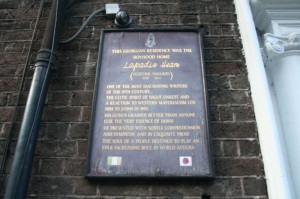 Commemorative plaque to Lafcadio Hearn, 48 Gardiner Street Lower, Dublin, Ireland. (Wikipedia)
The reader does not learn about the betrayal of Rosa's hopes in this part of the story. That comes later in the second narration, which is by (real-life) Alethea Foley (1853-1913) in Cincinnati.
To read the rest of my review please visit https://anzlitlovers.com/2021/12/23/t...
The Sweetest Fruits, by Vietnamese-American author Monique Truong, is a fictionalised life of Lafcadio Hearn (1850-1904). Of Greek-Irish heritage, Hearn was born on the Greek island of Lefkada; was abandoned by his father and then by his mother who unwisely left him under guardianship in Ireland. From there he was tutored in Wales and educated in France; but learned the craft of journalism and translation in the US; and subsequently in Japan became a teacher who introduced its culture and literature to the West. As we learn from the Afterword, Truong discovered the bare bones of his life story during research for a previous book Bitter in the Mouth. The novel had to have an authentic cornbread recipe from the South not the North, and the brief but intriguing bio that she found in an encyclopedia of food alerted her to Hearn's La Cuisine Creole: A Collection of Culinary Recipes (1885). As a child refugee from Vietnam, Truong is fascinated by people who choose to live in exile from country, family, language, and the physical and emotional assemblage of home so she had found the topic for her next novel and The Sweetest Fruits is the result.
A deft mixture of fact and imagination, Hearn's story is told in the distinctive voices of three women who were crucially important in his life, punctuated by the contrasting voice of his real-life biographer Elizabeth Bisland. The effect is not to make the reader doubt the veracity of these women but to acknowledge that people present different versions of themselves to others for all sorts of reasons, dubious or otherwise.
BEWARE: MILD SPOILERS
The first narrator is the illiterate (real-life) Rosa Antonia Cassimati, (1823-1882) dictating her story to Elesa, who is nanny to her second but (so far) only surviving child, Patricio Lafcadio Hearn. En route to Dublin where she hopes to reunite with the father of this child, Charles Bush Hearn, Rosa has escaped the bullying and cruelty of her childhood home where she was held to blame for her mother's premature death and destined to live out her days in a convent. Naïve and inexperienced in the ways of men, Rosa has to learn the hard way that men like Charles care more about their military careers in far-flung places than they do about their families.
Commemorative plaque to Lafcadio Hearn, 48 Gardiner Street Lower, Dublin, Ireland. (Wikipedia)The reader does not learn about the betrayal of Rosa's hopes in this part of the story. That comes later in the second narration, which is by (real-life) Alethea Foley (1853-1913) in Cincinnati.
To read the rest of my review please visit https://anzlitlovers.com/2021/12/23/t...

November 3, 2022
Got to meet the author and talk to her about the book. Favorite moment was when someone asked about how she embodied the different voices of each character with so much depth. She immediately got emotional, saying that a white male NYT reviewer had criticized the novel for the sameness of the voices, missing the beauty and complexities of these stories. Love how it pushes the historical archive in creative ways.

December 24, 2025
Mr. Anderson tells me that I'm five tens and three or, as he says it, "fifty-three" this year.
I asked him to show me what fifty-three looks like in tally marks. He did. I felt every one of those lines and slashes, each one a heavy coat worn on top of the other. Even on the hottest Cincinnati days, when the Ohio looks like it's steaming, I can't take those coats off, not a one.
Tell the truth but tell it slant. ~~Emily Dickinson

~~The beautiful island of Cerigo is pictured above, one of many islands dotting the Mediterranean Sea just to the south of Greece. Patricio's mother was grew up on this island, fell in love with a soldier, and Patricio was born of that love. Truong's novel is divided into loosely connected sections, held together by the investigations of Elizabeth Bisland into the life of Patricio Lafcadio Hearn.
First two sentences: Patricio Lafcadio Hearn was born hungry. I could tell by the way that he suckled.
Vital statistics: Author's home: Brooklyn, New York
Year written: 2019
Length: 290 pages
Setting: Ranges from the 1850's to early 1900's, with locations as varied as the Greek islands; to Cincinnati, Ohio; to Tokyo, Japan, to New York City.
Genre: rambling historical fiction that is strongly character driven
Read if: You enjoy reading about strong women who make the best of the hands they are dealt
My two cents: The prose was a pleasure to read--almost lyrical at times, but even writing this beautiful couldn't disguise the disjointed story arc. Given 2.5 stars or a rating of "Above average".
Favorite quotes: "Holy God, Holy Mighty, Holy Immortal, have mercy on us."
Old Iota sucked in her breath when she heard those words coming from my mouth. We both knew that at the graveside they belonged in the mouth of a priest. but what was I to do in the face of absence and silence? Giorgio was my child and a child of God. I knew both to be true. I listened to my heart that day, and it was a fist pounding with anger. My heart opened my mouth. My mouth pleaded, even if to no avail, for my blessed Giorgio.
~~You will see.
That is how the old curse the young, Elesa.
~~"God does not give many advantages to women, but He does give us boys, Rosa."
~~Widows, especially those without children, had only their grief for company, so they nourished and indulged it, like a lapdog or a parrot. Mrs. Brenane's grief inhabited all the rooms of her manor house and made it seem much smaller than it was.
~~Charlotte and I, we grew up with stories that were brambly, full of leaves, and with branches going every which way. When you reached the middle was when you were rewarded with the juicy berries, the sweetest fruits.
~~I stared hard at Pat when he told me about his early days here, not because I didn't believe him but because I did. You don't live with the streets as your home and not leave a part of yourself there. The soft parts were what you left behind, or sold, or lost like a rotted-out tooth--in its place, a gap, a soreness, and the taste of blood.
~~A few months after we married, Pat asked if I ever dusted his books. I hadn't. I'd never lived surrounded by so many books. Some were new but most were secondhand, he said. I didn't think of them as things--a vase or a table--that I would sweep a feather duster or a soft rag over. I didn't think that they were alive--a house cat or a pet bird--but maybe they were something in between. I'd never seen anyone carry a vase from room to room, onto the streetcars, or take it to bed with them the way that Pat did with a book. He even talked to some of them. He cursed at them too, slamming their covers shut.
~~What I want to know is whether these were the dishes that they cooked in their own kitchens or in the kitchens of others. The two aren't the same. The first is what they hunger for, and the second is what their hunger will make them do.
~~Every city and every house was a home, Yakumo, because we were each other's country.
~~These pages that I have shown you tonight, Yakumo, they are still weak with truths. I will shore them up by removing more bones.
I asked him to show me what fifty-three looks like in tally marks. He did. I felt every one of those lines and slashes, each one a heavy coat worn on top of the other. Even on the hottest Cincinnati days, when the Ohio looks like it's steaming, I can't take those coats off, not a one.
Tell the truth but tell it slant. ~~Emily Dickinson
~~The beautiful island of Cerigo is pictured above, one of many islands dotting the Mediterranean Sea just to the south of Greece. Patricio's mother was grew up on this island, fell in love with a soldier, and Patricio was born of that love. Truong's novel is divided into loosely connected sections, held together by the investigations of Elizabeth Bisland into the life of Patricio Lafcadio Hearn.
First two sentences: Patricio Lafcadio Hearn was born hungry. I could tell by the way that he suckled.
Vital statistics: Author's home: Brooklyn, New York
Year written: 2019
Length: 290 pages
Setting: Ranges from the 1850's to early 1900's, with locations as varied as the Greek islands; to Cincinnati, Ohio; to Tokyo, Japan, to New York City.
Genre: rambling historical fiction that is strongly character driven
Read if: You enjoy reading about strong women who make the best of the hands they are dealt
My two cents: The prose was a pleasure to read--almost lyrical at times, but even writing this beautiful couldn't disguise the disjointed story arc. Given 2.5 stars or a rating of "Above average".
Favorite quotes: "Holy God, Holy Mighty, Holy Immortal, have mercy on us."
Old Iota sucked in her breath when she heard those words coming from my mouth. We both knew that at the graveside they belonged in the mouth of a priest. but what was I to do in the face of absence and silence? Giorgio was my child and a child of God. I knew both to be true. I listened to my heart that day, and it was a fist pounding with anger. My heart opened my mouth. My mouth pleaded, even if to no avail, for my blessed Giorgio.
~~You will see.
That is how the old curse the young, Elesa.
~~"God does not give many advantages to women, but He does give us boys, Rosa."
~~Widows, especially those without children, had only their grief for company, so they nourished and indulged it, like a lapdog or a parrot. Mrs. Brenane's grief inhabited all the rooms of her manor house and made it seem much smaller than it was.
~~Charlotte and I, we grew up with stories that were brambly, full of leaves, and with branches going every which way. When you reached the middle was when you were rewarded with the juicy berries, the sweetest fruits.
~~I stared hard at Pat when he told me about his early days here, not because I didn't believe him but because I did. You don't live with the streets as your home and not leave a part of yourself there. The soft parts were what you left behind, or sold, or lost like a rotted-out tooth--in its place, a gap, a soreness, and the taste of blood.
~~A few months after we married, Pat asked if I ever dusted his books. I hadn't. I'd never lived surrounded by so many books. Some were new but most were secondhand, he said. I didn't think of them as things--a vase or a table--that I would sweep a feather duster or a soft rag over. I didn't think that they were alive--a house cat or a pet bird--but maybe they were something in between. I'd never seen anyone carry a vase from room to room, onto the streetcars, or take it to bed with them the way that Pat did with a book. He even talked to some of them. He cursed at them too, slamming their covers shut.
~~What I want to know is whether these were the dishes that they cooked in their own kitchens or in the kitchens of others. The two aren't the same. The first is what they hunger for, and the second is what their hunger will make them do.
~~Every city and every house was a home, Yakumo, because we were each other's country.
~~These pages that I have shown you tonight, Yakumo, they are still weak with truths. I will shore them up by removing more bones.

Read
December 20, 2020The Sweetest Fruits by Monique Truong
As I read it by Nguyen
The Sweetest Fruits relates a saga that apanned three generations and three continents around Lafcadia Hearn, also known as Yakumo Koizumi, by way of testimonies from his mother and his two successive wives.
Warning: SPOILERS
The saga started in the late 1940s on an island then under British rule in the Ionian Sea. Rosa, of noble descent, was a prisoner in her father’s house. Until she was twenty five “[he] forbade her everything except for the Villa Cassimati [where they lived] and a church in the Fortezza.”
But Rosa was not the kind of woman her father wanted her to be. She secretly dated a young Irish surgeon for the British army and they married when she was pregnant with Lafcadio. The child was two years old when Charles was reassigned to Dominica and he sent him and Rosa to Dublin to be taken care of by his mother. But nothing worked in Dublin, the coupled got estranged and Rosa returned to her home island, leaving his son, four years old, in the care of her husband’s family.
Lafcadio met Mattie in Cincinnati in the aftermath of the Civil War when she was a cook at a boarding house and Lafcadio became a boarder. She was a former slave and illiterate and he had arrived in the U.S. at nineteen with no money, left to fend for himself. By then he was a fledgling reporter for one of the city’s leading newspapers. They married when she was twenty and he was twenty three but life was complicated for a young mixed couple. He lost his job when the newspaper found out he lived with a black woman,and being together in the street was a risky venture. “If there were two or more of us, they would spot us without fail. Then, without fail, there would be trouble.” Their marriage lasted three years, more short-lived than his mother’s.
Lafcadia arrived in Japan at the age of forty in 1890, after the proclamation of the Meiji Constitution. He married Setsu, twenty two, a Samurai’s daughter, a year later. By then he had had a solid reputation in the U.S. as a writer and a journalist and he started a career as a teacher, eventually as a professor at prestigious universities. He also got Japanese citizenship and a Japanese name. Setsu and he had a happy, uneventful life, raising three sons and a younger daughter.
His only unhappy experience related to his work. Toward the end of his life “[he] wrote to friends in America for aid to find work there.” He then applied for a sabbatical leave he was entitled to for his travel to the U.S. and resigned when the leave was refused, “[c]convinced that [the refusal] was intended as a slight by the authorities in their purpose to be rid of him.”
The three testimonies are laced with large excerpts from The Life and Letters of Lafcadio Hearn by Elizabeth Bisland- for a reason.
Whereas Setsu’s testimony covers all the years she had shared with her husband until he died, Rosa’s last sight of her son had been of a four-year-old and Mattie had lived with LafcadIo only for three years. However close he had been to their hearts, Rosa and Mattie’s testimonies alone would not have been sufficient to shed enough light on the first four decades of his life.
Let the reader make no mistake, though. If there actually existed a biography entitled The Life and Letters of Lafcadio Hearn by an American writer and journalist named Elizabeth Bisland, the excerpts
in the novel are fiction, just like the women’s testimonies. Monique Truong said so in so many words since by her Acnowlegment all four protagonists including Bisland “kept Hearn’s secrets and theirs so close” and “divulged so little” “they made me work for every word.”
Ms. Truong’s mischievous sleight of hand notwithstanding, readers may find indeed hard to distinguish fact from fiction but they are warned beforehand: “Tell all the truth but tell it slanted” is the quote from Emily Dickinson that adorn The Sweetest Fruits’s frontispiece.
As I read it by Nguyen
The Sweetest Fruits relates a saga that apanned three generations and three continents around Lafcadia Hearn, also known as Yakumo Koizumi, by way of testimonies from his mother and his two successive wives.
Warning: SPOILERS
The saga started in the late 1940s on an island then under British rule in the Ionian Sea. Rosa, of noble descent, was a prisoner in her father’s house. Until she was twenty five “[he] forbade her everything except for the Villa Cassimati [where they lived] and a church in the Fortezza.”
But Rosa was not the kind of woman her father wanted her to be. She secretly dated a young Irish surgeon for the British army and they married when she was pregnant with Lafcadio. The child was two years old when Charles was reassigned to Dominica and he sent him and Rosa to Dublin to be taken care of by his mother. But nothing worked in Dublin, the coupled got estranged and Rosa returned to her home island, leaving his son, four years old, in the care of her husband’s family.
Lafcadio met Mattie in Cincinnati in the aftermath of the Civil War when she was a cook at a boarding house and Lafcadio became a boarder. She was a former slave and illiterate and he had arrived in the U.S. at nineteen with no money, left to fend for himself. By then he was a fledgling reporter for one of the city’s leading newspapers. They married when she was twenty and he was twenty three but life was complicated for a young mixed couple. He lost his job when the newspaper found out he lived with a black woman,and being together in the street was a risky venture. “If there were two or more of us, they would spot us without fail. Then, without fail, there would be trouble.” Their marriage lasted three years, more short-lived than his mother’s.
Lafcadia arrived in Japan at the age of forty in 1890, after the proclamation of the Meiji Constitution. He married Setsu, twenty two, a Samurai’s daughter, a year later. By then he had had a solid reputation in the U.S. as a writer and a journalist and he started a career as a teacher, eventually as a professor at prestigious universities. He also got Japanese citizenship and a Japanese name. Setsu and he had a happy, uneventful life, raising three sons and a younger daughter.
His only unhappy experience related to his work. Toward the end of his life “[he] wrote to friends in America for aid to find work there.” He then applied for a sabbatical leave he was entitled to for his travel to the U.S. and resigned when the leave was refused, “[c]convinced that [the refusal] was intended as a slight by the authorities in their purpose to be rid of him.”
The three testimonies are laced with large excerpts from The Life and Letters of Lafcadio Hearn by Elizabeth Bisland- for a reason.
Whereas Setsu’s testimony covers all the years she had shared with her husband until he died, Rosa’s last sight of her son had been of a four-year-old and Mattie had lived with LafcadIo only for three years. However close he had been to their hearts, Rosa and Mattie’s testimonies alone would not have been sufficient to shed enough light on the first four decades of his life.
Let the reader make no mistake, though. If there actually existed a biography entitled The Life and Letters of Lafcadio Hearn by an American writer and journalist named Elizabeth Bisland, the excerpts
in the novel are fiction, just like the women’s testimonies. Monique Truong said so in so many words since by her Acnowlegment all four protagonists including Bisland “kept Hearn’s secrets and theirs so close” and “divulged so little” “they made me work for every word.”
Ms. Truong’s mischievous sleight of hand notwithstanding, readers may find indeed hard to distinguish fact from fiction but they are warned beforehand: “Tell all the truth but tell it slanted” is the quote from Emily Dickinson that adorn The Sweetest Fruits’s frontispiece.
June 7, 2025
This book confounded me. It was not what I expected, and sort of insisted on being that way. But the longer I thought about it, the more I respected it.
OK, so what did I expect? The blurb promised to tell me about the life of a "remarkable" man through the women around him. But he kind of sucks. We don't get any of his writing, just a few titles of his works and some vague outlines of stories from them (which he in each case seems to have stolen from the women or to have learned the intricacies of storytelling from them). Also he worked as a journalist, so he couldn't have been that bad, right? And he sucks as a partner. He's mean to Althea and demanding to Setsu. It's hard to see why they loved him. Maybe when he took Althea's hands and told her about the sea or twirled Setsu around when he was so glad to see her? But mostly he's created through negative space and doesn't seem nice to be around, let alone remarkable. I also expected that these women would be the real geniuses of his work, and they kind of are but not really. They sustained life for him and provided inspiration but were not the partnerships I expected (hoped for).
So what DID I get? Something much more subtle and realistic, less a critique and more of a refusal to romanticize or glamorize unequal relationships. Or to give him a comeuppance. And it just occurred to me: I pretty much accepted the first part from his mom's point of view as of course steeped in self-sacrifice. But why, why should it be that way? Why tolerate that for her but have it bother me for the other women? The framing is so interesting and leaves me so much room to sit with my assumptions and expectations.
I really wanted these women to have more than him. They're so alive and observant, but their worlds are so separate from his. They have only suspicions and notions of his working life, what he does with his time, finances, everything. I kept wanting to know more about him, if only to settle for myself if he was "worthy" of their attention or if anything could justify his lopsided treatment of them. Or some passion or something? As if ANYTHING could justify all of this! So I had to sit with that as well.
The reality is that many women love average men, unremarkable men and they attach themselves to such men for a variety of reasons, from survival to adventure to love and lots of combinations. And even if the men are remarkable, the women have to go on anyway. They take their pleasures where they can, they live and make observations and do what feels right to them, given the expectations placed on them and the situations they find themselves in.
So as much as I rooted for these remarkable women to have an unconventional success or freedom or any of that (even to tell off the stupid guy for once!), what I got were women whose dignity ultimately didn't rest with his treatment of them and whose story is actually distinct (and more vibrant from the focus on their individual characters and histories and daily lives and ruminations [or reminiscences]) from his. That's a totally viable and valuable view of women, and it doesn't have to involve some sort of shouting match of telling the man off or shaking their tiny fists at the injustice of a partiarchal world.
OK, so what did I expect? The blurb promised to tell me about the life of a "remarkable" man through the women around him. But he kind of sucks. We don't get any of his writing, just a few titles of his works and some vague outlines of stories from them (which he in each case seems to have stolen from the women or to have learned the intricacies of storytelling from them). Also he worked as a journalist, so he couldn't have been that bad, right? And he sucks as a partner. He's mean to Althea and demanding to Setsu. It's hard to see why they loved him. Maybe when he took Althea's hands and told her about the sea or twirled Setsu around when he was so glad to see her? But mostly he's created through negative space and doesn't seem nice to be around, let alone remarkable. I also expected that these women would be the real geniuses of his work, and they kind of are but not really. They sustained life for him and provided inspiration but were not the partnerships I expected (hoped for).
So what DID I get? Something much more subtle and realistic, less a critique and more of a refusal to romanticize or glamorize unequal relationships. Or to give him a comeuppance. And it just occurred to me: I pretty much accepted the first part from his mom's point of view as of course steeped in self-sacrifice. But why, why should it be that way? Why tolerate that for her but have it bother me for the other women? The framing is so interesting and leaves me so much room to sit with my assumptions and expectations.
I really wanted these women to have more than him. They're so alive and observant, but their worlds are so separate from his. They have only suspicions and notions of his working life, what he does with his time, finances, everything. I kept wanting to know more about him, if only to settle for myself if he was "worthy" of their attention or if anything could justify his lopsided treatment of them. Or some passion or something? As if ANYTHING could justify all of this! So I had to sit with that as well.
The reality is that many women love average men, unremarkable men and they attach themselves to such men for a variety of reasons, from survival to adventure to love and lots of combinations. And even if the men are remarkable, the women have to go on anyway. They take their pleasures where they can, they live and make observations and do what feels right to them, given the expectations placed on them and the situations they find themselves in.
So as much as I rooted for these remarkable women to have an unconventional success or freedom or any of that (even to tell off the stupid guy for once!), what I got were women whose dignity ultimately didn't rest with his treatment of them and whose story is actually distinct (and more vibrant from the focus on their individual characters and histories and daily lives and ruminations [or reminiscences]) from his. That's a totally viable and valuable view of women, and it doesn't have to involve some sort of shouting match of telling the man off or shaking their tiny fists at the injustice of a partiarchal world.

July 23, 2020
For more reviews and bookish posts please visit: http://www.ManOfLaBook.com
The Sweetest Fruits by Monique Truong is the imagined story of three women who were all attached to Greek-Irish writer Patrick Lafcadio Hearn. Ms. Truong came to the US as a refugee from Vietnam, and is an award winning, bestselling author.
The novel is divided into three parts, three women talking about their relationship to Lafcadio Hearn. The first is his mother, a Greek woman who married an Irish officer in the British Army to get out of her father’s house. She followed her husband to Ireland, only to be forced to leave him.
The second, a former slave, an African-American woman from a Kentucky plantation. Making her way to Cincinnati after the Civil war working at a boarding house cook. At the boarding house she meets, and marries Hearn who is trying to make his name as a reporter.
The third, a Japanese woman named Matsue who got married to the new English teacher… Mr. Hearn. Matsue, a samurai’s daughter, gives birth to four children and collaborates with Hearn in his literary ventures.
I knew nothing about Patrick Lafcadio Hearn, I actually only found out he was a real person after finishing to read this book. The Sweetest Fruits by Monique Truong is the author’s attempt to tell the readers about the Greek-Irish writer through the women who knew him throughout his life, through their words, acts, and deeds.
The book has its ups and downs, the last third took a bit of concentration and perseverance, but overall I though that the writing was witty, and the narrative sharp. The author does not shy away from showing the humanity and flaws in the women who tell the story, as well as Mr. Hearn who had a tremendous impact on each one of their lives.
I almost skipped this book because the synopsis made it seem like it would be a history of one of those “great men” no-one had heard about. Instead we get different view points of what made Mr. Hearn’s voice so memorable to his fans, through tales from the women who fell by the wayside, but have had as much an impact on the writer as he had on himself.
What I thought was remarkable is that the author did not make Mr. Hearn the villain, nor the antagonist even though the story is told through the eyes of the women who loved him, the ones he loved back, and did wrong during his life. The author simply implies that due to childhood disability and dark skin he can relate to people who were marginalized at the time, and some are still marginalized today.
Frankly, I had no sympathy for Hearn, I am not familiar with his work and – even though I don’t think it was the author’s intention – he comes off as a jerk, arrogant, and even cruel. Even though Mr. Hearn is the focus of the book, the women telling it, survivors one and all, are the ones to give the reader insight.
The Sweetest Fruits by Monique Truong is the imagined story of three women who were all attached to Greek-Irish writer Patrick Lafcadio Hearn. Ms. Truong came to the US as a refugee from Vietnam, and is an award winning, bestselling author.
The novel is divided into three parts, three women talking about their relationship to Lafcadio Hearn. The first is his mother, a Greek woman who married an Irish officer in the British Army to get out of her father’s house. She followed her husband to Ireland, only to be forced to leave him.
The second, a former slave, an African-American woman from a Kentucky plantation. Making her way to Cincinnati after the Civil war working at a boarding house cook. At the boarding house she meets, and marries Hearn who is trying to make his name as a reporter.
The third, a Japanese woman named Matsue who got married to the new English teacher… Mr. Hearn. Matsue, a samurai’s daughter, gives birth to four children and collaborates with Hearn in his literary ventures.
I knew nothing about Patrick Lafcadio Hearn, I actually only found out he was a real person after finishing to read this book. The Sweetest Fruits by Monique Truong is the author’s attempt to tell the readers about the Greek-Irish writer through the women who knew him throughout his life, through their words, acts, and deeds.
The book has its ups and downs, the last third took a bit of concentration and perseverance, but overall I though that the writing was witty, and the narrative sharp. The author does not shy away from showing the humanity and flaws in the women who tell the story, as well as Mr. Hearn who had a tremendous impact on each one of their lives.
I almost skipped this book because the synopsis made it seem like it would be a history of one of those “great men” no-one had heard about. Instead we get different view points of what made Mr. Hearn’s voice so memorable to his fans, through tales from the women who fell by the wayside, but have had as much an impact on the writer as he had on himself.
What I thought was remarkable is that the author did not make Mr. Hearn the villain, nor the antagonist even though the story is told through the eyes of the women who loved him, the ones he loved back, and did wrong during his life. The author simply implies that due to childhood disability and dark skin he can relate to people who were marginalized at the time, and some are still marginalized today.
Frankly, I had no sympathy for Hearn, I am not familiar with his work and – even though I don’t think it was the author’s intention – he comes off as a jerk, arrogant, and even cruel. Even though Mr. Hearn is the focus of the book, the women telling it, survivors one and all, are the ones to give the reader insight.
February 5, 2020
The name Lafcadio Hearn may be familiar to most of us through his books of Japanese tales. Author Monique Truong gives us a sideways view of Hearn’s life, told through the eyes of the women who loved him. From his unworldly and unstable Greek mother, Rosa, who is swept off her feet by a dashing Irish officer on the island of Lefkáda. To his first wife, Alethea, a cook and former slave who encounters him in a boarding house in Cincinnati, Ohio. And his second wife, Koizumi Setsu, who meets him when he arrives in Japan as an English teacher. Each woman sees only a portion of his life, each in a vastly different setting. Each tries to make sense of what they know of him. Alethea, pleased to become the mistress of her own house, cooks and cares for him -- and is privy to his preference for fine white underwear, and his niggling criticisms of her cooking – his liking for bread over biscuits, for beef over pork. She listens and comments as he reads his stories published in the newspaper, stating “I was his witness” (125) and noting how his stories changed when they were published. As his mother abandoned him, Hearn ultimately abandons Alethea, in dawning awareness of having crossed a forbidden boundary.
Setsu, too, cares for him, raises his children, and collaborates with him, by telling him Japanese tales and serving as his guide to remote villages that regard this foreign man with suspicion. Like Alethea, Setsu’s narrative is filtered through her sense of living in a compromised position in Japanese society, as the daughter of an impoverished former samurai family who has few choices. Like a plant that bends toward the sunlight, her every aim is to create a pleasing life for Hearn; yet she is subtly attentive to the cultural strangeness of his tastes and speech. The Japanese words Hearn learned, in part through her, “never found their rightful order” (212) and made him sound like “A drunk lady poet” (212)! Through her narrative, we see her gradual realization that Hearn has not only borrowed his Japanese tales, but has altered them in ways that suit his flair for a good story, which to her holds the scent of betrayal. Even more, he has written her out of his stories, and erased her role as guide and interpreter and sometime rescuer. Through her “second telling” of their life, Setsu lays certain truths bare: “What was once fact---because you alone claimed it to be—can lose its lacquer, chip and blister over time…What was love can be read as mere proximity” (281). Lafcadio Hearn moves chameleon-like through the lives of these women and the countries they inhabit, absorbing and reshaping their stories and becoming famous in the process. In the end it is not so much Hearn who comes to life in the pages of this novel, but the women who tell the story.
Setsu, too, cares for him, raises his children, and collaborates with him, by telling him Japanese tales and serving as his guide to remote villages that regard this foreign man with suspicion. Like Alethea, Setsu’s narrative is filtered through her sense of living in a compromised position in Japanese society, as the daughter of an impoverished former samurai family who has few choices. Like a plant that bends toward the sunlight, her every aim is to create a pleasing life for Hearn; yet she is subtly attentive to the cultural strangeness of his tastes and speech. The Japanese words Hearn learned, in part through her, “never found their rightful order” (212) and made him sound like “A drunk lady poet” (212)! Through her narrative, we see her gradual realization that Hearn has not only borrowed his Japanese tales, but has altered them in ways that suit his flair for a good story, which to her holds the scent of betrayal. Even more, he has written her out of his stories, and erased her role as guide and interpreter and sometime rescuer. Through her “second telling” of their life, Setsu lays certain truths bare: “What was once fact---because you alone claimed it to be—can lose its lacquer, chip and blister over time…What was love can be read as mere proximity” (281). Lafcadio Hearn moves chameleon-like through the lives of these women and the countries they inhabit, absorbing and reshaping their stories and becoming famous in the process. In the end it is not so much Hearn who comes to life in the pages of this novel, but the women who tell the story.

April 28, 2026
Lafcadio Hearn has a fascinating and well known life story and is something of a literary icon in Japan . He was born an outsider , abandoned in teenage and lived across three continents as a journalist and writer. He seemed to seek out the world of the exotic , the mysterious and the unusual immersing himself in the world he found himself in . Full of charisma and constantly inventive he bought creole cooking and tales of Japan to a newly literate audience in America, whose appetite for the novelty of strange new worlds was insatiable .
All well and good but Troung chooses to tell instead the imagined stories of three women pivotal to his life , his mother and both his wives . They left few traces , all being poor , marginalised and illiterate in English and only the last able to read in her Japanese dialect.
The novel is told in the three voices of the women as they relate their stories to a real or imagined interlocutor. His mother is aboard a ship on its way back to the Ionians , his mother birthplace , having been persuaded to leave her son in the care of his Irish family . Lafcadio was the product of her romance with an officer in the army . Then we have a competent freed slave making her living as a cook in a boarding house in Cincinnati . Lafcadio is a printer and later journalist . Finally his Japanese wife , from an artisocratic family who have fallen on hard times who keeps house for him as he works as an English teacher .
Between each imagined story we have the real version from his biography written in 1905 by his lifelong friend with the objective of providing an income for his widow and children in Japan .
It's well written and provokes a great deal of thinking about who gets to have their story heard and how the appetite for the strange , the exotic , the extraordinary married with the wider literacy of the West at the turn of the nineteenth century enabled a few men to "report back " and solidify their version of what the male gaze saw and read .
All well and good but Troung chooses to tell instead the imagined stories of three women pivotal to his life , his mother and both his wives . They left few traces , all being poor , marginalised and illiterate in English and only the last able to read in her Japanese dialect.
The novel is told in the three voices of the women as they relate their stories to a real or imagined interlocutor. His mother is aboard a ship on its way back to the Ionians , his mother birthplace , having been persuaded to leave her son in the care of his Irish family . Lafcadio was the product of her romance with an officer in the army . Then we have a competent freed slave making her living as a cook in a boarding house in Cincinnati . Lafcadio is a printer and later journalist . Finally his Japanese wife , from an artisocratic family who have fallen on hard times who keeps house for him as he works as an English teacher .
Between each imagined story we have the real version from his biography written in 1905 by his lifelong friend with the objective of providing an income for his widow and children in Japan .
It's well written and provokes a great deal of thinking about who gets to have their story heard and how the appetite for the strange , the exotic , the extraordinary married with the wider literacy of the West at the turn of the nineteenth century enabled a few men to "report back " and solidify their version of what the male gaze saw and read .
August 19, 2023
"𝘐𝘧 𝘺𝘰𝘶 𝘣𝘦𝘭𝘪𝘦𝘷𝘦 𝘩𝘪𝘮 𝘵𝘰 𝘣𝘦 𝘰𝘯𝘦 𝘢𝘯𝘥 𝘰𝘯𝘭𝘺 - 𝘰𝘯𝘭𝘺 𝘎𝘰𝘥 𝘪𝘴 𝘵𝘩𝘦 𝘖𝘯𝘦 𝘢𝘯𝘥 𝘖𝘯𝘭𝘺, 𝘙𝘰𝘴𝘢 - 𝘵𝘩𝘦𝘯 𝘺𝘰𝘶𝘳 𝘣𝘰𝘥𝘺 𝘣𝘦𝘭𝘰𝘯𝘨𝘴 𝘵𝘰 𝘩𝘪𝘮. 𝘐𝘧 𝘺𝘰𝘶 𝘣𝘦𝘭𝘪𝘦𝘷𝘦 𝘩𝘪𝘮 𝘵𝘰 𝘣𝘦 𝘰𝘯𝘦 𝘰𝘧 𝘮𝘢𝘯𝘺, 𝘵𝘩𝘦𝘯 𝘺𝘰𝘶𝘳 𝘣𝘰𝘥𝘺 𝘳𝘦𝘮𝘢𝘪𝘯𝘴 𝘺𝘰𝘶𝘳 𝘰𝘸𝘯."
This book is indeed a journey. A story of three women—a Greek, an African-American, and a Japanese. These three women are all connected to Lafcadio Hearn.
A Greek woman shared her story of how she desired to free herself from her father’s house, where she was kept like a prisoner. A woman without knowledge of almost everything, even the journey of womanhood. She married an Irish officer whom she thought would change her life. She went to Ireland with her son, but tragically, she left without him.
An African American, born into slavery, works as a cook in a boarding house. She meets and marries a white man who is on his way to journalism.
Lastly, a Japanese woman who was introduced to the English teacher and became his live-in housemaid later got married and had four children.
Their stories with Hearn portrayed how hard it was to be a woman and to live by the mores of their time.
I can’t imagine living during this period. I can’t be that kind of woman who is voiceless and limited in what she can do and dream of. I can’t see myself as a woman who can just live in the kitchen and request a specific meal (I can’t even cook). I can’t be that woman whom you can just leave after I satisfy you with food and flesh. No one deserves that.
Nowadays, some of us may still experience stereotyping, but on the bright side, in this generation, a lot of people will stand up for you, encourage you, and validate you.
This made me do a lot of pausing and reflecting. I enjoyed it more because I really took my time to finish it, which was a feeling I really missed.
This book is indeed a journey. A story of three women—a Greek, an African-American, and a Japanese. These three women are all connected to Lafcadio Hearn.
A Greek woman shared her story of how she desired to free herself from her father’s house, where she was kept like a prisoner. A woman without knowledge of almost everything, even the journey of womanhood. She married an Irish officer whom she thought would change her life. She went to Ireland with her son, but tragically, she left without him.
An African American, born into slavery, works as a cook in a boarding house. She meets and marries a white man who is on his way to journalism.
Lastly, a Japanese woman who was introduced to the English teacher and became his live-in housemaid later got married and had four children.
Their stories with Hearn portrayed how hard it was to be a woman and to live by the mores of their time.
I can’t imagine living during this period. I can’t be that kind of woman who is voiceless and limited in what she can do and dream of. I can’t see myself as a woman who can just live in the kitchen and request a specific meal (I can’t even cook). I can’t be that woman whom you can just leave after I satisfy you with food and flesh. No one deserves that.
Nowadays, some of us may still experience stereotyping, but on the bright side, in this generation, a lot of people will stand up for you, encourage you, and validate you.
This made me do a lot of pausing and reflecting. I enjoyed it more because I really took my time to finish it, which was a feeling I really missed.

November 10, 2019
I learn about new books in various ways: from reviews in The Atlantic, on PBS, and Book Page, from friends, and from browsing in the public library. In the latter case, I always read the synopsis in the book jacket which is why I decided to read The Sweetest Fruits, "an ingenious reimagining of Greek-Irish writer Lafcadio Hearn (best known for his books about Japan)migratory life through the voices of the women who knew him best and who testify to their own remarkable journeys." Never mind that I'd never heard of Lafcadio Hearn, I was captivated that there had been three women; a young Greek peasant woman, a former young African-American slave woman, and the grown daughter of a Japanese samurai who were all important in the life of someone famous! And the book did not disappoint me as the life of each of these women was richly told in her own voice. That is the genius of author Monique Truong, who is not a native English speaker, to be able to write from the unique points of view of three such different women. Also,I was fully transported to the 19th century settings of a tiny Greek isle, an Irish city, Cincinnati, and several places in Japan. Author Monique Truong did an amazing amount of travel herself to get her descriptions just right. The only reason I didn't give the book 5 stars was because the story isn't linear enough for me and I felt confused quite often by how each character talks in the past and the present. However, a bit of intellectual confusion is good for the brain, I think, and I'm glad I read The Sweetest Fruits.

June 4, 2023
3.5 stars
3 thoughts:
1. Rosa and Setsu’s perspectives were stunning. I loved their connecting themes (islands, language barriers, young love, etc). the descriptions and prose were stunning in both. but they also put the middle section, Alethea’s, into sharp contrast. her story and voice were beautiful, but they felt out of place in the narrative. it didn’t share (almost) any of the themes, and the narration style with the interviewer felt choppy. she deserved her own separate story.
2. the interspersed 5-10 page long biography quotes were soooooooo boring. they were unnecessary and removed you from the narrative flow. I was racing to get out of them. [[and we never learn about Elizabeth?! even though the whole theme is women in his life?!]]
3. I do not give a fvck about Patricio/Pat/Yakumo/Lafcadio. sounds like a cool guy or whatever but he was the least interesting part of this novel. the book would’ve been much better off focusing less on him and more on the women!!! I think this book was going for feminist-adjacent???? showing how great women shape a great man’s life???? I think it had the opposite effect. everything was centered around him!! (yes I know that’s the point). you’re better off reading this as a story of feminine connection and with Lafcadio (too many names) (yes I know that’s the point) as a side character.
3 thoughts:
1. Rosa and Setsu’s perspectives were stunning. I loved their connecting themes (islands, language barriers, young love, etc). the descriptions and prose were stunning in both. but they also put the middle section, Alethea’s, into sharp contrast. her story and voice were beautiful, but they felt out of place in the narrative. it didn’t share (almost) any of the themes, and the narration style with the interviewer felt choppy. she deserved her own separate story.
2. the interspersed 5-10 page long biography quotes were soooooooo boring. they were unnecessary and removed you from the narrative flow. I was racing to get out of them. [[and we never learn about Elizabeth?! even though the whole theme is women in his life?!]]
3. I do not give a fvck about Patricio/Pat/Yakumo/Lafcadio. sounds like a cool guy or whatever but he was the least interesting part of this novel. the book would’ve been much better off focusing less on him and more on the women!!! I think this book was going for feminist-adjacent???? showing how great women shape a great man’s life???? I think it had the opposite effect. everything was centered around him!! (yes I know that’s the point). you’re better off reading this as a story of feminine connection and with Lafcadio (too many names) (yes I know that’s the point) as a side character.
Displaying 1 - 30 of 115 reviews