There is not a more important and practical doctrine than the Trinity. In our day, however, there are few doctrines that have been more overlooked. "Giving Glory to the Consubstantial Trinity" seeks to counteract this trend by offering a clear and concise biblical defense of the Trinity and its practical implications. This book demonstrates how the historical development of this doctrine in the Ante-Nicen and Nicene eras was undertaken not by philosophically-minded academics, but by pastors-thelolgians who grounded their thought first and foremost in the Scriptures and had a burning concern for the salvation of men and women.
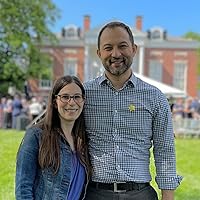
Dr. Michael A.G. Haykin is the Professor of Church History and Biblical Spirituality and Director of The Andrew Fuller Center for Baptist Studies at The Southern Baptist Theological Seminary.
He is also the editor of Eusebeia: The Bulletin of The Andrew Fuller Center for Baptist Studies. His present areas of research include 18th-century British Baptist life and thought, as well as Patristic Trinitarianism and Baptist piety.
Haykin is a prolific writer having authored numerous books, over 250 articles and over 150 book reviews. He is also an accomplished editor with numerous editorial credits.
Dr. Haykin provides an excellent resource that will be beneficial to both pastors and laymen regarding the Trinity. Haykin works through biblical texts as well as chronicling some of the early challenges regarding Trinitarian orthodoxy. This book introduces the reader to some of the early church fathers as well as shows why what we believe about the Trinity matters.
Clear and concise introduction to the doctrine of the Trinity, looking at it both scripturally and historically. Surveys key passages and then considers Irenaeus, Athanasius, and the Cappadocians.
Entry level resource with recommended bibliography at the end for both primary and secondary sources.
Michael Haykin has done for us a great service in this “essay on the quintessence of the Christian faith.” Many Christians struggle with the doctrine of the Trinity. Grappling with both the need to affirm what God has revealed in Scripture and respect what belongs in the realm of mystery, Christians are not well-assisted by selective historical facts and semi-informed criticisms of those who cast doubt on the validity of the church’s ancient creeds. Haykin provides both an explanation of key Trinitarian texts of the Nicene (and Niceno-Constantinopolitan) Creed, and also the historical events that produced these “landmarks of Christian theology.” Haykin does a great job telling the story in these pages.
Of course, a work of this size does not provide an exhaustive explanation of Nicene Trinitarianism. However, there is more help packed into these 100-pages than anything else I’ve read on the subject. I truly hope this book finds a wide audience in years to come. Don’t let a title like Giving Glory to the Consubstantial Trinity intimidate you. Haykin has not written this for the academy, but for the church. Highly recommend for anyone who wishes to understand the doctrine of the Trinity better and/or the historic creed by which the church has confessed this biblical doctrine for centuries.
A good resource about the three major ancient issues concerning the heresies on the Trinity. I love how Haykin structured his writing in a historical manner (of course he is a historian), and still gave adequate theological information on each issue. The book started with the biblical basis of the Triune God then explored the Trinitarian heresies: Gnosticism, Arianism, and Pneumatomachi issues.
In each heresy, Haykin included each personality who spearheaded, or main contributor, in battling the controversy. For Gnosticism, it was Irenaeus; for Arianism, Athanasius; and for Pneumatomachi issue, it was Basil the Great then crystallized by both Gregory of Nyssa and Gregory of Nazansius.
Overall, each chapter is done with both careful historical and theological precision. Haykin is such a gifted writer. He even self-translated most of the primary sources that he used in the citations. Indeed, this work, even concise, is a comprehensive one.
This is a very useful primer on Nicene theology, focusing on the Deity of Christ at the Council of Nicea in 325 AD and the Nicene-Constantinopolian Creed of 381 that made additions defending the Deity of the Holy Spirit. This book gives a useful historical overview of the patristic debates regarding Christology focusing on several early church fathers such as Ignatius, Athanatius, Gregory of Nazianzus, and several other defenders of orthodox Trinitarian theology. The primary focus is on 4th century patristics, but there is some introductory material of early church fathers prior to the 4th century to show their continuity with Nicea and corroborate that Nicea did not invent any new doctrine as the heretics argued. There is a very useful brief section on Gnosticism.
The last chapter focuses on the later addition in 381 to the Nicene Creed defending the Deity of the Holy Spirit and the patristic debates in the 4th century. There is a bibliography for further resources and research, but it still serves as a good primer or useful Sunday school material for historical background.
This is a superb, concise treatment of the development of the Nicene Creed and of the earliest formulations of the Christian doctrine of the Trinity. Yet for all its conciseness and brevity, it manages sufficient breadth of detail that the reader will come away thoroughly well-informed about the major issues involved in this watershed era in Christian history. Haykin also never fails to highlight the Scriptural origin of both the exigent pressures provoking the various stages of doctrinal expression, and the conclusions determined by the important actors in this drama. Cannot recommend highly enough as a worthwhile, informative, and worship-provoking treatment of a key moment in historical theology and Church History.
In this small, yet helpful book, Dr. Haykin once again reminds the learned Christian that the Bible is authoritative for all faith and practice, but that the formulation of creeds against the rise of heresy was necessary for the proper worship of the Biblically displayed Triune God. Haykin traces the line of Trinitarian belief first from the foundation of Scripture through the various historical theologians (and creeds) who fought for an orthodox understanding of the Triune God. I recommend this as a wonderful primer for those interested in such studies of the doctrine of the Trinity.
Great introductory read on a foundational Biblical-theological subject that many in the church today assume and overlook. Christians today would do well to not assume the nature of God is a settled issue in a skeptical, post-Christian West. This short book on the trinitarian debates of the first 4 centuries of the church are a good place for Christians to start to understand the church history, theological terminology and positions and the key names contributing to these early discussions within the church.
I was impressed by the quality of Dr. Haykin’s writing. He shows that the Nicene Creed of 381AD is sound in doctrine and is necessary to be affirmed. Heretical doctrines like Subordinationism, Arianism, Modalism, Sabellianism, and Gnosticism must be rejected. Affirmation that Jesus Christ is both fully God and fully man, that the Holy Spirit is God, and that our God is one in essence/being and three in person/subsistence are necessary to be considered within Christian orthodoxy. I praise God for this book!
Book: Giving Glory to the Consubstantial Trinity: An Essay on the Quintessence of the Christian Faith Author: Michael Haykin
Rating: 5/5 ⭐️⭐️⭐️⭐️⭐️ Genre: Historical Theology of the Doctrine of the Trinity Series?: No
Comments: I’m at the point that I will read everything Michael Haykin writes. I love his approach to historical theology and church history. He makes complex history understandable and fun. This is a great, helpful resource on the Doctrine of the Holy Spirit in the early church (patristics era).
This little book is a great introduction to studying historical Trinitarian theology. I appreciate the author using lots of primary sources from ancient church fathers and it’s very readable. It’s short but definitely wets your appetite to read the Ante-Nicene and Nicene church fathers. This will always be a resource I will point to new believers and those who are new to studying the Trinity and the historical development from the Ante-Nicene and Nicene eras.
A short, easy to read introduction to the historical development of the doctrine of the Trinity. I only gave it four stars because I would've preferred more content devoted to the theological issues rather than biography.