Jump to ratings and reviews
Rate this book

Скажи будущему - прощай

Rate this book
При жизни Хорас Маккой, американский журналист, писатель и киносценарист, большую славу снискал себе не в Америке, а в Европе, где его признавали одним из классиков американской литературы наравне с Хемингуэем и Фолкнером. Маккоя здесь оценили сразу же по выходу его первого романа "Загнанных лошадей пристреливают, не правда ли?", обнаружив близость его творчества идеям писателей-экзистенциалистов. Опубликованный же в 1948 году роман "Скажи будущему - прощай" поставил Маккоя в один ряд с Хэмметом, Кейном, Чандлером, принадлежащим к школе "крутого" детектива. Совершив очередной побег из тюрьмы, главный герой книги, презирающий закон, порядок и человеческую жизнь, оказывается замешан в серию жестоких преступлений и сам становится очередной жертвой. А любовь, благополучие и абсолютная свобода были так возможны...

320 pages, Paperback

First published January 1, 1948

39 people are currently reading
984 people want to read

About the author

Horace McCoy

41 books139 followers
Horace Stanley McCoy (1897–1955) was an American novelist whose gritty, hardboiled novels documented the hardships Americans faced during the Depression and post-war periods. McCoy grew up in Tennessee and Texas; after serving in the air force during World War I, he worked as a journalist, film actor, and screenplay writer, and is author of five novels including They Shoot Horses, Don’t They? (1935) and the noir classic Kiss Tomorrow Goodbye (1948). Though underappreciated in his own time, McCoy is now recognized as a peer of Dashiell Hammett and James Cain. He died in Beverly Hills, California, in 1955.

Ratings & Reviews

What do you think?
Rate this book

Friends & Following

Create a free account to discover what your friends think of this book!

Community Reviews

5 stars
145 (28%)
4 stars
202 (39%)
3 stars
120 (23%)
2 stars
36 (7%)
1 star
10 (1%)
Displaying 1 - 30 of 64 reviews
Profile Image for Dave.
3,660 reviews450 followers
July 10, 2025
"Kiss Tomorrow Goodbye" is a 1947 novel by McCoy and it was made into a movie, released in 1950 starring James Cagney. That movie was banned in Ohio because of its immorality and that it showed step by step how to commit crimes.

It is too bad McCoy didn't write more novels because what he did write was absolutely terrific. This is noir-era novel that is steeped in darkness and almost never leaves that dark, foreboding world. Cotter is a on a prison work farm somewhere in the South and he's made a deal to get out of there with Holiday, whose young brother is in custody with Cotter. Holiday is sex appeal personified. She is a woman of incredible appetites and almost hypnotizing beauty. She is also a machine-gun toting moll whose loyalty lasts so long as you are in the same room as her. The passionate scenes between McCoy, whose been in custody for two years, and Holiday are powerful to say the least.

With Holiday's help, Cotter escapes the prison work farm and, although initially intent on leaving the nearby town, begins step by step to take it over. The story includes daring, violent armed robberies, crooked cops, and a romance with a wealthy dame whose perfume reminds Cotter of his childhood.

If there is one word to use in describing this book, that would be intensity. The entire story is told in the first person, including Cotter's thoughts and memories. He's tough, hardnosed, bold, and has little loyalty to anyone whose friendship is not to his advantage. Some of the scenes are just awesome such as the prison escape and Cotter's romance with the rich blonde in the sports car. The action doesn't seem to let up in this book.
Profile Image for Carla Remy.
1,063 reviews116 followers
March 30, 2015

An intense book. My opinion kept shifting. But it was lively and entertaining, and I liked it overall. Plenty of sex and violence, though the sex, at least, isn't graphic. The other book of his I read, They Shoot Horses, Don't They? (more famous, these days, because of an old movie) is from 1935, and this is from 1948. Interesting. It seems that McCoy, in those decades, was a big name in noir.
Profile Image for Michael.
84 reviews16 followers
March 18, 2011
Kiss Tomorrow Goodbye is hardboiled fiction in the finest tradition. Whatever you believe pulp noir or hardboiled writing is, you’ll find it here. Tough guys, sexy women, crooked lawyers, dishonest cops, blackmail, betrayal, manipulation, sex and violence, it’s all in Kiss Tomorrow Goodbye, and it all hits home hard.

As a fan of hardboiled crime fiction, you’d think I’d have fallen in love with this one and I would have had the cover bronzed and framed to sit above my fireplace. If so, you’d think wrong because I didn’t really enjoy Kiss Tomorrow Goodbye that much.

Ralph Cotter is a career criminal. A genius and a psychopath, Cotter’s story begins with a violent prison escape. Once again a free man, Cotter continues his life of crime in his new city and with his new criminal colleagues. It doesn't take long before he eventually hooks up with those dishonest cops and one of those crooked lawyers. Along the way he connects with his ex-partner's sister and he doesn’t hesitate to beat her or anyone else who gets in his way. Through Cotter’s first person narration, Horace McCoy has given is a big old chunk of hardboiled heaven.

So why didn't I enjoy Kiss Tomorrow Goodbye that much? About halfway through the story, Ralph meets Margaret Dobson and it’s there that the story took a downturn for me. I didn’t mind the Dobson character and I didn’t mind Cotter falling for her, but she brought back memories from someone in Cotter’s past that would influence his decision making and behavior and it was from there that the story moved on to what I found an unsatisfying, and disturbing, ending.

What I loved most about Kiss Tomorrow Goodbye had nothing to do with the story, but that it was written by a talented writer of the genre and that it was written in 1948. Yes, Kiss Tomorrow Goodbye is violent and sexy even by today’s standards, but had it been written today, the violence would have been overly graphic and the sex would have been disturbingly lurid and together, they would have overshadowed the characters and the story leaving us with something far less than a classic.
Profile Image for Robert Carraher.
78 reviews21 followers
November 3, 2012
The second of Horace McCoy’s noir classics, republished in April by Open Road Media in a nicely formatted eBook with perhaps the most extensive biography of McCoy available. Published in 1948 at the start of what scholars consider the beginning of the Noir/Paperback era in crime fiction (and the end of the hardboiled era of authors like Dashiell Hammett, Chandler and the pulp magazines and their authors) , Kiss Tomorrow Goodbye leans towards the hardboiled genre, that had just past, but enters the noir era. The book is full of lively dialogue and tough guys and femme fatales that were also “tough gals”, and though it comes nowhere close to Raymond Chandlers snappy, cynical wit, it stacks up nicely with most of the hardboiled writing of the era.

McCoy, from Tennessee, served in the first world war. After the war he relocated to Texas where he spent the years between 1919 and 1930 as a sports editor for the Dallas Journal . It was while he was in Texas that he got bitten by the acting bug which led him to acting in local theater that eventually saw him move to California in an attempt, at first to become a movie star. This experience was put to good use in his novels and short stories which often depicted central characters that were either involved, usually with little success, in the budding film industry. In the late ‘20s he started his writing career by selling short stories to various pulp mystery magazines such as Amazing Stories, Black Mask and Dime Detective. He went on to publish his first novel, They Shoot Horses, Don't They? in 1935. Between ‘35 and 1961 (Corruption City was published posthumously in 1961) he published 5 more novels. He spent most of his efforts working as a script writer after the success of They Shoot Horses, Don’t They? (which we reviewed last week) from 1935 until his death in 1955. Kiss Tomorrow Goodbye, is among his best efforts and was turned in to a film starring James Cagney as the protagonist, Ralph Cotter. the film, and the book were widely banned because it was "a sordid, sadistic presentation of brutality and an extreme presentation of crime with explicit steps in commission." I guess they didn’t want little Johnny learning step by step criminal schemes.


“Kiss Tomorrow Goodbye” 1950, starring James CagneyThe movie received mixed reviews by the American critics, and was often compared unfavorably to White Heat which features Cagney in a similar role. Nevertheless, the film had a great influence on the French filmmakers who loved pulp fiction and gave the genre the name, film noir, and can be seen, for example, in Jean-Luc Godard's film Made in U.S.A, in which one character is reading this novel in its French translation, Adieu la vie, adieu l'amour. Indeed, the influence led McCoy and other writers such as David Goodis and James M. Cain ,works to be relabeled ‘noir’ differentiating them from the classic ‘hardboiled’ detective novels of Hammett, Chandler and others.

Kiss Tomorrow Goodbye is the story of Ralph Cotter, an unquestionably amoral man who sees himself as intellectually superior because of his Ivy League education and his having been born into an upper class family, although his pedigree is questionable and he avoids any proof when challenged by his minions, one exchange; “Does it matter?” (where he went to college) “You’re not ashamed of it , are you?” “I think the college might be. I’m sure my career doesn’t reflect too much credit on the school. It does prove one thing, though it proves that I came into crime through choice not through environment. I didn’t grow up in the slums with a drunk for a father and a whore for a mother and come into it because it mistreated me and warped my soul. Every criminal I know – who’s engaged in violent crime – is a two-bit coward who blames society. I need no apologist or crusader to finally hold my lifeless body up to the world and shout for them to come observe what they have wrought.” It’s easy to take this book as nothing more than a great ‘genre story’ but McCoy’s use of the then topical subject of “nature verses nurture” is important to the times he lived as many of the “folk lore” criminals of the day such as John Dillinger and Baby Face Nelson were raised in ‘broken homes’ and the apologists of the day explained their antisocial behavior on the hard times of the day.

The book opens with Ralph, along with a fellow inmate, Toko, breaking out of prison on a chain gang. They are aided by Holiday, the buxom gun moll cum femme fatale of the piece. Once successful, Ralph immediately starts pulling robberies in the unnamed town where he is hiding out. On his first job, he ends up being double crossed and when confronted by the police who at first seem about to shoot him, Holiday and Jinx, who had aided in the escape, but take their money instead and tell them to take the first bus to Phoenix.


Ralph comes up with a scheme to turn the tables on the crooked cops by recording them on a phonograph talking about a bigger heist and presumably aiding the gang in the crime. He uses this to blackmail the high ranking Inspector Webber and along the way meets and employs the lawyer, Mandon to help him setup his blackmail scheme. As he carries on a tumultuous relationship with Holiday, and plans bigger and bigger capers, Ralph (having taken on the alias of Paul Murphy) is soon revealed as not only wanting to gain riches but to climb socially as well. While trying to locate a con artists that can help him pull off his blackmail scheme he meets Margret, who he sees as a step up the social ladder. But after being caught In flagrante delicto with Margret and coming up with the excuse they had just been married, Ralph figures he has bitten off more than he can chew and consequently turns down $35,000 in bribe money to sign an annulment.

As Ralph, showing disdain for his loosely formed criminal gang, now with the aid of the crooked police and the shyster Mandon, plans to hold up, and kill, the bag men for a local mafia don, he details a complex and involved strategy. When the crime goes off without a hitch, he is at his most egotistic in the false belief that his superior intellect and planning were the reason for their success. He lords it over Holiday, Jinx and even Mandon, and instead of sowing respect earns more and more resentment from his compatriots.

But Margret and her wealthy industrial giant of a father has a new found respect for Ralph because he turned down the bribe. He offers Ralph a million dollars to marry Margret, who is infatuated with Ralph. Ralph has no desire to be married, but a million dollars and the respectability the offer could bring him tempts him. But he soon learns that he isn’t as smart as he thinks he is and that old barb about a woman scorned combined with karma can be a bitch.

McCoy drew the story in a very Hammett like way. The unnamed town, the prevalence of crooked small town politicians and superficial upper crust characters are all devices that Hammett used to great effect in his Continental Op stories. But McCoy adds to that many elements that would become in the coming decade of the ‘50s typical of the ‘noir’ genre. Instead of the lone good guy against the array of bad guys – crooked cops and crookeder crooks – and the damsel in distress femme fatale, McCoy introduces the tough gal in Holiday and nary a character is admirable. Everybody has their own motivations and most of those are deplorable and the characters are thus, beyond redemption. Further, though Ralph on occasion displays competence, his ego wants to see his successes as brilliance on his part when what it is is mostly luck.

McCoy also rises above the typical hardboiled/noir fare by introducing many topical subjects of the day; the deplorable conditions in prisons, “Not much of the morning could get into the place where I was, and the portions that did were always pretty well mauled and no wonder: they had to fight their way in through a single window at the same time a solid shaft of stink was going out. This was a prison barracks where seventy-two unwashed men slept chained to their bunks, and when the individual odors of seventy-two unwashed men finally gather into one pillar of stink you have got a pillar of stink the like of which you cannot conceive; majestic, nonpareil, transcendental, K.” (I’m not sure whether the ‘K’ is a misprint or an obscure term.). He also alludes to male rape in prisons and homosexuals who Ralph comes to accept as fellow rebels, he thinks to himself at one point “ We all had a little twilight in our souls; in every man there are homosexual tendencies, this is immutable, there is no variant, the only variant is the depth of the latency….They were rebels too, rebels introverted; I was a rebel extroverted. theirs was the force that did not kill, mine was the force that did kill.” . There is also the subject of “nature verses nurture” which was very much in discussion at the time the book was written. Further, he reveals much about Ralph and uses a plot device that would become stock in noir fiction through Ralph’s inner dialogs which are almost as numerable as the tough guy banter between the characters. This also portrays Ralphs rising mania to not only out wit the system but to rise above the typical slow witted crooks he is forced to employ in his schemes.

Altogether, not only a tour de force of hardboiled noir fiction, but a literary triumph of genre fiction from one of the grandfathers of the style and a wonderful edition now available in a nicely formatted eBook with an extended biography of the author.

Article first published as Book Review: Kiss Tomorrow Goodbye by Horace McCoy on Blogcritics.


The Dirty Lowdown
Profile Image for Tentatively, Convenience.
Author 16 books246 followers
November 30, 2018
review of
Horace McCoy's Kiss Tomorrow Goodbye
by tENTATIVELY, a cONVENIENCE - November 29, 2018

For the full review go here: https://www.goodreads.com/story/show/...

McCoy, like Ross MacDonald, is another crime fiction writer that I was tipped off to by a comment from a Goodreads reader. Thank you. W/ this one I might've reached my turning point where I'm beginning to accept that there're as many great mystery writers as there are science-fiction ones. In other words, w/ just about every new crime fiction writer that I read I find something new to appreciate. After I read the bk I checked out the original movie, Kiss Tomorrow Goodbye (1950, directed by Gordon Douglas). There's a 2000 made-for-TV movie called Kiss Tomorrow Goodbye too (directed by Jason Priestley) but, apparently, that has nothing to do w/ this bk. For once, I wdn't mind a remake, the 1950 movie softsoaps the sex & violence too much & that wdn't be 'necessary' in a version made these days. Maybe there cd even be explicit sex. That might do the bk justice.

"This is how it is when you wake up in the morning of the morning you have waited a lifetime for: there is no waking state. You are all at once wide awake, so wide awake that it seems you have slipped all the opiatic degrees of waking, that you have had none of the sense-impressions as your soul again returns to your body from wherever it has been; you open your eyes and you are completely awake, as if you had not been asleep at all. That is how it was with me. This was the morning it was going to happen, and I lay there trembling with accumulated excitement and wishing it would happen now and be done with, this instant, consuming nervous energy that I should have been saving for the climax, knowing full well that it could not possibly happen for another hour, maybe another hour and a half, till around five-thirty. It was now only a little after four." - p 3

This was first published in the US in 1948, according to a front page in the edition I have. The movie was only made 2 yrs later. The differences between the 2 show the limits of what's acceptable to the powers-that-be in relation to the respective mediums. As Andrew Spicer points out in his bk Film Noir:

"Because films were exhibited to such a broad public, including the 'unsophisticated and the impressionable', they were not allowed the same freedom of expression as literature, theatre or the press." - p 36, Andrew Spicer's Film Noir

"The Production Code's three General Principles attempted to ensure that films showed 'correct standards of life', including the injunction that crime must never go unpunished, while its numerous Particular Applications closely regulated the ways in which sex and violence might be depicted. 'Adultery and illicit sex' could not be explicitly treated nor justified, nor could 'lustful embraces' be shown and nudity was expressly forbidden. In addition to proscribing any sympathy for the criminal, the Code also refused to allow the detailed and explicit depiction of criminal methods. In sum, the Code was an attempt to make films promote home and family values and uphold American legal, political and religious instituitions and acted as 'a determining force on the construction of narrative and the delineation of character in every studio-produced film after 1931.' (Maltby, 1993, p. 38)" - p 37

Kiss Tomorrow Goodbye isn't in Spicer's Film Noir filmography so he may've felt that it qualified more as a more generic crime film or it might've just been excluded b/c he didn't have the space to include 'everything'. Nonetheless, I think what I quoted above is relevant in relation to the film adaptation. McCoy's narrator is in prison, waiting for his prison break. In the meantime, he's sexually harassed:

"Budlong, a skinny sickly sodomist, turned on his side facing me and said in a ruttish voice: 'I had another dream about you last night, sugar.'

"It will be your last, you Caresser of Calves, I thought. 'Was it as nice as the others?' I asked.

"'Nicer . . .' he said.

"'You're sweet. I adore you,' I said, feeling a fine fast exhiliration that today was the day that I was going to kill him, that I was finally going to kill him" - p 5

That's not in the movie. It cd be these days. In the movie, Holiday, the woman who's arranged for her brother to escape from prison w/ the narrator's help, covers their escape wearing men's clothes & shooting a rifle. In the bk, it's a machine gun. That's much more the weapon of a killer. In the movie Holiday is more of an innocent trying to free a brother that she thinks is innocent. In the bk:

"'That was pretty good,' I said. 'Wearing a man's suit . . .'

"She smiled at me, unbuckling her trousers but not unbuttoning the fly, slipping them off, arching her shoulders against the back seat to raise her buttocks out of the way. Her legs were slim and white. I could see the skin in the minutest detail, the pigments and pores and numberless valley-cracks that criss-crossed above her knees, forming patterns that were as lovely and intricate as snow crsytals. And there was something else I saw too out of the corner of my left eye, and I tried not to look, not because I didn't want to, not because of modesty, but only because when you had waited as long as I had to see one of these you want it to reveal itself at full length, sostenuto. I tried not to look, but I did look and there it was, the Atlantis, the Route to Cathay, the Seven Cities of Cibola . . ." - p 23

In other words, her cunt. On the narrator's 1st trip to Holiday's apartment:

"Holiday opened the door and I went inside. Before I had time to say anything, to look around, to even put down the newspaper I was carrying, she grabbed me around the neck, kicking the door shut with her foot, putting her face up to mine, baring her teeth. I kissed her, but not as hard as she kissed me, and then I saw that she was wearing only a light flannel wrapper, unbottoned all the way down. I had the impression that her breasts were small and hard and firm, but they were not in focus; I was looking at that Eldorado again" - p 35

Holiday & the narrator argue about her brother, who was killed in the escape:

"'Go on, be jealous,' she said.

"'Jealous? Of him? That bum? That popcorn thief?'

"She took a step towards me and in a sudden flinging motion she clawed at my face. I closed my eyes to protect them and slipped my head, jerking my knee up, slamming her in the crotch." - p 38

"'There you go getting jealous again,' she said.

"'You're nuts,' I said. 'I'm not jealous. I never saw you until two weeks ago and after tonight I'll probably never see you again. You're nuts.'

"Her eyes narrowed a little and she took off the green-checkered coat and flung it over her shoulder with a cheap theatricality. Then with both hands she ripped off the shirt, pitching it, underhanded, into my face. I caught a fast faint flavor of woman-smell, and when I got the shirt from in front of my eyes she was unzippering her skirt, which she let fall to the floor. She wore no brassiere. She yanked the top button of her shorts and kicked them clear over the bed. Then she moved a couple of steps in front of me, standing spreadlegged, her hands on her hips.

"'Tell me that again,' she said. 'Tell me you won't be seeing me any more after tonight.'

"I stood up slowly and slapped her across the face." - pp 39-40

The violence & its function as a sexual stimulus is more explicit in the bk than in the movie but I'll at least say that in the movie they argue & he slaps her around & from then on she's hooked, she's hugging & kissing him, she loves him.

"'Is that all we got left?' she asked.

"'Are you kidding?' I said, taking the rest of the currency out of my pocket, showing it to her. 'I'm a hard-working man. And it seems to me that the very least a man's woman can do when he comes home all tired out is to have some hot coffee for him.'

"She laughed, kicking off the sheet with both feet and turning her naked body towards me. 'What were you saying about the coffee?' she asked.

"One of these days I hope I can look at that thing and not hear wonderful music, I thought, cramming the money back into my coat pockets. 'Why, you must be having hallucinations,' I said, taking off my coat and getting into bed with the rest of my clothes on. 'I didn't say anything about hot coffee. . . .'" - pp 52-53

Butt, perhaps I'm getting too into the matter at hand. While he's still on the prison farm, he's thinking about money:

"this is what came of not having any money. Jesus, that was the answer — money. You got just what you paid for — be it a handkerchief or a prison-farm guard. Money. That was the answer to Nelson's success, and the success of all the other bums — money. Jesus, would I ever have any money?" - p 12

Later, he pretends to be having diarrhea so that he can go off from the farming & retrieve some hidden guns. A guard accompanies him to the outhouse from wch he slips away & then returns to. This takes long enuf to attract the guard's attn:

"'I thought maybe you had fell in,' Byers said.

"You're a bowel-watcher, I thought. You're reviving a lost art. 'It was that supper I ate last night,' I said. 'I have a very delicate stomach.'

"'Everything about you is delicate, ain't it?' he said.

"Including my trigger finger, you peasant bastard, I thought. 'I'm sorry, me-lord,' I said.

"'For God's sake, stop whining!' he said. 'Move along.'" - p 17

Then, waddya know? He's out & he's making money. Well, he's taking money. SO the $64 question is NOT "would I ever have any money?" but what the following big word means:

"I was asleep, of course, but even when you are asleep you possess a kind of propliopithecustian awareness that enables you to know and very acutely feel certain things." - p 35

Now "propliopithecustian" presumably means: having the properties of or being from the era of propliopithecus, wch I take to mean having a primeval back-brain awareness. I find "propliopithecus" defined as "a genus of small primitive short-jawed anthropoids from the Lower Oligocene of Egypt related to the gibbon but having the same dental formula as man" ( https://www.merriam-webster.com/dicti... ) so maybe he was really just referring to dentistry. From there it's only one small step to planning to frame the cops:

"'How do you expect to get 'em back here to make the recording? You've got to have 'em here to make the recording. How're you going to manage that?'

"'By rustling, and very lightly at that, the remaining eighteen hundred dollars of Jinx's money,' I said. She frowned dumbly. Is this eternally to be my fate, I wondered, to always be over their heads, to always have to use diagrams to explain myself? 'The noise that eighteen hundred dollars makes when you rub it together is very faint,' I said. 'You hardly can hear it across the room — but a cop can hear it for miles and miles. It comes in on a wave-length to which only his ears are attuned.'" - p 69

The narrator cd be sd to be a bit of a misanthrope:

"cheap, common, appalling people, the kind a war, happily, destroys. What is your immediate destiny, you loud little unweaned people? A two-dollar raise? A hamburger and a hump?" - pp 71-72

Don't scoff, I'd go big time for a "hamburger and a hump" right now. In the meantime, the characters are going for cake instead:

"Using cops to actually help me in a hold-up had heretofore been only a thought, never specifically considered any more than the guy playing left field for Dallas specifically considers his participation in a World's Series; it had been only a vague ambition, a dream that had flashed through my mind and registered and passed on. Bot now I sensed that it might be attained without long years of bush-league apprenticeship. The Inspector's face was still hard and set, but his eyes widened, barely perceptibly, and he looked at Reece momentarily, telepathically, and then back at me.

"'What the hell,' I said. 'Let's cut ourselves a real piece of cake.'" - p 82

Narrator, allow me to introduce you to the elite Baltimore Gun Trace Task Force:

"Seven officers were arrested and indicted for racketeering, extortion and fraud: Sergeant Jenkins; Detective Daniel Hersl, a 17-year veteran of the force; longtime partners Detectives Momodu Gondo and Jemell Rayam; and Detectives Maurice Ward, Evodio Hendrix and Marcus Taylor. Only one member - oddly enough, John Clewell, the man whose name triggered the entire investigation - escaped indictment. The FBI found he was never a part of the criminal enterprise.

"“They were involved in a pernicious conspiracy scheme that included abuse of power,” the US Attorney for Maryland told reporters that day. Police commissioner Kevin Davis, who’d once praised the men’s work, now likened them to 1930s-style gangsters.

"“It’s disgusting,” he said.

"The public soon learned that the GTTF stole from drug dealers, but also from a homeless man, a car salesman, a construction worker and many others. The victims were overwhelmingly African-American.

"That they received hundreds of hours of overtime, when they were actually at the bar or on the beach, from a city that struggles to keep the heat working in its schools.

"That during the unrest, Jenkins was stealing garbage bags of opiates from pharmacies, and that he also stole and re-sold heroin, Ecstasy, crack and cocaine.

"That he planted drugs on innocent people, and was slowly building up the courage and the arsenal to commit fully-fledged burglaries."

- https://www.bbc.co.uk/news/resources/...

Now, lest you think that this GTTF was all white officers b/c of the victims being "overwhelmingly African-American", I shd point out that 5 of the 7 cops were black. I think that it's probably safe to claim that these were class-based crimes, aimed at the people who were most legally defenseless. Anyway, the GTTF wd've been perfect partners for the narrator of Kiss Tomorrow Goodbye. Nonetheless, I think it wd've been sensible for the cops to have followed the narrator a little more closely. You just never know what this character's going to get up to:

"There were light standards along both sides of the street, but there were no lights burning, and in the lumpy glow of a moon becoming gibbous all the little houses in the block, chequered with windows that were squares and rectangles of yellowish incandescence, stood with amiable correctness, built to toy-town scale, and with scaled-up toy automobiles parked along the street. The house we were looking for was in the middle of the block, one-story, a cottage. We had no trouble finding it; we couldn't have missed it. The two front rooms on either side of the door were lighted, but with the windows shaded, and on the nice lawn near the pavement was a wooden sign, flooded with bright light from a goose-neck fixture.

DR DARIUS GREEN
PHILOSOPHIC GUIDE
ORGANON
(Aristotle)
NOVUM ORGANUM
(Bacon)
TERTIUM ORGANUM
(Ouspensky)
THE KEY TO COSMIC CONSCIOUSNESS
THE SPATIAL UNDERSTANDING OF TIME
DO NOT BE LOST IN THE LABYRINTH OF
CONFUSED THOUGHT" - p 99

Back at the home front, personal relations have gotten even more dangerous:

"'I feel wonderful. . . .' I replied, asking myself why I could not dispel the compulsion to play this neurotic game, why I was wasting my time, why I didn't save my energy for more important things, why I didn't just let this dame have it where it would hurt the most, and then I laughed inside. I wasn't kidding myself. I knew why. Perversity. Dégéneré supérieur, that was why. 'I thought I'd put on some coffee,' I said. 'Would you care for some?'" - p 155

A coffee storm is brewing. The narrator recruits a lawyer in his schemes:

"Mandon knew a lot of the cops and they knew him, but of the eight or nine he spoke to, not one of them called him by either of his names, Keith or Mandon, and only one called him Cherokee. The others called him 'Shice'. I was curious about that. 'What's this "Shice"? What is that?' I asked. 'It's just a nickname,' he said, but I still did not understand and I looked at him and he saw from the frown on my face that I did not understand, and said, 'It's short for shyster,' and smiled a wan smile, plainly intended to imply that they meant nothing derogatory or even disrepectful." - p 166

In case you think that's unlikely, go see a Mafia lawyer in action some time. I have, a Jewish Mafia lawyer to be exact (as opposed to the Italian Mafia - not that there's much difference). He trampled all over procedure w/ the viciousness of a juggernaut & suffered no consequences. It seemed that the courtroom figures admired his sheer aggressive audacity & weren't concerned w/ whether he was commiting crimes in the process. That cd drive a sensitive person into a murderous frenzy:

"They just sat there, talking and chewing and drinking; everybody in the place was talking and chewing and drinking, and in my mind I saw in every mouth what I had seen in the turnkey's mouth a loathsome bolus: these swine, these offals, and I could not eat the sandwich. I half-turned my face to the wall to shut out some of the scene, thinking how nice it would be to wire the walls and the floor of this place with t.n.t. and set it off some day at noon, what a great public benefaction that would be . . ." - pp 169-170

Ever wonder when dental floss came along? It didn't enter my life until at least the 1960s if not the 1970s. But here we are in 1948:

"Reece moved to the door to let me out, standing there, chewing on the splintered toothpick.

"'I see that you still prefer a toothpick to dental floss,'" - p 180

"Floss was not commercially available until 1882, when the Codman and Shurtleft company started producing unwaxed silk floss. In 1898, the Johnson & Johnson Corporation received the first patent for dental floss that was made from the same silk material used by doctors for silk stitches." - https://en.wikipedia.org/wiki/Dental_...

"credit for the invention of dental floss as we know it goes to a New Orleans dentist, who in 1815 began advising his patients to use a thin silk thread to clean between their teeth." - https://oralb.com/en-us/oral-health/d...

For the full review go here: https://www.goodreads.com/story/show/...
Profile Image for Kenny.
277 reviews7 followers
May 1, 2022
Plenty of insightful reviews here, so I'll simply say that this is a great character study. A must read for noir fans.
Profile Image for Джан Тефик.
62 reviews
November 9, 2023
"Прости се с утрешния ден" е роман на американския писател Хорас Маккой, на който вече имах неудоволствието да прочета "Уморените коне ги убиват, нали?" и някак си останах разочарован. Понеже под ръка имах и този роман, реших да му дам втори шанс и как само не съжалявам, а напротив!
Издаден през 1948г., романът спада към жанра "ноар", който термин се използва за обозначаване на холивудските криминални драми от средата на XX век. Също така е част от колекцията "Среднощни класики" и бих казал, че това доста добре пасва на съдържанието и. За жалост обаче, 2/3 от книгата прочетох дневно време и наистина се усещаше, че нещо не е както трябва, че не се изпитва истинското удоволствие от романа! Затова снощи (08.11.23), в една прекрасна ноемврийска дъждовна и студена нощ, рещих да направя нещата както трябва...за целта както казах, дъжд, полунощ, някакъв плейлист в spotify "Noir Jazz" на по-приглушени тоналности и естествено бърбън! Ах, как всичко си дойде на мястотоуу, ах какво удоволствие и въпреки, че романът е от преди много, много години и така да се каже изживял времето си, удоволствието беше неповторимо. Човек трябва да си създава атмосфера при гледане на филми и четене на книги, инак е повърхностно и бледолико отражение на стойността.
Самото име Хорас Маккой едва ли може да бъде по-американско...произнасяйки го, незабавно започвам да усещам вкуса на цигари Марлборо (не пуша), димът от спусъка на някой револвер, да чувам южняшки акцент дъвчещ тютюн, и по ирония на съдбата, романът направо заслепява с такъв нюанс. Бивш затворник-изпечен мошеник, гангстери, обири, корумпирани ченгета, магнат без да си знае парите и влиянието, неговата заблудена дъщеря естествено, оръжия, стрелби, убийства и да....
Това, което прави книгата убиец, поне в моите очи, обаче е главният герой, който няма как да не ви стане симпатичен и да не се почувствате катил покрай него! Надцакване на корумпирани ченгета, жени в краката, уважение и страх от хората, хитрост, мъжественост, интелигентност, харизма и какво ли не...една постоянно авантюра и флирт със смъртта в един танц, където се живее на ръба!
Естествено рано или късно всеки си намира майстора!
Прекрасен роман в стил ноар!
Profile Image for Procyon Lotor.
650 reviews111 followers
January 27, 2014
Uscito nel 1948, un tipico hard-boiled in bianco e nero (pi� nero). Doveva fare impressione a gente uscita dalla seconda guerra mondiale e ci riusc�. Ottimo esempio di assassino che si racconta - � lui il narratore - e linguaggio da "te lo dico tanto poi ti sparo". Oggi, scrivere un giallo o un thriller o un noir (qualsiasi cosa voglia dire - noir ricordo nasce come giallo dal colore delle copertine, nere in Francia e gialle da noi) agganciandosi troppo alla tecnologia rischia di fare invecchiare irrimediabilmente tutto appena essa cambia. Mentre frugare nei cassetti pu� assomigliare a leggere le e-mail con la sola differenza che si pu� fare anche a distanza, una fuga che non contempli l'onnipresenza di telecamere � definitivamente consegnata alla storia. McCoy � l'autore di "non si uccidono cos� anche i cavalli?"
Profile Image for Juan Jiménez García.
243 reviews44 followers
December 31, 2014
Horace McCoy. Tratado de inmoralidad

Hay escritores que están condenados a ser recordados por algo que va más allá de ellos. Pongamos: por haber escrito guiones de películas para Raoul Walsh, Nicholas Ray o Henry Hathaway (aunque ninguna memorable). Pongamos: por haber sido adaptado por Sydney Pollack (Danzad, danzad, malditos) o, esperando algo más de conocimientos cinematográficos, por Jean-Pierre Mocky (Un linceul n'a pas de poches). Quizás: por una película interpretada por James Cagney (Corazón de hielo… traducción moralista de, precisamente, Kiss tomorrow goodbye). Pero, entre todo ello, ¿qué lugar quedaría para Horace McCoy? Es más, quién es Horace McCoy. La respuesta es sencilla: uno de los más grandes (y desconocidos entre los grandes) escritores de novela negra norteamericana. Por las dudas: leer Despídete del mañana.

Horace McCoy no tuvo mucha fortuna como escritor. Tal vez simplemente fue una cuestión de estar en el lugar equivocado demasiado a menudo. Héroe de guerra (es decir, herido), actor, periodista, en algunos de sus libros se pueden encontrar destellos de su vida (o tal vez más). Por ejemplo, Los sudarios no tienen bolsillos (próximamente en estas páginas). Si hemos de hacer caso a esos más que presumibles apuntes autobiográficos, lo más probable es que McCoy no fuera un tipo fácil. Eso incluye una cierta tendencia a llevar la contraria y una ideología izquierdista no muy a la moda (y peligrosa). Esto se trasladó a sus libros y no solo por su contenido: alguno tuvo importantes problemas para aparecer publicado (pero eso es otra historia).

El caso es que en 1948 escribe una de sus mejores obras (que no la más conocida), Despídete del mañana, y eso no es que mejorara mucho las cosas en su maltrecha carrera literaria, pero al menos contribuyó a la historia del noir con una obra maestra absoluta (y no hay muchas), todo un prodigio de escritura vertiginosa, protagonista inolvidable y toneladas de mierda. Lo dicho, un clásico del género. Y ahora que todo es negro, no está mal leerse algo que es negro sobre negro. Pero veamos.

Ralph Cotter despierta una mañana en prisión. Sabe que aquella será una mañana especial porque será el principio de algo, de otra cosa. Esa otra cosa es escapar, huir. Y tras huir vendrá lo bueno. Cotter es un tipo especial. Puede parecer un criminal despiadado y lo puede parecer porque lo es. Pero hay algo en él inquietante, desde esa primera persona con la que nos cuenta su vida. No es ningún pobre diablo. Su inteligencia, su cultura, sus estudios, una familia que adivinamos importantes,… En fin. Cotter no es ningún desgraciado. Es un asesino que no duda en matar a todo aquel que se cruce en su camino (y que dedica sus días en pensar cómo acabar con toda la humanidad tiro a tiro), pero un asesino, vamos a decirlo, intelectual. ¡Un filósofo del crimen! Un hijo de puta que piensa profundamente. Qué complicado. Ralph Cotter es Ralph Cotter (o no, porque hasta su nombre perderá en el infierno por él creado). No, no es ningún descenso a los abismos del ser humano. Nuestro protagonista está donde quiere estar, hace lo que quiere hacer. Amoral, dirán algunos. Tanta abstracción…

El caso es que tras su huida, llega a algún lugar. Y en aquel lugar intentará hacerse un sitio. No es que no conozca maneras de hacerse un sitio, solo es que no entiende de otra cosa que no sea el crimen. Excepto el amor. El amor, el amor. Es una palabra muy grande (que no se dirá, para sentirse mejor). Su relación brutal con Holiday, que lo ha ayudado a escapar, una relación basada en la crueldad y en lo inevitable. Pero también su relación con esa chica que le recuerda algo, su magdalena proustiana.

El resto será podredumbre. Aquella que puebla la sociedad norteamericana y que McCoy tan bien supo retratar (y así le fue). Policías corruptos, abogados corruptos, industriales corruptos (¿he dicho sociedad norteamericana?). Y alrededor de ellos (o bajo ellos), estafadores, ladrones, gente bien que no tiene nada de bueno,… Qué vamos a contar. La amoralidad de Cotter tiene difícil encontrar su propio brillo, aunque bien que lo consigue.

Y sumando todo, tenemos Despídete del mañana, novela. Qué decir. Qué decir más. Desde la primera página, todo un universo de negras promesas se abre ante nosotros. Ahí está todo lo que quisimos, y solo cruzamos los dedos para que esa construcción se mantenga en pie, resista su propia grandeza, su propia ambición. McCoy no flojea. Firme, camina por la cuerda floja. Y a través de ella llega hasta el final. Cuando uno lee tanta novela negra, puede llegar un momento en el que perdemos el sentido de las cosas. Sí, todo está bien, todo nos parece bien. Hay grandes obras. Pero tenemos que encontrarnos con un libro como este, con su grandeza, con los estremecimientos que nos produce, para entender que era aquello que siempre buscamos en el noir. Para entender que la novela negra solo es una forma de hacer visible la oscuridad, de hacernos descender a patadas hacía lo más terrible de la condición humana, de enseñarnos esos lugares en los que vivimos, rodeados de lo que vivimos. De hacernos entender que no hay salida, pero también que no podemos dejar de buscar esa salida. Siempre.

Escrito para Détour.
Profile Image for Tim Schneider.
624 reviews3 followers
April 7, 2019
McCoy, when he's remembered at all, is usually remembered for They Shoot Horses Don't They? and is usually remembered with the early Black Mask/hardboiled crew like Cain, Hammett and Chandler. The comparison to Cain makes some sense, particularly for They Shoot Horses. Hammett not so much...and Chandler not at all. Kiss Tomorrow Goodbye is pretty clearly McCoy's second best known book and it occupies an interesting niche between the end of the Black Mask hardboiled era and the beginning of the paperback original era.

The protagonist, Ralph Cotter is completely amoral and I'm not convinced he's a completely reliable narrator. The beginning of the novel finds the self-professed Phi Beta Kappa breaking out of a prison work farm. He ends up in "the city" where he blackmails a police lieutenant, becomes involved with a politician and wealthy businessman's daughter and in the end is done in by his own amorality.

Kiss Tomorrow Goodbye calls back a bit to Hammett's The Glass Key and looks forward to Jim Thompson's work. Unfortunately it isn't as good as either Hammett or Thompson. But it's still a decent noir and one that holds an interesting place in the development of the genre.
Profile Image for Rick.
903 reviews17 followers
August 19, 2020
A terse tough guy novel that I enjoyed but not a great book
Profile Image for Jeffrey Powanda.
Author 1 book19 followers
February 28, 2021
Mean-spirited crime novel about an amoral criminal in a nameless city from the author of They Shoot Horses, Don't They? This book came out in 1947 and it was made into a movie starring James Cagney in 1950.

BTW, I saw the movie on TV many years ago and thought it was an OK crime drama, although not nearly as thrilling as White Heat, which came out the previous year. You can watch it here on YouTube. To satisfy Hollywood's Motion Picture Production Code guidelines, the movie frames the crime story within another story about the trial of the surviving criminals, essentially telling Cagney's story in flashback.

The book's fantastic opening grabbed me immediately. Unfortunately, the quality of the writing went downhill from there. The plot is much too simple, displaying no ingenuity. Although the narrator Ralph Cotter (a.k.a. Paul Murphy) mentions many times that he's smart and a Phi Beta Kappa, he doesn't seem very smart at all. His schemes succeed either from other people's actions or pure luck. Cotter's affair with a ditzy heiress seems unbelievable, especially when her father offers him one million dollars in cash for his daughter.

What distinguishes the book is McCoy's take on big city corruption, and McCoy's vivid depiction of violence and sex, which are frequently linked. Cotter learns that the cops are crooked, and they can be blackmailed easily, especially with the help of a mob lawyer he hires.

Old crime novels often provide a wealth of cultural and historical information that's fascinating to today's readers. For instance, after Cotter escapes from prison he goes to a grocery store and buys two food items: milk and Fig Newtons. I had no idea Fig Newtons were available in the Forties. Later in the book, Cotter visits with his girlfriend's wealthy brother, who asks his servant to fetch some benzedrine tablets for Cotter as casually as if he were offering tea. Benzedrine use skyrocketed during World War II. By 1945, more than 13 million tablets of the amphetamine were produced a month in the United States, enough for 500,000 Americans to take benzedrine each day. Benzedrine was the oxycodone of the Forties.

McCoy frequently uses internal monologue to let readers know what Cotter is thinking. But quite often McCoy repeats Cotter's thought in a line of dialogue in the next sentence. Didn't they have editors in the Forties? Here's an example. Cotter is having a drink at a millionaire's house and is impressed with an exquisite glass decanter:

It was one of the most beautiful things I had ever seen. ‘It’s one of the most beautiful things I’ve ever seen,’ I said, putting it down on the tray.


The biggest turnoff was Ralph Cotter's rampant homophobia. There are five instances of the homophobic epithet "faggot" in the book. At the start of the book, Cotter shoots a gay prisoner in the face because he sexually harassed him. Later, he repeatedly refers to a gay club-footed criminal as a "faggot son-of-a-bitch."

He later meets that gay criminal in a "pansy" nightclub. Here's how the narrator Cotter describes the scene:

I never saw such a crowd of dikes and faggots. This was their joint, by God, and they were all over it hanging over the tables, standing by the tables, sitting on the tables, blocking the aisle, filling the tiny dance space; all of them wearing a different kind of perfume that collected into a ball of debauched saccharinity and bounced off the walls and the ceiling and the floor. This was their joint, and here, by God, they could afford to be unrestrained. Here there were none of the daytime world’s hostile faces to haunt them, none of the daytime world’s cruel contemptuous eyes, none of the daytime world’s merciless incompassion…This was their joint, by God, and around it and inside it they developed the innate defences which nature evolves in its weak: remoteness and repellence.


Despite his apparent disgust for homosexuals, just a few sentences later Cotter realizes that all men have homosexual tendencies:

We all had a touch of twilight in our souls; in every man there are homosexual tendencies, this is immutable, there is no variant, the only variant is the depth of the latency, but in me these tendencies were not being stirred, even faintly, they were there, but this was not stirring them. No. The sameness was of the species, of the psyche, of the.…They were rebels too, rebels introverted; I was a rebel extroverted – theirs was the force that did not kill, mine was the force that did kill…

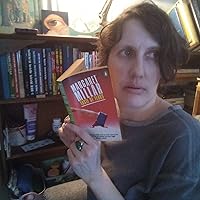
Ralph Cotter is not a "rebel extroverted." He's a psychopath without any redeeming qualities. SPOILER: In the book and the movie, Cotter gets the violent end he deserves.

McCoy had the right idea with this book, but he needed to go darker and weirder. A few years later, writer Jim Thompson would take the baton from McCoy and write some of the strangest, most depraved crime novels of the Fifties.
Profile Image for Martin Stanley.
Author 4 books17 followers
November 29, 2016
Quite possibly the dullest noir 'thriller' it's ever been my displeasure to read. In fact, after several weeks of struggling through leaden prose narrated by a boring, piss-poor anti-hero, I stopped reading it. The novel starts with a bang, as the protagonist stages a daring prison escape, but then it all comes to a halt in a small town, where the narrator wanders around with little plan, blackmailing crooked cops, falling for the wrong woman, and pontificates at length on how brilliant he is (and conversely how stupid everybody else is). He wants to be Dillinger, but I'm afraid he's far more of a Dullinger. And in a novel like this, once the protagonist loses you then it becomes a struggle to turn the page. And, oh, how I struggled with this. Which is a shame, really, as I loved Horace McCoy's superb They Shoot Horses, Don't They?, with its gripping central dance marathon narrative and nihilistic sense of despair. But I really can't stand another second of this dull and dreary novel.
Profile Image for Gibson.
690 reviews
March 27, 2019
Il Passato non ci abbandona mai

L'anima più Hardboiled di McCoy è tra queste pagine: immediate, a tratti urticanti, e intense nella maggior parte della narrazione, caratterizzate da un linguaggio moderno e da azioni secche.

Ralph Cotter è un uomo colto che batte la strada della criminalità, è un assassino in fuga, smanioso di arrivare in cima alla lista dei migliori gangsters.
Sa di essere più intelligente della maggior parte di loro, ma sa anche che per farcela gli servono molti soldi, e così si organizza e ordisce trame in grado di portarlo dove vuole, circondandosi di personaggi equivoci per poter delinquere come meglio crede.

Dietro il suo desiderio di emergere come criminale si nasconde un ingombrante senso di colpa, rappresentato dai ricordi di un Ralph bambino, evocati casualmente, come un profumo, sì da aiutarci a capire qualcosa di quest'uomo intelligente, la cui intelligenza, però, è al servizio del lato sbagliato della strada.
Sotto questo punto di vista, il finale assume tonalità poetiche.
Profile Image for Jim  Davis.
415 reviews27 followers
January 18, 2019
I am a fan of noir and hard-boiled fiction from Hammett to Leonard but McCoy just doesn't do it for me. The general plot of the story would have made a good novel in the right hands - James M. McCain maybe? But the first person narrative by Cotter was overwrought and tried to evoke an atmosphere and noirish mood through overwrought prose alone. It felt like a weird combination of pulp writing but using high class language. Even worse was Cotter's overuse of references to classic literature and mythology when he got his grandiose ideas. McCoy's version of version of first person narration by Cotter wasn't exactly purple prose but maybe we can call it mauve or violet to go along with Cotter's pretentiousness.
Profile Image for Guy Salvidge.
Author 15 books43 followers
April 30, 2018
It's about three times longer and one third as good as They Shoot Horses, Don't They? It's a 30s era crime novel that was made into a James Cagney film. I didn't hate it, but I found the writing generally pedestrian (some good stuff at the end though) and the plot humdrum. It didn't help that the protagonist was a cold psychopath and yet we are supposed to care about his childhood trauma.
Profile Image for J.
1,395 reviews235 followers
September 25, 2019
I've read a bunch of McCoy's books back to back and this one, widely considered one of his best, just rubbed me the wrong way compared to the other ones. This seems more trying with the character than the others. Like he's trying to convince us, the author is, that this narrator is very clever. It's not quite the narrator is doing it; it really does feel like the author is trying too hard. Alas.
Profile Image for Stephen.
215 reviews15 followers
December 11, 2007
This is one nasty hard as hell crime fiction piece.
Profile Image for Barry.
1,079 reviews24 followers
June 7, 2017
I did not like this novel. As a point of fact I found it to be a colossal confusing bore. I saw no purpose of the Margaret character and all the action was at the beginning only
Profile Image for Diana.
138 reviews3 followers
March 14, 2024
Horace McCoy is of the hard-boiled school of fiction; while lesser-known than Dashiell Hammett, Raymond Chandler, or James M. Cain, he is certainly among those (David Goodis, Chester Himes, and Jim Thompson) who left indelible imprints on the genre. Kiss Tomorrow Goodbye may not be on par with They Shoot Horses, Don't They? (and the less said about the 1950 movie featuring a badly miscast and too-old James Cagney the better), but still has much to recommend it -- though you will feel like you need a shower afterwards.

Career-criminal, Phi Beta Kappa key-holder Ralph (or Paul or...) stages a violent breakout from a prison farm. Hooking up with the kind of motley crew of miscreants that Goodis is so fond of -- as well as the Chandleresque crooked police and a sado-masochistic nymphomaniac who would not be out of place in Thompson -- Ralph continues on his merry path of destruction. Ultimately, as with most noir main male characters, his inability to escape his past (here, so textbook that the author jumps enthusiastically on the 1940s Freudian bandwagon) and his fatal flaw (a toxic mixture of insecurity and hubris) .

I had mixed feeling about this book. I'll start with three positives. First, like many in this genre, McCoy employs first-person narration. While Ralph is an unreliable narrator (In a Lonely Place's Dix comes to mind), he is self-aware enough to supply some hilarious meta commentary on the genre (his "'use me not as a preachment in your literature or your movies'" is priceless). McCoy's intervention is to marry the character of a sociopath with the mind of a classics major (wherever Ralph went to college, it's clear that he had a liberal arts education): certainly no other mythical beings are as noirish as the Furies he invokes, those goddesses of vengeance from whom no mortal can escape their fate. Second, Holiday -- who, like many misogynistic main male characters, Ralph easily dismisses -- proves to have more brains than he thought. Finally, the author (whose They Shoot Horses, Don't They? is really more of a social problem book than a noir) flexes New Deal liberal muscles with spot-on commentaries on class, prisons, and labor strikes.

Unfortunately, McCoy's liberalism is undercut by pervasive homophobia and racism (and, yes, even nearly a century ago, people knew such language was wrong) so casual that it seems as much a product of the author as the character. But the biggest negative for me was that Ralph after a while simply stopped bringing anything new to the narrative (this book could have been 2/3 of its length). Add in an origin story so ludicrous that I can't help reading it as more of the author's meta commentary, and it was hard to stay invested after a while.

If you love the hard-boiled genre (particularly Jim Thompson, whose The Killer Inside Me owes a lot to this book), you will definitely want to read this. Just be prepared to feel dirty afterwards. Side Note: Ralph's bio echoes some of Horace McCoy's.
32 reviews2 followers
June 12, 2017
Wow! "Hard boiled" doesn't being to describe the writing style of Horace McCoy. Having previously read his most famous work, "They Shoot Horses, Don't They?" and another rather short novel, "I Should Have Stayed Home," which could almost be a prequel to "Horses," I wasn't quite prepared for "Kiss Tomorrow Goodbye." The protagonist is Cotter, a prison escapee who takes on and discards acquaintances, "business associates," women, and (admittedly very few) friends along the way with hardly a thought to anyone but his own needs. But Cotter has a few demons, many of which are hinted at along the way but few which can be guessed at by the reader, at least this reader!

Made into a James Cagney film rather late in the actor's career, and not regarded as one of his classics, I'd be anxious to see how it worked. To me, the Cagney persona is a little too obvious, a little too up front and center, to portray Cotter, who is an enigma who lies about all things, major and minor, important and trivial, as if it is a game to thoroughly confuse all of those around him. Cagney, to me, seems a little too earthy for the role.

McCoy has a sparse style of writing, but in "Kiss" he employs a number of difficult and hard to understand words, to put forth the idea that Cotter has, if not a wealthy, a somewhat privileged background as a college man who once earned a Phi Betta Kappa key (but who lost it, and in typical Cotter style, bought a replacement at a pawn shop). Cotter's lack of sentimentality in this as well as other things is at the same time his overriding personal trait but ultimately his Achilles heel.

The plot can be convoluted at times, but the characters are richly drawn and fascinating. Nearly everyone is corrupt - the criminals (natch), the cops (natch, too, I guess), the lawyers (well), the wealthy, the middle class. Two major women characters figure prominently in the narrative, but they are not the usual bad girl/good girl conundrum which is presented to Cotter. Both are toxic in their own way.

After Cotter escapes from prison, he goes about trying to get a bankroll for himself so he can set himself up for a life of luxury. The pitfalls along the way are unpredictable and surprising.

Well plotted, with crisp, juicy dialogue, fascinating characters and a very surprising denouement to the whole thing, make this a book I had trouble putting down, reading it in a matter of a few days. Quite different than "They Shoot Horses" and "I Should Have Stayed Home," two books which were full of angst and despair. "Kiss Tomorrow Goodbye" is, rather, somewhat lacking in introspection and psychological renderings of the characters, at least on the surface. Instead, it gets you in the gut with its surprising plot twists and juicy characterizations.

A great book which deserves to be considered a classic in Noir fiction. I loved it!
Profile Image for Talita Koycheva.
83 reviews6 followers
January 20, 2024
В библиотеката ми отдавна се е настанила книгата на Хорас Маккой “Уморените коне ги убиват, нали?” и доста дълго отлежаваше, преди да посегна към нея. Оказа се, че в нея се съдържат още 2 романа, които не са посочени нито на корицата, нито в анотацията: “Прости се с утрешния ден” и “Саванът няма джобове”. И толкова по-добре, защото оценката ми щеше да бъде доста по-различна.

Давам 3,5 звезди за “Уморените коне ги убиват, нали?”. Въпреки че романът има лека криминална нотка, със съответното присъствие на смърт и насилие, за мен по-интересното в него е екзистенциалното измерение, което историята предава. Танцовият маратон, през който се развива действието, се движи в реалистични рамки, но малко по малко долавяме приплъзвания в символични и дори абсурдни плоскости. И тук е най-доброто. Защото абсурдните на пръв поглед въпроси, имащи символично значение, което насочва към отчуждението на един състезателен свят на „всеки за себе си“, се преживяват и в днешната реалност. Абсурд е, че абсурдът е реален. Тогава измисленият свят придобива различни нюанси и читателят може да се настани в който си поиска, тъй като всички те съжителстват в един кратък (от 91 страници), напрегнат роман, който почти век след появата си все още е валиден.

Няколко думи за “Прости се с утрешния ден”, който наистина ме впечатли, и с 5те звезди, които му давам, вдига общата ми оценка. Ако има една дума, с която да опиша този “noir” роман, това би била интензивност. Началото на историята е отлично, бързо увлича читателя. След около една трета от пътя обаче стилът и темпото забележимо се променят, действието се разсейва и разказът става по-психологичен. Сцените стават малко провлачени, на места има ненужно повторение на мисли/диалози. Въпреки това, историята е завладяващ разказ за човек, обсебен от идеята да бъде също толкова безмилостен като Дилинджър, но много по-умен и успешен в престъпленията си.

Не на последно място: “Саванът няма джобове” и моите 4,5 звезди. Написан през 1937 г., романът разказва за една ужасна, корумпирана и изпълнена с насилие Америка. Майк Долан е брилянтен журналист, който не иска да се подчини на логиката на мълчанието, доминираща във всички градски вестници.
Неизбежен и очевиден извод за една сурова книга, която не оставя у читателя и капка надежда за едно по-добро общество.
Ако ви се чете нещо утешително, тази книга не е за вас.
138 reviews1 follower
May 28, 2025
A Well-Written Psychological Crime Novel

This novel is written in the first person and puts us inside the head of a very intelligent and psychotic criminal. We know he’s intelligent because he tells us and almost everyone else he meets (he loves mentioning that he’s a Phi Beta Kappa college graduate). We also know he’s psychotic because he tells us, though indirectly (he’s aware he has psychological issues - “fetishes” in his terminology- but thinks he has them under control). We follow him as he escapes from prison, commits a robbery, then arranges to blackmail the police into helping him commit more robberies. Oh, and he meets a woman who cracks open his psyche and causes serious complications to his plans of surpassing Dillinger and the other big crooks of the day (though released in 1948, the novel seems to be set in the 1930s). It’s a fascinating portrait of a criminal who has, in his own words, chosen to be a criminal because he hates society and has utter contempt for most people, whom he considers beneath him. (Interestingly, toward the end of the book he does meet someone he likes - a rich young man who has no real ambition but does have a great wardrobe and looks good wearing it, which our narrator clearly admires.) McCoy has given this narrator a very distinctive voice. He loves using flowery language and making references to historical and mythological characters that show off his education and intelligence. It can sometimes be annoying or distracting, but it’s very true to the character. Overall, an excellent example of 1940s/50s noir that’s a notch above the typical pulp novels of the era.
Profile Image for Marco Camillieri.
114 reviews1 follower
February 25, 2025
Horace McCoy scrisse poco, troppo poco. Mettetevi nello spirito d'animo di centellinare ogni sua parola che vi capiterà davanti, gustarla come il protagonista di questo romanzo gusta il suo Delamain.
Un bacio e addio è la quintessenza del noir e più segnatamente del suo filone hard boiled: il protagonista è violento, spietato ma finisce per accattivarsi le simpatie del lettore, tormentato da fantasmi che solo nel finale mostreranno il loro sembiante. Il suo percorso è costellato di pallottole e violenza, il suo animo afflitto da ricordi sommersi che occhieggiano da un passato inquieto ma fatto di borghese normalità. È, insomma, un criminale atipico; egli stesso se ne rende conto, rivendica la sua scelta di diventare un violento pur senza averne l'imprinting.
A rendere le descrizioni ancor più umane ed efficaci, è il continuo psicanalizzarsi del protagonista che combatte il suo complesso di inferiorità e i suoi tremori, forzandosi a confrontarsi con le sue paure e trasformarle nella sua forza. Eppure egli stesso fugge, inconsciamente o meno; teme la donna dal profumo di gelsomino, teme una vita di normalità e consuetidini.
Un bacio e addio è un gioiellino nel suo genere; chi ha amato Chandler, Hammett, Ellroy, troverà nelle righe di McCoy gli echi di un intero genere, di un'intera era, descritta con stile asciutto ma personale attraverso musiche, profumi, poliziotti corrotti, luoghi di un'America che non è più, eppure è per sempre.
Profile Image for Magnus Stanke.
Author 4 books34 followers
May 9, 2021
Reading this book to the very end reminds me why my rule of not finishing books I don't enjoy is a very sound rule in the first place. I should have stuck to it - I'll never get the time I invested in this back.
The reasons I stuck it out are a) that I loved this author's 'They Shoot Horses, don't they?' and b) that the opening of this one is pretty swell. But it goes steadily downhill, becoming outright boring at times. For a hard-boiled novel it's very long at 350odd pages, presumably because McCoy took himself a tad too seriously at the time of writing it.
To be fair, the writing is pretty good but the protagonist is disgusting. I don't mean the fact that he's a cold-blooded killer but he's also a woman-beating homophobe (until he sees the light) and casual racist. I guess I was hoping to find some sort of redeeming quality in him but (spoiler alert) I didn't.
Profile Image for Adam Rosenbaum.
243 reviews1 follower
August 25, 2021
1940's classic noir, this tale of an evil psychopath is on the pulpy side and every once in a while, a treat for me to immerse myself in. Totally immoral, Paul or Ralph escapes from prison and rampages his way through an unnamed American city. He's phi beta kappa smart with no moral conscious so he does want he wants. And what he wants is everything, money freedom, women. The story is not so important here, but rather McCoy takes us inside the mind of a vicious criminal and it's scary, a la Jim Thompson Pop 1280 scary. Surprisingly, he imbues 2 women with memorable characters who are not exactly femme fatales. Certainly not for everyone, but if you like it dark.....

James Cagney starred in the 1950 film.
Profile Image for Marie.
913 reviews17 followers
April 26, 2021
Horace McCoy is not for everyone. His depictions of the criminal mind and criminal acts are gritty, explicit, severe and violent. Yet there is a certain sensuality in the experiences of our anti-hero, Ralph who becomes Paul; Ralph who becomes Paul who goes down the deep rabbit-hole of unrelenting unredemption. I loved this novel. To read it is like being unable to tear oneself away from witnessing a violence repeated over and over again. You want to, but you cannot stop. Just like Ralph who becomes Paul. Powerful deus ex machina ending, in a noirish operatic way, like eating oily dirt. But satisfying.
Profile Image for Steve Carter.
206 reviews7 followers
July 27, 2021
It’s an entertaining read. I wanted to like it more than I did. Maybe I just should have read “Horses” again rather than this. (I read a couple of his other books years ago. I even owned copies.)
I found a lot of it over the top so I had trouble suspending disbelief.
I like the ending just fine. But when he got cops involved with all these crimes, like the two that go along with the Roamer caper, it was just impracticality extreme and unbelievable which took away from the fun.
I know cops can be crooked but there was not enough info on these two and why they would just go along with a violent caper.
Profile Image for Howard.
185 reviews6 followers
October 26, 2017
just remembered this one which was an old republished noir i was guided to by Max Decharne, Mark Lamarr, Jonathon Ross, Joe Whitney, Huck Fuller etc (nonmainstream London media characters) from Decharne's band's song title. the book itself is great, amoral, unpredictable, gritty and admittedly cruel and nasty. i'd give it 5 stars but it was printed in a shit font to reflect the lad mag culture of the Chris Evans / Tony Blair era
Profile Image for Benjamin Kahn.
1,733 reviews15 followers
February 13, 2019
Got about halfway through this book and then I couldn't take it anymore. Just a big mess - the plot was all over the place, the protagonist was vacillating wildly between being a sophisticated college grad and a hard-boiled thug. Nothing made much sense and there wasn't anything here to grab me and make me finish.
Displaying 1 - 30 of 64 reviews

Can't find what you're looking for?

Get help and learn more about the design.