

What do you think?

The Heights of Macchu Picchu
Heights of Macchu Picchu
Paperback
First published January 1, 1950
About the author
Pablo Neruda
1,122 books9,825 followersPablo Neruda, born Ricardo Eliécer Neftalí Reyes Basoalto in 1904 in Parral, Chile, was a poet, diplomat, and politician, widely considered one of the most influential literary figures of the 20th century. From an early age, he showed a deep passion for poetry, publishing his first works as a teenager. He adopted the pen name Pablo Neruda to avoid disapproval from his father, who discouraged his literary ambitions. His breakthrough came with Veinte poemas de amor y una canción desesperada (Twenty Love Poems and a Song of Despair, 1924), a collection of deeply emotional and sensual poetry that gained international recognition and remains one of his most celebrated works.
Neruda’s career took him beyond literature into diplomacy, a path that allowed him to travel extensively and engage with political movements around the world. Beginning in 1927, he served in various consular posts in Asia and later in Spain, where he witnessed the Spanish Civil War and became an outspoken advocate for the Republican cause. His experiences led him to embrace communism, a commitment that would shape much of his later poetry and political activism. His collection España en el corazón (Spain in Our Hearts, 1937) reflected his deep sorrow over the war and marked a shift toward politically engaged writing.
Returning to Chile, he was elected to the Senate in 1945 as a member of the Communist Party. However, his vocal opposition to the repressive policies of President Gabriel Gonzalez Videla led to his exile. During this period, he traveled through various countries, including Argentina, Mexico, and the Soviet Union, further cementing his status as a global literary and political figure. It was during these years that he wrote Canto General (1950), an epic work chronicling Latin American history and the struggles of its people.
Neruda’s return to Chile in 1952 marked a new phase in his life, balancing political activity with a prolific literary output. He remained a staunch supporter of socialist ideals and later developed a close relationship with Salvador Allende, who appointed him as Chile’s ambassador to France in 1970. The following year, he was awarded the Nobel Prize in Literature, recognized for the scope and impact of his poetry. His later years were marked by illness, and he died in 1973, just days after the military coup that overthrew Allende. His legacy endures, not only in his vast body of work but also in his influence on literature, political thought, and the cultural identity of Latin America.
Neruda’s career took him beyond literature into diplomacy, a path that allowed him to travel extensively and engage with political movements around the world. Beginning in 1927, he served in various consular posts in Asia and later in Spain, where he witnessed the Spanish Civil War and became an outspoken advocate for the Republican cause. His experiences led him to embrace communism, a commitment that would shape much of his later poetry and political activism. His collection España en el corazón (Spain in Our Hearts, 1937) reflected his deep sorrow over the war and marked a shift toward politically engaged writing.
Returning to Chile, he was elected to the Senate in 1945 as a member of the Communist Party. However, his vocal opposition to the repressive policies of President Gabriel Gonzalez Videla led to his exile. During this period, he traveled through various countries, including Argentina, Mexico, and the Soviet Union, further cementing his status as a global literary and political figure. It was during these years that he wrote Canto General (1950), an epic work chronicling Latin American history and the struggles of its people.
Neruda’s return to Chile in 1952 marked a new phase in his life, balancing political activity with a prolific literary output. He remained a staunch supporter of socialist ideals and later developed a close relationship with Salvador Allende, who appointed him as Chile’s ambassador to France in 1970. The following year, he was awarded the Nobel Prize in Literature, recognized for the scope and impact of his poetry. His later years were marked by illness, and he died in 1973, just days after the military coup that overthrew Allende. His legacy endures, not only in his vast body of work but also in his influence on literature, political thought, and the cultural identity of Latin America.
Ratings & Reviews
Friends & Following
Create a free account to discover what your friends think of this book!
Community Reviews
Displaying 1 - 30 of 111 reviews

December 22, 2021
ترجمه را دوست نداشتم. (فرامرز سلیمانی- احمد کریمی حکاک). کتاب "پایان جهان" از نرودا و ترجمه فرهاد غبرایی بسیار مورد پسندم بود.
********************************************************************************
انسان، چون خوشهیی ذرت، فرسود
در انبار بیپایان کردارهای گمشده،
رویدادهای پست، از یک تا هفت، تا هشت
و نه یک مردن، بل مردنهای بسیار به هر تن روی آورد:
هر روز اندکی مرگ، خاکستر، کرم،
فانوسی خاموش در عفن بیغولهها
اندکی مرگ با بالهای فربه
چون زوبینی بر هر تنی فرو نشست
و در ستیز و گریز با نان و با دشنه، انسان پیروز شد.
فرزند لنگرگاهها، ناخدای گمنام خیش
کوبندهی راههای سخت
هر تن، رمق باخته، چشم در راه مرگ، مرگ کوتاه روزانه:
و آزمونهای هراس آور هر روزه
به جامی سیاه میمانست که لرزان از آن مینوشیدند.ص 33کتاب
********************************************************************************
انسان، چون خوشهیی ذرت، فرسود
در انبار بیپایان کردارهای گمشده،
رویدادهای پست، از یک تا هفت، تا هشت
و نه یک مردن، بل مردنهای بسیار به هر تن روی آورد:
هر روز اندکی مرگ، خاکستر، کرم،
فانوسی خاموش در عفن بیغولهها
اندکی مرگ با بالهای فربه
چون زوبینی بر هر تنی فرو نشست
و در ستیز و گریز با نان و با دشنه، انسان پیروز شد.
فرزند لنگرگاهها، ناخدای گمنام خیش
کوبندهی راههای سخت
هر تن، رمق باخته، چشم در راه مرگ، مرگ کوتاه روزانه:
و آزمونهای هراس آور هر روزه
به جامی سیاه میمانست که لرزان از آن مینوشیدند.ص 33کتاب
May 1, 2024
نمیدانم چه قدر میتوان ادعا کرد که آنچه که از سر نرودا گذشته را فهمیدهام! من با مختصات فکری او آنچنان آشنا نیستم که به جرأت بتوانم چنین ادعایی را مطرح کنم. اما از دوازده شعری که در این کتاب بود عمیقاً لذت بردم. عمیقاً! انگار دست در دست نرودا در همان بلندیهای ماچوپیچو پرواز میکردم و زورق خیال را در اقیانوسهای آمریکای لاتین رها میکردم. نرودا درونمایه مشخصی را برای دوازده شعرش انتخاب کرده. او از مرگ سخن میگوید. از وطنش و از شب و دست به دامن گذشتهای میشود که وقار و افتخار را زیر خاکهایش دفن کرده. انگار نرودا میخواهد آنچه که امروز، کشورش از دست داده را در تاریخ غنیاش جستجو کند و بگوید که همیشه این گونه نبوده است! به همین خاطر به تمدنهای پیشین، ارجاعات فراوانی دارد. به آزتکها و... این اشاره به گذشته شاید از جهاتی هم برای بازگرداندن غرور پایمال شده مردانی باشد که زیر چکمههای استعمار، غرورشان لگدمال شده است. حالا ابتدا باید خود را باور کنند و بعد دست در دست هم، آنچه که از آنها گرفتهاند را پس بگیرند. شاید این بازگشت و اشاره به گذشته را در ادبیات چپی و مارکسیستی هم بشود معنا کرد!
شعر آخر و دوازدهم کتاب، به بهترین شکل این مفهوم را به نمایش گذاشته است! شعر مورد علاقهام که در پایان ریویو میآورم.
بلندیهای ماچوپیچو شامل دوازده شعر است. آن را به ترجمه جیران مقدم خواندم که به نظرم نسبت به ترجمه فرامرز سلیمانی، ترجمه بهتری است.ابتدا مترجم در چند صفحه نحوه ترجمهاش را توضیح داد و بعد با آوردن زندگینامهای از مزدک دانشور، ابعاد مختلف زندگی نرودا را توضیح میدهد. من به این زندگی نامه اکتفا نکردم و تلاش کردم قبل از خواندن کتاب اطلاعاتم را نسبت به نرودا گسترش بدهم که تصمیم خیلی خوبی بود!
با من به فراز آی به زاده شدنی دوباره برادر!
دستانت را از وسعت دردهای فراموش شدهات به من ده
باز نخواهی گشت از ژرفای تیرهی گورت.
باز نخواهی گشت از زمان فراموش شدهات.
صدای خاموش شدهات دیگر هیچ کلامی را آواز نخواهد کرد
و چشمخانههای تهی در جمجمهات،
به روی زندگی گشوده نخواهد شد.
از ژرفای خاک مرا بنگر.
کارگر، نساج، چوپان خاموش:
رامکنندهی گواناکوهای مقدس:
سازنده داربستهای مستحکم:
نگاهبان اشکهای آند:
جواهرساز انگشتان خوشتراش:
کشاورز لرزان در بارآوری دانه:
سفالگر فراموششده میان ساختههای سفالین:
دردهای کهنه مدفونتان را در جام این زندگی دوباره بریزید.
به من نشان دهید خونتان را، زخمهاتان را
با من بگویید: اینجا مکان جزایم بود
به جرم آن که گوهر بدانسان که باید درخشان نبود
یا آنکه زمین به گاه
دانه و سنگش را ارزانیم نکرد
به من نشان دهید سنگهایی را که بر آن فرو افتادید
و چوبی را که بر آن مصلوب شدید
برایم از چوبهای باستانیتان آتشی بر افروزید
و نورهای کهن را به من بنمایاند
و تازیانهها را،
که از میان قرنها جراحت هنوز تازگیِ زخمهایتان را مکرر میکند
و تبر را با درخشندگی خونآلودهاش
میآیم، تا سخن گویم از طریق دهانهای مردهتان
از میان زمینی که خفتنگاهتان شد
از میان لبان به سکوت مهر شدهتان
از اعماق گور با من سخن گویید زین شب تیره به تمامی
چنان که انگار کنم زیستنم را بدان گاه با شما
همه را برایم باز گویید
زنجیر به زنجیر
حلقه به حلقه، گام به گام
تیز کنید خنجرهای اجدادتان را
آنها را در دستان من نهید
همانند رودی از درخشش سیمین رنگ
همانند رودی از یوزان مدفون
رهایم کنید تا بگریم، ساعتها، روزها، سالها
دورانهای بارور و قرون ستاره باران را
به من دهید سکوت را، آب را، امید را
به من دهید: جنگ را، فولاد را، آتشفشان را
دستهایتان، این آهنربای قدرت اتحاد انسان را
در دستان من نهید
شریک شوید در خون سرخ رگهایم، زانِ شما واژههایم
با من سخن بگویید: با کلماتم، با خونم.
شعر آخر و دوازدهم کتاب، به بهترین شکل این مفهوم را به نمایش گذاشته است! شعر مورد علاقهام که در پایان ریویو میآورم.
بلندیهای ماچوپیچو شامل دوازده شعر است. آن را به ترجمه جیران مقدم خواندم که به نظرم نسبت به ترجمه فرامرز سلیمانی، ترجمه بهتری است.ابتدا مترجم در چند صفحه نحوه ترجمهاش را توضیح داد و بعد با آوردن زندگینامهای از مزدک دانشور، ابعاد مختلف زندگی نرودا را توضیح میدهد. من به این زندگی نامه اکتفا نکردم و تلاش کردم قبل از خواندن کتاب اطلاعاتم را نسبت به نرودا گسترش بدهم که تصمیم خیلی خوبی بود!
با من به فراز آی به زاده شدنی دوباره برادر!
دستانت را از وسعت دردهای فراموش شدهات به من ده
باز نخواهی گشت از ژرفای تیرهی گورت.
باز نخواهی گشت از زمان فراموش شدهات.
صدای خاموش شدهات دیگر هیچ کلامی را آواز نخواهد کرد
و چشمخانههای تهی در جمجمهات،
به روی زندگی گشوده نخواهد شد.
از ژرفای خاک مرا بنگر.
کارگر، نساج، چوپان خاموش:
رامکنندهی گواناکوهای مقدس:
سازنده داربستهای مستحکم:
نگاهبان اشکهای آند:
جواهرساز انگشتان خوشتراش:
کشاورز لرزان در بارآوری دانه:
سفالگر فراموششده میان ساختههای سفالین:
دردهای کهنه مدفونتان را در جام این زندگی دوباره بریزید.
به من نشان دهید خونتان را، زخمهاتان را
با من بگویید: اینجا مکان جزایم بود
به جرم آن که گوهر بدانسان که باید درخشان نبود
یا آنکه زمین به گاه
دانه و سنگش را ارزانیم نکرد
به من نشان دهید سنگهایی را که بر آن فرو افتادید
و چوبی را که بر آن مصلوب شدید
برایم از چوبهای باستانیتان آتشی بر افروزید
و نورهای کهن را به من بنمایاند
و تازیانهها را،
که از میان قرنها جراحت هنوز تازگیِ زخمهایتان را مکرر میکند
و تبر را با درخشندگی خونآلودهاش
میآیم، تا سخن گویم از طریق دهانهای مردهتان
از میان زمینی که خفتنگاهتان شد
از میان لبان به سکوت مهر شدهتان
از اعماق گور با من سخن گویید زین شب تیره به تمامی
چنان که انگار کنم زیستنم را بدان گاه با شما
همه را برایم باز گویید
زنجیر به زنجیر
حلقه به حلقه، گام به گام
تیز کنید خنجرهای اجدادتان را
آنها را در دستان من نهید
همانند رودی از درخشش سیمین رنگ
همانند رودی از یوزان مدفون
رهایم کنید تا بگریم، ساعتها، روزها، سالها
دورانهای بارور و قرون ستاره باران را
به من دهید سکوت را، آب را، امید را
به من دهید: جنگ را، فولاد را، آتشفشان را
دستهایتان، این آهنربای قدرت اتحاد انسان را
در دستان من نهید
شریک شوید در خون سرخ رگهایم، زانِ شما واژههایم
با من سخن بگویید: با کلماتم، با خونم.

April 1, 2021
So I was looking around for a good translation of this work, because I have to say that some of his stuff I've read in the past have been kind of hit-and-miss. Depends very much on the translator and what tack they are taking with Neruda. He can be chockful of dense, opaque abstraction when he wants to be, even as he is throwing darts of limpid lightning, full of beauty and insight.
So where to find a good "Macchu Picchu"? The key was held in an essay in the American Poetry Review. The reviewer Ekiss pulled up comparisons between the previous best-known translator of the piece (Nate Tarn) and this new effort by Tomas Morin, who by all accounts is a native speaker and a poet himself. That's a good starting point any day. Choice of vocabulary and pitch/tone being critical, especially so in Neruda's case, it struck me immediately that the more "down-to-earth" choices that Morin was consciously making were more likely to prove fruitful.
So it has turned out to be. Neruda is difficult regardless, but once past the hurdle of that hard first canto, Morin does a fine job with the following four cantos that lay bare the despair at the heart of the poet's barren urban existence. It is a desolate portrait indeed:
How many times on a city’s winter streets or on
a bus or a boat at twilight, or in the deepest
loneliness of a festive night, under the sound
of shadows and bells, in the very cave of human pleasure,
did I almost stop and look for the endless eternal vein
I once felt in a stone or in the lightning of a kiss.
and soon after:
What was man? In which part of his debates
among his stores and whistles, in which part of his robotic movements
lived the indestructible, the eternal, life?
These are bleak poems, Cantos 3 and 4 and 5 exceptional (and exceptionally rendered) in their remorseless vision of futility, disconnect, and death:
Men were threshed like maize in the bottomless
granary of deeds no one remembers
and
Almighty death invited me many times:
it was like the hidden salt in waves
He sees his life for what it has become:
the clipped life of a pitiful petal:
an atom from the heart that never came to battle
and when finally his former fellows shut their doors upon the poet
I then went street by street and river by river,
city by city and bed by bed,
my salty mask crossing the wilderness,
and in the last humiliated houses, without light, fire,
bread, stone, or silence, alone,
I doubled over, dying of my own death.
He's reached the end...
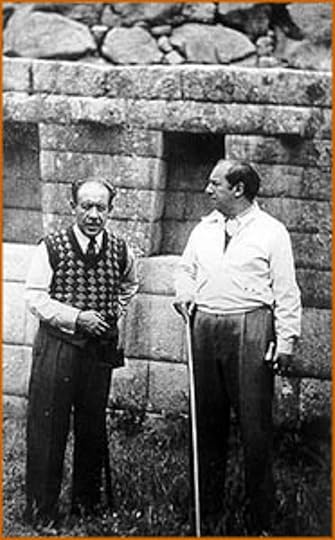
...And then one day (in 1943) he climbs the stones to Machu Picchu.
(TBC)
So where to find a good "Macchu Picchu"? The key was held in an essay in the American Poetry Review. The reviewer Ekiss pulled up comparisons between the previous best-known translator of the piece (Nate Tarn) and this new effort by Tomas Morin, who by all accounts is a native speaker and a poet himself. That's a good starting point any day. Choice of vocabulary and pitch/tone being critical, especially so in Neruda's case, it struck me immediately that the more "down-to-earth" choices that Morin was consciously making were more likely to prove fruitful.
So it has turned out to be. Neruda is difficult regardless, but once past the hurdle of that hard first canto, Morin does a fine job with the following four cantos that lay bare the despair at the heart of the poet's barren urban existence. It is a desolate portrait indeed:
How many times on a city’s winter streets or on
a bus or a boat at twilight, or in the deepest
loneliness of a festive night, under the sound
of shadows and bells, in the very cave of human pleasure,
did I almost stop and look for the endless eternal vein
I once felt in a stone or in the lightning of a kiss.
and soon after:
What was man? In which part of his debates
among his stores and whistles, in which part of his robotic movements
lived the indestructible, the eternal, life?
These are bleak poems, Cantos 3 and 4 and 5 exceptional (and exceptionally rendered) in their remorseless vision of futility, disconnect, and death:
Men were threshed like maize in the bottomless
granary of deeds no one remembers
and
Almighty death invited me many times:
it was like the hidden salt in waves
He sees his life for what it has become:
the clipped life of a pitiful petal:
an atom from the heart that never came to battle
and when finally his former fellows shut their doors upon the poet
I then went street by street and river by river,
city by city and bed by bed,
my salty mask crossing the wilderness,
and in the last humiliated houses, without light, fire,
bread, stone, or silence, alone,
I doubled over, dying of my own death.
He's reached the end...
...And then one day (in 1943) he climbs the stones to Machu Picchu.
(TBC)
Read
January 12, 2024me escuche el disco de los jaivas igual cuenta o no

February 8, 2011
I'm beginning to get the sense that Neruda's work may well be a matter of taste. To me, the beginning of this booklength poem has much of the incoherence and stilted vocabulary of refrigerator magnet poetry, the line breaks seemingly random and inhibiting rather than aiding sense. Here's the opening stanza:
Save recurring references to entrails, semen, and flower stamens, things do improve when the narrator begins his climb; Neruda becomes Whitmanesque by Book X (pp. 57-59):
I suspect that Nathaniel Tarn's translation isn't doing Neruda any favors here. For example, Neruda uses the word "sanguinaria" both at page 42 and page 49. At p. 42 we have: Y en el Reloj la sombra sanguinaria del condor cruza como una nave negra. Tarn translates this word as "ravenous" -- "And on this dial the condor's shadow cruises as ravenous as would a pirate ship." This strikes me as a bit awkward, but not nearly as goofy as how he translates the word at p. 49. This comes about midway through Canto IX, an interlude in which Neruda is spitballing disconnected, single-sentence images of the mountain, like tableaus fixed in a (socially conscious) hiker's memory blink-by-blink -- "Gale at a standstill on a slope./ Still turquoise cataract./ Patriarchal chiming of the sleepers." -- until we come to what Neruda wrote as Manos de puma, roca sanguinaria. Here, Tarn translates sanguinaria as "bloodstone," the whole line thus: "Puma paws, bloodstone."
Now, according to Wikipedia, the Sanguinaria is a North American flower called the Bloodroot (used to make red dye), but I don't know enough of Neruda's background to know if that's what he was going for. I think it doubtful (he was Chilean, after all, and his narrator is on Macchu Picchu, not in Nova Scotia). Assuming that Neruda's gore is not of the affable humour variety, I would think "bloody" makes a better translation for each line, if only to match Neruda's syntax in a more natural way.
Neruda ends The Heights of Macchu Picchu as though from the base of the Statue of Liberty, embracing his dispossessed landsmen (albeit still with the limited vocabulary scrips one might pull from a shoebox):
From air to air, like an empty net,The imagery is all over the place (moon fingers, fishing and Wall Street), and in some places meaningless... when is atmosphere ever *not* ambient? A few lines down we get violins, a buried tower, "raucous sulphur" (used to describe a color), a scabbard of meteors, and a "turbulent and tender hand" plunged into "the most secret organs of the earth." Yeah, no psychic surgery to reach those organs everyone knows about. Ick. At the end of Book IV, Neruda's narrator has at last arrived at the base of the mountain, albeit "dying of my own death" (p. 19). Imagine if he were dying of someone else's.
dredging through streets and ambient atmosphere, I came
lavish, at autumn's coronation, with the leaves'
proffer of currency and -- between spring and wheat ears --
that which a boundless love, caught in a gauntlet fall,
grants us like a long-fingered moon.
Save recurring references to entrails, semen, and flower stamens, things do improve when the narrator begins his climb; Neruda becomes Whitmanesque by Book X (pp. 57-59):
I question you, salt of the highways,It's easy to imagine the proletariat of early 20th Century South America pulsing to such rhetoric; these are words I could as easily imagine woven throughout Diego Rivera's socialist realist Rockefeller Center murals.
show me the trowel; allow me, architecture,
to fret stone stamens with a little stick,
climb all the steps of air into the emptiness,
scrape the intestine until I touch mankind.
Macchu Pichhu, did you lift
stone above stone on a groundwork of rags?
coal upon coal and, at the bottom, tears?
fire-crested gold, and in that gold, the bloat
dispenser of this blood?
Let me have back the slave you buried here!
Wrench from these lands the stale bread
of the poor, prove me the tatters
on the serf, point out his window....
Ancient America, bride in her veil of sea,
your fingers also,
from the jungle's edges to the rare height of gods,...
with them, with them, buried America, were you in that great depth,
the bilious gut, hoarding the eagle hunger?
I suspect that Nathaniel Tarn's translation isn't doing Neruda any favors here. For example, Neruda uses the word "sanguinaria" both at page 42 and page 49. At p. 42 we have: Y en el Reloj la sombra sanguinaria del condor cruza como una nave negra. Tarn translates this word as "ravenous" -- "And on this dial the condor's shadow cruises as ravenous as would a pirate ship." This strikes me as a bit awkward, but not nearly as goofy as how he translates the word at p. 49. This comes about midway through Canto IX, an interlude in which Neruda is spitballing disconnected, single-sentence images of the mountain, like tableaus fixed in a (socially conscious) hiker's memory blink-by-blink -- "Gale at a standstill on a slope./ Still turquoise cataract./ Patriarchal chiming of the sleepers." -- until we come to what Neruda wrote as Manos de puma, roca sanguinaria. Here, Tarn translates sanguinaria as "bloodstone," the whole line thus: "Puma paws, bloodstone."
Now, according to Wikipedia, the Sanguinaria is a North American flower called the Bloodroot (used to make red dye), but I don't know enough of Neruda's background to know if that's what he was going for. I think it doubtful (he was Chilean, after all, and his narrator is on Macchu Picchu, not in Nova Scotia). Assuming that Neruda's gore is not of the affable humour variety, I would think "bloody" makes a better translation for each line, if only to match Neruda's syntax in a more natural way.
Neruda ends The Heights of Macchu Picchu as though from the base of the Statue of Liberty, embracing his dispossessed landsmen (albeit still with the limited vocabulary scrips one might pull from a shoebox):
I come to speak for your dead mouths.... give me silence, give me water, hope. Give me the struggle, the iron, the volcanoes.... Speak through my speech, and through my blood.Again, I can understand how exciting such language could seem to a blue-collar or agrarian Spanish speaker in the 1930s, before the Soviet state and populist fascists like the Peronistas crushed the innocence out of the workers' paradise. I mean, hey, it's gutsy without literally calling out any special part of the GI tract. But it's a poor cover version for me; I've already been roused by the words of Walt Whitman and Emma Lazarus -- both of whose works predate Neruda's and unlike his reach beyond their immediate contexts. I hoped for more from Neruda, a yawp from the roof of the world, barbaric or no. Instead, all I find here is another dated, stilted, derivatively bourgeouis piece. Phooey on that.

April 27, 2021
This completes Task 20: Read a book of nature poems of the Book Riot's Read Harder Challenge.
I will preface this review with I am not a fan of poetry and I have no idea what constitutes a good poem or a bad poem. Therefore, I will not deduct stars based on the fact that this is a poetry book full of poems I may or may not truly understand. I will say that I did purchase this book at Pablo Neruda's house in Valparaiso, Chile. I must have been swept up in the view and history, because Valpo was my least favorite part of Chile and yet, I bought the most souvenirs at his place.
I actually started reading this a long time ago, but stopped, because it was overwhelming to read the Spanish and English translation at once. I decided to start from the beginning and only read the English translation with the expectation that some of the words and sentences will be lost in translation. The translator did a a decent job. Some words I felt like he wasn't looking at the whole sentence and/or the tone. However, sometimes, he did look at the whole stance to get the correct word. Basically, there were parts that were great and parts that I felt he missed. I loved the historical introduction to Pablo Neruda and maybe where he was in life when he wrote this poem. As I read it, I felt like I was walking the trail to Macchu Picchu and seeing the sun rise against the stones. Whether that's what the original poem intended, I don't know, that's how I interpreted it. I especially loved the feeling I got that it was set in Fall with the beautiful leaves falling all around the stones. I love the symbolism to stone and man and ancient vs modern. I could feel the ancient people who inhabited Macchu Picchu coursing through his veins; he talked to them in the past, but he knows the secret that they won't have a future there. Again, it's what I interpreted.
I felt inspired to travel to Macchu Picchu and I guess that's what you can expect from a nature poem. This will definitely help you in the next step of learning Spanish. The Spanish and English are side by side on different pages. If you love travel, poetry, nature, hiking, and ancient times, you will love this.
I will preface this review with I am not a fan of poetry and I have no idea what constitutes a good poem or a bad poem. Therefore, I will not deduct stars based on the fact that this is a poetry book full of poems I may or may not truly understand. I will say that I did purchase this book at Pablo Neruda's house in Valparaiso, Chile. I must have been swept up in the view and history, because Valpo was my least favorite part of Chile and yet, I bought the most souvenirs at his place.
I actually started reading this a long time ago, but stopped, because it was overwhelming to read the Spanish and English translation at once. I decided to start from the beginning and only read the English translation with the expectation that some of the words and sentences will be lost in translation. The translator did a a decent job. Some words I felt like he wasn't looking at the whole sentence and/or the tone. However, sometimes, he did look at the whole stance to get the correct word. Basically, there were parts that were great and parts that I felt he missed. I loved the historical introduction to Pablo Neruda and maybe where he was in life when he wrote this poem. As I read it, I felt like I was walking the trail to Macchu Picchu and seeing the sun rise against the stones. Whether that's what the original poem intended, I don't know, that's how I interpreted it. I especially loved the feeling I got that it was set in Fall with the beautiful leaves falling all around the stones. I love the symbolism to stone and man and ancient vs modern. I could feel the ancient people who inhabited Macchu Picchu coursing through his veins; he talked to them in the past, but he knows the secret that they won't have a future there. Again, it's what I interpreted.
I felt inspired to travel to Macchu Picchu and I guess that's what you can expect from a nature poem. This will definitely help you in the next step of learning Spanish. The Spanish and English are side by side on different pages. If you love travel, poetry, nature, hiking, and ancient times, you will love this.

January 30, 2021
Neruda alcanza las más altas esferas de la imaginación humana. ¿Y cuál lugar del mundo merece más sus palabras de esplendor que Machu Pichu?
Neruda nos presenta una civilización envuelta en el misterio del tiempo. Habla de la magia de la naturaleza, los animales y la majestad del pueblo en el cielo.
Me dio la impresión de que los Incas lo construyeron porque sabían que el chileno escribiría sobre ello. Seguramente, el criterio de Neruda sobre Machu Picchu era valioso para los Incas
Tenemos mucha suerte de poder apreciar sus frases como:
Al fin y al cabo, somos afortunados de tener a América Latina, por su influencia cultural e histórica. El continente y la poesía van de la mano hacia el atardecer. Neruda era simplemente uno de los hombres más capaces de describirlo.
Neruda nos presenta una civilización envuelta en el misterio del tiempo. Habla de la magia de la naturaleza, los animales y la majestad del pueblo en el cielo.
Me dio la impresión de que los Incas lo construyeron porque sabían que el chileno escribiría sobre ello. Seguramente, el criterio de Neruda sobre Machu Picchu era valioso para los Incas
Tenemos mucha suerte de poder apreciar sus frases como:
Águila sideral, vina de bruma.Estas son las primeras líneas de un poema que abarca tres páginas de adjetivos suntuosos. Te hace pensar en los éxitos de una cultura sin ruedas, pero llena de elegancia especial en el uso de sus piedras andinas. Una elegancia que elude las construcciones prácticas del europeos, quienes son helados en el realismo.
Bastión perdido, cimitarra ciega.
Cinturón estrellado, pan solemne.
Escala torrencial, parpado inmenso.
Al fin y al cabo, somos afortunados de tener a América Latina, por su influencia cultural e histórica. El continente y la poesía van de la mano hacia el atardecer. Neruda era simplemente uno de los hombres más capaces de describirlo.

November 23, 2008
این یکی کمی بیشتر سیاسی و اجتماعی بود و زیاد نفهمیدش

July 2, 2016
Magically delicious! I mean... Neruda's poetry has a very magical flow.
December 23, 2022
بودن، پوست انداختن خستگی ناپذیری بود
در سیلوی
اعمال فراموش شده، اتفاقات حقیر
شمارش بی پایان روزمرگی
از یک تا هفت تا هشت،
و نه تنها یک مرگ،
که مرگ های بسیاری بر هر سرنوشت مقدر بود.
در سیلوی
اعمال فراموش شده، اتفاقات حقیر
شمارش بی پایان روزمرگی
از یک تا هفت تا هشت،
و نه تنها یک مرگ،
که مرگ های بسیاری بر هر سرنوشت مقدر بود.

March 12, 2024
thank you to the beautiful kayla gillen for gifting this book to me. i will want to reread the original spanish text more carefully and attentively at some point — i mostly relied on the english translation.
“And the air came in with lemon blossom fingers
to touch those sleeping faces;
a thousand years of air, months, weeks of air,
blue wind and iron cordilleras—
these came with gentle footstep hurricanes
cleansing the lonely precinct of the stone.”
“And the air came in with lemon blossom fingers
to touch those sleeping faces;
a thousand years of air, months, weeks of air,
blue wind and iron cordilleras—
these came with gentle footstep hurricanes
cleansing the lonely precinct of the stone.”

January 17, 2023
TBH I'm not sure if I read the entire book because it was in PDF form uploaded by my teacher but I read a lot of it if not all of it. I liked it enough, but it was a bit abstract for me.

June 24, 2017
Amazing and powerful verse that is part of a larger work by Pablo Neruda who was inspired by his visit to the ancient ruins. Here is a part of a work that one will never forget:
And the air came with its fingers
of orange blossom over all of the sleepers:
a thousand years of air, months, weeks of air,
of a blue wind, of an iron mountain ridge,
that was like a soft hurricane of footfalls
polishing the solitary site of stone.
There is vision and feeling in all of Neruda's work and as it is read it tumbles into the mind of readers opening the door to their own visions of what may have come in the past and what may yet come in the future if we handle things the way they were handled in the building of the old empires.
And the air came with its fingers
of orange blossom over all of the sleepers:
a thousand years of air, months, weeks of air,
of a blue wind, of an iron mountain ridge,
that was like a soft hurricane of footfalls
polishing the solitary site of stone.
There is vision and feeling in all of Neruda's work and as it is read it tumbles into the mind of readers opening the door to their own visions of what may have come in the past and what may yet come in the future if we handle things the way they were handled in the building of the old empires.

Read
August 31, 2021مرتفعات ماتشو بيتشو لِبابلو نيرودا.
هي قصيدة ملحمية إنشادية نقلتها سحر أحمد إلى العربية بإثني عشر نشيدًا (كما ذكر في الكلمة ببداية الكتاب).
وصف الكاتب هُنا ماتشو بيتشو التي هي مناطق جبلية جميلة جدًا بُنيت هذه المدينة من قبل شعب الإنكا في القرن الخامس عشر، تقع هذه المدينة في كوزكو في البيرو بين جبلين من سلسلة جبال الأنديز.
وهنا تكمن قوة الشعر في إحياء الحضارات القديمة.
الكتاب صفحاته قليلة فقط ٧٢ صفحة لذلك لم تكن النبذة طويلة فالقصيدة تشرح نفسها بنفسها بالكتاب..
#مكتبجي
#نادي مكتبجي الثقافي
هي قصيدة ملحمية إنشادية نقلتها سحر أحمد إلى العربية بإثني عشر نشيدًا (كما ذكر في الكلمة ببداية الكتاب).
وصف الكاتب هُنا ماتشو بيتشو التي هي مناطق جبلية جميلة جدًا بُنيت هذه المدينة من قبل شعب الإنكا في القرن الخامس عشر، تقع هذه المدينة في كوزكو في البيرو بين جبلين من سلسلة جبال الأنديز.
وهنا تكمن قوة الشعر في إحياء الحضارات القديمة.
الكتاب صفحاته قليلة فقط ٧٢ صفحة لذلك لم تكن النبذة طويلة فالقصيدة تشرح نفسها بنفسها بالكتاب..
#مكتبجي
#نادي مكتبجي الثقافي
February 5, 2021
Este poemario reconoce el trabajo de todas aquellas personas que participaron en la construcción de una de las civilizaciones más importantes del mundo. Nosotros al pensar en Macchu Picchu, usualmente pensamos en la parte arquitectónica, pero no en las personas, como unidades, que dieron su chispa y su vida para encender la llama de nuestra cultura. En este sentido, es un excelente reconocimiento.
December 6, 2022
Macchu Picchu is one of Neruda's best poems. This book presents the original Spanish version on one side and the English translation on the opposite page. This allows the reader to compare the two versions, and see how they differ from each other. I speak both languages, and I can say that I am glad I can read both versions. I find that in the Spanish version the words flows nicer, their meaning more coherent and beautiful but that is to be expected. The translation is very good, the words were chosen very carefully to preserve beauty and meaning. Neruda's writing is not easy to translate, I really applaud the translator for doing such a wonderful job!

August 22, 2021
نوشتن از شعر کار سختیه!
راحت ترین راه نوشتن بخش مورد علاقهام از شعرهاست :)
« جایی نبودم برای لَختی آسایش
برای جاری شدن چو آب بهاری
نه حتی برای توقفی، تودهای شدن از زغال یا شیشه
یا حضور دستی که بازگرداند گرما را، سرما
در انعکاسِ خواهش دستانم »
راحت ترین راه نوشتن بخش مورد علاقهام از شعرهاست :)
« جایی نبودم برای لَختی آسایش
برای جاری شدن چو آب بهاری
نه حتی برای توقفی، تودهای شدن از زغال یا شیشه
یا حضور دستی که بازگرداند گرما را، سرما
در انعکاسِ خواهش دستانم »

December 26, 2018
Lyrical, atmospheric, haunting. I felt that the translation was faithful in tone and lyricism to the original.

March 29, 2023
QUEL DÉLICE Neruda quelle plume tu as et comme je t'adore !!!!!!!

January 24, 2022
Very good but I feel like I’m not quite smart enough to fully grasp what these poems are getting at.
January 23, 2019
"Then on the ladder of the earth I climbed
through the lost jungle’s tortured thicket
up to you, Macchu Picchu.
High city of laddered stones,
at last the dwelling of what earth
never covered in vestments of sleep.
In you like two lines parallel,
the cradles of lightning and man
rocked in a wind of thorns.
Mother of stone, spume of condors.
High reef of the human dawn.
Spade lost in the primal sand.
This was the dwelling, this is the place:
here the broad grains of maize rose up
and fell again like red hail.
Here gold thread came off the vicuña
to clothe lovers, tombs, and mothers,
king and prayers and warriors.
Here men’s feet rested at night
next to the eagles’ feet, in the ravenous
high nests, and at dawn
they stepped with the thunder’s feet onto the thinning mists
and touched the soil and the stones
till they knew them come night or death"
through the lost jungle’s tortured thicket
up to you, Macchu Picchu.
High city of laddered stones,
at last the dwelling of what earth
never covered in vestments of sleep.
In you like two lines parallel,
the cradles of lightning and man
rocked in a wind of thorns.
Mother of stone, spume of condors.
High reef of the human dawn.
Spade lost in the primal sand.
This was the dwelling, this is the place:
here the broad grains of maize rose up
and fell again like red hail.
Here gold thread came off the vicuña
to clothe lovers, tombs, and mothers,
king and prayers and warriors.
Here men’s feet rested at night
next to the eagles’ feet, in the ravenous
high nests, and at dawn
they stepped with the thunder’s feet onto the thinning mists
and touched the soil and the stones
till they knew them come night or death"
October 17, 2023
read this fully in english and spanish so it counts twice - now will i be able to write an essay on it? only time will tell!

December 28, 2015
¡Muy buen libro! Desgraciadamente, no puedo ni pensar en el título sin oír dentro de mi mente, con toda la parafernalia y tocando vigorosamente, a los Jaivas con su versión musicalizada,"Alturas de Machu Picchu" (así se escribe, por si acaso). Gracias a ellos, creo que muchísima gente se sabe uno de los poemas de memoria. Aunque no sean todos. Dicho sea de paso, es una canción excelente (que es parte de un álbum completo), para que lo revisen los que no lo han conocido todavía. Les va a gustar.
Sin embargo, pese a lo excelente de esta obra nerudiana.. creo que lo que la tanta calidad a estos poemas, antes que la cultura meramente americana, es la universalidad. Porque Neruda no vivió allí para poder presenciar directamente todos los conceptos a los cuales alude, ni lo hicimos los que leemos su poesía, pero como hablamos de un hombre (el trabajador y el oprimido se tocan especialmente) que son todos los hombres... podemos entenderlo, y vaya cómo. Además, por supuesto que enternece... el trabajo anónimo de todos los que vinieron antes que nosotros, que jamás conoceremos directamente. Se les agradece. Podríamos haber sido nosotros y, de hecho, lo somos, en nuestro ADN.
No sé, a la vez me pasa que... aunque sé que es importante y bueno, y algo que sucedió (la explotación, y la extinción) y que desgraciadamente aún sucede... también encuentro una patudez de parte de Neruda llegar y escribir un tratado sobre Machu Picchu como si fuera suyo. Parral, en donde él nació, queda a muchísimos kilómetros de distancia. En continentes como Europa, cabrían allí países enteros. Hay cosas, por supuesto, que tenemos en común (también soy chilena), y que son muchas... pero no es Neruda precisamente un descendiente directo de esos hombres heroicos a los que describe. No tiene por qué venir y hablar por su boca muerta. No, de todas formas, de la manera icónica en que lo hace. Alude que es para expresar el arrebato que hicieron los españoles sobre la cultura indigena, que es terrible y que no apoyo, pero... si tanto está a favor de la cultura indígena, ¿por qué eligió de seudónimo un nombre español como Pablo y no uno que considere tales orígenes? ¿Por qué tenía cuatro casas? No es coherente aunque admito, sí, que me lo estoy tomando personal.
En fin, quizá me exaspero de más, porque el también escribió de muchos otros lugares y situaciones como propia... de la guerra civil española, los países de Asia donde vivió como embajador, por dar algunos ejemplos. En realidad, escribió de muchas cosas. Quizás no sea culpa suya que el imaginario popular haya tomado a Machu Picchu como su locación clave y como su poesía ícono, cuando no corresponde.
YO VENGO A HABLAR POR VUESTRA BOCA MUERTA. Es lindo, ¿cierto? Pero también snob. Ni en Chile ni en Perú se usa el "vosotros", y además los incas no hablaban español.
Ya, ya, me callo. No sé por qué ando tan belicosa hoy con mis reseñas. Esta obra, agregaré (por si no quedó claro, jejeje), es una preciosura.
Sin embargo, pese a lo excelente de esta obra nerudiana.. creo que lo que la tanta calidad a estos poemas, antes que la cultura meramente americana, es la universalidad. Porque Neruda no vivió allí para poder presenciar directamente todos los conceptos a los cuales alude, ni lo hicimos los que leemos su poesía, pero como hablamos de un hombre (el trabajador y el oprimido se tocan especialmente) que son todos los hombres... podemos entenderlo, y vaya cómo. Además, por supuesto que enternece... el trabajo anónimo de todos los que vinieron antes que nosotros, que jamás conoceremos directamente. Se les agradece. Podríamos haber sido nosotros y, de hecho, lo somos, en nuestro ADN.
No sé, a la vez me pasa que... aunque sé que es importante y bueno, y algo que sucedió (la explotación, y la extinción) y que desgraciadamente aún sucede... también encuentro una patudez de parte de Neruda llegar y escribir un tratado sobre Machu Picchu como si fuera suyo. Parral, en donde él nació, queda a muchísimos kilómetros de distancia. En continentes como Europa, cabrían allí países enteros. Hay cosas, por supuesto, que tenemos en común (también soy chilena), y que son muchas... pero no es Neruda precisamente un descendiente directo de esos hombres heroicos a los que describe. No tiene por qué venir y hablar por su boca muerta. No, de todas formas, de la manera icónica en que lo hace. Alude que es para expresar el arrebato que hicieron los españoles sobre la cultura indigena, que es terrible y que no apoyo, pero... si tanto está a favor de la cultura indígena, ¿por qué eligió de seudónimo un nombre español como Pablo y no uno que considere tales orígenes? ¿Por qué tenía cuatro casas? No es coherente aunque admito, sí, que me lo estoy tomando personal.
En fin, quizá me exaspero de más, porque el también escribió de muchos otros lugares y situaciones como propia... de la guerra civil española, los países de Asia donde vivió como embajador, por dar algunos ejemplos. En realidad, escribió de muchas cosas. Quizás no sea culpa suya que el imaginario popular haya tomado a Machu Picchu como su locación clave y como su poesía ícono, cuando no corresponde.
YO VENGO A HABLAR POR VUESTRA BOCA MUERTA. Es lindo, ¿cierto? Pero también snob. Ni en Chile ni en Perú se usa el "vosotros", y además los incas no hablaban español.
Ya, ya, me callo. No sé por qué ando tan belicosa hoy con mis reseñas. Esta obra, agregaré (por si no quedó claro, jejeje), es una preciosura.

August 5, 2018
Хто не любить нашу планету, той не бачив Анд. Хто не любить слово, той не читав Пабло Неруду.
Пам’ятаю своє знайомство з творчістю поета. 2010 рік, Чемпіонат світу, балачки в передматчевій студії і задля ознайомлення з країнами-учасниками виконують композицію "Політ кондора". Ця мелодія мене настільки зачарувала, що я почав потроху читати про Анди. Мене зацікавив Мачу-Пікчу – покинуте місто інків, оповите таємницею. Інки залишили місто, коли їхню імперію розтрощили конкістадори, але завойовники про нього не знали, тож воно уникло руйнувань і було знайдене вже в XX столітті.
Краєвиди там – дивовижні. В 1943 році Неруда відвідує Перу, зокрема руїни Мачу-Пікчу. Сповнений вражень від побаченого, він пише поему, яку вважають однією з його найкращих, і безсумнівно найвеличнішою одою цій пам’ятці. Іспанською я знаю лише кілька слів, але тоді я прочитав усю поему і мені здалося, що не обов’язково знати мову, щоб зрозуміти, наскільки це гарний вірш. Сьогодні я прочитав його в українському перекладі і лише впевнився в тій думці восьмирічної давнини.
Поему під назвою «Верхів’я Мачу-Пічу» переклала і видала в Мюнхені Віра Вовк, поетеса в еміграції. Поема складається з 12 частин, насичених сюрреалістичними образами. За сюжетом, Неруда блукає світом і усюди бачить одне й те саме – щоденно кожна людина страждає і переживає маленьку «смерть». Поет приходить до таємничих руїн Мачу-Пікчу і під час сходження пізнає їхню історію. Він згадує інків – давніх володарів цього краю, які розчинилися в гірському повітрі, проте вижили в кам’яних монолітах столітніх стін. Поет дивується гостроверхим гребням, бурхливим річкам і кондорам у височині. Він возвеличує будівельників міста, на мить забуває про своє європейське коріння і стає з ними одного роду.
Ця поема віддзеркалює духовне піднесення Пабло Неруди. У непростий для людства час (я нагадаю, це був 1943 рік), у світі, повному страждань, він знайшов саме те, що було здатне повернути йому надію. Я переконаний, що така, здавалося б, інколи незначна річ існує для кожної людини – це може бути місце, подія, людина. Сьогодні мій рятівник – поезія Пабло Неруди, де кожне слово – чуттєвий досвід, кожен рядок – пригода, а вірш – неймовірне життя.
Пам’ятаю своє знайомство з творчістю поета. 2010 рік, Чемпіонат світу, балачки в передматчевій студії і задля ознайомлення з країнами-учасниками виконують композицію "Політ кондора". Ця мелодія мене настільки зачарувала, що я почав потроху читати про Анди. Мене зацікавив Мачу-Пікчу – покинуте місто інків, оповите таємницею. Інки залишили місто, коли їхню імперію розтрощили конкістадори, але завойовники про нього не знали, тож воно уникло руйнувань і було знайдене вже в XX столітті.
Краєвиди там – дивовижні. В 1943 році Неруда відвідує Перу, зокрема руїни Мачу-Пікчу. Сповнений вражень від побаченого, він пише поему, яку вважають однією з його найкращих, і безсумнівно найвеличнішою одою цій пам’ятці. Іспанською я знаю лише кілька слів, але тоді я прочитав усю поему і мені здалося, що не обов’язково знати мову, щоб зрозуміти, наскільки це гарний вірш. Сьогодні я прочитав його в українському перекладі і лише впевнився в тій думці восьмирічної давнини.
Поему під назвою «Верхів’я Мачу-Пічу» переклала і видала в Мюнхені Віра Вовк, поетеса в еміграції. Поема складається з 12 частин, насичених сюрреалістичними образами. За сюжетом, Неруда блукає світом і усюди бачить одне й те саме – щоденно кожна людина страждає і переживає маленьку «смерть». Поет приходить до таємничих руїн Мачу-Пікчу і під час сходження пізнає їхню історію. Він згадує інків – давніх володарів цього краю, які розчинилися в гірському повітрі, проте вижили в кам’яних монолітах столітніх стін. Поет дивується гостроверхим гребням, бурхливим річкам і кондорам у височині. Він возвеличує будівельників міста, на мить забуває про своє європейське коріння і стає з ними одного роду.
Ця поема віддзеркалює духовне піднесення Пабло Неруди. У непростий для людства час (я нагадаю, це був 1943 рік), у світі, повному страждань, він знайшов саме те, що було здатне повернути йому надію. Я переконаний, що така, здавалося б, інколи незначна річ існує для кожної людини – це може бути місце, подія, людина. Сьогодні мій рятівник – поезія Пабло Неруди, де кожне слово – чуттєвий досвід, кожен рядок – пригода, а вірш – неймовірне життя.

June 30, 2014
Even given the possibly deliberate misspelling of the name -- there is only one "c" in Macchu -- The Heights of Macchu Picchu, everything else is perfect and this remains perhaps the Chilean poet's greatest work. Before visiting Machu Picchu in 1945, Pablo Neruda spent years in Chile's diplomatic service in Southeast Asia, Spain, and Mexico. With his return to South America, and his visit to the Incan ruins high above the Urubamba River, he found a unifying symbol for man's suffering.
Neruda felt for the nameless Incas who fashioned Machu Picchu:
This is a difficult poem, one that bears many re-readings (if they're any good, this is always true).
Neruda felt for the nameless Incas who fashioned Machu Picchu:
Look at me from the depths of the earth,The first five sections of the poem cover his life before he came to his realization high above the Andes of his identification with his pre-Columbian ancestors.
tiller of fields, weaver, reticent shepherd,
groom of totemic guanacos,
mason high on your treacherous scaffolding,
iceman of Andean tears,
jeweler with crushed fingers,
farmer anxious among his seedlings,
potter wasted among his clays --
bring to the cup of this new life
your ancient buried sorrows,
Show me your blood and your furrow;
say to me: here I was scourged
because a gem was dull or because the earth
failed to give up in time its tithe of corn or stone.
Point out to me the rock on which you stumbled,
The wood they used to crucify your body.
This is a difficult poem, one that bears many re-readings (if they're any good, this is always true).

December 11, 2021
This translation brought Neruda to life in a way I hadn’t experienced before. Truly wonderful stuff. I’ll probably now investigate the rest of the Canto general because this was so vibrant and reached such heights (pun intended).

August 20, 2012
Great read. Would have been good to have on the train to Macchu Picchu!

October 15, 2023
como una copa negra que bebìan temblando
una vida de piedra después de tantas vidas
una vida de piedra después de tantas vidas

December 20, 2022
Inspired by Pablo Neruda’s journey to Machu Picchu, the Peruvian Inca city in the Andes, The Heights of Macchu Picchu is Neruda’s most famous longer poems.
The version of this poem has Spanish on one side and English on the other - mostly so you can compare the two if you’re able to read both languages. I only speak English and only know a few words in Spanish, so this wasn’t something I was able to take advantage of. But, I’m not doubting Nathaniel Tarn’s translation and believe he did the translation as true as he could.
This long poem, broken up into 11 sections, is all about life, death, and the history of Machu Picchu through the thoughts and questions of Neruda as he visits. You read about the emotions he goes through - from Sections II - V it’s a lot about his thoughts of death and how tired he is of the human world. Then, in Section VI, we get to Machu Picchu and he marvels at how amazing it is and how spectacular it could have been at its prime. But, we go back to sadder sections as Neruda discusses how there’s no living memory of the lives of the Ancient Incans at Machu Picchu, especially since the Incan’s had more oral history than written. He asks the river for its history in Section VIII, and then in Section X askes Machu Picchu itself its history, especially those of the slaves and poor who most likely built and made the location what it was. He calls out to the dead to allow him to be their voice so their stories are never forgotten in the last few sections.
This poem took me a bit to get through - I read it once all the way through in the evening, and then again the next afternoon after doing a bit of research. The second time around, I wrote my thoughts and connections down. That definitely helped me better understand what Neruda was talking about in certain sections, especially when calling out to the slaves and the poor of Macchu Picchu.
After reading this, I can see how this poem is marked as being one of Neruda’s most famous poems. It dives deep into the experience he had while visiting such a historical site of his heritage.
The version of this poem has Spanish on one side and English on the other - mostly so you can compare the two if you’re able to read both languages. I only speak English and only know a few words in Spanish, so this wasn’t something I was able to take advantage of. But, I’m not doubting Nathaniel Tarn’s translation and believe he did the translation as true as he could.
This long poem, broken up into 11 sections, is all about life, death, and the history of Machu Picchu through the thoughts and questions of Neruda as he visits. You read about the emotions he goes through - from Sections II - V it’s a lot about his thoughts of death and how tired he is of the human world. Then, in Section VI, we get to Machu Picchu and he marvels at how amazing it is and how spectacular it could have been at its prime. But, we go back to sadder sections as Neruda discusses how there’s no living memory of the lives of the Ancient Incans at Machu Picchu, especially since the Incan’s had more oral history than written. He asks the river for its history in Section VIII, and then in Section X askes Machu Picchu itself its history, especially those of the slaves and poor who most likely built and made the location what it was. He calls out to the dead to allow him to be their voice so their stories are never forgotten in the last few sections.
This poem took me a bit to get through - I read it once all the way through in the evening, and then again the next afternoon after doing a bit of research. The second time around, I wrote my thoughts and connections down. That definitely helped me better understand what Neruda was talking about in certain sections, especially when calling out to the slaves and the poor of Macchu Picchu.
After reading this, I can see how this poem is marked as being one of Neruda’s most famous poems. It dives deep into the experience he had while visiting such a historical site of his heritage.
December 13, 2023
Personalmente no disfruto los poemas de Neruda en su totalidad, pues el uso constante de imágenes hace que no logre comprender y me confundo un poco. Me gustó más el poemario de los veinte poemas y una canción desesperada. Sin embargo, esta vez también me gustaron algunos versos:
"Como una espada envuelta en meteoros, hundí la mano turbulenta y dulce en lo más genital de lo terrestre" (I)
"En la misma gruta del placer humano, me quise detener a buscar la eterna veta insondable que antes toqué en la piedra o en el relámpago que el beso desprendía" (II)
"Y fue cerrando paso y puerta para que no tocaran mis manos manantiales su inexistencia herida" (IV)
"Una racha fría que entraba por los vagos intersticios del alma" (V)
"Suaves huracanes de pasos lustrando el solitario recinto de la piedra" (VI)
"Hay que caer en el mar como en un pozo para salir del fondo con un ramo de agua secreta y de verdades sumergidas" (XI)
"Como una espada envuelta en meteoros, hundí la mano turbulenta y dulce en lo más genital de lo terrestre" (I)
"En la misma gruta del placer humano, me quise detener a buscar la eterna veta insondable que antes toqué en la piedra o en el relámpago que el beso desprendía" (II)
"Y fue cerrando paso y puerta para que no tocaran mis manos manantiales su inexistencia herida" (IV)
"Una racha fría que entraba por los vagos intersticios del alma" (V)
"Suaves huracanes de pasos lustrando el solitario recinto de la piedra" (VI)
"Hay que caer en el mar como en un pozo para salir del fondo con un ramo de agua secreta y de verdades sumergidas" (XI)
Displaying 1 - 30 of 111 reviews