

What do you think?

قصة قلبي: سيرة ذاتية
«السيرة الذاتية» لريتشارد جفريز كتاب مفعم بالحيويّة، يجب أن يقرأ ككلّ، أن يخبر كتجربة؛ لا يمكن تلخيصه. جفريز نفسه لم يكن قادرا على وصف كتابه إلّا بوسائل توضيحيّة. ما من كتاب من كتبه عنى له أكثر مما عناه هذا الكتاب، وكانت عدم قناعته به -حيث يدعوه «نبذة بالكاد مقتطعة»-مقياسا لمدى أهمّية ما كان يحاول (الكتاب) قوله بالنسبة إليه. لقد كان أساسا رجلا مريضا عندما قام بكتابته، وأحيانا في حالة «وجع شديد»، بين كانون الأوّل عام 1881 وأيّار عام 1883، وتظهر الكتابة كلّا من تأثيرات الألم والراحة الناجمة عن «رحلات الحجّ» الوجدانيّة على حدّ سواء، التي يستعيدها من عمر السابعة عشر يوم بدأت (قصّته). خلال الفترة التي تقلّ عن الأربع سنوات التي عاشها جفريز بعد نشر القصة للمرّة الأولى في تشرين الأوّل عام 1883، واصل كفاحه لتوسيع فلسفته حول «حياة الروح» أو «حياة الشمس». في رأيّي إنّ هذا يمثل كفاح رجل شجاع وموهوب لإدراك فكره الذي يشتمل (قصة قلبي) على قيمته الفذّة.
136 pages, Paperback
First published January 1, 1883
About the author
Richard Jefferies
226 books62 followers(John) Richard Jefferies (1848-1887) is best known for his prolific and sensitive writing on natural history, rural life and agriculture in late Victorian England. However, a closer examination of his career reveals a many-sided author who was something of an enigma. To some people he is more familiar as the author of the children’s classic Bevis or the strange futuristic fantasy After London, while he also has some reputation as a mystic worthy of serious study. Since his death his books have enjoyed intermittent spells of popularity, but today he is unknown to the greater part of the reading public. Jefferies, however, has been an inspiration to a number of more prominent writers and W.H. Hudson, Edward Thomas, Henry Williamson and John Fowles are among those who have acknowledged their debt to him. In my view his greatest achievement lies in his expression, aesthetically and spiritually, of the human encounter with the natural world – something that became almost an obsession for him in his last years.
He was born at Coate in the north Wiltshire countryside - now on the outskirts of Swindon - where his family farmed a smallholding of about forty acres. His father was a thoughtful man with a passionate love of nature but was unsuccessful as a farmer, with the result that the later years of Jefferies' childhood were spent in a household increasingly threatened by poverty. There were also, it seems, other tensions in the family. Richard’s mother, who had been brought up in London, never settled into a life in the country and the portrait of her as Mrs Iden - usually regarded as an accurate one - in his last novel, Amaryllis at the Fair, is anything but flattering. Remarks made in some of Jefferies’ childhood letters to his aunt also strongly suggest an absence of mutual affection and understanding between mother and son. A combination of an unsettled home life and an early romantic desire for adventure led him at the age of sixteen to leave home with the intention of traversing Europe as far as Moscow. In this escapade he was accompanied by a cousin, but the journey was abandoned soon after they reached France. On their return to England they attempted to board a ship for the United States but this plan also came to nothing when they found themselves without sufficient money to pay for food.
A self-absorbed and independent youth, Jefferies spent much of his time walking through the countryside around Coate and along the wide chalk expanses of the Marlborough Downs. He regularly visited Burderop woods and Liddington Hill near his home and on longer trips explored Savernake Forest and the stretch of the downs to the east, where the famous white horse is engraved in the hillside above Uffington. His favourite haunt was Liddington Hill, a height crowned with an ancient fort commanding superb views of the north Wiltshire plain and the downs. It was on the summit of Liddington at the age of about eighteen, as he relates in The Story of My Heart, that his unusual sensitivity to nature began to induce in him a powerful inner awakening - a desire for a larger existence or reality which he termed 'soul life'. Wherever he went in the countryside he found himself in awe of the beauty and tranquility of the natural world; not only the trees, flowers and animals, but also the sun, the stars and the entire cosmos seemed to him to be filled with an inexpressible sense of magic and meaning.
He was born at Coate in the north Wiltshire countryside - now on the outskirts of Swindon - where his family farmed a smallholding of about forty acres. His father was a thoughtful man with a passionate love of nature but was unsuccessful as a farmer, with the result that the later years of Jefferies' childhood were spent in a household increasingly threatened by poverty. There were also, it seems, other tensions in the family. Richard’s mother, who had been brought up in London, never settled into a life in the country and the portrait of her as Mrs Iden - usually regarded as an accurate one - in his last novel, Amaryllis at the Fair, is anything but flattering. Remarks made in some of Jefferies’ childhood letters to his aunt also strongly suggest an absence of mutual affection and understanding between mother and son. A combination of an unsettled home life and an early romantic desire for adventure led him at the age of sixteen to leave home with the intention of traversing Europe as far as Moscow. In this escapade he was accompanied by a cousin, but the journey was abandoned soon after they reached France. On their return to England they attempted to board a ship for the United States but this plan also came to nothing when they found themselves without sufficient money to pay for food.
A self-absorbed and independent youth, Jefferies spent much of his time walking through the countryside around Coate and along the wide chalk expanses of the Marlborough Downs. He regularly visited Burderop woods and Liddington Hill near his home and on longer trips explored Savernake Forest and the stretch of the downs to the east, where the famous white horse is engraved in the hillside above Uffington. His favourite haunt was Liddington Hill, a height crowned with an ancient fort commanding superb views of the north Wiltshire plain and the downs. It was on the summit of Liddington at the age of about eighteen, as he relates in The Story of My Heart, that his unusual sensitivity to nature began to induce in him a powerful inner awakening - a desire for a larger existence or reality which he termed 'soul life'. Wherever he went in the countryside he found himself in awe of the beauty and tranquility of the natural world; not only the trees, flowers and animals, but also the sun, the stars and the entire cosmos seemed to him to be filled with an inexpressible sense of magic and meaning.
Ratings & Reviews
Friends & Following
Create a free account to discover what your friends think of this book!
Community Reviews
Displaying 1 - 30 of 61 reviews

July 4, 2012
I've given this brief work only 2 stars, not because I disliked it but simply because it's definitely not for everyone. It's unabashedly late 19th century prose and if that's not to your taste, give it a pass.
On the plus side, the writing is quite beautiful and passionate, particularly in conveying the writer's deep relationship to the countryside and to the entire earth in general, a relationship that can best be termed spiritual. His prose immediately brings to mind the poetry of Wordsworth "... I wandered lonely as a cloud ..."
Along the way, Jefferies also goes to some lengths to express his personal philosophy about the destiny and rightful place of mankind, notably his disdain for the commercial and utilitarian world of work, business, human organization and in particular the pursuit of wealth. He was clearly an ascetic who might well have felt at home in an ashram. His view that a life spent working was wasted time certainly brought me up short and made me realize that this was a man from a different world, one that has probably never existed -- and if it did, a world that I could never begin to understand.
However, let's not dismiss this man just because he was a dreamer! We have no shortage of "practical" men. Surely there's room in our consciousness for the occasional pure idealist, the prophet without a country, the holy fool.
On the plus side, the writing is quite beautiful and passionate, particularly in conveying the writer's deep relationship to the countryside and to the entire earth in general, a relationship that can best be termed spiritual. His prose immediately brings to mind the poetry of Wordsworth "... I wandered lonely as a cloud ..."
Along the way, Jefferies also goes to some lengths to express his personal philosophy about the destiny and rightful place of mankind, notably his disdain for the commercial and utilitarian world of work, business, human organization and in particular the pursuit of wealth. He was clearly an ascetic who might well have felt at home in an ashram. His view that a life spent working was wasted time certainly brought me up short and made me realize that this was a man from a different world, one that has probably never existed -- and if it did, a world that I could never begin to understand.
However, let's not dismiss this man just because he was a dreamer! We have no shortage of "practical" men. Surely there's room in our consciousness for the occasional pure idealist, the prophet without a country, the holy fool.

October 22, 2014
Today’s Transcendentalists
Have you ever been overcome by a sense of awe and wonder? Perhaps outside watching the sun set over a roiling ocean or watching the Milky Way spin overhead on a moonless night? Perhaps you had a sense that you were small yet connected, insignificant and humble yet in touch with something much bigger than yourself, something huge. It is a transcendent feeling, one that Brooke Williams and Terry Tempest Williams are intimately familiar with, and one they recognized right away when they picked up an antique copy of THE STORY OF MY HEART by nineteenth century naturalist and mystic, Richard Jefferies. There, in a charming New England independent bookstore, kindred spirits connected over the generations.
Full disclosure: I am co-publisher at Torrey House Press, publisher of this rediscovery publishing project with Brooke and Terry. At THP we think the nineteenth -century transcendentalists including Richard Jefferies, and today Brooke and Terry, are on to something. It is a big something that is at the cutting edge of realizing meaning and significance. In THE STORY OF MY HEART, Richard Jefferies speaks of the soul being “the mind of my mind.” Jefferies was tuned into the fast-breaking science of his day. He knew about atomic spectral analysis which was discovered very near the time he wrote THE STORY OF MY HEART. He knew about Darwin’s ideas of evolution (and did not accept them). But whenever Jefferies spent time in natural environments he was thrilled and overwhelmed by the experience of being connected to something greater than religion, or science, or anything that common comprehension allowed. Jefferies had what religious scholar Marcus Borg would call a “thin rind.” He was more sensitive and more aware than most. Like the great mystics before him, Jefferies was easily connected to something real and big out there and it nearly drove him nuts trying to express what he found and experienced.
Today in science, the source and reason for human consciousness remains a mystery. To a pure and reasoned scientist, our sense of self and awareness and free will is necessarily but an elegant illusion, an epiphenomenon that springs from the electro-chemical mechanics in our brains. To most scientists that is, perhaps not to all. The Copenhagen Interpretation of quantum physics invokes consciousness as the source of a probability wave collapse that brings into existence a material particle where before there was only probability. It is an interpretation that has withstood the rigorous inquiries of science for nearly one hundred years. And it is at the quantum uncertainty level that there comes the possibility of choice, the possible source of the free will and sense of self that we all have. Adventurous thinkers today are considering the brain as a quantum amplifier that can convert the realm of the quantum into that of the material world. There is a notion that a universal consciousness is required to make this new hypothesis work. In that hypothesis, it works out that the material world springs from consciousness, not the other way around. Following this line of logic, there are legitimate questions of whether consciousness might be an element of the universe, just like space and time. And since we humans are creatures that evolved in the wild, it is back home in the wild that we can be most connected to this universal element, and it is through us that the universe becomes aware and continues to evolve.
It well could be that Jefferies was better than most at linking in with universal consciousness. His tool was to get outside and pay attention. With his resulting experience he rejected the idea that he was a simple creation of ancient religious myths or that he was just an elegant machine of science. Brooke and I have discussed how these notions exist somewhere between the disciplines of science and philosophy. Thus it takes free and bold thinkers like Brooke and Terry, smart and objective but not confined to a narrow academic silo, to engage with their life own experiences and more deeply explore this source of meaning, of significance. In that sense they are the new Transcendentalists. Working with them on this adventure of thought has been an honor and privilege for us at Torrey House. A truly transcendent experience.
Have you ever been overcome by a sense of awe and wonder? Perhaps outside watching the sun set over a roiling ocean or watching the Milky Way spin overhead on a moonless night? Perhaps you had a sense that you were small yet connected, insignificant and humble yet in touch with something much bigger than yourself, something huge. It is a transcendent feeling, one that Brooke Williams and Terry Tempest Williams are intimately familiar with, and one they recognized right away when they picked up an antique copy of THE STORY OF MY HEART by nineteenth century naturalist and mystic, Richard Jefferies. There, in a charming New England independent bookstore, kindred spirits connected over the generations.
Full disclosure: I am co-publisher at Torrey House Press, publisher of this rediscovery publishing project with Brooke and Terry. At THP we think the nineteenth -century transcendentalists including Richard Jefferies, and today Brooke and Terry, are on to something. It is a big something that is at the cutting edge of realizing meaning and significance. In THE STORY OF MY HEART, Richard Jefferies speaks of the soul being “the mind of my mind.” Jefferies was tuned into the fast-breaking science of his day. He knew about atomic spectral analysis which was discovered very near the time he wrote THE STORY OF MY HEART. He knew about Darwin’s ideas of evolution (and did not accept them). But whenever Jefferies spent time in natural environments he was thrilled and overwhelmed by the experience of being connected to something greater than religion, or science, or anything that common comprehension allowed. Jefferies had what religious scholar Marcus Borg would call a “thin rind.” He was more sensitive and more aware than most. Like the great mystics before him, Jefferies was easily connected to something real and big out there and it nearly drove him nuts trying to express what he found and experienced.
Today in science, the source and reason for human consciousness remains a mystery. To a pure and reasoned scientist, our sense of self and awareness and free will is necessarily but an elegant illusion, an epiphenomenon that springs from the electro-chemical mechanics in our brains. To most scientists that is, perhaps not to all. The Copenhagen Interpretation of quantum physics invokes consciousness as the source of a probability wave collapse that brings into existence a material particle where before there was only probability. It is an interpretation that has withstood the rigorous inquiries of science for nearly one hundred years. And it is at the quantum uncertainty level that there comes the possibility of choice, the possible source of the free will and sense of self that we all have. Adventurous thinkers today are considering the brain as a quantum amplifier that can convert the realm of the quantum into that of the material world. There is a notion that a universal consciousness is required to make this new hypothesis work. In that hypothesis, it works out that the material world springs from consciousness, not the other way around. Following this line of logic, there are legitimate questions of whether consciousness might be an element of the universe, just like space and time. And since we humans are creatures that evolved in the wild, it is back home in the wild that we can be most connected to this universal element, and it is through us that the universe becomes aware and continues to evolve.
It well could be that Jefferies was better than most at linking in with universal consciousness. His tool was to get outside and pay attention. With his resulting experience he rejected the idea that he was a simple creation of ancient religious myths or that he was just an elegant machine of science. Brooke and I have discussed how these notions exist somewhere between the disciplines of science and philosophy. Thus it takes free and bold thinkers like Brooke and Terry, smart and objective but not confined to a narrow academic silo, to engage with their life own experiences and more deeply explore this source of meaning, of significance. In that sense they are the new Transcendentalists. Working with them on this adventure of thought has been an honor and privilege for us at Torrey House. A truly transcendent experience.

Read
December 4, 2024"يا أيتها الحياة البشرية الجميلة! تصعد الدموع إلى عينيّ حالما أفكر بها. جميلة للغاية، جميلة للغاية إلى حج لا يوصف!"
هذا الكتاب حرّ الحركة، ما أعطاه خصوصية وقوة في أن معًا، يكتب جفريز مشاهداته، معايشاته، مشاعره، أفكاره، خواطره، تأملاته. يكتب عنها حرًا وجانحًا دون قيد، ويظهر هذا جليًّا في تكراره للعديد من الأفكار وحتى الكلمات والجمل، وما في ذلك من دلالة على كتابة دون أي مصفاة.
حتى أن هذا الكتاب حُر التصنيف، ليس سيرة ذاتية تمامًا، هو تأملات أو سيرة روحية كما يسميها الكاتب، سيرة عن الروح ومآلاتها.
كتب المناجاة الكونية عظيمة، لا أمل منها،على العكس أنا دائمًا بحاجة إلى هذا النوع من كتب شاطحة عن المألوف. الاتفاق والاختلاف يتنحى جانبًا تاركًا المكان إلى متعة خالصة.
كتاب بكرم زهرة، ورقة فراشة، وخفة النسمة.
هذا الكتاب حرّ الحركة، ما أعطاه خصوصية وقوة في أن معًا، يكتب جفريز مشاهداته، معايشاته، مشاعره، أفكاره، خواطره، تأملاته. يكتب عنها حرًا وجانحًا دون قيد، ويظهر هذا جليًّا في تكراره للعديد من الأفكار وحتى الكلمات والجمل، وما في ذلك من دلالة على كتابة دون أي مصفاة.
حتى أن هذا الكتاب حُر التصنيف، ليس سيرة ذاتية تمامًا، هو تأملات أو سيرة روحية كما يسميها الكاتب، سيرة عن الروح ومآلاتها.
كتب المناجاة الكونية عظيمة، لا أمل منها،على العكس أنا دائمًا بحاجة إلى هذا النوع من كتب شاطحة عن المألوف. الاتفاق والاختلاف يتنحى جانبًا تاركًا المكان إلى متعة خالصة.
كتاب بكرم زهرة، ورقة فراشة، وخفة النسمة.

September 13, 2015
This book is about Trees and Greece.
I like the poetic-yet-friendly language. I couldn't stop reading till I finished half of it, saving the other half for next day.
08:42 Friday, 19/2/2016: I raised it from 3 to 5 stars. Now I know his feelings.
I like the poetic-yet-friendly language. I couldn't stop reading till I finished half of it, saving the other half for next day.
08:42 Friday, 19/2/2016: I raised it from 3 to 5 stars. Now I know his feelings.

January 8, 2023
I loved large chunks of this book. Some bits lost me a little. Mostly it was written with an ardent, naive intelligence. It was heartfelt, expressing clear feelings, and thoughts on life, and humanity, and potential. A most unusual book.

November 23, 2021
I had thought this was to be a book mostly about nature; and while nature forms the backdrop of the author's musings, it is not the main emphasis. The author is wrestling with the big questions of life: the origins of man, evolution vs. intelligent design, the treadmill of labor vs the need for leisure, suffering, death. The ecstasies he experiences in nature he calls "prayer," while purporting to disregard any omnipotent, omnipresent "idol." He seeks to enlarge his soul by discarding all the philosophy, wisdom, religion, and learning of previous times. The soul-life, he maintains, is higher than any deity. By enlarging the soul he hopes that one day a utopia of plenty and leisure will materialize.
For anyone who believes prayer has an object (God), and who believes there is profit in labor (beyond monetary benefit), for anyone who respects the wisdom of the sages and saints who have paved the way for our benefit--- this book is blasphemy wrapped it pretty language.
For anyone who believes prayer has an object (God), and who believes there is profit in labor (beyond monetary benefit), for anyone who respects the wisdom of the sages and saints who have paved the way for our benefit--- this book is blasphemy wrapped it pretty language.

April 7, 2022
This poetic little book has alternating short chapters by Richard Jeffries (1883) and Brooke Williams (2014).
Richard Jeffries mostly "describes the familiar landscapes where he discovers higher meaning. These include; a high spot from which he gets a clear view, a great oak he sits against, a wood a half-mile from his home where he could be alone, a road winding south through the hills along which he always paused to feel wind sighing through tree branches." He has been compared to Darwin and Jung.
Brooke Williams mostly decodes Jeffries' musings and sends them through his filter of modern-day awareness.
They both talk about the meaning of life, death, joy, suffering and the nature of God and the human soul. And Nature.
I like William's parts better. The forward is written by his wife Terry Tempest Williams and it's good. I like the parts about their marriage.
Richard Jeffries mostly "describes the familiar landscapes where he discovers higher meaning. These include; a high spot from which he gets a clear view, a great oak he sits against, a wood a half-mile from his home where he could be alone, a road winding south through the hills along which he always paused to feel wind sighing through tree branches." He has been compared to Darwin and Jung.
Brooke Williams mostly decodes Jeffries' musings and sends them through his filter of modern-day awareness.
They both talk about the meaning of life, death, joy, suffering and the nature of God and the human soul. And Nature.
I like William's parts better. The forward is written by his wife Terry Tempest Williams and it's good. I like the parts about their marriage.

May 24, 2023
Jeffries was rather adventurous in his thinking for the time of his writing. I am glad this book has “passed by my window” and thoroughly enjoyed some of his passages and struggled with the rest. Interestingly I discovered that I don’t yearn for Jeffries level of soul-life or cosmic consciousness and am content with my life amongst nature. This book brought that home for me and I appreciate that.

February 8, 2021
On considering his funeral pyre: The high open air of the topmost hill, there let the tawny flame lick up the fragment called the body; there cast the ashes into the space it longed for while living.I was somewhat chagrined to stub my mental toes on an avalanche of this kind of prose after picking this up - somewhere, no idea - thinking it was an actual autobiography as the subtitle claims. It's a very slim paperback, 80 pages, produced by in 2007 by BiblioBazaar in Charleston, SC, with no bio or info of any kind about the author. The reproduction is poor, with errors in spacing, and must be abridged since the original seems to have been over 200 pages. I looked up the author on wiki and found that the original of this was published in 1883 which accounts for the flowery writing. It is best read in small doses, one short chapter at a time, as it does contain some really lovely passages. Jefferies died 4 years after it was published, of "tuberculosis and exhaustion" and must have had his long illness, and his wife and children, in mind when he wrote the entire thing.
The tomb cries aloud to us - its dead silence presses on the drum of the ear like thunder, saying, Look at this, and erase our illusions; now know the extreme value of human life; reflect on this and strew human life with flowers; save every hour for the sunshine; let your labour be so ordered that in future times the loved ones may dwell longer with those who love them; open your minds; exalt your souls; widen the sympathies of your hearts; ...make joy real now to those you love, and help forward the joy of those yet to be born.

September 26, 2018
*”It is eternity now. I am in the midst of it. It is about me in the sunshine; as the butterfly floats in the light-laden air. Nothing has to come; it is now.”*
I’m familiar with some of Jefferies’s nature writing and thought this one might be interesting. In spite of some bright and vibrant passages, it’s a tedious philosophical slog, full of worn-out and roughly presented ideas and self-centered musings.
If Walt Whitman had written overwrought prose, he might have written something like this, except he would have chosen much grander and more apt metaphors to do so, and he would have approached it with a more open mind and sensibility.
Jefferies rejects science, and particularly evolution (which was a still a fairly young theory when this was written). He rejects religion and history (except for Greek and Roman culture, which renders all other cultures useless dust). He sees himself as a visionary seer, launching the mind out into a ocean of new thought.
But in reality there’s very little new or novel about his approach, and he leaves his mystic vision so couched in common terms like “soul-life” that it feels ordinary and tedious at best.
It was a difficult book to slog through, in spite of its modest length.
I’m familiar with some of Jefferies’s nature writing and thought this one might be interesting. In spite of some bright and vibrant passages, it’s a tedious philosophical slog, full of worn-out and roughly presented ideas and self-centered musings.
If Walt Whitman had written overwrought prose, he might have written something like this, except he would have chosen much grander and more apt metaphors to do so, and he would have approached it with a more open mind and sensibility.
Jefferies rejects science, and particularly evolution (which was a still a fairly young theory when this was written). He rejects religion and history (except for Greek and Roman culture, which renders all other cultures useless dust). He sees himself as a visionary seer, launching the mind out into a ocean of new thought.
But in reality there’s very little new or novel about his approach, and he leaves his mystic vision so couched in common terms like “soul-life” that it feels ordinary and tedious at best.
It was a difficult book to slog through, in spite of its modest length.

March 11, 2019
السير غالبًا من النوع الذي أحبُّ قراءتَهُ. وهذه السيرة تجعلُكَ ترى نفسك بمرآة أحدهم. لا يهمُّ أحيانًا من يكون هذا الأحد حتى نقرأ ما يكتبُ، حتى نكابد معه سيرته حتى النهاية وحتى نقرأ معه كلماته الأخيرة التي كتبها جالسًا أمام نفسه مثلما أفعل الآن تقريبًا. أو هكذا يبدو لي أنا القارئ التَّعِب من وضوح حياة إنسان في كتابة وضوح الشمس. ثم نقول من هذا وما يفعل! قصة قلبي هي قصة مقترحة لجميعنا. ستختلف بمحطاتنا وتجاربنا التي لن تختلف كثيرًا حقًّا. لن تختلف.

March 7, 2014
What begins as a fascinating insight into one man's relationship with nature quickly becomes an attempt to find a way forward for the entire human race. Not an autobiography in the truest sense of the word, Jefferies believes he has something to say and this meander around his thoughts reveals a few pearls amid the irritating repetition and abundant purple prose. Not for everyone.

Read
November 5, 2014Have you ever been overcome by a sense of awe and wonder? Perhaps outside watching the sun set over a roiling ocean or watching the Milky Way spin overhead on a moonless night? Perhaps you had a sense that you were small yet connected, insignificant and humble yet in touch with something much bigger than yourself, something huge. It is a transcendent feeling, one that Brooke Williams and Terry Tempest Williams are intimately familiar with, and one they recognized right away when they picked up an antique copy of THE STORY OF MY HEART by nineteenth century naturalist and mystic, Richard Jefferies. There, in a charming New England independent bookstore, kindred spirits connected over the generations.
At Torrey House Press we think the nineteenth century transcendentalists including Richard Jefferies, and today Brooke and Terry, are on to something. It is a big something that is at the cutting edge of realizing meaning and significance. In THE STORY OF MY HEART, Richard Jefferies speaks of the soul being “the mind of my mind.” Jefferies was tuned into the fast-breaking science of his day. He knew about atomic spectral analysis which was discovered very near the time he wrote THE STORY OF MY HEART. He knew about Darwin’s ideas of evolution (and did not accept them). But whenever Jefferies spent time in natural environments he was thrilled and overwhelmed by the experience of being connected to something greater than religion, or science, or anything that common comprehension allowed. Jefferies had what religious scholar Marcus Borg would call a “thin rind.” He was more sensitive and more aware than most. Like the great mystics before him, Jefferies was easily connected to something real and big out there and it nearly drove him nuts trying to express what he found and experienced.
Today in science, the source and reason for human consciousness remains a mystery. To a pure and reasoned scientist, our sense of self and awareness and free will is necessarily but an elegant illusion, an epiphenomenon that springs from the electro-chemical mechanics in our brains. To most scientists that is, perhaps not to all. The Copenhagen Interpretation of quantum physics invokes consciousness as the source of a probability wave collapse that brings into existence a material particle where before there was only probability. It is an interpretation that has withstood the rigorous inquiries of science for nearly one hundred years. And it is at the quantum uncertainty level that there comes the possibility of choice, the possible source of the free will and sense of self that we all have. Adventurous thinkers today are considering the brain as a quantum amplifier that can convert the realm of the quantum into that of the material world. There is a notion that a universal consciousness is required to make this new hypothesis work. In that hypothesis, it works out that the material world springs from consciousness, not the other way around. Following this line of logic, there are legitimate questions of whether consciousness might be an element of the universe, just like space and time. And since we humans are creatures that evolved in the wild, it is back home in the wild that we can be most connected to this universal element, and it is through us that the universe becomes aware and continues to evolve.
It well could be that Jefferies was better than most at linking in with universal consciousness. His tool was to get outside and pay attention. With his resulting experience he rejected the idea that he was a simple creation of ancient religious myths or that he was just an elegant machine of science. Brooke and I have discussed how these notions exist somewhere between the disciplines of science and philosophy. Thus it takes free and bold thinkers like Brooke and Terry, smart and objective but not confined to a narrow academic silo, to engage with their own life experiences and more deeply explore this source of meaning, of significance. In that sense they are the new Transcendentalists. Working with them on this adventure of thought has been an honor and privilege for us at Torrey House. A truly transcendent experience.
--Mark Bailey, co-publisher, Torrey House Press
At Torrey House Press we think the nineteenth century transcendentalists including Richard Jefferies, and today Brooke and Terry, are on to something. It is a big something that is at the cutting edge of realizing meaning and significance. In THE STORY OF MY HEART, Richard Jefferies speaks of the soul being “the mind of my mind.” Jefferies was tuned into the fast-breaking science of his day. He knew about atomic spectral analysis which was discovered very near the time he wrote THE STORY OF MY HEART. He knew about Darwin’s ideas of evolution (and did not accept them). But whenever Jefferies spent time in natural environments he was thrilled and overwhelmed by the experience of being connected to something greater than religion, or science, or anything that common comprehension allowed. Jefferies had what religious scholar Marcus Borg would call a “thin rind.” He was more sensitive and more aware than most. Like the great mystics before him, Jefferies was easily connected to something real and big out there and it nearly drove him nuts trying to express what he found and experienced.
Today in science, the source and reason for human consciousness remains a mystery. To a pure and reasoned scientist, our sense of self and awareness and free will is necessarily but an elegant illusion, an epiphenomenon that springs from the electro-chemical mechanics in our brains. To most scientists that is, perhaps not to all. The Copenhagen Interpretation of quantum physics invokes consciousness as the source of a probability wave collapse that brings into existence a material particle where before there was only probability. It is an interpretation that has withstood the rigorous inquiries of science for nearly one hundred years. And it is at the quantum uncertainty level that there comes the possibility of choice, the possible source of the free will and sense of self that we all have. Adventurous thinkers today are considering the brain as a quantum amplifier that can convert the realm of the quantum into that of the material world. There is a notion that a universal consciousness is required to make this new hypothesis work. In that hypothesis, it works out that the material world springs from consciousness, not the other way around. Following this line of logic, there are legitimate questions of whether consciousness might be an element of the universe, just like space and time. And since we humans are creatures that evolved in the wild, it is back home in the wild that we can be most connected to this universal element, and it is through us that the universe becomes aware and continues to evolve.
It well could be that Jefferies was better than most at linking in with universal consciousness. His tool was to get outside and pay attention. With his resulting experience he rejected the idea that he was a simple creation of ancient religious myths or that he was just an elegant machine of science. Brooke and I have discussed how these notions exist somewhere between the disciplines of science and philosophy. Thus it takes free and bold thinkers like Brooke and Terry, smart and objective but not confined to a narrow academic silo, to engage with their own life experiences and more deeply explore this source of meaning, of significance. In that sense they are the new Transcendentalists. Working with them on this adventure of thought has been an honor and privilege for us at Torrey House. A truly transcendent experience.
--Mark Bailey, co-publisher, Torrey House Press

September 18, 2021
“The mind is infinite and able to understand everything that is brought before it; there is no limit to its understanding. The limit is in the littleness of the things and the narrowness of the ideas which have been put for it to consider. For the philosophies of old time past and the discoveries of modern research are as nothing to it. They do not fill it. When they have been read, the mind passes on, and asks for more. The utmost of them, the whole together, make a mere nothing. These things have been gathered together by immense labour, labour so great that it is a weariness to think of it; but yet, when all is summed up and written, the mind receives it all as easily as the hand picks flowers. It is like one sentence—read and gone.”
I am a little speechless right now, just reveling in this really lovely, dense book of a man’s life and ideas about the soul, or psyche, and prayer, or worship of nature that has caused him to break chains of religion and the mid 1800s England to glimpse a different way and possibility. Jefferies has written books that combined his experiences of nature and with society, and I struggled with them, but this book is all about soul and nature, like a long prayer or poem.
I feel what he feels. He writes like an ecstatic mystic in a vision, but he is trying to find words for the reverence he feels from the physical world and he admits this is all he has. I sensed more Thoreau in him in this book, he was a teenager when Thoreau died so may have been influenced in a way, but made the transcendentalist ideas his own. I am not sure why he is not more well known and studied; I imagine his non religious stance was influential is suppressing some of his work; and atheists may be uncomfortable with the term soul, too.
I loved it all. In meditative states on a hike, I catch glimpses of his intense connection to his body and the earth and the mind and the heart, and isn’t all that together a beautiful definition for soul? Annie Dillard wrote she never knew what it was that felt like a spirit, an eagle rising, into her lungs and heart she called it full-of-wonder. I felt it recently on a high mountain pass, listening to bird song in the morning forest, laying in the late summer grass entirely trembling and lit from the sun, and I was the song, and I was the light. I can’t imagine that many others know what I mean, but it is such a beautiful feeling filled with deep peace and visible beauty, I hope by sharing the art I make of it at least inspires anyone to take the moments to try.
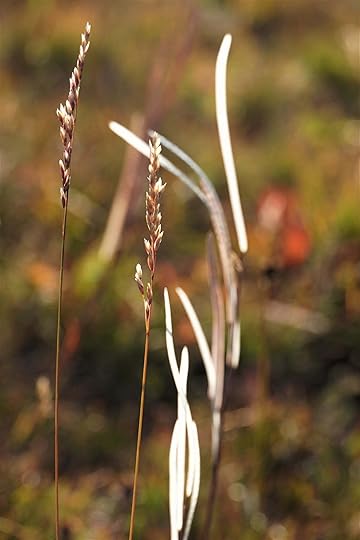
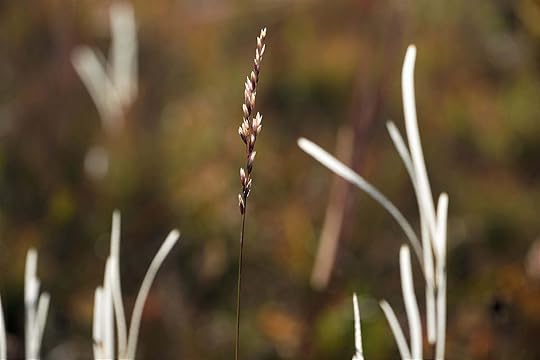
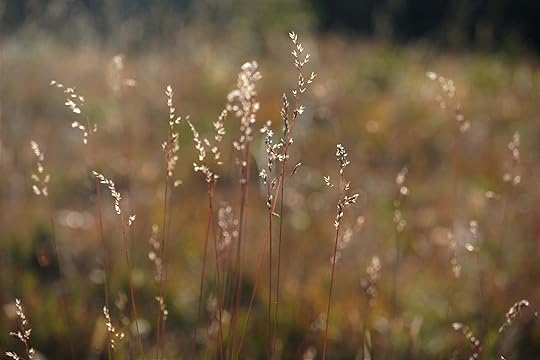
I dip my hand in the brook and feel the stream; in an instant the particles of water which first touched me have floated yards down the current, my hand remains there. I take my hand away, and the flow—the time—of the brook does not exist to me. The great clock of the firmament, the sun and the stars, the crescent moon, the earth circling two thousand times, is no more to me than the flow of the brook when my hand is withdrawn; my soul has never been, and never can be, dipped in time. Time has never existed, and never will; it is a purely artificial arrangement. It is eternity now, it always was eternity, and always will be. By no possible means could I get into time if I tried. I am in eternity now and must there remain. Haste not, be at rest, this Now is eternity.
Three things only have been discovered of that which concerns the inner consciousness since before written history began. Three things only in twelve thousand written, or sculptured, years, and in the dumb, dim time before then. Three ideas the Cavemen primeval wrested from the unknown, the night which is round us still in daylight—the existence of the soul, immortality, the deity. These things found, prayer followed as a sequential result. Since then nothing further has been found in all the twelve thousand years, as if men had been satisfied and had found these to suffice. They do not suffice me. I desire to advance further, and to wrest a fourth, and even still more than a fourth, from the darkness of thought. I want more ideas of soul-life. I am certain that there are more yet to be found. A great life—an entire civilisation—lies just outside the pale of common thought.
In the glow of youth there were times every now and then when I felt the necessity of a strong inspiration of soul-thought. My heart was dusty, parched for want of the rain of deep feeling; my mind arid and dry, for there is a dust which settles on the heart as well as that which falls on a ledge. It is injurious to the mind as well as to the body to be always in one place and always surrounded by the same circumstances. A species of thick clothing slowly grows about the mind, the pores are choked, little habits become a part of existence, and by degrees the mind is inclosed in a husk. When this began to form I felt eager to escape from it, to throw off the heavy clothing, to drink deeply once more at the fresh foundations of life. An inspiration—a long deep breath of the pure air of thought—could alone give health to the heart.
Let me launch forth and sail over the rim of the sea yonder, and when another rim arises over that, and again and onwards into an ever-widening ocean of idea and life. For with all the strength of the wave, and its succeeding wave, the depth and race of the tide, the clear definition of the sky; with all the subtle power of the great sea, there rises an equal desire. Give me life strong and full as the brimming ocean; give me thoughts wide as its plain; give me a soul beyond these. Sweet is the bitter sea by the shore where the faint blue pebbles are lapped by the green-grey wave, where the wind-quivering foam is loth to leave the lashed stone. Sweet is the bitter sea, and the clear green in which the gaze seeks the soul, looking through the glass into itself. The sea thinks for me as I listen and ponder; the sea thinks, and every boom of the wave repeats my prayer.
I was utterly alone with the sun and the earth. Lying down on the grass, I spoke in my soul to the earth, the sun, the air, and the distant sea far beyond sight. I thought of the earth’s firmness—I felt it bear me up: through the grassy couch there came an influence as if I could feel the great earth speaking to me. I thought of the wandering air—its pureness, which is its beauty; the air touched me and gave me something of itself. I spoke to the sea: though so far, in my mind I saw it, green at the rim of the earth and blue in deeper ocean; I desired to have its strength, its mystery and glory. Then I addressed the sun, desiring the soul equivalent of his light and brilliance, his endurance and unwearied race. I turned to the blue heaven over, gazing into its depth, inhaling its exquisite colour and sweetness. The rich blue of the unattainable flower of the sky drew my soul towards it, and there it rested, for pure colour is rest of heart. By all these I prayed; I felt an emotion of the soul beyond all definition; prayer is a puny thing to it, and the word is a rude sign to the feeling, but I know no other.
With all the intensity of feeling which exalted me, all the intense communion I held with the earth, the sun and sky, the stars hidden by the light, with the ocean—in no manner can the thrilling depth of these feelings be written—with these I prayed, as if they were the keys of an instrument, of an organ, with which I swelled forth the note of my soul, redoubling my own voice by their power.
That there is no knowing, in the sense of written reasons, whether the soul lives on or not, I am fully aware. I do not hope or fear. At least while I am living I have enjoyed the idea of immortality, and the idea of my own soul. If then, after death, I am resolved without exception into earth, air, and water, and the spirit goes out like a flame, still I shall have had the glory of that thought.
I am a little speechless right now, just reveling in this really lovely, dense book of a man’s life and ideas about the soul, or psyche, and prayer, or worship of nature that has caused him to break chains of religion and the mid 1800s England to glimpse a different way and possibility. Jefferies has written books that combined his experiences of nature and with society, and I struggled with them, but this book is all about soul and nature, like a long prayer or poem.
I feel what he feels. He writes like an ecstatic mystic in a vision, but he is trying to find words for the reverence he feels from the physical world and he admits this is all he has. I sensed more Thoreau in him in this book, he was a teenager when Thoreau died so may have been influenced in a way, but made the transcendentalist ideas his own. I am not sure why he is not more well known and studied; I imagine his non religious stance was influential is suppressing some of his work; and atheists may be uncomfortable with the term soul, too.
I loved it all. In meditative states on a hike, I catch glimpses of his intense connection to his body and the earth and the mind and the heart, and isn’t all that together a beautiful definition for soul? Annie Dillard wrote she never knew what it was that felt like a spirit, an eagle rising, into her lungs and heart she called it full-of-wonder. I felt it recently on a high mountain pass, listening to bird song in the morning forest, laying in the late summer grass entirely trembling and lit from the sun, and I was the song, and I was the light. I can’t imagine that many others know what I mean, but it is such a beautiful feeling filled with deep peace and visible beauty, I hope by sharing the art I make of it at least inspires anyone to take the moments to try.
I dip my hand in the brook and feel the stream; in an instant the particles of water which first touched me have floated yards down the current, my hand remains there. I take my hand away, and the flow—the time—of the brook does not exist to me. The great clock of the firmament, the sun and the stars, the crescent moon, the earth circling two thousand times, is no more to me than the flow of the brook when my hand is withdrawn; my soul has never been, and never can be, dipped in time. Time has never existed, and never will; it is a purely artificial arrangement. It is eternity now, it always was eternity, and always will be. By no possible means could I get into time if I tried. I am in eternity now and must there remain. Haste not, be at rest, this Now is eternity.
Three things only have been discovered of that which concerns the inner consciousness since before written history began. Three things only in twelve thousand written, or sculptured, years, and in the dumb, dim time before then. Three ideas the Cavemen primeval wrested from the unknown, the night which is round us still in daylight—the existence of the soul, immortality, the deity. These things found, prayer followed as a sequential result. Since then nothing further has been found in all the twelve thousand years, as if men had been satisfied and had found these to suffice. They do not suffice me. I desire to advance further, and to wrest a fourth, and even still more than a fourth, from the darkness of thought. I want more ideas of soul-life. I am certain that there are more yet to be found. A great life—an entire civilisation—lies just outside the pale of common thought.
In the glow of youth there were times every now and then when I felt the necessity of a strong inspiration of soul-thought. My heart was dusty, parched for want of the rain of deep feeling; my mind arid and dry, for there is a dust which settles on the heart as well as that which falls on a ledge. It is injurious to the mind as well as to the body to be always in one place and always surrounded by the same circumstances. A species of thick clothing slowly grows about the mind, the pores are choked, little habits become a part of existence, and by degrees the mind is inclosed in a husk. When this began to form I felt eager to escape from it, to throw off the heavy clothing, to drink deeply once more at the fresh foundations of life. An inspiration—a long deep breath of the pure air of thought—could alone give health to the heart.
Let me launch forth and sail over the rim of the sea yonder, and when another rim arises over that, and again and onwards into an ever-widening ocean of idea and life. For with all the strength of the wave, and its succeeding wave, the depth and race of the tide, the clear definition of the sky; with all the subtle power of the great sea, there rises an equal desire. Give me life strong and full as the brimming ocean; give me thoughts wide as its plain; give me a soul beyond these. Sweet is the bitter sea by the shore where the faint blue pebbles are lapped by the green-grey wave, where the wind-quivering foam is loth to leave the lashed stone. Sweet is the bitter sea, and the clear green in which the gaze seeks the soul, looking through the glass into itself. The sea thinks for me as I listen and ponder; the sea thinks, and every boom of the wave repeats my prayer.
I was utterly alone with the sun and the earth. Lying down on the grass, I spoke in my soul to the earth, the sun, the air, and the distant sea far beyond sight. I thought of the earth’s firmness—I felt it bear me up: through the grassy couch there came an influence as if I could feel the great earth speaking to me. I thought of the wandering air—its pureness, which is its beauty; the air touched me and gave me something of itself. I spoke to the sea: though so far, in my mind I saw it, green at the rim of the earth and blue in deeper ocean; I desired to have its strength, its mystery and glory. Then I addressed the sun, desiring the soul equivalent of his light and brilliance, his endurance and unwearied race. I turned to the blue heaven over, gazing into its depth, inhaling its exquisite colour and sweetness. The rich blue of the unattainable flower of the sky drew my soul towards it, and there it rested, for pure colour is rest of heart. By all these I prayed; I felt an emotion of the soul beyond all definition; prayer is a puny thing to it, and the word is a rude sign to the feeling, but I know no other.
With all the intensity of feeling which exalted me, all the intense communion I held with the earth, the sun and sky, the stars hidden by the light, with the ocean—in no manner can the thrilling depth of these feelings be written—with these I prayed, as if they were the keys of an instrument, of an organ, with which I swelled forth the note of my soul, redoubling my own voice by their power.
That there is no knowing, in the sense of written reasons, whether the soul lives on or not, I am fully aware. I do not hope or fear. At least while I am living I have enjoyed the idea of immortality, and the idea of my own soul. If then, after death, I am resolved without exception into earth, air, and water, and the spirit goes out like a flame, still I shall have had the glory of that thought.

June 17, 2019
richard jefferies was a 19th century writer mostly known for his nature writing, and is basically unread today. this book says it's an autobiography, but it isn't really; it's more like an attempt at getting across his spiritual ideas and worldview. there is a fair bit of nature mysticism as you nmight expect, but there's also some very radical seeming stuff for 1884, like the fact that he rejects both creation by a deity and rationalistic science. there's also quite a strong emphasis on physical perfection which reminded me a bit of mishima's sun and steel, and some early socialistic seeming ideas. some quotes:
"There is nothing human in any living animal. All nature, the universe as far as we see, is anti- or ultra-human, outside, and has no concern with man. These things are unnatural to him. By no course of reasoning, however tortuous, can nature and the universe be fitted to the mind. Nor can the mind be fitted to the cosmos. My mind cannot be twisted to it; I am separate altogether from these designless things. The soul cannot be wrested down to them. The laws of nature are of no importance to it. I refuse to be bound by the laws of the tides, nor am I so bound. Though bodily swung round on this rotating globe, my mind always remains in the centre. No tidal law, no rotation, no gravitation can control my thought."
"Of all the inventions of casuistry with man for ages has in various ways which manacled himself, and stayed his own advance, there is none equally potent with the supposition that nothing more is possible. Once well impress on the mind that it has already all, that advance is impossible because there is nothing further, and it is chained like a horse to an iron pin in the ground. It is the most deadly—the most fatal poison of the mind."
"I believe all manner of asceticism to be the vilest blasphemy—blasphemy towards the whole of the human race. I believe in the flesh and the body, which is worthy of worship—to see a perfect human body unveiled causes a sense of worship. The ascetics are the only persons who are impure. Increase of physical beauty is attended by increase of soul beauty. The soul is the high even by gazing on beauty. Let me be fleshly perfect."
"Each human being, by mere birth, has a birthright in this earth and all its productions; and if they do not receive it, then it is they who are injured, and it is not the 'pauper'—oh, inexpressibly wicked word!—it is the well-to-do, who are the criminal classes. It matters not in the least if the poor be improvident, or drunken, or evil in any way. Food and drink, roof and clothes, are the inalienable right of every child born into the light."
"For grief there is no known consolation. It is useless to fill our hearts with bubbles. A loved one gone is gone, and as to the future—even if there is a future—it is unknown. To assure ourselves otherwise is to soothe the mind with illusions; the bitterness of it is inconsolable. The sentiments of trust chipped out on tombstones are touching instances of the innate goodness of the human heart, which naturally longs for good, and sighs itself to sleep in the hope that, if parted, the parting is for the benefit of those that are gone. But these inscriptions are also awful instances of the deep intellectual darkness which presses still on the minds of men. The least thought erases them. There is no consolation. There is no relief. There is no hope certain; the whole system is a mere illusion. I, who hope so much, and am so rapt up in the soul, know full well that there is no certainty."
"There is nothing human in any living animal. All nature, the universe as far as we see, is anti- or ultra-human, outside, and has no concern with man. These things are unnatural to him. By no course of reasoning, however tortuous, can nature and the universe be fitted to the mind. Nor can the mind be fitted to the cosmos. My mind cannot be twisted to it; I am separate altogether from these designless things. The soul cannot be wrested down to them. The laws of nature are of no importance to it. I refuse to be bound by the laws of the tides, nor am I so bound. Though bodily swung round on this rotating globe, my mind always remains in the centre. No tidal law, no rotation, no gravitation can control my thought."
"Of all the inventions of casuistry with man for ages has in various ways which manacled himself, and stayed his own advance, there is none equally potent with the supposition that nothing more is possible. Once well impress on the mind that it has already all, that advance is impossible because there is nothing further, and it is chained like a horse to an iron pin in the ground. It is the most deadly—the most fatal poison of the mind."
"I believe all manner of asceticism to be the vilest blasphemy—blasphemy towards the whole of the human race. I believe in the flesh and the body, which is worthy of worship—to see a perfect human body unveiled causes a sense of worship. The ascetics are the only persons who are impure. Increase of physical beauty is attended by increase of soul beauty. The soul is the high even by gazing on beauty. Let me be fleshly perfect."
"Each human being, by mere birth, has a birthright in this earth and all its productions; and if they do not receive it, then it is they who are injured, and it is not the 'pauper'—oh, inexpressibly wicked word!—it is the well-to-do, who are the criminal classes. It matters not in the least if the poor be improvident, or drunken, or evil in any way. Food and drink, roof and clothes, are the inalienable right of every child born into the light."
"For grief there is no known consolation. It is useless to fill our hearts with bubbles. A loved one gone is gone, and as to the future—even if there is a future—it is unknown. To assure ourselves otherwise is to soothe the mind with illusions; the bitterness of it is inconsolable. The sentiments of trust chipped out on tombstones are touching instances of the innate goodness of the human heart, which naturally longs for good, and sighs itself to sleep in the hope that, if parted, the parting is for the benefit of those that are gone. But these inscriptions are also awful instances of the deep intellectual darkness which presses still on the minds of men. The least thought erases them. There is no consolation. There is no relief. There is no hope certain; the whole system is a mere illusion. I, who hope so much, and am so rapt up in the soul, know full well that there is no certainty."

November 24, 2014
This book is beautifully written, almost lyrical. It’s definitely not for everyone but you don’t have to agree with Jefferies to appreciate his writing and ideas.
Terry Tempest Williams summed it up perfectly: “Jefferies talks about being present, to be present in the moment at hand. To be conscious. To walk with your eyes wide open. To take care of ones soul life. He asks: what can you affect by the soul? We can only go so far with the mind, with our own understanding. In the end it is about love, it is about our relationships to the world around us. That becomes more than enough. The Story of My Heart asks: how do we be present with one another in our full passion, on the page and in the world, unabashedly?”
It's a lovely book. I've probably built it up too much and you may find it all a bit trite but it has certainly had an impact on me. I know I'll be going back to it several times because there is depth there that requires studying.
Terry Tempest Williams summed it up perfectly: “Jefferies talks about being present, to be present in the moment at hand. To be conscious. To walk with your eyes wide open. To take care of ones soul life. He asks: what can you affect by the soul? We can only go so far with the mind, with our own understanding. In the end it is about love, it is about our relationships to the world around us. That becomes more than enough. The Story of My Heart asks: how do we be present with one another in our full passion, on the page and in the world, unabashedly?”
It's a lovely book. I've probably built it up too much and you may find it all a bit trite but it has certainly had an impact on me. I know I'll be going back to it several times because there is depth there that requires studying.

December 30, 2021
Two stars simply for the beautiful writing on nature, reminiscent of L.M. Montgomery, the rest got a bit frustrating and irritating, purple-prosing on how he believes mankind can be improved, and not helped as many of his ideas and beliefs are very dated. I think I might stick to his nature essays.

October 30, 2022
أحب قراءة كُتب السيرة الذاتية جدًا، على أختلافها،إلا إن كتاب قصة قلبي للكاتب ريتشارد جفريز ، شعرت أنه مميز ، ويدهشني ريتشارد في كتابة سيرته وتأملاته عن الطبيعة والشمس والأرض والبحر وعن الأنسان ، وما يدهش حقا هذا القلب والعقل ، يجعلك تتورط معه وتفكر، تحلل وتجد نفسك في تأملاته وسيرته.
كتاب ممتع وخفيف على القلب.
كتاب ممتع وخفيف على القلب.

June 26, 2016
Meditations on nature, a hymn to personal ideals.

April 8, 2020
كتاب متعب !

July 5, 2023
I'm sure it's lovely if your attention allows you to read it. I love nature, I love books, but rarely do I like books about how people feel and think about nature.
April 20, 2020
Such a beautiful short book, I was totally astonished and bewildered by the passion and love of the author towards his natural surrounding and life in general, I'm still thinking about this book even while Im writing this review, I needed to jot down some of its impression it made upon me , but I find it so difficult...I am totally lost in it's depth, trying to imagine this man who wrote this book in the year 1880, almost 140 years ago, and how much I have this special affinity with his vision and emotions...in one part of his book while he was was walking on a green hill imagining a warrior setting foot thousands of years ago on the same place he was standing:
“I felt at that moment that I was like the spirit of the man whose body was interred in the tumulus; I could understand and feel his existence the same as my own. He was as real to me two thousand years after interment as those I had seen in the body. The abstract personality of the dead seemed as existent as thought. As my thought could slip back the twenty centuries in a moment to the forest-days when he hurled the spear, or shot with the bow, hunting the deer, and could return again as swiftly to this moment, so his spirit could endure from then till now, and the time was nothing.”
I could understand and feel his existence the same as my own....One of my favorite part of this book:
This hour, rays or undulations of more subtle mediums are doubtless pouring on us over the wide earth, unrecognized, and full of messages and intelligence from the unseen. Of these we are this day as ignorant as those who painted the papyri were of light. There is an infinity of knowledge yet to be known, and beyond that an infinity of thought. No mental instrument even has yet been invented by which researches can be carried direct to the object. Whatever has been found has been discovered by fortunate accident ; in looking for one thing another has been chanced on. A reasoning process has yet to be invented by which to go straight to the desired end. For now the slightest particle is enough to throw the search aside, and the most minute circumstance sufficient to conceal obvious and brilliantly shining truths ... At present the endeavor to make discoveries is like gazing at the sky up through the boughs of an oak. . Here a beautiful star shines clearly ; here a constellation is hidden by a branch ; a universe by a leaf. Some mental instrument or organon is required to enable us to distinguish between the leaf which may be removed and a real void ; when to cease to look in one direction, and to work in another ... I feel that there are infinities to be known, but they are hidden by a leaf ...
Thanks to another great writer Henry miller for mentioning this book in his own book called the "books in my life". I would have never been able to discover this obscure writer from the late 19th century. Another book that I will be rereading it more often from then on.
“I felt at that moment that I was like the spirit of the man whose body was interred in the tumulus; I could understand and feel his existence the same as my own. He was as real to me two thousand years after interment as those I had seen in the body. The abstract personality of the dead seemed as existent as thought. As my thought could slip back the twenty centuries in a moment to the forest-days when he hurled the spear, or shot with the bow, hunting the deer, and could return again as swiftly to this moment, so his spirit could endure from then till now, and the time was nothing.”
I could understand and feel his existence the same as my own....One of my favorite part of this book:
This hour, rays or undulations of more subtle mediums are doubtless pouring on us over the wide earth, unrecognized, and full of messages and intelligence from the unseen. Of these we are this day as ignorant as those who painted the papyri were of light. There is an infinity of knowledge yet to be known, and beyond that an infinity of thought. No mental instrument even has yet been invented by which researches can be carried direct to the object. Whatever has been found has been discovered by fortunate accident ; in looking for one thing another has been chanced on. A reasoning process has yet to be invented by which to go straight to the desired end. For now the slightest particle is enough to throw the search aside, and the most minute circumstance sufficient to conceal obvious and brilliantly shining truths ... At present the endeavor to make discoveries is like gazing at the sky up through the boughs of an oak. . Here a beautiful star shines clearly ; here a constellation is hidden by a branch ; a universe by a leaf. Some mental instrument or organon is required to enable us to distinguish between the leaf which may be removed and a real void ; when to cease to look in one direction, and to work in another ... I feel that there are infinities to be known, but they are hidden by a leaf ...
Thanks to another great writer Henry miller for mentioning this book in his own book called the "books in my life". I would have never been able to discover this obscure writer from the late 19th century. Another book that I will be rereading it more often from then on.

May 9, 2018
Quotable:
[Abraham] Maslow suggests that people who have had a peak experience are no longer interested in organized religions, which are based on believing in the experience of someone else (Jesus, Mohammed, Buddha).
Look at another person while living; the soul is not visible, only the body which it animates. Therefore, merely because after death the soul is not visible is no demonstration that it does not still live. The condition of being unseen is the same condition which occurs while the body is living, so that intrinsically there is nothing exceptionable, or supernatural, in the life of the soul after death.
I can see nothing astonishing in what we call miracles. Only those who are mesmerized by matter can find a difficulty in such events. I am aware that the evidence for miracles is logically and historically untrustworthy; I am not defending recorded miracles. My point is that in principle I see no reason at all why they should not take place this day. I do not even say that there are or ever have been miracles, but I maintain that they would be perfectly natural. The wonder is that they do not happen frequently.
[T]his moment was one of an infinite number of perfect moments occurring all around us, all of the time.
For as long as I have a memory, my study has been directed toward sources that help me put words to how I feel and what I inherently know.
[P]art of being human is finding peace with uncertainty. We still don’t know where we’re headed. We do know that when we’re quiet and alone in the wilds, a force surfaces from deep in our bones, moving us toward something right, something good.
[Abraham] Maslow suggests that people who have had a peak experience are no longer interested in organized religions, which are based on believing in the experience of someone else (Jesus, Mohammed, Buddha).
Look at another person while living; the soul is not visible, only the body which it animates. Therefore, merely because after death the soul is not visible is no demonstration that it does not still live. The condition of being unseen is the same condition which occurs while the body is living, so that intrinsically there is nothing exceptionable, or supernatural, in the life of the soul after death.
I can see nothing astonishing in what we call miracles. Only those who are mesmerized by matter can find a difficulty in such events. I am aware that the evidence for miracles is logically and historically untrustworthy; I am not defending recorded miracles. My point is that in principle I see no reason at all why they should not take place this day. I do not even say that there are or ever have been miracles, but I maintain that they would be perfectly natural. The wonder is that they do not happen frequently.
[T]his moment was one of an infinite number of perfect moments occurring all around us, all of the time.
For as long as I have a memory, my study has been directed toward sources that help me put words to how I feel and what I inherently know.
[P]art of being human is finding peace with uncertainty. We still don’t know where we’re headed. We do know that when we’re quiet and alone in the wilds, a force surfaces from deep in our bones, moving us toward something right, something good.

July 3, 2023
A weird and highly interesting little book; sometimes two stars, sometimes five.
An early phenomenologist and shaman without knowing, an utopist sometimes ab bit magalomaniac, but then, also very clairvoyant. Time showed how right he was about the "madness" of having making money as a priority, the illusion of work as a garantee for wealth (now so prominently promoted by neo-liberals).
What surprised me most was the fact that Jefferies clearly didn't see how special his relationship to world and nature was, so sensual, so full of desire and pleasure, a sensibility and alertness that is not common. He obviously thought that this gift was something everyone is born with.
I doubt that. It is beautiful and moving how he tries to share it, though.
An early phenomenologist and shaman without knowing, an utopist sometimes ab bit magalomaniac, but then, also very clairvoyant. Time showed how right he was about the "madness" of having making money as a priority, the illusion of work as a garantee for wealth (now so prominently promoted by neo-liberals).
What surprised me most was the fact that Jefferies clearly didn't see how special his relationship to world and nature was, so sensual, so full of desire and pleasure, a sensibility and alertness that is not common. He obviously thought that this gift was something everyone is born with.
I doubt that. It is beautiful and moving how he tries to share it, though.
January 20, 2025
Years ago, a now dearly departed friend gave me a copy of Siddartha by Herman Hesse, along with a stone. The stone signified the timelessness of the book, one that she read on an annual basis.
The Story of My Heart with the insights added by Brooke and Terry Tempest Williams is that same kind of book. I'm not going to "get it" all immediately, but over time with more readings and reflection I believe it's meaning will deepen. I'll try and revisit this one each year around the winter solstice.
What a comfort to discover these thoughts from 1883 and 2014!
The Story of My Heart with the insights added by Brooke and Terry Tempest Williams is that same kind of book. I'm not going to "get it" all immediately, but over time with more readings and reflection I believe it's meaning will deepen. I'll try and revisit this one each year around the winter solstice.
What a comfort to discover these thoughts from 1883 and 2014!

September 4, 2026
Based anti-Cartesian, transcendentalist spiritual awakening. Life is the greatest algorithm; calling happenstance a coincidence bastardizes the magic that is right place, right time, which is where this found me, affirming and expanding ideas I've already had and ideas I wish were spoken of more broadly. Someone else thought this, too. Jefferies was clearly partaking in plenty of meditation, existing without distraction in nature, and hence, profundities arrived to him, captured via this novel as best as language can fare with respect to such matters.
May 21, 2020
This was one of the most beautiful books I’ve read,
made me want to get out in nature more, and just be,
it’s a book I will look at again and again, and I recommend it to all that have a meditative, spiritual side.
made me want to get out in nature more, and just be,
it’s a book I will look at again and again, and I recommend it to all that have a meditative, spiritual side.

March 14, 2018
I wish I'd read this book in college (the subject is essentially what I attempted to study). Amazing read.
February 27, 2019
The first two chapters are not compelling.The writing style is elegant but to sophisticated at times. I do not plan on finishing.
December 19, 2019
Never has someone spoken my soul as accurately as this
Displaying 1 - 30 of 61 reviews