

What do you think?

The Greater Freedom: Life as a Middle Eastern Woman Outside the Stereotypes
The greater freedom is to be who you actually are; to be able to live your life in the way you deem best, free from any sort of restriction to do that, or fear of repercussions for doing so. Egyptian-born and London-raised, Alya Mooro grew up between two cultures and felt a pull from both. Where could she turn for advice and inspiration when it seemed there was nobody else like her? Today, Mooro is determined to explore and explode the myth that she must identify either as ‘Western’ or as one of almost 400 million other ‘Arabs’ across the Middle East. Through countless interviews and meticulous research, as well as her own unique experience, Mooro gives voice to the Middle Eastern women who, like her, don’t fit the mould. Women under pressure to conform to society’s ideals of how a woman should look and behave, what she should want and be. Women who want to think and act and love freely, without feeling that every choice means ‘picking a side’. Women who are two things at once and, consequently, neither. Part memoir, part social exploration, this is a book for anyone who has ever felt like an outsider.
256 pages, Paperback
First published October 1, 2019
About the author
Alya Mooro
2 books38 followersAlya Mooro is an Egyptian born, London raised freelance journalist. Her first book The Greater Freedom: Life as a Middle Eastern Woman Outside the Stereotypes, is out September 2019 (Little a; Amazon Publishing). She holds a BA in Sociology and Psychology and a Masters in Journalism. She has been published in The Telegraph, Grazia, Refinery29, The Washington Post and more, providing unique takes on social commentary, fashion and lifestyle. Alya has collaborated with brands the likes of Nike, ASOS and Absolut and guested on numerous national radio stations including BBC Radio 4 Woman’s Hour, BBC Radio 1 and BBC 1Xtra. She is a representative voice for both her generation and for multi-cultural women everywhere.
Ratings & Reviews
Friends & Following
Create a free account to discover what your friends think of this book!
Community Reviews
Displaying 1 - 30 of 87 reviews

September 13, 2019
Home, heart and soul
An excellent book. One of the things I really liked about his book is it actually fit better as I read more of it, especially the last few chapters.
I don't agree with everything in this book, it is probably 70% to 30%. I have always considered London home more the anywhere else. I am proudly a British Muslim a lot of the issues raised and discussed in this book applies to many people like me, even though the were brought up from a female point of view. If I had just one complaint of this book it would be apart jerks, (with the notable exception of Alya's father and "Courtney"), 95% of the Male voices on this book are from the jerks.
One thing in general that has always made me laugh that come up in this book as well is hip hop fan are always, complaong about Rock/Metal songs, where as I have always found Hip Hop lyrics more disrespectful, to woman especially. Yet they are surprised when they really listen to them or find the people who sang the actually believe them.
This book is well researched, and most of a current. Not just quoting academics and journalists but every day people (mainly women), popculture references and current event of this generation that everyone has been affected by. The other things this books tries to break is labels most people try to take the best of every category, without falling to the pitfall and if you do to learn from mistakes as life continually moves on.
This is an excellent book and I would be interested to read more, but in favour of the gender gap to hear from some male voices that are not evil or ghosts. I definitely recommend this book along with Young British Muslim Voices.
An excellent book. One of the things I really liked about his book is it actually fit better as I read more of it, especially the last few chapters.
I don't agree with everything in this book, it is probably 70% to 30%. I have always considered London home more the anywhere else. I am proudly a British Muslim a lot of the issues raised and discussed in this book applies to many people like me, even though the were brought up from a female point of view. If I had just one complaint of this book it would be apart jerks, (with the notable exception of Alya's father and "Courtney"), 95% of the Male voices on this book are from the jerks.
One thing in general that has always made me laugh that come up in this book as well is hip hop fan are always, complaong about Rock/Metal songs, where as I have always found Hip Hop lyrics more disrespectful, to woman especially. Yet they are surprised when they really listen to them or find the people who sang the actually believe them.
This book is well researched, and most of a current. Not just quoting academics and journalists but every day people (mainly women), popculture references and current event of this generation that everyone has been affected by. The other things this books tries to break is labels most people try to take the best of every category, without falling to the pitfall and if you do to learn from mistakes as life continually moves on.
This is an excellent book and I would be interested to read more, but in favour of the gender gap to hear from some male voices that are not evil or ghosts. I definitely recommend this book along with Young British Muslim Voices.

January 22, 2020
Reading books has been such a huge part of my life. I have always loved reading about other people's lives. But it's only recently, especially with the rise of representation in books, that I have been trying to read more books written by and that are about people whom I can relate to, hence my excitement when I started reading this book.
The Greater Freedom: Life as a Middle Eastern Woman Outside The Stereotypes is part memoir part self-exploitation of the Egyptian-born and London-raised, Alya Mooro.
I have been wanting to write a detailed review on this book for so long but I just can't seem to find the right words.
You can tell Mooro has a background in journalism and writing through her prose and well-researched references and information. But I simply couldn't see the point behind reading it as It didn't add anything to my knowledge. Quite the contrary, it left me perplexed when reading certain paragraphs that stereotyped Middle Eastern women and seemed to neglect to challenge or even to point out the oppression of the vast majority of Middle Eastern women, which contradicts the premises of this book.
Sadly though, Alya touched upon so many good themes and messages but they were lost or poorly expressed somewhere along the line.
If you want to read Alya's autobiography, presenting the Middle Eastern culture as flawed and the Western one as flawless, then go for it.
Otherwise, if you're going out of your way to buy it and read it, I wouldn't recommend it.
I really wanted to like this more than I did though, I really did.
The Greater Freedom: Life as a Middle Eastern Woman Outside The Stereotypes is part memoir part self-exploitation of the Egyptian-born and London-raised, Alya Mooro.
I have been wanting to write a detailed review on this book for so long but I just can't seem to find the right words.
You can tell Mooro has a background in journalism and writing through her prose and well-researched references and information. But I simply couldn't see the point behind reading it as It didn't add anything to my knowledge. Quite the contrary, it left me perplexed when reading certain paragraphs that stereotyped Middle Eastern women and seemed to neglect to challenge or even to point out the oppression of the vast majority of Middle Eastern women, which contradicts the premises of this book.
Sadly though, Alya touched upon so many good themes and messages but they were lost or poorly expressed somewhere along the line.
If you want to read Alya's autobiography, presenting the Middle Eastern culture as flawed and the Western one as flawless, then go for it.
Otherwise, if you're going out of your way to buy it and read it, I wouldn't recommend it.
I really wanted to like this more than I did though, I really did.

September 17, 2019
I was lucky enough to pick The Greater Freedom: Life as a Middle Eastern Woman Outside the Stereotypes up an Amazon First Reads as otherwise I may not have heard of the book for a while. Admittedly, I do not tend to read my Amazon First Reads within the first month of getting them, however I was very drawn to Alya Mooro's book because the Middle East and Arab culture is a place I find myself distinctly lacking knowledge about. I understand some of the basics of the history, the foundations of Islam and specific expectations within those cultures. However, I do not have any Middle Eastern friends, and I have limited exposure to talking to people from the Middle East. Alya Mooro is British-Egyptian woman who was born in Egypt and raised in both London and Egypt. Therefore, I thought this book would be a good foray into understanding how British culture and Middle Eastern culture interact. I would reiterate the fact that this book is written by a woman who is by her own admission from a fairly liberal background, who has spent a large part of her life surrounded by Western culture. Therefore, do not expect it to be the voices of all Arab women, nor should anybody expect that from one book alone.
However, I think this book is a fantastic starting point for all women, especially white, western women who have had limited interactions with Middle Eastern women and the Middle Eastern community to enable us to be better about intersectional feminism and reduce our ignorance. I think this is particularly important at the current point in time and political climate surrounding the Middle East, driven by the likes of Donald Trump etc.
The book is largely a mix between Alya Mooro discussing her life, her childhood and growing up as a British-Egyptian and the interaction between those two cultures. She looks at how these two cultures and the clash between them impacted on her as she became and adult; she examines the impact on her relationship with her family and with the people she dated. This is interwoven into the various thematic chapters that cover themes such as: family, sexuality, feminism, marriage etc
and how those themes fit with the idea of being a Middle Eastern woman. This made the book both personal and a poignant piece of non-fiction.
I also think the really interesting part about the book is how Alya Mooro spoke about how she never really fit into either place. She didn't fit the British expectations because she had Arab parents who still expected her home earlier than her British friends, but then in Egypt she was the 'Western kid' because she wasn't Arab enough. It's an interesting issue that surrounds individuals with this dual cultural identity, and one I do not think we address enough in society. We claim to be a multi-cultural United Kingdom and cosmopolitan etc, but then we fail to accept all sides of a person's identity and culture and we do not allow them to be 'British-Egyptian' without questioning their differences.
It is clear that Mooro has spent a lot of time researching her novel, talking to her social media communities and followers to investigate and consider how Middle Eastern women conceive of themselves and how they are viewed by others. Alya Mooro made lots of interesting points about Arab culture that I just wasn't aware of and had never really thought about. She has thoroughly footnoted to articles, pieces of non-fiction and research that she quotes meaning it is easy to trace back to the source on things she was quoting, and investigate more about those specific pieces. This is also particularly handy if you wanted to read more about Middle Eastern women and Arab culture as now I have a few extra books I want to read following on from this.
I also thought that Mooro made some fantastic points that are applicable across all cultures to women, particularly around the ideas of sex and sexuality. Her chapters on sex and sexuality were perhaps the most interesting and thought provoking to me, as she spoke about the shame associated with enjoying sex. The drive in young girls and the pressure they feel they are under to have sex, whilst all of this is not necessarily true. I think she made so many important and valid points about how young women across the globe need to feel comfortable in their own bodies, need to feel that they can have sex when they want, how they want and they can enjoy sex. I think sex has been a tool of male oppression and will continue to be used against women, as women face rape, arranged marriages, genital mutilation and all kinds of sexual harassment and sexual violence. For me these themes that were discussed throughout the whole book as Alya Mooro opened up on a very personal note about her relationships and some of her sexual history (which is a pretty big thing to do, considering how many women are slandered for being open about their sexuality), made these even more poignant.
This book has left me curious for more, and I have already followed a few of the links and picked up a couple of books that Alya Mooro referenced in her book. I would recommend this book to everyone!
However, I think this book is a fantastic starting point for all women, especially white, western women who have had limited interactions with Middle Eastern women and the Middle Eastern community to enable us to be better about intersectional feminism and reduce our ignorance. I think this is particularly important at the current point in time and political climate surrounding the Middle East, driven by the likes of Donald Trump etc.
The book is largely a mix between Alya Mooro discussing her life, her childhood and growing up as a British-Egyptian and the interaction between those two cultures. She looks at how these two cultures and the clash between them impacted on her as she became and adult; she examines the impact on her relationship with her family and with the people she dated. This is interwoven into the various thematic chapters that cover themes such as: family, sexuality, feminism, marriage etc
and how those themes fit with the idea of being a Middle Eastern woman. This made the book both personal and a poignant piece of non-fiction.
I also think the really interesting part about the book is how Alya Mooro spoke about how she never really fit into either place. She didn't fit the British expectations because she had Arab parents who still expected her home earlier than her British friends, but then in Egypt she was the 'Western kid' because she wasn't Arab enough. It's an interesting issue that surrounds individuals with this dual cultural identity, and one I do not think we address enough in society. We claim to be a multi-cultural United Kingdom and cosmopolitan etc, but then we fail to accept all sides of a person's identity and culture and we do not allow them to be 'British-Egyptian' without questioning their differences.
It is clear that Mooro has spent a lot of time researching her novel, talking to her social media communities and followers to investigate and consider how Middle Eastern women conceive of themselves and how they are viewed by others. Alya Mooro made lots of interesting points about Arab culture that I just wasn't aware of and had never really thought about. She has thoroughly footnoted to articles, pieces of non-fiction and research that she quotes meaning it is easy to trace back to the source on things she was quoting, and investigate more about those specific pieces. This is also particularly handy if you wanted to read more about Middle Eastern women and Arab culture as now I have a few extra books I want to read following on from this.
I also thought that Mooro made some fantastic points that are applicable across all cultures to women, particularly around the ideas of sex and sexuality. Her chapters on sex and sexuality were perhaps the most interesting and thought provoking to me, as she spoke about the shame associated with enjoying sex. The drive in young girls and the pressure they feel they are under to have sex, whilst all of this is not necessarily true. I think she made so many important and valid points about how young women across the globe need to feel comfortable in their own bodies, need to feel that they can have sex when they want, how they want and they can enjoy sex. I think sex has been a tool of male oppression and will continue to be used against women, as women face rape, arranged marriages, genital mutilation and all kinds of sexual harassment and sexual violence. For me these themes that were discussed throughout the whole book as Alya Mooro opened up on a very personal note about her relationships and some of her sexual history (which is a pretty big thing to do, considering how many women are slandered for being open about their sexuality), made these even more poignant.
This book has left me curious for more, and I have already followed a few of the links and picked up a couple of books that Alya Mooro referenced in her book. I would recommend this book to everyone!
Read
October 19, 2019I really enjoyed this book and Alya Mooro's perspective and writing. That said it's almost like something written for a college class--it blends research, personal narrative, and interviews from other Middle Eastern women. It's described as "part memoir, part social exploration" and I suppose that's very apt. The hybrid genre works though, it's compelling and rounded in a way that it wouldn't be without each of the pieces. Definitely worth reading.

September 7, 2019
I couldn't help thinking that 'The Greater Freedom: Life as a Middle Eastern Woman Outside the Stereotypes' was an unusual sort of book to include in the September Amazon First Reads list. Fortunately, this month we were offered two books as this one wouldn't have been my first choice.
I found the book rather frustrating. Yes, it's fair to say that 'outside the stereotypes' should have perhaps warned me that it wasn't about absolutely typical behaviour but I did rather expect more about what the stereotypes were in order to establish what was outside. In reality, this is much more a book about what you can get away with as a Muslim woman of Middle East / North African origins who doesn't actually live there and who has extremely liberal parents. It's a bit like reading a book about living as a Mormon if you're outside a Mormon community and your parents are extremely forgiving of just about anything you might do. I'd have liked to be more enlightened on the norms before stepping so firmly outside them.
There is a place, of course, for books about life as a trendy, fun-loving London girl who's slightly browner than average - Mooro herself says people wouldn't really know she wasn't European just by looking at her. I did feel, however, that her privileged life of boyfriends, parties, sex and freedom was a LOT 'greater freedom' than could be expected for most MENA women.
It started well. I found the expectations that women should be immaculately coiffured under their hijabs and almost hairless all over their bodies quite surprising - but entirely compatible with the beautifully turned out hijabi women I've met. Sadly though, this isn't a book that's going to help the Islamic 'sisterhood' and seems to neglect to challenge the oppression of the vast majority of Middle Eastern women.
I found the book rather frustrating. Yes, it's fair to say that 'outside the stereotypes' should have perhaps warned me that it wasn't about absolutely typical behaviour but I did rather expect more about what the stereotypes were in order to establish what was outside. In reality, this is much more a book about what you can get away with as a Muslim woman of Middle East / North African origins who doesn't actually live there and who has extremely liberal parents. It's a bit like reading a book about living as a Mormon if you're outside a Mormon community and your parents are extremely forgiving of just about anything you might do. I'd have liked to be more enlightened on the norms before stepping so firmly outside them.
There is a place, of course, for books about life as a trendy, fun-loving London girl who's slightly browner than average - Mooro herself says people wouldn't really know she wasn't European just by looking at her. I did feel, however, that her privileged life of boyfriends, parties, sex and freedom was a LOT 'greater freedom' than could be expected for most MENA women.
It started well. I found the expectations that women should be immaculately coiffured under their hijabs and almost hairless all over their bodies quite surprising - but entirely compatible with the beautifully turned out hijabi women I've met. Sadly though, this isn't a book that's going to help the Islamic 'sisterhood' and seems to neglect to challenge the oppression of the vast majority of Middle Eastern women.

October 20, 2019
I was elated to come across this title: Finally, a feminist book about the women of the Middle East that is actually written by a woman from the Middle East, I told myself. I couldn't believe my luck when I requested this book on NetGalley and got approved for an early edition. Overall, I found the book well-written and heartfelt. The candour and honesty from which the author's experience stems was refreshing and, at times, heartbreaking in a very good way. But I still had some scruples about its contents.
The author, like me, had a cross-cultural upbringing; she might be a few years younger than me, but I found that our experiences are very different. Of course, I could relate to and second what she exposed so valiantly in this book: the hypocrisy regarding gender roles, the preferential treatment of male children, the sexual repression and cultural misconceptions. Still, our experiences were different. This is why I will argue here that this book should be titled [My] life as a Middle Eastern Woman Outside the Stereotypes.
1. The book is not all-encompassing of the challenges ME women with multicultural backgrounds face either in the Middle East or in the West. It is limited to the challenges Mooro met growing up. A wild teenager whose parents' attempts at instilling discipline in her got her all the more wilder. Growing up between London and Zamalek (Cairo's Belgravia), the book clearly speaks of someone with economic privilege. And in all the accounts in the book, the socio-economic factor was not part of the argument. It wasn't factored in by any measure. The set of challenges facing immigrants and refugees and their extent differ from one class to another. But this truth wasn't part of this book. And in that the book was limited and lacking.
2. The book leans heavily on testimonies of women Mooro interviewed, loosely acknowledging their background as someone who grew up in London or was born in Iraq, sometimes mentioning their age, sometimes not. I don't know what sort of jobs these women have or, again, what's their socio-economic status; how representative they are of the wide ME female spectrum.
3. Some points in the book were well researched and supported by valid studies. However, to support her argument on many occasions, Mooro considers Instagram polls as evidence/indication. Towards the end of the book, Mooro admits to living in a social media bubble of her own making. According to EUROSTATS, 2.4 million immigrants entered the EU from non-EU countries in 2017 ALONE. Mooro's Instagram following is around 17k. I can only ask, how can an Instagram poll of followers who share Mooro's lifestyle or an interest in it be regarded as evidence to support or debunk an argument? This was where the book was at its weakest.
4. The freedom of ME women to wear their headscarves or Burqaa's in the West was totally absent from the conversation. While the oppression towards women in the MENA region to wear this or that is undeniably true, bullying women into taking off this or that was left out of the conversation here. Why? So was shaming ME girls and women into having sex. Many reported being called "virgins", "old hags" and much more derogatory terms to shame women who had a sincere wish to honour their heritage and traditions. This too was absent from the conversation here.
5. The use of the elusive term OPEN-MINDED was really problematic. Sometimes the word pops up to describe a man who is sexually active in a repressed environment, but then that man ends up not wanting to marry a woman who practices the same attitude towards sex. which means here that OPEN MINDED = SEXUALLY ACTIVE and/or HYPOCRITE. On other occasions, it describes a Muslim who consumes alcohol. Anna Wintour and Bradley Cooper are teetotalers, does that make them closed-minded? I think Mooro misused the word here.
6. Citing a study that looks into pre-marital sex in the MENA region, in which one-third of male participants admitted to having pre-marital sex opposed to one-fifth of women, and taking in consideration the chapter's content regarding the hypocrisy surrounding pre-marital sex in the region, in which men are looked upon as more manly while women become whores, Mooro concludes that fewer women are inclined to admit it to the exclusion of the possibility that men can also be lying to gain that all-knowing manly attribute.
7. The light in which Mooro perceives fashion labels that try to include women in Hijab or designing a doll with a headscarf is negative. Mooro argues that Hijab is used here as a demarcation of Muslim women. I don't see it that way. I see it the same a plus-sized woman sees herself when a brand decides to employ a plus-sized model to advertise the brand. I see it as something friendly not hostile: a sign of inclusivity of visibly Muslim women.
8. There was some redundancy of testimonies and personal accounts that dragged on and didn't add much. I am inclined to believe that the book was deserving of another round of editing.
Finally, I appreciate the author's effort and commend her candour in sharing such intimate details about her life, the painful moments and realizations of her coming of age. It was brave of her, to say the least. I do believe that navigating the world with our multiple cultural heritage, there is still a lot to learn and Mooro would do so good if she exposed herself to other circles of society east and west.
The author, like me, had a cross-cultural upbringing; she might be a few years younger than me, but I found that our experiences are very different. Of course, I could relate to and second what she exposed so valiantly in this book: the hypocrisy regarding gender roles, the preferential treatment of male children, the sexual repression and cultural misconceptions. Still, our experiences were different. This is why I will argue here that this book should be titled [My] life as a Middle Eastern Woman Outside the Stereotypes.
1. The book is not all-encompassing of the challenges ME women with multicultural backgrounds face either in the Middle East or in the West. It is limited to the challenges Mooro met growing up. A wild teenager whose parents' attempts at instilling discipline in her got her all the more wilder. Growing up between London and Zamalek (Cairo's Belgravia), the book clearly speaks of someone with economic privilege. And in all the accounts in the book, the socio-economic factor was not part of the argument. It wasn't factored in by any measure. The set of challenges facing immigrants and refugees and their extent differ from one class to another. But this truth wasn't part of this book. And in that the book was limited and lacking.
2. The book leans heavily on testimonies of women Mooro interviewed, loosely acknowledging their background as someone who grew up in London or was born in Iraq, sometimes mentioning their age, sometimes not. I don't know what sort of jobs these women have or, again, what's their socio-economic status; how representative they are of the wide ME female spectrum.
3. Some points in the book were well researched and supported by valid studies. However, to support her argument on many occasions, Mooro considers Instagram polls as evidence/indication. Towards the end of the book, Mooro admits to living in a social media bubble of her own making. According to EUROSTATS, 2.4 million immigrants entered the EU from non-EU countries in 2017 ALONE. Mooro's Instagram following is around 17k. I can only ask, how can an Instagram poll of followers who share Mooro's lifestyle or an interest in it be regarded as evidence to support or debunk an argument? This was where the book was at its weakest.
4. The freedom of ME women to wear their headscarves or Burqaa's in the West was totally absent from the conversation. While the oppression towards women in the MENA region to wear this or that is undeniably true, bullying women into taking off this or that was left out of the conversation here. Why? So was shaming ME girls and women into having sex. Many reported being called "virgins", "old hags" and much more derogatory terms to shame women who had a sincere wish to honour their heritage and traditions. This too was absent from the conversation here.
5. The use of the elusive term OPEN-MINDED was really problematic. Sometimes the word pops up to describe a man who is sexually active in a repressed environment, but then that man ends up not wanting to marry a woman who practices the same attitude towards sex. which means here that OPEN MINDED = SEXUALLY ACTIVE and/or HYPOCRITE. On other occasions, it describes a Muslim who consumes alcohol. Anna Wintour and Bradley Cooper are teetotalers, does that make them closed-minded? I think Mooro misused the word here.
6. Citing a study that looks into pre-marital sex in the MENA region, in which one-third of male participants admitted to having pre-marital sex opposed to one-fifth of women, and taking in consideration the chapter's content regarding the hypocrisy surrounding pre-marital sex in the region, in which men are looked upon as more manly while women become whores, Mooro concludes that fewer women are inclined to admit it to the exclusion of the possibility that men can also be lying to gain that all-knowing manly attribute.
7. The light in which Mooro perceives fashion labels that try to include women in Hijab or designing a doll with a headscarf is negative. Mooro argues that Hijab is used here as a demarcation of Muslim women. I don't see it that way. I see it the same a plus-sized woman sees herself when a brand decides to employ a plus-sized model to advertise the brand. I see it as something friendly not hostile: a sign of inclusivity of visibly Muslim women.
8. There was some redundancy of testimonies and personal accounts that dragged on and didn't add much. I am inclined to believe that the book was deserving of another round of editing.
Finally, I appreciate the author's effort and commend her candour in sharing such intimate details about her life, the painful moments and realizations of her coming of age. It was brave of her, to say the least. I do believe that navigating the world with our multiple cultural heritage, there is still a lot to learn and Mooro would do so good if she exposed herself to other circles of society east and west.
February 17, 2020
This book is a collection of 12 autobiographical essays written by Alya Mooro, a British-Egyptian journalist. She covers themes of identity, sex, love, religion, culture, relationships, and a lot more. This can be both a strength and weakness; while covering such a wide array of topics probably means a larger amount of people can relate, it also means the writer can’t possibly delve deeply enough into the topics.
Something I found striking about the responses to the book was that a massive amount of women with similar backgrounds as the writer were relieved to see that such a book was written, because they could finally relate to a story and they felt seen. I couldn’t relate to much in the book but it’s also not exactly meant to speak to me, so I can of course not consider that to be a flaw. I don’t read non-fiction to relate to it, I read it to learn about a topic I’m interested in. Somehow I barely learned anything new from this book despite it being filled to the brim with facts and information.
For me, the book is about the experiences of a female, 20-something, liberal ‘invisible immigrant’ (the writer’s words) with seemingly lots of privilege who writes about a fairly mild struggle with what she calls the ‘invisible jury’ (the people you talk about when you say ‘what will people think?’). The book is depicted as a groundbreaking account of an Arab woman who can speak up about freedom in an uninhibited manner, but it sounds to me like a narrative that we’ve been fed over and over and I can’t see the revolutionary dimension it claims to have - despite its ‘wokeness’.
Overall, it’s an easy and super entertaining read full of anecdotes, but I could predict almost everything the writer was about to address, there was not much room for surprise. I say this with a heavy heart because I was expecting a lot from this book; but except for its relatability for a lot of women, I unfortunately don’t see the usefulness of this collection in this time and space - in fact I think this book could contribute to the alienation of less privileged or liberal women. I was gifted a copy.
Something I found striking about the responses to the book was that a massive amount of women with similar backgrounds as the writer were relieved to see that such a book was written, because they could finally relate to a story and they felt seen. I couldn’t relate to much in the book but it’s also not exactly meant to speak to me, so I can of course not consider that to be a flaw. I don’t read non-fiction to relate to it, I read it to learn about a topic I’m interested in. Somehow I barely learned anything new from this book despite it being filled to the brim with facts and information.
For me, the book is about the experiences of a female, 20-something, liberal ‘invisible immigrant’ (the writer’s words) with seemingly lots of privilege who writes about a fairly mild struggle with what she calls the ‘invisible jury’ (the people you talk about when you say ‘what will people think?’). The book is depicted as a groundbreaking account of an Arab woman who can speak up about freedom in an uninhibited manner, but it sounds to me like a narrative that we’ve been fed over and over and I can’t see the revolutionary dimension it claims to have - despite its ‘wokeness’.
Overall, it’s an easy and super entertaining read full of anecdotes, but I could predict almost everything the writer was about to address, there was not much room for surprise. I say this with a heavy heart because I was expecting a lot from this book; but except for its relatability for a lot of women, I unfortunately don’t see the usefulness of this collection in this time and space - in fact I think this book could contribute to the alienation of less privileged or liberal women. I was gifted a copy.

September 16, 2019
A philosophy of life
I started reading this, found it difficult and thought I either wouldn't finish or give it 2*! I persevered and soon found it difficult to put down. It may be the thoughts, beliefs, values of a female Muslim born in Cairo but, I feel, is relevant to any gender of any faith born anywhere. We are who we are and follow the beliefs and values of the environment we are brought up with. This is what makes us all stereotypes of our background. A cultural shift shifts the stereotypical as a result. Unfortunately those brought up in conflict regard this the norm. Those brought up in peace find conflict difficult.
I am better for reading it.
I started reading this, found it difficult and thought I either wouldn't finish or give it 2*! I persevered and soon found it difficult to put down. It may be the thoughts, beliefs, values of a female Muslim born in Cairo but, I feel, is relevant to any gender of any faith born anywhere. We are who we are and follow the beliefs and values of the environment we are brought up with. This is what makes us all stereotypes of our background. A cultural shift shifts the stereotypical as a result. Unfortunately those brought up in conflict regard this the norm. Those brought up in peace find conflict difficult.
I am better for reading it.
September 9, 2019
I’ve been following Alya’s writing process on Instagram for a while now. I had such high expectations for the book, especially with our shared background as Egyptian women raised abroad (she in the U.K., and myself in the U.S.). She surpassed those expectations, weaving an intricate tapestry of what it means to be a Middle Eastern woman grappling with the intersections of identity. I recommend this to anyone who has confronted feelings of shame, guilt, and confusion to gain clarity over the choices they wish to make versus the path set out for them by culture, religion, and family.
September 8, 2019
I am impressed by the honesty , transparency with which each chapter tackles a taboo, addresses a preconceived embedded belief , and how this belief is unravelled and dissected with research and personal experiences ! Every human being out there regardless of race culture colour religion DNA and genes will resonate with some of the stories and will ring true to many ears out there !!! Embracing our humanity and good
September 22, 2019
Not my usual read however I was drawn to it in a quest for greater understanding of experiences which are not necessarily my own. I found the writing a little stilted at times but overall found it compelling. I think everyone, whether female or male, member of a diaspora or (like myself) living, working, socialising in the culture and country of your birth and ancestors, will gain a greater perspective by reading it. Our similarities are closer than our differences
December 10, 2019
As a first generation born Middle Eastern woman, I have never resonated with a book so much in my entire life. Every word that Alya Mooro wrote was more eloquently written than I could have ever tried to put into my own words. So grateful for my cousin that shared this book with me. Thank you Alya for writing this incredible book. I cannot wait to pass it on to more and hopefully my own children one day.

October 6, 2019
Found this to be well written and eye opening. A good read for anyone wanting to see the world from another perspective, lightly touches on a wide range of subjects with good references and information for you to go seek more detailed analysis on topics you are specifically interested in.
I liked the tone, pace and overall style and would recommend for anyone looking to broaden their knowledge.
I liked the tone, pace and overall style and would recommend for anyone looking to broaden their knowledge.
October 2, 2019
I'm glad I read this book. It was written by a woman and is heavily weighted towards a woman's perspective as you'd expect, but it did enlighten me to the similarities and differences between different Arab nations. I would be interested in a similar book written from a male perspective.
September 27, 2019
Fantastic read
I thoroughly enjoyed reading this book and sharing thoughts from it with others.
Very thought provoking and enlightening. I would recommend reading this book.
I thoroughly enjoyed reading this book and sharing thoughts from it with others.
Very thought provoking and enlightening. I would recommend reading this book.
August 21, 2020
Written by a complete Air Head! Absolutely no point nor lesson learned..basically a teenager kind of writing.
August 14, 2021
Astounding & Shocking. A must read for every Arab woman…❤️❤️❤️
September 10, 2019
To the western audience, the expectations of matriarchs in contemporary MENA society are little known about. We’ve recently been given access to BAME voices, but it is still rare that we hear experiences of Middle Easterners, particularly those living in the UK.
Thank you Alya for giving us MENA British women a voice - in a short space of time this book has already been a hot topic amongst many women in my circle of friends and with this review I hope that it reaches many beyond!
Alya speaks unapologetically about her experiences of being “othered” in both Cairo and the UK. Anyone who has a dual background knows how it is to be not one culture or the other but both, and the ongoing internal battle of which one to mute/amplify in various scenarios.
As a fellow compatriot I despaired, chuckled and nodded in agreement with every statement, line and conversation. Most poignant was the conditioning aspect of our respective Egyptian upbringings and what is described to the T. Anyone who has had a strong cultural upbringing will know about the inner sub-conscience that niggles away at you when you’re seemingly deviating from the guidelines that have been laid out before you. Furthermore, any female in this scenario will know about the added weight of these preset expectations and how mammoth they are compared to her male counterparts.
Whilst our parents were tasked with survival, we are a limbo generation seeking self-discovery and the immigration generation gap between us has never been so vast. Such a privilege we have to be able to search for purpose and fulfilment. Thankfully Alya’s parents, like mine and many other parents of friends I know (albeit a work in progress), gave Alya the voice and the freedom to deviate and question in order to be the best version of herself outside of the stereotypes.
The Greater Freedom will be sitting closely to Al-Saadawi’s The Hidden Face of Eve as a go-to guide and a transcript for my thoughts for now and for many years to come. Well done you - looking forward to the next one! 🙌🏽
Thank you Alya for giving us MENA British women a voice - in a short space of time this book has already been a hot topic amongst many women in my circle of friends and with this review I hope that it reaches many beyond!
Alya speaks unapologetically about her experiences of being “othered” in both Cairo and the UK. Anyone who has a dual background knows how it is to be not one culture or the other but both, and the ongoing internal battle of which one to mute/amplify in various scenarios.
As a fellow compatriot I despaired, chuckled and nodded in agreement with every statement, line and conversation. Most poignant was the conditioning aspect of our respective Egyptian upbringings and what is described to the T. Anyone who has had a strong cultural upbringing will know about the inner sub-conscience that niggles away at you when you’re seemingly deviating from the guidelines that have been laid out before you. Furthermore, any female in this scenario will know about the added weight of these preset expectations and how mammoth they are compared to her male counterparts.
Whilst our parents were tasked with survival, we are a limbo generation seeking self-discovery and the immigration generation gap between us has never been so vast. Such a privilege we have to be able to search for purpose and fulfilment. Thankfully Alya’s parents, like mine and many other parents of friends I know (albeit a work in progress), gave Alya the voice and the freedom to deviate and question in order to be the best version of herself outside of the stereotypes.
The Greater Freedom will be sitting closely to Al-Saadawi’s The Hidden Face of Eve as a go-to guide and a transcript for my thoughts for now and for many years to come. Well done you - looking forward to the next one! 🙌🏽
December 21, 2019
The key word most commonly used around this book is: relativity. I cannot agree more. I am myself an Egyptian-Canadian. From both, yet neither. Found myself literally nodding while reading many chapters in this book.
Alya uses such a refreshingly simple approach in translating the difficulties of understanding one's 'intersectional feminism'. 'Intersectional' referring to how unwaveringly one can stand for one's beliefs as a woman on Western homeland, yet somehow struggle to find the courage to stand for the exact same things in one's homeland by heritage.
I enjoyed her casual yet factual style of writing. Reading through her book felt like such a feel-good conversation with a girlfriend. Not to mention, quite well researched. She also so lovingly provides an extensive list of post-reading endnotes to feed those post-great-read blues or rather curiosities for others on a similar journey of their own.
Alya uses such a refreshingly simple approach in translating the difficulties of understanding one's 'intersectional feminism'. 'Intersectional' referring to how unwaveringly one can stand for one's beliefs as a woman on Western homeland, yet somehow struggle to find the courage to stand for the exact same things in one's homeland by heritage.
I enjoyed her casual yet factual style of writing. Reading through her book felt like such a feel-good conversation with a girlfriend. Not to mention, quite well researched. She also so lovingly provides an extensive list of post-reading endnotes to feed those post-great-read blues or rather curiosities for others on a similar journey of their own.
Want to Read
October 22, 2019Really good book about an Egyptian Muslim girl trying to work out who and what she was in today's society. Resonated with my own British culturally Christian upbringing in as much that I had a father who tried to protect me by controlling my life, followed by a teenage marriage which led to my husband then controlling my choices, which I then escaped, and am now in a happy culturally mixed religion marriage, having taken, with a pinch of salt, the criticism from both sides of our diverse family. It made me feel empowered as a woman and realising that I am actually a feminist, even thought I have always shied away from this label. I would recommend to both women and men.
September 26, 2019
Through an interesting account of the author's life, I learnt about life as a "foreigner" and not belong anywhere, about Islam and what it means to be "technically Muslim", too Muslim for England, and not Muslim enough for Egypt. I really enjoyed reading this book, the considerations are very deep but the tone is kept light and the fact that the author is talking about her own life also makes it very entertaining.
September 21, 2019
Great Book
Everyone should read this enlightening book and learn from it. Alya Mooro has a great flowing style in which she describes how life in Britain/Egypt, as young British woman with a strong Egyptian culture lives and copes with the pressures surrounding her daily life.
Everyone should read this enlightening book and learn from it. Alya Mooro has a great flowing style in which she describes how life in Britain/Egypt, as young British woman with a strong Egyptian culture lives and copes with the pressures surrounding her daily life.
October 10, 2019
A good enlightening read. Well written, Alya’s book was very insightful to the Middle Eastern and Arabic culture which I haven’t really explored with my reads in the past. Such an insightful modern lens and several parts where I could draw parallels to my own culture also. Would recommend!
September 30, 2019
Amazing read! So relatable and so original!

October 2, 2019
Very good insight into what it looks and feels like to make a life which straddles Egyptian roots with living in cosmopolitan London. This is harder for women than men.

December 3, 2019
Personal and telling, I found myself nodding my head in agreement with Mooro’s part memoir, part social and cultural exploration of Middle Eastern women. Highly recommend.
December 30, 2019
Snippets of my review for The National newspaper:
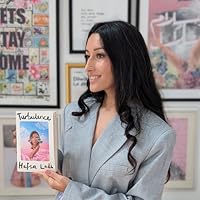
Dressed in an elegant black jumpsuit, Alya Mooro sits on a brown leather sofa at The Union Club in London while reading from her debut book, The Greater Freedom: Life as a Middle Eastern Woman Outside the Stereotypes. Her outfit is by Jordanian designer Nafsika Skourti – a fitting choice for the occasion, as in both her social commentary and this book, she has been vocal about her desire to support and campaign for modern, middle-ground Middle Eastern women.
Throughout The Greater Freedom, Mooro expertly weaves together personal anecdotes with research and statistics to compile a book about uncovering her identity as an Egyptian-born Londoner, fittingly described as “part memoir, part social exploration” by Amazon, its publisher.
“Where are you from?” the author is constantly asked, as an inner dilemma ensues about whether she identifies more with her Egyptian heritage or British citizenship.“I am both and neither,” she concludes to the reader. “Having to compartmentalise one’s life” is “strange” and “unpleasant”, she writes. Instead, she explores the ways in which her western culture and Egyptian heritage influence her outlook on life.
As a fellow female journalist with Eastern heritage, also raised in the West by moderately liberal parents, I found myself relating to many of Mooro’s experiences, questions and ambitions – not to mention the fact we both were Avril Lavigne fans before turning to hip-hop and are both awake by 7am, crafting lengthy to-do lists, feeling a burst of accomplishment once each task is ticked off.
Ours is a generation of second and third-culture women who are numerous, and in her book, Mooro’s stories are intertwined with discussions with fellow “hybrids”, or Middle Eastern women in the UK – anonymous sources referred to as Samira, Dunya, Mariam and Haifa, who hail from Egypt, Oman, Iraq and Kuwait.
“It took around two years to write The Greater Freedom, from inception of the idea to publication. I turned 30 as I finished writing the book, which felt very poignant, as writing had enabled me to unpick so many of the ideas and ways of being I had adopted almost by osmosis – from what I term in the book the ‘invisible jury’,” referring to the greater Arab society, who in her experience, equate the prospect of their children being westernised to them being “ruined”.
This invisible jury contends that Muslim Arab women should marry Muslim Arab men, as opposed to those of other religious or cultural backgrounds, and ensures ‘marriageability’ should be the top priority of Arab girls. Readers learn that in the UK, the average bride is 35, but in the Middle East, one fifth of girls are wed before they turn 18. “Regardless of other achievements or accolades, women in the Arab world are expected to first fill the roles of wives and mothers before all others,” writes Mooro. Needless to say, this contrasts starkly with the ideals embedded in her European upbringing...
Read the full review for The National newspaper here: https://www.thenational.ae/arts-cultu...
Dressed in an elegant black jumpsuit, Alya Mooro sits on a brown leather sofa at The Union Club in London while reading from her debut book, The Greater Freedom: Life as a Middle Eastern Woman Outside the Stereotypes. Her outfit is by Jordanian designer Nafsika Skourti – a fitting choice for the occasion, as in both her social commentary and this book, she has been vocal about her desire to support and campaign for modern, middle-ground Middle Eastern women.
Throughout The Greater Freedom, Mooro expertly weaves together personal anecdotes with research and statistics to compile a book about uncovering her identity as an Egyptian-born Londoner, fittingly described as “part memoir, part social exploration” by Amazon, its publisher.
“Where are you from?” the author is constantly asked, as an inner dilemma ensues about whether she identifies more with her Egyptian heritage or British citizenship.“I am both and neither,” she concludes to the reader. “Having to compartmentalise one’s life” is “strange” and “unpleasant”, she writes. Instead, she explores the ways in which her western culture and Egyptian heritage influence her outlook on life.
As a fellow female journalist with Eastern heritage, also raised in the West by moderately liberal parents, I found myself relating to many of Mooro’s experiences, questions and ambitions – not to mention the fact we both were Avril Lavigne fans before turning to hip-hop and are both awake by 7am, crafting lengthy to-do lists, feeling a burst of accomplishment once each task is ticked off.
Ours is a generation of second and third-culture women who are numerous, and in her book, Mooro’s stories are intertwined with discussions with fellow “hybrids”, or Middle Eastern women in the UK – anonymous sources referred to as Samira, Dunya, Mariam and Haifa, who hail from Egypt, Oman, Iraq and Kuwait.
“It took around two years to write The Greater Freedom, from inception of the idea to publication. I turned 30 as I finished writing the book, which felt very poignant, as writing had enabled me to unpick so many of the ideas and ways of being I had adopted almost by osmosis – from what I term in the book the ‘invisible jury’,” referring to the greater Arab society, who in her experience, equate the prospect of their children being westernised to them being “ruined”.
This invisible jury contends that Muslim Arab women should marry Muslim Arab men, as opposed to those of other religious or cultural backgrounds, and ensures ‘marriageability’ should be the top priority of Arab girls. Readers learn that in the UK, the average bride is 35, but in the Middle East, one fifth of girls are wed before they turn 18. “Regardless of other achievements or accolades, women in the Arab world are expected to first fill the roles of wives and mothers before all others,” writes Mooro. Needless to say, this contrasts starkly with the ideals embedded in her European upbringing...
Read the full review for The National newspaper here: https://www.thenational.ae/arts-cultu...
July 15, 2025
A very interesting book especially if you are the kind of person who struggles to answer the question “where are you from?”, and feel different even when you are amongst a group of people who look like you.

November 3, 2019
Alya really did something with this book. Explores so many themes and will make you learn/unlearn a new version of you.
January 6, 2020
Really enjoyed this book. Mooro's written voice is so relatable and she covers everything from sex and relationships to representation and belonging.
Displaying 1 - 30 of 87 reviews