Jump to ratings and reviews
Rate this book

Bitter Harvest: The Memoirs of Africa's Most Controversial Leader

Rate this book
This book is the autobiography of Ian Smith, the last Prime Minister of Rhodesia. After discussing his early life, Smith tells how he sought to keep Rhodesia on a path to full democracy during the West's decolonization of Africa.

663 pages, ebook

First published June 1, 1997

144 people are currently reading
1452 people want to read

About the author

Ian Douglas Smith

3 books15 followers
Former Rhodesian Prime Minister, which unilaterally declared his country independent of Britain on 11 November 1965, and led white-minority government until 1979.

Ratings & Reviews

What do you think?
Rate this book

Friends & Following

Create a free account to discover what your friends think of this book!

Community Reviews

5 stars
131 (37%)
4 stars
138 (39%)
3 stars
61 (17%)
2 stars
14 (3%)
1 star
8 (2%)
Displaying 1 - 30 of 60 reviews
11 reviews
November 16, 2010
A fascinating and gripping account of the life and times of Rhodesia's last prime minister. Not only does it have a biographical section exploring Smith the man, but the real meat is the geo-political storm that eventually made Rhodesia's existence unsustainable. A remarkable portion of African history is covered from a authentically contrarian and under-represented perspective. Smith comes across as bold, defiant, righteous, and whinny at times. A worthy read for anyone interested in African and colonial history.
Profile Image for Reza Amiri Praramadhan.
610 reviews38 followers
February 17, 2024
Ian Douglas Smith is my favourite African statesman. The reasons for it are: first, he was a conservative; second, he was a commited anticommunist; and third, he was a patriotic sort of man I admire. This book is much about Smith’s life in parallel with Rhodesia’s from the time of UDI right to its demise and the rise of Robert Mugabe. A staunch paternalist who believed that blacks are not ready to be handed power over Rhodesia, he fought against communist encroachment for almost fifteen years, a fight that he could win if not for the sabotages and obstructions from Britain, South Africa and to some extent, United States. His supposedly ‘racist’ views seem to be vindicated that Zimbabwe went from one of the countries with strongest economies in Africa, even with UN sanctions and embargoes, into a much-ridiculed country riddled with corruption, nepotism, totalitarianism and economic catastrophes, all caused by the blacks themselves, who posed as liberation fighters. I guess today Smith would be smiling in his grave because recently, Mugabe, his old nemesis was finally toppled and Zimbabwe now is trying to find a better path for itself.
Profile Image for Luke.
85 reviews11 followers
November 5, 2015
A very good autobiography, if nothing else. Although it should be expected that it is one sided, Ian Smith gives the view how it is and very rightly justifies himself - most of the things he said turned out to either be absolutely true or just common sense. Oh what a shame Rhodesia fell. I wish it was longer - that's my only complaint. Very British writing too, which is always a plus. He was born a Rhodesian, he died a Rhodesian. Unfortunately, his fellow kith and kin fell and betrayed him. The story of perfidious Britain, I suppose.
Profile Image for Patrick .
628 reviews30 followers
May 20, 2009
Although the writing style is typical British and statesman like. It is intresting if you are intresting in that sort of thing.

Whites screwing whites and blacks killing blacks. Even South Africa turned against Rhodesia.

I get Smith`s idea of gradualism but it turned out that the people wanted everything immediatly.
Profile Image for Cav.
907 reviews205 followers
April 5, 2023
Bitter Harvest (aka The Great Betrayal: The Memoirs of Africa's Most Controversial Leader) was an interesting look into the tragic story of a lost country; once great. Although the subject matter is pretty sad, it is an important historical account.

Author Ian Douglas Smith was a Rhodesian politician, farmer, and fighter pilot who served as Prime Minister of Rhodesia (known as Southern Rhodesia until October 1964 and now known as Zimbabwe) from 1964 to 1979.

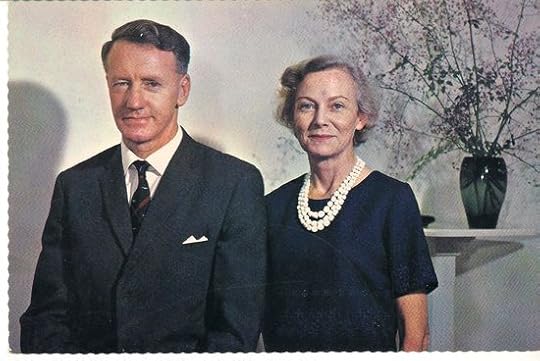
Ian Douglas Smith and his wife Janet:
0014c7c67a5ed5e6c1d1973f0dbd5468


Mention the former country of Rhodesia, and you will likely be met with many polarizing reactions, from different sides of the political spectrum. Many in academia and the media class decry Rhodesia, labeling it a "racist" regime. But was that true?? This book is the first-hand telling from the man who was Rhodesia's long-standing PM.

The story of Rhodesia's downfall is not the one of white versus black racial conflict and fighting that many historians and pundits would have you believe. Rather, the story of Rhodesia is one of fighting for the values of freedom and civilization against the destructive forces of socialism/communism. It is the story of how a brave and noble country fought to preserve the values that made western civilization great in the first place, despite being abandoned by their closest allies in their time of need.

As the book's title intimates, "the great betrayal" came from most of the free world's lack of support and eventual condemnation of Rhodesia as it fought against foreign-trained insurgent communist terrorists that aimed to bring down the country with Marxist revolutions. Both China and Russia were actively funding and training these communist insurgencies, with their end goal being to seize Rhodesia and make their way toward South Africa. They wanted the continent of Africa; complete with its abundance of natural resources, and their "domino" strategy aimed to achieve this end.

Not only did the British Crown not assist in helping their former colonial brethren fight for freedom and democracy against an active and murderous communist insurgency, they actively conspired to bring down the country. A country that enjoyed the highest standard of living in the entire Sub-Saharan African continent. Many historical figures are central to the writing here, including the socialist former PM of Britain Harold Wilson. The former PM of South Africa, John Vorster is also talked about at length.

Smith lays a bit of groundwork in this quote, noting the difficulty of integrating lesser developed tribal peoples into modern civilization:
"It is difficult for people who have never lived in this part of the world to appreciate that sub-Saharan Africa is different. It was the last part of our world to come into contact with western European civilisation, and when the pioneers arrived in this country the local people had no written language, no form of currency, no schools or hospitals, and lived in makeshift houses with grass roofs. The wheel had not even evolved, nor had the plough. The change which has taken place is absolutely phenomenal, and is a tribute to what the white inhabitants did over a period of ninety years..."

There is a common misconception often repeated by those that want to smear Smith's regime as racist; that Rhodesia was a white-supremacist apartheid regime. This was not the case. Smith addresses these attacks in this bit of writing:
"...One of the most persistent accusations hurled at us over the years was that we took this action in order to ensure permanent white minority rule.
History proves conclusively that this is a blatant lie. It was, of course, a continuation of the campaign of the communists, who had all along been trying desperately to frustrate our legitimate objective. Now that they had lost, they embarked on their misinformation campaign, trying to besmirch our motives. The only way they could succeed was by twisting the truth and, as everyone knows, the communists are world-beaters at that game. What is so sad is the gullibility of the free world: the vast majority allowed themselves to be hoodwinked.
Let us examine the facts, the truth. Going back to the original Rhodesian constitution of 1923, there was no racial connotation to the franchise, and from that date there have been people of every race, colour and creed on the voters’ roll. The next step came forty years later with the 1961 constitution, and this embodied the addition of a ‘B’ roll with a debased franchise qualification especially designed to cater for our black people. The normal roll, or ‘A’ roll as it was now called, remained open to all irrespective of race, colour or creed. So this new constitution, far from trying to entrench our white people, did the reverse, and facilitated and encouraged the participation of our black people. The constitution was accepted by, and carries the signatures of, representatives of the British government, the Rhodesian government, and the black nationalist leaders. It enshrined the principle of ‘unimpeded progress to majority rule’ and the British representatives involved in drawing up the constitution estimated that it would culminate in a black majority government within ten to fifteen years. If this is the manner in which white Rhodesians attempted to perpetuate their rule of the country, their incompetence, not to say stupidity, was most remarkable."

Apartheid is also mentioned in this quote, where Smith talks about John Volster's South African apartheid regime:
"Vorster’s National Party, however, was now faced with no small problem: how to climb down from their philosophy, which was the foundation, the whole basis of their party’s existence. The effect on their electorate would certainly have been traumatic. The result was that they simply allowed things to drift as far as the reallocation of land was concerned, but preserved, even strengthened those aspects which perpetuated racial segregation. This created an entirely new situation. A division within a unitary country based purely on race, declaring that white people were first-class citizens and blacks were second-class citizens, was unprincipled and totally indefensible. Not only would it be impossible to gain support for such a philosophy anywhere else in the world, but most important of all, it would create bitterness and hatred among the great mass of the people — a blatant affront to them, based purely on race. I believed that there were answers to the problem without abandoning our Western civilization, and lived in expectation as to how the South Africans were going to deal with it."

When European countries began to withdraw from Africa during decolonization, the optics of supporting a prosperous country created by the white man against black communist insurgencies began to be unpalatable by the former colonialists and global political organizations like the United Nations. A drive to remove all things associated with colonialism became fashionable as the modern left consolidated political power.

Smith mentions repeatedly that he supported a majority rule, but this needed to be implemented correctly. Hastily dumping complex systems of economy, governance, and infrastructure on a relatively primitive group of people that had no previous experience managing these things is a recipe for disaster. He wanted to make sure that the transition to majority rule placed a premium on maintaining stability for the citizenry.

Unfortunately, many neighboring African countries in the post-colonial era did not share this vision, and the results were tragically predictable. Called "Big Man Rule" by many historians, the political landscape of most of post-colonial Africa is replete with economic destruction, authoritarianism, mass murder, kleptocracy, nepotism, and even genocide.
Smith drops this quote:
"Probably the most compelling argument in support of our taking of independence was the recent history of Africa; we were living cheek by jowl with the results. For example, Ghana was the first British country to be granted independence in 1957, and the British government claimed that this glorious example would prove the success of Britain’s colonial policy.
Within a couple of years their President Nkrumah had established a oneparty dictatorship, half of the Members of Parliament were imprisoned, the leaders of the opposition had been eliminated, the economy was in ruins, and the President had established an external multi-million-pound personal bank account. We could not know at the time that in the following year, 1966, he would be ousted and lucky to get out with his life.
Next in line for independence was Nigeria, in 1960, and we were told that this was a mature country with links with Britain and Europe going back over 200 years. There were big religious and ethnic differences within the country, but the British-made constitution was designed to cater for those. Nevertheless, the country was soon enveloped in dreadful civil war between the Muslims in the north and the negroes in the south. Corruption was rampant and the economy soon in ruins. While our negotiations were at a peak in October 1965 we received reports of hundreds of murders during their elections. In spite of this, preparations for the Commonwealth prime ministers’ conference in Lagos in January continued. At its conclusion Wilson spoke in glowing terms of the great success of Nigeria’s independence, and of how well the other newly independent countries of the Commonwealth were progressing. Britain was proud of the part it had played in bringing all of this to fruition, Wilson said. Within days of the conference ending, their leader and dictator, Abubakar Tafawa Balewa, and a number of his ministers, were barbarously murdered.
Then came the Belgian Congo’s independence, also in 1960. The country was immediately plunged into civil war, with deaths running into tens of thousands and the white settlers caught in the middle with murder and rape carried out with impunity. Refugees by the thousand flocked through Rhodesia, and our whole country rose to the occasion to provide assistance. Needless to say, the graphic description of the atrocities to which these poor people were subjected, backed up by medical evidence from our doctors and hospitals, left an indelible impression on our people.
Then, in quick succession, came independence for Tanzania, Zanzibar, Uganda and Kenya. The story was the same: tribal violence and massacres, political opponents imprisoned, coups, streams of white refugees who had been dispossessed of their property and were passing through Rhodesia, rampant corruption and the establishment of external bank accounts by their leaders. In the short period of Zambia’s independence, October 1964, there had been massacres of government opponents, corruption was in full swing, and Kaunda had stated his intention of forming a one-party dictatorship. Yet Britain was more than happy to give them their independence, but not Rhodesia, which had to its credit an exemplary record of over forty years of self-government. How could Rhodesians accept such blatant hypocrisy, and condone such devious double standards, especially when the price was their own future, their own lives?
As I have stated on so many occasions, when British solutions for Africa went wrong — and this has happened in every case — the British were looking in the opposite direction, disassociating themselves from the resultant disaster. When people have to go on living with the decisions they make, they go out of their way to ensure that they avoid such blunders.
The record is clear for everyone to observe: British policy for Africa led to one man one vote — once. Thereafter, dictatorship ensued, with the resultant chaos and denial of freedom and justice. By contrast, we believed that our policy would prove successful. It was one of gradualism in order to ensure that people fully understood the complicated democratic system.
From experience, they would learn about its pitfalls, and this would assist them to avoid the disasters which we had witnessed in countries to our north. We referred to it as ‘meritocracy’, and tragically the world will never know whether it would have succeeded and proved the exception to the rule — evolution in preference to revolution. It is important to understand that with the introduction of Western democracy into sub-Saharan Africa we were experimenting with a system of government which was foreign to, and unknown in, those parts."


Sadly, the book is a long-form telling of the slow, predictable unraveling of a country that managed to prove the exception to the ghastly state of post-colonial Subsarahan Africa. A democratic nation, carved out of the wild terrain, founded on the principles that made Western Civilization great; Rhodesia enjoyed the highest standard of living (for both whites and blacks) on the continent, and was once considered "the breadbasket of Africa."

The lack of will by bleeding-heart socialists, leftists, and other assorted "liberals" to take a stand alongside a free country against a sustained, ~15 year multi-pronged communist onslaught out of fear of being called "racist" makes for a sad read. Ironically enough, it would be the majority black population - the same blacks that these virtue signallers pretend to care about - that would bear the lion's share of this onslaught which would ultimately lead to the complete destruction of their country.

Tragically for Rhodesia, neighboring Mozambique fell to the communists in 1975, which lead to a surge in cross-border attacks by various Marxist forces aimed at both military and civilian targets. Commonly known as "The Bush War," Rhodesia fought for its sovereignty from July 1964 to December 1979. While many great books have been written on that war, the end result of being cut off from all international aid in the face of well-funded communist insurrections in a war of attrition was inevitable...

The supreme tragic irony here is that the desire by many bien pensants of the political left to remove colonialists out of Rhodesia as quickly as possible would prove to be the absolute death blow to any semblance of functionality that the country would ever know going forward. Incoming communist dictator Robert Mugabe would go on to launch the forced expulsion of the remainder of Rhodesia's white population, and preside over the absolute and total destruction of the economy. Remaned "Zimbabwe," the country would ultimately have one of the highest rates of inflation in world history, peaking at an 79.6 billion percent month-on-month and 89.7 sextillion percent year-on-year in mid-November 2009.

***********************

Bitter Harvest is an important historical record. The writing here should help clear the air around many of the conspiracies and general smearing that surround the name of Rhodesia.
I would easily recommend this book to anyone interested.
4.5 stars.
Profile Image for Otto.
64 reviews7 followers
Read
June 9, 2007
Remarkable memoirs. His memoirs show him to be a competent and determined man with a fatal narrowness of vision.

"If Smith was a black man, I would say that he was the best Prime Minister that Zimbabwe ever had."
Profile Image for Joe.
84 reviews1 follower
April 14, 2018
I have wanted to read this book for many years. Seeing the collapse of Zimbabwe as a young man got me reading. Imagine my shock when i discovered that in the not to distant past the now failed state of Zimbabwe had been the prosperous first world nation of Rhodesia. Our so called leaders all feigned total surprise at Mugabe stealing elections and repressing his people. Killing white farmers and reducing his nation to a starving Cholera ridden hell hole. Despite his terrorist atrocities they repeatedly schemed to put him in power over the more reasonable leadership of Bishop Muzorewa and the government of national unity.

The book covers a brief synopsis of Rhodesia's brief history from its founding by the pioneers and responsible government in 1923. Smith tells of his family, growing up and his love of Sport and time at university. Most illuminating is his recount of his war time exploits as a fighter pilot and being shot down and spending many months behind enemy lines. His return to Rhodesia after the war. Buying his farm and entering parliament. The political difficulties of the brief confederation and then the endless duplicity and broken promises of the British government. You can understand it coming from the Wilson government but the worst transgressions committed against Rhodesia were by the conservative party. The first 10 years of UDI (Unilateral Declaration of Independence) seemed to go quite well. He recalls the failed conferences with Wilson.

The civil service briefed the government that Smith was merely a simple minded bigot and did everything possible to keep him from the TV cameras. When in fact its clear to me they had no idea who they were dealing with. Once it dawned on them it seems that Smith put a degree of terror into the British establishment because not only was he not corruptible he was prepared to make a stand against Marxism and the dedication with which his countrymen followed his leadership.

We then see how Rhodesia's position became untenable in the late 1970's with the fall of Mozambique and Rhodesia's total dependence on South Africa who sacrificed their only true ally in order to prolong their apartheid system. One detects the malign influence of Henry Kissinger in this betrayal. Which ultimately only hastened the downfall of South Africa. If our politicians had truly desired justice and progress for Africans then Rhodesia really was a model for other African countries to move towards majority rule through gradualism instead of revolutions by terrorists.

The final chapters detail the deterioration of Zimbabwe through corrupt 1 party rule and Marxist economic policies, nepotism and corruption throughout the 1980's and 1990's. Like me many of you will remember the collapse of Zimbabwe in 2008. The stolen election and the 100 trillion dollar notes the bank of Zimbabwe was printing. Equal to about 40 cents US. When in 1970 despite total blockade and being a pariah nation 1 Rhodesian dollar was equal to 1 US dollar.

Ian Smith is a man vilified as the most evil man in the world despite the fact his so called "racist" government did more for its black population than most black governments have. The lesson i took away from this memoir was that Smiths main flaw was being a gentleman. Had he been more ruthless in dealing with the terrorists and been prepared to call out Rhodesia's supposed "friends" for their treason and duplicity. To expand the war against the terrorists then the nation of Zimbabwe or Rhodesia would be much better off today.
Profile Image for James.
889 reviews22 followers
August 11, 2014
In Bitter Harvest, Smith meticulously tells the other side of Zimbabwe/Rhodesia's struggle for independence. He seeks to explain the reasons why his government declared its Unilateral Declaration of Independence, and how Rhodesia coped in the face of sanctions and terrorism until the pressures forced him and his government to accede to the wishes of his adversaries.

By no means unbiased, Smith's memoirs are however important in understanding the modern history of Zimbabwe and does shed some positive light on the pre-Mugabe times, counteracting some of the biases in Western media.

No matter in history is purely black and white: Bitter Harvest demonstrates this perfectly and in reading this, one appreciates historical matters are always more complex.
Profile Image for Leo.
28 reviews1 follower
August 26, 2024
Ian Smith, born in Rhodesia, Second World War pilot, was the last white prime minister of Rhodesia, a country known today as Zimbabwe. This book is his memoir and a very detailed and extensive account of how he became a politician, how Rhodesia gained independence from the UK, and ultimately what led to the creation of Zimbabwe.

This book served as a great look into the modus operandi of the large world governments (in this case the UK, US and South Africa, as well as the Soviet Union and China) in their foreign policy. Colonial countries after the Second World War were under much political pressure to relinquish their colonies, which led to a quick succession of independence granting mainly by the UK in Africa. There are many theories as to why this happened, such as maintaining the colonies being too expensive. Rhodesia's UDI (Unilateral Declaration of Independence) led to many sanctions from around the world on the UK's pressure. Despite this the landlocked country was doing well. The title of the book refers to the closest allies of Rhodesia (UK, South Africa, US) sequentially abandoning it in favour of appeasing domestic political tendencies, which eventually led to its fall.

Ian Smith was a proponent of a gradual switch of power from minority white rule to majority rule. It is to be noted that Rhodesia never had apartheid like South Africa, however voting laws were based on land ownership, which meant that essentially only white people voted. Much of the black population lived in tribal hierarchical structures on their own land, with no experience of democracy, with the majority being illiterate. For this reason, among many others, he argued, a gradual change to a one man one vote democracy would be necessary, to prevent a dictatorship or one-party state to develop (the way all other African countries went shortly after they gained independence; one-party states, dictatorships, military coups, or civil war with genocide). All this while communist world powers were practically openly funding terrorists in Rhodesia, and their communist neighbours hosting these terrorists (such as Nkomo's ZAPU or Robert Mugabe's ZANU, which eventually took over).

The key takeaway for me in this book was the handling and pressure large outside governments exercised in order to achieve their own ends. More often than not, the people making life altering decisions for Rhodesia had no clue about on the ground reality, or simply made blatantly ridiculous mistakes (with no consequences to them of course). Mistakes so ridiculous, I personally would not have given the benefit of the doubt that they weren't intentional. It is perfectly plausible that for colonial countries, in the final analysis, it was much cheaper to have a corrupt dictatorship govern a country than to run it themselves, all the while still having access to all the minerals and resources of said country. No responsibility for any famines, epidemics, economic catastrophes. Just bribing the top government officials to keep exploiting the country. Rhodesia after all was a self-sufficient country with a net positive trade balance, mostly growing cash crops such as tobacco, but also grain and maize.

Some negatives about the book were that this is obviously a biased perspective. I am sure Ian left out some facts that would have reflected poorly on him. However, at the end of the day, his negative predictions about the future of Southern Rhodesia/Rhodesia/Zimbabwe in case Britain's and South Africa's vision being implemented were not only fully confirmed; he completely underestimated how bad it would become. From the time when Rhodesia's currency was worth the same amount as the UK Pound Sterling independently, through the infamous Zimbabwean 100 trillion denomination bills all the way to Zimbabwe now simply using the US dollar as its currency, this is obvious. Due to UK's/US'/SA's failings, Robert Mugabe came to power within a year, established a one-party communist state with unimaginable corruption, genocide against its minority Matabele population, crashing the economy and currency of a formerly self-reliant and prosperous country (even during almost comprehensive embargo by the whole world). In his predictions Ian Smith is much more than vindicated.

Another negative about the book was too much detail describing every single meeting and conversation. I imagine he felt this necessary, to state his perspective on all these events, for the record. Many of these were useful to showcase the duplicity of the parties he was forced to deal with, but that point was reiterated far too many times. This book could have been shorter.

Small plus: Ian Smith mentioned Bisley a few times, as the place where the best shooters go to compete. I just went to the Imperial Meeting at Bisley in July to shoot for Cambridge.

Some quotes from the book:

"The record is clear for everyone to observe: British policy for Africa led to one man one vote — once. Thereafter, dictatorship ensued, with the resultant chaos and denial of freedom and justice. By contrast, we believed that our policy would prove successful. It was one of gradualism in order to ensure that people fully understood the complicated democratic system. From experience they would learn about its pitfalls, and this would assist them to avoid the disasters which we had witnessed in countries to our north. We referred to it as ‘meritocracy’, and tragically the world will never know whether it would have succeeded and proved the exception to the rule — evolution in preference to revolution. It is important to understand that with the introduction of Western democracy into sub- Saharan Africa we were experimenting with a system of government which was foreign to, and unknown in, those parts. "

"An aggravating factor was that the new PM, Robert Mugabe, was born and educated and grew up in Chirau’s country, and as a tribesman from that area traditionally owed special allegiance to Chief Chirau. Obviously there was a clash, and those who came to power through the barrel of the gun were going to stay there by the same means. "

"Gradually the pioneers started spreading out, looking for gold, which was the main attraction, and land to start producing food. Among them were my uncle, George, who trekked up from the Cape in 1894, and my father, Jock Smith, who joined him in 1898. There was no friction, because the local black people knew nothing about mining, and were interested and fascinated at the white man’s digging. In fact, they were happy to have the opportunity to work and, for the first time in their lives, earn money which enabled them to join in the excitement of this new adventure of purchasing and selling — something they had not previously known. Land was plentiful, so there was no problem over crop growing, which again provided an opportunity to earn money. Moreover, because of the primitive agricultural implements used by the black people, which were wooden as opposed to the iron used by the white man, they were concentrated on the light sandy or loam soils, which they found easier to work. The white man, on the other hand, preferred the heavier soils."

"Probably the most compelling argument in support of our taking of independence was the recent history of Africa; we were living cheek by jowl with the results. For example, Ghana was the first British country to be granted independence in 1957, and the British government claimed that this glorious example would prove the success of Britain’s colonial policy. Within a couple of years their President Nkrumah had established a one- party dictatorship, half of the Members of Parliament were imprisoned, the leaders of the opposition had been eliminated, the economy was in ruins, and the President had established an external multi-million-pound personal bank account. We could not know at the time that in the following year, 1966, he would be ousted and lucky to get out with his life.
Next in line for independence was Nigeria, in 1960, and we were told that this was a mature country with links with Britain and Europe going back over 200 years. There were big religious and ethnic differences within the country, but the British-made constitution was designed to cater for those. Nevertheless, the country was soon enveloped in dreadful civil war between the Muslims in the north and the negroes in the south. Corruption was rampant and the economy soon in ruins. While our negotiations were at a peak in October 1965 we received reports of hundreds of murders during their elections. In spite of this, preparations for the Commonwealth prime ministers’ conference in Lagos in January continued. At its conclusion Wilson spoke in glowing terms of the great success of Nigeria’s independence, and of how well the other newly independent countries of the Commonwealth were progressing. Britain was proud of the part it had played in bringing all of this to fruition, Wilson said. Within days of the conference ending, their leader and dictator, Abubakar Tafawa Balewa, and a number of his ministers, were barbarously murdered.

Then came the Belgian Congo’s independence, also in 1960. The country was immediately plunged into civil war, with deaths running into tens of thousands and the white settlers caught in the middle with murder and rape carried out with impunity. Refugees by the thousand flocked through Rhodesia, and our whole country rose to the occasion to provide assistance. Needless to say, the graphic description of the atrocities to which these poor people were subjected, backed up by medical evidence from our doctors and hospitals, left an indelible impression on our people.
Then, in quick succession, came independence for Tanzania, Zanzibar, Uganda and Kenya. The story was the same: tribal violence and massacres, political opponents imprisoned, coups, streams of white refugees who had been dispossessed of their property and were passing through Rhodesia, rampant corruption and the establishment of external bank accounts by their leaders. In the short period of Zambia’s independence, October 1964, there had been massacres of government opponents, corruption was in full swing, and Kaunda had stated his intention of forming a one-party dictatorship. Yet Britain was more than happy to give them their independence, but not Rhodesia, which had to its credit an exemplary record of over forty years of self-government. How could Rhodesians accept such blatant hypocrisy, and condone such devious double standards, especially when the price was their own future, their own lives? "

"Wilson’s next move was to impose oil sanctions, something which had previously been considered but, as we will see, was not well thought out. He struck a bargain with US President Johnson that, in return for British support of America’s Vietnam policy, Johnson would assist with the oil embargo. This was just one more excellent example of how Rhodesia was being used as a political shuttlecock by outside countries, and how the leaders of so-called free world countries could lend themselves to corrupt decisions in order to win support for their own policies. America had no interest in or desire to do anything about Rhodesia. The British were unconcerned about Vietnam. But their leaders were dragging their countries into both these conflicts for their own selfish interests. "

"He asked me, now that I had had a good look at much of the rest of the world, was I still happy about Rhodesia and Africa generally? Obviously, black advancement would progress gradually, with better education and better healthcare, then there was the problem of the local custom of polygamy and the tradition of large families. This had been necessary because, under their previous existence before the white man came, more children had died than survived. However, with more blacks accepting medicine and taking advantage of the improved health standards, the majority now survived, and the population explosion was a growing problem. I had often thought on these questions, and we philosophised at length on various aspects of them. "

"Meanwhile, to the north of us, things were not going all that smoothly. In the spirit of Macmillan’s ‘Winds of Change’ speech, the Belgian government decided that the time had come for them to pull out of the Congo. Tragically, instead of an organised plan for withdrawal and transfer of power, they allowed a state of panic to develop, leading to chaos and a stampede, with the white people being caught up in the usual pillage, murder and rape associated with such events. The responsible authority took the first plane back home, and simply abandoned all commitments. The refugees poured down through the two Rhodesias, where emergency committees were set up to provide accommodation, food and medical facilities. It was the latter half of 1960. This event had a profound effect on our people, making them realise all the more positively the danger of capitulating to the metropolitan powers, who were ready to cut and run at the drop of a hat. "

"And so back home — always a good feeling, but even better when one is a member of a close-knit family built around worthwhile traditions. It is worth repeating: great nations are built on the foundation of great families. There was also the advantage of being part of a small rural community, where people were interested in one another, and prepared to lend each other a helping hand. That communal spirit, turning out to support your local team, making your contribution to the social life of the community, is the bedrock of civilised life. "

"Fortunately, there were some areas in sound natural condition, and the important fact was that we were able to arrest further deterioration. Today, over forty years later, it is a different place and a joy to behold, but there is still much more to be done. We are not unique in this regard. All land requires dedicated people who believe in that well-known maxim that we do not inherit our land from our fathers, we borrow it from our great- great-grandchildren, and each generation is honour-bound to pass it on in better condition than it was in when received. "

"It is difficult for people who have never lived in this part of the world to appreciate that sub-Saharan Africa is different. It was the last part of our world to come into contact with western European civilisation, and when the pioneers arrived in this country the local people had no written language, no form of currency, no schools or hospitals, and lived in makeshift houses with grass roofs. The wheel had not even evolved, nor had the plough. The change which has taken place is absolutely phenomenal, and is a tribute to what the white inhabitants did over a period of ninety years. "

"Later, in 1967, our government, faced with mounting pressure for increased education facilities for black children, in keeping with our constructive approach to such problems, set up a committee to investigate how best to solve the difficulty. The report, which was not finished until the following year, was comprehensive and revealed some startling evidence when presented to us by John Wrathall, the Minister of Finance. Before the advent of the pioneer column in 1890 the local population had remained at around 300,000, kept in check by constant war, disease, pestilence, malnutrition and starvation caused by droughts. With the coming of the white man, however, all this changed. He prevented the wars, provided medicines for the people and veterinary services for the stock, and even in times of drought food was available. It was estimated that the indigenous population was now between 4 and 5 million. The finance necessary to provide education for everyone would consume the whole of our present national budget! The vast mass of the people were in the lower income bracket, and their contribution to the fiscus was minuscule. The thought of increasing tax was rejected because of the adverse effect this would have on confidence, investment, and thus overall development, which in turn would lead to fewer job opportunities. The current sanctions campaign against our country was an aggravating factor. "

"The Portuguese had learned from experience that the British government was not always trustworthy. Did I think there was any hope of the British government meeting our request? I reiterated our case history, pointing out that it was absolutely water-tight, and said that in all honesty I did not see how the British could continue to renege on the agreement which they had made with us. He assured me that he had followed our history meticulously, obviously because of our mutual interests in the area, and that there was no doubt in his mind of the justice of our case. Moreover, he was convinced that what we were trying to do was in the best interests of our black people, as well as of the whites. Then with much circumspection, speaking quietly, almost hesitatingly, he enquired as to whether I planned any action in the event of British intransigence continuing. I stressed that I was a patient man, by nature opposed to impetuosity, but that if we finally came to the conclusion that there was no point in further negotiation, that Britain clearly had no intention of honouring its obligation, expressly because of their desire to appease the OAU, then I must be honest and give him a straight answer: we would take matters into our own hands and declare our independence. His serious, almost impassive face suddenly came alight, his eyes sparkled and his mouth stretched into a gentle smile. He did not speak, and I sensed that he was overcome by a certain amount of emotion. He slowly rose from his seat, came up to me, and shook my hand very warmly before resuming his chair. He then said that he was pleased to meet a man who had the courage to put the interests of his country first, and that he could not fault the plan as I had explained it. Regrettably, he was of the opinion that the British would fail to honour the contract which they had made with us, with the consequence that I had mentioned. Portugal would give us maximum support, and according to his information South Africa would do likewise. He thought that the going would not be easy for us, but knowing the calibre of our people he was satisfied that we would finally win through. "

"I always find it reassuring to be associated with people who have the courage of their convictions. It has the tonic effect of restoring one’s confidence in one’s fellow-men. "
84 reviews
May 29, 2015
'Politicians worry about the next election, statesmen worry about the next generation'-Ian Smith.

A very interesting book about a much maligned political leader of the 70s and 80s. I thoroughly enjoyed this book as it showcased repeatedly Ian Smith's integrity, courage, and firmness. From a WWII pilot to the president who eventually lead Rhodesia to Independence from Great Britain.

Much of Rhodesia's history has been scarred by its close proximity and friendship with South Africa, however, Rhodesia never had an apartheid system of government.

Smith and Rhodesia were eventually forced to acquiesce to external demands (by the U.K. OAU and U.S.) to allow the Communist terrorist to vote in the last free and fair election. The results were a worst-case scenario that elected Robert Mugabe, who successfully destroy the country over the next 30 years.

While most white Zimbabweans emigrated, Smith decided to remain in the land of his birth until his death.

Smiths story is inspiring, and the chronicling of the decline of Zimbabwe tragic. Truly a black mark on history, and a shame to those politicians who helped it come to pass.

For a more critical view of the Smith PF government I recommend 'Rhodesians Never Die' by Peter Godwin. And a great documentary is Mugabe and the White African.

(The book is long though and some points are repeated up over and over again, like your old grandpa telling you a story again and again).
Profile Image for RANGER.
312 reviews29 followers
October 25, 2023
Important memoir whose veracity is confirmed by historical hindsight
Ian Smith's 1997 political memoir of his life as possibly the African continent's most famous "white African" was originally entitled "The Great Betrayal" -- a title which sums up largely the bulk of the message of this well-written, bitter-sweet historical memoir. Ian Smith, a native born Rhodesian, was the last white Prime Minister of Rhodesia, the first white ruler in African history to peaceably transition power to a black nationalist, and the voice of political reason and opposition during the first 17 years of the 37 year reign of the Zimbabwean communist dictator, Robert Mugabe.
Bitter Harvest is the title of the American edition of The Great Betrayal and covers Smith's entire life through 1997. It is a long well-written but somewhat tedious book due to the large amount of material focused on the endless rounds of diplomatic banter during the 1970s when the UK, South Africa, and the United States tried to speed up Rhodesia's planned transition to black majority rule using tactics that sadly led to the 1980 events that put Mugabe in power. But if you are a student of Cold War, post-colonial African history like me, you will find this part intriguing.
This is a controversial book on several levels.
First, it's a memoir -- the "memories" -- of a controversial political figure. As this is his story, Smith unapologetically justifies his decisions and role in the transition of Rhodesia to Black African Majority Rule and his fight to keep Rhodesia/Zimbabwe independent from Great Britain and free from Communism. Such memoirs are rarely self-critical or totally honest. Fortunately, history and the witness of others to it, have largely vindicated Ian Smith's efforts to keep Rhodesia strong while he was its Prime Minister. But that doesn't mean all of the details in his memoir aren't free from bias or selective memory.
How could they be?
Secondly, Ian Smith, as one of the most controversial figures in 20th century politics, was largely demonized by the Western news media, Western liberal activists and academics, and the propagandist arms of both the Communist and Non-Aligned Movements of the late 20th Century. As Rhodesia has become a bit of a footnote in Cold War, post-colonialist history, if you have heard of him you likely heard only the slander of his very vocal detractors. He has been called a racist and an architect of apartheid, neither of which is true. And the venom of virtue-signalers who paint all "white" African leaders as Nazi-like colonialist is spread broadly over everyone but especially Ian Smith. Because he clearly was no racist and presented his arguments for the evolution of Rhodesia to black majority rule (via the tribal system) with intelligence and compassion. And he largely succeeded as Rhodesia did transition to a new country called "Zimbabwe Rhodesia" with a black prime minister, Abel Muzorewa, in 1979.
I did find his remarks about Nelson Mandela illuminating. He expressed his opinion that of all the black nationalists who fought for black majority rule, only Nelson Mandela achieved the level of a true Statesman. Most objective witnesses to the tragic events of post-colonial Africa would agree.
For the rest of his life, despite being on the enemies list of ZANU-PF, the communist-nationalist party of Robert Mugabe, Ian Smith continued to live and work his farm in Zimbabwe. He also continued as the leader of the Rhodesian Front opposition party until retiring in 1987--even as ZANU-PF thugs tried to push him off his land and eventually reduced his political party to mere token opposition under the heavy hand of Mugabe who murdered tens of thousands of his tribal and political enemies during his rapacious rule over Zimbabwe. Ian Smith died in a South African hospital in 2007.
In sum, Smith comes across in Bitter Harvest as a simple, conservative yet compassionate, native-white African who loved his country and his people -- Black and White -- but who stuck to his guns, stubbornly clinging to his Rhodesian nativism and seemingly quaint British imperialist notions of honor and fairness even as those around him sold him out for political or economic favor. Rhodesia didn't stand a chance, it seems. Despite Smith's best intentions to keep Rhodesia free and in control of its own destiny, it was simply unable to overcome the steamroller of post-colonialism and the harsh realities of Cold War realpolitik.
It is worth noting that US Secretary of State Henry Kissinger apologized to Smith in 1975 for being involved in a process that would "destroy his beautiful country" -- something Kissinger ADMITTED to later on in his own post-retirement career. So maybe many of Smith's most fascinating recollections are valid and should be accepted at face value.
Either way, this is a fascinating read -- IF you have a decent understanding of the post-colonial political events in southern Africa during the second half of the 20th century. If not, you will likely find the droning recollections of failed diplomacy that make up the middle of this long memoir a bit too much. Which is unfortunate because some of the best parts of this book are in its final quarter, when Smith is out of power and has to deal with Robert Mugabe. Later editions of this book (like mine) contain afterwards and epilogues on the collapse of Zimbabwe's economy and the fading popularity of Mugabe which would lead to his removal from power in 2017. Again, I love this kind of history so for me, this was a fantastic, hard-to-put-down read.
Recommended for those interested in Rhodesia, Zimbabwe, the Bush Wars, Cold War politics in Africa, South Africa's political activism on the continent in the late 20th Century, and US and UK efforts to manage African de-colonization. HIGHLY RECOMMENDED!
Profile Image for Thomas Kanyak.
62 reviews1 follower
January 23, 2018
Spoiler Alert: The great betrayal is by Britain and South Africa, selling out Rhodesia to the tragedy of one party gangster dictatorship similar to what happened to the rest of Africa when colonial rule came to end starting in the late 1950's. And Smith makes a compelling case in a very entertaining narrative.
Profile Image for Brian Chando.
23 reviews10 followers
April 12, 2021
I can rate him as a highly misunderstood great statesman of the time. In as much as he inherited a broken society in the racial lines he had great plans of making his country a great one. He has to his disadvantage the unfortunate object of being in a wrong timing. The world over was obsessed with pleasing communists and granting freedom, whereas he had the a idea of a standards based society. He highly respected the rule of law and had great wish to see real success in all respects. Nonetheless he failed to realize what was really happening at the time. In as much as he wanted to please the white supremacists around him covertly, he was also faced with the growing concerns over giving power to the blacks. He constitutionally changed the constitution to allow for inclusion of blacks into the political space (done by no white government ever in africa in that Era) but however the rate at which he did that was not at par with the expectations.

The black politicians were not fully aware that they were following communist ideology which could easily be manipulated to bring about a one party state and he knew that this was comming. No one else saw it coming. I respect him for standing down and not resorting to using force to remain in power as noted in him being a constitutionalist. But this was to the detriment of the society. It must have been hard for him, really hard to then live in the country with delapidating living standards whereas he had saw it coming.

People misunderstood his wish to have a slow migration to a majority rule as opposed to a revolution because we see the results of the revolution in modern day zimbabwe.

I have learned a few aspects about the history that we have been taught in school.

That the freedom fighters overpowered the British, at no point in time did this happen. The RLI and Selous Scouts were the best military professionals ever and of all face to face confrontations with the terrorists, they never lost a battle. They thwarted freedom fighters with accuracy suffering a few if at all casualties. And besides, this wasn't the British, it was a Rhodesia under heavy sanctions from the free world and under political pressure from South Africa which was its next largest trading partner.

Secondly It was only Smith who advocated for policies of inclusion such that black politicians could stand a chance at sitting at the political round table to discuss the future, it was not because of superiority of blacks military power-not at all (pressure maybe).

Another point we fail to realize is that black people were not coming from an educated perspective, how do you teach someone politics when they don't know how to write their name. Which is why smith created schools and political campaigns to motivate people to get educated and vote. But they wanted to cling to the rural setup of chiefs and kraal heads, Smith realizing this, he setup and general council of chiefs to maintain this social construct. Only a few people were really interested in white man politics - at least at the start.

Also a thing i noted was that one man one vote doesn't really work since mass media propaganda can always be used to change public opinion, so there has to be a certain level of competence when it comes to voting and i think Smith had this thorn in his ass trying to convince the free world into observing this.

In the end i feel like only a thing such as negotiation opted for by Nkomo and Sithole etc was the best course for the Nation although military pressure was necessarily to convince the white supremacists. Another thing important was maintaining white trust in the system coz they had the skillls and experience of running a country
Profile Image for Darnell.
1,440 reviews
Read
May 3, 2025
The conversation is generally about whether you think the author is racist or what can be gleaned through his biases, but honestly, my first major thought was being reminded how much I don't like memoirs: I don't think the author's recountings offer many real insights and I absolutely don't want to read about whether he did or did not play rugby at various points in this life.

This continues into the political sections of my book, which are all meetings and individuals, not analysis or conclusion. Usually I try for primary sources, but this is a case where I absolutely wanted a secondary source, because I don't have the knowledge to evaluate the author and his biases. My search for books on Zimbabwe continues.

Finally, just going to quote this from one of the top reviews: "Ian Douglas Smith is my favourite African statesman. The reasons for it are: first, he was a conservative; second, he was a commited anticommunist; and third, he was a patriotic sort of man I admire."
6 reviews1 follower
January 23, 2022
Very interesting first hand account of Rhodesian life and the policy of gradualism Vs revolution. It seems that everyone saw the writing on the wall for Mugabe but the external powers were too busy politicising the Rhodesian issue to take note.
Profile Image for Duncan Swann.
573 reviews
December 22, 2024
Look, very interesting as history, tragic as a story, but poorly written so overall I can't be bothered finishing it.
Profile Image for Lifa Nobanda.
18 reviews
April 15, 2021
A worthy read for those who are interested in the fall of Rhodesia, the rise of Mugabe and tragically the premonition predicted by Ian Smith of a failed State Government by a one-party State dictatorship. The book starts off with Smith's early and younger years, his contribution to the war, the formation and breakup of the Rhodesia Federation and his rise to the premiership. It is from the period of the dissolution of the federation, where this book becomes very interesting and intriguing. As the name would suggest, Rhodesians' were unfortunately betrayed, by the double standards of International politics and Diplomacy. Unashamed to mention it, Smith reveals how the British were dishonest in their dealings with Rhodesia, patronizing and frustrating to work with. He is equally critical of the South Africans too, describing the naivety of the Vorster administration of realizing that the collapse of Rhodesia, would pave the way to communism, eventually coming to South Africa, and likewise, the fall of Apartheid.

Smith states in his book, that he was not against having a black government, rather the intention was to produce a Constitution which would gradually bring in more Blacks into Government. In his view, an evolutionary process was necessary compared to revolutionary, or power being seized by the barrel of the gun.

One feels pity for Ian Smith, as he had to deal with not only the lying, double-standards and deceit of the British and South African Governments, but as you read further and towards the end of the book; he laments the 'betrayal' from those within his caucus, the indecisiveness and ineptitude of some of his colleagues.

A pitiful end to a country which had one of the strongest currencies in Africa and an industrial hub base second to South Africa; for the country to be brought to the worst of social-economic problems in Sub Sahara Africa.
Profile Image for Jacob Granqvist.
97 reviews4 followers
April 8, 2021
Even though it was repetitive at times, its contents were extremely interesting. An eye opener.
Profile Image for R..
1,680 reviews51 followers
July 23, 2017
Meh. Ian Smith may idolize Winston Churchill but he's most definitely not Winston Churchill. Smith lived a very interesting life and I learned a great deal about him from this memoir. One of the more interesting facts being that he was a fighter pilot in WW2 and was shot down over Italy, connected with the resistance, and lived among them for a number of months before being smuggled back to Allied controlled territory.

All that aside, this is not a very interesting book. It flows in chronological order but it almost seems chaotic and disorganized despite that. Sometimes it's hard to follow who is who and what African leader is connected with which group because Smith assumes that the leader comes into this knowing a lot and doesn't take the time to explain any of the background on basically anything or any of them. Even being someone who has done some reading on Rhodesia in the past I found myself asking questions like, "Who the hell is this guy? What is this group? Are they good or bad? What the heck is he talking about?"

Not for the novice reader on the subject and not for someone who wants to learn about the war in particular, this was all about politics and that sort of thing.
4 reviews
August 10, 2025
The book is boring, repetitive, pretentious and quite frankly bullshit. it is important to note this book was written by an absolute idiot/dickhead.

this book contains so many disgusting lies and inaccuracies. like claiming how blacks somehow couldn't vote (despite massively disenfranchising the majority of the population through rigging) to claiming Rhodesia ''wasn't racist'', lying about the reasons of UDI and the ultimate bullshit claim that Rhodesia was betrayed by every country in the 1979 landcaster agreement. for anybody to pick up & read this book and treat it as fact is f**king idiot.

for actual and factual history read the following:
the struggle from Zimbabwe by David martin 1981
Hashim Mbita Southern African Liberation Struggles volume 5 Zimbabwe 2015
Zimbabwe's Fight for Independence: Aspects of ZANLA's Guerrilla War by Jephias Andrew Dzimbanhete 2014
The Zimbabwe African People's Union, 1961-87: A Political History Of Insurgency In Southern Rhodesia by Eliakim M. Sibanda 2005
Counter-Insurgency in Rhodesia by JK cilliers 1985
Becoming Zinmbabwe 2008 and A History of Zimbabwe 2014 both by Alois Mlambo
1 review
January 2, 2021
He is always right, everyone is conspiring against him, he whines throughout this book. The truth is he had a deal within his hands which would have left a lot of control in white hands for a long period, and the wives of the Rhodesian Cabinet talked the Ministers out of it.

This book is repetitive, endlessly stating that the communists were taking over Africa, that Rhodesia stood as the last stanchion of Western Christian society, and is just one long whine from beginning to end.

There's nothing worse than someone who is convinced he's always right. Smith's refusal to compromise at the Victoria Falls conference turned the breadbasked of Africa into what it is now, a basket case.
Profile Image for Roy Bartle.
42 reviews2 followers
October 28, 2016
Smith gives a personal view on the course of Rhodesian and Zimbabwean history, and an account of his premiership. He strongly denounces the South African policy of apartheid, and portrays much of the British political class as sly and untrustworthy. On the other hand, Smith has little time for those who resort to violence for political ends. Certainly worth a read. A caveat might be attached to say that a wider reading of texts on this era is necessary to obtain context and balance to the subjects at hand.
5 reviews
September 22, 2018
An excellent read. Basically the memoirs of Ian Smith, this book gives insight in the motivation of one of the most controversial statesmen in the Cold War.

Especially reading his own motivations for his decisions in contrast to what we've learned makes this book a worthy read.

This book shows one mans love for his country and all of it's people, desperately trying to keep it out of communist hands and ecenomic collapse, failing in the end with disastrous results.
This entire review has been hidden because of spoilers.
Profile Image for Jason Harper.
167 reviews5 followers
October 2, 2020
A fascinating read and a warning to readers about what might come to be. Smith detailed his childhood in Rhodesia, his service in WWII, and then his entry into Rhodesian politics. Smith gave an account of the events that led to the UDI and the betrayal that left Rhodesia in the hands of Marxists. A definite must read for the application of history.
Profile Image for Tom Hallberg.
20 reviews2 followers
January 24, 2016
Ian Smith blamed everyone but himself. He was "always correct." This was a difficult read because I honestly believe he believed what he wrote. People like Smith are dangerous. I would recommend this book, however, to read a firsthand account of a colonial ruler in his own disturbing words.
2 reviews
Currently reading
March 14, 2013
Got this one many moons ago. Tried to read it, but found it very hard to keep up with detail at the time (pregnant, young kids etc). On the shelf to try when retired!
Profile Image for Michael Rolls.
Author 7 books1 follower
August 6, 2015
If you enjoy reading about endless meetings between various diplomats that end, eventually, in a perfectly nice country ceasing to exist...This is the book for you!
Profile Image for Nick.
402 reviews9 followers
June 24, 2020
A truly excellent book. Very sad.
59 reviews
October 13, 2020
Mr. Smith wasn’t the best writer, but this is a must read for insight into the settlers perspective durring the Rhodesian conflict.
10 reviews
December 2, 2020
Very Sad, but very true account of betrayal and duplicity.
Displaying 1 - 30 of 60 reviews

Can't find what you're looking for?

Get help and learn more about the design.