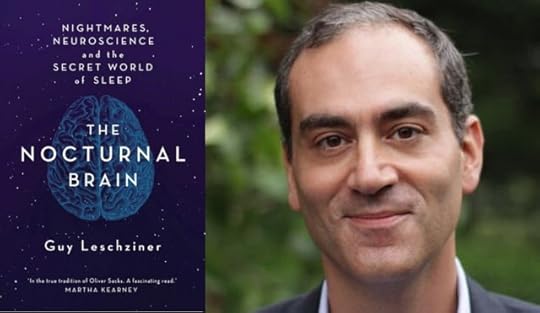
One way of discovering how any bodily organ does what it does is to study the effects produced when it goes wrong, and that’s as true of the sleeping brain as any other organ. The Secret World of Sleep is a book of case studies, the personal stories of patients who have passed through the Sleep Disorders Centre based at two hospitals, Guy’s and St. Thomas’s, in London.
As the author puts it, “…while we think of our brains switching off at night, these patients illustrate that quite the opposite is true. The functions and dysfunctions of our nocturnal brains are as numerous and varied as those of the daytime, and influence every aspect of our waking lives too.” And some of the things people struggle with, for years, when sleep goes haywire are astonishing. For example, cases of people having sex in their sleep (or, more usually, attempting to have it) are so well-known this condition even has a name: sexomnia. What doesn’t have a name is climbing out of bed during the night, getting fully dressed and then driving a car for miles—without mishap and all while sound asleep. Or compulsively eating vast amounts of food at night, fast asleep.
Then there’s cataplexy, an instant collapse into deep sleep triggered by a sudden emotion—laughing at a joke for instance. Can you imagine going through life half-afraid to laugh at anything funny for fear of keeling over in front of everybody? Narcolepsy is worse: this is excessive sleep, sleeping the majority of the time, and can include falling asleep without warning at any moment—while walking down the street say, or crossing a busy road, or just trying to do a day’s work. Then there are disorders of our internal body-clock: picture a 24-hour wall-clock running just a little too fast; every now and then it will be showing the right time, before creeping ahead again until, weeks later, it is the full twelve hours out of synch. Incredibly, there are people saddled with an internal clock just like that.
The conventional view is that we are either awake or asleep, and one thing this book has taught me is that it’s not that clear-cut at all. Also, the brain isn’t awake or asleep as a unit either; some parts sleep while the rest is awake (I knew dolphins and birds such as swifts do this, but had no idea that, to a much lesser extent, so do we). One message that comes across from this book overall is of increasingly blurring “boundaries”—as much between “awake” and “asleep” as between the biological and psychological.
To be honest, while the individual cases here are fascinating, I’m not sure I learned as much about sleep itself as I was hoping to. I did read this book out of interest in the brain though, rather than because of any sleep problems of my own; and that’s something it definitely has given me: a real appreciation of just how lucky I am that I don’t; a true appreciation, for the first time really, of a good night’s sleep.