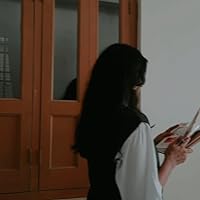
A modern classic about an independent young women’s struggle to hold on to her identity in a traditional world Geeta, an educated, vivacious Bombay girl, marries into a conservative family and abruptly finds herself living in purdah in her husband’s ancestral haveli. Faced with this and other traditions that threaten to snuff out her independence and progressive views, Geeta fights to maintain the modern values that she has always lived by. Inside the Haveli is the story of how Geeta manages to carve out an identity for herself in the new and ostensibly stifling environment she has been plunged into.
I often feel humbled by how many of my Indian friends on Goodreads are not only completely fluent in English, but also well-versed in American, Canadian, and British literature.
I wish that these friends could know (and I suppose that's why I'm writing this), how challenging it is for us, in the states, to return the favor and to be anywhere as familiar and/or as well-versed in Indian lit.
It's still difficult to find a variety of works of fiction by Indian-American writers, and it's equally difficult to find available, affordable, and translated lit fiction coming out of India.
So. . . just imagine that task, when applied to a 1970s project.
I waited well over a year to have a copy of INSIDE THE HAVELI, which was published in 1977 and offered for sale “in the Indian Subcontinent only.” It has gone out-of-print, and it's challenging, though not impossible, to obtain an affordable copy. (I have no idea of its availability within India, but I'd love to know).
The writer, Rama Mehta, was a Hindu woman, and a novelist, sociologist and lecturer. She died only a year after this novel was published, at the age of 55.
Ms. Mehta's background of being both a sociologist and a novelist came together beautifully to teach someone like me what life was like for some Hindus in the mid-twentieth century who were still living within the confines of the ancestral “haveli” and “keeping purdah.”
In case these terms are as unfamiliar to you as they were to me. . . a haveli is a sprawling domicile that is an ancestral home for a family and all of their servants, and “keeping purdah” is the seclusion of women from public observation among Muslims and some Hindus especially in India.
The women who keep purdah in this novel are covered completely, including using an opaque sari to hide all of the face.
For a modern, American woman like me, this practice leaves me completely flummoxed in disbelief, but that is the beauty of this novel: the author takes the reader on a journey where judgment and disbelief are suspended, so the mind and heart may focus on the story.
And what a brilliant story it is, with young, educated Geeta being married off to a highly educated man from an ancestral haveli. Geeta goes from being free to study, as she chooses, in Bombay, to being covered, crown chakra to sandal, and living in an ancient labyrinth with her new husband and his extended family.
The story line is relatively simple, but the writing and the themes are complex.
Strangely enough, I found myself comparing this novel, in my mind, to two of my favorite Russian stories: Doctor Zhivago and Anna Karenina.
There's a wedding procession in the story that brought tears to my eyes and caused me to reflect on small communities and how lively and beautiful we can sometimes be, in our ceremonies.
I teared up, also, during a scene where the women pull a frazzled new mother into their arms and massage oil into her scalp and onto her feet, restoring and revitalizing her with their attention and touch.
And I cried at this description of the beloved patriarch of the family:
He was like a towering tree under which the family sheltered. It was from him that everyone got their nourishment.
I loved this journey, and I am so grateful to my friend, Shankar, for researching titles for me for the international part of my project and to my friend, Musa, for fielding so many of my questions.
If you can find a copy of this, I think it is a forgotten treasure that is worthy of your attention.
Coincidentally, I read Inside the Haveli at the same time as watching Inside the World's Toughest Prisons on Netflix. Maybe Raphael Rowe could do Udaipur havelis at some point to see how their prisoners women live (though I think they are mostly gone now). There are a lot of similarities between most prisons in the world and women living under the purdah system (which existed in many different cultures).
- Overcrowding - Lack of privacy - Hardcore hierarchy - Violence - And the really basic one, they've locked you up and thrown away the key. No freedom.
So now that we know my view on such horrendous social systems, let's talk about the book. Inside the Haveli is about Geeta, an educated woman from Mumbai, whose parents thrust her into a marriage with Ajay Singh, the only son of parents bent on upholding the outdated and sexist traditions of their cavernous mansions. But she had not really bargained on the purdah system that does not allow women to show their faces to their elders, male or female, even to their close relatives. The story revolves around Geeta and how she struggles and finally accepts her fate. But all her misgivings open up again when her daughter enters her teenage years. Would she now be forced into a purdah marriage? Or would Geeta resist?
Despite my annoyance with these people, I loved this book. The writing was so evocative of Udaipur and the situations so real that I was carried away into the past. It was awful, no doubt, but it gives a very real glimpse into a different way of life. The havelis are now mostly gone but many women in Rajasthan still observe purdah. The rate of child marriage is sky high, and despite better educational opportunities, many girls still drop out of school after a few years of schooling. It's still one of the most backward states in India. So much so, that the one major criterion my friend had when she was looking for grooms was that she wouldn't wear a veil.
However, Rama Mehta appears to think that it is all right. This book takes Geeta, a so-called independent woman and turns her into a doormat, and calls it 'carving a niche out for herself'. For one thing, Geeta was never an independent woman: she never worked in her life, she got married off at nineteen to a man she was never allowed to meet before the wedding, and she never lived or travelled on her own, she never earned money. But she was educated and hence, was stifled in her married home. Instead of rebelling, she 'adjusted' like most women are expected to. It's basically a romanticisation of an awful past - but so is Padmaavat. I enjoyed both. So within a social context, Mehta's book has nothing to contribute, but that's not necessarily a problem because most books don't change the world.
The real problem is that the men of the haveli are consistently described as honourable, kind, 'progressive', caring, etc., which I simply don't see at all. If you make your wife live in captivity away from a life she enjoys, then there is simply nothing honourable or progressive about it. Ajay constantly reiterates that he supports Geeta, but not on a single occasion did he actually do so. Geeta is mostly left to her own devices. It's really her mother-in-law who, despite her complete lack of intelligence and exposure, supports her on a daily basis. Her father-in-law is some god-like creature who makes up rules as he goes along and is "proud" of Geeta because she started teaching young girls. So why not simply set your women free to pursue education since you are so god-like and the whole house caters to your wishes? The men are arseholes and they know it too. They just know how to cover it up.
This deeply conservative view of the purdah system disturbed me, but I can't deny that Mehta is a really good writer, able to transport the reader into another place and time. I could not breeze through this book despite how good the writing was. I simply felt too chocked up and breathless after reading a while, my claustrophobia surfacing. That's how good the writing really was. Geeta was trapped, and it communicated itself to me. That's darned good writing, no matter how backward the author's opinion about women's rights is.
Udaipur. That's the first word of the book and the reason for me getting hooked to it right away :)
Set in the princely family of Mewar's current times, this is the story of a modern educated girl from Mumbai, Geeta, getting married to the prince of the Haveli. She has to face lots of challenges getting accustomed to the lifestyle and traditional approach of the family. The prince, Ajay, is also well educated and is a lecturer in the Udaipur university.
While Geeta wants them to move away from Udaipur and have an independent life without much family intervention, Ajay's heart stays with Udaipur living with his parents in their ancestral Haveli - him being the only son to the ageing King.
The book is divided into three parts, taking 5 years leaps in between, beginning from the birth of Ajay and Geeta's daughter, to her upbringing in the haveli along with the servant's kids of the same age, to attaining marriageable age.
From purdah system, to child labor and child marriage, the book touches on many sensitive nerves of the society. Geeta and her strong character is the pivot for this interesting story.
Rounding up to 4 stars, because I'm slightly biased ;)
Geeta gets married into a feudal royal family in the Udaipur. The book vividly describes her journey from a Mumbai born modern girl to a master of a feudal Haveli of Jeewan Niwas through her marriage to a worthy son of Haveli in the form of Ajay Singh. The book is about her initial suffocation in the completely different social cultural set up. She failed to understand so many things going in the Haveli of Jeewan Niwas. She remained aloof but she did not revolt. The typical social, cultural and behavioral norms of the Haveli were quite unfamiliar to her. Still she persisted. She did not insult or humiliate her in laws or husband. She remained there yet remained little but isolated. Things change dramatically after she gave birth to a baby girl. Same day another daughter was born to the one of the servants of the Haveli named Laxmi. She was named as Seeta. However Laxmi fled away from the Haveli citing the humiliation and insult perpetrated by he husband Gangaram who accused her of a bad character. Geeta’s daughter Vijay bai and Laxmi’s daughter Seeta grew together and became close friends to each other. Geeta had hope that her husband May land in a job in Delhi but soon to her despair her husband chose to remain in Udaipur in a less privileged position in University citing family reasons and old age of his father. So Geeta’s predicament became complete. She has now no hopes left of leaving the Haveli. Then she decided to adjust to the Haveli norms and decided to start education for less privileged children including Laxmi’s daughter Seeta. The move was widely criticized yet slowly accepted by the people. Geeta got crucial support from her father in law to run the school in the Haveli for the children. Things took another twist when Seeta got marriage proposal from a good family. Geeta opposed it. But her in laws prevailed on her. They convinced Geeta that Seeta as a servant’s daughter has already got a good proposal. And it was in Seeta’s best interest that she gets married to the boy who was learning and he had assured that Seeta’s education won’t be affected. Finally Geeta gave it. But when murmurs began about her daughter’s marriage to the son of the one of the richest families of Udaipur, she thought to give a fight with her in laws. She wanted Vijay Bai to complete her education. She thought of her own plight. She thought that her daughter deserved better life than her. All these delicate issues disturbed her emotionally. Her father in law also in last days of his life tried to convince her about the proposal. He told Geeta that eventually daughters are to be married in a different family and getting a good family was a priority. However with his death Geeta suddenly discovered her new status as a new mistress of Jeewan Niwas. She has to now follow the customs to Haveli.
Though Geeta is a central character, there are other many people who also play an important role. Particularly servants of the Haveli who subtly and cunningly with their witty remarks and gestures make this book nice read. Pari who was widowed at a very young age is trusted servant of mother in law of Geeta who knows all customs and norms and upholds it. She is everywhere in the book and her views were valued. Laxmi unfortunately left the Haveli and later was seen offering gifts and laddoos to her daughter Seeta who was studying the school. Haveli people later discovered that the women who gives gifts to Seeta in the school is bothering but Laxmi. But they did not gather sufficient courage to bring back her to the Haveli.
The book is a nice read. One can feel Geeta’s emotional state of mind in the Haveli. Her measured and dignified response to all debates and conversations is worthy. She never insulted or humiliated her in laws. She fought with indomitable spirit and grace. While preserving dignity of the Haveli, she achieved her objectives. The changes she ushered were evolutionary and graded. Finally she was admired by one and all. She for sure would have carried the traditions of Haveli further with little changes as she would have liked. The story line is pierced with heavy dialogues, studded with customs with a tinge of feudal norms of master servant relationship. Yet one can see a fresh air of outlook towards modern life by masters of Haveli
The book depicts the change of the morals and lifestyle of an open-minded woman after she marries in a household of old traditions. It shows how the thoughts and behavior of a person can change when they are kept in a contrasting environment. Some may call it adaptation but in this novel, I realized that in the end, Geeta surrendered her morality and thoughts for her emotional stability.
But it also shows that the changes don't occur at once. Geeta's mother-in-law brings the equality of behavior among maids and mistresses in the haveli and Geeta in the next generation brings the importance of education. The mother-in-law and Geeta have faced resistance for their morals. But they did what they thought was important for the upcoming generation.
This exotic little book gives you a lot to think about - the lives of the women of the Haveli, their customs, their willing discrimination towards themselves and others and the strong rejection of the changing ideas of the outside world. The language is very Indian, with many colloquializations (this word check tells me that's not a word; isn't it?) and a few words out of the regional language to add flavour. That being said, the style is fluid and the descriptions are vivid and apt. Also, it could have been turned into a complete drama-fest, instead it is just very charmingly subtle. Great book!
I think I found this on the swap shelf of our school, but I'm not entirely sure. This is a very well-written recounting of life in the haveli - women in purdah, in India. Unfortunately I'm not sure my copy is not missing some pages - I always feel suspicious when the book ends at the bottom of the last page without any extra pages between it and the cover.This happened once before with a different book and someone kindly photocopied and sent me the pages. That book was far more popular than this, I suspect so I'm not sure anyone would have a copy of this available. Good read even with the inconclusive ending.
The author had so much potential to make this book an interesting one but failed. Although its quite an insightful into the lives of women of Rajasthan but it failed to catch my attention. Took me awhile to finish it and it didn't have an ending as such. Readers can read it if they are curious about the ways of living of traditional women but don't expect something great.
One of the worst book ever written in women's writing in India. Misguided feminism. Deeply right wing. Conservative.
She takes slavery and caste hegemony to a whole new level. I started reading the book in Jan'13 and stopped mid-way (I wish I left it at that) completed it and utterly disgusted.
really enjoyed the more subtle approach to exploring life in India. Sometimes such books can be very tragic and dramatic nearly all the way through, but this one paced itself delicately and I let it's humans be simply human. Lovely read.
Inside the Haveli by Rama Mehta is one of those books that quietly lingers in your mind long after you’ve turned the last page. Set in the 1970s, it tells the story of Geeta, an educated, modern woman from Bombay, who marries into a deeply traditional family in Udaipur. Her move into the haveli marks a journey — emotional, cultural, and spiritual — far more complex than she initially imagines. 
The strength of the novel lies in its atmospheric writing. Mehta doesn’t just describe the purdah, the rituals, the rules — she makes you feel the weight of them. The hush in the women’s quarters, the secrecy, the separation of spaces between men and women, the inevitability of tradition pressing in. These are not just settings, they are living, breathing characters in themselves. 
Geeta’s inner conflict is subtle but real. She questions, chafes, wonders — often in silence. Her resistance is not dramatic, but shading, hesitation, the longing for something more while trying to belong. There’s no loud revolt; instead, there’s negotiation — with her identity, her expectations, and the world she’s entered. I admire Mehta’s restraint. 
Ultimately Inside the Haveli is not a story of rebellion so much as one of negotiation. It’s about what modernity and tradition demand — and what a woman gives up, holds on to, and reshapes along the way. It made me question what strength means, what compromise and belonging feel like, and how one’s identity can both bend and endure. It’s not the kind of feminist novel that gives you clear victories, but it gives you something more delicate — a picture of inner survival.
One of them came forward , pulled her sari over her face and exclaimed in horror ‘Where do you come from to show your face to the world ?’
Inside the Haveli is a story of a well educated girl , who is thrusted into a marriage with a prince of Haveli. It’s a story of sacrifice, courage, love, determination, commitment, separation. It’s a story of what goes on inside a purdah. It’s a story of a journey from Suffocation to Liberation .
Inside the haveli is a short and sweet , Sugar and Spice story of a woman and her survival.
Society and its opinion, fear of losing relations, fear of getting judged, getting questioned by all the eyes rolling around you, are the bars where each and every woman got trapped at one point or the other in her life.One can’t see them but can feel getting buried under them.One can’t touch them and so can’t get bailed out.
My favourite part from the book was every time Geeta stood up. Education is the only treasure which grows when shared. Geeta knew it. She shared it. She spread it. She gave the women and children their voice. Their own thoughts. Their own time.
I myself have never been trapped with such strong barriers but have definitely seen girls getting crumpled because of them. It is the story, the backdrop, Rama Mehta's homely writing and the emotional connection I had with this book.
I had many expectations and I am super disappointed. It didn't deliver on what the description said at all. Geeta was hardly an independent girl before getting married (finishing college and marrying at 19 because her parents said so, is not my definition of independent, really. Just because she was Educated does not mean she was independent) and she was given almost no personality. I hated her passivity for the most part of the book. Heck, she wasn't even the main character or concern for most of it. I... I don't know if I liked the story at all. The only value I find in this book is that it gives a good peek into the lives of people in Havelies. It is just a slice-of-life-inside-the-Haveli book and not the story-of-Geeta-inside-the-Haveli book. And that is about it. Nothing mindblowing here.
My first encounter of the patriarchal aristocratic feudal overlord system of Udaipur/ Rajasthan. The purdah system and the way women were kept secluded is deplorable. however as I delved deeper into the story, I got an inkling of the mentality of thr women and how even an educated Mumbai born woman slowly changes to encompass her husband's archaic system, though she succeeds in making her presence felt.
I came across this book purely by chance and I'm glad that I did. The simplicity of the prose draws you instantly. The descriptions aren't ornate or complicated but perfectly paint the picture of the Rajasthani aristocratic life of haveli. More than anything else, the book spoke to me about female solidarity, the tenacity of human bonds and a precarious line between tradition and modernity.
This is an amazing book with a background set up in the haveli of Udaipur. I read Hindi translation and needless to say I could connect to the writer. At some places I felt like losing the interest but it is perfect to understand the impact of culture and heritage in the Indian society and how it is being passed on.
A very realistic portrayal of many Indian households. With every chapter I read, I felt as if the author saw the world through my eyes, but I just happened to see the same world as hers. It makes me question a lot about which why is better to live? Is the world outside the haveli or the world inside it better?
This is a conservative take on all the clichés, with nary a baddie in the aristocratic lot -- haughty, yes, but no one naughty. Any ounce of radicalism that could be found is perhaps limited in relevance to the 1970s and even earlier times.
The book is an amazing read, it discovers a segment of life in royal havelis of Rajasthan and the way things need to change as we step into the future.
The book itself is like a bucket of water withdrawn from a vast sea, it has identity withdrawn from the vast history of female situations in royal Rajasthan. The book dives into a simple sketch of every character present and tries to form as much as possible scenarios which test a lifestyle.
The book can be infinitely progressed on either side of time, so great is the flow and accuracy of the story. It could be disturbing to some readers, but a revelation to everyone for sure.
Being a part of Rajput society, I can relate to the book like most of us can't and hence it's even more special for me.