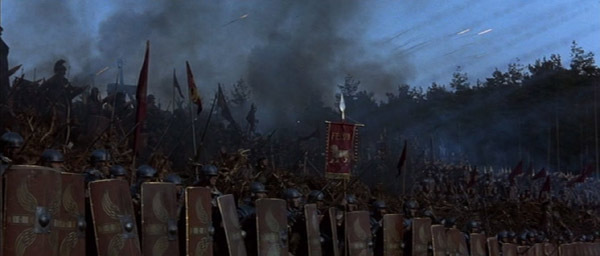
Germanien, 9 n. Chr. Einige Stämme östlich des Rheins haben genug von den römischen Eindringlingen und planen einen Überfall. Ihr Anführer ist Arminius, ein Cheruskerfürst, der bereits lange davon träumt, die brutalen Besatzer aus seinem Land zu vertreiben. Dafür hat er sich das Vertrauen des römischen Statthalters Varus erschlichen. Nur Tullus, ein erfahrener Centurio, misstraut Arminius und warnt Varus - vergeblich. Als die drei Männer und mehrere Legionen ihr Sommerlager verpassen, um zu den Festungen am Rhein zurückzumarschieren, weiß allein Armenius, was die Römer im Dunkel des Teutoburger Walds erwartet: Dreck, Blut und Tod.
Ben Kane is a bestselling Roman author and former veterinarian. He was born in Kenya and grew up in Ireland (where his parents are from). He has traveled widely and is a lifelong student of military history in general, and Roman history in particular. He lives in North Somerset, England, with his family.
From a very young age Ermin has sworn vengeance against the Romans that have murdered his family, and brutalised his people. He attended the ritualistic execution of a group of legionaries when he was aged eight. The priest cut out their eyes so they could not see Ermin’s people; he cut out their tongues so they can no longer speak lies, and he removed their hearts so they were devoid of Roman courage. After watching the deeply symbolic sacrifice Ermin has one goal: to insure the Romans never slaughter his people again, and the revenge he later exacts is very suggestive of the ritual he once witnessed.
A cold plan for vengeance
Indeed, twenty one years later when the Romans have almost conquered Germania there is a surprise waiting for them. Ermin’s people have been subjugated and he now serves in a Roman cavalry unit; he has even adopted a new Roman name: Arminius. The Romans hold him in esteem and would never question his loyalty. But, he still secretly remembers the sacrifice. His vengeance is ready to surface. The Romans have no idea what is about to boil over, and to make things worse for them Arminius knows the Roman way of war; he respects it; he knows their tactics, and he knows how to defeat them. He is ready to strike.
The result is one massive ambush that I couldn’t wait to read. The suspense building up to it was huge. From the second chapter it was clear how this novel would end, and I couldn’t wait to get there. The alternating points of view helped to create this effect. Arminius has a point of view along with a Roman Centurion named Tullus, an annoying Roman legionary called Piso and the Roman governor of Germany: Varus. The switching of the point of views led to a very fulfilling action sequence, which also led us into the next book.
Brutally clever
I really liked the deception in this novel; it made the novel more exciting than just reading about a standard tribal uprising that would try and defeat Rome is a straight forward way. The approach Arminius took was less direct and far more cunning. I realise that this was based upon truth, but I think the way the author delivered it was very clever. I actually began to feel sorry for the Romans because of the cold brutality of Arminius’s plan. It was quite ironic how the brutal oppressor became the victim of a cold, calculated plan that led to the slaughter of three whole legions in a display of brutal violence.
Overall this was very exciting book. It was obvious how it would end, history dictates it after all, but the author managed to create heaps of suspense to urge us into an ending we already know of. I like books like this, when you know how it will end but the plot is so engaging, and the characters so compelling, that reading about it is just as exciting as if you didn’t know how it would end. This is an author whose books I’ll be looking out for in the future.
I loved the Ben Kane books when I was younger, but I found this one left a bad taste in my mouth.
I KNOW that the Roman centurions would have been ass holes. I know that. But I just don’t like hearing it - women and men working topless in the fields due to the heat, and the women are clearly asking for it?! Just didn’t need it. Didn’t add to the story.
The actual plot was really interesting and gripping. A Germanic leader in the Roman army is finally ready to take revenge on the romans for everything they did to his family.
Having read Ben Kane's short story about the ex-legionary in the anthology on Pompeii, A Day of Fire: A Novel of Pompeii, and been impressed, I was eager to read his conception of the AD 9 Battle of Teutoberg Forest in Germania, in which three legions were nearly completely massacred and their eagles stolen by the Germanic warriors under the leadership of the duplicitous Romanized German, Arminius [or to give him his German name, Ermin]. Arminius had vowed from a young age to wreak vengeance on the Romans. He trained with them in their military, knew their strategies, and rallied the different tribes to his banner. This story was a masterful retelling. Kane incorporated details from much of the recent archaeological finds, such as a cavalry face mask and a pair of clothes fasteners. His use of historical events seemed quite accurate. He presented Varus, the Roman governor, as an intelligent man, but with a blind spot where Arminius was concerned. This led to devastating consequences. As the book ended, we left some of the men, led by the hero, Centurion Tullus, attempting to make it back to winter quarters at Vetera Fort through hostile Germans. My understanding is that this novel is the first of a trilogy on this battle and its aftermath.
Characterization of the major players was well done; minor ones were ciphers. Battle and skirmish scenes were well done, and not too bloody for me. I also wanted to compare this with an older novel I had read and really liked on the same battle and its aftermath: The Three Legions. My final verdict: this novel's strength is being truer to history and a more modern writing style. It was a pure action/adventure, whereas the other was stronger in characterization. Writing style was that of 50-60 years ago and obeyed the strictures of those days. Scenes of the battle were very well done in each. I felt myself comparing the two as I was reading, but that's probably not fair to either. There is a place for each. I do wish Mr. Kane would have toned down the profanity and references to bodily functions. Although there was an unnamed woman character, I am very glad Mr. Kane did not include love interest, which would have been out of place here and cheapened the story.
7/10, subido a cuatro estrellas porque creo que le he penalizado por la comparación con su trilogía de La legión olvidada, que me gustó mucho más. Si no hubiese leído esa trilogía antes posiblemente le hubiese dado más nota.
¿De qué va? Pues de allá por 9 d.c.
No me ha gustado que te pases el libro esperando la famosa batalla y que luego esta haya sido un poco deslucida. Supongo que el autor tira de rigor histórico, pero novelísticamente la cosa no me ha acabado de funcionar.
Los personajes -¿hay más de uno?- normalitos tirando a flojos. La trama como novela ya digo que mínima, supongo que subordinada a la Historia. Y sin embargo tienes siempre ganas de coger el libro para seguir leyendo. De ahí el 7/10 y el redondeo al alza.
Ya digo que me gustó mucho más esa otra trilogía suya que leí antes, esta la seguiré más adelante y seguro que empiezo otra de novela histórica por medio. Sin prisas, vamos.
Ben Kane has written some great novels over the years but, in my opinion, Eagles at War is the very finest. This is superb military historical fiction, putting us at the centre of Rome's most infamous and terrifying defeat through the strength of the characters of the men, of all ranks, who fought it. When the battle comes there's every chance that you, like me, will be at the edge of your seat. A book of the year for me, without any doubt at all.
Empecé esta saga debido a que un amigo me la ha dejado completa. Mi experiencia con Kane en el anterior libro me hizo tener ganas de leerle más, y lo cierto es que por ahora sus libros me entretienen mucho, por lo que seguiré leyéndole.
Con respecto a esta saga de Águilas en guerra, se centra en la debacle de las legiones romanas en Germanía durante el gobierno del emperador Augusto. La trama esta bien construida y en ningún momento perdí el interés en ella. Los personajes no están mal, quizás un poco estereotipados, aunque he de reconocer que el centurión Tulo me ha gustado mucho. La ambientación a mi me ha convencido más que de sobra, cierto es que no soy ni de lejos un experto en el imperio romano.
Por ponerle algún pero, al desenlace le falta un poco de épica, aunque bien es cierto que tenemos de sobra durante el último tercio de la novela, y sobre todo, el querer que sigas leyendo la saga por parte de su autor, deja el final algo descafeinado.
En cualquier caso, lectura recomendable y muy amena.
This takes place around 9 AD and centers around the battle of the Teutoburg Forest in Germany. The Germanic tribes rallied together under Arminius to attack three Roman legions, and the Germans won. The lengthy section of the book that dealt with this ambush from the forest was incredible. It's a wonder that any Romans survived at all! It was incredibly nerve-wracking.
We followed along with several points of view, most notably those of Arminius and Senior Centurion Tullus of the Eighteenth. The worst POVs were those of a couple of idiotic officers. In particular the CO, because had he listened to advice in the first place, three legions wouldn't have been slaughtered. Not that the Romans were lily white, but still. And Tribune Tubero was one of those useless bootlickers that drive me bonkers. I'm a sucker for rooting for veteran soldiers, and Tullus made it easy for me. Great character! I could have had sympathy for Arminius if it wasn't for the fact that although German, he was made Roman. He befriended, fought beside, and ate and slept beside these soldiers he intended to betray. I have a hard time sympathizing with those types of characters.
I already purchased, and will be reading, the next in the series. I've never read Ben Kane before, so I'm really happy that it all worked out!
After recommendations from several members of the Ancient and Medieval Historical Fiction group, I decided to read this.
Set in Germania it covers Arminius and his desire to free his people from the yoke of Rome.
Varus, for once, is treated sympathetically. A good man, and a good soldier, whose one true fault is that he takes people at face value. When one of those people is the bluff, jovial Arminius, that's a recipe for disaster.
Well written, absorbing and impecably researched.
Am now waiting on the second volume from the library.
Full disclosure: Ben Kane is a friend and fellow member of the HWA... but that said, I'm pretty careful about those I review - I only those books that genuinely move me, or inspire me or leave me lying awake at night wondering if I can ever write anything as powerful... and this book does all of those for me. Others have outlined the plot: the Teutoberg forest and Varus' loss of the legions in 9AD - we know the outline of what happened, but nobody has delved into the hard reality of the betrayal, the conflict between tribal loyalties and loyalty to the legions, the eagles and to Rome. Few either, have looked beyond to what happened next, which is where Ben is going with the other two books in this series. It's easily the best of his writing: rich, deep, full of passion and glory and the courage of war - on both sides. For those of us who think the greatest loss of our history was when Rome held onto Britannia, this looks at both sides of a tribal/legionary war - and allows both to come out with courage.
There are relatively few events that can truly be said to have changed the course of history, but the German ambush of three Roman legions during Augustus’s reign was one of them. It halted Roman pacification of the vast land to the east of the Rhine known as Germania, preventing the Pax Romana, free trade, and the lingua franca of Latin from extending into eastern Europe. As a result, the Germans remained a threat to Western civilization, leading to Goths, Vandals, Huns, and eventually the Third Reich.
In EAGLES AT WAR, the first of a planned trilogy, Ben Kane boldly tackles that pivotal event of 9 AD in all its juggernaut horror.
Arminius, a noble of the Cherusci tribe, nurses a childhood vow of avenging the Roman slaughter of his aunt and cousins. (We are not told why their deaths occurred.) Subsequently ingratiating himself with the Romans who are gradually subduing the local tribes, he has become a trusted cavalry commander attached to one of the legions. Unbeknownst to them, he cajoles the rebellious tribes into an alliance that will attack the army when it moves to winter quarters. Tullus, a tough, grizzled senior centurion, gets wind of the conspiracy, but Governor Varus pooh-poohs his warnings about the likable Arminius. With all the inevitability of a Greek drama, Varus’s hubris will lead to an attack of unimaginable viciousness on his 15,000 troops.
With an enviable mastery of historical fact and his own understanding of a Roman soldier’s life, Kane puts the reader solidly into this tale of treachery, culminating in a hair-raising account of the Romans’ disbelief, rage, anguish, terror, and despair as they struggle to escape Arminius’s trap. His leading Roman characters are well drawn, especially Varus, smugly pleased with Rome’s gradual conquest of Germania, and the gung-ho young tribune Tubero, whose arrogance contributes to the eventual disaster. But the real hero is Tullus, the rock-solid veteran whose experience and force of will may offer the only hope his men will have of escaping death… if anyone at all escapes.
There’s quite a bit of exposition early in the book, and in my opinion Arminius never quite emerges from the shadows of history. But these are relatively minor quibbles, compared to the tour de force account of the prolonged ambush that would shatter the Romans’ perception of themselves as invincible. Definitely recommended.
I’ve been looking for a good book on the Battle of the Teutoburg Forest for some time. For such an ill-documented incident there are actually a glut of books to choose from. Yet all of them failed in some way, large or small, to capture a feeling of what it was like. The Three Legions is a bloodless, old-fashioned account afraid to take sides. Give Me Back My Legions! is repetitive and impersonal and repetitive. And Blood Forest can’t seem to tell the difference between modern combat vets and Roman legionaries.
And so I turned to Ben Kane. I’ve read Ben Kane’s books before, specifically his Clash of Empires series. I found him a good writer, but a little limited when he strays outside of certain subjects. Specifically, while he’s excellent at describing military life he’s less skillful at depicting politics (all simplistic hypocrisy) and culture (largely battle-worship). Fortunately, there’s little call for either of those here (although I might expect more Classical allusions from the officers to show they’re better than all the rest). This is a straight up military story.
And, well, it’s simply phenomenal at what it’s trying to do. The feeling of being a part of the most deadly professional combat force in the world, the tedium of daily army life, the depiction of life on the Germanic frontier... It all comes together to make a compelling story. A strictly military story told within the confines of the Roman army.
Centurion Tullus is a big part of making this world likable for us. He’s a nice guy for a Roman. He’s hard as nails (centurions had to be) but cares deeply for his men and is not immune to bursts of compassion. He’s also, unusually, a middle-aged man and not the strapping action figure we usually get for our lead. I found him an inviting presence almost immediately, and a much more sympathetic figure than any of the guys from the last Kane book I read.
Varus is also a standout character. I did mention that Kane’s not so good at handling political scenarios, which is probably why his Varus comes across as such a martial figure here. As commander of three legions he would have to be of course, but his main failing seems to have been that he regarded his role more as an administrator than a general. Kane deals with that by having Varus constantly flee from his paperwork. Regardless, it’s so nice to see Varus treated as something other than a narcissistic pariah that I’ll forgive almost anything. It’s very human to attribute all kinds of vices to a man who failed spectacularly, yet weakness or even incompetence doesn’t make a man inherently wicked. Varus is, as he probably should be, a tragic figure. He’s harsh when he needs to be, but also (too) loyal to his friends and kind to his slaves. You can’t really hate the man, even if his naïveté leads to the death of thousands.
As for the battle itself, I’ve never seen it described better. This is very much a grunts up perspective and you’re often unclear what’s going on as it unfolds. Yet it all feels right. The initial stages are bad, yet hardly catastrophic. It feels like they’re in for a tough fight, but nothing about it seems like they face annihilation. Clearly this was the small tribal rebellion they were on their way to quell and if they can just discard their baggage train and push through they’ll crush them quickly enough and be out in the open. By day two the situation is starting to seem more and more grim as the level of preparations they encounter reveal just how outmatched the Romans really are. By day three there’s barely anyone left. And while that outline of events is clearly given, the whole thing is mired in confusion and sodden misery. It sounds like hell on earth and makes for an epic climax.
About the only thing that feels off to me is the itinerary and timing. Retracing Varus’ path is difficult (even knowing the exact site of the battle, there’s still an argument over which way the army was headed) but I don’t think I buy that the battle took place so close to the route back to the Rhine. It would be a very roundabout way of heading to Xanten and would actually be traveling away from Aliso. This is, of course, a matter of interpretation
This isn’t a perfect book of course. No book is. I still felt our view was a little limited by the strictly military focus and the narrow timescale. There are a few good hints at how Germany was being turned into a province, but the issue remains on the sidelines. I very much doubt Arminius achieved all that he did in the course of a single summer. He must have been probing potential allies for much longer. And the fact that we don’t really get to see how he pulled off the incredible feat of uniting all the tribes is a genuine shame. Yet none of the other books really capture a plausible reason for his success either. And on the whole I don’t know how many people will even care. The book sets out to tell the story of the Battle of the Teutoburg Forest from the perspective of the Roman soldier. And that’s exactly what you get.
Dr Kane has done a superb job of telling the story of perhaps Rome’s most notorious and consequential defeat, the Teutoburg Forest in 9 AD. The author tells the story from 3 main viewpoints. The first is the German auxiliary cavalry officer, and secret German freedom fighter – Arminius. The Roman governor of Germany, Varus, is the second. Both of these men are actual historical figures. A veteran Centurion and Cohort commander, Tullus, in the ill-fated 18th Legion is fictional and is the third main character. I felt they were well drawn and believable.
In setting up the story, Dr. Kane veers off of the conventional view of Varus and the state of the area between the Rhine and the Elbe. Most histories and historical fiction see Varus as both a dilatant and an incompetent, both as a general and as a governor. In his author's note, the author says he can't see Augustus appointing such a man to such an important post. His Varus is both a good governor and a competent, if not brilliant, commander. Varus has one major weak point, his absolute trust in a Senior Roman officer of German extraction – Arminius. Like a lot of competent commanders through history he refuse to believe any intel that runs counter to his perceived notions. This ultimately leads to disaster and his own demise.
Dr. Kanes picture of “unconquered Germany” is also different them most. His Germany is not an untamed wilderness. He presents it as in the last stages of pacification. There are semi-permanent Roman Army camps dotting the country side, the tribes are paying their taxes, albite reluctantly, and as far as the Romans know, there are no incipient rebellions brewing. In short it is just about ready to be annexed.
The story starts off some 15 yrs before the debacle, when Arminius’ father takes an 8 yr old Aminius to a sacred grove to witness a sacrifice in the middle of the night. The sacrificial victims are Roman soldiers. As they are tortured and finally executed, Arminius’ father makes him promise not to allow Rome to subdue the tribes, Germany or make it part of the Empire. The novel then fast forwards to the summer of 9 AD as the Roman legions guard the various tax collectors and try to keep the peace.
Arminius, while definitely the villain of the piece is in many respects sympathetically drawn. In his lights he is doing the right thing. He is depicted as very two faced with uncanny ability to make everyone like and trust him - German and Roman alike, about the only one who doesn’t is Tullis and his father-in-law. As my mother used to say, he could sell ice to an Eskimo in December. While he is formenting his rebellion, he actually becomes Varus best friend and a major confidant. Naturally keeping the Romans in the dark about his plans for rebellion, Arminius uses his position as a Cavalry Commander to visit the various tribes and successfully convinces them to join his conspiracy and help prepare his chosen battlefield. I felt these scenes were well written and shows that Dr. Kane can write conspiracy as well as battles. He is helped along by some unfortunate Roman actions. A young tribune, Tubero (another historical figure) comes across some young men/boys moving cattle and is so anxious for action he promptly decides, on no evidence, that they are rustling and kills four of them and is not apologetic about it. This and a revenge raid by the tribe that does not end well for the raiders drive that tribe into Arminius’ hands.
As the summer winds down and the Legions prepare to return to their permanent bases on the west bank of the Rhine, the story really picks up. The main battle is approximately the last 2/5s of the novel. This is where Dr. Kane really shines. He puts the reader into the minds of both the Roman Soldiers and the attacking German tribesmen. The battle scenes are really well written and the descriptions of the horrid weather that the battle was fought in are excellent
Dr. Kane presents a reasonable explanation of just why Varus led appox 15K soldiers of 3 legions into a place where they not only could not deploy effectively, but how a three day running fight affected the moral of those caught in the ambush. In the end Tullis gets about 15 men out of the ambush and eventually to the safety of the west bank of the Rhine. By some estimates less that 200 of the 15K Legionares survived.
About the only problem I have with the novel, is that Dr. Kane does not adequately explain just how Arminius came to a Roman officer and be so trusted by the Roman establishment. Yes, he was a Roman officer, but there were lots of Auxiliary commanders who didn’t have that kind of influence, including his brother.
In my opinion this a 4.25 star read, but GR doesn’t allow partial stars, so I’ve rated it 4 stars for GR.
Ben Kane thunders back into the charts with what I can only describe as an epic novel of the Teutoburg disaster. I’m a fan of Ben’s work, though since I read it his first Hannibal book has remained my favourite. Until this one.
I’m sure there are folks out there who don’t know the history Varus’ disastrous campaign in Germany in 9AD, of Arminius and the tribes. Of the Teutoburg massacre. A lot of you will, even those not particularly au fait with Roman history. It is the most ignominious military loss in Roman history and infamous as such. It ranks up there with Crassus’s death at Carrhae or the unpleasant fate of Valerian, the only emperor ever captured by the enemy. I shall spare you the details. Suffice it to say that this is a novel about Rome and the German tribes in their early days, when there was potential for a settled, Romanised Germany that would become truly part of the Empire. It was a fragile time, but a hopeful one for Rome, and for some of the natives. But not all the Germans were ready to bow their head to the emperor. Cue one man with an ambitious plan to unite tribes whose mutual hatreds went back centuries based purely on the belief that they hated Rome more even than they hated each other. As governor Varus plans his summer marches into the east, so Arminius, the son of a chieftain and a man trained by decades of Roman service, begins to put his plan into action.
Enough about the plot. No spoilers (though to be honest a glance at any webpage or book that mentions Varus or Arminius will immediately barrage you with spoilers if you are in the dark. No matter. This book is not written hinged on complete innocence on the part of the reader. As a man who knows the events around which it is based, I can say with certainty that knowledge of the Varian disaster does not ruin the book, so don’t worry about that.
The book is divided into two parts, with the first being the events that form the backdrop to the rebellion, introducing us in detail to the characters, locations, motivations and themes. The second part is the part that most of you will be waiting for. It surprised me to find how much of the book Ben had devoted to the lead-up, when I had assumed the disaster itself would provide enough material for a book on its own, and possibly even more than one book. But d’you know what? It worked. The way Ben has built the plot gives it so much more of a human edge and a personal feel that it would have missed had it concentrated more on the battle itself at the expense of what precedes it. It also means that the book starts slowly, peacefully and pleasantly, and gradually builds pace throughout the first half, with tension rising, and then gallops into the second part in a crescendo that just peaks time and again right to the end of the book.
What I think deserves first special mention here is Ben’s characters. Not for their realism or depth. If you’ve read Ben’s books before then you expect nothing less than deep and realistic characters. No, what I like is who Ben has chosen to tell his story. We have Varus, the governor, a senatorial noble of Rome. We have Arminius, the German chieftain serving in Rome’s military. Yes, they are the prime movers in the events behind the book. But in order to give us the events from an intimate level, we also have a veteran centurion – Tullus – and a young legionary recruit – Piso. Thus every level is open to the reader, from those who shape the empire to those who die for it. Writing a tale like this from four such disparate viewpoints cannot be easy, but it is carried out with skill, and the reader can identify with and follow each of the four. Also, each is sympathetic in their own way – even Arminius! Oh, there is one loathsome character in there, but I’ll let you find him on your own. In fact, Varus is here given a very favourable treatment, flying in the face of the more common portrayal of an impetuous fool. Refreshing. And because of the way the story is written, there is no sense of ‘good guy and bad guy’ in Eagles at War. As is so often the case in reality, both sides are simply people, each with their own belief in the value of their motives.
In terms of themes, the book gives us a nice view of what it might have been like in the early stages of the Romanisation of a land, with tribal leaders both obsequious and resistant, some trying to outdo each other in the new regime while others grumble about taxes. It also makes some use of an aspect of the Roman military that is very rarely mentioned in novels: the slaves. When an author deals with the five thousand men of a legion, plus the cavalry and support etc, what is often forgotten is that most officers would have at least one slave, and the senior ones probably and entire household of them. Think on the activity of slaves in a Roman camp, serving one legate, one camp prefect, six tribunes and sixty centurions, plus various other officers. We are not talking about the odd body, after all. The human aspect is handled well particularly through the trials and tribulations of young Piso, and of a woman with her girl and pup, who become a recurring thread. And as for the sheer power of the loss of a legion’s eagle? Well that is put over very well. The chaos of unsought and unexpected combat is a major theme in the second part of the book and drives the narrative at least as much as the specifics of the timeline.
In fact, part two reminded me in style at times of two different tales. It carries the epic scale of The Longest Day, roving back and forth across the locations, giving us a view of events from several angles without dropping the pace of the action. And it also contains all the tension and eeriness of a nervous journey, a-la Apocalypse Now (or Heart of Darkness, of course). The legions are strung out, there is trouble communicating, there are isolated pockets of men involved in their own tiny wars all forming part of one great whole.
All in all, this is a masterpiece of the genre, from the earliest stages of the troubles right up to the tense, violent climax. In fact, twice in this read I was so hooked that I continued reading at night long after I was really ready for sleep. Roll on the next book, I say, for I think I know what it will involve…
I requested Eagles at War kind of randomly on NetGalley when I saw it and it was a spur in the moment decision when I decided to start reading it soon after I got approved for it. I love history, especially history of this era but I didn't know a single thing about the battle of the Teutoburg Forest. And to be honest I didn't think I would enjoy this book because I didn't think I'd like a book that focuses on the military espects in history. But guess what? I ended up absolutely loving it and it's my favorite book that I have read in 2015 so far.
I was intrigued by all of the characters. From the characters that were created by the author to the ones that had once lived.There was just something about the way Ben Kane wrote these characters that made me want to find out what was going to happen to them. I especially liked reading about Roman centurion Tullus, and chieftain Arminius.
The book switched points of view a bit between a couple of characters but I was always glad the most when it returned to Tullus. He was an incredible character.
There was also a certain suspense to the story, knowing a big battle is imminent because Arminius is planning to betray and ambush the Romans. And naturally, the book was very action-packed, gritty and intense.
The book took me almost a week to finish. Generally I finish books way faster because I usually read shorter ones but it was totally worth it. I was pretty much hooked from the moment I read the prologue up to the ending.
And I also have to say that after finishing the book, I actually found myself wanting to read and learn more about the battle of the Teutoburg Forest.
I dived into this book blindly, not knowing what to expect. What I didn't expect was to be so engrossed with this story, with these characters. You know a book is good when you're actually sad to have finished it because you wanted to read more. That's what Eagles at War by Ben Kane did to me. Highly recommended!
Mr. Kane tells a fictional story, but stays very close to the historical facts of the battle of Teutoberg. The writing is rich and makes the suspense of the novel palpable. The amount of accurate details of the life of the roman soldiers in the legions is amazing. The characterization is brilliant. It's not difficult to root for Tullus as the good guy, but one can easily comprehend the motives of Arminius and symphatise with the German tribes. The deception of Varus was masterfully told. The scenes with the 18th legion made me feel as if I was part of it. I was deeply impressed by this novel.
The problem about writing a novel about the Varian disaster of AD9 is that the ending is inevitable: the Romans will lose, three legions will be wiped out, their eagles captured by the victorious German tribes. This is no spoiler – this is simply historical fact. How then does a novelist make something worthwhile from the story? Before Kane’s effort there have been other attempts. Gregory Solon’s Three Legions is a sombre and readable account of the disaster, especially successful in its rendition of the defeat itself. It is probably the best of the earlier novels on the subject. Ralph Graves’ The lost Eagles has a nephew of Varus attempt to restore the family honour by recovering the eagles. This novel is a good adventure story, but could equally be a western or a Vietnam novel with a soldier going behind the lines among the native population. It has its good points, notably the portrayals of Germanicus Caesar and the emperor Tiberius, but is not historically convincing. Harry Turtledove has also written a novel on the subject, entitled Give me back my legions! I have not read it, but it does not garner many favourable reviews anywhere.
There is no doubt that Ben Kane deserves much credit for his level of research, indeed his personal stake in visiting the probable battle sites. This is very important given the scarcity of detail in the ancient written evidence. Roman writers acknowledged the importance of the disaster but did not focus on the details, whether because so few survived to give evidence or because they preferred not to remember.
So what about this novel? The story is often just ok, much of the time quite good and occasionally brilliant. A standout scene is when the first volley of slingshots and spears from the Germans strike the unsuspecting Romans – a real picture of shock and awe. I appreciate too the portrayal of Varus, which rings true – no overbearing ignoramus, but an able and brave leader who has been fooled and betrayed by a man he respected and trusted. However, the first half of the novel in which the leading characters are delineated and the scene is set is often rather pedestrian, even hackneyed. It is difficult for the author to build a lot of tension into Arminius’ scheming and plotting, as the reader knows it will all work out for him in the end. To Kane’s credit he does his best. The central character, the veteran centurion Tullus, is well drawn, the development of the soldiers in Tullus’ command less so; while the character of the villainous young tribune, Tubero, is a familiar type from a dozen other Roman novels and novelists.
As in Three Legions, the account of the battle and its immediate aftermath is well done and makes this novel a worthwhile read. Some years ago I read Kane’s first novel, The Forgotten Legion, and stopped at that point. With Eagles at War, I will want to read the sequel.
"Águias Em Guerra" foi a minha estreia com o autor Ben Kane. Começo por dizer que eu e romance histórico não somos os melhores amigos, quero com isto dizer que embora comece sempre com bastante entusiasmo as leituras dentro deste género, em determinada altura esse entusiasmo perde-se, pois parece-me sempre que falta qualquer coisa que me agarre. O mesmo se passou com este livro. A escrita é boa, a história é boa e para minha surpresa ainda me conseguiu agarrar até metade do livro, mas depois aconteceu o que, infelizmente, me costuma acontecer quando leio romances históricos: o livro começa a aborrecer-me e a leitura torna-se custosa e lenta, penosamente lenta... Por esse motivo a minha classificação para este livro não será certamente a mais justa, mas é a única que lhe consigo dar: it was ok.
Contudo, acredito que este seja uma excelente leitura para os fãs do género.
As expected this is a very fast paced novel with a lot of historical accurate background, but, with some fictional characters, too.
I was surprise about some of the details about the battle of Teutoberg Forest in Germania ( for example, the romans have been massacred in more than one day) that I didn`t knew, so a big plus there.
A lot of the situations, though fiction are very believable and have the potential to be true in one form or another, at least from the point of view of the deception that Arminius played for the roman camp.
The characters were well made, palpable, and seemed very much alive.
And it`s surprising that the story being known the writer succeeded to make it so fresh and engaging.
Definitely a historical page turner and a signal for me that I have to check, beside the second volume of this series, the other works from this writer, too.
I am somewhat torn by this book, on the one hand the writing is simply brilliant, as ever Ben Kane has impeccable attention to detail and history, driven by his knowledge of marching in roman kit, and having walked the ground in Germany, couple that with his passionate research of the subject and empathy for the subject, all you can expect is brilliant writing.
This is a great read, informative, with fantastic characters and great battle scenes and descriptions of place.
We follow a variety of points of view, from "treasonous" Germans to Roman legates and centurions and legionaries. The characters were all very well developed and got me throughly immersed in the story.
There’s perhaps only one thing wrong with Eagles at War - it’s not near long enough. I’m maybe a glutton for this kind of punishment, but the battle in the Teutoburg forest, as written by the right honourable Ben Kane here, is insanely tense, down and dirty, life on the line, not knowing from one minute to the next where the arrow, sword or spear with your name on it is coming from, tense.
It is the perennial Historical Fiction problem don’t you think, when you’re writing of an actual recorded event, for which the outcome is known - how do you get it to be tense, thrilling, edge of the seat, when everyone - even those who haven’t seen (or read) a history of the massacre (oops!), like the one called Rome’s Greatest Defeat. No amount of hoping they don’t go into the forest, that the leader isn’t quite so pig-headed, maybe will listen to Tullus and reconsider trusting Arminius, can change the inevitable. For Ben to have done it so well, even reaching towards the class of The Day of The Jackal, speaks volumes for his writing.
Because of Ben’s writerly background and because of us having bought this book to read about Romans, it’s the Romans’ side we’re on. The other lot are trouser-wearing barbarians. To the Romans and to us. However, Ben is excellent in giving the local tribes’ grievances and fears over the coming of the Romans, equal strength. As I understand it, (their leader) Arminius, it wasn’t his birth name, maybe not the name used at the time, but by Ben using the name for him here, it gives an added feeling of treachery to the plot and putting us even more firmly behind the Romans.
There are other characters galore here, on both sides. One leads the way though. And it isn’t Arminius. It’s the Roman Centurian Tullus. Wouldn’t we all hope we’d be just behind him, or someone like him, in this sort of desperate situation? He's a wonderful creation and I have no doubt he alone could carry the series. Though my personal favourite is Dagmar. I hope he survives!
Then we get to the forest.
It's in the forest Ben's writing really comes to the fore. He is quite simply superb at putting over the big picture, while also concentrating on the ‘it could have been you and me’ feeling of the boots on the ground Roman soldier. The ‘grunt.’ With the background to the tribes’ motivation put over so adroitly - facing a foreign conquering army, from a long way away, not understanding their local culture, wanting to conquer and subdue, not work with and co-operate, that’s if they absolutely have to be there at all - does that remind you of anything? Any conflict of more recent years? Maybe you have to be of my generation, or with my interests: The Vietnam War.
It’s Vietnam in the forest. No doubt about it. I’ve read many, many Vietnam War books in my time, and even if Ben Kane hasn’t, he certainly comes over as if he has. The claustrophobic, never-ending nerve-shredding unseen menace is the same as described by American soldiers in the forests of Vietnam. And if I’m going to draw a modern parallel with the Vietnam War, then I'm also bound to say my overriding feeling from this book is, separated by 1960-odd years or not - nothing has changed. Read it and see, you'll agree.
I think a reader might be forgiven for thinking ‘well, why not turn around and go back?’ However, thinking about how Ben has the attacks on the Romans unfold, it could perhaps be inferred that the opening attacks, were small scale to have the Romans believe they were just isolated, maybe opportunist, attacks the army would be able to march on through. And only when they were too far in, to contemplate turning round, did the attacks begin in overwhelming force. This does to me suggest also that the Romans didn't have an accurate appreciation of the forests size. No local guides or information. And that while the army was spread out to near breaking point along narrow forest paths, no one had any real idea of the situation as a whole. No one riding up and down the lines, though Ben does have a couple of incidents with messengers. Clearly I’m perhaps thinking of it in modern terms, where the back could radio to the front and communicate easily. The Romans didn’t, I think I’m correct in saying, have radios. Then, there’s the face-losing aspect. No Roman leader, as is implied, worth his salt would admit to have made a mistake like going into the forest. So, they had to go on, they couldn’t, physically as well as mentally, turn round.
If the whole thing is worthy of a trilogy, I think the jury is still out. I have the second two in the series, but haven’t read them as at the time of writing. If you’re looking at just the conflict, the build up to, the march through the forest and the battle, with its immediate aftermath, then a one volume, this book, would do. But no one writes - or commissions, it seems - one-offs these days. Things always seem to be planned as trilogies from the start. I’ll write about this historical event! "Can you get three books out of it? Even if you can’t, do!" Robert Fabbri seems to have written a one volume book on Arminius, which I have yet to read, so I don’t know if that is basically the yin to this’ yang, but certainly it shows that a one-off on this can be done. I just do wish, that authors would announce their new book. Now always, always, announce their new series. How refreshing that would be.
I found the first half of this one seemed drag a bit as it took a long time to set the scene for the battle. Once the battle started the speed of the action speed up considerably.
Ciemne chmury to moja pierwsza powieść Bena Kane’a. Już od dłuższego czasu kusiły mnie jego książki. Po pierwsze, w szkole moim ulubionym przedmiotem była historia zaś preferowany okres historyczny to właśnie starożytność i średniowiecze. Po drugie zachęcały mnie wysokie oceny oraz pochlebne opinie.
Ciemne chmury to już druga czytana przeze mnie, fabularyzowana historia bitwy w Lesie Teutoburskim. Pierwszą była wydana przez Dom Wydawniczy Rebis powieść Krwawy las, której autorem był Geraint Jones. Interesujące było dla mnie to jak inny autor pokaże te wydarzenia.
Przyznam się, że z tego starcia, górą jest dla mnie jednak Krwawy las. Poniżej postaram się wytłumaczyć dlaczego.
Bohaterem Krwawego lasu jest początkowo anonimowy legionista z amnezją. Nie będę wnikał w jego historię, zachęcam za to do lektury. Bardziej interesuje mnie tu pozycja głównego bohatera. Tam był on szeregową postacią. Nie miał więc pełnego wglądu w toczące się wydarzenia na najwyższych szczeblach dowodzenia. Ponadto w Krwawym lesie, Arminiusz był postacią poboczną. Pojawiał się rzadko i był dla głównego bohatera tajemnicą. Tym bardziej uderzyła mnie jego zdrada i zaplanowany atak na rzymskie legiony. W Ciemnych chmurach, Arminiusz jest jedną z głównych postaci. Rozumiem, że autor poprzez pokazanie jego punktu widzenia, chciał dać czytelnikowi wgląd w kulisy oraz powody zaplanowanej zdrady. Niestety dla mnie wyszło to odrobinę zbyt nachalnie. To znaczy, Arminiusz jawił mi się tu jako karykaturalny złoczyńca, który co chwilę wyłuszcza każdemu bohaterowi swój plan. Ciągłe powtarzanie jaki to Rzym jest zły. Że przyjdzie czas zemsty. Że obiecuje wszystkim bogom go zniszczyć, zaczął mnie w pewnym momencie irytować.
Przewagą Krwawego lasu nad Ciemnymi chmurami jest także bardziej naturalistyczne podejście do wydarzeń. Dzięki pierwszoosobowej perspektywie szeregowego legionisty, mogłem poczuć się jakbym brał udział w samej walce. Czułem to, w jakich warunkach przyszło walczyć legionistom. Jak świetnie Arminiusz przygotował swoją zasadzkę. Namacalny wręcz był siąpiący deszcz, krwawe starcia, poczucie utraty braci z oddziału oraz ciągła niepewność.
Ponadto nie polubiłem się za bardzo z drugą, z głównych postaci z Ciemnych chmur. Mianowicie chodzi mi o Warusa. Rozdziały pisanego z jego perspektywy były dla mnie najmniej ciekawe. Stałe narzekanie na papierkową robotę oraz ogrom dokumentów. Pochwała swojego niewolnika, dzięki któremu możliwe było odnalezienie się w stosie papierów. A przede wszystkim ślepe przeświadczenie w niewinność Arminiusza. Mimo, że dowodów na planowaną zdradę dostarczało mu wiele postaci, Warus pozostawał ignorantem i przez to doprowadził do zguby podległe mu legiony. Wiem, że ma to uzasadnienie historyczne, jednak wystarczyło zrobić go postacią poboczną, bez ciągłego ukazywania jego ignorancji.
Trzecia z głównych postaci, czyli fikcyjna postać centuriona Tullusa, uważam za największy, ale nie jedyny plus powieści. Żołnierz z krwi i kości. Doświadczony w boju. Doskonały dowódca i przykład dla swoich podkomendnych. Kompetentny, lojalny wobec Rzymu. Dający z siebie wszystko w obliczu przeciwnika. Rozdziały z jego udziałem powinny tworzyć całą powieść. W mojej ocenie, wtedy Ciemne chmury byłyby rewelacyjne. Rozdziały, gdzie to Tullus wiódł prym, były według mnie najciekawsze. Obfitowały także w wiele emocjonujących starć. Dzięki temu, że jest to postać fikcyjna, czuje się napięcie wywołane niepewnością, co do jego losów. Każde starcie z jego udziałem czytałem tak, jakby miało być ostatnie. I tu wplatam drugi duży plus dla Ciemnych chmur. Autor bardzo dobrze umie opisywać bitewne starcia. Nie ma tu zbędnego chaosu, a przy tym są emocjonujące i wystarczająco krwawe. Przy tym autor nie epatuje przesadnie przemocą.
Kolejnym plusem są dla mnie dobrze ukazane historyczne realia. Nie noszą znamion żywcem wyjętych definicji z encyklopedii. Autor w posłowiu opisuje swoje podróże w historyczne miejsca oraz doskonale zna odwzorowane uzbrojenie legionisty. Czytając te fragmenty, można poczuć, jakby autor tam faktycznie był, w tym czasie historycznym, z tymi bohaterami.
Podsumowując, Ciemne chmury to dla mnie powieść dobra i tylko dobra. Niestety za dużo było dla mnie dłużyzn i przestojów w akcji. Rozdziały z centurionem Tullusem oraz ostatnie strony opisujące samą bitwę to zbyt mało, bym wysoko ocenił tę powieść. Oczekiwałem emocji od początku do końca, a zdarzały się fragmenty, przez które przechodziłem z trudem. To, jak ocenicie Ciemne chmury, pozostaje tylko Waszym przywilejem. Ja jak zwykle zachęcam do lektury i wyrobienia własnego zdania.
Oh por Júpiter!!! que libro más bueno!!! Pocas veces he leído un tratamiento tan prolijo y emocionante de pasajes de batallas o guerras! Me encanto como Ben Kane logra transmitir aspectos como el cansancio, la desesperación, el pánico, el honor, el valor y más en sus lineas. Sin dudas un autor grande, que logra entregar emoción y demostrar amor y pasión por lo que hace. No puedo aguantar para leer la segunda parte de esta trilogía (afortunadamente ya lo tengo en mis manos, por lo que no tendré que esperar). Nos vemos en el final del segundo libro. Nota: 5/5
Excelente libro, me engancho desde la primera página y la verdad es que iba a la fija con Ben Kane y la verdad no me decepciono. Aquí enfrente tengo el segundo libro de la trilogía listo para comenzar. Creo que voy a recomendar esta trilogía a ojo cerrado.
Reading historical fiction from thousands of years earlier inevitably means there's an "authors note" as to how accurate the book is. And this has that. At the end. And it's brilliantly surprising as the three legions annihilated isn't an "unknown" subject, but as a reader, not many authors seem to be keen to put a GOOD story behind this. This book had me churning through pages, oblivious to my husband, to the delight of my dogs curled up for the duration of my reading!
This book is absolutely brilliant to "get lost in," in a grusomely wonderful way. There's enough "humanity" to balance the gore and desperation of the characters situation. That's hard to do given the information available and the "smaller" opportunity of the authors ability to stray from the known path. You're there. You can stand in ANY of the main characters nailed boots and see it from their point of view.
The subject of this book almost cannot be written as "fiction," however that almost appears to be daunting to authors. Or a brilliant opportunity. Ben Kane, of the few authors I've read on this subject, NAILS IT!! I think this is the eighth book of his I've read, this series, but this book being my favourite so far! Ben, please keep 'em up! Especially like this! From the other edge of the world in NZ.
Actual rating: 4.5 stars. I received a review copy of this book from lovereading.co.uk.
Eagles at War is not only a meticulously researched historical drama telling the story of the battle of the Teutoberg Forest, but also a gritty, gory, realistic story that I couldn’t put down. Its battle scenes are not for the faint of heart, and that is one of the reasons it was so excellent; I really felt like I was there seeing or fighting in these horrific scenes.
It is also full of interesting characters, and I was really conflicted because I loved—and hated—characters on both sides of the conflict. My only complaint was really that all of the women in this story exist to be rape or murder victims, which in turn motivates the men in the story to seek revenge. That’s an overused way to write female characters; hopefully the girl mentioned in the last few pages will exist in the next book as something more than a plot device.
This is the first of a trilogy and I will be eagerly awaiting the second installment!
A great story set in 9 AD when the Roman 17th 18th and 19th Legion went upon their ill-fated march into Germany's Teutoburg Forest.
The Reader is introduced to real characters of the time and some wonderful and believable fictitious ones as well. The build up is great as we see the incredible events, that will come about, unfold. There is the legendary Arminius a Germanic horseman within the Roman ranks forming an alliance with his brethren Germanic tribesman. Varus the Roman commander of the three legions.
As I knew the story of the Teutoburg Forest battle, I was enthralled to follow the fictitious characters and what would be their fate? Would any live to tell their story? This is a great and worthwhile read for anyone who enjoys historical fiction based on the Roman Empire.
The characters are a bit wooden, some details seemed awkwardly shoe-horned in (this was confirmed in the afterward) and at times I found that I couldn't fully buy in to what was happening, but wow if this book didn't drag me in and keep me reading.
I don't read much historical fiction, but I just may have to now. Fun story, I kept finding myself googling different things to learn more as I read, I picked this book up around noon and barely put it down until I was through hours later.
Also, shout out to Laura's friends, whom I have learned go through and read my reviews sometimes. I do it for the fans, so it's good to know you appreciate my work.