
What do you think?
Rate this book


239 pages, Hardcover
First published October 3, 2017


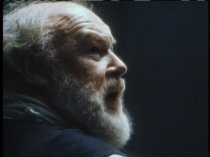

Blow, winds, and crack your cheeks! rage! blow!All right, by quoting one of Shakespeare's greatest speeches, I am setting the bar impossibly high. St. Aubyn's Dunbar, the Canadian media mogul, has just declared himself "non-executive chairman" of the mighty Dunbar Trust and handed over control to his daughters. Who have promptly put him into a psychiatric facility in the English Lake District. And it is there that we first meet him, telling his story to an alcoholic fellow-inmate, a professional comedian called Peter Walker. Peter is a splendid creation, absolutely in the mould of Lear's Fool; hearing his stream of one-liners in many voices made me hope that St. Aubyn might have found a close kinship with the original. Peter helps Dunbar to escape, but soon leaves him, leaving the old man to trudge alone over a mountain pass in a winter storm:
You cataracts and hurricanoes, spout
Till you have drench'd our steeples, drown'd the cocks!
You sulphurous and thought-executing fires,
Vaunt-couriers to oak-cleaving thunderbolts,
Singe my white head! And thou, all-shaking thunder,
Smite flat the thick rotundity o' the world!
Crack nature's moulds, all germens spill at once,
That make ingrateful man!
He hauled himself up and straightened his body one more time and brought back both his fists against his chest, inviting that child-devouring sky-god to do his worst, to rain down information from his satellites, to stream his audiovisual hell of white noise and burning bodies into Dunbar's fragile brain, to try to split its hemispheres, if he could, to try to strangle him with a word-noose, if he dared.If you know the original, you may find some amusement in the echoes. But you will also recognize the fatal flaw, that the quality that surely gives King Lear its supreme status—its moral scale—is entirely absent. There is a quality of excess everywhere in Lear: the King's capriciousness, the madness that consumes him, the wildness of the setting, the violence and cruelty, and the Gothic malevolence of his two daughters, Goneril and Regan. Though St. Aubyn may fall short of the more existential qualities, he goes to town on the evil sisters; dysfunctional families, after all, are what he does. His Melrose novels may contain more than their share of familial horror, but here he uses Shakespeare as permission to go over the top. But without a balancing scale in all aspects of the drama, the wanton violence and sexual perversity becomes merely nauseating.
'Come on,' whispered Dunbar hoarsely. 'Come on, you bastard.'


