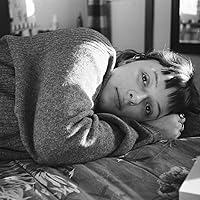
When Anne Dufourmantelle drowned in a heroic attempt to save two children caught in rough seas, obituaries around the world rarely failed to recall that she was the author of a book entitled In Praise of Risk, implying that her death confirmed the ancient adage that to philosophize is to learn how to die. Now available in English, this magnificent and already much-discussed book indeed offers a trenchant critique of the psychic work the modern world devotes to avoiding risk.
Yet this is not a book on how to die but on how to live. For Dufourmantelle, risk entails an encounter not with an external threat to life but with something hidden in life that conditions our approach to such ordinary risks as disobedience, passion, addiction, leaving family, and solitude
Keeping jargon to a minimum, Dufourmantelle weaves philosophical reflections together with clinical case histories. The everyday fears, traumas, and resistances that therapy addresses brush up against such broader concerns as terrorism, insurance, addiction, artistic creation, and political revolution. Taking up a project than joins the work of many French thinkers, such as Jacques Lacan, Jacques Derrida, Jean-Luc Nancy, H�l�ne Cixous, Giorgio Agamben, and Catherine Malabou, Dufourmantelle works to dislodge Western philosophy, psychoanalysis, ethics, and politics from the redemptive logic of sacrifice. She discovers the kernel of a future beyond annihilation where one might least expect to find it, hidden in the unconscious.
In an era defined by enhanced security measures, border walls, trigger warnings, and endless litigation, Dufourmantelle's masterwork provides a much-needed celebration of the risks that define what it means to live.
Docteur en philosophie et diplômée de Brown Univesity, Anne Dufourmantelle a enseigné à l’école d’architecture UP6-la Villette, et donné un séminaire à l’Institut des Hautes Etudes en Psychanalyse à l’Ecole normale supérieure. Anne Dufourmantelle meurt le 21 juillet 2017 en tentant de sauver l'enfant d'une amie de la noyade sur une plage du sud de la France.
Felsefeyi psikoloji ile zekice birleştiren A. Dufourmantelle, riski ve risk almayı biraz karışık bir şekilde anlatıyor ve risk almaya gerçekten övgü yağdırıyor. Hayat hikayesini okuyunca düşüncelerinin arkasında tam bir inançla durduğunu risk almaktan kaçmadığını göreceksiniz.
Bir filozof aynı zamanda bir psikanalist, tıp eğitimi gerektiren psikiyatrist değil, anlatımların ruhsal çözümlerini yapan bu konuda eğitim alan bir psikanalist. Bu nedenle akademik derinliklere dalmadan, özellikle kendi deneyimlerine ait çeşitli psikanaliz örnekleriyle risk almanın kötü bir şey olmadığını anlatıyor.
Ele aldığı konular çok çeşitli, örneğin; bağımlılıklar, korkular, aileyi veya eşi terketme, özgürlük, kaygılar, hayal kırıklıkları, rüyalar, yalnızlıklar, inanmak, umut etmemek, itaat etmemek, mahremiyete bağlılık vb bir çok ilginç ve güncel insanlık halleri. Aşırı yoruma kaçılan bazı bölümler kitap içinde yama gibi duruyor, örneğin romantizmi riske atmak, çeşitlemeleri riske atmak vb gibi. Alıntı yaptığı yazar ve bilim insanları dünyaya farklı bakan kişiler; J. Derrida, M. Blanchot, G. Deleuze, E. Levinas, F. Guattari, ve tabii ki Descartes, S. Freud, F. Nietzsche, S. Kierkegaard, J. Kristeva vd.
Hızla okunacak bir kitap değil, biraz zaman ayırmak gerek, bazı yerlere tekrar dönüşleri yaşadım, kitap çizme huyunuz yoksa küçük bir not defterini yanınızda bulundurun. En önemlisi bu tarz kitaplarda sıklıkla rastlanan “fikri empoze etme”, adeta okura bazı konuları dikte ettirme olayının bu kitapta hiç olmaması. Özgür düşünceye saygılı olması. Riske övgü düzenleyen yazar sizden risk almanızı bekleyerek yazmamış bu kitabı kanımca. Keyif alarak okudum yoğun içerikli bu kitabı, öneririm.
“How fascinating and frightening to be able to read the very book that set the stage for its author’s death. How awe-inspiring and refreshing to read the work of a philosopher whose words are more than empty words, jargon, or obscurantism—a philosopher who does not just learn but manifestly knows how to die, ” writes Steven Miller in the English translation book introduction.
Yes, how could we not love the philosopher who lived and died by her published words?
“The instant of decision, the one in which risk is taken, inaugurates another time, much as trauma does. But a positive trauma.”
“The very utterance of zero risk is an absurdity because its actuality would annul the very reality of which it attempts to speak. Peril must be faced head-on. This is the least among the forms of courage that might save us. We can always recover from pain, catastrophe, or mourning, but evil will always claim a share.”
Probably her best and most daring book. It is not about the risk of dying, it's about the risk of living.
Half way the book, reasoning makes place for a poetic uitburst right from the deep desire of the heart, to live life without the restrictions of fear, embracing life with all that it entails. Which doesn't mean being reckless. The risk of living is a calculated risk, but a calculation that incorporates a certain trust in your deeper self, "le moi perceptif", the self in its pre-human awareness of life and the world.
Me costó mucho enganchar al principio, me demoré un montón en leerlo, sentí que los ensayos eran demasiado cortos y que no se alcanzaban a desarrollar bien. Pero, cuando habla de la belleza, la noche, el infierno (ya al final) algo hizo click en mi y fue como wow, cómo osé pensar cosas malas de este libro? tal vez aquí es cuando entra en juego la teoría de la recepción de los textos. No lo sé, ni quiero saberlo.
Llegué a él por un artículo de Alexandra Kohan, lo recupera para hacer un "elogio de lo incierto". El libro ensaya esos instantes, esos acontecimientos en que se pone en riesgo la vida misma: la pasión, un secreto, los escándalos, el olvido, las revoluciones. "¿Cómo permanecer con los ojos abiertos, un poco más... y no quedarnos apartados de las cosas más bellas?", se pregunta Anne Dufourmantelle. En estos días de confinamiento, leerla fue algo así como un alivio.
Style agréable, quelques passages m'ont charmée et invitée à réfléchir. La structure, entre essai et récits de séances d'analyse permet de respirer un peu, mais globalement j'ai trouvé l'ouvrage trop dense, fouilli et bourré de références philosophiques/littéraires peu explicitées pour un lecteur profane. J'ai calé sur cette lecture à bien des reprises... 6/10.
“What becomes of a culture when it can no longer think about risk except as a heroic act, pure madness, deviant conduct?...How is it possible, as a living being, to think risk in terms of life rather than death?”
Aaaah those ever intense, enigmatic and fatalistic French philosophers with their devil may care attitude towards mortality, fidelity and other stuffy Anglophonic concerns, gesticulating manically in between chain smoking Gitanes and draining glasses of vin rouge…
I know, I know, I’m joking, but maybe only a little bit. I’m not sure there was a need for the long-winded introduction in this book?...I have to say once you’ve read a certain number of these French thinkers, it can start to seem like rehashed re-runs of the same old themes. There were many moments when Dufourmantelle probed into some interesting areas, but I never felt she really captured them or explored them in any satisfying way and if she did maybe they were lost in translation?..,
Comprendre le risque, prendre les risques. Pour se libérer. Pour que subsiste le désir qui nous rend vivant. De l'intérêt de la psychanalyse à travers l'hospitalité de l'analyste et le risque de la variation, du déplacement. Éloge de la littérature.
« Le risque ouvre un espace inconnu. Comment est-ce possible, étant vivant, de le penser à partir de la vie et non de la mort ? À l’instant de la décision, il interroge notre rapport intime au temps. Il est un combat dont nous ne connaîtrions pas l’adversaire, un désir dont nous n’aurions pas connaissance, un amour dont nous ne saurions pas le visage, un pur événement. »
Sağaltıcı bir anlatı. Çeviriden ya da kitabın üslubundan kaynaklanan metinlerin kendi içinde bazı kopuklukları var. Belki de bir yerinde okumak üzerine yaptığı vurguya benzer bir deneyimle okutmuştur kendini. Okumanın mümkün olmadığı durgunluklar, aralıklar, düşünce yırtıkları... Herşeyi anlamak ne mümkün. İnsanın temel meselelerine göz kesilmiş. Ara ara düşünceye kurgunun dahil olduğu anlatılar okumayı daha derinlikli hale getirdi. Riske övgü, yaşamın kendisinde yaşamanın riski...
İyi ki yazılmış, iyi ki çevrilmiş ve iyi ki okumuşum. Kendimi bir analize tâbi tutmak değildi bu; yüzüme çarpan, içimi kavuran, gözlerimi dolduran, göğsümü ferahlatan bir diyalogtu. Murat Erşen'e bu güzel çeviri için ne kadar teşekkür etsem az.
“The quiet routine of everyday life are nothing but the absence of risk, the war against all held at bay, a fragile episode of calm purchased at the price of unending calculation, precaution, and surveillance.” “We believe that our fears hold us back; we believe we don’t have enough strength to confront them, because this would be to know them, but also to know them, even to grow attached to them. Our fears present the face of future amazement, the beginning of all creation. We live under local anesthesia, wrapped in cellophane, desperately seeking the substance, or the love, which might wake us up without frightening us”
i’ve read so many Great books this year and this one blows all of them out of the water. how truly beautiful and, i’m so glad i’ve found and read this during my year of vulnerability. the chapter on dreams and laughter was one of the most excellent texts i’ve read, and i read it as the F train became elevated, the sunlight shining through the windows onto the pages as we passed through central and south Brooklyn. and i proceeded to have the most wonderful day in Coney Island (my first time there in the non-summer). i’m really grateful for my head, my heart, my soul.
es extraño leer algo tan cesudo con tanta claridad, sumergirse en las tinieblas que la autora disipa. de algún modo es un libro muy cercano, pese a la distancia técnica que nos separa. Recomendadísimo
At first, this book present itself as a philosophy book with a very interesting form, which is to be concise into very small chapter. It is very refreshing to read philosophy this way. And while, the philosophy aspect is no that deep, it still ask some pretty interesting questions.
BUT, when I bought this book, I didn't knew the author was a psychoanalyst first and then had an phd in philosophy. And in the first third, the references to Freud and Lacan (which are the two author she referenced to the most) did not really bothered me as there were few and sparsed and used philosophically. But they became more and more frequent, and then we lost all philosophy for psychoanalytic bullshit.
Psychoanalysis is bullshit. Psychoanalysis should only be viewed as a philosophy of a time (to answer questions that a society had at the time - mostly about sexuallity and war - and we should not apply those ideas onto our society and time, we can use them to think but not apply them as they are not as relevant anymore to us) and not a way to heal/take care of patients. Because the single fact that some people try to apply vague universalist theories about dreams etc. onto people that are already vulnerable is dangerous.
For exemple, I stopped at the chapter about laugh. And exactly where the author wrote something about "Laughing is in itself erotic". The way she universalised this very stupid affirmation is fucked up. She means that ontologically, a laugh as it is a form of corporal pleasure (full possession of the body upon the intellectual reasonning), laughing is the same as cumming, an erotic pleasure. Which means that anytime someone laugh, a form a eroticism accompany this laugh (bla bla bla Freud and the pulsion of life and all of this bullshit). And, the way she says it means that this is universally true for everyone, as a laugh is in ITSELF erotic. So, an infant that laugh is inhabited by an erotic corporal possession. Do you see the fucking problem ??? You cannot universalised something like. It may be true for some people, I cannot deny that, but you cannot universalised and apply to everyone this kind of theories. Because this simple affirmation raise a lot more questions as it is universalised. And even more, universally true concept is, now, philosophically very dubious.
And there is hundreds of things like that that are wrote in this book. Some that are very subtile some other not very. I could excuse all of this is the book was from the last century, but it's from 2011.
Very Eurocentric ideas on philosophy and psychoanalysis in the form of short essays. Pretentious writing but some good ideas to consider. Some not. It’s too metaphorical and philosophizing for my taste. Good enough read for anyone but maybe especially those trying on different philosophers and philosophies like tshirts, like during a student’s undergrad timeframes. I prefer more straightforward language and prefer not to work with excessive metaphor unless it really adds something meaningful.
Author kept referring to white male philosophers like Lacan and Foucault in her essays. I would take their philosophies and writings and hers as well with a giant grain of salt. Those philosophers have been re-evaluated based on their actions and are not noble men wanting the best for society. I also don’t understand the high reviews. The author died trying to save children from drowning which is a very kind and noble act but these life and death events seem to make some readers visions foggy about the quality or truth of the work. The writing may be her truth as she wants to present it but not every other person’s truth.
Me encantó el libro, los planteos de Anne, intercalados con las pequeñas viñetas clínicas, son realmente muy enriquecedores y plantean un psicoanálisis interesante que no apunta a cerrar sentidos sino todo lo contrario. Más interesante cuando uno se interioriza en la vida (o, particularmente, la muerte) de la autora.
Hay que mencionar igual que la traducción tiende a ser mala, realmente dificulta la lectura en algunos pasajes, ya que eligieron palabras raras o los fraseos son extraños. Eso no le saca mérito a las ideas del libro, pero sí complican la experiencia de lectura.
“Tanto la falta como la angustia son hambres espirituales, experimentarlas como tales no nos salva de su negatividad ni de su morbilidad, pero pueden volverse un vector de potencia del que la libertad es el otro nombre.”
Beaucoup trop freudien et philosophique, ça m'a juste rappeler que la philo c'est cool pour moi que quand je suis bourrée avec des potes sinon pas ouf. Je m'attendais plus à un livre de """développement personnel""" au sens littéral du terme mais c'était trop abstrait.
Risquer la révolution, c’est peut-être, à un certain moment, avoir atteint une limite au-delà de laquelle plus aucune pensée, liberté, amour, n’est possible et là, dans ce mouvement de volte qui dit non, qu’apparaisse une autre langue, un autre jour.