Tulsa, Oklahoma, 1953: an impoverished Cherokee named Buster Youngwolfe confesses to brutally raping and murdering his eleven-year-old female relative. When Youngwolfe recants his confession, saying he was forced to confess by the authorities, his city condemns him, except for one man—public defender and Creek Indian Elliott Howe. Recognizing in Youngwolfe the life that could have been his if not for a few lucky breaks, Howe risks his career to defend Youngwolfe against the powerful county attorney’s office. Forgotten today, the sensational story of the murder, investigation, and trial made headlines nationwide.
Oklahoma’s Atticus is a tale of two cities—oil-rich downtown Tulsa and the dirt-poor slums of north Tulsa; of two newspapers—each taking different sides in the trial; and of two men both born poor Native Americans, but whose lives took drastically different paths.
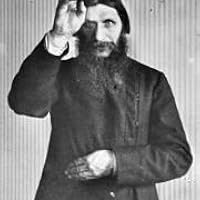
Hunter Howe Cates explores his grandfather’s story, both a true-crime murder mystery and a legal thriller. Oklahoma’s Atticus is full of colorful characters, from the seventy-two-year-old mystic who correctly predicted where the body was buried, to the Kansas City police sergeant who founded one of America’s most advanced forensics labs and pioneered the use of lie detector evidence, to the ambitious assistant county attorney who would rise to become the future governor of Oklahoma. At the same time, it is a story that explores issues that still divide our nation: police brutality and corruption; the effects of poverty, inequality, and racism in criminal justice; the power of the media to drive and shape public opinion; and the primacy of the presumption of innocence. Oklahoma’s Atticus is an inspiring true underdog story of unity, courage, and justice that invites readers to confront their own preconceived notions of guilt and innocence.
Thoroughly researched and passionately written, Oklahoma's Atticus is a great book. It's an exciting true crime story, and a powerful courtroom drama. While the heart of the book lies with Elliott Howe's defense of Buster Youngwolfe, it also effectively weaves in conversations about the effects of poverty and racism, the history of the Native American tribes and their impact on Tulsa's growth, and the importance of the presumption of innocence.
A powerful story and one I would recommend for anyone interested in the history of Tulsa, true stories about fighting systemic racism, or anyone looking for a good crime story.
I have written and re-written this review many times in my head. There is a lot to say, but I don’t want to make anyone mad at me.
I didn’t realize that 25% of Native Americans moved west on their own after the Louisiana Purchase.
Following the Indian removal, from the author’s perspective about the Creek (Mvskoke) Indians, but probably other tribes as well, the tribe spent 20 years building functioning towns, only to be ravaged and destroyed by both Union and Confederate soldiers near the end of the Civil War.
The author did bring up another similarity to 1921. The Tulsa Tribune, which told its readers to “Nab Negros” in that year, was used as a mouthpiece for the prosecution in 1953 to publically convict another person of color — this time, a Cherokee Indian.
Progress has been made in general in the Justice System since 1953 — guarantees that an attorney be present during questioning, must let the suspect go after 72 hours without charges, gag orders to the trial participants, Miranda rights.
But, as the author says, the presumption of innocence is not evenly distributed, especially against people of color. I don’t think he mentioned this, but with social media, it’s harder than ever to minimize the effect of the court of public opinion. It is easier now to instigate a violent “protest” than it was in 1921.
Oh, and he brought up the slow growth of Tulsa’s population over the decades. I only know of what I saw growing up. The population stagnated and decreased during the 1970s and 80s. I remember high schools closing and thought it was because Tulsa was no longer “The Oil Capital of the World”. It played a part, but was also the lack of development in north Tulsa. That area was a desert for many years, especially for large grocery stores. Just recently, such a store opened for the first time in a while, and I believe it’s the first Black-owned grocery store in a very long time. Medical care and industry is moving into the area. North Tulsa spans many square miles — it’s not just Greenwood. I’m glad the people in charge are keeping an eye on the big picture and will continue to accelerate the growth.
So, obviously the book is about more than a murder case (and that is very well presented). It really makes you think about what’s being said about both our history and now, and what is not being said. Recommended.
Thank you, Hunter Howe Cates for bringing this wonderful story to light.
Elliot Howe, public defender in Tulsa, OK is appointed as Buster Youngwolfe's representative in a trial regarding a gruesome murder of an 11-year-old girl who live in the slums of Tulsa. Howe, although somewhat inexperienced and believing in his client's innocence, fights to clear his client's name.
While the circumstances surrounding Buster Youngwolfe's arrest were not surprising, the fact that he was found innocent (especially during the time that he was tried for murder), was. I'm not even sure that this day in age he would have been found innocent. Also, I think readers should take pause and realize that this sort of thing still happens today. The police still badger people into admitting to crimes they did not do. It's a shame that Phyllis Warren's killer was never found. I wonder if any of the evidence was saved so that DNA could be lifted and analyzed.
I found this book interesting, however the author seemed to be repetitive at times.
Another sad story of corruption and racism in the 1950’s Oklahoma. Gives a brief history of how all of the Native American tribes came to Oklahoma/Indian Territory. History I only know because I enjoy reading about it,not because tit was taught in Oklahoma Public Schools during my school years(1965-1976).It also tells of the schools Native American children were sent to in the early 1900’s. Such sad stories but worth the read!
I love this because it is an Oklahoma book and I was born and raised in Oklahoma. But on an even deeper level, our country is still dealing with the same things this book talks about. I would recommend reading every. Single. Word of this book and taking it to heart. Phyllis will forever be on my mind, just as Buster and Elliott will be.
Cates drives home an important point in the closing section of this book. All of us are a product of decisions we make and circumstances we inherit. This is a story of two men who’s stories paralleled in many ways, but a few decisions made by each put them on drastically different paths. How different things could’ve been and nearly were.
The main characters in “Oklahoma’s Atticus” are long deceased. And yet through the details of their lives author Hunter Howe Cates brings them alive. One can almost picture 11-year-old Phyllis Warren running barefoot with a comb at the handy. When a young orphaned Elliott Howe jumps in the car with his departing siblings, refusing to be separated from what remains of his family, you want to snatch him up and hug him. That one of these children will meet an untimely end is known from the start. The other, the author’s grandfather, Howe, will play a role in her murder trial.
The time is 1953, the place is Tulsa, Oklahoma. The story is that of a Cherokee named Buster Youngwolfe who is wrongfully convicted of Phyllis’ murder and the public defender and Creek Indian Howe, determined to prove him innocent. That is not the entire story though because “Oklahoma’s Atticus” is also about Tulsa, a place with a rich history based on Creek hospitality. It was in Tulsa that Black Wall Street came into being. It was also in Tulsa that it was brutally destroyed. Cates does not offer easy answers here, instead he paints a picture of a time, a place and a people, both those fighting for justice and those fighting to maintain an unequal system.
Although the story happened more than half a century ago, it is still being repeated today. Not just in Tulsa, but also in Tacoma and Taos. In any city in the U.S. there are innocent people convicted of crimes they didn’t commit. Many of them are minorities. We know the public defenders they often rely on are overworked and underpaid. What few know is that it was worse in 1953 when Howe was one of 84 public defenders in the entire country, only 64 of them full time. That is the history that will captivate readers. The human stories will draw them in. The sparse writing that leaves one hanging at the end of each chapter will keep them reading until the very end.
The time is 1953, the place is Tulsa, Oklahoma. The story is that of a Native American Cherokee named Buster Youngwolfe who is wrongfully convicted of murdering 11-year-old Phyllis Warren and the public defender a Native American Creek Indian Elliott Howe, determined to prove him innocent.
Much of the book deals with Elliott Howe's dogged investigation, his efforts to sow reasonable doubt by revealing sloppy police work and county attorney James Howard Edmondson's questionable integrity, and ultimately implying, though not revealing, a possible alternative. Though this investigation stands as a compelling narrative for readers interested in legal forensics, the book distinguishes itself when Cates focuses on Tulsa's racial and cultural landscape. Cates also takes the reader on an historical journey depicting life in Tulsa during the fifties. There are times when I read these parts of this story that took my attention away from the actual murder trial and I wish he would have just stuck to story but many readers might find the history of Tulsa and the oil boom that happened there interesting.
Although the story happened more than half a century ago. In any city in the U.S. there are innocent people convicted of crimes they didn’t commit. Many of them are minorities. We know the public defenders they often rely on are overworked and underpaid. What few know is that it was worse in 1953 when Howe was one of 84 public defenders in the entire country, only 64 of them full time. It still is great story on the plight of Native American Indians and so much more entwined with the telling of a terrible case of injustice.
Reading Oklahoma's Atticus was informational especially how Native Americans were treated and what others thought of them. Being from OK , having family who grew up in Dawson, OK and being part Native American myself, this book really hit home. Hunter did a great job with details and explains the racism and history of many things. Knowing parents of a little girl didn't act one bit was sad blew my mind. Knowing that an innocent Cherokee man was possibly going to jail or possibly death due to actions of another person broke my heart. Throughout my reading I came to a conclusion of who possibly done the crime but was blown away by how no one went after the individual or really questioned him in depth. I'm glad Hunter wants someone to reopen this case and I hope they do. In my opinion this is a must read and own.
This entire review has been hidden because of spoilers.
An informative story of justice with an instructive history of mid-century Oklahoma. Read the afterword for an important message regarding what we learn from this narrative as it relates to today’s so-called justice system.
Terrific story and the title isn't misleading at all. I think you have to enjoy learning the history of Oklahoma for it to bump from a four- to a five-star read but it's a great read nonetheless.
I'd say if you enjoyed "Killer of the Flower Moon", you'll really like this book too.
Nice read, as a life long Tulsan I enjoyed getting some of its history and a snapshot of its oil heyday in the 50's. But just as today there was a huge divide between the haves and have-nots. An inspiring story that makes me proud of at least some of our predecessors.
"Oklahoma’s Atticus" tells the story of a young Cherokee man accused, tried and convicted by the public of the brutal rape and murder of an eleven year old female relative. Shortly after his arrest, he confesses. The authorities take him to the scene where the young girl’s body was found and he ‘reenacts’ the crime. As far as the police, DA and public are concerned, the case is solved, the outcome of a trial preordained, in essence, case closed. Yet, this was not to be the case. A young public defender, Elliott Howe, a Creek Indian, and barely out of law school, steps in and although at first he likewise believes his client guilty, he begins to have doubts. Initial lie detector tests were inconclusive, but the young man’s tale of being held in jail without adequate food and rest for several days leading to his confession, proves true and Howe takes on the fight for his innocence with a vengeance. Howe is the grandfather of the author, the scene was Tulsa Oklahoma in 1953. The story is one of two sides, the rich south side and the impoverished slum areas of north Tulsa, where the accused, Buster Youngwolfe, lived. A story of two daily newspapers with each offering differing sides of the crime and the accused. And the story of two men, both Native Americans coming from poor pasts but whose lives proved significantly different. The crime and trial made headlines nationwide. The battle between the young, inexperienced public defender risking his reputation vs. the experienced prosecutor, the press and public, is a riveting story, one could say even unbelievable, but it’s 1953 and all true. Unfortunately, one cannot help but make some parallels with those cases even today, where prejudice, initial judgments and conclusions, prevail over the concept of innocent until proven guilty. Congratulations to the author Hunter Howe Cates for bringing this story of his grandfather’s fight to save an innocent man to light. A story that deserves to be told and here it is told in a most persuasive and well-written way.