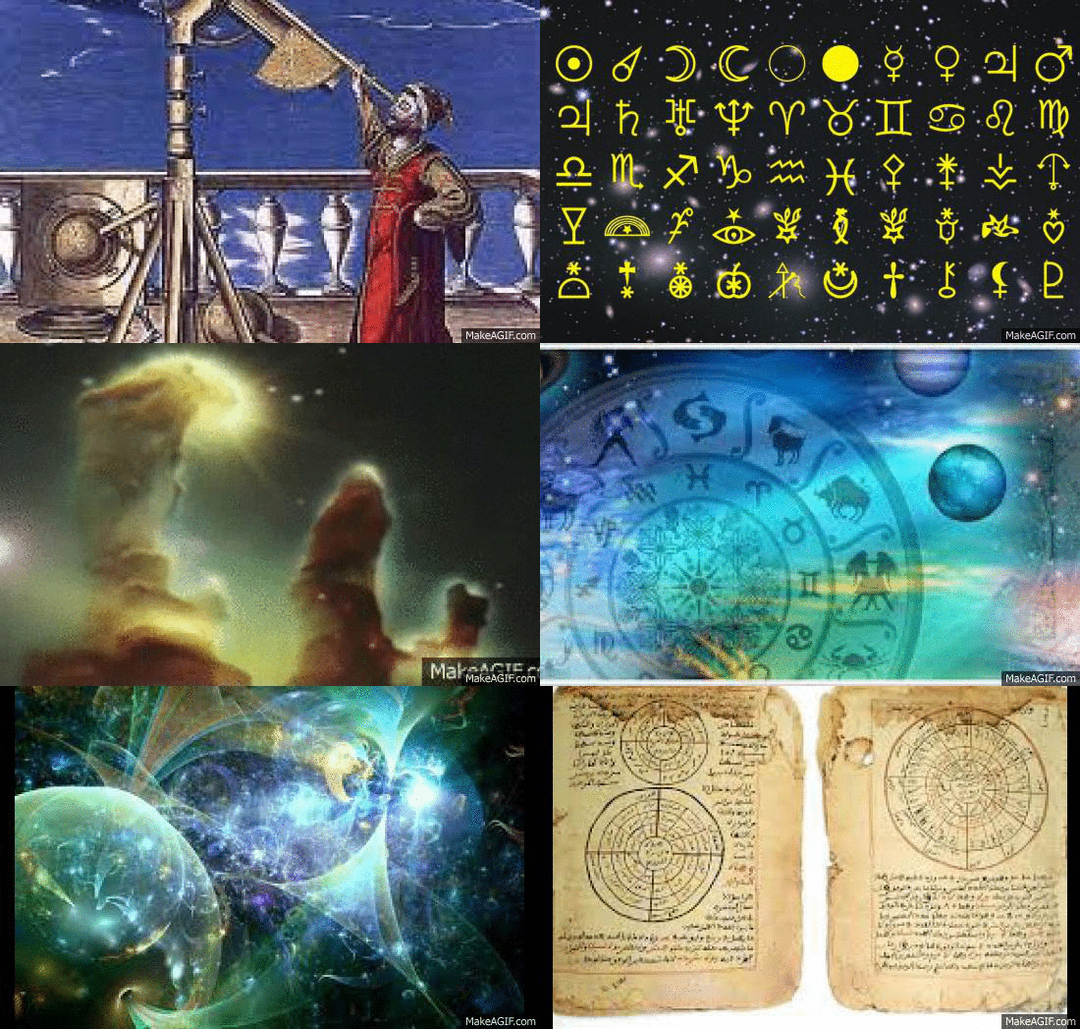
In a world without artificial lights, the night sky is ablaze with stars, whose patterns tell stories you have heard since childhood. The Sun, Moon, and stars are crucial to your daily existence, since they tell the time, direction, and when to plant and harvest. The perfect regularity of the heavens is the only guaranteed part of life and inspires deep religious and philosophical ideas, while unexpected events such as eclipses and comets incite fear.
Experience this ancient outlook with noted astrophysicist and historian of astronomy Professor Bradley Schaefer of Louisiana State University. An award-winning teacher, Dr. Schaefer takes you around the world, exploring the close relationship that people thousands of years ago had with the sky.
The Remarkable Science of Ancient Astronomy covers notable sites and phenomena such as Stonehenge, the Great Pyramid, the Star of Bethlehem, the origin of constellations, Polynesian sky navigation, ancient calendars, and more. Understand the precise alignment of prehistoric monuments with the Sun and stars, learn how to use a medieval astrolabe, and decipher the workings of an astonishing ancient Greek computer called the Antikythera mechanism, which was centuries ahead of its time.
Using only their eyes, ancient astronomers got many things right, and their meticulous records have proved invaluable to modern astronomers, helping them calculate the slowing of Earth's rotation and the expanding stellar cataclysms called supernovae. Ancient astronomers truly laid the foundation for modern science.
Based on the title, I thought that I would get different information. I wasn’t a fan of how he presented his case about ancient people and their intentions with their monuments. We can’t even rebuild the pyramids to the accuracy that they did, so I think they knew a thing or two about what’s happening in the skies. I also did not like how he spent time trying to debunk his contemporaries. I wish she would’ve focused on presenting new information Based on his research.
*** This ‘Great Course’ is truly a great course! 4 out of 5 stars! ***
“The Remarkable Science of Ancient Astronomy” chronicles the transition of astronomy from a qualitative science to a quantitative science and the decoupling of astronomy from astrology. It should be noted, however, that the title Science of Ancient Astronomy is a bit of a misnomer; the course would be more properly entitled the History of Ancient Astronomy. The focus of the course is the importance of the understanding – or the lack thereof – of astronomical phenomena on human history and the cumulative importance of the contributions of ancient astronomers on modern astronomy.
Kudos to Professor Schaefer for including the contributions of non-Western astronomers. Without diminishing the importance of the ancient Greeks on modern, Western Thought, the course also examines the discoveries of Chinese, Indian, Aboriginal, New World native peoples, and Islamic Golden Age scholars.
While acknowledging that this is a survey course taught from an archeological and anthropological perspective, as a geophysicist I question the exclusion of a discussion on the impact of continental drift on the alignment of ancient astronomical sites. Professor Schaefer devotes several lectures to Stonehenge, the Great Pyramid, Maes Howe, and other archeological sites. He lauds the ancient architects for the near-perfect alignment of the structures to the cardinal directions or to various celestial directions, but doesn’t discuss whether the movement of the continents over the past several thousand years has thrown off the original alignment…or corrected it.
All in all, this is a worthwhile course and highly recommended for history and astronomy enthusiasts.
This was dense but worth the hours. L1: Stonehenge and Archaeoastronomy L2: The Real Stonehenge L3: Alignments at Maes Howe and Newgrange L4: Astronomy of Egypt's Great Pyramid L5: Chaco Canyon and Anasazi Astronomy L6: Ancient Cosmologies and Worldviews L7: Meteorite Worship and Start of the Iron Age L8: Eclipses, Comets, and Omens L9: The Star of Bethlehem L10: Origins of Western Constellations L11: Chinese and Other Non-Western Constellations L12: Origins and Influence of Astrology L13: Tracking Planet Positions and Conjunctions L14: Ancient Timekeeping and Calendars L15: The Lunar Crescent and the Islamic Calendar L16: Ancient Navigation: Polynesian to Viking L17: Breakthroughs of Early Greek Astronomy L18: The Genius of Hipparchus L19: Revealing the Antikythera Mechanism L20: How the Antikythera Mechanism Worked L21: Achievements and Legacy of Ptolemy L22: Star Catalogs from around the World L23: How Ancient Astronomy Ended L24: Ancient Astronomy and Modern Astrophysics
So I used this just to listen to, and after the first 1-2 lectures, when I couldn’t sleep. The topic is not what I was expecting. I guess I expected archeo-astronomy and this is recorded history, ancient history, and basically a paean to the Greeks. The topic was boring enough to drift off to, despite the weird format of chunks (so pauses while a title card would come up, again I am just listening). Not a fan of the lecturer’s way of speaking. But it worked for why I kept listening and some parts held the attention. Wouldn’t recommend to myself YMMV
what is ancient astronomy and what does it entail what do we know about it how do we know it how has our understanding of it shifted over time what caused those shifts (new discoveries, technologies) how might our understanding be improved in the future
i do not want condescending chuckles, patronizing glibness, or an assumption that a modern understanding is somehow complete or ?morally superior?
and ffs don't casually refer to one of the ancient dead as "a cripple". no. just no.
I found this very interesting and informative, although it seemed to tangent a bit often for what I like. Since this is exclusively an audiobook, I will factor that in as well. I know the author is not a trained voice actor, however, I would have liked a bit more editing of any errors.
A very board survey of ancient and pre-scientific civilizations that used astronomy/astrology to navigate the world they lived in. From navigation to predicting astronomical events for religious purposes, the ancients relayed heavily upon the stars.
4 stars due to the unfortunate recording of narrative. There were many unnecessary pauses in recording. The pauses made listener think the lecture was over. However the content was great. Very interesting and not boring.