For fans of the Netflix show Narcos and readers of true crime, Kilo is a deeply reported account of life inside Colombia’s drug cartels, using unprecedented access in the cartels to trace a kilo of cocaine—from the fields where it is farmed, to the hit men who protect it, to the smuggling ships that bring it to American shores.
"Toby Muse’s tautly written account of his intimate prowl through Colombia’s narco world is both compelling and unforgettable. With Kilo, cocaine now has its own Dispatches. Simply kickass.”
— Jon Lee Anderson, The New Yorker and author of Che A Revolutionary Life
Cocaine is glamour, sex and murder. From the badlands of Colombia, it stretches across the globe, seducing, corrupting and destroying. A product that must be produced, distributed, and protected, it is both a harbinger of violence and a source of immense wealth. Beginning in the jungles and mountains of Colombia, it filters down to countryside villages and the nightclubs of the cities, attracting money, sex, and death. Each step in the life of a kilo reveals a different criminal underworld with its own players, rules, and dangers, ranging from the bizarre to the diabolical. The killers, the drug-lords, all find themselves seduced by cocaine and trapped in her world.
Seasoned war correspondent Toby Muse has witnessed each level of this underworld, fueled by the appetite for cocaine in America and Europe. In this riveting chronicle, he takes the reader inside Colombia’s notorious drug cartels to offer a never before look at the drug trade. Following a kilo of cocaine from its production in a clandestine laboratory to the smugglers who ship it abroad, he reveals the human lives behind the drug’s complicated legacy. Reporting on Colombia for the world’s most prestigious networks and publications, Muse gained unprecedented access to the extraordinary people who survive on the drug trade—farmers, smugglers, assassins—and the drug lords and their lovers controlling these multi-billion dollar enterprises. Uncovering stories of violence, sex, and money, he shows the allure and the madness of cocaine. And how the War on Drugs has been no match for cocaine.
Piercing this veiled world, Kilo is a gripping portrait of a country struggling to end this deadly trade even as the riches flow. A human portrait of criminals and the shocking details of their lives, Kilo is a chilling, unforgettable story that takes you deep into the belly of the beast.
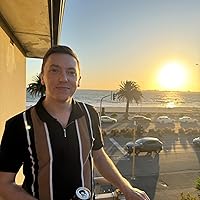
A war correspondent and documentary filmmaker, Toby Muse's first book is Kilo: Inside the Deadliest Cocaine Cartels. The book is made up of his experiences reporting the cocaine wars in Colombia, where he lived for 15 years. His work has appeared in The New York Times, The Guardian, the BBC, CNN, Vice and others. He has reported from the frontlines of the wars in Syria and Iraq. He grew up in London but now lives in Washington, DC. He never declines a rum from a stranger. He's writing his first novel.
Ever snorted a line at a party? You're complicit in the cocaine trade, which has destroyed generations of Colombian families, and turned regions into perpetual war zones. Kilo is surely the best account of the cocaine trade that will be ever be written, as well as the most incredible work of investigative journalist I've read. It's a high-stakes yarn that shows each step of the drug ladder in vivid detail -- from creation to consumption. Toby Muse's riveting storytelling matches his all-access journalism, making for a superb and important book.
This was definitely eye-opening seeing the whole journey of cocaine from the very beginning, just a crop in the jungle to a line in the bathroom of a nightclub.
This is some serious investigative work, Toby Muse has nerves of steel to be able to put himself in such dangerous situations. I really enjoyed the writing of this investigation, it was captivating and thought-provoking. We see the violence and utter devastation caused by Cocaine, but it’s not just the plant, there’s government officials, guerilla’s (FARC) as well as the traffickers. Is the war on drugs causing even more damage?
Jos käytät, koskaan olet käyttänyt tai harkinnut käyttäväsi kokaiinia, lue tämä. Äärimmäisen hyvin kirjoitettu teos siitä, mitä kaikkea yhden huumeen maailmaan mahtuu ja miten vaikea yhtälö huumeiden vastainen sota on.
Mutta mutta, ymmärrän että kokaiinin maailmassa naisilla on vain yksi paikka, mutta onko kirjailijan pakko sanallistaa kaikkia naisia samalla tavoin kuin narcot tekee… :^) Naisten ulkonäkökuvaus oli taas luokkaa ”hän oli uskomaton näky, kaunis kuin enkeli, pitkähiuksinen ja pakarat pyöreäksi treenatut” vaikka ulkonäön kuvaamisella ei olisi ollut MITÄÄN väliä siinä kohtaa. Niin kuin… miksi….
This reactionary and wildly sensationalised book is not the one for a serious assessment of the global cocaine trade. If you took a shot for every claim that was backed up with evidence you would finish the book more sober than when you started it. It could easily be half the length that it is.
The Colombian government and US government are portrayed as trying, but failing, to stop the cocaine trade, ignoring that the economies of both countries are reliant on - and both governments ensure - its continuation. From Muse's framing and reframing of Colombian cocaine production being rooted FARC activities the reader could not be blamed for concluding that the real villains of the story are 'socialists and Marxists'.
concept is good - showing the horrors of the cocaine trade by following a kilo of it from production to consumption. all the rest is quite horrible. hyperbolic language (don't know if the finnish translation made it worse than it is), sexual objectification of women, numerous melodramatic scenes. not a lot of info that cannot be accessed by going down a cocaine/drugs/cartel rabbithole on youtube.
Interesting topic regarding the international trade of cocaine, corruption and violence. I managed to get through the book but thought the writing was tedious and monotonous. Not a particularly well written book.
Kilo plunges the reader straight into the action. We begin in the jungle, as the peace brokered between the FARC and the Colombian government in 2016 reveals its weaknesses. Without the stability of a single, known rebel organisation, new armed groups sweep in, and the fighting escalates. The author is fully aware of just how complicated the situation is in the jungles of Colombia, and does not waste time trying to explain the various different groups in detail. For the majority of those living in the countryside, it matters little who the perpetrators of ‘the Violence’ are anyway; it only matters how many people are being killed at any one time. Muse deftly articulates the feelings of the coca farmers, most of whom would love to escape from a life of growing this illegal crop, but who are offered no viable alternative. Coca is all they know, and the help promised by the government never materialises. The author’s access gives us an insight into the reality of life in rural Colombia, and the scene is a desperate one. Attempts to stop the spread of coca farms seem futile; the authorities risk their lives to pull out bushes they know will be replanted almost immediately. The farmers know better than to look to the government to help them. Muse talks with men and women who sound utterly defeated by their circumstances, and it is harrowing to hear the hopelessness in their voices.
In the small towns, their product, now in paste form, is passed on for a modest sum that is still more than they could earn by any legal means. The farmers celebrate with drink and prostitutes and return to their farms. Already it is clear that Muse excels at character, painting beautiful, haunting portraits with a few words. Of a nineteen-year-old prostitute in La Gabarra, Muse says:
“So much life has passed across this face, through this body. This woman has seen more of humanity in this ghastly cell than I’ll see in several lifetimes.”
From the countryside, we move to Medellin. As an avid fan of the series Narcos, I felt on more familiar territory here, in Escobar’s old stomping ground, but Muse delves far deeper than any fictional account could. Cachote, the assassin, is described by the author with the deadpan humour that is scattered throughout this book:
“He’s not cursed with an abundance of smarts, but he’s got the malice and the balls to do this job.”
One of the many aspects which make Kilo such an original and engaging read is how effectively Muse allows his personality, or at least his personal thoughts, to leak onto the pages. I read more fiction than non-fiction, and have occasionally found journalistic writing to be too dry for my own taste. There is no such problem here; not only is Muse a wry, thoughtful and often amusing guide, but it is also clear that the journey he is bravely undertaking has a profound effect on him. He wrestles with the big questions: “How many live honestly only out of fear of the law?” and he does so with an openness which made me warm to him as a narrator, even as I felt awed by his courage.
War correspondents are fully entitled to a certain amount of swagger; but while Muse does have moments of being shockingly blase in dangerous situations, there is a strong recognition of the line between his role as witness and that of the participants in this endless war. He does not let his interview subjects off the hook for their crimes, but he recognises that this is a society in which many young men do not expect to live past thirty; in which murders are not “solved in forty-two minutes by attractive cops on the small screen”, but are instead a fact of daily life. I experienced a very small jolt of my own when I realised that the book that Alex, the drug-lord, considers his ‘self-help bible’ The 48 Laws of Power, sits on my husband’s shelf with his other management books. The phrase ‘accidents of birth’ springs to mind.
As the kilo rolls out of Medellin, destined for either Europe or the US, Muses’s focus shifts to the authorities engaged in the endless war on drugs. At the airport, he witnesses the arrests of drug mules, and the stories of how drugs are smuggled make for some grim reading. But it is the section in which he joins the Coast Guard in the Pacific that provides some of the most thrilling and dramatic prose in the book. Muse is a fantastic writer; his short, punchy sentences contain a sparse beauty, and as he rides the high seas with the crew of the James, the exhilaration of successful drug busts and the despair of failed attempts are captured in exquisite, gripping detail:
“As the adrenaline slowly rises in the blood, the teams joke and banter in the darkness. Electricity flows through the air. Excitement. Anticipation.”
Here in particular, the narrative pulls you inside it, lets you feel the spray of the ocean and the almost unbearable tension of the endless cat-and-mouse games played out across the vast expanse of the Pacific.
Reading Kilo is an immersive, thrilling and deeply engaging experience; this is not a book to sit back and read passively. In terms of the narrative drive, the conceit of following a single kilo of cocaine from the coca farms through the small towns to the cities, and from there on its way abroad, is simple and elegant. It works exceptionally well, providing natural shifts from one setting to another, creating the effect of a series of linked short stories, each one as vivid and richly populated by memorable characters as the last. The relentless movement urges you on, with barely time to pause for breath between each captivating instalment in the kilo’s journey. This is aided by Muse’s visceral writing style, which makes the reader feel as if they are diving head-first into cold, murky water with every new chapter. His writing is almost a physical sensation; it chills the blood with its bare, spare honesty.
It is difficult to express quite what an impressive feat Kilo is. Toby Muse takes the very best of investigative journalism and combines it with a huge talent for character, description and good old-fashioned story-telling. Habitual readers of both non-fiction and fiction will find themselves compelled to read on, to follow the kilo on its fascinating and often terrifying journey. It is a voyage of discovery masterfully helmed by a writer who has given so much of himself to tell us this story.
I had initially decided not to mention the current global situation in my review, but on reflection I feel it would be remiss of me not to emphasise that if you are looking for a book that will take you on a wild ride straight into the heart of a completely different, far longer-term crisis, this expertly crafted work will block out all other noise and occupy your thoughts for a good long while: an achievement that cannot be overstated in these strange times.
A perpetually entertaining, fundamentally right-minded look at the cocaine business and what its continuing illegality enables in South America. The reportage is deep and the consideration of the intertwined relationship between the cartels and those who try (or want to appear to try) to stop them consistently sharp, although the territory is well-trod at this point. I have a few misgivings about the facts pulled here; there are a meaningful handful of times that I ask "how could he know that?," and the bravura style employed leaves a certain permanent sense of uncertainty, in a manner that reminds me of Hunter S. Thompson. This is a book that you chew through fast. Is it not just fast but fast and loose? Hard for me to say.
Quite repetetive. If I hear a mention of 'drug, sex, and money' again I will smash my head against the wall. The whole conversation about the war on drugs is kind of botched, as we all know the consumer is not the problem, yet this isn't explored deeply. A less-informed person would believe the consumer and the producer is the problem, which isn't the case.
Overall an interesting book with good information about what happens in drug cartels and the people who are in the cocaine industry. I would recommend this more so to people who already know about the war on drugs and the issues behind it.
This entire review has been hidden because of spoilers.
Quick impressions: Toby Muse takes us on the journey of a kilo of cocaine from the coca fields of Colombia to the smuggling of cocaine out of Colombia. Along the way, he meets and talks to all sorts of people from coca farmers to dealers and assassins to law enforcement and drug lords. It is a fascinating journey that looks at not only the drug trade but also how that trade drives corruption and violence in Colombia. To make matters worse, the U.S. War on Drugs does little to help given that the United States is the largest consumer of cocaine, its biggest customer. Wherever cocaine goes, money, flash, and power follow for some, but after the initial boom soon misery, violence, and destruction follow for most everyone else anywhere near the cocaine trade.
This is definitely a book I highly recommend for those interested in the topic.
This is a very interesting read. It is more interesting that informative or educational. If you don’t know much about the cocaine/cartel world, then you will feel a bit lost. If you are an expert, then you may get bored. However, a lot of the stories and anecdotes are very interesting and entertaining to read. I give tons of credit to Toby Muse for putting together this book, even though at times it moved really slow and felt like it lacked purpose. The reason why this is a 3-star and not a 4-star book is because there are better books that do everything this book tries to do. This book could have been anecdote-driven yet fueled by deep dives—it was missing a lot of the deep dives.
Hands down one of the best non fiction books I've ever read. This one will stay with me for a long time and I have no doubt I'll read it again down the track (probably a couple of times).
Heartbreaking, eye opening and thought provoking, with a little dash of humour here and there, Toby Muse is my favourite kind of investigative journalist. Wholeheartedly recommend.
On a side note: if you read this book and still do that line of coke on a Friday night without even a thought about how many lives were lost or ruined to get that line up your grubby little snout, you're one cold hearted son of a bitch.
This book took me a while because it felt a little disjointed. It is like 1000 different short stories and interviews from this journalist’s life in Columbia. But I felt like I really got to understand cocaine trade after this book. Seriously everyone is a victim in a world with cocaine and it sucks. It was interesting to hear that the narcos want things to be illegal, like marijuana? Because illegal drugs earn them more money than legal ones. Something to chew on, but legalizing everything seems aaaalso like not the best option. If there was an easy solution, this journalist sure would’ve said it already
One of the best non-fiction books I have read in a long time. It not gives a vivid inside of the cocaine cartels, but also forces us to ask the question on how we can become complicit in illegal activities. Even if you never saw cocaine in your life, it still begs the question. It is also cruelly shows how supply and demand works, so if for nothing else read it for the economic and sociological principles behind the price of goods.
4⭐️ Kilo is a fascinating look into the cocaine trade in Columbia by workers, cartel leaders, traffickers, and law enforcement. The greed, corruption, and ugly side effects of the drug trade, as well as the common people at the core of the business who are simply trying to make a living. Tony Muse is a seasoned war correspondent who is an expert author who writes in a way that makes you feel like you are right there experiencing the world beside him.
The perfect story of Cocaine. I absolutely loved this story of following the cocaine from it's beginning as a small bush to it's final stages of being exported out of Columbia. A book that talks about the Colombian connection to the drug and only that. Showing the path behind every kilo. The blood, pressure and pain needed to get it from a plant to your nose.
Confronterend hard...over hoe een kilo coke dood en verderf zaait in failed state Columbia. Zonder een principiële keuze te uiten, is de auteur wel duidelijk: enkel het beperken van de vraag naar coke biedt hier soelaas. Wat mij betreft een must read voor elke recreatieve cokesnuiver die een gedoogbeleid promoot...
“The drug trade leaves an international trail of murder and mayhem, to end in a consumer’s nose on a Friday night. A failed war on drugs makes monsters billionaires and misery for those caught in the daily crossfire.” 5 stars ⭐️⭐️⭐️⭐️⭐️ for Kilo by @tobysmuse Jaw dropping stories. Astounding statistics and facts. Tragic. Definitely put this one on your list.
Such an amazing and well-written piece of first hand journalism on the situation in post 'peace deal' Colombia. Must read for anyone who wants to understand why cocaine has ruined, and will continue to ruin, a country that has such dynamism
Interestingly laid out - following cocaine’s process and logistics chain from plant to end customer. I liked that there was a human aspect with the stories of people along the way. Downsides were that the writer was repetitive (made me wonder if I already read parts) and I found some parts a bit slow. Wouldn’t generally recommend.
Mielenkiintoinen kirja ja tempaisi kyllä mukaansa. Aika pikkutarkkaa kuvailua oli kyllä, mutta ei se oikeastaan haitannut kun oli sujuvasti kirjoitettu. Selkeyttä loi, että tapahtumia kuvattiin ja selitettiin aivan alusta työvaihe kerrallaan loppukäyttöön asti. Luinkin tämän todella nopeasti.
The author follows cocaine from Colombia through the supply chain, putting himself in some risky situations. It mostly just highlights the never ending cycle of drug violence without adding much new. The coca plant picking and jungle labs were interesting chapters.
Fantastic journalism on show here, interviewing Cocaine farmers, cooks, cartel hitmen, cartel traffickers, prostitutes who deal with Cartel members and even a chapter on the national guard
A terrific read. Toby Muse takes us farther into the narco trade than anything I've read. He does a stellar job of humanizing the toll the cocaine industry wreaks on lives, governments, and the environment. He also manages to pull off the double challenge of deep-sourced reporting and narrative writing with the flair of a novelist that makes the book compulsively readable. He does not glamorize or intellectualize the tragedy of the drug business, instead portraying it on a gut-wrenching emotional level. I could have used less about the Coast Guard foray and more on possible solutions and the fact that Colombia's elite largely ignore what's happening in their back garden. That would've added an interesting dimension, but those are minor points in a book that's essential reading for anyone interested in Latin America.
Removing the glamour of the kingpins, Muse focuses on the misery cocaine spreads through every layer of society in Colombia. He loosely follows the trail from the jungle bushes in Catatumbo, to the first (local) lab, the first (local) transportation hub, to the cartel's export center, and then either the streets of Medellin's slums or the Cocaine Corridor on the Pacific Ocean. His travels showcase the decentralization of the cocaine industry from the big cartels and counterrevolutionaries to the start-ups and disorganized competition and violence between them. Along the way he interviews an eclectic cast of workers ranging from cocoa picker to kingpin.
Readers are often taken with the fantastic lifestyles of the kingpins. It is an irresistible lure to so many impoverished Latinos that they willingly give up tomorrow to celebrate today. As Muse interviewed a neighborhood slum gang leader and a cartel hitman, both expressed acceptance that will likely die violently before they are 35-years-old, and despair. Indeed, Muse leaves the gangleader in a mostly empty apartment vacantly staring at an empty wall, waiting for rival gangsters to sneak into his home and kill him.
Muse's journey to the jungles, the labs, and the transportation hubs are interesting from the standpoint of sociologists. Everyone wants something other than employment in the cocaine industry. But the money (or the threat of violence if they do something else - local narco militias dictate to farmers what they can and will grow), drive them back to cocoa. Even the kingpin that Muse meets opens up to Muse far more than one might expect. Again, the kingpin wants to leave the business. He is getting older and knows the statistics are against him. The chaos and violence of the decentralized (post-cartel era) is on display as everyone in Colombia is afraid. In the past, you knew what you did, to whom, and what they would do in return. Now, people disappear or turn up worse - much worse, without any indication why. There is an argument for stability, a stability that could only come from a massive realignment of drug policy in Colombia and the US.
The glamour follows the cocaine to each transportation hub. Muse's descriptions of La Gabarra and Tumaco are fascinating. The crushing poverty, the brutality of the gangs, the sleaze, the money, the faux celebrations. If Muse is accurate in his description, there is so much misery. The economies of these hubs is centered around cocaine. Muse may be exaggerating; but the rest of the book suggests that he is not.
A large part of the book (about 50 pages) focuses on the Cocaine Corridor. Muse reveals that the Colombians made a decision in the post-cartel era that they would sell cocaine to the Mexicans for far less than what they would have made selling to Americans or getting the drug into the United States. Muse describes it as a purely business decision - the steady profit over the potential for a windfall. The result is that most of the cocaine traveling to the United States passes through the vast void of the Eastern Pacific - often in speed boats or quasi-submarines that need to make port in 2 days' worth of travel - just short of Mexico. In sum, these cocaine runs fuel the intense violence in Honduras and El Salvador.
Combating the cocaine runners is the US Coast Guard. Muse spent some weeks on board a Coast Guard cutter and witnessed how the warships intercept and seize tons of cocaine each week. The tone of the Coast Guard crew is remarkably different from that of the Colombians fighting on land. The Americans view it as a game to collect trophies, make seizures, and imprison impoverished fishermen for decades in American jails. Although Muse praises their efforts, the sharp contrast in the tone of these chapters over everything else in the book almost shows childish delight (Americans) in the mismatch between the interdictors and the drug runners.
Muse has an interesting writing style. He is a front line reporter. He put himself repeatedly in harm's way. In a sense he is copying the playbook of fellow writer Ioan Grillo. Muse must possess the charisma and grit to succeed in his interviews with kingpins, hitmen, and gangsters. Grillo writes with a bit more confidence and does not rely on pseudonyms to protect people at the same rate as Muse; but the access is different. I do not recall Grillo partying with kingpins in nightclubs, much less dreading that he could be blamed for the arrest of his gangster associates' business partners. Both of them have a tongue-in-cheek dry sense of humor. I vividly remember Muse taking in the carnival of a roadhouse in La Gabarra when two men in gaudy cowboy attire walk in. There was something different about them. As Muse wrote, you can fake toughness and crazy; but you cannot fake an aura of casual violence. Similarly, he related the story of some narcos in a shopping mall with a dreaded killer nicknamed Bunny. The narcos appeared like wealthy businessmen, most Colombians can recognize them; but most Americans would not. Among this group Bunny stood out for his county clothing and dark skin. When a child accidentally bumped into Bunny everyone tensed up even the narcos. That is the world of modern post-cartel Colombia.
Overall, it is an interesting read. The misery and violence caused by the collapse the cartels and the decentralization of the industry is on high display. The instability means that anyone who comes into contact with the drug is at substantial risk of experiencing violence. There is more fear among the dealers themselves. It is not just competition between a handful of big Mafia syndicates. It is an intense competition with the other guys constantly seeking weak spots. Muse's narrative is one of excitement, wonder, and despair.