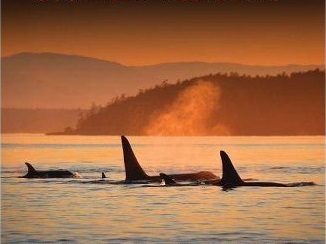
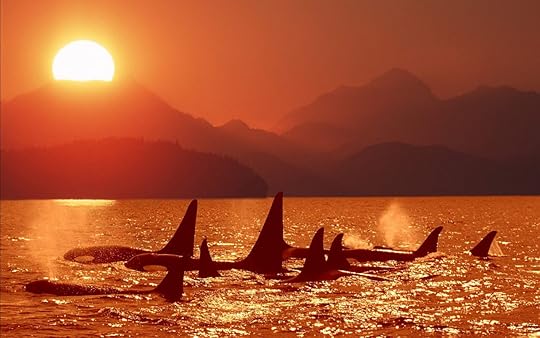
The Southern Resident killer whales are icons of the Pacific Northwest, a beloved population of orcas that are considered the most-watched whales in the world. Despite decades of research and focused conservation efforts, they are on the brink of extinction.
Each year J-, K-, and L-Pods return to the inland waters of Washington State and British Columbia, a region known as the Salish Sea, where scientists and whale watchers alike know them as individuals. J2 Granny lost relatives to captivity but went on to lead her family for decades. The controversial satellite tagging of K25 Scoter reshaped orca conservation efforts. L112 Sooke was only three years old when she washed up dead from blunt force trauma to the head on the outer coast, a death shrouded in mystery.
From the capture era and the beginning of killer whale research to the whale-watching boom and endangered listing, the whole story of the Southern Residents is told here. Our relationship to these whales, complicated by both the positive attachments and negative politics we have created around them, has changed dramatically over the last 50 years. With more challenges on the horizon, one question can we still create a sustainable future for humans and orcas in the Salish Sea?
A fascinating look inside one of the world's most iconic species – the Southern Residents.
Southern Residents are the most widely observed and researched orca population. They are known for their close family bonds - both males and females stay with their mothers their entire lives. They eat only fish, particularly Chinook salmon. Their range extends from Washington State and California to Oregon and British Columbia. The iconic Southern Residents are, unfortunately, critically endangered. They have low birth rates, which, combined with the scarcity of their favorite prey, Chinook salmon, landed them on the Federal endangered species list.
The captive industry decimated this beloved orca population during the 1960s and 1970s. It is hard to know the exact number of captured whales. Estimates range from 45 to 50. Fifty-three years ago today, the most infamous roundup in the history of Washington took place. A large group of Southern Residents was corralled in the waters of Penn Cove, near Puget Sound, Washington State, on August 8th, 1970. Seven juveniles were caught and sold to marine parks. Five orcas drowned in the nets. Their bellies were filled with rocks to cover up the crime. Three months later, the bodies washed up on the shore of Whidbey Island. This event sparked a series of protests in Washington. Orca captures were banned in 1976.
Perhaps it's my naive human perspective missing a lot of what goes on among them, but the whales certainly seem to resolve conflicts without violence; maintain camaraderie despite disagreements, and share grief without losing sight of joy. The Southern Residents have survived loss, declining prey, and changing group dynamics, not to mention living with their immediate family 24 hours a day, 365 days a year. And they do it with grace, intelligence, love, and perseverance.
*spoilers*
57-year-old Lolita is the only survivor of the Penn Cove captures. Her original name was Tokitae, which means 'Bright Day, Pretty Colors' in Chinook. Lummi Tribe of the Lummi Reservation refer to her as 'Sk'aliCh'elh-tenaut'. The stage name Lolita was given to her by the Miami Seaquarium. She was named after Vladimir Nabokov's Lolita. (how creepy is that??) Lolita is living in the smallest orca tank in the world. Her tank mate, Hugo, died in 1980 after repeatedly banging his head against the side of their tank. Lolita is a member of the L pod. It is believed that Lolita's mother is L25 Ocean Sun. Ocean Sun was seen again this summer in Washington's remote Haro Strait. She is over 93 years old! She lost both of her children – her younger daughter Lolita was captured in 1970, and her older daughter Tsunami died in 1982. She travels with L77 Matia, Matia's daughters L119 Joy and L124 Whistle, Matia's sister L94 Calypso, Calypso's daughter L113 Cousteau, son L121 Windsong, daughter L127 Scuba and an orphaned male named L85 Mystery.
Southern Residents have many famous members. Some of the most well-known names include Moby Doll, Shamu, Lolita, Hugo, Granny, Ocean Sun, Ruffles, Mike, Tahlequah, and Luna.
Moby Doll was captured from the waters of Saturna Island, Washington, on July 16th, 1964. Moby Doll helped change the public's perception of the species from vicious monsters to highly intelligent, friendly, affectionate beings.
Shamu was a member of the J Pod. Her mother was harpooned and killed in front of her. Shamu's name was immortalized in 1965 when she arrived at Seaworld San Diego. She died in 1971, but her name lives. (unfortunately)
I'm sure many of you have heard of Luna. Luna was born in 1999 into the L pod (the same pod as Lolita). He was born in Puget Sound, Washington. For reasons unknown, he got separated from his pod. He appeared in Nootka Sound, British Columbia, in 2001 when he was only two years old. The lonely young orca actively sought out human companionship. Luna loved playing with people and dogs. The more accustomed Luna became to people, the smaller his chances were of reuniting with his family. Researchers wanted to bring him back to his pod. Mowachaht/Muchalaht First Nations saw him as the reincarnation of their former chief. They were against any kind of intervention. Sadly, his life was cut short when he was accidentally struck by a boat propeller. He was six years old. Luna's story is eerily similar to another well-known case of a lost baby orca. Thankfully, Springer's story had a happy ending. There's a documentary about Luna called The Whale ((2011).
The Southern Resident orca community consists of three pods : J, K, and L. L is the largest, and K is the smallest. Each pod consists of several matrilines. I am fond of all Southern Resident pods. However, if I had to choose one, it would be the J pod. Its famous members include Shamu, Granny, and Tahlequah.
J2 Granny was the most legendary orca of the Pacific Northwest. She was the ultimate matriarch and the unofficial queen of the entire Southern Resident community. Some scientists say she was 105 years old. Others say she was 80. Granny's grandson J24 Canuck was taken into captivity. He lived at Seaworld Orlando. Granny died in 2016. The surviving members of Granny's pod include her great-granddaughters J37 Hy'Shqa and J40 Suttles, great-grandson J45 Se-Yi'-Chn, great-great-grandson J49 T'ilem I'nges and the newest member of the family – her little great-great-granddaughter J59 Sxwyeqólh.
J35 Tahlequah gained global attention when she was seen carrying her deceased calf for a remarkable 17 days. The female calf passed away shortly after birth and was named Tali posthumously. Tahlequah’s unwavering determination to hold onto her calf was only relinquished when, sadly, the calf began to disintegrate. This heartbreaking display of grief resonated with countless individuals worldwide. Southern Resident orcas remain with their mothers for their entire lifespan. Nowadays, Tahlequah is a devoted mother to her two sons - J47 Notch and J57 Phoenix. Following the losses of her mother, J17 Princess Angeline, and sister, J28 Polaris, Tahlequah assumed the role of “guardian” for her brother, J44 Moby, sister J53 Kiki, and niece J46 Star.
One of my favorite matrilines consists of J-27 Blackberry, his sister J31 Tsuchi, brother J39 Mako, and Tsuchi's daughter J56 Tofino. The matriarch J11 Blossom died in 2008. Young Mako was raised by his siblings. The two brothers have a very close bond. Tsuchi divides her time between her brothers and females from other matrilines. She took great pleasure in being an honorary aunt to her friend’s calves and frequently looked after them until she finally had a calf of her own. Tsuchi went through five miscarriages and one stillbirth before finally giving birth to her mischievous daughter Tofino in 2019.
I can't end this review without mentioning J19 Shachi, her daughter J41 Eclipse, grandson J51 Nova, and granddaughter J58 Crescent. Eclipse became the youngest confirmed Southern Resident mother in history when she gave birth in 2015, aged ten years. Female orcas typically have their first calf when they are around 14 to 15 years old. Nova would not have survived without the help of his grandmother. He is doing well, and so is his energetic little sister Crescent. Eclipse is Monika's favorite orca.
Monika Wieland Shields is the president of the Orca Behavior Institute. She dedicated her career to studying Southern Resident killer whales. She is also doing groundbreaking research on mammal-eating Transients. There has been some progress since this book was published in 2019. J and K pod have had two successful births this year. J pod Granny's great-granddaughter J37 Hy'Shqa gave birth to a female calf J59 Sxwyeqólh, and K pod's K20 Spock gave birth to K45 Prosper (also female). Little K45 is K pod's first successful birth in 11 years. There is hope yet for Southern Residents.
Consider L87 Onyx, the whale who has seemingly lost everything. He lost his mother, and then, for some reason, he left the L12 sub-group with whom he had spent every day growing up and started traveling with K pod. This was the first time a whale was documented changing pods. One by one, the females he grew attached to as surrogate mothers, passed away as well, and he switched again from K pod to J pod. Onyx has found a way to survive when many adult males don't after losing their mothers. He continually seeks out new companions, navigates the politics of changing groups, and still finds reason to play - regularly breaching, tail slapping, and his favorite - swimming upside down at the surface in what looks like pure joy.
Consider J31 Tsuchi, a young adult female who has always loved calves. She often leaves her two brothers to hang out with families that have young ones, and I anxiously waited for her to have her own firstborn. When I saw the video in early 2016 of Tsuchi with her first observed calf, it brought tears to my eyes. She had given birth to a stillborn. The footage showed her carrying the body of her little one on her rostrum. We've seen this from grieving mothers and we know they sometimes take their lost calves with them for hours, days, or even weeks. My heart broke for Tsuchi that she had such a sad experience with her calf after finding such joy in the babies of others. Despite her loss, however, she spent the summer in the proximity of the other young mothers, babysitting and playing with their calves like always.
I'm sure the Southern Residents have conflicts as any complex society must, but I can't help but believe these whales have a much more harmonious community than humans do. What would they think if they had any idea of the insanity we have created around them? Since their population has survived all the terrible things humans have put them through, I continue to look to the orcas for hope. If they can do it, maybe one day so can we.
EDIT : Lolita, or Toki, as she is affectionately called, passed away on August 18th. She was the last surviving Southern Resident in captivity. She was a member of the L pod and the presumed daughter of L25 Ocean Sun, who is still alive and over 90 years old. This beautiful whale touched the hearts of many with her gentle nature and unbreakable spirit.
Children. Adults. Scientists. Environmentalists. Philanthropists. Activists. Orca enthusiasts. Lummi Nation. People from all over the world. They were all united in one goal: to relocate Lolita to a sea sanctuary in her home waters of the Salish Sea. Sadly, she died before the plans were finalized. Lolita's remains were cremated and flown to Bellingham, Washington, where they were delivered to the Lummi Nation tribe. In a way, Lolita DID come home. It was not in the way we wanted, but she came home. Several ceremonies were held in her honor. I am incredibly touched by the love people had for her. Her memory lives on.
What a great book about the Southern Resident orcas; information-heavy but at the same time easy to read & up-to-date. It certainly corrected some info I remember from older orca books.
One word to describe this book... AMAZING! A ‘must-read’ for anyone that follows or studies the Southern Resident Killer Whales (SRKW) of the Pacific Northwest. 5 stars is not enough for this book.
I don’t read a lot of nonfiction, but I’m so glad I picked this up. It sort of haunted me after I saw it in Darvill’s Bookstore on Orcas Island, WA. I kept thinking of the idea of killer whales having culture, based on my limited knowledge of the different populations having no social contact or prey overlap.
I came back to Darvill’s and picked up the book and have been fascinated and educated by this great read that so evenly covers so many stories and so much information. Thanks to Monika Wieland Shields and all the other champions of these Orcas. Long live the southern residents!
Well organized and thoughtful. Presents the issues without the clutter of industry jargon, makes it easier for the reader to understand. Just the three threats could be books unto themselves, but Shields is concise with the history and present of each and how they tie together for this population. If I wish anything, its that there was more discussion on what potential solutions could be based on current science.
Beautiful, and a true all-rounder in terms of the knowledge as well as passion and devotion imparted. Very cohesive and easy to understand for the general public/laypersons, this book offers significant insight into this killer whale population, its history and dynamics, chances and tentative future.
Living in the Age of the Anthropocene means coming to terms with scarcity. You’d think we were pretty good at this, really. After all, our economic system is premised upon the importance of scarcity: effectively, the scarcer a resource, the greater its value. So, it’s no wonder that the Anthropocene is defined by the scarcity of species – loss after loss is being documented as we read newspapers and books herald that we are living amidst the Sixth Extinction. This one, though, entirely created by a single species – h. Sapiens – with little to no relief in sight. Not very uplifting or hopeful, is it?
Yet, there are people on our planet who can tell stories of the genuine efforts being made to protect species by understanding them and shifting h. Sapiens’ knowledge and behaviour. These books require a significant dose of hope and compassion; otherwise, they’re just too hard to read. Not every author can find the right combination of information, passion, and solution in this rather depressing, but real world.
So, let’s give thanks to Monika Wieland Shields who’s spent nearly two decades researching and observing a precious group of apex predators in our oceans – the Orca in the Salish Sea. In particular, her book focuses on the Southern Resident Orca who occupy the waters claimed by the US and Canada between Seattle and Vancouver. It’s an area of water that more recently was renamed the Salish Sea, recognising the local indigenous tribes as well as the need to redraw boundaries that more genuinely depict the truth – there are no national boundaries for these cetaceans or any of the other creatures that live in these waters.
Shields’ book provides a solid contemporary history of Orca in the Pacific Northwest, a species that we as modern humans have come to love. However, our love of these creatures has also been their demise – from live capture into concrete tanks to modern-day eco-tourism charters with whirring cameras and whale watchers. While we humans seem to be “getting it” -- our behaviours have been abhorrent and these are intelligent, social creatures beyond our imagination – there’s still plenty to learn and do if we wish to see them survive these challenging times.
Shields unfolds a chronological story about the Orca since the 1960s. This is the era when we decided that live capture would be a great way to make some money through aquaria and SeaWorld-esque entertainment. The disturbing reality of taking live animals with intimate and intricate social bonds is difficult reading. If you are a human being with any empathy, you’re unlikely to leave this part of the book without shedding a tear or two. And, quite honestly, you should. Why? Because as Shields’ book progresses to illustrate, these kinship ties are fundamentally about how the species learns and ensures its culture is passed from generation to generation. Without key individuals, particularly the leading females of this matrilineal society, the species’ ability to adapt and survive is increasingly compromised.
The book also shares the extensive research of the past 50 years, showing a slow progression of ‘aha’ moments where we discover that these incredible creatures: communicate in ways we are yet to fully comprehend; have life-long familial bonds; share cultural behaviours that are passed across generations; travel and migrate with memory and purpose; and much more. They do this while navigating waters that are under increasing pressure from over-fishing, pollutants (chemical to noise), increased shipping traffic, military testing of sonar and seismic technologies, deforestation, dams and multiple human-induced development pressures like stormwater and wastewater run-off.
These creatures must now also cope with the increasing pressures of climate change which brings ocean current, sea temperature and climatological changes that impact their waters. Orca around the world are known for being specialist feeders – each region seems to have its own culinary preferences. The Southern Residents are particularly fond of salmonids, while the Transient Orca rely upon marine mammals. In my own home waters of Aotearoa New Zealand, Orca are particularly adept at hunting stingrays. So, when such an apex predator has a preferred food source, it can also become quite dependent upon it, especially when it shows little desire to adapt. That is certainly the case for the Southern Residents who rely heavily upon the Salmon runs in the Salish Sea river areas, which have seen a significant decline due to dams, toxins, overfishing and other human-induced pressures. Shields’ book provides a review of the research, so we better understand the empirical evidence of what’s needed to help these now critically endangered marine mammals. I particularly value that Shields not only recounts the research, but a’ so offers an insight into the researchers. She ensures the reader understands these people are passionate, focused, committed and come with human strengths and foibles. There is a brief, but quite insightful, set of passages regarding the tensions, animosities and differences that arise in a research culture seeking to secure the same outcome – protection and survival of the Southern Residents.
While this book is about these very special Orca – they are the most studied and surely most loved! – it is also, fundamentally, a history of humankind’s slow, but steady learning. It is about our strange ability to believe our internal assumptions and theories, irrespective of empirical evidence. It is a book that also shames us – what we have done and continue to do in the face of facts, evidence and clear solutions. Shields’ narrative remains focused on hope and striving for a genuinely protected and (eventually) flourishing population of Orca. It is one I share and commend. At the same time, Shields’ book provides insight into us, as a species and as individuals, reminding each of us that what we believe, what we support and how we act determines the fate of so many others.
Monika Wieland Shield’s book, Endangered Orcas: The Story of the Southern Residents, is recommended reading for all those interested in both the history of this special Orca population and our own engagement with it.
A detailed and at times technical account of whale research and the community of people interested in the lives of the Southern Resident orcas — so it is not always a breezy read. Fascinating, nonetheless.
Should be required reading for all who live by the Salish Sea as it pulls us into the lives of this endangered species (and how our lives have connected and are intertwined). Humans have captured, killed, observed, studied, and named each of them. We have polluted their environment with noise and toxins.
Ultimately, we are starving them by damming rivers which have served as key Chinook salmon runs.
Notable: Loved reading about whale culture. Loved reading about dogs who help with whale research by tracking scat on the sea from the University of Washington's Conservation Canines program.
Quotable: "The lack of salmon is undoubtedly the biggest risk factor facing the Southern Residents, exacerbated by vessel threats and toxins."
"Cumulatively, what the science has shown is undeniable: lack of prey is the biggest hurdle in the way of recovery in the Southern Resident killer whales." (They eat primarily Chinook salmon as well as Coho and chum.)
A comprehensive, well-written, account of the plight of the Southern Residents. A great read for orca enthusiasts, researchers and biologists alike. This book will be in circulation and referenced for decades as the most comprehensive information in one place on the Southern Residents. If just a fraction of the 500,000 tourists that visit the area to catch a glimpse of these orcas each year took the time to get educated about their history, plight, and future, perhaps more could be done to save them. I highly recommend this book and hope it get's shared far and wide. The more people who know their story, understand the key issues surrounding their survival or extinction, the more each of us can contribute in some way to saving them. Excellent job. Excellent book. So very necessary.
I absolutely loved this book and it's a must read for anyone who is fascinated by these magnificent animals. This book dives in deep and covers pretty much any areas pertaining to these orcas you can think of. It's not only informative, but the personal stories the author shares about her life with the southern residents makes it the perfect book on orcas. It's very uplifting learning about the things that are being done for them and knowing there is still hope.
Excellent book filled with an incredible amount of information! The flow of the book is great and gives great insight about orca behaviour! Tons of resources are provided to expand your knowledge on orcas as well!
An excellent and informative read about these most studied and well known animals. Their future is dependent on our ability to get our acts together hopefully it won’t be too late for them when we do.
Awesome. Very informative and well written. I really enjoyed it and will probably reread it a few times. I love the personal touch and stories she adds to make this non fiction relatable to the public.
This is a must read for anyone wanting to learn more about the connection between humans and nature. It goes way beyond just the southern residents and explores why their situation is so important on a larger scale
Lots of information about the Orca that along the US west coast. Primarily in WA state and SW Canada. We are driving these creatures to extinction and need to save them.
Read almost all of it during a whale watch; skimming through some of the very information heavy parts. But such a fun book - the stories of individual whales that the author has gotten to know over the years, getting to know “whale waiters” and their encounters with these orcas over the decades, and the politics and movements around the conservation and research of these mammals was amazing!!