Jump to ratings and reviews
Rate this book

Ashenden Or the British Agent

Rate this book
Ashenden: Or the British Agent is a 1928 collection of loosely linked stories by W. Somerset Maugham. It is partly based on the author's experience as a member of British Intelligence in Europe during the First World War. (Wikipedia)

183 pages, Kindle Edition

First published January 1, 1927

537 people are currently reading
5223 people want to read

About the author

W. Somerset Maugham

2,114 books6,063 followers
William Somerset Maugham was born in Paris in 1874. He spoke French even before he spoke a word of English, a fact to which some critics attribute the purity of his style.

His parents died early and, after an unhappy boyhood, which he recorded poignantly in Of Human Bondage, Maugham became a qualified physician. But writing was his true vocation. For ten years before his first success, he almost literally starved while pouring out novels and plays.

Maugham wrote at a time when experimental modernist literature such as that of William Faulkner, Thomas Mann, James Joyce and Virginia Woolf was gaining increasing popularity and winning critical acclaim. In this context, his plain prose style was criticized as 'such a tissue of clichés' that one's wonder is finally aroused at the writer's ability to assemble so many and at his unfailing inability to put anything in an individual way.

During World War I, Maugham worked for the British Secret Service . He travelled all over the world, and made many visits to America. After World War II, Maugham made his home in south of France and continued to move between England and Nice till his death in 1965.

At the time of Maugham's birth, French law was such that all foreign boys born in France became liable for conscription. Thus, Maugham was born within the Embassy, legally recognized as UK territory.

Ratings & Reviews

What do you think?
Rate this book

Friends & Following

Create a free account to discover what your friends think of this book!

Community Reviews

5 stars
1,043 (25%)
4 stars
1,697 (41%)
3 stars
1,064 (26%)
2 stars
204 (5%)
1 star
47 (1%)
Displaying 1 - 30 of 459 reviews
Profile Image for Bill Kerwin.
Author 2 books84.3k followers
April 11, 2019

Somerset Maugham's Ashenden: Or the British Agent (1927) is the first spy novel written by someone who actually worked for an intelligence agency. It is also the work of a writer who had the knack for creating a vivid character in few words, and then allowing that character to reveal his story—and usually more of himself than he would wish—to the attentive reader. Maugham—both in this book and in the cosmopolitan atmosphere of his short stories—was a great influence on spy novelists in general and on Eric Ambler in particular, whose masterpiece A Coffin for Dimitrios would not have been the same without Maugham.

His locales—Geneva, Naples, Paris, Basle, Lucerne, Petrograd—are efficiently and convincingly created, and provide a fine backdrop for Ashenden's encounters with many memorable characters: R, the enigmatic head of British Intelligence; “The Hairless Mexican,” a flamboyant agent employed as an assassin by the British; traitor and good family man George Caypor and his devoted German wife; “His Excellency,” an ambassador with a surprising past; Anastasia Alexandrovna, flighty lover and committed revolutionary; and Mr. Harrington, the forthright and foolhardy American seeking business contacts within the new revolutionary Russian government.

In fact, there are so many different locales, so many colorful people participating in so many unconnected stratagems, revealing themselves in so many distinct conversations, that it would not be surprising if a reader concluded that Ashenden was no more than a collection of themed short stories printed in chapters to make it look like a novel.

This particular reader, however, thinks it qualifies as a novel. Not only does Ashenden's profession help unify the many revelations of deception and the hidden aspects of character recorded here, but the “Great War” helps unify the narrative too. The book begins in the heart of Western Europe, in neutral territory, and progresses from the carrying of small bits of information, to the arrangement of assassinations and betrayals, to violent disruptions in the Russian streets in the days before the Soviet revolution. Throughout the novel, the morality of Ashenden's sphere of action becomes increasingly compromised until at the end he arrives at the gates of a newly unstable modern world.

If you decide to read this, strive to obtain an edition (like this one) that includes not only the 1928 novel but the preface to the 1941 edition. By 1941, the 67 year-old Maugham had slipped out of favor, dismissed as a plot-driven popular writer who concocted neat little fictions far removed from the complexities of modern existence, from the loose ends and sloppiness of life. His preface is a spirited—although prickly-- defense of the traditional literary concepts of “a beginning, a middle and an end.” Maugham dismisses the assertion that “fiction should imitate life,” asserting that this is “merely a literary theory like another.”

In our post-post-modernist atmosphere, this preface has something to say to us. If we can claim no longer that it speaks “the truth,” I still think it safe to claim this much: what Maugham says here now shines with a newly burnished "validity."
Profile Image for Orsodimondo.
2,458 reviews2,433 followers
August 20, 2024
LA FINTA SPIA


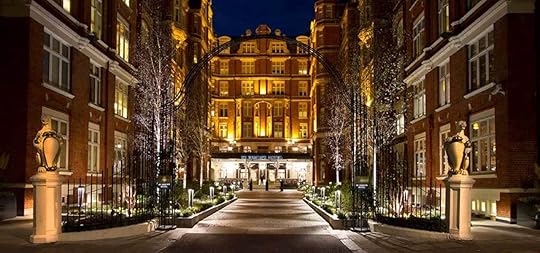
St. Ermin’s Hotel a Londra, vicino a Westminster, soprannominato l’hotel delle spie.

Una dozzina di ghiotti racconti per me che sono un patito delle spy story.
Anche se poi si scopre che i racconti di spionaggio sono solo i primi cinque, e che la spia ricorrente, Ashenden, è uno scrittore, che in veste di spia è più bravo come psicologo che agente, più capace di leggere e interpretare che di scoprire, più attore che risolutore.
Infatti, la maggior parte dell’attività richiestagli:
si basava proprio su delle congetture; si doveva ricostruire l'animale partendo dalla mandibola.


Il che echeggia la vicenda personale dello stesso Maugham che durante la Grande Guerra fu coinvolto dal servizio di spionaggio inglese, proprio come anni dopo capitò a Graham Greene.
Ciò nonostante, la mia preferenza va a due racconti, Prima del ricevimento e La moglie del colonnello, che fanno parte della seconda metà della raccolta, i sette dedicati alla “finzione” più che allo “spionaggio”.


Tratto caratteristico del Maugham che conosco è l’ambientazione spesso esotica. Qui, come si addice alla spy story per antonomasia, si gira il mondo, sia geograficamente che negli incontri umani: Svizzera, messicani, italiani, Orient Express, americani, Rivoluzione russa.
Un viaggio condito di ironia e cinismo, commedia più che suspense, e soprattutto scrittura piacevole, buona costruzione delle trame, succosi incastri.


1936: ”The Secret Agent – Amore e mistero” di Alfred Hitchcock. John Gielgud è Ashenden, qui con l’immancabile Peter Lorre.

Nel 1936 Hitchcock realizzò un film tratto dal romanzo di Maugham Ashenden or the British Agent, lo stesso Ashenden protagonista dei primi cinque racconti di questa raccolta.
Il film di Hitch si chiamò The Secret Agent che in Italia diventò “Amore e mistero” (sigh).
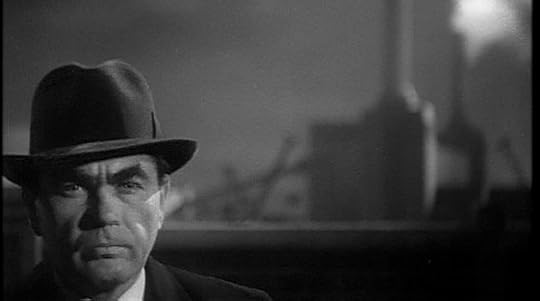
Lo stesso anno il maestro inglese realizzò un altro film, intitolato Sabotage, questo tratto da un romanzo di Conrad intitolato The Secret Agent.


1936: ”Sabotage” di Alfred Hitchcock. Nella foto il protagonista Oskar Homolka, che nel film è affiancato da Sylvia Sidney.
Profile Image for Ben Sharafski.
Author 2 books148 followers
January 24, 2022
A collection of short stories about a secret agent in Switzerland during the First World War, based on Maugham's own experience working for the British intelligence. Wry, poignant, composed and yet compassionate - this is an understated gem.
Profile Image for Mary.
85 reviews40 followers
November 4, 2024
This is a series of unrelated events, in chronological order, describing the experiences of an agent of British Intelligence holed up in a hotel in Switzerland during WW1. The events are based on the experiences of the author who worked as an agent of British Intelligence during WW1.

The preface talks of the constraints placed upon the fiction author and how real-life is somewhat different of that of the fictional counterpart. I could not argue with his premise.

Wonderfully written, I was drawn in by the opening event. Ashen is taking a day away from his residence (the hotel) and is out to meet up with one of his agents. On returning to the hotel he's told by reception, 'The police are awaiting you in your room.'

Crikey, what's about to go down: nothing comes from it. Yet, having read the preface and been on the edge of my seat (the police are wanting a word), I turn hurriedly to the next chapter: wanting to know what will happen next.
Profile Image for Susan.
3,018 reviews570 followers
January 10, 2020
This fascinating, and delightful, book is often regarded as the first spy story and a precursor to Smiley and James Bond. Based on W. Somerset Maugham’s real life experience working for the Secret Service in WWI, this is a collection of linked stories about his fictional alter ego Ashenden. Like Maugham, Ashenden is an author; approached by a middle-aged Colonel (later known as ‘R’) at a party in London, shortly after the outbreak of the first world war. He suggests that, as Ashenden speaks several European languages and his profession is a perfect cover, he joins the intelligence agency. Despite the comment that, “if you do well you’ll get no thanks and if you get into trouble you’ll get no help,” Ashenden seems happy enough to oblige.

What follows is an odd , often bizarre, series of events which mainly take place in hotels, restaurants and trains, far from the theatre of war. Espionage in WWI was often frowned upon as not being gentlemanly. While describing an agent, nicknamed ‘the Hairless Mexican,’ that Ashenden is asked to accompany to Italy, R remarks that, “he hasn’t had the advantages of a public school education.” Again, when Ashenden suggests that another agent has offered to carry out as assassination for money, R expostulates, “damn it all, we are gentlemen!”

However, despite the various restrictions and general distrust of spying, Ashenden has a calm head and is entrusted with some very important missions. We follow him through France, Switzerland, Italy and Russia, as he uncovers spy networks, accompanies agents to intercept certain documents, tries to trap Indian nationalists and is bored to death by an American businessman on the Trans-Siberian express. Maugham’s writing was never less than brilliant and this is no exception. To spend time in the company of his writing is always a delight and this is a wonderful, charming set of stories – told with typical British reserve – but perhaps even more moving because of the understatement. Although Ashenden does not venture into the field of battle, we (and his hero) are always aware of the soldiers in their trenches and the fact that the outcome of his various missions may result in a firing squad at dawn...
Profile Image for Carol, She's so Novel ꧁꧂ .
963 reviews836 followers
January 29, 2020
3.5★

"I gather from what you have not said that he is an unmitigated scoundrel."

R. smiled with his pale blue eyes.

"I don't know that I'd go quite so far as that. He hasn't had the value of a public-school education. His ideas of playing the game aren't quite the same as yours and mine. I don't know that I would leave a gold cigarette-case about when he was in the neighbourhood, but if he had lost money to you at poker and he had pinched your cigarette-case, he would immediately pawn it to pay you."


Maugham was the real deal. This book (or rather, a collection of short stories) is based on Maugham's own experiences after being recruited as a spy during World War One. The best of them were dry and amusing but other than the final story I was never totally engaged. Normally with short stories, it is best for me to read one or two at time, but some of the stories were interlinked, so I don't think my memory would cope with that.

The other problem for me was I was reading this book on Open Library. Apparently downloading on to your Kindle is only available in the States (Boo! Hiss!) If anyone knows a work around I would be grateful. Reading on my laptop wasn't an altogether enjoyable experience.


https://wordpress.com/view/carolshess...
Profile Image for Ian.
982 reviews60 followers
August 26, 2023
Maugham begins this 1927 novel with a preface explaining “This book is founded on my experiences in the Intelligence Department during the war, but rearranged for the purposes of fiction. Fact is a poor story-teller.” At least in outline, Ashenden’s career mirrors Maugham’s. He spends the first part of the war in Switzerland before being sent to Russia in 1917. As Maugham describes, “In 1917 I went to Russia. I was sent to prevent the Bolshevik Revolution and to keep Russia in the war. The reader will know that my efforts did not meet with success.” Ashenden travels through Russia by train from Vladivostok to Petrograd. Maugham did this too.

Some might argue that this is more a collection of stories than a novel, but I think the stories are linked enough for the book to count as the latter. At the outset Ashenden is in a hotel in Geneva, and the business of espionage still has elements of the 19th century about it. In the same hotel there is a German agent, an aristocrat whom Ashenden knew well before the war.

“He had charming manners and was much interested in the Fine Arts. But now Ashenden and he pretended they had never seen one another before. Each of course knew on what work the other was engaged and Ashenden had had a mind to chaff him about it—it seemed absurd when he had dined with a man off and on for years and played cards with him, to act as though he did not know him from Adam…”


By 1917 however, Ashenden finds himself in the chaos of the Russian Revolution. The change in mood perhaps reflects the changes in European society brought on by the war.

It seemed to me that, in this book, Maugham had a tendency to portray female characters as manipulative and controlling. There are at least two, arguably three, in this category, each with men in complete thrall to them. By contrast, although Ashenden’s boss “R” is efficient and ruthless, some of the other male characters have an innocence about them, men out of their depth in the wartime world. This seemed to be especially the case with the Englishman Caypor, who has a German wife, and the American businessman Harrington. To be honest, these were the characters I most identified with, which probably tells you something about me.

As might be expected, Maugham perfectly expresses the reserved and understated dialogue of upper-class Brits of this period. In the extract below, Ashenden is awaiting instructions from “R”.

"I'm expecting a fellow to come and see me to-night," he said at last. "His train gets in about ten." He gave his wrist-watch a glance. "He's known as the Hairless Mexican."
"Why?"
"Because he's hairless and because he's a Mexican."
"The explanation seems perfectly satisfactory," said Ashenden.


Although the book has its lighter moments, it also captures the ruthlessness involved in the business of espionage. Ashenden uses deceit, blackmail and entrapment against his adversaries, with potentially fatal consequences for them, and he does that to people with whom he is personally acquainted.

I’ve given a 4-star rating but some of the stories weren’t as good as that. There was one odd story in which a British ambassador tells Ashenden the story of a youthful love affair, which seemed to have nothing to do with the rest of the novel. There were though several that were very good. Since my overall rating is somewhere in-between, I have rounded up.
Profile Image for Kushagri.
179 reviews
March 7, 2023
3.5 stars

This book is a collection of related short stories which is almost a complete novel though there is no central “plot” per se. It gives a semi-fictional semi-autobiographical (this feature being quite similar to Bulgakov’s ‘A Country Doctor’s Notebook’) account of Maugham’s own experiences as a British Intelligence Officer.

It tries to highlight with accuracy that all espionage work may not be 007 action-packed, but include a lot of clerical monotonous tasks, like observing and reporting.

That said, the stories were interesting and takes our author-turned-spy, Ashenden across Europe amid World War I. Maugham gives his “proxy” Ashenden, a dry-wit humour. He is an astute observer of people, who are as Ashenden says, “his raw material”. Which I do agree, is true for Maugham and is what indeed makes him a wonderful writer. The stories were very witty and humorous at places. The last one though, was a bit sad. There is a particular scene where a diplomat is telling Ashenden a story of his life, and the following dialogue takes place.

‘I hope you haven’t been bored all alone with my husband. What have you been talking about? Art and Literature?’

‘No, its raw material,’ said Ashenden.


The following is an interesting quote from the book.

'All sensible people know that vanity is the most devastating, the most universal and the most ineradicable of the passions that afflict the soul of man, and it is only vanity that makes him deny its power. It is more consuming than love. With advancing years, mercifully, you can snap your fingers at the terror and the servitude of love, but age cannot free you from the thraldom of vanity. Time can assuage the pangs of love, but only death can still the anguish of wounded vanity. Love is simple and seeks no subterfuge, but vanity cozens you with a hundred disguises. It is part and parcel of every virtue: it is the mainspring of courage and the strength of ambition, it gives constancy to the lover and endurance to the stoic, it adds fuel to the fire of the artist's desire for fame and is at once the support and the compensation of the honest man's integrity, it leers even cynically in the humility of the saint. You cannot escape it, and should you take pains to guard against it, it will make use of those very pains to trip you up. You are defenceless against its onslaught because you know not on what unprotected side it will attack you. Sincerity cannot protect you from its snare nor humour from its mockery!’

I particularly liked the Preface to Ashenden in the Vintage Classics edition. It was very insightful (the main reason why I love reading Maugham's works cover-to-cover).
Profile Image for Warwick.
Author 1 book15.4k followers
September 7, 2024
John Le Carré says somewhere that Switzerland is the natural home of spies, and that tradition is one that essentially goes back to Somerset Maugham and this book. Maugham was recruited into the secret service in 1915 and spent much of the First World War based in Geneva, running a network of spies in Germany; he also made trips further afield, including to Samoa and, most famously, Russia in an attempt to prevent the 1917 Revolution. (‘The reader will know that my efforts did not meet with success,’ he comments drily in the preface.)

Those experiences are funnelled into the material of this book, which is not quite a book of short stories as some describe it, but at least a rather episodic novel. Although the espionage work is described as being ‘uncommonly dull’, I found the details of Ashenden's duties fascinating – the laborious codework, the fraught meetings with agents, the tedious dinners with diplomats, the furtive trips over the border into France. Switzerland itself, meanwhile, is ‘the scene of all manner of intrigues; agents of the secret service, spies, revolutionaries and agitators infested the hotels of the principal towns’, while by the lakes the locals can be seen

taking their neutrality, like a dachshund, for a walk with them.


Maugham's character-work is extremely fun, even if it often crosses the line into caricature – a flamboyant assassin called the Hairless Mexican and an early type of the ingenuous American tourist are just two of the more memorable examples. Sentence by sentence, the writing is lovely. Maugham's prose is urbane, unflustered, undemonstrative and slyly ironic.

Ashenden looked at the sun shining so gaily on the lake; the shadow of a breeze fluttered the green leaves of the trees; everything invited to a stroll; he got up, went to his room and throwing himself on his bed had a very pleasant sleep.


Hitchcock's The Secret Agent is based on a couple of the incidents in here, and Maugham's portrayal of ‘R.’, Ashenden's chief, is the first appearance of a kind of spymaster that would have an enduring influence on later fiction. Altogether it comes across as a strange and fascinating mix, a triangulation point midway between Oscar Wilde and Ian Fleming. At one point, he even drinks ‘what I believe is called a dry Martini’, though whether it was shaken or stirred, Maugham neglects to mention.
Profile Image for Ярослава.
971 reviews927 followers
Read
December 7, 2024
Ешенден - письменник, піжон і любитель життя - під час Першої світової війни виїздить з Англії в нейтральну Швейцарію, бо вся ця ваша воєнна атмосфера заважає йому писати комедії, а він тонкий митець, йому треба тиша і спокій. Чи принаймні так він каже, коли до нього з обшуком приходить поліція. Насправді ж він - джентльмен-шпигун і жанровий дідусь Джеймса Бонда, а в Швейцарії осів якраз тому, що вона стала транзитним хабом для розвідок і потоків інформації по обидва боки фронту. (Власне, Сомерсет Моем теж трохи був таким письменником-експатом-розвідником, і "Ешенден" - це його зізнання в любові до себе: і в анфас він офігенний, і в профіль, ну як такого можна не любить, - думає Сомерсет Моем, виписуючи злегка автобіографічний образ головного героя.)

Я дуже люблю шпигунські історії того періоду (у сучасному кіно це зазвичай досить гламурний образ чи бодай захопливий, натомість для того періоду це дуже брудна й невесела робота, і Ешенден якраз про це: про повсякденність зрад - зрад країни, дорогих тобі людей, ідеалів; і про вірність - собі і якимось там своїм дрібним смішним принципам - яка нічого доброго не дасть, а от голову запросто допоможе втратити) й історії про місця, де шпигунів тусується більше, ніж нормальних людей (ну, передовсім я, звісно, люблю Т.Е. Лоренса і тепер шукаю подібну #естетику в інших книжках). "Ешенден" scratches the itch, якщо ви любите таку естетику, то вам сюди.

Jump scare warning, так би мовити: якщо ви читаєте щось таке для ескапізму від реальності й не хочете бачити росії ще й у книжках, то попереджаю, що Ешенден в останніх двох оповіданнях їде в рос.імперію, намагаючись запобігти сепаратному миру з Німеччиною (і по ходу усвідомлює, що там є й більші проблемки) - і про софт пауер російської культури, завдяки якій будь-який немитий вишкребок здаватиметься не відбитим на всю голову мудаком, а ~втіленням загадкової російської душі~

Russian art seized upon Europe with the virulence of an epidemic of influenza. New phrases became the fashion, new colours, new emotions, and the highbrows described themselves without a moment’s hesitation as members of the intelligentsia. It was a difficult word to spell but an easy one to say. Ashenden fell like the rest, changed the cushions of his sitting-room, hung an eikon on the wall, read Chekhov and went to the ballet.


Мені здається, автор дещо іронізує з усіх цих російських салонних революціонерів і їхньої культурної експансії, але, карочє, якщо ви про це читати не хочете, то ви попереджені.
Profile Image for Sketchbook.
698 reviews265 followers
July 3, 2015
As a spy for the UK during WW1, MOM was based in Geneva. His cover - as a writer - was perfect and resulted some years later in this marvelous "memoir," also published as Vol 3 of his Collected Stories. In 1915 he was spying while writing a comedy, "Caroline," produced in London in 1916. His duo efforts are described herewith. Middle-brows like to put MOM down. Once you start reading him, you cant put him down.
Profile Image for Kim.
426 reviews541 followers
July 19, 2016

What a gem this is! Maugham, who served in the British secret service during World War I, cleverly combines autobiography and satire in these interconnected tales of European espionage. Crisp prose, memorable (if somewhat exaggerated) characters, humour, poignancy and a subtle dig at modernist fiction make this book an absolute delight. Knowing that Ashenden inspired the creation of fictional spies such as James Bond is an added bonus, even though Ashenden and Bond could not be more different as characters and Maugham and Fleming could not be more different as writers. While I'm not that interested in James Bond or his creator, this work has only increased my newly discovered enthusiasm for Maugham's writing. I listened to the audiobook edition narrated by Christopher Oxford, who is superb.
Profile Image for Chrissie.
2,811 reviews1,421 followers
September 19, 2018
This book consists of a handful of interconnected short stories about a British intelligence officer, Ashenden. The stories are based on Maugham’s own experiences as an intelligence agent stationed in Switzerland working for the Allies during the First World War and then in St. Petersburg as an undercover agent with Kerensky in power and the October 1917 Bolshevik Revolution soon to take place. The stories are set in Geneva, Basel, Lausanne and Lucerne, Switzerland, Thonon, France and St. Petersburg, Russia.

One story takes place on the Trans-Siberian Railway. Amusing in tone, we follow an eleven-day trip from Vladivostok to St. Petersburg. Ashenden shares his cabin with an American business man who will not shut his mouth! Oh, Mr.Harrington, he is quite a conversationalist. As Ashenden remarks, although his travel companion is a bore, it is impossible to not end up liking him.

There is also a story about the flamboyant “Hairless-Mexican”, who wears a wig, in fact several, but hasn’t a hair on his face. Maugham has the ability to make a despicable person interesting, intriguing and kind of fun. You should not like the person, but you do!

In all of the stories, Maugham observes people. He intrigues the reader or makes one laugh. Each story has a message, varying from the subtle and thoughtful to those that are blatant and obvious. One becomes downright silly. The messages reflect Maugham’s personal views on everything from love and marriage, personality types, political bigwigs to espionage. Maugham is drawing a picture of the life of a spy, illuminating the profession’s mundane, boring tasks and unexciting groundwork that sometimes, but not always, culminates in ruthless decisions and death, carried out by the spy and sometimes not. Spy work is teamwork and obeying one’s seniors. The absurd, the ridiculous and the deadly are to be observed in the stories.

Christopher Oxford reads the audiobook. The performance is good. It is not hard to follow.

I simply cannot fall in love with a collection of stories even interconnected ones.

My ratings of Maugham’s books :
*Then and Now 5 stars
*Mrs Craddock 4 stars
*Cakes and Ale 4 stars
*The Painted Veil 4 stars
*The Verger 4 stars
*Liza of Lambeth 3 stars
*The Razor's Edge 3 stars
*The Summing Up 3 stars
*The Gentleman in the Parlour: A Record of a Journey from Rangoon to Haiphong 3 stars
*The Magician 3 stars
*Up at the Villa 3 stars
*Christmas Holiday 3 stars
*Catalina 3 stars
*Ashenden 3 stars
*Theatre 2 stars
*The Moon and Sixpence 2 stars
*Of Human Bondage 2 stars
*The Merry-Go-Round 1 star

Books and short stories by Maugham still to be read :
The Narrow Corner
Rain and Other South Sea Stories
The Constant Wife
Don Fernando
Profile Image for Nigeyb.
1,475 reviews404 followers
October 28, 2017
I was very impressed by this book. It was the first book I read by W. Somerset Maugham. Maugham's beautiful writing evokes the life of a spy and is based on his own spying experiences during World War 1.

Through a series of interrelated short stories the reader gains an appreciation of Maugham's spying experiences. He is insightful about those he meets, their motivations, and the extent to which they might be friend or foe.

In the course of these stories, Maugham's protagonist Ashenden (a self portrait) gets to travel throughout Europe and Asia on missions where he meets a diverse cast of characters. Although this world is the polar opposite of James Bond, the stakes are still high (imprisonment or death a real possibility), and on a couple of memorable occasions he witnesses first hand the outcome of his work.

All the stories are good, and four of them really pack a punch (The Hairless Mexican, The Traitor, His Excellency, and Mr Harrington's Washing).

The book ends on a dramatic and unexpected note.

It's a minor masterpiece.

Since first reading this book in November 2012, I have read three more books by W. Somerset Maugham. All were very good - he's now one of my favourite writers.
Profile Image for Tim Pendry.
1,150 reviews487 followers
December 16, 2012
Ashenden is a thinly disguised memoire of Maugham's own period in wartime (1914-1918) secret service work. For all his customary detachment, he is very aware of and interested in the moral issues involved in such work.

Maugham cannot write badly but this book is still (structurally) an imperfectly strung together group of short stories and novellas. It can also be rather self-consciously literary at times.

Famous as a precursor of Fleming's Bond and influencing an early Hitchcock film, it is rather misleading to compare Ashenden with 007. The book is certainly not 'exciting' in the way that we have come to expect within the thriller genre.

Each story is both a literary concoction and a moral tale of sorts in which the 'hero' is an observer out of necessity, with his own moral choices limited to a certain commitment and a sense of duty.

As neither one thing nor the other, literature or memoire, the total leaves one a little dissatisfied but the parts make up for the whole.

The component stories tend to centre on types of weak, fundamentally unimaginative or unfulfilled individuals, none of whom are truly mocked but all of whom are dissected through their own words.

They kill, lose lovers, probably die, actually die or are left deeply depressed, either because some obligation creates a situation from which there is no escape or the necessary duty of others entraps them.

The book closes with a tragic satire of two types of bourgeois - the Russian liberal and the American businessman - but there is an unusual generosity of spirit here, as if the confusion of the middle classes in a collapsing West had resulted in a strange camaraderie.

If the book can appear to be callous on the surface, it is only the detachment of the doctor dealing with pain and disease. We should remind ourselves that Maugham was originally trained in that profession at St. Thomas'.

Every now and then, we find out that this secret agent is not a natural psychopath like 007 but one socially constructed entirely by war and empire.

Ashenden is quite capable of holding strong sympathies with his required victims while wholly suspending sentiment in order to get the job done. In a way, he stands for all corporate men with a job to do.

In the tale told by an ambassador, in a literary sleight of hand, a man speaks of another where Maugham is clearly speaking of himself in the voice of the first.

It help here to know what contemporary readers did not - that he was gay. 'Society' requires certain things in terms of sexual conduct and that's an end to the matter.

This particular tale drags a bit and is conventional in precisely the way that Maugham (through Ashenden) appears to mock earlier in the book but the sentiment within it is undeniably real.

Perhaps that is the real virtue of the book - out of conventional, even theatrical, tales of duty, courage and treachery, he teases out an underlying human reality.

In each of his characters, he uncovers some emotional trait that may be absurd, and even be hysterically expressed, but which is nevertheless 'true' to our species.

Ostensibly a story of a world which has lost its moral compass in a struggle for survival, the book returns us time and time again to the fact that even a world of duty and obligation contains human foibles and emotions that need to be recognised as part of that world.
Profile Image for Dottie (I'm not dotty).
26 reviews13 followers
December 19, 2024
Almost all of my books come from the ‘bring one - take one’ stall at my local open-air market. There are boxes and boxes for you to rummage through. Birdie (his first name is Finch) who keeps the boxes full, is sweet on me (in the most fatherly manner) and puts my requests to one side. Birdie recommended Ashenden, “Churchill tried to ban its publication,” he told me.

I read the preface and rushed in. I was shocked by what lay in wait: a series of short stories that begin in a manner of little consequence, gain no significance, before drifting off to languish among questions from which there is no satisfactory answer. It was the splendid scene setting and the character depiction that kept me reading.

He was a British spy during the early part of the last century and these stories come from his own experience: his view on spying suggests it’s a humdrum affair, carried out quietly and affably whilst insuring feathers go unruffled.

Once done, I read the preface again and again and again. The preface told me what to expect from the book. In my first reading, I took little notice of what he was telling me. It is quite a meal and was difficult for me to digest in one sitting. I’ve taken it apart, trying to understand the meaning: some sentences I had to chew on for a good while. I have written the preface in words I can cope with...

“Our lives roll along, colliding with events that are more often than not determined by chance. There may be a source from which they hail, but in the main, the connections are loose, if at all relevant. Coincidence happens and sometimes frequently but, coincidence that repeatedly provides a favourable outcome stretches the idea of what is credible. After all, most often, events in life are random and the outcomes are incalculable. The stark, true, factual retelling of an event rarely makes for enjoyable reading. Its beginning is usually of little consequence, gains whatever relevance allowed it before drifting off to languish among questions from which there is no satisfactory answer. Writers of formula-fiction largely ignore this truth and try to create a firm beginning, construct strong ties between events, and manufacture a sound and acceptable ending. When working within the confines constructed, space for the plausible to find suitable accommodation is limited.”

I’ve loaded my saddle bags with Birdie’s books for a few years now and read my share of formula-fiction. William Somerset Maugham (Billy) had an eye on what might be available to future generations. He knew, way back then, we crave for a startling beginning, a gripping ride to the summit, a breath-taking descent, and expect a satisfying finish.
Profile Image for David.
Author 1 book72 followers
June 9, 2025
Maugham's Ashenden is probably my favorite spy character. I found him more human than Le Carre's Smiley. In fact, I didn't care for any of Le Carre--too boring. I know that that's what spycraft is really like–-boredom dominated by anxious fear. I can't think of a worse life.

Maugham's Ashenden has class; although he is not a Bond-type like Ian Fleming's character. Ashenden is more like Maugham himself--just "there" and ready to serve, bristling with a clear head, dedication, and style--loyal to his class.

I read all the short stories of Somerset Maugham while living in Langley, Virginia, but I enjoyed the Ashenden stories the best, even though more exciting things were happening all around me at that time.

I have compared in my mind the quality of Maugham's writing vs. Graham Greene's and I prefer Maugham's hands down. I'm more suspicious of religious views than spying. Their novels however balance out. I might prefer Greene's over Maugham's. Religiosity still gets in the way. As I read more of both writers, whose writings live on way past their deaths, I may change my mind.
8 reviews6 followers
October 16, 2024
I read this years ago and wanted to read it again. It's seen as having a place in the spy/thriller genre.
A jumble of short stories about a man working for British Intelligence, whilst based in a hotel in Switzerland.
None of the stories have a real starting point or an end.
At one point, him having been to meet one of his contacts arrives back at the hotel to find the police new waiting for him. They question him and leave. That's is the end of that. It goes no further.

In the preface the author does suggest that life (real life) is like that. We bumble along, things happen, we deal with them well, or not so well, and we continue in our life, there's never really any dramatic climax.

It breaks with all of the reading I know of. It tells us that in the most part, the life of an intelligence operative is dull, repetitive and nothing much gets achieved.

I've chosen to read this book again and write this review because I'm halfway through a book that kept pulling my thoughts back the these stories.
Profile Image for Poppy.
74 reviews45 followers
August 24, 2025
A wonderfully written story and enjoy reading of life in those times. A British spy has claimed a room in a Swiss hotel as a base for his dealings; the war with Germany (the first one) is afoot.

I think this must be what life was REALLY, TRULY, ACTUALLY, like for the spy overseas. Life goes on around the man, he's suspicious of everyone and trying to be seen as an innocent novelist. There is a sense that something dramatic might happen at sometime. Things do happen... much like they do for 99% of the time in real life.

I enjoyed every bit of it.
Profile Image for Dfordoom.
434 reviews125 followers
August 21, 2011
W. Somerset Maugham’s Ashenden, or the British Agent is an example of one of my favourite genres, the early 20th century espionage tale. While spy stories set during World War 2 and during the Cold War have their charms I find the earlier tales set during the First Word War or in the years leading up to that war much more appealing.

Ashenden, or the British Agent, first published in 1928, is a series of linked stories relating the adventures of a writer of comic plays who is recruited into British Intelligence. Maugham himself actually did serve in British Intelligence during the Great War and based these stories to a considerable extent on his own experiences.

This book was the basis for Alfred Hitchcock’s very underrated 1936 film Secret Agent and it’s remarkable just how closely Hitchcock reproduces the tone of the book, with the same mix of black humour and cynicism, of innocence and cold-bloodedness.

For anyone with even a passing interest in the evolution of the espionage story Maugham’s book is essential reading. It’s witty and highly entertaining with a very dark edge to it. Highly recommended.
Profile Image for A.K. Kulshreshth.
Author 8 books76 followers
May 21, 2021
This might be the first time that I read a book after adding it to be TBR based on what a character in another book says after meeting the author in that other book. Somerset Maugham is a character in Philip Kerr's The Other Side of Silence , and Bernie Gunther kind of recommends Ashenden, which I'm not sure I had heard of earlier.
The Other Side of Silence.

I live in Singapore, where Maugham's being a regular at the Raffles Hotel is part of folklore. I had dismissed Maugham in my younger days as just another racist, after reading a story called The Yellow Streak. As said, I picked up Ashenden because of who recommended it, and wan't disappointed.

I am Indian, and it's good to get this out of the way:

This 1928 novel stands out for some good reasons. Most of all, it preceded the work of other master spy fiction writers who didn't make their spies out to be James Bond types (Conrad did that much earlier, though). The world of espionage here is full of drudgery, and of characters who are not morally squeaky clean. Other British writers would take the theme of calculating bosses who let others do the dirty work to further national interest... and let some innocents get collaterally damaged. Of course, the bosses could often be wrong.

Other reviewers have commented that this is more a series of short stories than a novel. What connects the stories is Ashenden's "voice", sardonic and restrained. Some of the incidents -- e.g. a woman's culinary choices and her political-economic views putting an end to an affair -- could only have happened in real life, because they seem hard to have been cooked up. Then there are the outlandish characters: the hairless Mexican, a rather unquiet American, a woman acrobat madly in love with a rebel that British Intelligence wants to kill... I would guess they were invented by adding layers on to people the writer met in his career as a spy.

A "golden-age classic" that has aged well, except for the offending word or two.
Profile Image for Ian Laird.
479 reviews98 followers
October 30, 2025
Ashenden may be as old-fashioned a character as Somerset Maugham is old hat.

Yet the espionage work of Maugham’s World War One spy is compelling, with a genuine authenticity born of Maugham’s own experience working covertly for Britannia: in France, neutral Switzerland and finally Russia during that turbulent period between the February and October revolutions of 1917.

Though Maugham maintained that this novel, published in 1927, was fictitious, the events, locations and his character’s status as a successful novelist recruited by British Intelligence closely tallies with what actually happened. Ashenden’s task master is a professional military officer, a Colonel known simply as ‘R’, whose low-born status and straightforward ruthlessness contrasts with Ashenden’s more patrician background. Ashenden is more nuanced, used to navigating in circles where people’s names are widely known, though he can be cold-blooded when required. He lures two enemy agents to their deaths, notwithstanding that one of them, an Indian, is more a threat to British colonial authority than an enemy combatant, and for whom Ashenden has some sympathy, or at least for the man’s cause.

These loosely connected tales, hardly a novel in a conventional sense, vary in light and shade, although to be fair mostly shade. They include larger than life characters eg the ‘the Hairless Mexican’ a general without an army whose garrulousness is in inverse proportion to his judgment; a traitorous ex-patriate, for whom there can be no mercy, and a pious American businessman, naïve and confident at the same time, with whom Ashenden shares an interminable rail journey from Vladivostok to Petrograd and who places the highest value on clean laundry, to his detriment.

Ashenden’s understanding of human nature, skill in observation, characteristic detachment and realistic appreciation of risk and danger help him to survive, and to move on to the next assignment. Along the way he discovers some valuable life lessons; the prospect of eating scrambled eggs every day for breakfast makes him realise the folly of a particular romantic union. He preserves his independent status for the time being, at least.
Profile Image for Paulo (not receiving notifications).
145 reviews22 followers
Read
May 11, 2024
Somerset Maugham was one of the most celebrated writers and playwrights of the 20th century.
His novel "Of Human Bondage" is widely considered a masterpiece, and his magnificent short stories have earned him a reputation as one of the greatest storytellers of all time. If you're looking for an introduction to his work, I highly recommend his short story "Rain." It's a haunting and unforgettable tale that showcases his incredible talent for character development and his keen sense of atmosphere and setting.

According to his own opinion, Maugham didn't consider himself proficient in imagination or in possession of powers of invention. Perhaps that was true, but for sure, he was a powerful keen observer and he studied people, situations, and places, and used them to create his stories with minimal alteration or disguise. He sought, in all his works, to skillfully narrate a story that would resonate with readers and provide a glimpse into the complexities of life. He strived to convey his message with simplicity and elegance. Additionally, he endeavoured to captivate and delight his readers with his acute observations of human nature and the intricacies of character.
He was considered by many, to be the most popular and successful English fiction writer of the 20th century.
A critic defended that; Bestsellers that appeal to the mass reader are seldom good literature, but there are exceptions. Maugham was one of those exceptions.

This book," Ashenden: Or the British Agent", being far from the mainstream spy book genre, (and for the best works of SM) influenced writers like Raymond Chandler, Ian Fleming, Georges Simenon, John le Carré and others.
"Ashenden" stories are a collection based on the writer’s brief career as a spy during the First World War at the service of the British Intelligence Service. It is a novelized semi-autobiographic account of his experiences when recruited by the SIS as a British spy during WWI, operating in Switzerland and France.
When first published, the stories seemed so authentic in their account, that, according to legend, Winston Churchill, a friend of Maugham's, warned him that his stories might be considered a breach of the "British Official Secrets Act". Consequently, the author burned 14 unpublished "Ashenden" stories and kept only the ones published in this book.

When you think "spies", it immediately comes to mind James Bond, glamorous half-naked girls and lots of shotguns, fast cars, fancy gadgets and drinks at sunset, right? According to Maugham, wrong... Spying is so boring that to manage to write interesting stories about the business he had to pull on his imagination and invent. "Ashenden" (Maugham) soon discovered, after being recruited, that spying is just data collection: His life, he complains, is as orderly and monotonous as a city clerk. The work of an agent in the Intelligence Department is, on the whole, extremely monotonous. A lot of it is uncommonly useless. Mostly his job was to watch, listen and report back.

In spite of W. Somerset Maugham's insistence that his work is a product of his imagination and not based on actual events or facts, I strongly believe that Winston Churchill's warning or threat, if true, was not just a mere joke but had a significant reason behind it. While the exact nature of Churchill's warning remains a mystery, it is plausible that he had a valid reason to issue such a warning, given his reputation as a shrewd and insightful mind and statesman. Therefore, it is worth considering the possibility that there was more to Churchill's warning than meets the eye and that Maugham's fictional portrayal of the events may have been closer to real-life circumstances than Maugham wanted us to believe.
Anyway, in "Ashenden", espionage seems more like an excuse for Maugham's literary activity than vice versa.

As usual with Maugham, the book reads easily with his light, sometimes ironic or cynical prose. In certain moments he shows the existential ennui he experienced with general human stupidity and pretentiousness; Usually a deadly combination as it is shown in some moments. Maugham excelled in human analysis and in depicting characters under the strain of either ordinary or stressful situations.
Mr Harrington, in the final story, is a wonderful tragic/comic character with righteous indignation but naive to the point of stupidity. One almost despairs, reading his story, not knowing what to do, cheer or kill him.

This is very far from the glamour of 007 or the acrobatics of Hollywood's demented imagination, but is an interesting insightful reading.
Profile Image for Nancy Oakes.
2,019 reviews917 followers
January 2, 2020
4.5 rounded up

In the preface to Ashenden, Maugham wastes no time in revealing that this book is "founded on my experiences in the Intelligence Department during the war, but rearranged for the purposes of fiction." He later goes on to say that

"the work of an agent in the Intelligence Department is on the whole extremely monotonous. A lot of it is uncommonly useless. The material it offers for stories is scrappy and pointless; the author has himself to make it coherent, dramatic and probable,"

and that is exactly what Maugham does here.

Ashenden was first recruited by a man known only as "the Colonel" or "R," whom he had met at a party and who later in a private meeting noted Ashenden's "particular qualifications for the secret service." His knowledge of different languages was a plus, as was the fact that he was a writer, allowing him the perfect cover -- traveling to a neutral country to work on his latest project, as he was already known for his plays. Once he takes on his duties in intelligence, Ashenden's "official existence," as we learn, is "as orderly and monotonous as a city clerk's," but the work he does is "evidently necessary." He knows that he functions as a "tiny rivet in a vast and complicated machine," in which he "never had the advantage of seeing a completed action," most of the time not knowing "what his own doings led to." His main job is to keep an eye on things, listen, and report back to his superiors. Over the course of this book he will find himself involved with a unique array of people, including a strange general known as the Hairless Mexican whose destiny is often told in the cards, an elderly British chaperone to two princesses, an Italian music-hall dancer in love with a seriously-dangerous Indian agitator and "fanatic," and a talkative American who "would not listen to reason." Love and betrayal weave their way through these stories, and while some are a bit on the entertaining side, it is impossible not to be absolutely devastated at the outcomes of a few of the others. What Ashenden has to do is often not pretty, but he never fails in his duty, despite what he feels toward "the bigwigs," who

"shut their eyes to dirty work so that they could put their clean hands on their hearts and congratulate themselves that they had never done anything that was unbecoming to men of honour."

Ashenden is a fine book, filled with stories which Maugham handled with a mix of deadly earnest and levity. It is definitely not the edge-of-your-seat stuff of later spy thrillers in which the work of intelligence gathering often becomes life-threatening business, although Maugham makes crystal clear that there are risks involved in what Ashenden does. While his work is "evidently necessary," there is another side to it that comes with very human consequences, which are played out again and again throughout this novel. By the way, feel free to argue that it is not actually a novel -- we'll just agree to disagree on that point.

So very highly recommended -- I loved this book.
This entire review has been hidden because of spoilers.
Profile Image for Ehsan'Shokraie'.
763 reviews222 followers
June 25, 2021
اشندن جاسوس اینتلیجنس سرویس،برگرفته از زندگی سامرست موام است..زمانی که در شرف جنگ‌جهانی به عنوان جاسوس انگلستان در کاوری البته واقعی،به عنوان یک‌نویسنده،به سوویس رفت،موام چندان محبوب نیست چرا که نوشته های جنجال برانگیزش که بس هنرمندانه بیهودگی و سبعیت و جهالت حاکم بر انسان های اطرافش را نشان می دهد به شدت برخلاف سیاست و فرهنگ محافظه کارانه انگلستان‌است..
اشندن را‌نخستین بار در ۱۲سالگی،در شهرمان،روزی در انبار خالی مانده ای از گندم، که نبش کوچه ای قرار داشت که تمام‌کودکی ام..تمام‌آن‌روز های گرم‌و طلایی در آن بگذشت،نمایشگاهی بهاری دائر بود..سیل جمعیت مردم که نمایشگاه را نه تنها محلی برای خرید،بلکه تفریح و تفرجگاهی بزرگ می‌پنداشتند.. با پلاستیک‌هایی پر از‌گوشت و مرغ‌..کیسه هایی از برنج..یا که قالیچه ای یا کلاهی از حصیر یا که حتی دستی خالی اما دلی شاد..با‌چهره ای محظوظ و‌پیروز به خانه برمیگشتند..هر کس آن‌روز ها هر آنچه بدان‌نیاز داشت می اندوخت..صبحگاه جمعه بود..روزی از اردیبهشت..خورشید جنوب به بی رحمی همیشگی اش نمی سوخت..شاید ۱۲سال پیش..همراه پدرم به انجا رفتیم..در اخرین سالن،جایی که‌حتی نور از آن میگریخت و چراغی ناتوان در تقلای روشنایی..بر میزی کتاب هایی قرار داشت..و‌من ۱۲ ساله،بی اختیار کتاب سرخ رنگ اشندن،جاسوس اینتلیجنس سرویس را برداشتم..تا که ۱۲سال بعد من دیگری،در کنار درختان مشرف به دانشکده..در خنکای نسیمی که گویی در ان روز،در۱۲سال‌پیش هم‌می وزید بار دیگر آن روز را بخاطر آورم..
Profile Image for Wanda Pedersen.
2,297 reviews365 followers
August 20, 2018
3.5 stars

***2018 Summer of Spies***

Somerset Maugham was writing and living the life of the spy long before Ian Fleming or John Le Carré. His introduction to this novel lets the reader know that it is based on his own experiences, but shaped into a decent story arc, something that the author found lacking in real life.

If, as in another review, I compare Fleming to boxing and Le Carré to chess, then I would say that Maugham is more like solitaire. Much quieter and self-contained. He’s maybe flipped a few cards around to make things work more smoothly, but still at the end, with only a few cards left in play, finds himself unable to win the game.

Maugham spent time with Ian and Ann Fleming (as one of Ann’s circle, not Ian’s) and I can well imagine him needling Ian about the fantastical qualities of James Bond’s espionage. Ian was definitely not a fan of Maugham, but I have to say that I am.
Profile Image for Alan (on December semi-hiatus) Teder.
2,707 reviews249 followers
November 7, 2023
The Agent Runner in WWI
Review of the Arni Books Kindle eBook edition (April 6, 2023) of the original Heinemann hardcover (1927)

Ashenden's official existence was as orderly and monotonous as a city clerk's. He saw his spies at stated intervals and paid them their wages; when he could get hold of a new one he engaged him, gave him his instructions and sent him off to Germany;


I became intrigued by W. Somerset Maugham (1874-1965) while reading Tan Twan Eng's historical fiction The House of Doors (2023) where the author is shown in 1921 Penang, Malaya gathering real life stories which were later fictionalized into the short story collection The Casuarina Tree (1926). I didn't want to jump into the latter until I had finished Eng's book [RTC] but I have had Ashenden on my TBR for the longest time, so I read it first.

Ashenden (1927) is of interest as it is quite the early precedent for the 1960s & later cynical spy novels of John le Carré, Len Deighton and others. Ashenden is a fictionalized version of Maugham himself, who did actually work for the British Secret Service in Switzerland and Russia during the First World War. The writer Ashenden is recruited as an agent runner by R, an otherwise nameless chief in British Intelligence. As mentioned in the above excerpt he is mostly just acting as a handler, paying off the actual spies and relaying messages. The assignments all end in failure with misunderstandings, botched assassinations, and bungled attempts at manipulation.


Back & front covers & spine of the 1927 original Heinemann hardcover. Image sourced from Wikipedia and may be found at the following website: http://www.facsimiledustjackets.com/cgi-bin/fdj455/2315.html?id=mVxIWhnP., Fair use, Link.

I read one of the public domain Kindle eBook editions of which there are many. The book is in the public domain in Canada (perhaps not everywhere else) and can be read at Project Gutenberg or Faded Page. My edition has the original 16 chapters of the 1927 original. Some later editions group chapters together which are part of the same mission, resulting in 7 stories.

It may have been a bit of self-promotion, but Maugham later said that after the book was published Winston Churchill accused the author of contravening the Official Secrets Act, resulting in Maugham destroying 17 unpublished stories which presumably would have been a sequel.

Trivia and Link
Read an Analysis of Somerset Maugham's Ashenden (Note: Contains spoilers) by Nasrullah Mambrol, Literariness, May 8, 2022.
Profile Image for Junaid Taj.
3 reviews27 followers
October 9, 2015
This was certainly a disappointment.This book was written probably way back in 1927 and it still echoes the colonial British supremacist mindset of the author.The collection has no flow and most stories end abruptly.Although,i must admit that I liked some of the stories-especially the vivid and poignant descriptions of love and doomed passion.
All in all,I would say this book is passable.I haven't read any other books by Maugham but I have heard amazing reviews about The Painted Veil.
Profile Image for Dillwynia Peter.
343 reviews67 followers
June 28, 2016
Ashenden has an important place in modern Mythology. This book, along with the Gadfly, are the two biggest influences on Fleming’s James Bond. Here we have the sophisticated multi-lingual Englishman of good breeding fighting those Axis spies during the First World War. He knows how to play bridge, to mix in excellent society and to hold his own. Out of the social scene he uses his cover as a playwright to interact with his street runners – the poor and down at heel.
Maugham was a spy during this war, spending much of his time in Switzerland and it is claimed, had he been in Tzarist Russia 6 months to a year earlier, he might have influenced the Bolshevik Revolution.
The book is branded by Maugham and publishers as short stories, but really it is three novellas. How Maugham managed to publish these, is a mystery – they are so thinly veiled from Maugham’s actual experiences, right down to the code name for the Head – R. Yep – here is the start of the Chief being give a code name letter.
These novellas lack the pizazz of more modern writing. Pistols are owned but rarely fired; nor will you experience explosions or raunchy sex with beautiful women. Instead, one gets analysis of people: codes, feints, watching your known enemy. One of Maugham’s counterparts was a distant relative, so it is quite comical when he notes the dear fellow refuses to acknowledge him in public.
There are women who are betrayed, men who are betrayed and characters – lots of characters. I enjoyed it that not all the women were beautiful; rather many of them are interesting - and I think this shows Maugham's homosexuality in not being able to create a character that has "flings"

Virtually ALL of the novellas at one time have appeared since 1928 in either films (eg: Hitchcock) or TV espionage.
Maugham tells a good tale full of emotion, character and atmosphere. For some these stories will be dry and boring, but not to me. But then, I am a fan of Maugham and his style.
Displaying 1 - 30 of 459 reviews

Can't find what you're looking for?

Get help and learn more about the design.