
What do you think?
Rate this book


658 pages, Paperback
First published January 1, 1998


I think Eliot's disillusion with his marriage was associated with his sexual failures and preceded the discovery of his wife Vivienne's chronic illness. There is no denying that many of Eliot's early poems suggest sexual problems-not lack of desire but inhibition, distrust of women & a certain physical queasiness.Looking back more than a century, T.S. Eliot was born of a family that was bound with strong moral contours and a Victorian sensibility, quite unlike today.
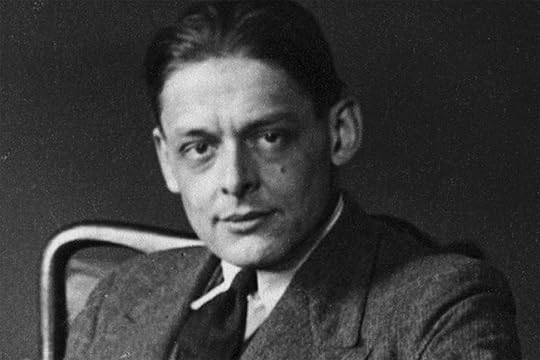
to experience the world as a waste was a prerequisite for experiencing it in faith. The notion of a pilgrimage from imperfection to perfection was deeply rooted in Eliot's family & their Puritan past.
His self-imposed detachment from St. Louis, Boston & London took on the authority of a modernist position. But this was not an end in itself because he was also detached in time. From that vantage point, he saw a biblical plot: the recurrent destruction of a corrupt society. His private horror--the nightmare of evil--was like that of the prophets, for whom, alone in their time, history had meaning. His other model was Aeneas, the Christian pilgrim.
Aeneas crosses from one culture to another, an act of obedience to timeless gods, a man on a mission and the mission was everything. Wherever Eliot stood, part of him was not there. He always had something in reserve.
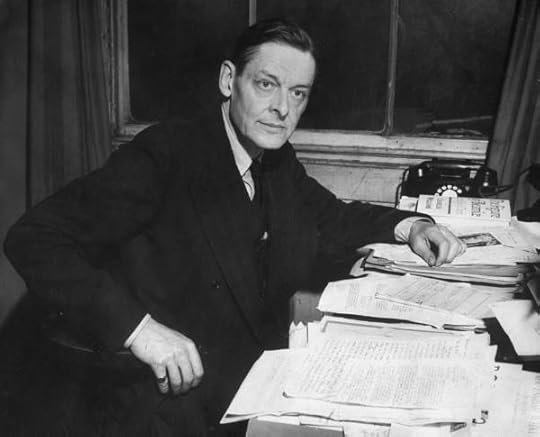
Eliot's poetry invites us to look with him into the silence at the still point of a turning world. Eliot's effortless superiority had been in a way, his cross; it set him apart, so that to love or to sympathize was not as easy as for most.For anyone who has valued T.S. Eliot's body of work, Lyndall Gordon's portrait of the poet as a flawed man, his lifetime in a prophetic kind of self-analysis that in many ways mirrored his age, makes for exceedingly good reading.
He could be genial, jokey, painstaking but these were acts of deliberation, duty, not pleasure. Eliot was simply too clever to be a saint but he fell back on another goal, to be God's agent. Denied perfection, he lived to perpetuate its possibility for other lives.


