

What do you think?

토지 #1
土地 第一部 第一卷
物語は慶尚南道河東郡平沙里の大地主・崔参判家の当主崔チスの若妻が、下男のクチョンと駆け落ちする場面から切って落とされる。ところが数奇なことには、崔チスと下男のクチョンは異父兄弟であった。産みの母の尹氏は、この道ならぬ逃避行を心中では喜んでいたのだ。崔参判家の血族が織り成す波瀾万丈の「全体小説」刊行!韓国文学史に燦然と輝く国民的大河小説。
- GenresFiction
327 pages, Paperback
Published December 1, 2008
Ratings & Reviews
Friends & Following
Create a free account to discover what your friends think of this book!
Community Reviews
Displaying 1 - 2 of 2 reviews
November 14, 2018
Park, Kyungni is my most favorite Korean writer. When I had read 'the Daughters of Pharmacist Kim,' in my youth for the first time out of her works, I liked her novel a lot. Since then, I read most of her books, whenever available, but I had no chance to read twenty volumes of 'Land' because I came to the U.S. before the books were published. It's said that it took 25 years for Park to complete 20 volumes.
When I visited my mother in Korea this year, in October,2018, I found there were 20 complete volumes, Land, at nearby library of my mother's house. I was very excited when I borrowed books with my nephew's library card. I was very tired after taking care of my mother who has a severe dementia, but I kept reading instead of resting while she was sleeping.
The volume 1 starts with novelist, Jisoo Choi's family, living in countryside in the early 20th century just before Korea was ruled by Japan. Japan is preparing colonization of Korea; Japanese grants land to Japanese settlers.
For those who want to know about the books 'Land' more, I copied the book introduction at Amazon.com. and I attached below since I cannot write better than that, and I found nobody wrote a book review of 'Land.'
.... it possesses both the formal dimensions and the high seriousness of epic, is set in a period during which Japan held strong sway over Korea, regulating its business and industry and making arbitrary land grants to Japanese settlers. At the heart of the novel is a series of conflicts between Korean conservatives too enervated to oppose Japan's acquisitive energies and radical native insurgents. Their resistance culminated in the Dong Hak rebellion, a watershed historical event that casts long shadows over the intricately interwoven fates of Kyong-ni's vividly drawn characters--most especially Choi Chisoo, an arrogant, wealthy landowner, hated and envied by his neighbors and servants, and at continual odds with his embittered wife, whose ``failure'' to bear him a son provokes Choi's bitter displeasure and sets in motion a chain of events leading to his downfall. The author employs a kind of Upstairs, Downstairs structure, in which nondescript villagers and assorted second-class citizens observe, comment on, and in some ways parallel the lives of their ``betters.'' Among the most memorable are Pyongsan, an impoverished landowner waiting patiently through half a lifetime to be revenged on the avaricious Choi; the handsome villager Yongi; and the scheming Guinyo, the ambitious housemaid whose plan to rise above her station precipitates chaos, losses, and death, and drives the story to its stunning, tragic conclusion. The energy of melodrama surges through this big novel, yet as a portrait of a culture and a knowing psychological tale of the social and personal consequences of rigidly enforced class differences, it's a work of high literary distinction as well. A much-beloved work in Korea (where it was made into an equally popular television series) that should find many grateful admirers in America as well. -- Copyright ©1996, Kirkus Associates, LP. All rights reserved.
When I visited my mother in Korea this year, in October,2018, I found there were 20 complete volumes, Land, at nearby library of my mother's house. I was very excited when I borrowed books with my nephew's library card. I was very tired after taking care of my mother who has a severe dementia, but I kept reading instead of resting while she was sleeping.
The volume 1 starts with novelist, Jisoo Choi's family, living in countryside in the early 20th century just before Korea was ruled by Japan. Japan is preparing colonization of Korea; Japanese grants land to Japanese settlers.
For those who want to know about the books 'Land' more, I copied the book introduction at Amazon.com. and I attached below since I cannot write better than that, and I found nobody wrote a book review of 'Land.'
.... it possesses both the formal dimensions and the high seriousness of epic, is set in a period during which Japan held strong sway over Korea, regulating its business and industry and making arbitrary land grants to Japanese settlers. At the heart of the novel is a series of conflicts between Korean conservatives too enervated to oppose Japan's acquisitive energies and radical native insurgents. Their resistance culminated in the Dong Hak rebellion, a watershed historical event that casts long shadows over the intricately interwoven fates of Kyong-ni's vividly drawn characters--most especially Choi Chisoo, an arrogant, wealthy landowner, hated and envied by his neighbors and servants, and at continual odds with his embittered wife, whose ``failure'' to bear him a son provokes Choi's bitter displeasure and sets in motion a chain of events leading to his downfall. The author employs a kind of Upstairs, Downstairs structure, in which nondescript villagers and assorted second-class citizens observe, comment on, and in some ways parallel the lives of their ``betters.'' Among the most memorable are Pyongsan, an impoverished landowner waiting patiently through half a lifetime to be revenged on the avaricious Choi; the handsome villager Yongi; and the scheming Guinyo, the ambitious housemaid whose plan to rise above her station precipitates chaos, losses, and death, and drives the story to its stunning, tragic conclusion. The energy of melodrama surges through this big novel, yet as a portrait of a culture and a knowing psychological tale of the social and personal consequences of rigidly enforced class differences, it's a work of high literary distinction as well. A much-beloved work in Korea (where it was made into an equally popular television series) that should find many grateful admirers in America as well. -- Copyright ©1996, Kirkus Associates, LP. All rights reserved.
January 24, 2022
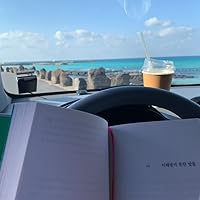
20권으로 가는 길이 험난할 것으로 생각되었으나
생각보다 흥미진진한 빠른 전개에 단숨에 읽어내렸다
생각보다 흥미진진한 빠른 전개에 단숨에 읽어내렸다
Displaying 1 - 2 of 2 reviews