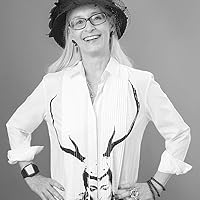
Rather than making "something" out of "nothing," what follows is an endeavour to express the potential of language and thought to encounter what is infinitely beyond both yet to be imagined.In The Nothing That Is, Johanna Skibsrud gathers essays about the very concept of "nothing." Addressing a broad range of topics―including false atrocity tales, so-called fake news, high-wire acts, and telepathy, as well as responses to works by John Ashbery, Virginia Woolf, Anne Carson, and more―these essays seek to decentre our relationship to both the "givenness" of history and to a predictive or probable model of the future.The Nothing That Is explores ways in which poetic language can activate the possibilities replete within our every moment. Skibsrud reveals that within every encounter between a speaking "I" and what exceeds subjectivity, there is a listening "Other," be it community or the objective world.
Johanna Skibsrud is a Canadian writer whose debut novel The Sentimentalists, winner of the Scotiabank Giller Prize. She is also the author of This Will Be Difficult to Explain, as well as two poetry collections. She lives in Tucson, Arizona.
The series SEINFIELD was often hailed as a series about nothing. That seems to be an underlying theme in THE NOTHING THAT IS. But it is a book that is satisfying and relevant. Author Johanna Skibsrud won the prestigious Scotiabank Giller Prize in 2010. Now more than a decade later, she has released this interesting book. The book features eleven food for thought essays. They focus on “nothing,” discussing such subjects as war, and literary icons Virginia Woolf and Arthur Miller. She also tackles “fakes news” thanks to Donald Trump. She looks at the Vietnam War as a case in point, reflecting on the atrocities against innocent people, that were not what they appeared to be. Her father served as a Marine during that War, witnessing many horrific scenes. Yet, there were many other occurrences that were said to be exaggerated. She comments about life beyond death, with those people who thought that once they reached the other side, they would somehow be able to connect with those still in the land of the living. It makes for great speculation and a leap of faith. Other areas she mentions include the falling man who leaped from the Twin Towers in New York on September 11 2001. She notes it was by choice and definitely not a heroic feat. The essays are thought-provoking and controversial, letting the reader decide if this book was about nothing or filled with substance.
"...to evoke the possibility of a relationship with what exists beyond the bounds of subjective perspective and understanding is to take a large, perhaps even impossible, responsibility. It is the weight of this impossible responsibility that, Rukeyser suggests, we seem to crave 'above all things.'"