

What do you think?

The Weight of Light: A Collection of Solar Futures
A collection of science fiction stories, art, and essays exploring human futures powered by solar energy, with an upbeat, solarpunk twist. What will it be like to live in the photon societies of tomorrow? How will a transition to clean, plentiful energy transform our values, markets, and politics?
The Weight of Light emphasizes that the design of solar energy matters just as much as the shift away from fossil fuels. Solar technologies can be planned, governed, and marketed in many different ways. The choices we make will profoundly shape the futures we inhabit. The collection features stories by award-winning science fiction authors, working in collaboration with illustrators, graphic designers, and experts in policy, ethics, climate science, and electrical, environmental, civil, and aerospace engineering.
Download for free at https://csi.asu.edu/books/weight/
The Weight of Light emphasizes that the design of solar energy matters just as much as the shift away from fossil fuels. Solar technologies can be planned, governed, and marketed in many different ways. The choices we make will profoundly shape the futures we inhabit. The collection features stories by award-winning science fiction authors, working in collaboration with illustrators, graphic designers, and experts in policy, ethics, climate science, and electrical, environmental, civil, and aerospace engineering.
Download for free at https://csi.asu.edu/books/weight/
248 pages, ebook
First published February 20, 2019
Ratings & Reviews
Friends & Following
Create a free account to discover what your friends think of this book!
Community Reviews
Displaying 1 - 14 of 14 reviews

May 22, 2019
This book was a fantastic combination of fiction and non - as one of our Solarpunk readers pointed out, more of a hackathon in book form than a collection of essays.
Under the Grid was just phenomenal. It links back to ecosystems - all life is linked, and that really does make things complicated. But that complexity just makes for a more interesting challenge.
Big Rural - though I liked the ending solution, the idea of people hanging onto an outdated system simply because they don't know what to replace it with, and simply trying to stop progress with anger? Gah. Sounds all too familiar.
And finally, Small Rural. Ramish society, and the idea of adapting yourself to the environment, rather than the other way around, really appealed to me. This story was much more along the lines of other Solarpunk stories I have read, and I greatly enjoyed it.
Overall a real winner, and the combination of stories and essays was fantastic - there was so much I didn't know about the current (heh) state of solar technology, and this collection was a real eye opener. Well worth a read for a look into possible directions this tech could take us.
Under the Grid was just phenomenal. It links back to ecosystems - all life is linked, and that really does make things complicated. But that complexity just makes for a more interesting challenge.
Big Rural - though I liked the ending solution, the idea of people hanging onto an outdated system simply because they don't know what to replace it with, and simply trying to stop progress with anger? Gah. Sounds all too familiar.
And finally, Small Rural. Ramish society, and the idea of adapting yourself to the environment, rather than the other way around, really appealed to me. This story was much more along the lines of other Solarpunk stories I have read, and I greatly enjoyed it.
Overall a real winner, and the combination of stories and essays was fantastic - there was so much I didn't know about the current (heh) state of solar technology, and this collection was a real eye opener. Well worth a read for a look into possible directions this tech could take us.

September 18, 2021
The Weight of Light contains four short stories, and a few essays dealing with the world depicted in these stories. They all fall under the umbrella of solarpunk, an hopeful sub genre of science fiction, where mankind has actually dealt with the climate crisis.
Like with all anthologies, I like some stories better then others, but on the whole I like the outcome. Apart from the last one, “Divided Light” by Corey S. Pressman, the authors of these short stories seem to try to take a rather realistic view towards the world being created. And I have to say, that one is my least favorite story in the book, still pretty good.
For someone that has lived in a small town “Big Rural” by Cat Rambo felt rather familiar, the tension between the small community, and the bigger, more powerful one felt real. The ending is perhaps a little simple, it might have been better if the story had been a little longer to build towards that ending, but other than that it works well.
There is a certain sadness in “Under the Grid” by Andrew Dana Hudson that I like quite well. I felt for the old woman in the story, but at the same time I saw that the outcome may have been for her own good anyway.
“For the Snake of Power” by Brenda Cooper is perhaps the most “punk” of the stories in this anthology. It is about protest, power and activism. I think It may be my favorite story of these four.
All in all, I liked this anthology. The essays, and the short stories work well together to show a new kind of future.
Like with all anthologies, I like some stories better then others, but on the whole I like the outcome. Apart from the last one, “Divided Light” by Corey S. Pressman, the authors of these short stories seem to try to take a rather realistic view towards the world being created. And I have to say, that one is my least favorite story in the book, still pretty good.
For someone that has lived in a small town “Big Rural” by Cat Rambo felt rather familiar, the tension between the small community, and the bigger, more powerful one felt real. The ending is perhaps a little simple, it might have been better if the story had been a little longer to build towards that ending, but other than that it works well.
There is a certain sadness in “Under the Grid” by Andrew Dana Hudson that I like quite well. I felt for the old woman in the story, but at the same time I saw that the outcome may have been for her own good anyway.
“For the Snake of Power” by Brenda Cooper is perhaps the most “punk” of the stories in this anthology. It is about protest, power and activism. I think It may be my favorite story of these four.
All in all, I liked this anthology. The essays, and the short stories work well together to show a new kind of future.

May 10, 2019
I read this book together with the Goodreads Solarpunk group./i>
It's hard to rate The Weight of Light. On one hand, I really like the multidisciplinary approach to coming up with each story, as explained in one of my notes below. On the other, I wasn't overly impressed by the stories themselves, writing-wise (with the exception of "Under the Grid"). Ultimately, I'm giving it 3 stars ("liked it") rather than 4, because I'd like to see writers take their time to polish their stories, instead of rushing to meet 48-hour deadlines. Sustainable results need sustainable schedules. ;)
Here're my reading notes:
https://choveshkata.net/forum/viewtop...
It's hard to rate The Weight of Light. On one hand, I really like the multidisciplinary approach to coming up with each story, as explained in one of my notes below. On the other, I wasn't overly impressed by the stories themselves, writing-wise (with the exception of "Under the Grid"). Ultimately, I'm giving it 3 stars ("liked it") rather than 4, because I'd like to see writers take their time to polish their stories, instead of rushing to meet 48-hour deadlines. Sustainable results need sustainable schedules. ;)
Here're my reading notes:
https://choveshkata.net/forum/viewtop...

June 4, 2019

Our current societies are carbon democracies, societies wrapped around the technologies, systems, and logics of oil. What will it be like, instead, to live in the photon societies of the future?
Big Rural ★★★☆☆
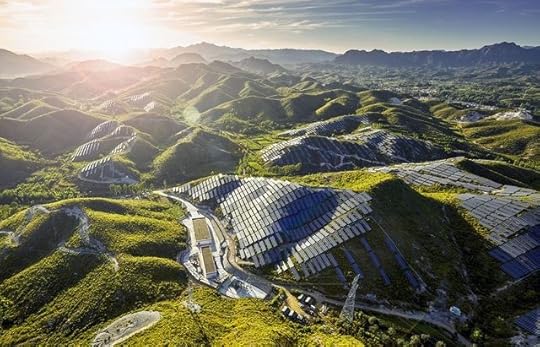
This story deals with the setting up of a large solar farm in a rural ex-coal town.
It brought up two good points.
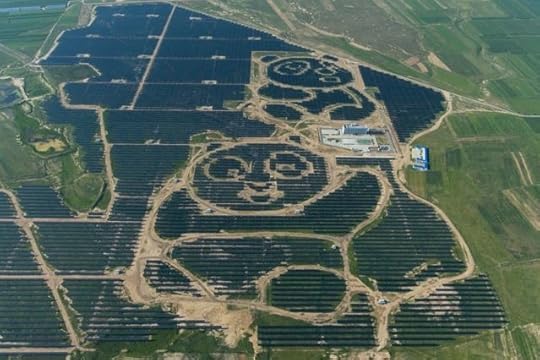
1. Solar farms should have a sense of place. Ex. China’s übercute Panda Solar Farm!
2. Agrosolar! Yes, you can grow vegetables under those panels! Ex. The Cochin International Airport! https://youtu.be/54iuCZq2Qws
What I did not understand about the story was the MCs sudden turnaround perspective of Aaron’s view on coal. Actually, the whole story was “solved” like an episode of Sesame Street.

Small Rural ★★★½☆
“Her facial sol tats glowed a fierce gold as she carefully hoved towards me in the chaotic dark. There were arms around me and I was up and out. And in love.”
I enjoyed reading about the Ramish and hope that the Saudis can move their society forward in this inclusive, colorful, ecological manner. It was a striking juxtaposition with Americans donning the homogeneous white linens.

Big Urban ★★★★☆
Short story about a whistleblower effecting change through truth, and protest, about public power.

Small Urban ★★★½☆
Painful story of an America in transition that has given up its power to HOAs.
Average: 3.5 Stars
The arrangement of short fiction bolstered by non fiction essays was effective. I hope to read more of this style of edifying collaborations.

April 11, 2019
"The Weight of Light" ist keine normale Anthologie, sondern eine Sammlung von vier "Design Fiction"-Stories und dazugehörigen Begleittexten zum Thema Solarenergie.
Einschub: "Design Fiction" sind von Schriftstellern/Autoren in Zusammenarbeit mit Wissenschaftlern verfasste Geschichten, die eine bestimmte Vision eines Konzeptes ausarbeitet und durchspielt. Die Fiktion dient dabei als Denkanstoß zur Diskussion und soll zum Nachdenken über Auswirkungen und Nebeneffekten einladen.
In "For the Snake of Power" wurde der städtische Kanal, der sich durch Phoenix schlängelt, mit Solarzellen überdacht.
In "Under the Grid" suchen Städte mehr Platz im Vertikalen – nicht für Hochhäuser, aber Solaranlagen, Gärten oder Fauna.
In "Big Rural" findet eine riesige Solaranlage keine Akzeptanz bei den Einwohner eines Wüstenkaffs im Südwesten der USA.
"Divided by Light" hab ich nicht zu Ende gelesen, weil wir die anfängliche Prämisse zu sehr "Fantasy" war.
So richtig zufrieden war ich mit keiner Story und keinem Essay. "For the Snake of Power" fokussierte sich zu sehr auf einen sehr banalen Aspekt und versäumte die Chance durchzuspielen, was diese Solaranlage, quer durch die Stadt, mit eben jener Stadt macht – außer Schatten zu spenden…
"Under the Grid" hatte die faszinierendste technische Vision – auf die aber in der Fiktion kaum eingegangen wurde. In der Story kam Solarenergie kaum vor und die nachfolgenden Essays konzentrierten sich mehr auf Aspekte wie Entscheidungsprozesse in der Demokratie und Aufsplittung von Verantwortung auf lokalste Ebene. Es blieb aber insgesamt oberflächlich.
Am meisten Charme hatte "Big Rural", weil die Figuren und die Atmosphäre interessant waren. Die Story wirkte aber so, als ob Cat Rambo erst zwei Seiten vor Schluss einfiel, dass sie nun zu Potte kommen muss und die Geschichte mit einem Heureka-Moment schnell und billig zu Ende brachte. Die ausführlichere Schilderung der Problemlösung, oblag dann den beiden nachfolgenden Essays.
In Ansätzen waren es interessante Geschichten – aber sehr viel mehr als Denkanstöße um einige Dinge weiter zu spinnen, war es nicht. Immerhin: das Buch steht kostenlos in verschiedenen Formaten zum Download zur Verfügung. https://csi.asu.edu/books/weight/
Einschub: "Design Fiction" sind von Schriftstellern/Autoren in Zusammenarbeit mit Wissenschaftlern verfasste Geschichten, die eine bestimmte Vision eines Konzeptes ausarbeitet und durchspielt. Die Fiktion dient dabei als Denkanstoß zur Diskussion und soll zum Nachdenken über Auswirkungen und Nebeneffekten einladen.
In "For the Snake of Power" wurde der städtische Kanal, der sich durch Phoenix schlängelt, mit Solarzellen überdacht.
In "Under the Grid" suchen Städte mehr Platz im Vertikalen – nicht für Hochhäuser, aber Solaranlagen, Gärten oder Fauna.
In "Big Rural" findet eine riesige Solaranlage keine Akzeptanz bei den Einwohner eines Wüstenkaffs im Südwesten der USA.
"Divided by Light" hab ich nicht zu Ende gelesen, weil wir die anfängliche Prämisse zu sehr "Fantasy" war.
So richtig zufrieden war ich mit keiner Story und keinem Essay. "For the Snake of Power" fokussierte sich zu sehr auf einen sehr banalen Aspekt und versäumte die Chance durchzuspielen, was diese Solaranlage, quer durch die Stadt, mit eben jener Stadt macht – außer Schatten zu spenden…
"Under the Grid" hatte die faszinierendste technische Vision – auf die aber in der Fiktion kaum eingegangen wurde. In der Story kam Solarenergie kaum vor und die nachfolgenden Essays konzentrierten sich mehr auf Aspekte wie Entscheidungsprozesse in der Demokratie und Aufsplittung von Verantwortung auf lokalste Ebene. Es blieb aber insgesamt oberflächlich.
Am meisten Charme hatte "Big Rural", weil die Figuren und die Atmosphäre interessant waren. Die Story wirkte aber so, als ob Cat Rambo erst zwei Seiten vor Schluss einfiel, dass sie nun zu Potte kommen muss und die Geschichte mit einem Heureka-Moment schnell und billig zu Ende brachte. Die ausführlichere Schilderung der Problemlösung, oblag dann den beiden nachfolgenden Essays.
In Ansätzen waren es interessante Geschichten – aber sehr viel mehr als Denkanstöße um einige Dinge weiter zu spinnen, war es nicht. Immerhin: das Buch steht kostenlos in verschiedenen Formaten zum Download zur Verfügung. https://csi.asu.edu/books/weight/

August 8, 2019
An AMAZING read!!!
The Weight of Light is a collection of speculative solarpunk short stories and analytical essays, seamlessly tied together and wonderfully exploring different scales of applied solar power and the many ways it could look. I read the whole thing in little more than 24 hours, and it might just be me, being obsessed with solarpunk, but I found it so inspiring, well-written, lovely in its collaboration, and thought-provoking.
The quality of the writing of both the essays and the stories honestly blew me away! I was expecting a dry compilation of facts and forecasts, but instead I was greeted with fascinating prose and poetic fiction, feeling connected and invested in all the protagonists right away.
Many thanks to everyone who made this book and published it for free--I'm absolutely recommending it to everyone!
The Weight of Light is a collection of speculative solarpunk short stories and analytical essays, seamlessly tied together and wonderfully exploring different scales of applied solar power and the many ways it could look. I read the whole thing in little more than 24 hours, and it might just be me, being obsessed with solarpunk, but I found it so inspiring, well-written, lovely in its collaboration, and thought-provoking.
The quality of the writing of both the essays and the stories honestly blew me away! I was expecting a dry compilation of facts and forecasts, but instead I was greeted with fascinating prose and poetic fiction, feeling connected and invested in all the protagonists right away.
Many thanks to everyone who made this book and published it for free--I'm absolutely recommending it to everyone!

October 20, 2019
Science fiction has been going through a deep, dark, dystopian phase for the last decade or so. It's hard to find a novel in the field lately that isn't an exploration of the fall of civilization, whether by climate change, social upheaval, or zombie apocalypse.
So it was great to come across this collection of short stories based on the premise of cheap , ubiquitous solar power. After all, the idea of every house, every vehicle, every backpack, being able to generate their own electricity, free of any controlling Central Authority, is about as close to Utopia as we can imagine these days. Right? Right?
Not so fast. These stories came out of a series of workshops that were dedicated to gaming out the positive and negative aspects of solar power. How can we be sure that access to solar power will be shared? How can we be sure that the electricity generated by solar power will be distributed equitably? Even today, there are places in the Sunbelt were you cannot Place solar panels on your own house, because of some obscure Rules from a controlling homeowners association. Is that going to be the bottleneck to ubiquitous solar?
That's the kind of thing these stories explore. It seems that in 2018 we can't even imagine a positive future.
So it was great to come across this collection of short stories based on the premise of cheap , ubiquitous solar power. After all, the idea of every house, every vehicle, every backpack, being able to generate their own electricity, free of any controlling Central Authority, is about as close to Utopia as we can imagine these days. Right? Right?
Not so fast. These stories came out of a series of workshops that were dedicated to gaming out the positive and negative aspects of solar power. How can we be sure that access to solar power will be shared? How can we be sure that the electricity generated by solar power will be distributed equitably? Even today, there are places in the Sunbelt were you cannot Place solar panels on your own house, because of some obscure Rules from a controlling homeowners association. Is that going to be the bottleneck to ubiquitous solar?
That's the kind of thing these stories explore. It seems that in 2018 we can't even imagine a positive future.

August 17, 2019
What a delightful anthology of fiction and nonfiction about the need for solar power, and how different types of communities could benefit from and use it. This is a free download from Arizona State University's Center for Science and the Imagination.
There are only 4 fiction stories in this, each interesting in their own way, ranging in theme from Big City to Small City to Big Rural to Small Rural. The first three are rooted more deeply in near future ideas, while the last one feels much more science fictiony.
I enjoyed the essays accompanying the stories, some explaining the concepts, some going into the worldbuilding for the stories. I learned some things, also - like the idea of agriculture and solar panels working together.
My only complaint at all was that one of the essays before the stories starts to delve too deep into the plot of the stories, and I usually prefer to go in blind, so I skipped most of that essay. YMMV
There are only 4 fiction stories in this, each interesting in their own way, ranging in theme from Big City to Small City to Big Rural to Small Rural. The first three are rooted more deeply in near future ideas, while the last one feels much more science fictiony.
I enjoyed the essays accompanying the stories, some explaining the concepts, some going into the worldbuilding for the stories. I learned some things, also - like the idea of agriculture and solar panels working together.
My only complaint at all was that one of the essays before the stories starts to delve too deep into the plot of the stories, and I usually prefer to go in blind, so I skipped most of that essay. YMMV

June 21, 2025
“The Weight of Light: A Collection of Solar Futures” is a 2018 publication by the Arizona State University (ASU) Center for Science and the Imagination. It’s edited by Joey Eschrich and Clark A. Miller, and contains a mixture of short fiction, and related science essays. The overall topic is how solar energy might be implemented, and how these implementations may affect future societies.
The four works of fiction are by Brenda Cooper, Andrew Dana Hudson, Cat Rambo, and Corey S. Pressman. All are pretty good stories, and generally positive. The related essays are interesting explorations of the ideas in the stories, and especially the choices made. Overall, it’s a thought-provoking work.
One can obtain a free copy from ASU:
https://csi.asu.edu/books/weight/
The four works of fiction are by Brenda Cooper, Andrew Dana Hudson, Cat Rambo, and Corey S. Pressman. All are pretty good stories, and generally positive. The related essays are interesting explorations of the ideas in the stories, and especially the choices made. Overall, it’s a thought-provoking work.
One can obtain a free copy from ASU:
https://csi.asu.edu/books/weight/

March 9, 2023
This was such a fascinating insight into the role fiction can play for imagining different models of solar futures. I loved equally the short stories themselves and the theoretical underpinnings that lead into the exercise to generate them - and I wished I could have been a fly on the wall for the discussions!
The resulting four pieces were distinct, interesting, and explored (with surprising nuance for their length) complex impacts of solar powered cities. I do wish each story was a bit longer to explore the worlds in a bit more detail, but on the whole I was really impressed by the quality and depth of these short stories.
The resulting four pieces were distinct, interesting, and explored (with surprising nuance for their length) complex impacts of solar powered cities. I do wish each story was a bit longer to explore the worlds in a bit more detail, but on the whole I was really impressed by the quality and depth of these short stories.

October 11, 2020
Only read the stories, skipped the essays. Each describing a world where solar panels power the world, but exploring different setups (urban vs. rural, large vs. distributed). Each one with its own griefs and impacts on society.

March 14, 2024
"Mama, did I see chickens up there? They can't fly!" Ingrid said when she pushed into the house. The floor was covered in piles of computer junk, stacks of books. She edged a narrow path into the kitchen.
"Marsha down the block has chickens," Krystal said. "Why should she get all the eggs."
"Marsha down the block has chickens," Krystal said. "Why should she get all the eggs."
April 11, 2020
Beautifully written. I highly recommend.

March 25, 2019
Speculative fiction on an all-solar future, from a workshop of writers, designers, and policy/energy academics. The short stories are good, tight conflict and imagination, and with the accompanying analysis explore the trade-offs of varied scenarios of who benefits from ownership and access to solar infrastructure etc - a 100% solar future has no reason to be bright green fields for society.
Displaying 1 - 14 of 14 reviews