

What do you think?

Erdogan Rising
Who is Recep Tayyip Erdogan, and how did he lead a democracy on the fringe of Europe into dictatorship? How has chaos in the Middle East blown back over Turkey’s borders? And why doesn’t the West just cut Erdogan and his regime off?
Hannah Lucinda Smith has been living in Turkey as the Times correspondent for nearly a decade, reporting on the ground from the onset of the Arab Spring through terrorist attacks, mass protests, civil war, unprecedented refugee influx and the explosive, bloody 2016 coup attempt that threatened to topple – and kill – Erdogan.
Erdogan Rising introduces Turkey as a vital country, one that borders and buffers Western Europe, the Middle East and the old Soviet Union, marshals the second largest army in NATO and hosts more refugees than any other nation. As president, Erdogan is the face of devotion and division, a leader who mastered macho divide-and-rule politics a decade and a half before Donald Trump cottoned on, and has used it to lead his country into spiralling authoritarianism.
Yet Erdogan is no ordinary dictator. His elections are won only by slivers, and Turkey remains defined by its two warring cults: those who worship Erdogan, the wilful Muslim nationalist with a tightening authoritarian grip, and those who stand behind Ataturk, the secularist, westward-looking leader who founded the republic and remains its best loved icon – now eighty years dead.
Erdogan commands a following so devoted they compose songs in his honour, adorn their homes with his picture, and lay down their lives to keep him in power. Erdogan Rising asks how this century’s most successful populist won his position, and where Turkey is headed next.
Hannah Lucinda Smith has been living in Turkey as the Times correspondent for nearly a decade, reporting on the ground from the onset of the Arab Spring through terrorist attacks, mass protests, civil war, unprecedented refugee influx and the explosive, bloody 2016 coup attempt that threatened to topple – and kill – Erdogan.
Erdogan Rising introduces Turkey as a vital country, one that borders and buffers Western Europe, the Middle East and the old Soviet Union, marshals the second largest army in NATO and hosts more refugees than any other nation. As president, Erdogan is the face of devotion and division, a leader who mastered macho divide-and-rule politics a decade and a half before Donald Trump cottoned on, and has used it to lead his country into spiralling authoritarianism.
Yet Erdogan is no ordinary dictator. His elections are won only by slivers, and Turkey remains defined by its two warring cults: those who worship Erdogan, the wilful Muslim nationalist with a tightening authoritarian grip, and those who stand behind Ataturk, the secularist, westward-looking leader who founded the republic and remains its best loved icon – now eighty years dead.
Erdogan commands a following so devoted they compose songs in his honour, adorn their homes with his picture, and lay down their lives to keep him in power. Erdogan Rising asks how this century’s most successful populist won his position, and where Turkey is headed next.
416 pages, Paperback
Published September 5, 2019
Ratings & Reviews
Friends & Following
Create a free account to discover what your friends think of this book!
Community Reviews
Displaying 1 - 30 of 60 reviews

November 1, 2020
Definitely a 4.5 for someone who knows little about the history of modern Turkey. The book unbraids the soul of Turkey one bead at a time; the love of Islam, Ataturk legacy, popular politics, Turkey's enemies, fraught relations with EU, role in the Syrian conflict, handling of the immigrants.
Highly recommended for anyone trying to unravel modern Turkey.
Highly recommended for anyone trying to unravel modern Turkey.

December 26, 2020
I knew the author was a journalist, not a social science scholar when I chose this book but I was expecting some more scientific approach that I didn't find in this book. I can classify this book as a diary rather than a research-based insight into an extremely sensational era of Turkey. Therefore, as a diary, it is biased. Some interviews are trying to reflect the background of certain periods and events however with different interviewee reflections could have been a hundred percent opposite.
Especially when she describes the pre-Erdogan era, she should have done more research so that she could grasp the virtue of the young republic and could have given some stunning examples like Demirel, who was coming from a poor family, a shepherd who graduated state schools became a president in Turkey or Ozal, another president whose grandmother was a Kurd and didn't know a Turkish word. There were of course some difficulties and mistakes during pre-Erdogan, ”Kemalist” as the author describes, era but Is there any other Muslim majority country that practice democracy that was not earned by its people but served to them, so good?
Last but not least, It was quite surprising how the author could not pronounce nearly any of the Turkish names properly though, she spends years in Turkey.
Especially when she describes the pre-Erdogan era, she should have done more research so that she could grasp the virtue of the young republic and could have given some stunning examples like Demirel, who was coming from a poor family, a shepherd who graduated state schools became a president in Turkey or Ozal, another president whose grandmother was a Kurd and didn't know a Turkish word. There were of course some difficulties and mistakes during pre-Erdogan, ”Kemalist” as the author describes, era but Is there any other Muslim majority country that practice democracy that was not earned by its people but served to them, so good?
Last but not least, It was quite surprising how the author could not pronounce nearly any of the Turkish names properly though, she spends years in Turkey.

January 8, 2020
An excellent insight into how populists attain power through democratic means and then slowly tighten their autocratic grip through the use of tried and tested tactics to undermine institutions. Before you know it, you're living in an autocratic society. A must read for those in countries that have nationalist/populist leaders who lead through the cult of personality and nothing else.
November 26, 2020
I will start my review with a disclaimer. I am not a fan of Erdogan.
That said, this author’s portrayal of Erdogan and Turkey is shocking, primarily due to not only its bias, but the racism evident in her tone throughout. A Times journalist, she constantly seems to stop just short of calling Turks ‘those savage Orientals’ or ‘backwards eastern people’, in fact, in a couple of places she says it in slightly less offensive language. The racial undertones are evident from the start.
Secondly, for a journalist who has lived in Turkey for six years and has a command of the language, her knowledge of Turkish history is surprisingly poor, she seems to have only a surface level grasp of Ataturk himself and quite a bit of Turkish history. That doesn’t stop her from patting herself on the back for having ‘seen things’ and ‘knowing things’. She constantly acts like she has the true insider knowledge and brings up any compliment paid to her by people of the region which I suppose makes her feel like she is the real authority and can say what she likes.
Third, she seems to have a clear dislike of Turks, not just Erdogan supporters, Turks as a whole. Why live in that country if you dislike the people so much? She is more sympathetic to Syrians, its true, but any tragedy or problem for Turks she depicts as a problem of their own making which they deserved.
Fourth, her whitewashing of western Europe and the US. This was to be expected of a Times reporter, but I still think its fair to mention. For example, what Turkey does is bad if it doesn’t align with what Europe wants, but in the Iraq war the UK and US just ‘made mistakes’? Again, she very clearly shows her thinly hidden view of ‘lesser’ cultures.
All that said, the book was enjoyable, I enjoyed it primarily because I enjoy books on Turkey. The author did make some good points against Erdogan, as well as a host of unfair or twisted points. Her criticism of his mishandling of the army, his referendum, certain deals made by his government, mishandling of certain parts of the Syrian crisis (though not the refugee part, that’s just evil according to her because Europe should not be subject to those refugees I guess) are all well explained and seem quite sound. Her mischaracterizations were unfair, as mischaracterizations are wont to be. She has a tendency to trail off in detail into other topics which are not relevant to the subject. This makes for slow reading. A book I would normally finish it maybe four days I spent nearly two weeks slogging through because of these overly detailed asides. It reads more like a travelogue peppered with her orientalist impressions than an informative book.
That said, this author’s portrayal of Erdogan and Turkey is shocking, primarily due to not only its bias, but the racism evident in her tone throughout. A Times journalist, she constantly seems to stop just short of calling Turks ‘those savage Orientals’ or ‘backwards eastern people’, in fact, in a couple of places she says it in slightly less offensive language. The racial undertones are evident from the start.
Secondly, for a journalist who has lived in Turkey for six years and has a command of the language, her knowledge of Turkish history is surprisingly poor, she seems to have only a surface level grasp of Ataturk himself and quite a bit of Turkish history. That doesn’t stop her from patting herself on the back for having ‘seen things’ and ‘knowing things’. She constantly acts like she has the true insider knowledge and brings up any compliment paid to her by people of the region which I suppose makes her feel like she is the real authority and can say what she likes.
Third, she seems to have a clear dislike of Turks, not just Erdogan supporters, Turks as a whole. Why live in that country if you dislike the people so much? She is more sympathetic to Syrians, its true, but any tragedy or problem for Turks she depicts as a problem of their own making which they deserved.
Fourth, her whitewashing of western Europe and the US. This was to be expected of a Times reporter, but I still think its fair to mention. For example, what Turkey does is bad if it doesn’t align with what Europe wants, but in the Iraq war the UK and US just ‘made mistakes’? Again, she very clearly shows her thinly hidden view of ‘lesser’ cultures.
All that said, the book was enjoyable, I enjoyed it primarily because I enjoy books on Turkey. The author did make some good points against Erdogan, as well as a host of unfair or twisted points. Her criticism of his mishandling of the army, his referendum, certain deals made by his government, mishandling of certain parts of the Syrian crisis (though not the refugee part, that’s just evil according to her because Europe should not be subject to those refugees I guess) are all well explained and seem quite sound. Her mischaracterizations were unfair, as mischaracterizations are wont to be. She has a tendency to trail off in detail into other topics which are not relevant to the subject. This makes for slow reading. A book I would normally finish it maybe four days I spent nearly two weeks slogging through because of these overly detailed asides. It reads more like a travelogue peppered with her orientalist impressions than an informative book.

Read
February 22, 2021Book Riot's 2021 Read Harder Challenge: #18. Read a book by/about a non-Western world leader
This asshole, this is like Dictator 101.
This asshole, this is like Dictator 101.
November 4, 2020
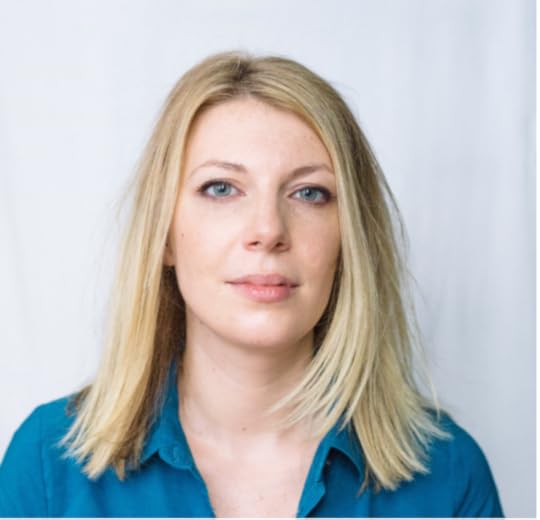
This was an interesting and informative book. Author Hannah Lucinda Smith is The Times' correspondent in Turkey, where she has covered conflicts, a coup attempt and the rise of controversial president, Recep Tayyip Erdogan. During her time in the country, she has also reported from inside rebel-held Syria, on the front lines of the battle against Isis in Iraq, and joined the mass movement of migrants on their journey to Europe in 2015, according to this book's Google page.
Hannah Lucinda Smith :
Hannah Lucinda Smith writes in an interesting, and engaging manner, for the most part. Although I have to admit that I enjoyed the first half of this book more than the second, which I felt was a bit dry and long-winded, especially towards the end, where I found my attention wandering numerous times...
Thankfully I did not find myself lost in the weeds here, despite not being familiar with many of the Turkish politicians covered in these pages.
Erdogan Rising: The Battle for the Soul of Turkey covers the rise of Recep Tayyip Erdoğan, as it's title implies. It also gives the reader a bit of relevant context; covering Mustafa Kemal Atatürk and a brief history of Turkey. Smith also talks about many topics adjacent to the story of modern Turkey: the attempted coup of 2016, the Arab Spring, the war in Syria, the refugee crises of 2015, the rise of The Islamic State, and much more.
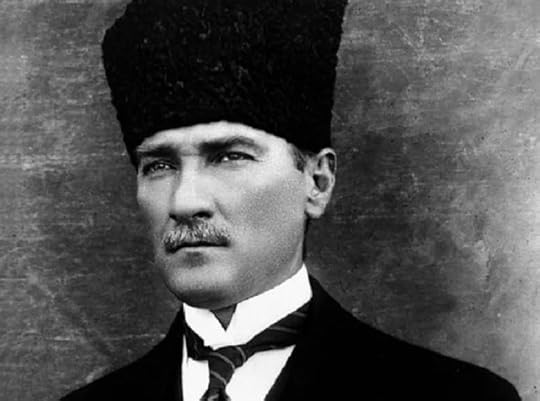
Mustafa Kemal Atatürk :
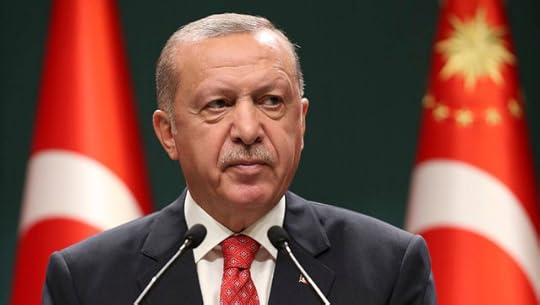
Recep Tayyip Erdoğan :
Smith writes about the rise of Turkey as a tourist destination for the Muslim world:
The Clash Of Civilizations that Samuel P. Huntington talks about in his book of the same name is not only taking place on a macro-scale between nation-states. It is also an internal struggle in many Islamic countries, including Turkey. The tide of Western Cultural Imperialism is crashing hard against traditional fundamental Islamic values.
Smith writes about this ongoing struggle in Turkey: Erdogan appeals to many Turks with traditional Islamist aims, in sharp contrast to the secularism that Kemal Atatürk fought so hard to bring to Turkey.
Atatürk is still very much a prominent figure in Turkish politics, Smith informs the reader - despite being dead for 80+ years now...
Despite finding some of the reading here a bit dry, I would still recommend this one to anyone interested.
3 stars.
Hannah Lucinda Smith :
Hannah Lucinda Smith writes in an interesting, and engaging manner, for the most part. Although I have to admit that I enjoyed the first half of this book more than the second, which I felt was a bit dry and long-winded, especially towards the end, where I found my attention wandering numerous times...
Thankfully I did not find myself lost in the weeds here, despite not being familiar with many of the Turkish politicians covered in these pages.
Erdogan Rising: The Battle for the Soul of Turkey covers the rise of Recep Tayyip Erdoğan, as it's title implies. It also gives the reader a bit of relevant context; covering Mustafa Kemal Atatürk and a brief history of Turkey. Smith also talks about many topics adjacent to the story of modern Turkey: the attempted coup of 2016, the Arab Spring, the war in Syria, the refugee crises of 2015, the rise of The Islamic State, and much more.
Mustafa Kemal Atatürk :
Recep Tayyip Erdoğan :
Smith writes about the rise of Turkey as a tourist destination for the Muslim world:
"...By 2017, Turkey has risen to become the world’s third most popular destination for halal travellers, a four-place rise on the year before (only Malaysia and the UAE score higher).
In a global halal tourism market now worth $151 billion annually, Turkey dominates the beach-holiday sector. The country accounts for a disproportionate amount of the hotels listed on Halalbooking.com, not out of a conscious effort on Seçgin’s part but simply because Turkey is the place with the best-developed concept of what an all-inclusive halal holiday means. This, after all, is an evolution of the model the Turks have been fine-tuning on booze-soaked European tourists since the 1980s..."
The Clash Of Civilizations that Samuel P. Huntington talks about in his book of the same name is not only taking place on a macro-scale between nation-states. It is also an internal struggle in many Islamic countries, including Turkey. The tide of Western Cultural Imperialism is crashing hard against traditional fundamental Islamic values.
Smith writes about this ongoing struggle in Turkey: Erdogan appeals to many Turks with traditional Islamist aims, in sharp contrast to the secularism that Kemal Atatürk fought so hard to bring to Turkey.
Atatürk is still very much a prominent figure in Turkish politics, Smith informs the reader - despite being dead for 80+ years now...
"...And then there is the cult of Mustafa Kemal Atatürk, founder of the Turkish republic and possibly the only man capable of raising a serious challenge to Erdoğan despite the fact that he has been dead for eighty-one years. Atatürk – or at least the Atatürk who is still very much alive in the imagination of today’s Turks – stood for almost everything Erdoğan despises, and vice versa. He was an unbending advocate for secularism, non-aggression in dealings with other states, and a Turkey that is allied to Europe and the West.
Atatürk has always been a Turkish hero, but increasingly he is also the figure Erdoğan’s opponents rally around. During the 2017 constitutional referendum campaign the streets of my Istanbul neighbourhood – a secular bastion that voted 81 per cent against Erdoğan’s plans to gather power in his own hands – turned into an open-air gallery of Atatürk-inspired artwork..."
Despite finding some of the reading here a bit dry, I would still recommend this one to anyone interested.
3 stars.
January 1, 2020
Erdogan is the prototype of an Islamist ruler: corrupt to the bone, ruthless with opponents, abuse religion to lead and suppress the underprivileged masses (and make sure that they continue to be so).
It is even interesting to see how political Islam has transformed Erdogan from a potentially democratic politician into a bloody dictator.
For me the book is not a surprise, because I am sure that this is the outcome of rule under Islam. However for those who have a naive believe that there is moderate political Islam, it is an essential read.
It is even interesting to see how political Islam has transformed Erdogan from a potentially democratic politician into a bloody dictator.
For me the book is not a surprise, because I am sure that this is the outcome of rule under Islam. However for those who have a naive believe that there is moderate political Islam, it is an essential read.
May 3, 2020
An objective, courageous observation spanning a century.
"All sides of our political spectrum are in their essence conservative. Our leftist are actually right wing, and therefore our right wing is extreme right" (Ertuğrul Günay)
"For populists like them, winking is the only part of democracy that matters"
PPP ( public private partnership) is a classic example of instant gratification on a grand scale.
"All sides of our political spectrum are in their essence conservative. Our leftist are actually right wing, and therefore our right wing is extreme right" (Ertuğrul Günay)
"For populists like them, winking is the only part of democracy that matters"
PPP ( public private partnership) is a classic example of instant gratification on a grand scale.
December 14, 2023
Only gave a few chapters to the economic aspect of Erdoğan's Türkiye and those chapters added up to "at first economy good and then bad". The book was filled with the author's anecdotes about living in the country, that with the exception of those relating to being harassed as a journalist did not add to the book. The best part of the book was it's chapters relating to the Syrian Civil War and the Kürd problem.
April 2, 2020
Overall a very good summary of the turbulent years since the beginning of the Syrian uprising. I particularly liked the section that shed light on the unholy aspects of the Turkish-British relationship. Smith is a good writer and you should read it if you want to understand this very complicated country better.
October 9, 2019
I was expecting a book about Erdogan but it was a collection of personal stories from a correspondent covering Turkey and Syria instead. It might be worthwhile if you are interested in the work of foreign correspondents or how they work with translators and fixers on the ground.

Read
April 9, 2026This was an interesting, fulfilling and thought-provoking read. Smith has a smooth and engaging writing style and her observations were well-explained and multi-sided. That being said, though I would recommend it (especially for newcomers to Turkish politics), there were some significant imperfections that I’d want to disclaim first.
Firstly, Smith’s historical context focusses almost entirely on the establishment of the Republic and its immediate aftermath. She generally compares Erdoğan’s politics with Atatürk or Kemalism while brushing over the political and social context of Turkey 1940-1990s. But considering these years would have added a far greater complexity to her analysis, particularly her considerations of the psychology of Turkey’s political world, the 2016 coup attempt, and polarisation in Turkish society. (For instance, it is hard to evaluate her suggestion that the rise of AKP has led to greater split between secular and Muslim groups as one thing or the other without any serious consideration of how the split developed and evolved post-Republic and throughout 20th c.)
Secondly, her perspective on Islam’s place in Turkey — both the use of Islam in politics and the role it has in ordinary life — is evasive and often vague. She frequently uses the term ‘Islamist’, but does not specify what she considers the meaning of the term to be. Does she mean a politics that supports Islamic fundamentalism and introduction of Sharia law? Or a group that exploits Islam for political gain? There are times when it seems ‘Islamist’ is being used simply as a shorthand for ‘Muslim’, and then the comments feel distasteful or even ‘Othering’. (She relays a comment, for instance, that an advert made by the Saadet party is the first example of an Islamist with a sense of humour). And though she frequently mentions the polarisation between secular and Muslim groups in Turkish society, she too slips into a homogenising narrative that bungs Muslims with one political party and secular citizens with another, which is of course an over-simplification in a population of over 86 million people. (For example, she observes that CHP supporters are mostly secular, citing the lack of head-scarfed women at a CHP rally — which demonstrates a whole other homogenising idea about religious practice.) While she makes an effort to include voices from many different groups, there does seem to be a bias that slips through her writing: the tone of her portrayal of poorer, rural, pious or conservative voices differs from the more affirmative representation of liberal, cosmopolitan or Western perspectives. I also found some of her comments about particular social groups uncomfortable — I was quite surprised to hear her describe Kilis as a ‘Turkish fleapit’ full of ‘tower blocks housing masses of rural peasants’ (p. 45).
Ultimately, I think the book would have benefitted from more editing. Really it is tangentially about Erdoğan, and her reflections on Turkey in 2015-2018 delve into memoir or travelogue-esque reflections. This didn’t bother me, but I do think her argument would be far stronger if the structure were cleaner and each chapter more focussed. It’s still a worthwhile read, but there are some oversights to be aware of. 😃
Firstly, Smith’s historical context focusses almost entirely on the establishment of the Republic and its immediate aftermath. She generally compares Erdoğan’s politics with Atatürk or Kemalism while brushing over the political and social context of Turkey 1940-1990s. But considering these years would have added a far greater complexity to her analysis, particularly her considerations of the psychology of Turkey’s political world, the 2016 coup attempt, and polarisation in Turkish society. (For instance, it is hard to evaluate her suggestion that the rise of AKP has led to greater split between secular and Muslim groups as one thing or the other without any serious consideration of how the split developed and evolved post-Republic and throughout 20th c.)
Secondly, her perspective on Islam’s place in Turkey — both the use of Islam in politics and the role it has in ordinary life — is evasive and often vague. She frequently uses the term ‘Islamist’, but does not specify what she considers the meaning of the term to be. Does she mean a politics that supports Islamic fundamentalism and introduction of Sharia law? Or a group that exploits Islam for political gain? There are times when it seems ‘Islamist’ is being used simply as a shorthand for ‘Muslim’, and then the comments feel distasteful or even ‘Othering’. (She relays a comment, for instance, that an advert made by the Saadet party is the first example of an Islamist with a sense of humour). And though she frequently mentions the polarisation between secular and Muslim groups in Turkish society, she too slips into a homogenising narrative that bungs Muslims with one political party and secular citizens with another, which is of course an over-simplification in a population of over 86 million people. (For example, she observes that CHP supporters are mostly secular, citing the lack of head-scarfed women at a CHP rally — which demonstrates a whole other homogenising idea about religious practice.) While she makes an effort to include voices from many different groups, there does seem to be a bias that slips through her writing: the tone of her portrayal of poorer, rural, pious or conservative voices differs from the more affirmative representation of liberal, cosmopolitan or Western perspectives. I also found some of her comments about particular social groups uncomfortable — I was quite surprised to hear her describe Kilis as a ‘Turkish fleapit’ full of ‘tower blocks housing masses of rural peasants’ (p. 45).
Ultimately, I think the book would have benefitted from more editing. Really it is tangentially about Erdoğan, and her reflections on Turkey in 2015-2018 delve into memoir or travelogue-esque reflections. This didn’t bother me, but I do think her argument would be far stronger if the structure were cleaner and each chapter more focussed. It’s still a worthwhile read, but there are some oversights to be aware of. 😃
May 12, 2023
A good account of modern Turkey, showing the ways that Erdogan has changed the country through his rule. I found at times this book served more as an eyewitness account to recent Turkish history, rather than the biography of Erdogan’s rise to power that I’d hoped for.
Many of the chapters were meandering and made little to no mention of the President, but on the whole I was left with a much fuller understanding of the context in which Erdogan operates - definitely useful for going into the election this weekend.
Many of the chapters were meandering and made little to no mention of the President, but on the whole I was left with a much fuller understanding of the context in which Erdogan operates - definitely useful for going into the election this weekend.

March 14, 2021
The book is clearly anti-erdogan and doesn’t say a single positive thing about him. The book basically states that he is an absolute dictator which I’m not sure if I totally agree with yet. (He certainly has dictator tendencies) . The argument is that erdogan is a populist and uses clear populist tactics to solidify his power which is probably true to some extent. he is trying to wipe all the legacy of Ataturk who made turkey what it is and saved it from the destiny of its Arab neighbors. ( also probably true )

June 6, 2020
In a nutshell: The best English-language book you can find on contemporary Turkey. Smith is bestowed with sophisticated and strong prose, which makes the reading experience very enjoyable. Her personal experiences in Turkey and Syria come to life in this memoir/political commentary crossover. Highly recommended if you're interested in Turkey.
May 18, 2023
More of a 2.5. Basically, it's a dairy rather than a serious work of research. Smith flatters herself too much and talks too much about herself and her boyfriend constantly. No one cares. We want to learn about Erdoğan and Turkey. The book does contain some good information and highlights some important issues; but Smith writes with a deep bias and a Western chauvinistic attitude and makes a very weak attempt to explain the deep divisions that gave birth to Erdoğan. She fails to offer the same scrutiny for other historical figures. Think of this book as if Tom Freedman was a British woman writing about Turkey. Get the picture. A good writer, and you'll learn a lot, but you'll never wanna meet or have lunch with the writer.
January 24, 2023
i can finally fill all my erdoğan slander with facts

August 12, 2022
Some here accuse Smith of racism/orientalism. A few times I noticed her bestow the description "blond and blue-eyed"—her own looks—on people almost as a compliment. Apart from that—undeniably benign—offense, I saw no evidence of a sense of superiority. Well-meaning but uninformed Western audiences can mistake a—justified—disdain for radical or political Islam with racism, a confusion which Islamists love to exploit. In fact, Smith demonstrates sharp insight into both Turkish and Syrian societies, obtained in part by making friends with all kinds of people. Thus she observes very clearly many cultural and historical forces that divide each nation, rather than presenting a romanticized, stereotyped image. This kind of nuance to me is the very antithesis of racism.
You may ask why I had to mention Syria, and here lies the the book’s greatest sin, as others have pointed out: a lack of focus. The book is just as much about Syria as it is about Turkey. To an extent that makes sense, because the insanely complicated war in Syria and the ensuing refugee crisis played a major role in how Turkey's relations with the EU developed, and how Erdoğan's ambitions (both within and without Turkey) grew. But one gets the feeling that since Smith first went to Turkey as a Syrian War correspondent, she just had a lot of material on the latter that didn't want to go to waste. I understand this is not an "academic" work of history, and there is certainly nothing wrong with publishing a memoir, or a diary. Smith beautifully interleaves her personal story and eyewitness accounts with the "big picture" and background material. That to me puts her in the company of the great journalist-historians (William L. Shirer, George Orwell, John Reed). It's just that the amount of inessential information just make the book's title seem a bit misleading or dishonest.
I listened to an audio version of this book, narrated by Smith herself. She delivers it extremely well, with just the right amount of inflection. Quotations are especially entertaining in the way they're delivered. Many say her Turkish pronunciation isn't great. I don't know enough Turkish to judge. But I am a native speaker of Persian, and was sad to hear her fall into the common anglophone trap of pronouncing "Mahmoud Ahmadinezhad" as "Makkkhhhhmoud Akkkhhhmadinejad".
You may ask why I had to mention Syria, and here lies the the book’s greatest sin, as others have pointed out: a lack of focus. The book is just as much about Syria as it is about Turkey. To an extent that makes sense, because the insanely complicated war in Syria and the ensuing refugee crisis played a major role in how Turkey's relations with the EU developed, and how Erdoğan's ambitions (both within and without Turkey) grew. But one gets the feeling that since Smith first went to Turkey as a Syrian War correspondent, she just had a lot of material on the latter that didn't want to go to waste. I understand this is not an "academic" work of history, and there is certainly nothing wrong with publishing a memoir, or a diary. Smith beautifully interleaves her personal story and eyewitness accounts with the "big picture" and background material. That to me puts her in the company of the great journalist-historians (William L. Shirer, George Orwell, John Reed). It's just that the amount of inessential information just make the book's title seem a bit misleading or dishonest.
I listened to an audio version of this book, narrated by Smith herself. She delivers it extremely well, with just the right amount of inflection. Quotations are especially entertaining in the way they're delivered. Many say her Turkish pronunciation isn't great. I don't know enough Turkish to judge. But I am a native speaker of Persian, and was sad to hear her fall into the common anglophone trap of pronouncing "Mahmoud Ahmadinezhad" as "Makkkhhhhmoud Akkkhhhmadinejad".

April 25, 2021
I'm in two minds about this.
Probably the biggest criticism is it's lack of focus - I expected an Erdoğan biography and while at times it attempts this, there does seem to be too much emphasis on the author's personal experience. (Take chapter 2 for instance, where Smith talks exclusively about her time in Syria - completely forgetting to relate it to Turkey and Erdoğan. As the significance of Syria is covered later in the book this chapter really isn't needed).
Another criticism is that I think Smith should have covered the state of the Turkish economy considerably more than she does. (She gives it little more than a paragraph). Over the past 10 years, the Turkish Lira has lost around 80% of it's value against the Euro, British Pound and US Dollar - this is hugely significant politically in a volatile country defined abroad by it's international relations. This should have been looked at in depth - Erdoğan may be 'rising' but the Turkish Lira certainly isn't.
On the positive side, I liked Smith's writing style ...
Probably the biggest criticism is it's lack of focus - I expected an Erdoğan biography and while at times it attempts this, there does seem to be too much emphasis on the author's personal experience. (Take chapter 2 for instance, where Smith talks exclusively about her time in Syria - completely forgetting to relate it to Turkey and Erdoğan. As the significance of Syria is covered later in the book this chapter really isn't needed).
Another criticism is that I think Smith should have covered the state of the Turkish economy considerably more than she does. (She gives it little more than a paragraph). Over the past 10 years, the Turkish Lira has lost around 80% of it's value against the Euro, British Pound and US Dollar - this is hugely significant politically in a volatile country defined abroad by it's international relations. This should have been looked at in depth - Erdoğan may be 'rising' but the Turkish Lira certainly isn't.
On the positive side, I liked Smith's writing style ...

August 16, 2020
I visited Turkey 3 years ago on a backpacking trip and I always enjoy books that teach me about countries I have visited. This is a top notch overview of Erdogan but even more so a mini history of Turkey since independence after WW1. It is interlaced with personal anecdotes of her reporting in Turkey and Syria during the civil defence and very much in the vein of Tim Marshall, another journalist/writer I admire.
A good book if you want to learn more about more Turkey.
A good book if you want to learn more about more Turkey.

October 2, 2021
A good summation of contemporary Turkey and the changes underway in the country.
To be sure, Erdogan Rising is an opinionated work. It's journalistic and not a work of history. Nonetheless, anyone wishing to understand Turkey 2021 will do well to read Smith's work.
Highly recommended to anyone interested in Turkey. This book is much more than merely a biography of Erdogan.
To be sure, Erdogan Rising is an opinionated work. It's journalistic and not a work of history. Nonetheless, anyone wishing to understand Turkey 2021 will do well to read Smith's work.
Highly recommended to anyone interested in Turkey. This book is much more than merely a biography of Erdogan.
January 5, 2024
A slow and somewhat meandering start gives way to a thoroughgoing history of Turkey in the 21st century, told primarily but not exclusively through the lens of politics.
The tone was overwhelmingly morose at times but then: why wouldn't it be? Erdoğan doesn't leave much room for optimism.
The tone was overwhelmingly morose at times but then: why wouldn't it be? Erdoğan doesn't leave much room for optimism.
December 26, 2019
I learned many things I didn't know but author seems unable to get a handle on Erdogan, where he came from or where he's going.
September 14, 2020
Personal, reflective and powerful journey into the modern evolution of Turkey and the growth of Erdogan and capture of state power, hyper nationalism, judicial and finally the power apparatus.

May 25, 2023
This is probably my favorite of the three Erdoğan biographies I have read recently, but probably not for the right reasons. The author, journalist Hannah Lucinda Smith, is infinitely braver and better informed than I am, but in some senses she is telling my story of Turkey. I don't believe I've ever met her, but I think we've got many friends in common. I'm not 100% sure about this, but I suspect I've hung out with one of the book's more colorful characters a few times. Smith moved to Turkey in 2011, to cover the war in Syria. I moved to Istanbul in 2011 to party and make a little money. Her arc of falling in love with Turkey, and growing horror at what Erdogan was doing to it, closely matches my own.
The book serves as an excellent "first draft of history" and introduction to the country and its issues. She intersperses her own (somewhat suicidally) brave experiences in Syria and Turkey with solid potted histories of the country's various dynamics. Syria, the Kurds, Islamism, the coup and all the rest of the events of the tumultuous last decade are covered quite well. I could certainly quibble with some of the details, but not that many.
As the book started I thought I would find her Syria coverage more irritating. She retains many more fond feelings for the romantic early years (months?) of the Syrian uprising than I do. That makes sense, because she covered it in person, and took extraordinary risks to do so. By the time I started paying serious attention to the conflict, it had already devolved into the mess of proxy war Jihadism that it remains today. Smith seems to think there was more of a fight worth supporting at the outset than I do. She sees what happened as a tragic devolution, while I see it as more of an inevitability considering US, Turkish and Gulf interests and the state of Mesopotamian politics circa 2011. But after roughly 2012 or so, her account jibes pretty well with what I saw and believe about the conflict. And she provides a lot of useful material about the role Turkish and other outside sponsors played in making the conflict as horrific as it is.
The book seems a little too Syria focused at the outset, but by the end, it reinforced how essential this perspective is in understanding Erdogan's consolidation of power. I've long maintained that the main reason Erdogan's influence got as malign as it is, and probably the main reason he is still in power, is the conflict in Syria. This book was most valuable for me in emphasizing the very real ways that the Syrian conflict spilled over to Turkish towns and cities like Cizre and Diyarbakir. Smith provides some pretty heart-rending first person accounts. Bizarrely, it made me a little more sympathetic to the Turkish nationalists who are likely to give Erdogan yet another term in power in the May 28th, 2023 run-off election. The US betrayal of Turkey, the choice to support Syrian Kurds closely aligned to the PKK, became a lot more concrete to me as I read Smith's descriptions of the destruction of Cizre. I vaguely knew something was up out east at the time, but I don't think I fully reckoned with its horror and significance until I read her account. In my defense the Istanbul suicide bombings I kept just missing were drawing more of my attention at the time.
Despite her heroic efforts, the book remains an outsider's account, and perhaps that's why I enjoyed it so much. Her impassioned, sometimes amusing coverage of the past decade of Turkish politics has greatly enriched my understanding. While I was working in law offices and partying with Turkish rich kids, she was following refugees, and attending all the rallies I only saw brief clips of.
Smith has been a bit poorly served by her publishers in one respect. The version of the book I purchased does not carry the apt subtitle "The Battle for the Soul of Turkey". Instead it's got the somewhat Orientalist and dumbass democracy vs. autocracy framed "A Warning For Europe". "What's the warning?" I wondered... Don't be run by a secularist military oligarchy that falls into combat with a hyper-talented religiously focused politician and loses? I don't think that's been a serious risk for any European country since the 1970s. The text never really answered that question, or even posed it. Also some of marketing of the book refers to Turkey as a healthy democracy prior to Erdogan, which I do not believe is accurate, or what Smith describes. This framing made me more hostile to the book than I should have been when I started reading.
The book serves as an excellent "first draft of history" and introduction to the country and its issues. She intersperses her own (somewhat suicidally) brave experiences in Syria and Turkey with solid potted histories of the country's various dynamics. Syria, the Kurds, Islamism, the coup and all the rest of the events of the tumultuous last decade are covered quite well. I could certainly quibble with some of the details, but not that many.
As the book started I thought I would find her Syria coverage more irritating. She retains many more fond feelings for the romantic early years (months?) of the Syrian uprising than I do. That makes sense, because she covered it in person, and took extraordinary risks to do so. By the time I started paying serious attention to the conflict, it had already devolved into the mess of proxy war Jihadism that it remains today. Smith seems to think there was more of a fight worth supporting at the outset than I do. She sees what happened as a tragic devolution, while I see it as more of an inevitability considering US, Turkish and Gulf interests and the state of Mesopotamian politics circa 2011. But after roughly 2012 or so, her account jibes pretty well with what I saw and believe about the conflict. And she provides a lot of useful material about the role Turkish and other outside sponsors played in making the conflict as horrific as it is.
The book seems a little too Syria focused at the outset, but by the end, it reinforced how essential this perspective is in understanding Erdogan's consolidation of power. I've long maintained that the main reason Erdogan's influence got as malign as it is, and probably the main reason he is still in power, is the conflict in Syria. This book was most valuable for me in emphasizing the very real ways that the Syrian conflict spilled over to Turkish towns and cities like Cizre and Diyarbakir. Smith provides some pretty heart-rending first person accounts. Bizarrely, it made me a little more sympathetic to the Turkish nationalists who are likely to give Erdogan yet another term in power in the May 28th, 2023 run-off election. The US betrayal of Turkey, the choice to support Syrian Kurds closely aligned to the PKK, became a lot more concrete to me as I read Smith's descriptions of the destruction of Cizre. I vaguely knew something was up out east at the time, but I don't think I fully reckoned with its horror and significance until I read her account. In my defense the Istanbul suicide bombings I kept just missing were drawing more of my attention at the time.
Despite her heroic efforts, the book remains an outsider's account, and perhaps that's why I enjoyed it so much. Her impassioned, sometimes amusing coverage of the past decade of Turkish politics has greatly enriched my understanding. While I was working in law offices and partying with Turkish rich kids, she was following refugees, and attending all the rallies I only saw brief clips of.
Smith has been a bit poorly served by her publishers in one respect. The version of the book I purchased does not carry the apt subtitle "The Battle for the Soul of Turkey". Instead it's got the somewhat Orientalist and dumbass democracy vs. autocracy framed "A Warning For Europe". "What's the warning?" I wondered... Don't be run by a secularist military oligarchy that falls into combat with a hyper-talented religiously focused politician and loses? I don't think that's been a serious risk for any European country since the 1970s. The text never really answered that question, or even posed it. Also some of marketing of the book refers to Turkey as a healthy democracy prior to Erdogan, which I do not believe is accurate, or what Smith describes. This framing made me more hostile to the book than I should have been when I started reading.

January 5, 2021
This books is OK to read if you are interested in contemporary internal matters of Turkey and general political atmosphere. Nevertheless, it fails to cover majority of imperative topics that are essential for comprehension of global picture. I would have been more thrilled if this book has offered more substantial views on the following topics:
1) The author briefly describes the grounds on which Erdogan managed to become popular and solidify his power; however, there is lack of detailed depiction of the reasons and past mistakes that led to the rise of his popularity and his rule. What has he done right? What have the alternative ruling parties done wrong? Why has he succeeded? Stating that the voice of marginalised part of population was simply ignored / unheard previously, does not constitute a solid ground.
2) It completely skips the reign of Suleyman Demirel. I believe his rule was one of the inherent factors that led to the rise of AKP and consequently Erdogan. For analysing this part of Turkish history, the author simply needed to focus on this contemporary chunk of history.
3) As mentioned, this book provides a reader with great details regarding the internal politics and suppression of democracy within Turkey; however offers only brief information about Turkey's external affairs and ambitions. It fails to describe Erdogan's imperialistic views and goals, his relationship with neighboring countries and allies, and how he handles external political pressure. The title of this book is Erdogan Rising, a Warning to Europe; nevertheless, I fail to understand the lessons that Europe should extract.
4) The author interviews multitude of individuals that either express their exaltation or their dejection / despair. I believe that the author should have tried to interview businessmen and politicians in exile as well.
Generally speaking, the author is somewhat subjective and constantly clings to the topic of coup and elections of 2018. In my opinion, the author failed to complete the full portrait of Erdogan.
1) The author briefly describes the grounds on which Erdogan managed to become popular and solidify his power; however, there is lack of detailed depiction of the reasons and past mistakes that led to the rise of his popularity and his rule. What has he done right? What have the alternative ruling parties done wrong? Why has he succeeded? Stating that the voice of marginalised part of population was simply ignored / unheard previously, does not constitute a solid ground.
2) It completely skips the reign of Suleyman Demirel. I believe his rule was one of the inherent factors that led to the rise of AKP and consequently Erdogan. For analysing this part of Turkish history, the author simply needed to focus on this contemporary chunk of history.
3) As mentioned, this book provides a reader with great details regarding the internal politics and suppression of democracy within Turkey; however offers only brief information about Turkey's external affairs and ambitions. It fails to describe Erdogan's imperialistic views and goals, his relationship with neighboring countries and allies, and how he handles external political pressure. The title of this book is Erdogan Rising, a Warning to Europe; nevertheless, I fail to understand the lessons that Europe should extract.
4) The author interviews multitude of individuals that either express their exaltation or their dejection / despair. I believe that the author should have tried to interview businessmen and politicians in exile as well.
Generally speaking, the author is somewhat subjective and constantly clings to the topic of coup and elections of 2018. In my opinion, the author failed to complete the full portrait of Erdogan.
This entire review has been hidden because of spoilers.
March 17, 2024
Part Biography (not that good), part post-2013 Turkish History (better)
This is a review of the audible edition of this work.
This book is part Erdogan biography and part overview of recent Turkish history {i.e., primarily 2013 on}.The fact that it is post- 2013,in and by itself, prevents the book from being a decent biography of Erdogan as it ignores his earlier formulative years as well his earlier political lcareer. Hence as a biography it leaves much to be desired. As if this is not bad enough, there is little analysis regarding Erdogan’s motivation and personality. There is also no analysis as to what Edrogan is trying to accomplish. For example, is he attempting to form a governing structure similar to that which Christian Democrats were attempting to form in the later 180Ds in Europe? A structure based on his force of character and personality? A revived Ottoman State? Hence the book is a weak biography of Erdogan.
With respect to the other part, an overview of recent Turkish history, the book does a better job. Albeit it still has serious weaknesses here too. There is little on the economy, foreign affairs {at least outside of Syria and the Arab world) and military affairs. For someone with little knowledge on modern day Turkey (i.e., post 2013) this book would have some value but for those with more than that level would not gain very much from this work.
In addition, the reading of the audiobook leaves much to be desired. It is very monotonous. This reviewer read this on a long trip and almost fell asleep numerous times, not from the nature of the material but by the performance. Definitely not recommended for a long road trip.
This is a review of the audible edition of this work.
This book is part Erdogan biography and part overview of recent Turkish history {i.e., primarily 2013 on}.The fact that it is post- 2013,in and by itself, prevents the book from being a decent biography of Erdogan as it ignores his earlier formulative years as well his earlier political lcareer. Hence as a biography it leaves much to be desired. As if this is not bad enough, there is little analysis regarding Erdogan’s motivation and personality. There is also no analysis as to what Edrogan is trying to accomplish. For example, is he attempting to form a governing structure similar to that which Christian Democrats were attempting to form in the later 180Ds in Europe? A structure based on his force of character and personality? A revived Ottoman State? Hence the book is a weak biography of Erdogan.
With respect to the other part, an overview of recent Turkish history, the book does a better job. Albeit it still has serious weaknesses here too. There is little on the economy, foreign affairs {at least outside of Syria and the Arab world) and military affairs. For someone with little knowledge on modern day Turkey (i.e., post 2013) this book would have some value but for those with more than that level would not gain very much from this work.
In addition, the reading of the audiobook leaves much to be desired. It is very monotonous. This reviewer read this on a long trip and almost fell asleep numerous times, not from the nature of the material but by the performance. Definitely not recommended for a long road trip.

May 22, 2021
A detailed primer on the last decade of Turkish politics- well worth a read to understand present day Turkey better. Good sketches of the different parts of Turkish society and their roles in the new Turkey.
It also benefits from the weaving in of the Syrian war and its impacts, and Smith clearly has done a lot of research here.
Drawbacks: I expected more background on Erdoğan's early life in politics, like his involvement in Erbakan's MSP, and more about *why* he became an Islamist. I find it amazing that the MSP, Kısakürek and his ideology didn't get a mention at all, and only a few brief mention's of Erbakan despite his massive role in RTE's early political career. I just think this is a big gap that should have been filled.
Also, there was a lack of analysis of the first half of Erdoğan's first decade in power, exemplified by a total of two sentences on the Ergenekon and Balyoz cases.
Overall really good, I just had hoped for a bit more. Looking forward to Smith's next book on Turkey.
It also benefits from the weaving in of the Syrian war and its impacts, and Smith clearly has done a lot of research here.
Drawbacks: I expected more background on Erdoğan's early life in politics, like his involvement in Erbakan's MSP, and more about *why* he became an Islamist. I find it amazing that the MSP, Kısakürek and his ideology didn't get a mention at all, and only a few brief mention's of Erbakan despite his massive role in RTE's early political career. I just think this is a big gap that should have been filled.
Also, there was a lack of analysis of the first half of Erdoğan's first decade in power, exemplified by a total of two sentences on the Ergenekon and Balyoz cases.
Overall really good, I just had hoped for a bit more. Looking forward to Smith's next book on Turkey.

October 4, 2021
A highly readable introduction to the rise and rule of Erdogan, which also serves as a decent introduction to the history of Turkey since the foundation of the republic. I found the book fairly enjoyable, with the talk about the history of Erdogan and Turkey grounded in the stories of the people the author has interviewed throughout her time working in Turkey. One issue that I personally felt recurred throughout the book was a tendency of the author to veer into what felt like oversimplifications of the political forces at place in Turkey, such as a highly simplified characterisation of certain political figures and their supporters, with the author stating that Turkish society was polarised around three cults of personality (Erdogan, Ataturk and Ocalan), which I felt seemed to be an unhelpful oversimplification. Despite this criticism, this is a very useful introduction to modern Turkey, and one I would certainly recommend to somebody wishing to learn more about the country and surrounding region.
February 7, 2022
This book is at its best when it's not talking about Erdoğan, but instead is an investigative journalist piece into the massive refugee crisis from Syria. She interviews everyone in the process including the refugee, the smuggler, the document forger, the border official, and the money mule. It's a great insight into the logistics of human trafficking.
When discussing modern Turkish politics, it was better than a Wikipedia article but less than talking to a local. It is written in journalist style, not academic style, which is fine for the emotional stories but some segments came off as disrespectful when her proud-british-athiest side belittled local customs.
She clearly loves the country (maybe not the people or the politics) very much because she describes in detail all the neighborhoods of major cities and the Turkish countryside. Those made me smile
When discussing modern Turkish politics, it was better than a Wikipedia article but less than talking to a local. It is written in journalist style, not academic style, which is fine for the emotional stories but some segments came off as disrespectful when her proud-british-athiest side belittled local customs.
She clearly loves the country (maybe not the people or the politics) very much because she describes in detail all the neighborhoods of major cities and the Turkish countryside. Those made me smile
Displaying 1 - 30 of 60 reviews