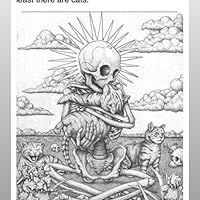
Explores the roots of witchcraft while providing an integrated magical system to serve the modern witch Raven Grimassi is among the pioneering authors of the modern witchcraft renaissance. In What We Knew in the Night , he presents a cohesive and complete system of witchcraft based on traditional sources. The author’s premise is that, beginning in the 1980s, with the rise of modern metaphysical publishing, authors began presenting very personal witchcraft practices. In the process, traditional and formerly well-established practices fell into obscurity, which potentially lead to confusion. What We Knew in the Night uncovers and clarifies those buried gems for a new generation, assembling and integrating key components of witchcraft, past and present. Grimassi lays out key mystical and practical foundations of witchcraft and restores their important role. Sharing lessons and advice from his own almost 50 years of personal study and practice, Grimassi explores what he describes as the “heart of the old rites.” He also offers practical instructions and a clear 5-step process of empowerment―one chapter for each step ―for anyone who wants to walk the path of Having accomplished these steps, the reader will possess the “quintessence of witchery” and be firmly grounded in the arcane art of witchcraft.
Raven Grimassi was an American author of over 20 books, and a scholar of paganism with over 40 years of research and study in the genre of Wicca, Stregheria, witchcraft and neo-paganism.
It's one thing to claim your work is authentic, but when one uses sources of people that didn't do the actual work that's another thing altogether. I was piqued to know about "witchcraft" prior to "eastern influences" and then find many references to Hecate, whom is far from European. The idea is that "Rooted Ways", "Old Ways", etc. is based on the foundation of a secret society rather similar to Free Masonry and early Christanity. The authorities Grimassi cited Doreen Valiente and Gerald Gardner didn't do the work. They had some inspiration by Margaret Murray, but were greatly influenced by Free Masons and occult cults from the 19th century. Occult cults that had nothing whatsoever to do with pre-Christian beliefs Grimassi talked a lot of lores and myths but never explained where these stories came from nor where they were from. Premodern Europe and even Europe of the mid 19th century did not look anything like 20th century Europe. But the fact Gardner wasn't a historian or even looked at history, but a very amateur anthropologist, who didn't even stick with his work (done secretly under the cover of darkness--just as well he didn't stick with it!) rather leaves questions to the crediability of this book. How exactly anyone interested in Grimassi's ideas of Witchery is supposed to find a beech wand, a silver chalice and a skull (no mention as to what kind!), among other items is largely unknown. From the reading and course I took in the Witch hunts the Witch is a community based woman or women (sometimes men) applying her services to the community and she was far from rich to possess a silver chalice! But Grimassi's book witch business is secretive and doesn't work for the community. So the words "what we heard in the late 1960s and 1970s" has no real value than anyone in the 21st century sitting up one day and declaring themselves a witch with western and eastern cultural influenes (more likely appropriation). The first chapter or so was interesting, however, there was no history, no background, just "what I was taught by older people calling themselves witches". None of that made the information/practices authentic or credible. A very strong point is that none of the healers called witches ever called themselves "witches". They knew themselves as community members of their village or town or city. It was only a secret to authority figures who lived outside of the community.
Useful stuff. But all in all dry and full of historic errors. Also the way he discussing women’s bodies, although framed as connected to the goddess, is very dehumanizing.
There are only a handful of author/teachers I would recommend to others, and Raven Grimassi is one of them. This book is a culmination of his decades of research and practice of witchcraft. In this book, Raven shares information learned from his own teachers and others he encountered on his path. Much of the information in the book will not be found in any book of modern witchcraft, as these are truly the old ways, the old magic. Those who demand sources and references will be at a loss, as there are many truths about witchcraft that have never been published, having been directly shared from teacher to student. For example, the mystical connection the witch has to the forest, the moon and the trees. Ignore the negative reviews, this book is a treasure for those who seek to learn the Rooted Ways, the Old Ways of the witch. I will keep this book close at hand and refer to it often. Highly recommended.
It's not a bad book, but there are so many other better books out there that present similar information better. I took a few tips and interesting thoughts away, but I don't think I'd recommend this to anyone as a foundational text.
I found his writing pretty easy to read, but he talks a great deal about the Old or Rooted ways, and it mainly seems to be based on the sorts of witchcraft he encountered in the 60s and 70s. He makes it sound like his way is the only right way to practice and people these days don't respect it. It's very boomer energy. Also, as is common in older witchcraft books his attitude is pretty sexist and there's one spot in particular that I almost put the book.
Concise, accessible, informative, and instructive. A lot of ground is covered in a short length while still including detail and historical context. This is probably equally good as an introduction to Grimassi's books and a wrapping-up final work for those who've already read everything else.
I did not know that Raven Grimassi had recently died until picking this up. I saw one of his talks several years ago, and his writing voice here reflects the gentleness in his actual speaking. If the late beloved Bob Ross had ever done a special on witchcraft, this would basically be it.
Lost me in the Note to the Reader. I was already on the fence about this one because of the sonorous writing style but then you have the author warning the reader not to skip around in the book or they will miss key teachings. Maybe the reader wouldn't need to skip around if the author kept them engaged! Also, why not simply draw attention to the information more clearly then? This attempt to control reader experience put me in mind of the kind of teacher that blames students for his or her own lack of clarity. Just not a good sign.
Honestly has a lot of the same regurgitated info as a lot of other books on the same subject. Not to mention the misinformation and blatant to rewriting of historical fact. Also the content surrounding the bodies of women is just poorly veiled sexualization that you unfortunately encounter in a lot of older books within the community. Multiple other reviewers have said similar things to myself but I wanted to write this as a warning to anyone getting into the. Raft that this book is outdated, wrong and not worth your time or money.
Loved loved loved this book. Raven Grimassi was a true master. I've read about many different traditions, but this one, and the Ash, Birch, and Willow tradition that he founded with his wife, was the first one that really spoke to me as a practitioner. Highly recommend for any witch really wanted to connect to a grounded tradition in the old ways.
Did not enjoy this book, however I powered through to attempt to uncover the knowledge behind the arrogance. I do not like being told what to do as a person or a reader, and did not enjoy being told at the beginning how I should read this book. I tried very hard to regard the sexism as his historical recounting instead of as a personal view, however it became harder and harder to do so.
Really hate to say it but I didn’t enjoy this book as much as I had hoped. There is some interesting tidbits, but I really had to wade through a lot of unnecessary information to get to them. I skimmed the last portion of the book because it seemed like there was a lot of repeat writing going on, making it feel more like a random info dump opposed to a coherent book on witchcraft.
I'm sorry to say I did not like this book, I think it is full of a lot of rubbish, and while it had some very good points and interesting bits of information, I really question a lot of its content. But that's me, I am sure that someone will find it a very worthy read.
I will use some of the practices in this book, but many are simply unattainable to me or anyone else living in a city. It had interesting information but as other reviews have said, was kind of lacking in any sort of solid historical backing which is what I was hoping to learn.
Really nice book. This book is especially great if you are Wiccan or interested in Wiccan ceremony. I loved the chapters on roots, herbs, and plants and how he explains the symbolisms in witchcraft.
Raven Grimassi's last book is a mixed bag of boomer nostalgia, mythic history, speculation, and some interesting—but questionable—beliefs and rituals.
In What We Knew in the Night: Reawakening the Heart of Witchcraft, Grimassi expresses sorrow for losses in contemporary Witchcraft due to increased solitary and self-styled Witchery that forgoes traditional, initiatory forms of Witchcraft. Therefore, Grimassi shares teachings he received in the 1960s and 1970s. These teachings are less about techniques and more about beliefs, ideas, what it all means, and where it comes from. Although he often refers to the lore as "ancient", the result is a mythic history of a diverse assortment of European Witchcraft, along with considerable personal speculation.
I have a great deal of respect for Raven Grimassi and have enjoyed some of his early books. I wanted to like this book, especially since it was his last one. Some of the ideas and poetry in this book are interesting and lovely, but they are not enough to outweigh its nonsense.