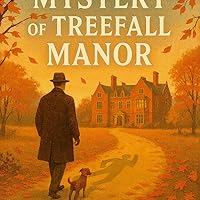
Set between the Wars at an English country house, of course a dead body turns up in the billiard room, and even worse, Lady Considine’s pearls are missing. First in the Anthony Bathurst series.
"Brian Flynn, English author and an accountant in government service, a lecturer in elocution and speech, an amateur actor. He wrote about 50 novels, mostly for the library market. His serial character is Anthony Bathurst." - fantasticfiction.com
A pretty good first mystery from the Golden Age. Brian Flynn was a prolific author but not considered one of the top writers of his time. Was not part of the Detective Club of writers, but nonetheless had considerable success. Here we are introduced to his lead character, the aristocrat Anthony Bathurst and we see him both working with and competing against the local detective to solve not just a murder committed on a billiard table but also the burgling of a certain pearl necklace. In my opinion the book suffers from two things. First, the language is tough. Too many phrases from that 1930's time period and very stiff language. "I will pilot you there." Instead of "I will show you there." The other issue is that many of the small details that led to the eventual outcome were withheld from the reader. There is a reason for that but it still is off-putting. Now I will read another of his books, they do not cost much to buy on Kindle, but this was just an OK book and I am not sure if I want to spend the $ or time on more. Here, however, is hoping for the best!
You'll occasionally see writing advice that you should only use 'said' as a dialogue tag, as 'said' is invisible to readers. I don't think that's quite true, as I remember listening to an audiobook where every single line of dialogue ended 'x said' and, boy, did it stand out.
This book is an excellent example of the hilarity of using a thousand different dialogue tags. Even the infamous 'he ejaculated'. Much fun was had.
The story itself didn't catch me overmuch, beyond me wincing at all the superlatives thrown at the amateur detective. Lots of amateur detectives are super-smart, dashing, charming and all-around fantastic, but this story really noticeably kept telling me that. I ended up disliking him as a result.
Also quite a lot of period language with embedded racism and classism.
Having read one of the later Bathurst stories in paper form and quite enjoyed it, I decided to start reading them in chronological order as they are now available from Kindle at reasonable prices.
This, the first one, I found not so enjoyable. Perhaps the author refined Bathurst as he progressed. I will try another to see. In this one, which I thought was too long, I found Bathurst to be an annoying, smug and conceited know-it-all. It is very difficult to review this story without spoiling so I wont go into any detail other than to say there is a surprising twist at the end. The writing is good but very class conscious with the servants all being forelock-touching dimwits. Quotes like " You surely can't suspect him, he is an officer and a gentleman" are frequent.
A good debut, but the central idea... no spoilers but resembles a better known classic mystery from a couple of years earlier. Still, a fun read. Full review at classicmystery.wordpress.com
This is very easy reading. Were it not for the fact that the central idea is lifted from a genre classic, albeit given a somewhat misleading twist, I might have given a higher rating, especially as it was the author's first.
It is, in addition, a bit too "English public school", "stiff upper lip", "Oxbridge hearty" for my liking. While Anthony Bathurst has none of the silly ass about him, he was rather too much of a smart-aleck for my liking. The criminals are stereotyped, and the women are portrayed as "good chaps".
An interesting GA mystery with parallels to another famous murder mystery written contemporaneously (though no plagiarism!).
Various clues made it clear who the murderer was fairly early in the story, and the motive wasn’t hard to guess. The author valiantly tried to cloud the issue with a jewel theft which took place at the same time as the murder, but it was simply a slight detour on the way to solving the mystery.
I didn’t like the first person narrative, chiefly because it had to be abandoned twice in order for facts to be revealed to the reader - once when the police were conferring and once when the detective explained his methods at the denouement.
The detective himself was young, engaging and charming; he was intellectually sharp but without the arrogance of a Holmes or the minor affectations of a Poirot. The other characters were well drawn too and it was overall a competent and well written mystery.
Could have been a good mystery, but for the overly elaborate praise of Bathurst's talents, and the fact that I guessed the killer halfway through. Am not sure why so many amateur detectives always seem to find it so easy to wangle their way into police investigations. But then there wouldn't be story if they didn't.
2023 bk 10. Brian Flynn is considered one of the contributing authors to the 'Golden Age of mystery authors." A friend challenged me to seek out these authors (besides Christie, Chesterton, Marsh, Allingham) that were not as well known in the states and recommended Brian Flynn as a good one to start with. First of all - the book was a good representative of its time period and the British class system. It did not make fun of the local police as so many of these books did. The author did provide almost all of the clues needed and still managed to pull off a surprise ending - I had my suspicions but had veered in the wrong direction. Well done first mystery.
It's Cricket Week at Considine Manor, which provides us lucky readers with a cast of characters who are nicely assembled in a country house where an unfortunate and confusing murder can now take place. And it's straight into the action. After a chapter of who's who, a body is found in the billiard room with a knife in its neck. Luckily, wannabe sleuth Anthony Bathurst is on hand to aid Inspector Baddeley and to spot the clues the good bobby misses. This book has all the classic tropes and uses them well. There is confusion regarding the crime scene, pieces of evidence that don't make sense, a bit of Sherlockian deduction regarding shoelaces, a nice (if somewhat coincidental) red herring that confuses the murder investigation further. The writing is fine, and it's a reasonably short read. Not 5 stars, but it's a solid, well-plotted mystery and worth any mystery fan's time. There's also a wonderful introduction by Steve Barge who "rediscovered" Brian Flynn and we should all be thankful he did.
This first novel by Brian Flynn is a polished and assured piece of work. An apparently typical country house murder story conceals a neat and satisfying sting in its tail.
Out of print and almost entirely forgotten for many years, Flynn created an engaging and believable amateur sleuth in Anthony Bathurst. Thanks to Dean Street Press his first ten novels are now available again. I'll be reading more of these for sure, and I can imagine this rediscovered writer will pick up a number of new fans.
This is truly an underrated gem, recommended to me by an obscure friend. Written during the Golden Age when Agatha Christie and her gang ruled the roost, it is indeed a sad state of affairs that such a brilliant mystery went unnoticed.
And it is certainly understandable. The puzzle bears a very close resemblance to one of Christie's early works - the one that propelled her to fame. But looks like these two were independently written books. Just that Brian Flynn had a hard time getting his book off the ground (perhaps it was even prior to Christie's magnum opus). Nevertheless, it only makes one wonder what would have happened had this book gotten published earlier.
Coming to the book itself, it is a typical whodunnit. The clues are superbly strewn, the writing a bit clunky, but not necessarily overdone. I liked the setup and the way the characters move around easily. The puzzle is intricate, taut and the best part is that that author does not cheat the reader. It was so good, I went back and looked at chapters where I had completely misread the situation.
In all, a spectacular piece of work that has been mostly overseen because of serendipity. Would now try to finish Anthony Brathurst's canon of murder mysteries.
Published in 1927, this is the first in a series featuring Anthony Bathurst by Brian Flynn. Flynn explained in the introduction that he was inspired to write this after reading a number of mystery novels, which he found uninspiring and determined to do better. I am not sure he succeeded, but this is a reasonable attempt at an opening to a series.
The story is set in Considine Manor in Sussex, home of Sir Charles and Lady Considine and their children - Jack, Mary and their married daughter, Helen and her husband, Captain Arkwright. It is the annual cricket week, so there are a number of visitors - Bill Cunningham, the narrator, Anthony Bathurst, Gerry Prescott, Major Hornby, Lieutenant Barker and three young men - Tennant, Daventry and Robertson. In the morning, Gerry Prescott is found dead, and Lady Considine's pearls are stolen. It is up to Inspector Baddeley, with Bathurst's help, to uncover the truth.
There is little sense of Anthony Bathurst as a person, apart from his love of crime novels and his obvious competence. It is always interesting to read formerly out-of-print Golden Age mysteries and I will try the second in the series and see whether there is more depth in the characters moving forward.
Despite knowing of the author and his super sleuth character, never read one up to now. Bought this on a cheap kindle deal as it was number 1 in the series.
Overall. Thought it was okay. In a lot of ways this felt so typical of what a 1920’s golden age crime novel should be; the detective, the location, crime, suspects, police, twisty plot etc that it almost reads like a pastiche written after the date. Obviously having been written at the time I still wonder if initially readers thought it was a send-up of other authors books or just a on-point/latest trend novel?
The writing style is still readable today nearly a 100 years after publication, the characters felt slightly thin but for some reason not as well drawn as other authors have done, the plot was interesting with enough twists and turns to keep the reader interested. Not sure I would say it was a fair play novel, close perhaps but only if you have read a few mysteries.
A solid entertaining read then, will probably try the next novel at some point in time.
What I've noticed about Golden Age of Crime Mystery's is there is always a new author to discover. I was unaware Brian Flynn until about two weeks ago so I took the chance to read "The Billiard Room Mystery" which introduces criminologist Michael Bathurst. A week of cricket had organised at Considine Manor but on the first night Reg Prescott is found strangled in the billiard room and Lady Considine's necklace has been stolen. Inspector Baddeley is sent to investigate while Bathurst and friend Bill Cunningham are allowed to follow their own line of inquiries. Bathurst and Cunningham are very much influenced by Sherlock Holmes and Dr Watson with the latter acting as the book narrator. Baddeley is not written as the fool but instead allows it Bathurst to offer possible solutions when the Inspector runs up a blind alley. The book is an enjoyable read despite the major surprise when the killer is finally unmasked which I doubt anybody would have seen coming.
Actually four and a half stars. Bill Flynn seems to be an unknown master of detective stories and this book certainly proves it. Some people have a high regard for the author. The Puzzle Doctor is obsessed with him. See the website classicmystery.com. Flynn gives all the clues and a sharp witted reader can deduce who the murderer is. I am not such a reader and the solution hit me between the eyes. This is Flynn’s first book and was available as an e-book. His other books are quite scarce. We can only hope that his other books will soon become available as e-books. The Puzzle Doctor promises that his first ten books will be republished at the end of this year. I only hope they will be e-books too.
Challenge: Cloak & Dagger Christmas (Clue) 2020 - Billiard Room/sport (4, billiards, cricket, golf). Originally published in 1927, this mystery is indicative of the time in that it is heavily plot-driven, contains words that deprecate persons not of the upper class as well as dialog that can be hard to follow due to language usage of the day. There are two crimes in the story; are they connected? After all the suspects are eliminated, who is left? Not all clues are given to the reader, but the villain can be guessed. A bit too dependent on the murderer being motivated by depravity rather than bad character. Probably the author's most famous installment of the Anthony Bathurst mysteries and reflective of some common attitudes of the era.
Fairly good mystery; the writing is not as polished as the more "professional" writers of the time. There are a lot of seemingly unnecessary exclamation points (a lot!), and more commas than seems appropriate (I tripped and stumbled over commas the whole book). If it weren't for the slightly amateurish writing this imaginatively plotted story might have been as famous as the one to which it is frequently compared.
From other reviews, it seems that Flynn's work gets better as the series went on. I'll read more.
I really didn't like this book at all. I read a lot of these golden age mysteries and I didn't like the language in this one, the way it was written, the way they spoke to one another and I really felt like the characters had absolutely no personality. It was way too Bertie Wooster for me but without the laughs. I have read where people say that the next book is better but I can't really see myself coming back to this series again.
I'm going to leave this as not finished and try the next book in the series hoping that the author improved. My problems are with the formal language used that frankly bored me, all the initial references to cricket which I know nothing about (and almost made me put the book down earlier) and my biggest problem, the cast of characters are all what I call anonymous talking heads. No effort was made to describe any of them and they all sound the same and use the same language.
I don’t know why so many reviewers excuse the horrible writing as just being “of it’s time”, when so many incredible authors (Agatha Christie, Thornton Wilder, Virginia Woolf, E. M. Forster, Willa Cather, Arthur Conan Doyle, F. Scott Fitzgerald) were publishing very readable, beautifully written novels in this same time period.
This book suffers from having a similar premise as another, more famous contemporary murder mystery (though we are assured it is just a co-incidence) but to be honest, the premise is handled a little better in this instance. The motive and identity of the killer flows naturally from the events of the book until you feel a twit for not spotting it.
I read a spoiler in another Goodreads review so I knew who the killer was going in. I’m curious if I would have guessed it if I hadn’t known. It seemed like it was being telegraphed pretty heavy handedly but maybe I wouldn’t have picked up on it. I thought the book was well structured and the mystery was well done. The book is a little bit of a downer, mood wise.
This entire review has been hidden because of spoilers.
I started this book a long time ago, or so it seemed, but put it down when I was about halfway through it. So my recollection of the beginning is hazy.
I was caught off guard by the ending. Good explanation for it though.