

What do you think?

Beheld
From the bestselling author of The Wives of Los Alamos comes the riveting story of a stranger’s arrival in the fledgling colony of Plymouth, Massachusetts―and a crime that shakes the divided community to its core.
Ten years after the Mayflower pilgrims arrived on rocky, unfamiliar soil, Plymouth is not the land its residents had imagined. Seemingly established on a dream of religious freedom, in reality the town is led by fervent puritans who prohibit the residents from living, trading, and worshipping as they choose. By the time an unfamiliar ship, bearing new colonists, appears on the horizon one summer morning, Anglican outsiders have had enough.
With gripping, immersive details and exquisite prose, TaraShea Nesbit reframes the story of the pilgrims in the previously unheard voices of two women of very different status and means. She evokes a vivid, ominous Plymouth, populated by famous and unknown characters alike, each with conflicting desires and questionable behavior.
Suspenseful and beautifully wrought, Beheld is about a murder and a trial, and the motivations―personal and political―that cause people to act in unsavory ways. It is also an intimate portrait of love, motherhood, and friendship that asks: Whose stories get told over time, who gets believed―and subsequently, who gets punished?
Ten years after the Mayflower pilgrims arrived on rocky, unfamiliar soil, Plymouth is not the land its residents had imagined. Seemingly established on a dream of religious freedom, in reality the town is led by fervent puritans who prohibit the residents from living, trading, and worshipping as they choose. By the time an unfamiliar ship, bearing new colonists, appears on the horizon one summer morning, Anglican outsiders have had enough.
With gripping, immersive details and exquisite prose, TaraShea Nesbit reframes the story of the pilgrims in the previously unheard voices of two women of very different status and means. She evokes a vivid, ominous Plymouth, populated by famous and unknown characters alike, each with conflicting desires and questionable behavior.
Suspenseful and beautifully wrought, Beheld is about a murder and a trial, and the motivations―personal and political―that cause people to act in unsavory ways. It is also an intimate portrait of love, motherhood, and friendship that asks: Whose stories get told over time, who gets believed―and subsequently, who gets punished?
288 pages, Hardcover
First published March 17, 2020
About the author
TaraShea Nesbit
4 books292 followersTaraShea Nesbit is the author of THE WIVES OF LOS ALAMOS and BEHELD. Her nonfiction, fiction, and critical essays have appeared in Granta, The Guardian, Salon, Fourth Genre, The Los Angeles Review of Books, and elsewhere. She is an associate professor at Miami University and lives in Cincinnati with her family.
Ratings & Reviews
Friends & Following
Create a free account to discover what your friends think of this book!
Community Reviews
Displaying 1 - 30 of 869 reviews

May 9, 2020
I believe this was my first HF on the early years of the colony established at Plymouth. I thoroughly enjoyed reading this novel as the characters are well-developed, there is tension between the settlers, there is a portrayal of the relations with the Native Americans and a tragic development. I would recommend 'Beheld' to all fans of historical fiction who look for a solid read.

February 21, 2020
It has been ten years since the first pilgrims arrived on the Mayflower and formed a colony. William Bradford is the governor and Miles Standish, the muscle. Had to laugh as Standish is referred to in this book as , "the shrimp." Small in stature but full of himself. The colony did not contain all Puritans, though they were the leading authority. There were also indentured servants, who by now had worked out their years of servivutude and were promised equality. Needless to say, this was not the way it happened, they were still seen as lesser and treated so. This would create bitterness and hard feelings, one that would be the impetus of America's first murder.
Of course that isn't actually true if one considers the slaughter of the Native Americans.
What sets this book apart from others written about this time period, is that the author gives us the viewpoint of the women. In alternating chapters we hear from Alice, the governors wife, and Eleanor, the wife of the accused. We learn their backstories and how they feel about events as they are happening. Considered lesser, their power is limited, but their workload heavy. Hypocrisy alongside fervent belief, is the rule of the colony or at least how it was perceived by some. Regardless, this wasn't a happy little place, rather a place where much was happening beneath the surface. Although a murder is committed, which is historical fact, this is not a mystery and has few graphic scenes.
The characters are vibrantly portrayed and the story of our country's beginning an engrossing one.
ARC from Netgalley and Edelweiss.
Of course that isn't actually true if one considers the slaughter of the Native Americans.
What sets this book apart from others written about this time period, is that the author gives us the viewpoint of the women. In alternating chapters we hear from Alice, the governors wife, and Eleanor, the wife of the accused. We learn their backstories and how they feel about events as they are happening. Considered lesser, their power is limited, but their workload heavy. Hypocrisy alongside fervent belief, is the rule of the colony or at least how it was perceived by some. Regardless, this wasn't a happy little place, rather a place where much was happening beneath the surface. Although a murder is committed, which is historical fact, this is not a mystery and has few graphic scenes.
The characters are vibrantly portrayed and the story of our country's beginning an engrossing one.
ARC from Netgalley and Edelweiss.

November 1, 2019
"We thought ourselves a murderless colony. In God's good favor, we created a place on a hill, overlooking the sea, in the direction from which we came." Ten years later, in 1630, the community of Plymouth, Massachusetts experienced its first murder.
A contingent of Puritans had left England to reside in Leiden, Holland. The Dutch allowed them to "worship without hindrance", however, worshipers were embracing a "Dutchness", learning the Dutch language and customs. In addition, there was fear that the Spanish might attack Holland. A ship called "Speedwell" was commissioned to transport these Puritans to Southampton, England to meet up with other Puritans sailing from England aboard the Mayflower. "Speedwell" had frequent leaks and was deemed unsuitable for a long sea voyage. The Mayflower was required to transport the "Speedwell" travelers as well. A miserable journey ensued. The Mayflower was overcrowded and food was in short supply.
Who were the passengers? Although Puritans intended to create a community of believers and "purify" practices of the Church of England, the voyagers included Anglican indentured servants. Told from a woman's perspective, the unrest, resentment, and hypocrisy between Puritan elders and indentured servants is revealed. Strained relations intensified aboard the Mayflower. The Puritans were forced to accept non-religious passengers to help fund the voyage. John Billington, an indentured servant and wife Eleanor, were sitting in a central location on the ship. When affluent William Bradford boarded the overcrowded Mayflower, he demanded that Billington move his family from the ship's center. During a storm, water was likely to cascade over the side. Billington's response to Bradford was, "Perhaps you should go back to Holland. Perhaps God does not want you to see the New World." Ten years have passed. It is now 1630.
According to Alice Bradford, "of all the regrets William had about negotiations with the investors, at the top of his list was that John Billington was allowed to sign up as an indentured servant, bring his family, and board the Mayflower...[Governor Bradford] considered Billington to be...the elder of the most profane family..." "Since I became the governor's wife the women told me less. 'I was the earpiece to authority.' "
Eleanor Billington reported, "we agreed to seven years of labor with respectable, ordinary British people. We agreed to seven years of servitude in Virginia, not Plymouth...my kind, my common kind, we are never given what we are promised...It made our men sour..." "Plymouth was the England that John Billington tried to escape...Instead of King James, there was Governor Bradford and his hired soldier, Myles Standish." Billington composed a letter and sent it to the colony investors complaining of ill treatment. Alice stated, "Quick to see threat and quick to act upon it. I did not doubt my husband was godly...[but] when a man betrayed him, he did not forget...".
"Beheld" by TaraShea Nesbit is a well researched, captivating work of historical fiction, a window into the lives of the women as well as the men who settled Plymouth colony. Plymouth was advertised as "fertile and abundant" land. The colony touted its years of experience. New settlers arrived seeking freedom from repression, escape from criminal convictions, inexpensive land or exciting new adventure. Plymouth and the surrounding colonies started to become more open to "strangers". Author Nesbit's novel is an awesome read that I highly recommend.
Thank you Bloomsbury Publishing and Net Galley for the opportunity to read and review "Beheld".
A contingent of Puritans had left England to reside in Leiden, Holland. The Dutch allowed them to "worship without hindrance", however, worshipers were embracing a "Dutchness", learning the Dutch language and customs. In addition, there was fear that the Spanish might attack Holland. A ship called "Speedwell" was commissioned to transport these Puritans to Southampton, England to meet up with other Puritans sailing from England aboard the Mayflower. "Speedwell" had frequent leaks and was deemed unsuitable for a long sea voyage. The Mayflower was required to transport the "Speedwell" travelers as well. A miserable journey ensued. The Mayflower was overcrowded and food was in short supply.
Who were the passengers? Although Puritans intended to create a community of believers and "purify" practices of the Church of England, the voyagers included Anglican indentured servants. Told from a woman's perspective, the unrest, resentment, and hypocrisy between Puritan elders and indentured servants is revealed. Strained relations intensified aboard the Mayflower. The Puritans were forced to accept non-religious passengers to help fund the voyage. John Billington, an indentured servant and wife Eleanor, were sitting in a central location on the ship. When affluent William Bradford boarded the overcrowded Mayflower, he demanded that Billington move his family from the ship's center. During a storm, water was likely to cascade over the side. Billington's response to Bradford was, "Perhaps you should go back to Holland. Perhaps God does not want you to see the New World." Ten years have passed. It is now 1630.
According to Alice Bradford, "of all the regrets William had about negotiations with the investors, at the top of his list was that John Billington was allowed to sign up as an indentured servant, bring his family, and board the Mayflower...[Governor Bradford] considered Billington to be...the elder of the most profane family..." "Since I became the governor's wife the women told me less. 'I was the earpiece to authority.' "
Eleanor Billington reported, "we agreed to seven years of labor with respectable, ordinary British people. We agreed to seven years of servitude in Virginia, not Plymouth...my kind, my common kind, we are never given what we are promised...It made our men sour..." "Plymouth was the England that John Billington tried to escape...Instead of King James, there was Governor Bradford and his hired soldier, Myles Standish." Billington composed a letter and sent it to the colony investors complaining of ill treatment. Alice stated, "Quick to see threat and quick to act upon it. I did not doubt my husband was godly...[but] when a man betrayed him, he did not forget...".
"Beheld" by TaraShea Nesbit is a well researched, captivating work of historical fiction, a window into the lives of the women as well as the men who settled Plymouth colony. Plymouth was advertised as "fertile and abundant" land. The colony touted its years of experience. New settlers arrived seeking freedom from repression, escape from criminal convictions, inexpensive land or exciting new adventure. Plymouth and the surrounding colonies started to become more open to "strangers". Author Nesbit's novel is an awesome read that I highly recommend.
Thank you Bloomsbury Publishing and Net Galley for the opportunity to read and review "Beheld".

March 15, 2020
Beheld is not a feel good book. In this historical fiction taking place ten years after the first Pilgrims arrived at Plymouth, things are tense, inhospitable and not at all what they had hoped for when they left their former countries for a new land, full of promise, hope, and imagined glories. Those who left their countries for religious freedom are all too happy to impose their beliefs on everyone else. The indentured servants that they needed to even have a chance of surviving in the new world have never been allowed to rise up from their lowly levels. Class segregation is at its worst. Some of the new leadership is only too happy to murder innocent people, in the name of whatever rules they have made up. Some of the friendly, helpful Indians have been slaughtered to show the rest of them who is in control. Food, all provisions, are scarce and even though the existing Pilgrims in the new country need more people to come to their world to get much needed supplies and financing, they also fear that the new people will be those who are "not them". They fear being outnumbered by those with beliefs different from their own.
The story is told from several different perspectives. Alice and Eleanor play the biggest parts in telling their story although Nature even gets a turn to show who is really running the show. In nature, there are peaceful scenes that can then be shattered by animals not only attacking other animals for food, but also wolves attacking their own weaker kin. This is also reflected in how the humans treat each other, tearing down those who are already down, not allowing them to even get a foothold or feeling of security. Staying on top by keeping everyone else under one's foot.
One of the most sympathetic characters is a young man who is murdered by a former indentured servant, whose anger has reached its limit, as the former servant is cheated and held down by those who hold all the cards in this game of life. There are also young children who have been sold as slaves by their father, because he no longer wants to care for them. All the indentured servants are at the mercy of their owners and there are Godly men who do unmentionable things behind closed doors. A young woman who is raped by her owner's brother is killed for getting pregnant. Nothing is fair in this life, cruelty is badly disguised as justice.
Thank you to Bloomsbury Publishing/Macmillan and Edelweiss for this ARC.
The story is told from several different perspectives. Alice and Eleanor play the biggest parts in telling their story although Nature even gets a turn to show who is really running the show. In nature, there are peaceful scenes that can then be shattered by animals not only attacking other animals for food, but also wolves attacking their own weaker kin. This is also reflected in how the humans treat each other, tearing down those who are already down, not allowing them to even get a foothold or feeling of security. Staying on top by keeping everyone else under one's foot.
One of the most sympathetic characters is a young man who is murdered by a former indentured servant, whose anger has reached its limit, as the former servant is cheated and held down by those who hold all the cards in this game of life. There are also young children who have been sold as slaves by their father, because he no longer wants to care for them. All the indentured servants are at the mercy of their owners and there are Godly men who do unmentionable things behind closed doors. A young woman who is raped by her owner's brother is killed for getting pregnant. Nothing is fair in this life, cruelty is badly disguised as justice.
Thank you to Bloomsbury Publishing/Macmillan and Edelweiss for this ARC.

March 25, 2020
Tbh don’t know how they got Helen Simonson to blurb on the front cover. Her quote was “Riveting” ...This was a boring ass book.
I was expecting MURDER and INTRIGUE and WAILING and GNASHING OF TEETH because that was how it was marketed. And instead I got “blah blah blah backstory backstory some feelings that could have been exciting (but were written in a very unexciting manner) from everyone, especially Alice Bradford, more backstory Alice Bradford Alice Bradford, jesus we’re really obsessed with Alice Bradford aren’t we, blah blah a rape of an indentured servant girl we haven’t heard of prior just randomly inserted into the narrative? (Smells like trauma porn), blah blah more backstory that doesn’t *really* pertain to the murder, omg the murder’s gonna happen finally we’re 3/4 into the book, very blah murder (aka weak explanation for why the murder was committed because we didn’t get enough backstory on the murderer or the person murdered because we’re really focused in on Alice Bradford for some reason!?), very blah trial, an unemotional hanging, cruelty cruelty trauma porn involving breasts/whipping/public humiliation, end of book (but not before we talk more about Alice Bradford because clearly I care about every little detail in her will before she dies)”
There you go. If you read my summary here, you’ve basically read the whole book. I mean, apologies to Nesbit, but this was just not my thing. And murder mysteries are very much my thing...so.
I was expecting MURDER and INTRIGUE and WAILING and GNASHING OF TEETH because that was how it was marketed. And instead I got “blah blah blah backstory backstory some feelings that could have been exciting (but were written in a very unexciting manner) from everyone, especially Alice Bradford, more backstory Alice Bradford Alice Bradford, jesus we’re really obsessed with Alice Bradford aren’t we, blah blah a rape of an indentured servant girl we haven’t heard of prior just randomly inserted into the narrative? (Smells like trauma porn), blah blah more backstory that doesn’t *really* pertain to the murder, omg the murder’s gonna happen finally we’re 3/4 into the book, very blah murder (aka weak explanation for why the murder was committed because we didn’t get enough backstory on the murderer or the person murdered because we’re really focused in on Alice Bradford for some reason!?), very blah trial, an unemotional hanging, cruelty cruelty trauma porn involving breasts/whipping/public humiliation, end of book (but not before we talk more about Alice Bradford because clearly I care about every little detail in her will before she dies)”
There you go. If you read my summary here, you’ve basically read the whole book. I mean, apologies to Nesbit, but this was just not my thing. And murder mysteries are very much my thing...so.

April 2, 2020
Drink every time the author says “betwixt”

November 11, 2019
This story sheds light on struggles of the first pilgrims, who weren’t just Puritans. And not the struggles pertaining to their survival, but the struggles within their community – non-Puritans living with Puritans.
Plymouth is the first colony in New England, where a group of Puritans and non-Puritans arrive from England making it their new home in 1620.
Now, 10 years later, it seems that a friction between religious Puritans and not so religious Anglicans – as they are seen in the eyes of Puritans – wasn’t left in England, but rather transported to New England.
As divided as they already are, a murder in the colony separates them even more.
John Billington despises godly Puritans, calling them hypocrites as they call the Indians idle. But it was the Indians who helped Puritans to survive the first years on unknown sandy soil. He is a commoner who has been treated with deference from the moment he stepped from the Mayflower ship. Puritans who see God everywhere, treat another man as he is worth something less. How he hates those hypocrites. He complains to investors about ill-treatment, which puts even a bigger friction between him and the governor, William Bradford.
Alice Bradford, governor’s wife, says “To be a successful colony, to pay off our debts, to be free of England, we needed a good reputation.” And John Billington certainly isn’t bringing them the much needed good reputation.
Eleanor Billington says “So when those hypocrites looked their cherubic faces my way and claimed themselves to be the saints and I, a stranger to God? Ho, ho, I said to them. They were as flimsy in mind and spirit as saplings.”
Newcomen is Billingtons’ new neighbor, whose acreage seems to be overlapping with Billingtons’. A conflict begins.
What an incredible cast of characters. Enjoyed their versions of the story from the moment they opened their mouths. But Eleanor just tops them all with her garlicked breath, “I preferred my breath to be nice and garlicked, keeping away the illnesses those dour ones kept giving us.” And if you asked her who the governor of New Plymouth was? She’d tell you Captain Shrimp. “I put on my proper voice for the occasion of insulting him.” Loved her sharp tongue.
The story presents interesting details of how colony functioned, for example, how land was distributed and in some situations how reconsiderations needed to be made – meant only for certain people. How trading with Indians needed approval from the Puritan leaders. And “Who traded with the Indians? Those who did the approving.”
The story also grippingly reveals the missions of Mayflower and Speedwell. The latter failing to even leave the port.
Originally written story, with vividly portrayed characters, takes a reader on an eye opening journey. Journey of the Mayflower travelers, who weren’t strictly Puritans – looking for religious freedom. But people from different backgrounds coming to the new colony for different reasons – “indentured servants who signed up out of various necessities, craftsmen hired to assist in the physical creation of the colony, adventurers looking for economic gain…”
Source: ARC was provided by the publisher via Netgalley in exchange for an honest review.
Plymouth is the first colony in New England, where a group of Puritans and non-Puritans arrive from England making it their new home in 1620.
Now, 10 years later, it seems that a friction between religious Puritans and not so religious Anglicans – as they are seen in the eyes of Puritans – wasn’t left in England, but rather transported to New England.
As divided as they already are, a murder in the colony separates them even more.
John Billington despises godly Puritans, calling them hypocrites as they call the Indians idle. But it was the Indians who helped Puritans to survive the first years on unknown sandy soil. He is a commoner who has been treated with deference from the moment he stepped from the Mayflower ship. Puritans who see God everywhere, treat another man as he is worth something less. How he hates those hypocrites. He complains to investors about ill-treatment, which puts even a bigger friction between him and the governor, William Bradford.
Alice Bradford, governor’s wife, says “To be a successful colony, to pay off our debts, to be free of England, we needed a good reputation.” And John Billington certainly isn’t bringing them the much needed good reputation.
Eleanor Billington says “So when those hypocrites looked their cherubic faces my way and claimed themselves to be the saints and I, a stranger to God? Ho, ho, I said to them. They were as flimsy in mind and spirit as saplings.”
Newcomen is Billingtons’ new neighbor, whose acreage seems to be overlapping with Billingtons’. A conflict begins.
What an incredible cast of characters. Enjoyed their versions of the story from the moment they opened their mouths. But Eleanor just tops them all with her garlicked breath, “I preferred my breath to be nice and garlicked, keeping away the illnesses those dour ones kept giving us.” And if you asked her who the governor of New Plymouth was? She’d tell you Captain Shrimp. “I put on my proper voice for the occasion of insulting him.” Loved her sharp tongue.
The story presents interesting details of how colony functioned, for example, how land was distributed and in some situations how reconsiderations needed to be made – meant only for certain people. How trading with Indians needed approval from the Puritan leaders. And “Who traded with the Indians? Those who did the approving.”
The story also grippingly reveals the missions of Mayflower and Speedwell. The latter failing to even leave the port.
Originally written story, with vividly portrayed characters, takes a reader on an eye opening journey. Journey of the Mayflower travelers, who weren’t strictly Puritans – looking for religious freedom. But people from different backgrounds coming to the new colony for different reasons – “indentured servants who signed up out of various necessities, craftsmen hired to assist in the physical creation of the colony, adventurers looking for economic gain…”
Source: ARC was provided by the publisher via Netgalley in exchange for an honest review.

March 3, 2020
This was not quite what I was expecting. I knew when I began reading that the story was set in Plymouth, just a few years after the Puritans arrived on the Mayflower. The hardships of the times and the journey on the Mayflower were an important part of the story. I was captivated by the details of the times and how their beliefs influenced their decisions.
Told from two very different points of view, readers will see how the colony became full of conflict, how they often misunderstood each other and how often times they did not live up to their religious beliefs.
When a man is murdered, a trial is held. Of course, the results are no surprise, but neither was the murder. This is definitely a story that portrays how wealth and status can influence a community and how those who voice their grievances are often portrayed as the troublemakers. I was expecting a bit more mystery surrounding the murder, but instead I found it very predictable.
Many thanks to NetGalley and Bloomsbury Publishing for allowing me to read an advance copy and give my honest review.
Told from two very different points of view, readers will see how the colony became full of conflict, how they often misunderstood each other and how often times they did not live up to their religious beliefs.
When a man is murdered, a trial is held. Of course, the results are no surprise, but neither was the murder. This is definitely a story that portrays how wealth and status can influence a community and how those who voice their grievances are often portrayed as the troublemakers. I was expecting a bit more mystery surrounding the murder, but instead I found it very predictable.
Many thanks to NetGalley and Bloomsbury Publishing for allowing me to read an advance copy and give my honest review.

November 10, 2019
Because of, you know, life, I had to put Beheld down several times while I was reading and then return a few days or a week later. With many books, this would lessen the enjoyment, but with Beheld the effect was the opposite. Beheld stayed with me through each of those breaks. I kept turning characters and events over in my head, considering what I knew about the historical period (it's set in Plymouth Colony) and Nesbit's thoughtful, multi-angled examination of it.
Nesbit is the author of Wives of Los Alamos, in which the narrator is a collective "we" made up of women whose husbands are working at Los Alamos while the atomic bomb is being invented. This time around, Nesbit explores the first recorded murder in Plymouth Colony, and does so through multiple narrators—various colonists, Dorothy Bradford (who drowned in the harbor where pilgrims were about to disembark and enter the "new world"), and Nature herself. The relationships among these characters are complex, so Nesbit isn't just telling us a single story from multiple perspectives. Instead, we come to understand the complicated tapestry holding all these lives together in a variety of ways in the vulnerable, tension-riddled colony.
One key source of tension in Plymouth is the different status and faiths of the various colonists. In school, Plymouth is depicted as homogenous: a group with a shared religion and values committed to a single cause. In fact, the colony was founded not just by Puritans, but also by a number of individuals of other Christian demominations who came as indentured servants and were promised "membership" in the colony after they'd served their seven years' indenture. Tensions roil below the surface between the Puritans who see themselves as the "real" colonists and the formerly indentured who feel marginalized and ill-treated.
This mix of lives and tension makes for fascinating reading. Beheld is a book you'll want to read—and share with friends so you can mull over its many aspects together.
I received a free electronic review copy of this book via NetGalley and the publisher. The opinions are my own.
Nesbit is the author of Wives of Los Alamos, in which the narrator is a collective "we" made up of women whose husbands are working at Los Alamos while the atomic bomb is being invented. This time around, Nesbit explores the first recorded murder in Plymouth Colony, and does so through multiple narrators—various colonists, Dorothy Bradford (who drowned in the harbor where pilgrims were about to disembark and enter the "new world"), and Nature herself. The relationships among these characters are complex, so Nesbit isn't just telling us a single story from multiple perspectives. Instead, we come to understand the complicated tapestry holding all these lives together in a variety of ways in the vulnerable, tension-riddled colony.
One key source of tension in Plymouth is the different status and faiths of the various colonists. In school, Plymouth is depicted as homogenous: a group with a shared religion and values committed to a single cause. In fact, the colony was founded not just by Puritans, but also by a number of individuals of other Christian demominations who came as indentured servants and were promised "membership" in the colony after they'd served their seven years' indenture. Tensions roil below the surface between the Puritans who see themselves as the "real" colonists and the formerly indentured who feel marginalized and ill-treated.
This mix of lives and tension makes for fascinating reading. Beheld is a book you'll want to read—and share with friends so you can mull over its many aspects together.
I received a free electronic review copy of this book via NetGalley and the publisher. The opinions are my own.

January 20, 2020
I generally say that I do not care much for Historical Fiction. And yet, going through what I've read recently, there is an awful lot of Historical Fiction in it. I am coming to realize that it can be one of my favorite genres if it has one primary concern: to present a fuller picture of history. If your novel is just there to play in a different era, it does not pique my interest. But if your book wants to reexamine how we consider a time and place, the stories that are not included in our popular narratives, and do more than say "it was a different time," then I am all in.
BEHELD is one of these books. It is about the Plymouth colony, as big a part of the American narrative as any in history. When you grow up in the United States you learn about the pilgrims and the puritans and religious freedom. Sometimes you get a little bit about indentured servitude or relations between the settlers and the indigenous people whose lands they took. (Though I have yet to see a textbook that calls it stealing.) You also will not hear much at all about women, though they were just as much a part of building the colonies as men. Nesbit notes at the end of the book that she started thinking about this story when reading the narratives of the time and wondering where all the women were.
Thus our primary narrators here are Alice Bradford, wife of the governor, and Eleanor Billington, wife of an indentured man who is not a puritan. We sometimes follow men as well, but it's the women who have the first person narratives here, men only ever get third person. There is tension in the colony. Factions are starting to form. There are investors to repay. More people are necessary for the colony's survival, but more people mean less puritans, making their governance more difficult. The husbands of Alice and Eleanor hate each other and it's clear from the first page that something is about to go very badly.
Alice gets more of our time, as she is responsible not only for her own story but also for the story of her dear friend who was also the governor's first wife. Her story of coming to Plymouth is not the one you are used to hearing, it is not all about heroes and religion. It is about pain and loss and misery and struggle. It is a shame we don't get more time with Eleanor, who is smart and loyal and coarse and whose voice is even less common in these narratives than Alice's.
This is a historical crime novel at its heart, we know a crime is coming, we have an idea of who will be involved, but we have to wait to see what will happen and what will follow. The prose in this time period can be a little hard, but the suspense kept me turning pages so quickly I read this in just a day and enjoyed it very much.
BEHELD is one of these books. It is about the Plymouth colony, as big a part of the American narrative as any in history. When you grow up in the United States you learn about the pilgrims and the puritans and religious freedom. Sometimes you get a little bit about indentured servitude or relations between the settlers and the indigenous people whose lands they took. (Though I have yet to see a textbook that calls it stealing.) You also will not hear much at all about women, though they were just as much a part of building the colonies as men. Nesbit notes at the end of the book that she started thinking about this story when reading the narratives of the time and wondering where all the women were.
Thus our primary narrators here are Alice Bradford, wife of the governor, and Eleanor Billington, wife of an indentured man who is not a puritan. We sometimes follow men as well, but it's the women who have the first person narratives here, men only ever get third person. There is tension in the colony. Factions are starting to form. There are investors to repay. More people are necessary for the colony's survival, but more people mean less puritans, making their governance more difficult. The husbands of Alice and Eleanor hate each other and it's clear from the first page that something is about to go very badly.
Alice gets more of our time, as she is responsible not only for her own story but also for the story of her dear friend who was also the governor's first wife. Her story of coming to Plymouth is not the one you are used to hearing, it is not all about heroes and religion. It is about pain and loss and misery and struggle. It is a shame we don't get more time with Eleanor, who is smart and loyal and coarse and whose voice is even less common in these narratives than Alice's.
This is a historical crime novel at its heart, we know a crime is coming, we have an idea of who will be involved, but we have to wait to see what will happen and what will follow. The prose in this time period can be a little hard, but the suspense kept me turning pages so quickly I read this in just a day and enjoyed it very much.

September 5, 2020
It's been ten years since the Mayflower landed in Plymouth and life is not as expected for many. For those seeking religious freedom, the Puritans have established their own strict guidelines of propriety. Many who came as indentured servants are now looking to receive the land promised for their years of service. The prospect of freedom, equality and prosperity has been a grave disappointment as they work the rocky soil. As a ship carrying new residents approaches, tensions are running high between those in power and those who serve, leading to a murder, a trial and a hanging.
Told through the voices of the women in the village, the story offers a different perspective of life in early America.
Based on historic figures, an intriguing insight into our Colonial settlers.
3.5 stars rounded up 4.
Told through the voices of the women in the village, the story offers a different perspective of life in early America.
Based on historic figures, an intriguing insight into our Colonial settlers.
3.5 stars rounded up 4.

January 30, 2021
This is well-written (I breezed through it quickly) but left me with a ‘meh’ feeling. A lot of repeated foreshadowing of the event (ok ok I realize that someone is going to be killed) and repeated themes made my sympathy and interest wane. Also - were pilgrim women really getting so much oral sex that it was mentioned in 2 different couples? I mean I’d love to think so but seems wishful writing, an out-of-place modern (feminist?) take on the sex lives of Puritans.

November 24, 2019
I was very hopeful for this book given its subject matter. I was encouraged by the writing early on, such as:
“We were divided, as we had been from the beginning—half of the colonists were congregants striving to live as God intended. And the other half? Well, they were why we took care to mend the fences.”
However as the book unfolds too many of the characters lack true complexity. In addition, you know from the beginning what’s going to happen, and when it does, everything is exactly as you’d expect. There’s just not enough here to leave me feeling anything strongly, and to me, that’s a sadly missed opportunity.
“We were divided, as we had been from the beginning—half of the colonists were congregants striving to live as God intended. And the other half? Well, they were why we took care to mend the fences.”
However as the book unfolds too many of the characters lack true complexity. In addition, you know from the beginning what’s going to happen, and when it does, everything is exactly as you’d expect. There’s just not enough here to leave me feeling anything strongly, and to me, that’s a sadly missed opportunity.

June 13, 2021
My time betwixt starting this book and ending it was wasted.

August 23, 2020
I do love historical fiction and am an aficionado of Puritan times. This book felt reasonably authentic and well-researched, though not delving deep into the complexities of the Puritan faith and mindset (especially around land, leadership, and native Americans). But mostly, I didn't enjoy this book because of two factors. First, the author ends almost ever chapter with a little tip to what will, inevitably, happen ("If only I'd known what would happen that evening..." or "And yet, the day would hold more sorrow..."). This is a cheap way to create tension and an artificial construct. Who is the character talking to? Second, the novel focuses on women as (some of) the central characters and tries to "give voice" to women in an abstract way (two chapters that are written from pov of "nature" and an anonymous woman servant). The women, though, remain absolutely constrained, passive, controlled, subservient, meek. All of them. I imagine that many Puritan women and servants in that world had to do such. But it isn't a very compelling novel to "give voice" to women and then just have them submit to men.

October 30, 2019
Personally, this book was a dud for me. I was really excited about a historical murder mystery type book, as the description alluded too. Unfortunately, the first 3rd of the book was long, drawn out, and not much happened. I know that we were building character background, but I felt like 2-3 things happened in 35% of the book. However, the writing of the book and the historical setting was well done. If you are someone who enjoys a slower paced book, this book would most likely be an enjoyable read!

July 26, 2019
The fastest way to get me interested in a historical story is to say that it's about a well-known topic from the perspective of people who have largely been written out of the history books.
In this case the story of the Pilgrims is told through the perspective of the women and the Anglican former indentured servants ten years after the Mayflower landed in Plymouth, and it focuses on the time leading up to the community's first murder.
The writing and ideas really hooked me and kept me engaged throughout, which is really saying something since I've struggled to get into any of the books I've picked up over the last couple of weeks. My one criticism might be that the author uses aphorisms a little too liberally, but that's only a minor quibble.
Overall it was pretty fascinating to see this story from the vastly different perspectives of the ruling Puritans and the former servants who feel wronged and hemmed in by their self righteous piety. You really get a strong sense of each side's bitterness, resentment, hypocrisy, and self centeredness.
I was on guard as I read to see how Indigenous folks would be portrayed, but the scope of the book is very narrow and it doesn't look heavily at the Europeans' interactions with them. I do think that this aspect of the book was done pretty well, though, particularly because the Pilgrims were definitely not painted in a positive light (the whole time I was just mentally going "fuuuuuuuuck the Puritans").
Another thing that I appreciated was how the characters feel very of their time/place, but at the same time still feel somehow very relatable, like on an a basic human nature sort of level. For example:
"We were trying to be in God's good favor, and whatever was fashionable was lowly and earthly. Beauty was a vanity, an earthly vanity, which is why the royalty spent their time upon it. That was not us, I kept telling myself, but privately I believed it was far easier to be less vain when you were beautiful".
"He spoke loud enough for his wife to register the grumbling, but not loud enough to elevate his annoyance into an argument, as is common with husbands."
Overall I really found this to be fascinating and super readable. Would recommend to anyone who would like to read things from this time period without having an absolute aneurysm over racist/sexist/classiest/xenophobic shit (I mean it's there, of course, but it's not held up as good or natural in any way).
In this case the story of the Pilgrims is told through the perspective of the women and the Anglican former indentured servants ten years after the Mayflower landed in Plymouth, and it focuses on the time leading up to the community's first murder.
The writing and ideas really hooked me and kept me engaged throughout, which is really saying something since I've struggled to get into any of the books I've picked up over the last couple of weeks. My one criticism might be that the author uses aphorisms a little too liberally, but that's only a minor quibble.
Overall it was pretty fascinating to see this story from the vastly different perspectives of the ruling Puritans and the former servants who feel wronged and hemmed in by their self righteous piety. You really get a strong sense of each side's bitterness, resentment, hypocrisy, and self centeredness.
I was on guard as I read to see how Indigenous folks would be portrayed, but the scope of the book is very narrow and it doesn't look heavily at the Europeans' interactions with them. I do think that this aspect of the book was done pretty well, though, particularly because the Pilgrims were definitely not painted in a positive light (the whole time I was just mentally going "fuuuuuuuuck the Puritans").
Another thing that I appreciated was how the characters feel very of their time/place, but at the same time still feel somehow very relatable, like on an a basic human nature sort of level. For example:
"We were trying to be in God's good favor, and whatever was fashionable was lowly and earthly. Beauty was a vanity, an earthly vanity, which is why the royalty spent their time upon it. That was not us, I kept telling myself, but privately I believed it was far easier to be less vain when you were beautiful".
"He spoke loud enough for his wife to register the grumbling, but not loud enough to elevate his annoyance into an argument, as is common with husbands."
Overall I really found this to be fascinating and super readable. Would recommend to anyone who would like to read things from this time period without having an absolute aneurysm over racist/sexist/classiest/xenophobic shit (I mean it's there, of course, but it's not held up as good or natural in any way).
September 26, 2022
Rating: 2.7 / 5
This is one of those books that tries to be deep. You know the kind I mean: the kind where the writing is superb, the character development complex, and the emotions and motivations are intense and well-described?
But, unfortunately, it's ALSO the kind of book that gets lost in the details and somewhere along the way loses what was meant to be the plot.
Over 50% of the way through--at around page 150 or so, which is when Part One ends and Part Two begins--and we're still in the setup phase of things. I mean, it's beautiful and intriguing historical setup, but it's still just setup. That murder that's supposed to happen, as explained on the summary on the back of the book?
Yeah, it hasn't happened yet.
Unfortunately, most readers have stopped caring by this point and will therefore DNF this book.
I'm sorry to say, but readers need more of a payoff before reaching this point if you want them to read your book from start to finish. If there's no payoff and just build-up, readers will feel cheated, or like they're expected to pull the weight of the story by "connecting" with the characters more than the text warrants for.
Additionally, there's something a little "off" with Nesbit's writing, though I'm not exactly sure what. It could be that she's trying but not succeeding with achieving a certain narrative-historical voice, or it could be that here characters aren't the most interesting and not everything about them is explained clearly, but...
I don't know, it's just off. But, because I haven't decided whether I like it or not, I'm not taking off any additional stars for it.
Instead, I'm just taking this book with a grain of salt, and that's what I recommend that others do as well. Just...take it for what it is.
Whatever that may be.
This is one of those books that tries to be deep. You know the kind I mean: the kind where the writing is superb, the character development complex, and the emotions and motivations are intense and well-described?
But, unfortunately, it's ALSO the kind of book that gets lost in the details and somewhere along the way loses what was meant to be the plot.
Over 50% of the way through--at around page 150 or so, which is when Part One ends and Part Two begins--and we're still in the setup phase of things. I mean, it's beautiful and intriguing historical setup, but it's still just setup. That murder that's supposed to happen, as explained on the summary on the back of the book?
Yeah, it hasn't happened yet.
Unfortunately, most readers have stopped caring by this point and will therefore DNF this book.
I'm sorry to say, but readers need more of a payoff before reaching this point if you want them to read your book from start to finish. If there's no payoff and just build-up, readers will feel cheated, or like they're expected to pull the weight of the story by "connecting" with the characters more than the text warrants for.
Additionally, there's something a little "off" with Nesbit's writing, though I'm not exactly sure what. It could be that she's trying but not succeeding with achieving a certain narrative-historical voice, or it could be that here characters aren't the most interesting and not everything about them is explained clearly, but...
I don't know, it's just off. But, because I haven't decided whether I like it or not, I'm not taking off any additional stars for it.
Instead, I'm just taking this book with a grain of salt, and that's what I recommend that others do as well. Just...take it for what it is.
Whatever that may be.

January 5, 2021
5.17 hours
176 w/m
176 w/m

October 21, 2021
Giving voices to Pilgrim women
This well-researched historical novel is set in 1630, ten years after the landing of the Mayflower. It's about real people and historical events, fleshed out with imaginary details, and it includes quite a bit of background history. Nesbit explains her process and provides references in a comprehensive Author's Note at the end.
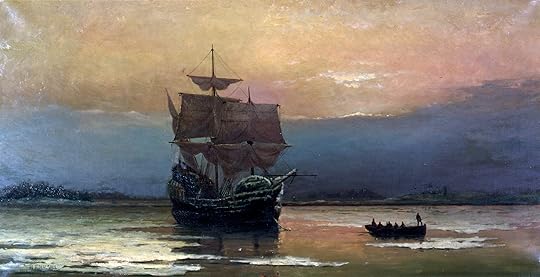
Mayflower in Plymouth Harbor, William Halsall & wikimedia
The main narrators are two women with very different points of view, Alice Bradford, wife of the governor, and Eleanor Billington, who arrived as an indentured servant. My direct ancestor Susanna even has a minor role in the story.
The tensions in New Plymouth were there from the beginning, as the colony was a melding of separatists and strangers, indentured and free, with different expectations about life in the new world. They eventually erupted in the colony's first murder, although Nesbit had me wondering if it were really the first.
Kudos to Nesbit for giving the women voices, as history has largely silenced them. The bits about their sexuality seemed a bit gratuitous and reminded me that this is historical FICTION, after all.
I love the art by illustrator Olaf Hajek on the hardcover version. I've been waiting for the paperback, hoping it might have the same cover, but it doesn't. So I read the eBook.
This well-researched historical novel is set in 1630, ten years after the landing of the Mayflower. It's about real people and historical events, fleshed out with imaginary details, and it includes quite a bit of background history. Nesbit explains her process and provides references in a comprehensive Author's Note at the end.
Mayflower in Plymouth Harbor, William Halsall & wikimedia
The main narrators are two women with very different points of view, Alice Bradford, wife of the governor, and Eleanor Billington, who arrived as an indentured servant. My direct ancestor Susanna even has a minor role in the story.
The tensions in New Plymouth were there from the beginning, as the colony was a melding of separatists and strangers, indentured and free, with different expectations about life in the new world. They eventually erupted in the colony's first murder, although Nesbit had me wondering if it were really the first.
Kudos to Nesbit for giving the women voices, as history has largely silenced them. The bits about their sexuality seemed a bit gratuitous and reminded me that this is historical FICTION, after all.
I love the art by illustrator Olaf Hajek on the hardcover version. I've been waiting for the paperback, hoping it might have the same cover, but it doesn't. So I read the eBook.

August 5, 2020
This book started out with so much promise. A story about the first pilgrims that came over on the Mayflower and landed in Plymouth. I was excited. The reviews that I read were good. What could go wrong? Well, I'm sorry, but the story fizzed out for me about 1/3 through. I continued to read hoping it would get better, but it didn't happen. Even though it's not a long book, it was a struggle to get through the last 1/2. Maybe it was because the leading characters didn't feel real to me. They were wooden mannequins, not real people. Maybe because it took so long to get to the main point of the story — the murder and trial, and then it just moved off of that at lightning pace. I did finish, but was guiltily happy to close the covers on this one. I wanted a real taste of 17 century American pilgrim life. What I got was a mishmash of characters that never connected at all throughout the entire book. I cannot recommend this book.

May 27, 2020
Центральна влада корумпована! Місцева влада зловживає повноваженнями! Кумівство! Контрабанда! Нелегальна торгівля! Землю продають незаконно! А ті в церкву не ходять! А оті ходять - але не в ту! Сусід на мою корову криво подивився, на межу зазіхнув і мою груш... мій дуб пиляти почав! Ні, це не про сучасне українське село, це про отців-пілігримів та непросте життя в Плімутській колонії року Божого 1630-го.
ТараШі Несбіт взяла за основу добряче запилюжену архівну історію: у вересні 1630 року в керованій пуританами колонії Плімут сталося перше задокументоване вбивство. Душогубця засуджено, страчено, всі щасливі і не танцюють, бо пуритани - їм не можна. А що можна зробити з одного рядочка в губернаторському щоденнику? Наприклад, невеличкий роман з кількома не дуже надійними оповідачами, купую цікавих історичних дрібничок і доволі сумними висновками про границі людяності та роль Іншого у становленні спільнот.
Очевидні плюси Beheld:
* пропозиція глянути на піонерсько-пілігримську тему очима жінок, на яких каменем падала значна частина обслуговування життя юних колоній, а ризики принципово меншими не були
* увиразнення не тільки ідейних та релігійних, але й соціальних конфліктів, що стояли за протистоянням "пуритани VS звичайні люди"
* спроба вичавити жанровий максимум з простої та прозорої історії: тут нам і соціальна драма, і сімейна, і переповідка процесу самоусвідомлення дозованої окремішності жіночих інтересів, і виживальницьке прєвозмагання, і навіть елементи трилеру (хоча з нагнітанням "але ж ми не знали, якою blood bath закінчиться цей день!" авторка трохи перебрала).
Очевидний мінус: матеріал, нехай розкішний, опирався і постійно намагався втекти кудись не туди, тож про багате внутрішнє життя однієї з героїнь ми дізнаємося більше, ніж тема обіцяла. І воно насправді цікаво, але хотілося все ж більше про непрості плімутські розклади, аніж про "я все життя себе їстиму за те, що вийшла заміж за чоловіка найкращої подруги".
ТараШі Несбіт взяла за основу добряче запилюжену архівну історію: у вересні 1630 року в керованій пуританами колонії Плімут сталося перше задокументоване вбивство. Душогубця засуджено, страчено, всі щасливі і не танцюють, бо пуритани - їм не можна. А що можна зробити з одного рядочка в губернаторському щоденнику? Наприклад, невеличкий роман з кількома не дуже надійними оповідачами, купую цікавих історичних дрібничок і доволі сумними висновками про границі людяності та роль Іншого у становленні спільнот.
Очевидні плюси Beheld:
* пропозиція глянути на піонерсько-пілігримську тему очима жінок, на яких каменем падала значна частина обслуговування життя юних колоній, а ризики принципово меншими не були
* увиразнення не тільки ідейних та релігійних, але й соціальних конфліктів, що стояли за протистоянням "пуритани VS звичайні люди"
* спроба вичавити жанровий максимум з простої та прозорої історії: тут нам і соціальна драма, і сімейна, і переповідка процесу самоусвідомлення дозованої окремішності жіночих інтересів, і виживальницьке прєвозмагання, і навіть елементи трилеру (хоча з нагнітанням "але ж ми не знали, якою blood bath закінчиться цей день!" авторка трохи перебрала).
Очевидний мінус: матеріал, нехай розкішний, опирався і постійно намагався втекти кудись не туди, тож про багате внутрішнє життя однієї з героїнь ми дізнаємося більше, ніж тема обіцяла. І воно насправді цікаво, але хотілося все ж більше про непрості плімутські розклади, аніж про "я все життя себе їстиму за те, що вийшла заміж за чоловіка найкращої подруги".

January 25, 2020
Nesbit imagines life in the Plymouth Colony in this fictionalized account providing a back story and after story to its first murder. The author writes in the vernacular of the day, creating a piece which helps the reader become absorbed in 17th century life. Much of the story's narration comes from the wife of the convicted murderer. Her differences with Bradford and Standish at times make the reader question her reliability as a narrator and at times create questions of the integrity of the colonial leaders. The book, lacking an action-driven plot, requires the reader to savor the characters and atmosphere created by the author. As someone who loves colonial American history, I enjoyed this book; however, it may not be a book for everyone. I received an advance review copy from Bloomsbury, the publisher. While an honest review was encouraged, it was not required.

June 16, 2021
As someone who grew up amid the red-padded pews of an Evangelical church (that had its full share of hypocrites), I am fascinated by novels that explore characters whose questionable decisions are justified “in the name of religion or God.” This book will give you a good dose of the righteousness that led some of the country’s first “pilgrims” – Puritans – to commit horrific acts against others.
This is an interesting and fascinating tale about what life might really have been like (and is based on factual occurrences) for those who stepped off the Mayflower. I loved the author’s notes at the end, describing the genesis of her idea and which characters were from the history books.
For me, personally, however the points of views of multiple characters in both first and third person put me at arm’s length for emotional connection. The last portion of the book was rushed in its narrative format as well, making me want a lot more character development. I had so hoped Alice and Eleanor would grow/interact in some way, yet they remained somewhat stagnant and unchanged.
In all, this was an interesting read that I’m happy to have picked up. I look forward to more of this talented author’s work.
This is an interesting and fascinating tale about what life might really have been like (and is based on factual occurrences) for those who stepped off the Mayflower. I loved the author’s notes at the end, describing the genesis of her idea and which characters were from the history books.
For me, personally, however the points of views of multiple characters in both first and third person put me at arm’s length for emotional connection. The last portion of the book was rushed in its narrative format as well, making me want a lot more character development. I had so hoped Alice and Eleanor would grow/interact in some way, yet they remained somewhat stagnant and unchanged.
In all, this was an interesting read that I’m happy to have picked up. I look forward to more of this talented author’s work.

August 11, 2020
When I read reviews of this book, and blurbs from the publishing company and other promotional material about it, I felt it was being put forward as a murder story. It includes the story of the first murder that happened in the fledgling Plymouth colony. However, I am over 160 pages in and the murder hasn't happened yet.
I think the book should have been marketed more as a modern way to give voice to these women who were omitted from making choices about their own lives, their own husbands, their own children, where they would live, what was okay to believe or not, constantly shamed for breathing just about, questioning the morality of every thought or word or behavior choice. Oh I definitely would have been tried as a witch. (I mean, I am one but still. LOL.)
Honestly the murder and the trial are such a minimal part of the book and of the story itself. There are 100 pages left in this book and like I said, neither has happened yet.
I like the character of Elinor Billington, wife of an indentured servant who came to Plymouth poor and having to work for the higher ups for 7 years. Now having done their work, they are given a sorry plot of land compared to the other settlers. They are looked down upon for their poverty and their religious beliefs, and are not given an equal part in the community. Elinor tells off the high and mighty self righteous biddies who give her judging looks, or dare come to her door to tell her how her husband should behave. I enjoyed her and wished there was more of her in the book. But then again she is a stark contrast to how most of the women of Plymouth would have actually been, for survival's sake.
I think the quality of the writing itself is excellent but the story is just dragging on and boring. I wanted to read it to see what happened, in a fictional way of course. Instead I gave up and hit up Google to find out about the murder. Took 5 seconds. There are SO many books on my TBR list and on request for me at the local library systems. I'm gonna go enjoy the next one.
I think the book should have been marketed more as a modern way to give voice to these women who were omitted from making choices about their own lives, their own husbands, their own children, where they would live, what was okay to believe or not, constantly shamed for breathing just about, questioning the morality of every thought or word or behavior choice. Oh I definitely would have been tried as a witch. (I mean, I am one but still. LOL.)
Honestly the murder and the trial are such a minimal part of the book and of the story itself. There are 100 pages left in this book and like I said, neither has happened yet.
I like the character of Elinor Billington, wife of an indentured servant who came to Plymouth poor and having to work for the higher ups for 7 years. Now having done their work, they are given a sorry plot of land compared to the other settlers. They are looked down upon for their poverty and their religious beliefs, and are not given an equal part in the community. Elinor tells off the high and mighty self righteous biddies who give her judging looks, or dare come to her door to tell her how her husband should behave. I enjoyed her and wished there was more of her in the book. But then again she is a stark contrast to how most of the women of Plymouth would have actually been, for survival's sake.
I think the quality of the writing itself is excellent but the story is just dragging on and boring. I wanted to read it to see what happened, in a fictional way of course. Instead I gave up and hit up Google to find out about the murder. Took 5 seconds. There are SO many books on my TBR list and on request for me at the local library systems. I'm gonna go enjoy the next one.

July 8, 2020
What a nice change to read something of historical fiction that isn't WWII!
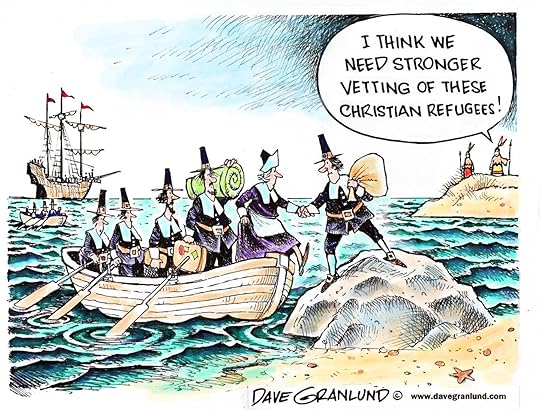
Things I learned about the Puritans--
They were only "pilgrims" in the sense that they traveled. They didn't call themselves that. And "puritan" was a term used by their enemies.
They were idiots! First they take a ship from Holland to meet up with indentured servants and others in England. That ship (The Speedwell) leaks and stays in port at Southampton for over 2 weeks. In order to pay lodging, they sell their stores of food for the trip and first months. Wouldn't that stop you right there and re-consider going back to Holland?
You know how the story goes that they came to America for religious freedom? Well, they had that in Holland. So why did they leave?
They were masochists! Not a direct quote, but to them "punishment was entertainment." Remember the stocks?
Not too long ago I watched Jamestown on PBS and I pictured the houses, palisades, etc from that show.
Things I learned about the Puritans--
They were only "pilgrims" in the sense that they traveled. They didn't call themselves that. And "puritan" was a term used by their enemies.
They were idiots! First they take a ship from Holland to meet up with indentured servants and others in England. That ship (The Speedwell) leaks and stays in port at Southampton for over 2 weeks. In order to pay lodging, they sell their stores of food for the trip and first months. Wouldn't that stop you right there and re-consider going back to Holland?
You know how the story goes that they came to America for religious freedom? Well, they had that in Holland. So why did they leave?
They were masochists! Not a direct quote, but to them "punishment was entertainment." Remember the stocks?
Not too long ago I watched Jamestown on PBS and I pictured the houses, palisades, etc from that show.

April 20, 2020
Last year I read Mayflower: A Story of Courage, Community, and War by Nathaniel Philbrick. I had hoped to learn something substantial about the Pilgrim women. I did not. Seems the women were taught to read so they could save their souls but not taught to write. So we have few or no letters or journals or recipes (for food or healing). So I waited to find another way to learn about the New England women.
I found this historical novel. Here economic and social class differences drive the plot. The current and former indentured servants find no respect, fewer resources allocated, public humiliation (and worse), and ostracization. The women married to the more powerful mem of the colony find that they are subordinated to uncomfortable levels as well.
Evocative Historical Fiction.
I found this historical novel. Here economic and social class differences drive the plot. The current and former indentured servants find no respect, fewer resources allocated, public humiliation (and worse), and ostracization. The women married to the more powerful mem of the colony find that they are subordinated to uncomfortable levels as well.
Evocative Historical Fiction.

March 4, 2021
I certainly don't know about this historical period to speak to the accuracy of the book, but I did struggle with the writing a bit. I understand that in the 1600s, people spoke differently than they do now, and reading a whole book in that kind of language would be a struggle, but I definitely struggled with Nesbit's use of mostly modern English with the word "betwixt" thrown in every couple of pages to give it some flavour... Not really my favourite.
There also really wasn't much of a plot - the murder the book talks about doesn't happen until most of the way through the book and even then, it's kind of dealt with and the book swiftly moves on. Most of this book was people hating their neighbours, with a lot of background detail thrown in. That all being said, I liked that all the POV chapters were told from women's perspectives, and the setting was cool. I just think the plot could have been much better executed unfortunately.
There also really wasn't much of a plot - the murder the book talks about doesn't happen until most of the way through the book and even then, it's kind of dealt with and the book swiftly moves on. Most of this book was people hating their neighbours, with a lot of background detail thrown in. That all being said, I liked that all the POV chapters were told from women's perspectives, and the setting was cool. I just think the plot could have been much better executed unfortunately.

May 25, 2020
What I personally love about books about the Mayflower, pilgrims, colonies, is the huge puritan influence, that strives to keep everyone in a submissive, guilt ridden, sin focused community that is SO unchristian like that it's laughable. This is a book about some fervent puritans who basically call the shots, and the newer Anglican's who say, enough of that crap. Beheld is about a murder, a trial, and about a community that came to "America" for freedom, and instead is a puritanical nightmare. This book was different as well, as it's written from the woman's perspective. So many "myths" about Plymouth, that I enjoyed this piece of historical fiction immensely.

February 22, 2026
3.5 - v interesting as far as historical fiction goes, but the lack of lessons learned or comeuppance delivered left me wanting more
Displaying 1 - 30 of 869 reviews