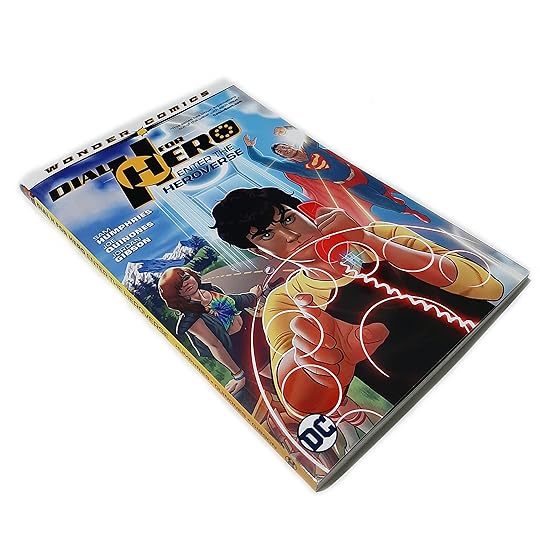
What would you do if you could become any superhero for just an hour? The catch? Who you become is absolutely random. The H-Dial returns to the DC Universe courtesy of Sam Humphries as part of Brian Michael Bendis' new imprint for young heroes: Wonder Comics!
When teenager Miguel Montez was ten years old, Superman saved his life--and since then, he's spent every waking hour trying to recapture the thrill of that moment. Unfortunately, life in the sleepy town of Devil's Canyon, California, is hardly an adrenaline rush--especially when you're stuck working at your uncle's mayonnaise-themed food truck.
But Miguel is about to get more excitement than he can handle. When a mysterious rotary phone appears in a life-or-death moment, a strange voice comes over the line saying that it has the power to transform him into a never-before-seen costumed champion--all he has to do is dial "H"!
Suddenly, Miguel becomes a superhero--or, more specifically, a bunch of different superheroes, with each new "call" lasting a single hour. But he also becomes a target--because the villainous Thunderbolt Club knows all about the power of the H-Dial, and its members will stop at nothing to get their hands on it. Now it's up to Miguel and his new friend Summer to get the H-Dial into the hands of the one man who can protect it--a certain Man of Steel!
Crafted by writer Sam Humphries (and artist Joe Quinones(Wednesday Comics), Dial H for Hero Vol. 1: Enter the Heroverse launches a new era of action with an astounding array of young superheroes and an incredible variety of art styles! Collects issues #1-6 of the acclaimed new series from DC's Wonder Comics--curated by comics legend Brian Michael Bendis!
This is what comics should be, fun. A teenager, Miguel, finds a mysterious phone that when he dials H-E-R-O is transformed into a random superhero. People who have used the phone before become addicted to it and are trying to steal it from him and his friend Summer.
Joe Quinones does a lot of heavy lifting in this book. Every time a new hero appears, he changes his art style to mimic the type of hero he is. Manga, Vertigo, Sin City, Moebius, Quinones does a phenomenal jab of mimicking different genres and artists.
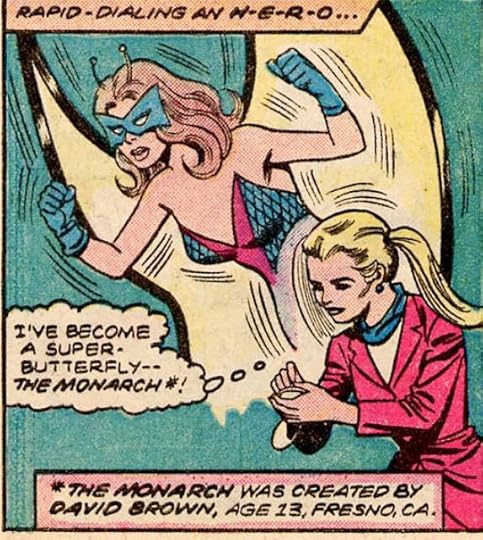
I do think the creative team missed an opportunity with the book though. When this book was published in the 80's the heroes and villains were created by fans who sent in their designs, even getting a credit. I thought that was the coolest thing as a kid. With the ease of using the internet for submissions, they could have done something similar with this book.
So this is the third book I’ve read in Brian Bendis’ new Wonder Comics label for DC and the line looks like it’s aimed at young teens/the kiddles. Because the latest revamp of Dial H for Hero is basically an extended Saturday morning cartoon with its simplistic plot and fairly light tone - and that’s why I wasn’t that taken with it.
Some kid arbitrarily comes into contact with the magic hero phone which, when dialled, temporarily turns you into a wacky superhero. Another kid joins the first kid and together they go on a kerazy adventure while a cliched bad guy tries to steal the phone back from them. Superman cameos a bit and everything predictably works out. Zzz…
The main characters are bland, the plot is even more forgettable and I was barely entertained at any point. Like the only other Dial H book I’ve read (China Mieville’s dismal New 52 attempt), the constant introduction of new bonkers superheroes throughout makes for a repetitive and eventually tiresome reading experience that only drags the pacing down. Also apparently using the phone turns you into a drug addict, chasing that next hit of the phone, which is a strange detail to include in a kid’s comic!
That said, each time a new superhero is introduced the art style changes and I quickly realised they were parodies of more famous properties, a lot of them outside of DC, so the only fun I got out of this dull comic was playing “guess the reference” with the myriad characters.
There’s Monster Truck (Rob Liefeld?), Jobu the Zonkey King (Son Goku the Monkey King from Dragon Ball), Chimp Change (Frank Miller’s Sin City), the Blue Bird of Happiness (Shade the Changing Man?), a brilliant Dan Clowes parody, a nod to Alex Ross, and Lo Lo Kick You, which initially felt like a riff on Jamie Hewlett’s Tank Girl but later looked more like a Mike Allred character; Allred’s one of the artists drawing this book so it’s probably the latter. Of course there’d be several artists - as good as Joe Quinones is, I don’t think he’s THAT versatile!
Anyway, no I wouldn’t recommend Dial H for Hero, Volume 1: Enter the Heroverse to most people though if you’ve got youngsters then they might enjoy this one.
Dial H for Hero is absolutely phenomenal. Sam Humphries is not an author I’m normally a huge fan of, but he transcended himself as a writer on this book by writing an absolutely joyous comic that is everything superhero comics should aspire to be — fun, creative and inspiring. But Joe Quinones is the real star of the show here, his art is something from another world — he switches and adapts his art to anything Humphries throws at him, utilizing multiple different styles in every single issue. This book is an absolute spectacle and one of the best comics of the year in a year that is already overflowing with amazing books, and it’s unlike anything I’ve ever read before. I am eagerly looking forward to new issues of Dial H every month, and I can’t believe I am saying all these things about a Sam Humphries comic. Dial H for Hero is unbelievably good.
China Mieville wrote a Dial H: Deluxe Edition that is likely to never be equaled. It upped the craziness and it developed a mythology. Sadly, Humphries ignores Mieville's foundational mythology, but he does a great job of creating some craziness of his own and also resolves the one flaw with Mieville's run by (once more) tying "Dial H" back into continuity.
This version of "Dial H" (the fifth by my count) returns to the early days of having young, wish-fulfillment heroes but also has wacky heroes and recognizes "Dial H" as a great story to break the fourth wall and treat the comic as a something happening in a comic book. It's a good combination, and something that might be more approachable than Mieville's amazing but complex run.
Oddly enough, didn't hate this. It got more interesting as it went along. I'm not really into the new Wonder Comics stuff (pretty mediocre and too campy a tone for me), but I'm mildly interested in seeing what happens here.
Dial H for Hero is back! This time I liked this story a lot more than New 52 one.
SO Miguel, our main hero here, stumbles on a magical phone. Once dialed he becomes a HERO! And what this story bases itself on is Miguel always wanted to be like Superman. When he was a child he was rescued by the hero and looks up to him. But he also has a pretty shitty life at the moment. Till he finds the phone! Then everyone is after him and between him and his new friend they must escape their clutches.
What works really well here is the art. Obviously the major throwbacks to many comics from different genres is awesome. On top of that Miguel is a fun protagonist and he's pretty funny too as is his company. I thought the pacing was a bit off though and the ending didn't work as well for me as the first few issues. I also thought the ending tied it up and confused where it'll go.
Either way though it's something pretty different. For the art alone I'd give it a 5 but the story isn't as strong, so I'll settle on a 3.5 out of 5.
A reminder of just how strange and fun DC comics can be when they're not constantly strewing rakes in their own path, this resurrects the old concept of the H-Dial - and if you don't know what that is, don't worry, because nor did the writer before he got the call*. Essentially it's the superhero idea stripped down to its core of transformation and wish-fulfillment: there's a magic telephone, you dial it, and boom, you're a superhero. So it goes for the lead here, Miguel, working at Mayo Madness, the worst food truck in a dead-end town, writing letters in his head to Superman, who rescued him once as a kid...and then suddenly empowered to stand alongside him.
Where things become more fun for the reader, though occasionally less so for the dialler, is that the dial doesn't just confer abilities, but a whole costume, name, backfilled secret origin - frequently a bit wonky, because these were disposable characters cooked up in a hurry. Something with which this run really goes to town, each fresh hero a pastiche of a different era or style of comics, thrown into collision, and realised astonishingly well on the page by Joe Quinones and co. Sam Humphries, meanwhile, is playing into his usual inability to write anything without messed-up characters by having Miguel and his new friend, repeat runaway Summer, pursued on their road trip by a secret society of adults who previously used the dial and are now desperate for another hit. That sounds like it could be oppressive, but it's not, more of a proper kids' adventure thrill. Likewise, though one of the things bogging DC down lately has been its insistence on permanent Crisis, endless new and bigger dimensions and cosmic forces more ultimate and forcier than those before them, even when Dial H moves into similar territory it comes across meta and entertaining, instead of exhausting. Just joyful, in a way too few superhero comics remember how to be.
*Though that does also mean you missed China Mieville's brief foray into superheroes, which was well worth a read.
So I guess I was the only person who actually liked China Mieville's take on this title? This isn't bad, but it's just so juvenile (which I guess is the point, Wonder Comics being targeted at younger audiences) in tone, character, etc. I like the art, though.
I'm not a superhero fan, or a multiverse fan. Not at all. But, all the same, this was fun. The best part is the art. Every time a new superhero is created, which happens frequently, the art style changes. I might even continue to book 2.
I really didn’t like this book, the story is kind of stupid and Miguel, the Operator and as well as most of the characters are extremely annoying. But Summer’s a really cool character and the different art styles for the different heroes is amazing.
Like most of the titles in DC’s new Wonder Comics imprint, Dial H for Hero is shockingly good and beautifully polished (the one exception among the imprint’s titles is the lackluster Young Justice). Dial H is a wild romp through comics history with likeable characters, a goofy fun plot, and pitch-perfect visual imitations across an array of genres, styles, and eras.
Ok, this concept has been rebooted and tweeked at LEAST 5 times now. China Mieville even got in on the action and did a pretty wicked take on it all.
This version stays solidly within a YA/teen idea. You get solid call backs to its mid 60s origins and you also get some Grant Morrison level 'multiversity' explanations. Some of it can get pretty meta and mindbending.
Overall it's fun, it tries to fall back into main DC continuity (crossing over into 'Young Justice' at least), and its got a fun visual style that references other comic/artist styles.
Bonus: check out the Sin City style panels and the Cathy newspaper strip panels too. Weird.
Better than I was expecting, it's funny, clever, and I like the characters the team has come up with. But man, MVP is Quinones, who's just killing it on the art. He's able to integrate and deploy so many styles; he's pretty much the perfect artist for this book at this exact point in time. Great first volume.
I came into this without any prior knowledge of the line or the other Dial H books. This was awesome though, creative and charming. I really hope the issue continues to pace itself, with all these amazing secret origins.
Basic Plot: When a stunt goes wrong, Miguel is offered the chance to become a hero by dialing a red phone, but there's more to his secret origin than that!
This was a really original, truly fun romp through superhero (and other) comics. Miguel and Summer are really well fleshed out. The Operator(mentor figure) is mysterious and kinda creepy. The villain is suitably villainous. I love all the little nods to other comics that can be spotted throughout the pages. I also like how the book breaks the fourth wall creatively. There are pages on top of pages, and characters break out of panels or hang off of them. There are tons of different art styles in here, depending on what era or style a character is coming from. Really, the art is brilliant.
This was a fun book. But the art was stellar and outshines the story; great visual gags and shifts in style as the phone conjures up new heroes. An amazing visual feast, highly recommend
You can find my review on my blog by clicking here.
Who wouldn’t love to become a hero for an hour? To embrace their fanciest dreams and save the day? While it’s easy to think that being a hero doesn’t come with much of a workload, young teenager Miguel Montez has to learn this the hard way. As part of superstar creator Brian Michael Bendis’ deal for joining DC Comics, the major comic book company gladly had to agree in adopting and integrating his Wonder Comics universe, now an official imprint that targets young adults and focuses on coming-of-age stories. Among the series that helped launch this new line-up is the revival of DC Comics’ Dial H for Hero—a play on words derived from director Alfred Hitchcock’s Dial M for Murder. Looking to finally work with his buddy Sam Humphries over at DC Comics, Brian Michael Bendis pitches the idea to him as he takes on the challenge after a bit of research—we can’t know everyone after all—and offers fans the chance to discover what actually happens to those who dare to dial “H”.
What is Dial H for Hero: Enter the Heroverse about? Collecting issues #1-6, the story follows teenager Miguel Montez in his everyday life in the mundane town of Devil’s Canyon, California. Young, about ten years old, he was saved by Superman in a freak accident and has been chasing the dragon ever since just to relive the thrill of that moment once again. It’s when he finds himself in a life-or-death situation once again that a mysterious red rotary phone appears and the operator compels him to dial “H” if he wants to live. From that moment forward, life wasn’t the same anymore as he discovers the powers bestowed by this telephone: the person who dials “H” is transformed into a different superhero, every time, for an hour. With the villainous Thunderbolt Club looking to get their hands on this phone, it’s up to Miguel and his rebellious friend Summer to deliver it to the one person who can protect it: Superman.
There’s plenty to appreciate in this opening story arc and the direction this series takes as it blows open the multiverse and tosses readers into uncharted territory. The idea behind the heroverse is original and offers plenty of exciting ideas to be explored while keeping the story centered around two teenagers trying to understand what they want to do with their lives as they approach adulthood. This time around, I do have to admit that I couldn’t wrap my head around Miguel Montez’s character, who had a very nagging voice throughout the story and never helped me acclimate myself to his demeanour. If it weren’t for his character, the story in itself would’ve had my utmost praise as it introduces us to a thrilling universe that paves the way to plenty of fun and creative roads to explore. It’s ultimately a quirky, slightly eccentric, and old school story that shows that the writer and artists had fun in expanding creator Brian Michael Bendis’ universe.
You have to give it to them. The creative team behind this reboot did a solid job of bringing back to life a series that was lost over time. Perfectly fitting into the Wonder Comics imprint, writer Sam Humphries achieves a sweet and enjoyable story that fans of all ages can enjoy without prior knowledge on the history of this run. While the original series back in the 1980s solicited the fanbase to come up with heroes that could get featured in this story, and credit the person for it too, this pretty cool but missed opportunity can be overlooked by the new direction taken on by the team. In fact, for each new hero introduced following the dialing of “H” allows Joe Quinones and his collaborating artists to change up the artwork—actually giving the inconsistent artwork a raison d’être—to commemorate various styles, from manga to the golden age era, thus allowing this story arc to present countless neat references for the observant to note while reading. Although the base artwork style is a bit cartoonish, it certainly fits well with the story and captures the liveliness of the universe through colourful and bubbly visual designs.
Dial H for Hero: Enter the Heroverse is an off-the-wall, exciting, and colourful revival of a series exploring the key ingredient within all to becoming a hero.
Dial H for Hero's a fairly straight forward concept, but it always seems to get creative teams to do weird and wonderful things with it. My only two exposures to Dial H are this series, and the previous New 52 one, and they couldn't be more different, and yet are equally as entertaining.
This series focuses on Miguel Montez, a normal kid who finds the H Dial and tries to get it to Superman, since Supes should know what to do with something dangerous, right? Of course, it's not that easy, as the illusive Thunderbolt Club are out to steal it from Miguel, and the Operator lurks in the shadows with a truly inspired link to Dial H mythology that will delight fans of the concept.
The story's pretty good fun, but this first volume is mostly just setting the stage for what's coming next; I'm surprised at the ambition here, because it doesn't wrap up at all, and if DC hadn't given the book another 6 issues, I might be singing a different tune right now.
The art however is utterly phenomenal. Joe Quinones' normal artwork is always gorgeous, but when he turns his hand to the new heroes that pop up in each issue, he manages to be inspired by the heroes in question and turn out something truly special. Some characters are obvious parodies or pastiches of established franchises, while others are entirely new, but they're all wonderfully drawn by Quinones on every page.
Dial H is fun with a capital F. This definitely feels like just the beginning of something larger, and I'm glad we're getting to see where Humphries and Quinones are going to take it.
Absolutely brilliant. We've taken our Ben 10 concept and shot it into the stratosphere. You want a Rob Liefeld-eque hero? BAM! YOU GOT IT! You want a playful parody of Akira Toriyama? BAM! YOU GOT IT! You want a bizarre visual madness character ala Neil Gaiman's Sandman? BAM! YOU GOT IT! You want a furry version of Cathy the newspaper comic strip? BAM! YOU GOT IT for some weird reason...who wants to read CATHY of all things? That's just scratching the top molecules of paint off of this shiny new beast of a story vehicle. Also, since it's DC there's a lot of homage here, so if you're any kinda DC fan, this thing is rife with Easter Eggs, expies, proxies, and all sorts of goodies!
An absolutely joyous comic that celebrates the sheer wackiness of the DC universe (and comics in general). I'm not too familiar with Dial H for Hero, but I love the concept here, and especially love all the homages to DC characters/styles, as well as styles outside of DC. Frank Miller's Sin City, Alex Ross, Rob Liefeld/Image, Mike Allred/Madman, Dragon Ball, Shade the Changing Man, Daniel Clowes. Too many to name! Joe Quinones does an amazing job with the art, adapting to multiple styles in the same issue. Sure, the story's a little predictable, but the inventiveness and fun factor more than make up for it. Books like this remind me why I love reading comics.
This is one of the most enjoyable comics I've ever read. Humphries is incredibly skilled in balancing humor with emotion to create engaging stories and characters that you can't help but love, and I was awestruck by Quinones' artistic talent and ability to switch between styles. I'm grateful the title was renewed for a few more issues and I'd recommend it to anyone who has even a minimal interest in superheroes.
Dial H for Hero is a comic book feature published by DC Comics about a magical phone that enables an ordinary person to become a superhero for a short time by selecting the letters H-E-R-O in order. Each time it is used, the dial causes its possessor to become a superhero with a different name, costume, and powers. Dial H for Hero: Enter the Heroverse collects the first six issues of the 2019 on-going series and collects one-issue storylines that are more or less interconnected.
The trade paperback centers on Miguel Montez, an orphan teenager, living in Devil's Canyon in a small dead-end town in California who eventually ran away from home with a girl named Summer Pickens after an altercation put the police on his trail. Montez would eventually inherit the mysterious H-Dial that would make anyone who uses it into a superhero. He is eventually joined by Lucas "Snapper" Carr as they battle Mister Thunderbolt and his Thunderbolt Club. The heroes that the protagonists turn into are rather inventive, albeit a tad harebrained.
Sam Humphries penned the entire trade paperback. For the most part, it is written rather well. The main purpose of the trade paperback is to introduce the main characters of Miguel Montez, Summer Pickens, and to some extent Lucas "Snapper" Carr and introduce them into the DC Universe as the first two are new characters and the last being reintroduced for the first time since the revamp. Humphries has successfully introduced a semi-obscure title into the mainstream. The center of the story is Superman as it was Montez's interaction with the superhero that made him into the teenager that he is today.
With the exception of one issue (Dial H for Hero #3), which was co-penciled by Arist Deyn, the rest of the trade paperback was penciled by Joe Quinones. Since he was the main penciler, the artistic flow of the trade paperback flowed exceptionally well. His penciling style is wonderful and is apropos and accentuates the series rather well.
All in all, Dial H for Hero: Enter the Heroverse is a good start to what would hopefully be a wonderful series.
Dial H for holy shit this was actually pretty good!
I've heard of the dial in older, golden age histories of the DC universe because, lets face it, its a very golden "agey" concept. You dial a phone and it makes you a random superhero? I mean, it's not exactly anywhere near logical. But if you just accept it as the magical chaosy mess that it is, this works pretty well. Especially with the approach that Sam Humphries took. It was kind of tounge in cheek, with even the narrator at times kind of poking fun at the concept and the book in general. There's action, adventure, meta adventure, and a whole lot of humor.
The real reason why I picked up the book was because of the Joe Quinones art. I've always been a fan of his clean line and it certainly shines here. It gives the book a modern "shine" to it that helps with the golden age concept overall. But what's really cool is that Quinones does his best J H Williams III by having different art styles for different heroes! There's tons of art easter eggs as many heroes are introduced. I saw Miller, Clowes, Mobius, Leifeld, Lee, etc... there's so much to enjoy from an art standpoint.
This book is jsut damn fun, and if you can let go of logistics and just go with the overall theme and idea of the book, then you will have fun too. Recommended for fans of DC's more whimsical side.
Este cómic ha sido todo un viaje, y no lo digo solo por la odisea que realizan los personajes durante la historia, sino por las constantes referencias a otros personajes e historias del pasado de DC para entender lo que ocurre, sobre todo del pasado del Dial H (Ben Ten tiene mucho que explicar). Me sorprende que este cómic sea parte de la iniciativa para conseguir lectores más jóvenes. Una cosa es hacer que tengan curiosidad por leer otros cómics para saber qué ha pasado, pero otra es obligarles a tener constantemente abierta DC Wikipedia. Sin embargo, fuera de esto, cuando la historia por fin encuentra su camino, al llegar al Heroverse, se vuelve muy interesante la idea que plantea: "Los héroes que crea el H Dial carecen de una motivación, un origen secreto que decida su camino". Una idea que va a hacer que siga leyendo esta historia, además de la "originalidad" de los héroes creados por el H Dial, parodias y homenajes de todo tipo de personajes de cómics. Es muy divertido jugar a tratar de reconocer su inspiración, sobre todo porque no entenderlas no afecta al entendimiento de la historia. El dibujante de la historia hace un gran trabajo, pero también son geniales los cambios de estilos para adecuarse a cada nuevo héroe.
While mostly entertaining a lot of this story consists of the main character whining about, well, everything. Not just that but the whining is just copy / pasted word for word from issue to issue / chapter. It gets old and if I wanted to just read about the rantings of a whiny teenager I could just read a Marvel Comic like Spider-Man or any number of X-Men books. My other problem with the book is the whole "A new hero you will never see again" is just annoying and seems to ignore the whole joy of most of the old Dial H books, you could see these heroes again.
I mean the comic is not terrible and Crush errr I mean Lo Lo Kick You is kind of a fun hero so far. But how many times are we going to have another story from DC of a young boy living in a dead end small town with no prospects, abused by relatives, forced to work for relatives that with the help of his sidekick (girl Friday - who is much much much cooler than the guy). They find sudden powers and adventure all while complaining about how unfair the world has treated them.
Don't let my nit picking scare you away, there are plenty of little gems in this comic. Check it out!
There is something about the H Dial that I always found captivating. The sole concept: dialing a phone and becoming a hero is the absolute dream of most comic book fans, but then again, "Dial 'H' for Hero" has had some weird runs that never satisfied my expectations. Of course, this is my personal appreciation. This time, we have these endearing kids (Miguel and Summer), some fantastic art by Joe Quiñones, and the dial. So far so good. But whenever the dial is actually used, the story gets disrupted somehow. The writer, Sam Humphries, set every new hero under a different narrative style (both in art and text). As an idea, I like it, as part of the story, this creates a break into the story that I find hard to deal with. It's like watching a movie and then, all of a sudden, in the actual climax, the one sitting next to you yells "This is fake". Of course, this little "yell" jumps at me with every issue, and it seriously began to bug me. As for the story, it was nice, a bit slow, but quite enjoyable. I read it in single issues (and now I'm onto the second set of this series).
Maybe comic books do this all the time and I just haven't read enough of them yet, but I've never seen anything like this before! The way every time someone used the H-dial and became a temporary superhero, the artist and/or art style completely changed to fit the hero type! As an artist myself and someone who loves this kind of storytelling medium primarily for the illustrations and artwork, this was really a treat. From dark noir to 60's-80's style comics to manga to Charles Schultz to Jay Howell to pop art, this comic covered it all. I really loved how so many different artists were included in the project! I'm so glad Wonder Comics decided to bring back Dial H for Hero. I'd never heard of it before and this was my first time reading anything about it. But I quickly fell in love with the concept and characters. I'm excited to have this more recent and modern renewal, it was an excellent way to be introduced to the the H-dial. Miguel and his story especially resonated with me. I literally cannot wait to get my hands on the next volume!