Willie Black knew he had a father, even if he didn't know where he was buried. It wasn't like Artie Lee gave his son anything but his genes. He died when Willie was fifteen months old, and Artie and Peggy never married. They couldn't have, in the segregated commonwealth of Virginia in 1960. Then, in January of 2018, Artie Lee, dead almost fifty-seven years, reinserts himself into his son's life. Philomena Slade calls Willie, the mixed-race night-cops reporter for the local daily rag, to her death bed to ask him a favor he can't refuse: keep Artie s grave clean. She's been doing it after everybody else who knew him either died or chose to forget they ever knew Artie Lee. Willie Black finds his father's final resting place in Evergreen, an abandoned cemetery on the east side of Richmond where full-grown trees and thickets obscure memorials to people who, like Artie Lee, are long-forgotten. Willie soon discovers that the almost-impenetrable wilderness of Evergreen is a metaphor for his search for Artie. Artie Lee, a saxophonist and race man who did not suffer bigots gladly, died in a car crash. Willie knew that. When he starts figuratively digging, though, he finds out more than he really wanted to know. Arthur Meeks and Archangel Bright, Artie's friends back in the day, don t seem that eager to talk about him, but Willie keeps pumping them. Eventually, he'll discover how a double-homicide at a Ku Klux Klan rally in 1960 connects with an auto wreck on a deserted road a year later. It's not like Willie has plenty of extra time to unearth a story he might not even be able to write. In addition to covering the always-thriving Richmond crime scene, he's now assigned by his newspaper's most recent boy publisher to do a daily feature from the city's past. Who can blame him if he starts mixing a little fiction with the history? As he tries to find out what happened to Artie Lee, Willie figures that, when it comes to reconnecting with his long-deceased father, late is better than never. When he digs up the truth, though, he'll see that never might not have been so bad.
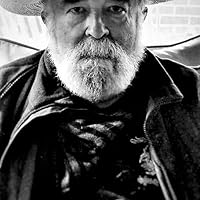
Howard Owen was born March 1, 1949, in Fayetteville, N.C. He is a graduate of the University of North Carolina at Chapel Hill (1971, journalism) and has a master's degree from Virginia Commonwealth University (1981, English). He and his wife since 1973, Karen Van Neste Owen (the former publisher of Van Neste Books), live in Richmond, Va. He was a newspaper reporter and editor for 44 years. Owen won The Dashiell Hammett Prize for crime literature in the United States and Canada for Oregon Hill, his 10th novel. His first novel, "Littlejohn," was written in 1989, when he was 40. It was bought by The Permanent Press and published in 1992. Random House bought it from The Permanent Press and reissued it as a Villard hardcover in 1993 and a Vintage Contemporary paperback in 1994. It was nominated for the Abbey Award (American Booksellers) and Discovery (Barnes & Noble) award for best new fiction. It has sold, in all, more than 50,000 copies. It has been printed in Japanese, French and Korean; it has been a Doubleday Book Club selection; audio and large-print editions have been issued, and movie option rights have been sold. His second novel, "Fat Lightning," came out as a Permanent Press book in 1994. It was bought by HarperCollins and was reissued as a Harper Perennial paperback in 1996. It received a starred review from Publishers' Weekly. His third novel, "Answers to Lucky," was published by HarperCollins as a hardcover in 1996 and as a paperback in 1997. It received favorable reviews in The New York Times, Southern Living, GW, Publishers' Weekly, the Atlanta Constitution, the Baltimore Sun, the Memphis Commercial Appeal and numerous other publications. It was included in "The Best Novels of the Nineties: A Reader’s Guide." His fourth novel, "The Measured Man," was published in hardcover by HarperCollins in 1997. It was praised in The New York Times, The Los Angeles Times, Publishers' Weekly, Kirkus Reviews, the Raleigh News & Observer, the Orlando Sentinel, the Fort Lauderdale Sun-Sentinel and many other publications. It was one of the LA Times Book Reviews’ "Recommended Titles" for 1997. It was included in "The Best Novels of the Nineties: A Reader’s Guide." Owen's fifth novel, "Harry and Ruth," was published by The Permanent Press in September of 2000 to critical acclaim from Kirkus, Publisher's Weekly and various weekly publications. His sixth novel, "The Rail," was published in April of 2002. It is about (among other things) baseball and the parable of the talents. Owen won the 2002 Theresa Pollack Award for Words. His seventh novel, "Turn Signal," was about a man whose muse drives him either to madness or to the best move he's ever made in his life. It came out in 2004 and was a Booksense selection for July of 2004. His eighth novel, "Rock of Ages," is something of a sequel to his first novel, "Littlejohn." Georgia McCain returns to her hometown years after her father’s death to sell the family farm and finds herself immersed in baby-boomer guilt and a murder mystery. It was a Booksense pick for July of 2006.
His ninth novel, "The Reckoning," about ghosts of the ’60s, came out in late 2010 and received very positive reviews from, among others, Publishers Weekly and the New York Journal of Books. His short story, "The Thirteenth Floor," part of "Richmond Noir," came out in early 2010. The protagonist of “The Thirteenth Floor,” Willie Black, also is at the center of Owen’s 10th novel, “Oregon Hill,” which came in July of 2012 to very positive reviews in The New York Times, Publishers Weekly, Kirkus and elsewhere. It's also an audio book.
Willie starred in future Owen novels: The Philadelphia Quarry (2013), Parker Field (2014), The Bottom (2015), Grace (2016) and The Devil's Triangle (2017). His 16th novel, Annie's Bones, comes out in April of 2018.
The Willie Black mysteries by Howard Owen follow the trials and investigations of a modern-day crime reporter in a world where newspapers fail and the internet fails to support jobs. But these novels are far more than just crime mysteries. They also follow the life of a character so believable that, when he falls in love (again) you really want it to last, and as he ages, you wish he and his family might thrive. The next book becomes a must-read just to know how this believably determined character progresses.
Now happily married and pleasingly committed to protecting his friends and family, Willie Black is faced with another mystery—who was his father, and why was he always absent from his life? The overgrown cemetery of Evergreen’s title is an apt metaphor for past lives hidden and forgotten, mysteries buried in the weeds of secrets and lies, uncovered by the care of an occasional loving hand. But not all hands are loving, and not all memories are properly stored by aging antagonists. Still, Willie’s not one to drop the trail just because it’s inconvenient. And he will never let go once he or his loved ones feel threatened.
Local history, family trials, and the past of previous novels are woven very naturally into this mystery, providing satisfaction for a regular reader of the series and plenty to entice new readers. Characters and places are drawn with fascinating detail. The protagonist’s voice is natural and convincing. Dialog has depth and humor. And the world of reporting is drawn with wholly believable cynicism and honesty—as are the worlds of prejudice, violence and loss. There’s even love as well, and a redeeming lightness to the story’s sad themes that blends perfectly with the protagonist’s honest search and heartfelt loyalties.
I’ve read lots of Howard Owen’s mysteries and I suspect I believe each new one to be the best. This one’s no exception but the truth is, I really enjoy the character, I’m drawn through him to the place and urban history, I’m fascinated by the people and mysteries, and I love the whole series.
Disclosure: I was given a preview edition and I offer my honest review.
There is a bias here, let's make that clear. Howard Owen is a former boss and a friend. So you just have to trust me: The entire Willie Black series is very good and this is the best one yet. Start reading them and thank me later.
When Willie Black is asked by dying Philomina Slade to take over maintenance of his father's grave, he realizes he has no idea where Artie Lee was buries. He's also he's reminded how little he knows about his late father.
That fact makes Willie to learn more about the man he never knew. His mother is no help and those of his father's friends still living can only give him limited information. That sends him into an investigation ostensibly for background of a historical news piece but in reality to discover more about his father. He's soon up to his chin in the story of a car bombing in 1961 that killed two Klan members and his father's death the following year in a single car accident.
What do the two incidents have in common? All facts point to collusion and conspiracy: a witness saw two men in the car with the victim before the accident happened, then later recanted his story...Artie Lee was a troublemaker, in the sense that he wouldn't let a wrong go unrighted...some of the people involved back then are still alive and still giving Artie's son trouble.
What Willie learns will change his attitude toward some people very close to him, and bring up some moral choices people made back then and he now has to also make in the present.
This an enjoyable read and an intriguing story about a man seeking answers about the father he never knew, except for one thing: It's written in that distracting but current fad of First Person Present.
Willie Black is a character the reader will want to meet again and again.
This novel was provided by the publisher and no remuneration was involved in the writing of this review.
If you ever worked at a newspaper, you knew a guy like Willie Black. Hard-nosed and obsessed when chasing a story. Hard-drinking whether he was on the hunt or not. More ex-wives, back-street lovers and one-night stands with other reporters than Tanya Tucker’s had hot meals.
A smartass who never knew when to shut up. To bosses, cops or pols. Might get him demoted from the capitol beat to night cops, but he was too good a reporter to fire.
Newsrooms used to be full of guys and gals like Willie. Back when print journalism was lively, vibrant and bawdy fun. Back before newspapers went the way of the buggy whip and the steam locomotive and newsrooms became dead zones of empty desks and survivors doing the jobs of four or five of the departed.
Willie’s old school, pushing 60 and too stubborn and scared to change. Along with last night’s booze, Willie oozes authenticity. Which is why Howard Owen’s most durable character is so compellingly believable, book after book, a tribute to the author’s own ink-stained career.
In Owen’s latest book, Evergreen, Willie’s latest obsessive story chase is his own legacy -- the black father he never knew, killed in a one-car wreck on a back road when Willie was a toddler, leaving him to be raised by his white mother in the most redneck enclave in Richmond, Va. He grew up during the deeply segregated early 60’s, when it was illegal for whites and blacks to marry, the Klan was a lethal terror and a mixed-race child was a shameful thing.
Willie, a survivor who has learned to skate through both the white and black world, has never bothered to learn about his father. That changes when Philomena Slade, a dying aunt on his father’s side who Willie reveres like a grandmother, gives him a last request -- keep his father’s grave clean, a task she has been performing for decades.
Willie’s father, Artie Black, a jazz sax player and proud black man, is buried in a graveyard called Evergreen. It’s a remote, nearly-forgotten place, a “colored” burial ground overgrown with brush and littered with toppled tombstones -- except the graves of a dwindling number of souls who still have family members alive who keep them clean.
At first, Willie reluctantly honors his aunt’s request -- but little more. Gradually, curiosity kicks in and he starts asking his mother about his father. Her answers skim the surface as she talks about being smitten by his looks, musical talent and charm, but offer little more.
He tracks down two of his father’s running buddies -- old men now who talk about deep friendship and fun times, but also darkly allude to his father’s penchant for trouble and his refusal to bow down to the white man, a fatal flaw in those times.
Willie can smell a story, but every time he pushes a little harder, the old men clam up. There’s a buried secret there and Willie is determined to dig it up, a quest that uncovers murders, betrayal, racist cops, Klansmen and the descendants of men with blood on their hands that want to shut Willie down.
He’s always been willing to pay the price for the truth he seeks. But this time, the cost includes pain and suffering for those Willie loves.