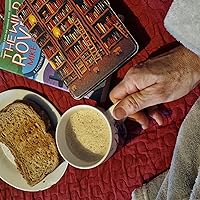
I downloaded this on Kindle Unlimited.
I loved reading this book, at the same time as it making me feel really fed up because I wasn't there, doing it, and now I (very probably) never will be. I was glad I've read Bill Bryson's A Walk In The Woods, because I recognised some landmarks, even the names of shelters, and was familiar with the basics of such an endeavour, not least of all the superiority of the 'thru-hiker' compared with the day hikers (I detected the hierarchy, even in such a goodwill-filled world!), the mechanics of daily living, and the reasons why people (like Bill Bryson) drop out.
At the beginning, before 'Fozzie's' adventure starts, there are short first-person pieces introducing some of the hikers with whom Keith walked his many miles. I particularly liked the story of 'PJ' (thru-hikers all have their 'trail names') ~ he got out of bed one morning, told his wife he was going to hike the AT, and would not be coming back. Just one slight criticism that isn't really a criticism ~ I think they would have been twice as effective if dropped in here and there, throughout the book, when we'd got to 'know' the person on the trail. Lazagne, Thirsty and co all appear at the end, too, to talk about their life post-AT.
Keith and his friends have much in common: a desire to live life their own way, a dislike of authority for authority's sake, the need for solitude, peace, to be out in the wild and lead a more simple life, away from the constraints of modern society. I found myself smiling a lot, feeling much the same. 'I didn't like being told what to do by my parents, bosses, friends or my teachers, and I still struggle with it.'
Interspersed with the hike story are passages about the history of the trail, about the early hikers, the other great trails of the US—and a grisly murder or two. Mostly, though, it's a journal about the journey. Nothing much happens, but it's fascinating. It's all about whether or not you can tell a story, really, isn't it?
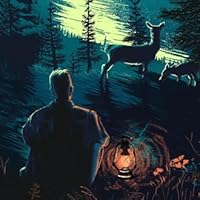
My favourite parts were the accounts of the author's time alone, about the weather and the beauty of the trail, his thoughts. 'I lived in the woods, respected them and in return they looked after me. They shaded me from the fierce sun and shielded me from strong winds ... occasionally a pool or creek would offer itself up so I could wash and every single night two stout trees held me aloft as I slept in my hammock. The woods provided firewood for the colder nights and during the warmer nights the smoke chased away the mosquitos. I was given logs to sit on or trunks to rest my back against.'
But it's not all ponderous and poetic - there is much about the jolly cameraderie, and also the problems faced on a daily basis ~ not only aches, pains, hunger and a slight depression once they neared the end, simply because it was ending. One thing that stuck in mind was the curious two-seater privy in Maine, with a cribbage board thoughtfully placed in between. Like Keith, I thought, who on earth decided anyone might want to a) do the business in company and b) play cribbage while doing so?
I loved some of the observations, like how 'apart' he felt from 'normal' life after just a week or so on the trail, when he would leave it for a day to go into a town to restock, do laundry, etc, and it felt all wrong. I was amused to read that the author has post apocalypse fantasies, as I do ~ for me, it's about all the 21st century way of life being over, and the challenge to survive. And about discovering what is really important. As Keith points out, in the world of the AT, just the knowledge that the next shelter actually had a door and a proper floor was something to get excited about.
This bit: There were virtually no buildings, no one in authority, no signs stating orders, no man-made noise, and there was no need to be in a certain place at a certain time... I believe making this connection with nature reminds our bodies and minds of a long time ago when we were truly free. We all came from the wilds. The history, although long gone and forgotten for all of us, still occupies a small space in the back of our minds. Somewhere, subconsciously, our minds remember the woods where we spent our infancy, and spending time there rekindles those distant times in our past. It was home.
There's so much I want to put in this review ~ the sad fox in the Trailside zoo who Keith wanted to free, so many quotes and examples of the beauty, the generosity of strangers; I highlighted so much, but it's far too long already. Anyway, I loved it. I shall now go and download his adventures on the Pacific Coast Trail, and I can't wait to read about the Continental Divide!