

What do you think?

มือสมัครเล่น
เมื่อมือสมัครเล่นในสนามชีวิตได้แต่คลำทางไปข้างหน้าเพื่อตามหาสิ่งที่ขาดหายโดยไม่รู้จุดหมาย รอคอยบางสิ่งบางอย่างที่แม้แต่ตนก็ไม่รู้ว่าอะไร ต่างคนต่างเสาะหาอดีตและอนาคตจากในเศษซากของความสัมพันธ์ที่พังทลาย ในทุกการหักห้ามใจที่ไม่เคยเอาชนะความเย้ายวน ในทุกความผิดที่ติดอยู่ภายใน กระนั้นไม่ว่าจะเดินมาไกลเพียงไร แต่ทุกคนกลับเพิ่งจะออกเริ่มต้นเพื่อค้นหา ว่าทำไมชีวิตจึงไม่สุขสมบูรณ์เสียเลย
17 เรื่องสั้นของชีวิตคนเดินดินที่ไม่ได้สมบูรณ์พร้อม บอกเล่าด้วยภาษาเรียบตรงไร้การปรุงแต่งของนักเขียนผู้ธรรมดาสามัญ ต้นฉบับดั้งเดิมปราศจากการปรับแก้ของรวมเรื่องสั้น “What We Talk About When We Talk About Love” ซึ่งเป็นแรงบันดาลใจให้ผู้กำกับ อเลฆานโดร อินาร์ริตู นำไปสร้างเป็นภาพยนตร์ “Birdman” ในปี 2014
17 เรื่องสั้นของชีวิตคนเดินดินที่ไม่ได้สมบูรณ์พร้อม บอกเล่าด้วยภาษาเรียบตรงไร้การปรุงแต่งของนักเขียนผู้ธรรมดาสามัญ ต้นฉบับดั้งเดิมปราศจากการปรับแก้ของรวมเรื่องสั้น “What We Talk About When We Talk About Love” ซึ่งเป็นแรงบันดาลใจให้ผู้กำกับ อเลฆานโดร อินาร์ริตู นำไปสร้างเป็นภาพยนตร์ “Birdman” ในปี 2014
296 pages, Paperback
First published January 1, 2009
About the author
Raymond Carver
366 books5,295 followersCarver was born into a poverty-stricken family at the tail-end of the Depression. He married at 19, started a series of menial jobs and his own career of 'full-time drinking as a serious pursuit', a career that would eventually kill him. Constantly struggling to support his wife and family, Carver enrolled in a writing programme under author John Gardner in 1958. He saw this opportunity as a turning point.
Rejecting the more experimental fiction of the 60s and 70s, he pioneered a precisionist realism reinventing the American short story during the eighties, heading the line of so-called 'dirty realists' or 'K-mart realists'. Set in trailer parks and shopping malls, they are stories of banal lives that turn on a seemingly insignificant detail. Carver writes with meticulous economy, suddenly bringing a life into focus in a similar way to the paintings of Edward Hopper. As well as being a master of the short story, he was an accomplished poet publishing several highly acclaimed volumes.
After the 'line of demarcation' in Carver's life - 2 June 1977, the day he stopped drinking - his stories become increasingly more redemptive and expansive. Alcohol had eventually shattered his health, his work and his family - his first marriage effectively ending in 1978. He finally married his long-term parter Tess Gallagher (they met ten years earlier at a writers' conference in Dallas) in Reno, Nevada, less than two months before he eventually lost his fight with cancer.
Rejecting the more experimental fiction of the 60s and 70s, he pioneered a precisionist realism reinventing the American short story during the eighties, heading the line of so-called 'dirty realists' or 'K-mart realists'. Set in trailer parks and shopping malls, they are stories of banal lives that turn on a seemingly insignificant detail. Carver writes with meticulous economy, suddenly bringing a life into focus in a similar way to the paintings of Edward Hopper. As well as being a master of the short story, he was an accomplished poet publishing several highly acclaimed volumes.
After the 'line of demarcation' in Carver's life - 2 June 1977, the day he stopped drinking - his stories become increasingly more redemptive and expansive. Alcohol had eventually shattered his health, his work and his family - his first marriage effectively ending in 1978. He finally married his long-term parter Tess Gallagher (they met ten years earlier at a writers' conference in Dallas) in Reno, Nevada, less than two months before he eventually lost his fight with cancer.
Ratings & Reviews
Friends & Following
Create a free account to discover what your friends think of this book!
Community Reviews
Displaying 1 - 30 of 308 reviews

June 29, 2012
MAN ON WIRE

Will Ferrer in “Everything Must Go” di Dan Rush, 2010. Il cast è completato da Rebecca Hall, Michael Peña e Laura Dern.
Qui sopra si vedono cinque stelle, ma è un’illusione: in realtà, c’è il firmamento intero.
Ho letto e riletto questi racconti nel corso degli anni, alcuni anche tre o quattro volte, e ho ritrovato sempre, intero e intatto, l’incanto.
In versione editata oppure originale, small size o full size, strada o gran turismo, naked o con optional, Carver rimane un maestro.
Il maestro del racconto.
Di quanti si potrebbe dire la stessa cosa?
Mezzo rigo e sei già dentro la storia; dialoghi inarrivabili, che ti circondano di persone in carne ossa e voce; i finali, le sospensioni, le uscite di scena, così secche e insieme struggenti.
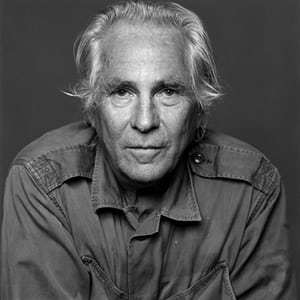
Gordon Lish è nato l’11 febbraio del 1934.
Non ho niente contro Gordon Lish, il famoso (o famigerato) editor di Carver: questi racconti erano bellissimi dopo la cura dimagrante Lish.
Solo che se sono belli, e in molti, molti punti perfino più belli, nella versione preferita da Carver, qualche domanda sorge spontanea: era proprio così necessario tagliare, cambiare titoli e nome dei personaggi, riscrivere, falciare?
Ripeto, l’intervento di Lish ha prodotto dei racconti mitici, indimenticabili. Ma adesso che li leggo così come erano previsti e pensati e creati, li trovo anche più indimenticabili.
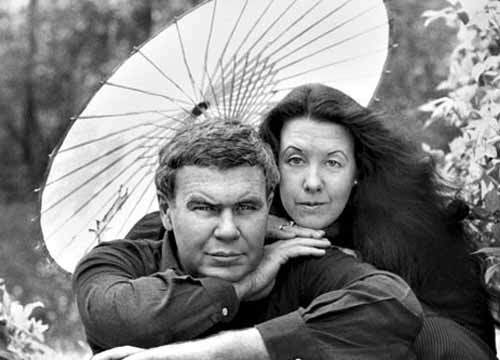
Tess Gallagher e Raymond Carver.
Forse Lish ci teneva a entrare nella storia letteraria, a brevettare il minimalismo ecc.
Solo che il minimalismo è durato poco, è sparito presto, in pochi se ne sono accorti, e nessuno ha sentito la sua mancanza.
Mentre di Carver e della sua scrittura io sento una forte mancanza.
La sua assenza determina quel genere di silenzio impressionante nel quale è possibile sentire cadere la neve.

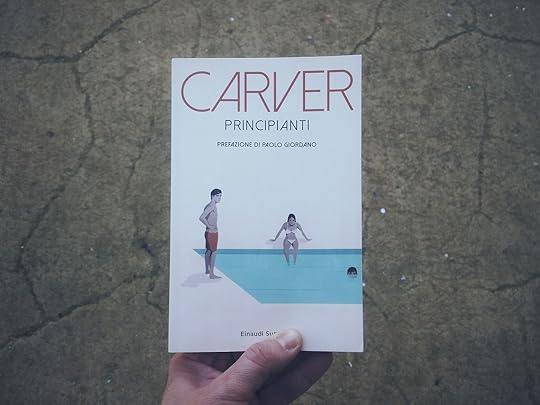
Alessandro Gottardo ha disegnato le copertine delle cosiddette ‘uniform edition’ di Einaudi: questa è quella di “Principianti”.
Leggerlo mi fa sentire come Philippe Petit, l’equilibrista che andava a spasso su un filo teso da una torre gemella all’altra.
Così è la vita, quando leggo Carver: sento che devo attraversare il vuoto, andare da qui a laggiù, muovendomi cauto sul filo.
Teso, come la fatidica corda di violino.
E come la corda dello strumento, tagliente, manco fosse la lama di un rasoio.
E sdrucciolevole, bagnato: di sentimento, e umanità - di vodka, gin, e anche rum.

Alessandro Gottardo: la copertina per l’edizione Einaudi di “Di cosa parliamo quando parliamo d’amore”.
E allora, un brindisi alla signora Gallagher, la moglie di Carver, che ha fortemente insistito e lottato per pubblicare questi racconti nella “versione di Raymond”!

Alessandro Gottardo: la copertina per l’edizione Einaudi di “Se hai bisogno, chiama”.
Perché non ballate? è il racconto che apre la raccolta (anche nell’edizione Garzanti, quella con la cura Lish).
Ne parlo perché è splendido e perché l’altra sera ho visto il film che ne è stato tratto, Everything Must Go (dignitoso, non memorabile: ma è bello vedere come da sole sei pagine si svillupa una sceneggiatura di 90/100 pagine – ed è stato bello vedere Will Ferrer in un ruolo serio, che affronta così bene da reggere da solo tutto il peso del film. Anche se Michael Peña è sempre un piacere da vedere).
Allora, in queste sei pagine la capacità di rendere lo struggimento, la malinconia, la dolcezza del passato, è potentissima, inarrivabile. Tocca l’anima.
Senza spiegare nulla di quello che precede, lasciando il lettore pressoché al buio (quali sono effettivamente le storie personali dei personaggi?), sguazzando nell’omissione, Carver trasforma le piccole cose in grandi cose, trasforma la sua prosa in poesia.

Philippe Petit a spasso tra le Twin Towers di Manhattan il 7 agosto 1974.
Will Ferrer in “Everything Must Go” di Dan Rush, 2010. Il cast è completato da Rebecca Hall, Michael Peña e Laura Dern.
Qui sopra si vedono cinque stelle, ma è un’illusione: in realtà, c’è il firmamento intero.
Ho letto e riletto questi racconti nel corso degli anni, alcuni anche tre o quattro volte, e ho ritrovato sempre, intero e intatto, l’incanto.
In versione editata oppure originale, small size o full size, strada o gran turismo, naked o con optional, Carver rimane un maestro.
Il maestro del racconto.
Di quanti si potrebbe dire la stessa cosa?
Mezzo rigo e sei già dentro la storia; dialoghi inarrivabili, che ti circondano di persone in carne ossa e voce; i finali, le sospensioni, le uscite di scena, così secche e insieme struggenti.
Gordon Lish è nato l’11 febbraio del 1934.
Non ho niente contro Gordon Lish, il famoso (o famigerato) editor di Carver: questi racconti erano bellissimi dopo la cura dimagrante Lish.
Solo che se sono belli, e in molti, molti punti perfino più belli, nella versione preferita da Carver, qualche domanda sorge spontanea: era proprio così necessario tagliare, cambiare titoli e nome dei personaggi, riscrivere, falciare?
Ripeto, l’intervento di Lish ha prodotto dei racconti mitici, indimenticabili. Ma adesso che li leggo così come erano previsti e pensati e creati, li trovo anche più indimenticabili.
Tess Gallagher e Raymond Carver.
Forse Lish ci teneva a entrare nella storia letteraria, a brevettare il minimalismo ecc.
Solo che il minimalismo è durato poco, è sparito presto, in pochi se ne sono accorti, e nessuno ha sentito la sua mancanza.
Mentre di Carver e della sua scrittura io sento una forte mancanza.
La sua assenza determina quel genere di silenzio impressionante nel quale è possibile sentire cadere la neve.
Alessandro Gottardo ha disegnato le copertine delle cosiddette ‘uniform edition’ di Einaudi: questa è quella di “Principianti”.
Leggerlo mi fa sentire come Philippe Petit, l’equilibrista che andava a spasso su un filo teso da una torre gemella all’altra.
Così è la vita, quando leggo Carver: sento che devo attraversare il vuoto, andare da qui a laggiù, muovendomi cauto sul filo.
Teso, come la fatidica corda di violino.
E come la corda dello strumento, tagliente, manco fosse la lama di un rasoio.
E sdrucciolevole, bagnato: di sentimento, e umanità - di vodka, gin, e anche rum.
Alessandro Gottardo: la copertina per l’edizione Einaudi di “Di cosa parliamo quando parliamo d’amore”.
E allora, un brindisi alla signora Gallagher, la moglie di Carver, che ha fortemente insistito e lottato per pubblicare questi racconti nella “versione di Raymond”!
Alessandro Gottardo: la copertina per l’edizione Einaudi di “Se hai bisogno, chiama”.
Perché non ballate? è il racconto che apre la raccolta (anche nell’edizione Garzanti, quella con la cura Lish).
Ne parlo perché è splendido e perché l’altra sera ho visto il film che ne è stato tratto, Everything Must Go (dignitoso, non memorabile: ma è bello vedere come da sole sei pagine si svillupa una sceneggiatura di 90/100 pagine – ed è stato bello vedere Will Ferrer in un ruolo serio, che affronta così bene da reggere da solo tutto il peso del film. Anche se Michael Peña è sempre un piacere da vedere).
Allora, in queste sei pagine la capacità di rendere lo struggimento, la malinconia, la dolcezza del passato, è potentissima, inarrivabile. Tocca l’anima.
Senza spiegare nulla di quello che precede, lasciando il lettore pressoché al buio (quali sono effettivamente le storie personali dei personaggi?), sguazzando nell’omissione, Carver trasforma le piccole cose in grandi cose, trasforma la sua prosa in poesia.
Philippe Petit a spasso tra le Twin Towers di Manhattan il 7 agosto 1974.

April 29, 2016
English (Beginners) / Italiano
«A man without hands came to the door to sell me a photograph of my house»
Yes, the protagonist of "Viewfinder", one of the shortest novel of this collection, has two hooks for hands. And the first edition of this collection of novels suffered the same fate of those amputations: dramatically reduced by Carver's editor, Gordon Lish. Probably Lish's intention was to ride the wave of minimalism that was popular those days. But this is frowned upon by Carver:
«I don't like it. There is something in that "minimalist" looking like a miserable picture, or a hasty execution. And I don't like it»Impossible to think, hasty execution is the complete opposite of the meticulous Carver's writing, who struggles in his novels for the best choice of words. However, to be honest, Lish makes also good choices in his revisions, as emphasized by Carver in some letters to the editor. But in the same letters there is also some desperation, the despair of an author assisting to the mutilation of his work, the distortion of what he perceives as the primary sense of his novels.
These deep reduction generate What We Talk About When We Talk About Love, first edition of this collection. But what we talk about when we talk about love, then? Carver admits we're all "beginners" in love. But one thing is for sure: Carverian love is a very thin one, be it the love between two partners or the one of the parents for their children.
Last entry: in these novels there's never a well-defined ending. Carver focuses on the description of a situation leading towards the epilogue, but the ending is choosen by the readership. And each time, the ending that Carver let me imagine brings me a sense of unease, a little hopelessness that makes me know how Raymond Carver has a way with the words.
Vote: 8
«Un uomo senza mani si è presentato alla porta per vendermi una foto di casa mia»
Si, perchè il protagonista di Mirino, uno dei racconti più brevi di questa raccolta, possiede degli uncini al posto delle mani. Lo stesso destino di questi arti amputati lo hanno subito nella loro prima edizione tutti i racconti di questa raccolta: tagliati in larga parte per opera del suo editor, Gordon Lish. Probabilmente le intenzioni di Lish erano quelle di cavalcare l'onda del minimalismo in voga all'epoca. Etichetta di minimalista che però non è vista di buon occhio da Carver:
«Non mi piace. C'è qualcosa in quel minimalista che dà l'idea di una visione misera e di un'esecuzione frettolosa. E non mi piace»Figuriamoci, esecuzione frettolosa è proprio l'opposto del modo di scrivere meticoloso di Carver, che fa della scelta del vocabolo giusto una questione essenziale. Tuttavia, ad essere sincero, Lish è anche efficace in alcune sue scelte, come sottolinea Carver stesso in alcune sue lettere all'editore. Dalle stesse lettere trapela però anche una certa disperazione, lo sconforto di un autore che vede mutilate le sue opere con uno stravolgimento di quello che lui percepisce come il senso primario di quello che ha scritto.
Da questi profondi tagli nasce Di cosa parliamo quando parliamo d'amore, prima edizione di questa raccolta. Ma di cosa parliamo quando parliamo d'amore? Carver ammette che siamo tutti principianti, in amore. Una cosa è certa: l'amore carveriano è estremamente labile. Sia esso l'amore di due compagni o quello dei genitori per i figli.
Ultima nota: non c'è mai un finale definito, in questi racconti. Carver si concentra sulla vicenda, sulla descrizione di una situazione che conduce verso un epilogo. Però il finale se lo scelgono i lettori. E ogni volta, il finale che Carver mi lascia immaginare mi procura un senso di disagio, una piccola disperazione che mi fa capire che Raymond Carver con le parole ci sa fare maledettamente bene.
Voto: 8

March 8, 2011
This is the original versions of the stories that were first published as "What We Talk About When We Talk About Love", which I reread alongside this and reviewed HERE.
Differences: Edited and Unedited
Some of the versions here are more than double the length, and most of them are darker and with more ambiguous endings.
I would like to believe that Carver's words were butchered by an over-zealous editor, and many say that is the case, but I'm not sure that's entirely true. The two versions of each story are often quite different, but it is hard to say which is better. In some cases, shorter is pithier, but in others, the originals contain backstory that adds depth and richness. However, some of the changes are more gratuitous, such as renaming Mel McGinniss to be Herb McGinniss.
See Stephen King's claim that "The editor is always right", from his book, On Writing, my review HERE.
Themes and Style
All the stories involve sad, dysfunctional people: a vivid glimpse of people at a troubling time in their lives. Most concern recent or imminent loss, whether a partner, child, friend or home. Often matters are exacerbated by problems with drink and fidelity. But there is often a glimmer of hope.
Many are beguiling, a few are grisly, but towards the end of the collection I lost the impetus to continue, so I put it aside for a while. I'm not sure what the problem was.
A few stories are positively disturbing (e.g. a brutal and pointless murder), but there are insights and questions too:
* Where does love go when it dies?
* How do you come to terms with the violation of the sanctity of your home?
* Can there be love if there is also violence?
* How does a functional family fall apart?
Some of the characters are keen to explore these matters overtly ("There was more to it, and she was trying to get it talked out" and "We'd reached the end of something, and the thing was to find out where new to start"), but others are victims of circumstance or just go, unthinkingly, with the flow.
One of the early stories contains the line "Booze takes a lot of effort if you're going to do a good job with it" and one expects that to sum up the collection, but they're more varied than that.
Characters
There are few really likeable characters; more references to fishing than might be expected; misogynistic aspects and not much humour, yet they were fascinating to read.
The Stories
The summaries are more to jog my memory in future than to add great insight for anyone reading.
Why don't you Dance? is about a yard sale. A young couple come by, dance on the driveway and linger.
Viewfinder has a wonderful opening line, "A man without hands came to the door to sell me a photo of my house".
Where is Everyone? is about an alcoholic relationships.
Gazebo is about a couple running a declining motel. Drinking "consumes a great deal of time and effort if you devote yourself to it fully".
Want to See Something? concerns a neighbourhood feud and how the killing of a slug leads to reappraisal of a marriage. It is told from the woman's perspective and is very different from the edited version.
The Fling is what a man tells his visiting adult son about. The extra detail and backstory of this original version make it much darker.
A Small, Good Thing is one that I think I've seen a film of. A mother orders a birthday cake for her son's birthday. When she doesn't turn up to collect it, the baker takes a nasty turn. This longer version is much more elegiac. I have written a full review of this story, HERE.
Tell the Women we're Going starts with the mundane but gets very nasty. This version is more nuanced than the edited one.
If it Please You follows a couple to bingo where they are annoyed by the presence of a hippie couple (oh, how dated that makes it sound). "He liked to be on time, which meant a few minutes early." I can relate to that bit.
So Much Water so Close to Home is when three men go on a fishing weekend, find a body, but do nothing about it straight away. Their wives are horrified, to the detriment of their marriages. It was filmed as Jindabyne (http://www.imdb.com/title/tt0382765/).
Dummy explores the mysterious obsession (fish) of a mute, and its tragic consequences.
Pie is about the aftermath of a broken relationship and particularly the strains of Christmas.
The Calm did nothing for me. A man chats to his barber.
Mine is about possession, rather than excavation: a separating couple dividing the spoils - including their baby!
Distance is a vignette of a father telling his daughter of one incident shortly after she was born, that illustrates the relationship pressures of the early days of parenthood.
Beginners has couples pondering the meaning of love and whether it's incompatible with physical abuse.
One More Thing has a man rowing with his teenage daughter who thinks mind over matter can fix his attachment to drink.
Differences: Edited and Unedited
Some of the versions here are more than double the length, and most of them are darker and with more ambiguous endings.
I would like to believe that Carver's words were butchered by an over-zealous editor, and many say that is the case, but I'm not sure that's entirely true. The two versions of each story are often quite different, but it is hard to say which is better. In some cases, shorter is pithier, but in others, the originals contain backstory that adds depth and richness. However, some of the changes are more gratuitous, such as renaming Mel McGinniss to be Herb McGinniss.
See Stephen King's claim that "The editor is always right", from his book, On Writing, my review HERE.
Themes and Style
All the stories involve sad, dysfunctional people: a vivid glimpse of people at a troubling time in their lives. Most concern recent or imminent loss, whether a partner, child, friend or home. Often matters are exacerbated by problems with drink and fidelity. But there is often a glimmer of hope.
Many are beguiling, a few are grisly, but towards the end of the collection I lost the impetus to continue, so I put it aside for a while. I'm not sure what the problem was.
A few stories are positively disturbing (e.g. a brutal and pointless murder), but there are insights and questions too:
* Where does love go when it dies?
* How do you come to terms with the violation of the sanctity of your home?
* Can there be love if there is also violence?
* How does a functional family fall apart?
Some of the characters are keen to explore these matters overtly ("There was more to it, and she was trying to get it talked out" and "We'd reached the end of something, and the thing was to find out where new to start"), but others are victims of circumstance or just go, unthinkingly, with the flow.
One of the early stories contains the line "Booze takes a lot of effort if you're going to do a good job with it" and one expects that to sum up the collection, but they're more varied than that.
Characters
There are few really likeable characters; more references to fishing than might be expected; misogynistic aspects and not much humour, yet they were fascinating to read.
The Stories
The summaries are more to jog my memory in future than to add great insight for anyone reading.
Why don't you Dance? is about a yard sale. A young couple come by, dance on the driveway and linger.
Viewfinder has a wonderful opening line, "A man without hands came to the door to sell me a photo of my house".
Where is Everyone? is about an alcoholic relationships.
Gazebo is about a couple running a declining motel. Drinking "consumes a great deal of time and effort if you devote yourself to it fully".
Want to See Something? concerns a neighbourhood feud and how the killing of a slug leads to reappraisal of a marriage. It is told from the woman's perspective and is very different from the edited version.
The Fling is what a man tells his visiting adult son about. The extra detail and backstory of this original version make it much darker.
A Small, Good Thing is one that I think I've seen a film of. A mother orders a birthday cake for her son's birthday. When she doesn't turn up to collect it, the baker takes a nasty turn. This longer version is much more elegiac. I have written a full review of this story, HERE.
Tell the Women we're Going starts with the mundane but gets very nasty. This version is more nuanced than the edited one.
If it Please You follows a couple to bingo where they are annoyed by the presence of a hippie couple (oh, how dated that makes it sound). "He liked to be on time, which meant a few minutes early." I can relate to that bit.
So Much Water so Close to Home is when three men go on a fishing weekend, find a body, but do nothing about it straight away. Their wives are horrified, to the detriment of their marriages. It was filmed as Jindabyne (http://www.imdb.com/title/tt0382765/).
Dummy explores the mysterious obsession (fish) of a mute, and its tragic consequences.
Pie is about the aftermath of a broken relationship and particularly the strains of Christmas.
The Calm did nothing for me. A man chats to his barber.
Mine is about possession, rather than excavation: a separating couple dividing the spoils - including their baby!
Distance is a vignette of a father telling his daughter of one incident shortly after she was born, that illustrates the relationship pressures of the early days of parenthood.
Beginners has couples pondering the meaning of love and whether it's incompatible with physical abuse.
One More Thing has a man rowing with his teenage daughter who thinks mind over matter can fix his attachment to drink.

February 3, 2021
Γίνεται μια συλλογή διηγημάτων να έχει μόνο εξαιρετικά διηγήματα; Ναι, γίνεται! Κι αυτή η συλλογή είναι η συγκεκριμένη. Μέγα Κάρβερ! Ένα προς ένα μοναδικά!
Συναντάμε κι εδώ αυτοβιογραφικά στοιχεία.
Συναντάμε κι εδώ την Αμερική, τη ζωή στο Νέο Κόσμο.
Συναντάμε κι εδώ ένα λόγο λιτό που σε αγγίζει κι έναν βρώμικο ρεαλισμό που σε ρουφά μέσα στις σελίδες.
Συναντάμε κι εδώ αυτοβιογραφικά στοιχεία.
Συναντάμε κι εδώ την Αμερική, τη ζωή στο Νέο Κόσμο.
Συναντάμε κι εδώ ένα λόγο λιτό που σε αγγίζει κι έναν βρώμικο ρεαλισμό που σε ρουφά μέσα στις σελίδες.

November 8, 2011
First up, it's ridiculous to contrast this unfavourably with What We Talk About When We Talk About Love. These are first drafts; of course they're going to seem unfinished! Secondly, personally I've never bought the line that What We Talk About... was Carver's best book; to me it always seemed the most frustrating. Thirdly, I've read some stories by Gordon Lish — the editor of What We Talk About... — and I wasn't impressed. Glib and cynical, just like the worst of his reworkings of Carver. So why not rather approach this book in the spirit of what might have been, if Carver had been willing or able to stand up to Lish and, more to the point, to wait until he was ready to edit the stories himself? You want to weigh up Lish's as opposed to Carver's editing skills? Check out Elephant, or the best bits of Cathedral, then you’ll see what Carver could do by himself, given a bit of time and security. Yeah, Lish came up with the gimmick (and what else is it but a gimmick to call a 2-page story about a couple physically fighting over their baby 'Popular Mechanics'?) and by making Carver appear more experimental and oblique gave him a notoriety that boosted sales. But any argument that posits Lish as the real talent is absurd. Carver was a big-hearted human writer with a conscience; to turn him into a clever cynic by destroying half of his text was no achievement. Lish was a good editor, no doubt, but not a good collaborator. And Carver, after stressing out majorly in a letter that would later become famous, just lay down and took it. Why? The advance was paid, he was sick of being poor, he was sick of fighting. We can be thankful he never lay down again. Oh, and you want to read some beautiful, heartbreaking first drafts from the vault? Check out the posthumously-published stories in Harvill's Call if You Need Me, some of the best stuff Carver ever wrote. RIP Raymond. You are missed.

April 30, 2020
Raymond Carver - Beginners
The fact that Carver's literary brilliance survived through the heavy abridgement his initial writings were subjected to by his editor is merely one more proof of that same brilliance. Reading his work in its initial full form is a completely different experience than that of reading What We Talk About When We Talk About Love and I strongly believe that this is how it should have been from the start. In any case Carver's stories touch the very essence of being human and I'm forever thankful for having read them.
The fact that Carver's literary brilliance survived through the heavy abridgement his initial writings were subjected to by his editor is merely one more proof of that same brilliance. Reading his work in its initial full form is a completely different experience than that of reading What We Talk About When We Talk About Love and I strongly believe that this is how it should have been from the start. In any case Carver's stories touch the very essence of being human and I'm forever thankful for having read them.

March 18, 2017
Empatia, densità e tensione narrativa.
In Principianti - versione originale e più generosa di Di cosa parliamo quando parliamo d’amore - ci sono almeno 5 o 6 tra i racconti più belli che io abbia mai letto [82/100]
Perché non ballate? ✖✖✖
Mirino ✖✖✖✖✖
Che fine hanno fatto tutti? ✖✖✖✖✖
Gazebo ✖✖✖
La vuoi vedere una cosa? ✖✖✖
L’avventura ✖✖✖✖✖
Una cosa piccola ma buona ✖✖✖✖✖
Di’ alle donne che usciamo ✖✖✖
Se così ti piace ✖✖✖✖
Con tanta di quell’acqua a due passi da casa ✖✖✖✖✖
Dummy ✖✖✖✖✖
La torta ✖✖✖
La calma ✖✖✖
Mio ✖✖✖
Distanza ✖✖✖
Principianti ✖✖✖✖✖
Un’altra cosa ✖✖✖
In Principianti - versione originale e più generosa di Di cosa parliamo quando parliamo d’amore - ci sono almeno 5 o 6 tra i racconti più belli che io abbia mai letto [82/100]
Perché non ballate? ✖✖✖
Mirino ✖✖✖✖✖
Che fine hanno fatto tutti? ✖✖✖✖✖
Gazebo ✖✖✖
La vuoi vedere una cosa? ✖✖✖
L’avventura ✖✖✖✖✖
Una cosa piccola ma buona ✖✖✖✖✖
Di’ alle donne che usciamo ✖✖✖
Se così ti piace ✖✖✖✖
Con tanta di quell’acqua a due passi da casa ✖✖✖✖✖
Dummy ✖✖✖✖✖
La torta ✖✖✖
La calma ✖✖✖
Mio ✖✖✖
Distanza ✖✖✖
Principianti ✖✖✖✖✖
Un’altra cosa ✖✖✖

Read
March 3, 2022Raymond Carver é, não poucas vezes, e bem pelo contrário, apelidado de minimalista. E, foi ao ver vendida esta imagem, que procurei saber mais do autor. Rapidamente, porém, descobri que ele detestava o epíteto e com justa razão: Carver foi pouco senhor das suas obras.
Em 1980, quando se senta frente a um papel em branco e redige a missiva que pretende escusá-lo do editor Gordon Lish, já Carver é um nome conhecido no mundo literário, associado a técnicas de cunho simplista e estilizado. Acabara de escrever O Que Sabemos Do Amor (Beginners, no original) e este era um trabalho que lhe falava particularmente: "(...) much of this has to do with my sobriety and with my new-found (and fragile, I see) mental health and wellbeing (...) I'll tell you the truth, my very sanity is on the line here." *
Os cortes que Lish proponha chegavam a limitar o manuscrito de Carver em mais de 70%; algumas partes sendo reescritas - como era seu hábito -; nomes alterados; novos finais inventados e mesmo os títulos completamente re-imaginados. No ano seguinte, no entanto, e apesar da paixão que Carver emprega em tentar alterar este desfecho, a publicação avança segundo vontade do editor, sob o título "De Que Falamos Quando Falamos De Amor".
E o tratamento de Lish é, claramente, de um de profundo desrespeito pela criação do autor. A ser assim, mais valia ler o nome do editor no lugar do escritor e vice versa.
Vale pois a pena contrastar os textos.
A um dos meus contos preferidos segue-se a seguinte nota (e por estas notas finais muito vale a presente edição):
"Uma coisa pequena e boa
Na versão original, manuscrito de 37 páginas que Gordon Lish cortou em 78 por cento para publicação em livro. O conto foi publicado pela primeira vez na revista Columbia: A Magazine of Poetry and Prose, da Universidade de Columbia, Nova Iorque, na Primavera de 1981, após uma primeira revisão de Lish. Nessa primeira revisão, as últimas 18 páginas foram eliminadas e o título alterado. Em 1982, Carver recuperou o tamanho original do conto, bem como o titulo, e publicou-o na revista Ploughshares, de Cambridge, Massachusetts, sem nenhuma das alterações propostas por Lish, excepto ligeiras modificações no primeiro parágrafo."
Isto trocado por miúdos, e depois de lidas ambas as versões - Carver (Quetzal, O Que Sabemos Do Amor)/Lish (Editorial Teorema, De Que Falamos Quando Falamos De Amor) - resume-se a truncar a história por mais da metade, o que não é ser minimalista, mas censor. E esta barbárie repete-se sistematicamente:
"manuscrito de 15 páginas que Gordon Lish cortou em 78 por cento"; "manuscrito de seis páginas que Gordon Lish cortou em 30 por cento"; "manuscrito de 11 páginas que Gordon Lish cortou em 29 por cento"...
A própria linguagem usada (e transformada) pelo editor é de uma baixeza que pouco ou nada tem que ver com a sensibilidade de Carver. Reduz imenso a dimensão humana e apresenta antes uma caricatura de pessoas: banais, rudes, com o palavrão na ponta da língua e pouco mais na cabeça - ou no coração.
Carver talvez não seja o escritor absolutamente original, genial, incrivelmente maravilhoso e o danado minimalista que os leitores se acostumaram a julgá-lo e me impingiram, mas, para mim, tem um talento incomum: dá-nos textos que começam a media res sem se tornarem ridículos e inverosímeis; dá-nos personagens credíveis e humanos, de mundos comuns e iguais aos nossos; dá-nos vários retratos daquilo que o amor é: do amor filial ao amor criminoso; do amor na terceira idade ao primeiro amor; do amor banal ao amor edificante...
Posto isto, alguns dos contos aqui reunidos são brilhantes enquanto outros são apenas um pequeno entretenimento, e outros ainda são verdadeiros contos de terror pela violência que deles emana.
Honestamente, pagaria bom dinheiro pelo livro apenas para ler Porque Não Dançam, o conto que abre o volume. O que não serve para dizer que os restantes não sejam bons, muito bons e igualmente excelentes, razoáveis ou apenas muito maus.
Entre os favoritos contam-se:
Porque não dançam ⭐⭐⭐⭐⭐
Tanta água, tão perto de casa ⭐⭐⭐⭐
Se assim o quiseres ⭐⭐⭐⭐
Uma coisa pequena e boa ⭐⭐⭐⭐⭐
Meu ⭐⭐⭐⭐
Principiantes ⭐⭐⭐⭐⭐
Este é o verdadeiro Raymond Carver que me foi vendido como a epítome do movimento minimalista, como o escritor de fragmentos poderosos, facto que, não deixando de ser verdade também não deixa de ser mentira.
A imagem de Carver manter-se-á colada à de Lish, é inevitável. Talvez nunca viesse a ser ninguém (enquanto o escritor de nome que é, entenda-se) sem a intervenção deste. Há todavia a reconhecer que a ética não fazia certamente parte das qualidades do editor. E diria que o escritor merece um pouco do nosso tempo investido no seu genuíno trabalho - seja ele o que for.
«...às vezes consegue-se ouvir a neve a cair. Se estivermos tranquilos e a cabeça estiver limpa e estivermos em paz connosco próprios e com todas as coisas, podemos deitar-nos no escuro e ouvir a neve. Tente ouvir a neve um dia.»
274
*https://www.newyorker.com/magazine/20...
Em 1980, quando se senta frente a um papel em branco e redige a missiva que pretende escusá-lo do editor Gordon Lish, já Carver é um nome conhecido no mundo literário, associado a técnicas de cunho simplista e estilizado. Acabara de escrever O Que Sabemos Do Amor (Beginners, no original) e este era um trabalho que lhe falava particularmente: "(...) much of this has to do with my sobriety and with my new-found (and fragile, I see) mental health and wellbeing (...) I'll tell you the truth, my very sanity is on the line here." *
Os cortes que Lish proponha chegavam a limitar o manuscrito de Carver em mais de 70%; algumas partes sendo reescritas - como era seu hábito -; nomes alterados; novos finais inventados e mesmo os títulos completamente re-imaginados. No ano seguinte, no entanto, e apesar da paixão que Carver emprega em tentar alterar este desfecho, a publicação avança segundo vontade do editor, sob o título "De Que Falamos Quando Falamos De Amor".
E o tratamento de Lish é, claramente, de um de profundo desrespeito pela criação do autor. A ser assim, mais valia ler o nome do editor no lugar do escritor e vice versa.
Vale pois a pena contrastar os textos.
A um dos meus contos preferidos segue-se a seguinte nota (e por estas notas finais muito vale a presente edição):
"Uma coisa pequena e boa
Na versão original, manuscrito de 37 páginas que Gordon Lish cortou em 78 por cento para publicação em livro. O conto foi publicado pela primeira vez na revista Columbia: A Magazine of Poetry and Prose, da Universidade de Columbia, Nova Iorque, na Primavera de 1981, após uma primeira revisão de Lish. Nessa primeira revisão, as últimas 18 páginas foram eliminadas e o título alterado. Em 1982, Carver recuperou o tamanho original do conto, bem como o titulo, e publicou-o na revista Ploughshares, de Cambridge, Massachusetts, sem nenhuma das alterações propostas por Lish, excepto ligeiras modificações no primeiro parágrafo."
Isto trocado por miúdos, e depois de lidas ambas as versões - Carver (Quetzal, O Que Sabemos Do Amor)/Lish (Editorial Teorema, De Que Falamos Quando Falamos De Amor) - resume-se a truncar a história por mais da metade, o que não é ser minimalista, mas censor. E esta barbárie repete-se sistematicamente:
"manuscrito de 15 páginas que Gordon Lish cortou em 78 por cento"; "manuscrito de seis páginas que Gordon Lish cortou em 30 por cento"; "manuscrito de 11 páginas que Gordon Lish cortou em 29 por cento"...
A própria linguagem usada (e transformada) pelo editor é de uma baixeza que pouco ou nada tem que ver com a sensibilidade de Carver. Reduz imenso a dimensão humana e apresenta antes uma caricatura de pessoas: banais, rudes, com o palavrão na ponta da língua e pouco mais na cabeça - ou no coração.
Carver talvez não seja o escritor absolutamente original, genial, incrivelmente maravilhoso e o danado minimalista que os leitores se acostumaram a julgá-lo e me impingiram, mas, para mim, tem um talento incomum: dá-nos textos que começam a media res sem se tornarem ridículos e inverosímeis; dá-nos personagens credíveis e humanos, de mundos comuns e iguais aos nossos; dá-nos vários retratos daquilo que o amor é: do amor filial ao amor criminoso; do amor na terceira idade ao primeiro amor; do amor banal ao amor edificante...
Posto isto, alguns dos contos aqui reunidos são brilhantes enquanto outros são apenas um pequeno entretenimento, e outros ainda são verdadeiros contos de terror pela violência que deles emana.
Honestamente, pagaria bom dinheiro pelo livro apenas para ler Porque Não Dançam, o conto que abre o volume. O que não serve para dizer que os restantes não sejam bons, muito bons e igualmente excelentes, razoáveis ou apenas muito maus.
Entre os favoritos contam-se:
Porque não dançam ⭐⭐⭐⭐⭐
Tanta água, tão perto de casa ⭐⭐⭐⭐
Se assim o quiseres ⭐⭐⭐⭐
Uma coisa pequena e boa ⭐⭐⭐⭐⭐
Meu ⭐⭐⭐⭐
Principiantes ⭐⭐⭐⭐⭐
Este é o verdadeiro Raymond Carver que me foi vendido como a epítome do movimento minimalista, como o escritor de fragmentos poderosos, facto que, não deixando de ser verdade também não deixa de ser mentira.
A imagem de Carver manter-se-á colada à de Lish, é inevitável. Talvez nunca viesse a ser ninguém (enquanto o escritor de nome que é, entenda-se) sem a intervenção deste. Há todavia a reconhecer que a ética não fazia certamente parte das qualidades do editor. E diria que o escritor merece um pouco do nosso tempo investido no seu genuíno trabalho - seja ele o que for.
«...às vezes consegue-se ouvir a neve a cair. Se estivermos tranquilos e a cabeça estiver limpa e estivermos em paz connosco próprios e com todas as coisas, podemos deitar-nos no escuro e ouvir a neve. Tente ouvir a neve um dia.»
274
*https://www.newyorker.com/magazine/20...

April 14, 2017
Principianti sino alla fine
"Sono rimasto disteso a fissare lo schermo. Scorrevano immagini...non sentivo niente, ma non mi andava di alzarmi. Ho continuato a fissare lo schermo finché hanno cominciato a chiudermisi gli occhi. Ma è lì che mi sono risvegliato in un sussulto, con il pigiama madido di sudore. Una luce nevosa riempiva la stanza. Un ruggito che m'assaliva. Frastuono dappertutto. Io sono rimasto disteso lì. Non mi sono mosso."
"D'un tratto mi sono sentita lontanissima da tutti quelli che conoscevo e amavo da ragazza. Mi mancavano. Desiderare di tornare a quell'epoca...Buffo come la vita non somigliasse per niente a quello che mi ero immaginata quando ero giovane e sognavo il futuro. Ormai non ricordavo neanche più cosa volessi farne della mia vita a quell'epoca..."
"Forse non si vince mai davvero, non in quello che conta."
"Eppure tra me e lui non cambierà nulla. Niente cambierà sul serio. Invecchieremo insieme. Be', certe cose intorno a noi cambieranno un po', si faranno più facili o difficili, dipende, ma in fondo niente cambierà veramente. Oramai le nostre decisioni le abbiamo prese, le nostre vite si sono messe in moto e andranno avanti così per sempre, finché non si fermeranno."
Alla fine siamo tutti un po' Carver.
Quando un bicchiere tira l'altro, lo sguardo si fa sfocato e le pareti incominciano a oscillare, la mente corre verso lidi inesplorati e plasma nuovi orizzonti da raggiungere.
Ma, nel correre via, non si va mai così lontano come si vorrebbe.
La realtà ci raccoglie dal tombino dove abbiamo sboccato l'anima, ci rimette in piedi e ammanta la nostra esistenza del noioso grigiore dei compromessi da accettare; degli amori sfioriti e tentativi di aggrapparcisi per rimanere ancorati a una realtà che ci consuma giorno dopo giorno; della degradante decadenza maturata, negli anni, a rincorrere chimere e fulgide illusioni.
Forse, in fondo, non saremo mai veterani della vita.
"Sono rimasto disteso a fissare lo schermo. Scorrevano immagini...non sentivo niente, ma non mi andava di alzarmi. Ho continuato a fissare lo schermo finché hanno cominciato a chiudermisi gli occhi. Ma è lì che mi sono risvegliato in un sussulto, con il pigiama madido di sudore. Una luce nevosa riempiva la stanza. Un ruggito che m'assaliva. Frastuono dappertutto. Io sono rimasto disteso lì. Non mi sono mosso."
"D'un tratto mi sono sentita lontanissima da tutti quelli che conoscevo e amavo da ragazza. Mi mancavano. Desiderare di tornare a quell'epoca...Buffo come la vita non somigliasse per niente a quello che mi ero immaginata quando ero giovane e sognavo il futuro. Ormai non ricordavo neanche più cosa volessi farne della mia vita a quell'epoca..."
"Forse non si vince mai davvero, non in quello che conta."
"Eppure tra me e lui non cambierà nulla. Niente cambierà sul serio. Invecchieremo insieme. Be', certe cose intorno a noi cambieranno un po', si faranno più facili o difficili, dipende, ma in fondo niente cambierà veramente. Oramai le nostre decisioni le abbiamo prese, le nostre vite si sono messe in moto e andranno avanti così per sempre, finché non si fermeranno."
Alla fine siamo tutti un po' Carver.
Quando un bicchiere tira l'altro, lo sguardo si fa sfocato e le pareti incominciano a oscillare, la mente corre verso lidi inesplorati e plasma nuovi orizzonti da raggiungere.
Ma, nel correre via, non si va mai così lontano come si vorrebbe.
La realtà ci raccoglie dal tombino dove abbiamo sboccato l'anima, ci rimette in piedi e ammanta la nostra esistenza del noioso grigiore dei compromessi da accettare; degli amori sfioriti e tentativi di aggrapparcisi per rimanere ancorati a una realtà che ci consuma giorno dopo giorno; della degradante decadenza maturata, negli anni, a rincorrere chimere e fulgide illusioni.
Forse, in fondo, non saremo mai veterani della vita.
December 29, 2018
Τρεις το λάδι, τρεις το ξύδι, τρεις και το λαδόξιδο.
Όπως σε όλες τις συλλογές διηγημάτων-εκτός ελαχίστων εξαιρέσεων-ή του ύψους ή του βάθους.
Έχει ένα 5αστερο διήγημα (Μια Μικρή Παρηγοριά), ένα 4αστερο (Πες στις Γυναίκες Ότι Φεύγουμε-θυμίζει ανατριχιαστικά την πρόσφατη υπόθεση φόνου στην Ρόδο), κάποια διηγήματα στο 3,5 (Γιατί Δεν Χορεύετε, Ας Είναι Το Θέλημα Σου, Τόσο Πολύ Νερό Κοντά Στο Σπίτι, Μουγγός), αλλά και κάποια μονάστερα (Σκόπευτρο, Δικό μου), με τα υπόλοιπα να κινούνται κάπου ανάμεσα.
Αξίζει να διαβαστεί για την δύναμη στην Αμερική του editor -κυκλοφόρησε και στα ελληνικά ως "Για τι πράγμα μιλάμε όταν μιλάμε για αγάπη". Στην κυριολεξία άλλο βιβλίο.
ΥΓ : είχα το βιβλίο κάτι μήνες στην βιβλιοθήκη μου αδιάβαστο, προσπαθώντας εν τω μεταξύ να καταλάβω ποιον μου θυμίζει ο συγγραφέας στο εξώφυλλο. Είναι ίδιος ένας ταρίφας που ξέρω.
Όπως σε όλες τις συλλογές διηγημάτων-εκτός ελαχίστων εξαιρέσεων-ή του ύψους ή του βάθους.
Έχει ένα 5αστερο διήγημα (Μια Μικρή Παρηγοριά), ένα 4αστερο (Πες στις Γυναίκες Ότι Φεύγουμε-θυμίζει ανατριχιαστικά την πρόσφατη υπόθεση φόνου στην Ρόδο), κάποια διηγήματα στο 3,5 (Γιατί Δεν Χορεύετε, Ας Είναι Το Θέλημα Σου, Τόσο Πολύ Νερό Κοντά Στο Σπίτι, Μουγγός), αλλά και κάποια μονάστερα (Σκόπευτρο, Δικό μου), με τα υπόλοιπα να κινούνται κάπου ανάμεσα.
Αξίζει να διαβαστεί για την δύναμη στην Αμερική του editor -κυκλοφόρησε και στα ελληνικά ως "Για τι πράγμα μιλάμε όταν μιλάμε για αγάπη". Στην κυριολεξία άλλο βιβλίο.
ΥΓ : είχα το βιβλίο κάτι μήνες στην βιβλιοθήκη μου αδιάβαστο, προσπαθώντας εν τω μεταξύ να καταλάβω ποιον μου θυμίζει ο συγγραφέας στο εξώφυλλο. Είναι ίδιος ένας ταρίφας που ξέρω.

February 10, 2020
Carver, σ' αγαπώ
Δε σε καταλαβαίνω πάντα, αλλά σ' αγαπώ και τότε.
Δε σε καταλαβαίνω πάντα, αλλά σ' αγαπώ και τότε.

July 11, 2017
Em toda a vida juntos só tinham estado separados em duas ocasiões, por um breve período de tempo. Imaginem só isto. Mas, meu Deus, ele estava tão sozinho sem ela. Digo-vos, ele tinha saudades dela. Nunca soube o que significava essa palavra, saudade, até ver o que estava a acontecer a este homem. Tinha saudades ferozes dela. Desesperava pela companhia da mulher, aquele velho. (Do conto "Principiantes")

March 31, 2018
Un placer gigante este libro, lleno de momentos que calan hondo, relatos que son fotografías vivas, historias de personas simples llenas de dolor y frustración sin relegar el instinto de supervivencia. Me es imposible señalar uno en particular, todos tienen algo emotivo y llegan a tocar la fibra mas sensible. Celebro estas muestras de como la literatura sin valerse de rebuscados recursos técnicos ni un vocabulario amplio es capaz de lograr tal ensalada de sentimientos.

April 30, 2019
Beginners Carver'ın Aşk Konuştuğumuzda Ne Konuşuruz isimli kitabındaki öykülerin Carver'ın yakın arkadaşı editör Gordon Lish tarafından kesilip biçilmemiş hallerini içeriyor. Bazı öykülerin dörtte üçünün bazılarının ise yarısının kesildiğini dikkate alınca öyküleri bir de orijinal halleriyle görmek iyi oldu.

April 8, 2020
Άθλιο εξώφυλλο. Αριστουργηματικη συλλογή.
Η πρώτη μου επαφή με τον Κάρβερ με έφερε κοντά στο να ανάψω το πρώτο μου τσιγάρο μετά το " Μια μικρή παρηγοριά".
Διηγήματα που μυρίζουν ή μάλλον βρωμάνε Αμερική, σε βάζουν τόσο στο κλίμα μιας κοινωνίας ξένης προς εσένα που σου γίνεται στο τέλος οικεία , τόσο έντονα που θέλεις να βάλεις στο σάκο σου δύο αλλαξιές ρούχα και να φύγεις μακριά.
Μόλις διάβασα μια από τις κορυφαίες συλλογές διηγημάτων.
Η πρώτη μου επαφή με τον Κάρβερ με έφερε κοντά στο να ανάψω το πρώτο μου τσιγάρο μετά το " Μια μικρή παρηγοριά".
Διηγήματα που μυρίζουν ή μάλλον βρωμάνε Αμερική, σε βάζουν τόσο στο κλίμα μιας κοινωνίας ξένης προς εσένα που σου γίνεται στο τέλος οικεία , τόσο έντονα που θέλεις να βάλεις στο σάκο σου δύο αλλαξιές ρούχα και να φύγεις μακριά.
Μόλις διάβασα μια από τις κορυφαίες συλλογές διηγημάτων.
August 6, 2017
Vrlo dobra zbirka, napokon ugledala svjetlo dana u izvornom obliku 2009 godine nakon što je poprilično unakažena od strane urednika davne 1981 pod naslovom "O čemu govorimo kad govorimo o ljubavi". Ako mislite da je okosnica ovih priča ljubav, malo ćete biti razočarani jer je popriličan dio i o piću (razumljivo, jer je Carver bio alkoholičar). Ponekad mi stvarno nije jasno što je to s velikim američkim književnicima i cugom. Od Hemingwaya preko Salingera do Carvera. Rečenice se ponekad slažu (da malo iskarikiram navedene momke) jednostavno ovako: Ušao sam u bar i naručio piće, sreo staru Sally (J.D-Lovac, haha) i naručio piće i njoj. Zatim smo otišli u hotelsku sobu gdje smo popili još jedno piće, malo gledali tv i podrapali se da bi potom zapalili cigaretu i popili piće. Nakon toga smo zaspali svatko na svojoj strani, a kad sam se probudio uz sunčeve zrake - popio sam piće.
Uglavnom, malo karikiram ali se riječ piće ponavlja toliko puta da je presmiješno za ne spomenuti.
Ocjena 4 iako neke priče na zaslužuju toliko ali druge su za 5, onako... neka sredina ;)
Uglavnom, malo karikiram ali se riječ piće ponavlja toliko puta da je presmiješno za ne spomenuti.
Ocjena 4 iako neke priče na zaslužuju toliko ali druge su za 5, onako... neka sredina ;)

November 18, 2022
¿De qué lado estamos? ¿Somos fanáticos de Raymond Carver sin recortes y supresiones? ¿O apoyamos el trabajo de edición y reorganización que su editor, Gordon Lish hizo sobre sus cuentos?
“Principiantes” es la publicación original de diecisiete relatos que Raymond le envío a su editor y que éste transformó, con muchas intervenciones en “De que hablamos cuando hablamos de amor”
En su momento realice comparación en tres o cuatro cuentos; las versiones de Lish son superiores. La “limpieza” que realizó le imprimió a los mismos un tono más directo, dramático y crudo que sus versiones originales.
Igualmente, Carver original es fantástico. Su narración es sobresaliente. Tiene algo de inquietante, sucio, real. te pegan una trompada en el estómago y te dejan mareado.
Libro imprescindible para los amantes de los relatos breves.
“Principiantes” es la publicación original de diecisiete relatos que Raymond le envío a su editor y que éste transformó, con muchas intervenciones en “De que hablamos cuando hablamos de amor”
En su momento realice comparación en tres o cuatro cuentos; las versiones de Lish son superiores. La “limpieza” que realizó le imprimió a los mismos un tono más directo, dramático y crudo que sus versiones originales.
Igualmente, Carver original es fantástico. Su narración es sobresaliente. Tiene algo de inquietante, sucio, real. te pegan una trompada en el estómago y te dejan mareado.
Libro imprescindible para los amantes de los relatos breves.

September 7, 2017
Astenersi disamorati dei racconti
Si tratta della stesura originale di "Di cosa parliamo quando parliamo d'amore", doverosa perchè l'editor che allora in fondo aveva scoperto Carver lo "massacrava" mica male, tagliando e cambiando pezzi che invece erano fantastici già cosi.
Ma in fondo era Carver stesso a modificarli a lungo, infinitamente, un po' come quando lavoriamo in Power Point e non siamo mai contenti...
e comunque Carver ti fa pensare. Ti immette in un mondo quotidiano fatto di storie da niente, ma intrise della sensazione di essere davanti ad un baratro, o a qualcosa che da un momento all'altro può accadere e non sai cosa. Come quando ti trovi dentro a quelle svolte improvvise che la vita ti constringe inaspettatamente a percorrere e tu ti chiedi solo "perchè a me..." e sei ancora senza respiro, prima ancora di sentire il dolore, prima di capire tutto, mentre ancora stai pensando che proprio poche ore prima era tutto diverso.
Perchè tutti di fronte all'amore siamo principianti, ma alla fine dell'ultimo racconto mi è venuto da pensare che principianti comunque lo siamo sempre, anche nei confronti della vita, malgrado tutti i nostri anni e le esperienze vantate e pregresse.
Si tratta della stesura originale di "Di cosa parliamo quando parliamo d'amore", doverosa perchè l'editor che allora in fondo aveva scoperto Carver lo "massacrava" mica male, tagliando e cambiando pezzi che invece erano fantastici già cosi.
Ma in fondo era Carver stesso a modificarli a lungo, infinitamente, un po' come quando lavoriamo in Power Point e non siamo mai contenti...
e comunque Carver ti fa pensare. Ti immette in un mondo quotidiano fatto di storie da niente, ma intrise della sensazione di essere davanti ad un baratro, o a qualcosa che da un momento all'altro può accadere e non sai cosa. Come quando ti trovi dentro a quelle svolte improvvise che la vita ti constringe inaspettatamente a percorrere e tu ti chiedi solo "perchè a me..." e sei ancora senza respiro, prima ancora di sentire il dolore, prima di capire tutto, mentre ancora stai pensando che proprio poche ore prima era tutto diverso.
Perchè tutti di fronte all'amore siamo principianti, ma alla fine dell'ultimo racconto mi è venuto da pensare che principianti comunque lo siamo sempre, anche nei confronti della vita, malgrado tutti i nostri anni e le esperienze vantate e pregresse.

May 7, 2019
พออ่านจบเรื่องที่สาม คิดว่าอืม.. ถ้าอารมณ์นี้ทั้งเล่มคงจะอ่านเพลินเลย มีสักหนึ่งพันหน้าก็น่าจะชิลๆ อินเดอะมู้ดฟอร์ดาร์กหว่อง ตัดบัวยังเหลือใย อะไรไปเรื่อย ก่อนอ่านหนังสือได้อ่านคำนิยมมาบ้างจึงพอมีพื้นอยู่นิดหน่อย คิดว่าตีกรอบการอ่านอยู่เหมือนกัน แทบทั้งหมดเป็นเรื่องของผู้คนที่กำลังจะหรือหลุดวงโคจรจากความสัมพันธ์แบบคู่รักไปแล้ว พังพินาศหนักเบาในแบบต่างๆ กันไป หรือถ้ายังคงความสัมพันธ์มันก็เหมือนมีบรรยากาศอึนๆ มีเครื่องหมายคำถามทำนองว่า แบบนี้มันใช่แล้วเหรอวะ? อะไรแบบนั้น ซึ่งถ้าจับความหมายชั่งตวงไม่ได้น้ำหนักสักเท่าไรก็แค่สูดกลิ่นเพลินบรรยากาศก็เพียงพอ ใครชอบแนวนี้ก็ดิ่งมาได้เลย กวักมือหยอยๆ ทิ้งไว้สักระยะผมกะว่าจะอ่านอีกสักรอบ
เรื่องที่หก แปด สิบเอ็ด มีสถานการณ์ก่อหวอดพลุ่งพล่านกว่าเรื่องอื่นนิดหน่อย มีพล็อตมีเนื้อหาให้จับต้องได้มากกว่าเรื่องอื่น ก็เลยดูโดดออกมาน้อยนึงอะนะ เรื่องที่ผมชอบมาก "บอกพวกผู้หญิงว่าเราไปข้างนอก" คันปากอยากเล่าจริงๆ
บทความท้ายเล่มช่วยเสริมความเข้าใจบางแง่มุมของงานเขียนได้ดีเลย แต่หน้า 272 273 สลับกันอยู่นะ เชิญทีมงานไปเด็ดก้านมะยมมาเดี๋ยวนี้เลย!
เรื่องที่หก แปด สิบเอ็ด มีสถานการณ์ก่อหวอดพลุ่งพล่านกว่าเรื่องอื่นนิดหน่อย มีพล็อตมีเนื้อหาให้จับต้องได้มากกว่าเรื่องอื่น ก็เลยดูโดดออกมาน้อยนึงอะนะ เรื่องที่ผมชอบมาก "บอกพวกผู้หญิงว่าเราไปข้างนอก" คันปากอยากเล่าจริงๆ
บทความท้ายเล่มช่วยเสริมความเข้าใจบางแง่มุมของงานเขียนได้ดีเลย แต่หน้า 272 273 สลับกันอยู่นะ เชิญทีมงานไปเด็ดก้านมะยมมาเดี๋ยวนี้เลย!

December 31, 2019
งานเรื่องสั้นของเรย์มอนด์ คาร์เวอร์ เป็นอะไรที่พิเศษมาก เรื่องเล่าความสัมพันธ์พังทลาย เรื่องเล่าธรรมดาสามัญในชีวิต ที่คาร์เวอร์จับมาเล่าได้พิเศษและจับใจมากๆ ในแง่งานเขียนผู้ชาย ก็เป็นครั้งแรกที่ได้อ่านงานผู้ชายๆ ขนาดนี้ แก้วเหล้า คนติดเหล้า มีชู้ ชีวิต ความสัมพันธ์พังๆ เออ แต่แม่งเรียลอ่ะ
แล้วก็ทำให้เข้าใจการใช้ชีวิตมากนะ ว่าเออเนี่ย พวกเรานี่มือสมัครเล่นกันจริงๆ มีชีวิตก็มีอยู่ครั้งเดียว แถมยังเป็นมือสมัครเล่นในการใช้ชีวิตอีก อะไรๆ ที่มันดำเนินไปอ่ะ ไม่ได้อยากให้มันพังหรอก แต่มันก็พังอยู่ดี และเมื่อมันพังไปแล้ว เราจะทำไงต่อ เท่านั้นละ
แล้วก็ทำให้เข้าใจการใช้ชีวิตมากนะ ว่าเออเนี่ย พวกเรานี่มือสมัครเล่นกันจริงๆ มีชีวิตก็มีอยู่ครั้งเดียว แถมยังเป็นมือสมัครเล่นในการใช้ชีวิตอีก อะไรๆ ที่มันดำเนินไปอ่ะ ไม่ได้อยากให้มันพังหรอก แต่มันก็พังอยู่ดี และเมื่อมันพังไปแล้ว เราจะทำไงต่อ เท่านั้นละ

April 27, 2011
When I picked this up, I didn't look at the author properly. I saw the 'Raymond' and briefly a 'C-er' and just grabbed it thinking it was a gritty detective novel by Chandler. I was disappointed when I got home, however my embarrasing misobservation turned into delight, as I discovery what I could probably call the 'perfect short story'.
Yes, Carver's precision and execution of this much overlooked writing form had me reeling with wonder and envy. Here was finally an author I could enjoy on a reader's level yet also learn about from a writerly angle, which goes to show the literary value of this collection.
Originally published in 1981 as 'What We Talk About When We Talk About Love', these short stories soon gained a lot of attention in America and around the world for their candid and gritty exploration of 'real' relationships. As the title suggests, the stories are about love in all its' various guises and is as bold an attempt to capture what love really is, as opposed to what we expect it to look and feel like. Carver's stories oscillate between extremes, as he looks at what happens to the chemistry between two people when things willingly or unwillingly go wrong.
In 'Why Don't You Dance?' and 'Viewfinder' Carver examines the different ways humans respond to a break-up. The former story stands out as the most powerful, as the protagonist completely guts the house of its contents and sets them up on the lawn outside exactly as they were when inside the house. This 'gutting' and remodelling stands as a metaphor for loss and underlines how spaces are sometimes saturated by relationships and become an extension of the lover.
In 'Gazebo', Carver paints the death-throes of what was once a stable relationship. The dialogue between the couple is key, as Carver times speech and prose perfectly to reproduce that unbearable 'tug-of-war' between two wills; the betrayed and the betrayer. The chemistry here is extremely volatile and is nicely offset by a side-story of the perfect married couple. This time a motel acts as the setting, making a statement on the absence of a real 'home' and the negativity energy of a space that was designed to be rented to whoever, whenever.
The house features very heavily in all Carver's stories, no matter what aspect of love he is trying to capture. This gives his work a very sharp 'domestic' edge which when added with his eagle-eyed observations from real-life, makes his prose believable and at times, dark and exceedingly uncomfortable. Having said that however, his stories aren't all this way. In 'A Small, Good Thing' Carver looks at the tragedy of child loss. The story itself ends on a gossamer-like thread of hope, as the grieving parents find peace in the most unlikeliest of places.
What I ultimately loved about these stories was their honesty and how Carver did not sacrifice nor dilute that part of the narrative for aesthetic purposes. There is also the fact that these stories are from a male perspective, which just goes to show that men are not from mars, nor ladies from venus. There is nothing separating the sexes from the pain of betrayal, nor are there separate types or textures of the stuff. We are all wonderfully, mutually, the same. Except perhaps in how we deal with it. In this respect I am reminded of Murakami's 'South of the Border, West of the Sun' a confessional of sort's where Hajime, a happily married thirty-something man suddenly meets his mysterious first love after years of absence, and begins a narrative documenting all the rights and wrongs he has done in the name of love.
A must-read for anyone interested in studying the art of the short story, or indeed any form of writing. Satisfaction guaranteed.
Yes, Carver's precision and execution of this much overlooked writing form had me reeling with wonder and envy. Here was finally an author I could enjoy on a reader's level yet also learn about from a writerly angle, which goes to show the literary value of this collection.
Originally published in 1981 as 'What We Talk About When We Talk About Love', these short stories soon gained a lot of attention in America and around the world for their candid and gritty exploration of 'real' relationships. As the title suggests, the stories are about love in all its' various guises and is as bold an attempt to capture what love really is, as opposed to what we expect it to look and feel like. Carver's stories oscillate between extremes, as he looks at what happens to the chemistry between two people when things willingly or unwillingly go wrong.
In 'Why Don't You Dance?' and 'Viewfinder' Carver examines the different ways humans respond to a break-up. The former story stands out as the most powerful, as the protagonist completely guts the house of its contents and sets them up on the lawn outside exactly as they were when inside the house. This 'gutting' and remodelling stands as a metaphor for loss and underlines how spaces are sometimes saturated by relationships and become an extension of the lover.
In 'Gazebo', Carver paints the death-throes of what was once a stable relationship. The dialogue between the couple is key, as Carver times speech and prose perfectly to reproduce that unbearable 'tug-of-war' between two wills; the betrayed and the betrayer. The chemistry here is extremely volatile and is nicely offset by a side-story of the perfect married couple. This time a motel acts as the setting, making a statement on the absence of a real 'home' and the negativity energy of a space that was designed to be rented to whoever, whenever.
The house features very heavily in all Carver's stories, no matter what aspect of love he is trying to capture. This gives his work a very sharp 'domestic' edge which when added with his eagle-eyed observations from real-life, makes his prose believable and at times, dark and exceedingly uncomfortable. Having said that however, his stories aren't all this way. In 'A Small, Good Thing' Carver looks at the tragedy of child loss. The story itself ends on a gossamer-like thread of hope, as the grieving parents find peace in the most unlikeliest of places.
What I ultimately loved about these stories was their honesty and how Carver did not sacrifice nor dilute that part of the narrative for aesthetic purposes. There is also the fact that these stories are from a male perspective, which just goes to show that men are not from mars, nor ladies from venus. There is nothing separating the sexes from the pain of betrayal, nor are there separate types or textures of the stuff. We are all wonderfully, mutually, the same. Except perhaps in how we deal with it. In this respect I am reminded of Murakami's 'South of the Border, West of the Sun' a confessional of sort's where Hajime, a happily married thirty-something man suddenly meets his mysterious first love after years of absence, and begins a narrative documenting all the rights and wrongs he has done in the name of love.
A must-read for anyone interested in studying the art of the short story, or indeed any form of writing. Satisfaction guaranteed.

May 14, 2016
Principianti d'amore.
In questo mondo di principianti in fatto d'amore, Carver ci pone la sua cornice eccezionale e ci dona una raccolta di racconti su quei gesti piccoli ma simbolici che ci fanno capire dove i protagonisti hanno amato e quelle situazioni dove l'amore è finito per sempre.
Diciamocelo, i migliori amici di Carver sono l'amore, il ballo, la pesca e l'alcol; quattro simboli ricorrenti in quasi tutti i racconti di Principianti, chi più chi meno.
Credo che in quest'opera, Carver sia riuscito a svelare alcuni degli aspetti più importanti che caratterizzano un uomo nella vita normale; lui racconta la verità e non abbellisce le sue storie con sentimenti o situazioni astratte che rendono la lettura più positiva o ottimistica agli occhi del lettore. No, niente di tutto questo costituisce questi racconti e Carver stesso.
Qui si può trovare l'essenza della sua vita: i suoi problemi con l'alcol, il suo primo matrimonio fallito ma anche il suo amore per Tess Gallagher e il suo passato con la morte del padre per colpa dell'alcolismo.
Ma in fondo Carver era un uomo normale con dei sogni normali come noi: riuscire a trovare una persona o la propria stabilità emotiva per vivere un amore il più duraturo possibile, tranquillo, isolato ed intoccabile da tutti quei fattori che possono comparire da un giorno all'altro e che può farlo ammalare di una malattia che per tutti è quasi la stessa e che sfondi l'inevitabile barriera dell'abitudine.
Senza ombra di dubbio, considero Carver uno scrittore romantico ma con un'impronta tutta personale e inimitabile. Gli piace raccontare l'amore: di come è nato, il suo sviluppo e, soprattutto, il suo declino.
Credo che le parole di Paolo Giordano descrivano meglio ciò che voglio dire: "Ma l'amore carveriano è talmente fragile ed effimero ch'egli non può soffermarvisi, se non per un giro di ballo."
Questo libro per me è un messaggio forte e chiaro sul fatto che non si è soli nel vivere in situazioni in cui ci si può sentire esclusi ed incompresi. Siamo tutti delle creature innamorate, sognatrici ma soprattutto siamo delle creature imperfette, che sbagliano i gesti e le parole e ne subiamo le conseguenze per poi continuare ad andare avanti.
Lettura più che consigliata, anzi, autore più che consigliato se ancora avete letto poco o nulla di Raymond Carver.
In questo mondo di principianti in fatto d'amore, Carver ci pone la sua cornice eccezionale e ci dona una raccolta di racconti su quei gesti piccoli ma simbolici che ci fanno capire dove i protagonisti hanno amato e quelle situazioni dove l'amore è finito per sempre.
Diciamocelo, i migliori amici di Carver sono l'amore, il ballo, la pesca e l'alcol; quattro simboli ricorrenti in quasi tutti i racconti di Principianti, chi più chi meno.
Credo che in quest'opera, Carver sia riuscito a svelare alcuni degli aspetti più importanti che caratterizzano un uomo nella vita normale; lui racconta la verità e non abbellisce le sue storie con sentimenti o situazioni astratte che rendono la lettura più positiva o ottimistica agli occhi del lettore. No, niente di tutto questo costituisce questi racconti e Carver stesso.
Qui si può trovare l'essenza della sua vita: i suoi problemi con l'alcol, il suo primo matrimonio fallito ma anche il suo amore per Tess Gallagher e il suo passato con la morte del padre per colpa dell'alcolismo.
Ma in fondo Carver era un uomo normale con dei sogni normali come noi: riuscire a trovare una persona o la propria stabilità emotiva per vivere un amore il più duraturo possibile, tranquillo, isolato ed intoccabile da tutti quei fattori che possono comparire da un giorno all'altro e che può farlo ammalare di una malattia che per tutti è quasi la stessa e che sfondi l'inevitabile barriera dell'abitudine.
Senza ombra di dubbio, considero Carver uno scrittore romantico ma con un'impronta tutta personale e inimitabile. Gli piace raccontare l'amore: di come è nato, il suo sviluppo e, soprattutto, il suo declino.
Credo che le parole di Paolo Giordano descrivano meglio ciò che voglio dire: "Ma l'amore carveriano è talmente fragile ed effimero ch'egli non può soffermarvisi, se non per un giro di ballo."
Questo libro per me è un messaggio forte e chiaro sul fatto che non si è soli nel vivere in situazioni in cui ci si può sentire esclusi ed incompresi. Siamo tutti delle creature innamorate, sognatrici ma soprattutto siamo delle creature imperfette, che sbagliano i gesti e le parole e ne subiamo le conseguenze per poi continuare ad andare avanti.
Lettura più che consigliata, anzi, autore più che consigliato se ancora avete letto poco o nulla di Raymond Carver.

September 25, 2019
รวมเรื่องสั้น 17 เรื่องนี้มีตัวละครคล้ายๆกัน และส่วนหนึ่งมันอาจจะมาจากชีวิตผู้เขียนเอง(มโนเอา)
ตัวละครหลักส่วนใหญ่อยู่ในช่วงวัยผู้ใหญ่ตอนต้นถึงวัยชรา มีปัญหาชีวิต โดดเดี่ยวเปลี่ยวเหงา อภัยให้ตัวเองไม่ได้ ก้าวไปข้างหน้าก็ไม่ได้ ติดวนอยู่ในกับดักที่ตัวเองสร้างขึ้นมา
บางคนมีปัญหากับความสัมพันธ์ที่สั่นคลอน ทั้งที่ครั้งหนึ่งเคยรักกันมากแต่อยู่ๆก็ไม่เหลือความรู้สึกนั้นแล้ว หรือความรักที่ไม่อาจอยู่ร่วม การหย่าร้าง การแตกสลายของครอบครัวรวมไปถึงตัวตน
โทนเรื่องหนักๆ ดาร์กๆ หม่นๆ ปัญหาชีวิตซึ่งไม่ใช่แนวที่ชอบซักเท่าไหร่ แต่ละเรื่องหนักเบามากน้อยต่างกัน บางเรื่องก็เบาหวิวเหลือเกิน
ตัวละครหลักส่วนใหญ่อยู่ในช่วงวัยผู้ใหญ่ตอนต้นถึงวัยชรา มีปัญหาชีวิต โดดเดี่ยวเปลี่ยวเหงา อภัยให้ตัวเองไม่ได้ ก้าวไปข้างหน้าก็ไม่ได้ ติดวนอยู่ในกับดักที่ตัวเองสร้างขึ้นมา
บางคนมีปัญหากับความสัมพันธ์ที่สั่นคลอน ทั้งที่ครั้งหนึ่งเคยรักกันมากแต่อยู่ๆก็ไม่เหลือความรู้สึกนั้นแล้ว หรือความรักที่ไม่อาจอยู่ร่วม การหย่าร้าง การแตกสลายของครอบครัวรวมไปถึงตัวตน
โทนเรื่องหนักๆ ดาร์กๆ หม่นๆ ปัญหาชีวิตซึ่งไม่ใช่แนวที่ชอบซักเท่าไหร่ แต่ละเรื่องหนักเบามากน้อยต่างกัน บางเรื่องก็เบาหวิวเหลือเกิน

January 2, 2021
Κρίμα που δεν υπάρχουν 6 αστέρια ή και παραπάνω.

August 11, 2011
One thing you soon surmise from reading Raymond Carver is that he was an alcoholic. Carver’s characters tend to drink excessively, and his stories often examine the negative impact of drinking on his central character’s relationships. But nowadays, what we talk about when we talk about Carver is the role of his editor, Gordon Lish.
Carver first met Lish, then the editor of a small press magazine, in 1968. Lish began to heavily edit and publish Carver’s stories and Carver’s reputation grew. He was particularly admired for his sparse, pared-down prose. The sense of mystery and of unspoken tension in his stories led them to be labelled as ‘minimalist fiction’. But the minimalism was down to Lish’s editing; Carver hated being called a minimalist.
The collection ‘’What We Talk About When We Talk About Love’’ was published in 1981, but Carver had become increasingly unhappy with the way Lish edited his stories. In particular, a story that appeared in the collection as ‘The Bath’ was so severely cut back it had little left in common with Carver’s version. Carver wrote to Lish begging him to reinstate the original of this and other stories. The implication of his letter is that Carver no longer considered them to be ‘his’ stories.
In 2009, after much pressure from Carver’s widow, Tess Gallagher, the unedited stories of ‘’What We Talk About When We Talk About Love’’ were published under Carver’s original title, ‘’Beginners’’. The book is now available in paperback.
The stories in ‘’Beginners’’ are not only longer versions of those edited by Lish they also tend to be a little less downbeat. But that doesn’t necessarily make them better. I may be biased here, because ‘What We Talk About When We Talk About Love’ was the first Carver story I ever read and it blew me away. But in my opinion the changes Lish made to the original story were a great improvement. Here’s the original opening, for example:
‘’My friend Herb McGinnis, a cardiologist, was talking. The four of us were sitting around his kitchen table drinking gin.’’
Here’s the edited version:
‘’My friend Herb McGinnis was talking. Herb McGinnis is a cardiologist, and sometimes that gives him the right. The four of us were sitting around his kitchen table drinking gin.’’
For once, the Lish edit (in this extract) is longer than the original but that’s unusual. He usually cuts. Which isn’t to say his cutting is always successfully. For example, the original version of ‘The Bath’ – ‘A Small, Good Thing’ – is a much better story than the much shorter, much more sinister Lish version and is probably the highlight of this collection. The problem is, ‘A Small Good Thing’ has already appeared elsewhere (in the later collection ‘’Cathedral’’ and in the ‘best of’ compilation ‘’Where I’m Calling From’’).
The majority of the stories in this collection, though, are looser and somehow less satisfying than the tightly edited versions that appeared in 1981. The endings of many of them are also completely different and usually, again, not quite as perfect as the ‘Lish version’. It’s odd to think that the style that became known as ‘Carveresque’ owed less to Raymond Carver than it did to Gordon Lish.
I found ‘’Beginners’’ a fascinating read, but overall the stories are not quite as good as the edited versions that appeared in ‘’What We Talk About When We Talk About Love’’. Having said that they are nevertheless very good stories, and the book is definitely worth buying if you’re already a fan or a dedicated student of Carver’s work. Beginners, though, might be more inclined to go directly to ‘’What We Talk About When We Talk About Love’’ which was, after all, the volume that made Carver’s name.
Carver first met Lish, then the editor of a small press magazine, in 1968. Lish began to heavily edit and publish Carver’s stories and Carver’s reputation grew. He was particularly admired for his sparse, pared-down prose. The sense of mystery and of unspoken tension in his stories led them to be labelled as ‘minimalist fiction’. But the minimalism was down to Lish’s editing; Carver hated being called a minimalist.
The collection ‘’What We Talk About When We Talk About Love’’ was published in 1981, but Carver had become increasingly unhappy with the way Lish edited his stories. In particular, a story that appeared in the collection as ‘The Bath’ was so severely cut back it had little left in common with Carver’s version. Carver wrote to Lish begging him to reinstate the original of this and other stories. The implication of his letter is that Carver no longer considered them to be ‘his’ stories.
In 2009, after much pressure from Carver’s widow, Tess Gallagher, the unedited stories of ‘’What We Talk About When We Talk About Love’’ were published under Carver’s original title, ‘’Beginners’’. The book is now available in paperback.
The stories in ‘’Beginners’’ are not only longer versions of those edited by Lish they also tend to be a little less downbeat. But that doesn’t necessarily make them better. I may be biased here, because ‘What We Talk About When We Talk About Love’ was the first Carver story I ever read and it blew me away. But in my opinion the changes Lish made to the original story were a great improvement. Here’s the original opening, for example:
‘’My friend Herb McGinnis, a cardiologist, was talking. The four of us were sitting around his kitchen table drinking gin.’’
Here’s the edited version:
‘’My friend Herb McGinnis was talking. Herb McGinnis is a cardiologist, and sometimes that gives him the right. The four of us were sitting around his kitchen table drinking gin.’’
For once, the Lish edit (in this extract) is longer than the original but that’s unusual. He usually cuts. Which isn’t to say his cutting is always successfully. For example, the original version of ‘The Bath’ – ‘A Small, Good Thing’ – is a much better story than the much shorter, much more sinister Lish version and is probably the highlight of this collection. The problem is, ‘A Small Good Thing’ has already appeared elsewhere (in the later collection ‘’Cathedral’’ and in the ‘best of’ compilation ‘’Where I’m Calling From’’).
The majority of the stories in this collection, though, are looser and somehow less satisfying than the tightly edited versions that appeared in 1981. The endings of many of them are also completely different and usually, again, not quite as perfect as the ‘Lish version’. It’s odd to think that the style that became known as ‘Carveresque’ owed less to Raymond Carver than it did to Gordon Lish.
I found ‘’Beginners’’ a fascinating read, but overall the stories are not quite as good as the edited versions that appeared in ‘’What We Talk About When We Talk About Love’’. Having said that they are nevertheless very good stories, and the book is definitely worth buying if you’re already a fan or a dedicated student of Carver’s work. Beginners, though, might be more inclined to go directly to ‘’What We Talk About When We Talk About Love’’ which was, after all, the volume that made Carver’s name.

February 3, 2015
Principiantes o de qué hablamos cuando hablamos de Carver.
No, la canción de Enrique Bunbury no tiene absolutamente nada que ver con el texto de Carver. Sí, es un conjunto imprescindible de relatos que cualquier amante del género debe abordar, tanto desde la postura de la lectura como desde la creación literaria. Y sí, Birdman (Alejandro G. Iñárritu, 2014) es un excelente pretexto para ingresar al mundo literario de Carver, mas no a la inversa.
Los pretextos de la trama se sustentan en los problemas cotidianos del ámbito clasemediero norteamericano, no difíciles de trasladar a la realidad occidental. A pesar de su brevedad, las tramas de cada relato no es endeble. Cada relato constituye una metáfora de la vida, una cruel comparación entre el deber ser y el trágico ser de cada personaje.
Las historias de los relatos inician de un modo tácito, heterogéneo, libre de sospechas kafkianas, más cercanas a un laconismo heredado de Hemingway. En Carver cada oración está enunciada a un alto precio; la trama cobra factura conforme se avanza en los relatos. Los títulos se asoman como navajas en la oscuridad más profunda, entre dientes, no vedadas al mediocrismo moral de cierta narrativa contemporánea.
No me ocuparé de Lish, de quien seguramente el lector sacará sus propias conclusiones. Carver le otorga al lector el rol de un testigo maldito, impotente ante la implacable diégesis a la que se ven expuestos los personajes. Acaso la comunicación lector-autor sea tan conflictiva como la de los mismos personajes, no por la complejidad de los textos, sino por el protagonismo implícito que ambos roles generan.
Las tramas de cada relato son sólidas, encaminadas a desenlaces tan enternecedores como violentos. Acaso el tufo insoportable de una botella de whisky impere en los reductos de cada relato. Los personajes de Carver no reflexionan, ceden al implacable destino; no discuten, son cómplices porque su dolor es mutuo; beben y, simultáneamente son bebidos; No son una caricatura de bohemios ni de artistas, son retratos en su insoportable extensión; son principiantes. Y aquí es donde se zanjó la cosa.
No, la canción de Enrique Bunbury no tiene absolutamente nada que ver con el texto de Carver. Sí, es un conjunto imprescindible de relatos que cualquier amante del género debe abordar, tanto desde la postura de la lectura como desde la creación literaria. Y sí, Birdman (Alejandro G. Iñárritu, 2014) es un excelente pretexto para ingresar al mundo literario de Carver, mas no a la inversa.
Los pretextos de la trama se sustentan en los problemas cotidianos del ámbito clasemediero norteamericano, no difíciles de trasladar a la realidad occidental. A pesar de su brevedad, las tramas de cada relato no es endeble. Cada relato constituye una metáfora de la vida, una cruel comparación entre el deber ser y el trágico ser de cada personaje.
Las historias de los relatos inician de un modo tácito, heterogéneo, libre de sospechas kafkianas, más cercanas a un laconismo heredado de Hemingway. En Carver cada oración está enunciada a un alto precio; la trama cobra factura conforme se avanza en los relatos. Los títulos se asoman como navajas en la oscuridad más profunda, entre dientes, no vedadas al mediocrismo moral de cierta narrativa contemporánea.
No me ocuparé de Lish, de quien seguramente el lector sacará sus propias conclusiones. Carver le otorga al lector el rol de un testigo maldito, impotente ante la implacable diégesis a la que se ven expuestos los personajes. Acaso la comunicación lector-autor sea tan conflictiva como la de los mismos personajes, no por la complejidad de los textos, sino por el protagonismo implícito que ambos roles generan.
Las tramas de cada relato son sólidas, encaminadas a desenlaces tan enternecedores como violentos. Acaso el tufo insoportable de una botella de whisky impere en los reductos de cada relato. Los personajes de Carver no reflexionan, ceden al implacable destino; no discuten, son cómplices porque su dolor es mutuo; beben y, simultáneamente son bebidos; No son una caricatura de bohemios ni de artistas, son retratos en su insoportable extensión; son principiantes. Y aquí es donde se zanjó la cosa.

December 25, 2019
Hay libros extraordinarios, que cuestionan e interpelan a otras historias. Con Carver me sucede ello, a toda la gente que tuvo que influenciar con su escritura. 17 relatos que te llevan a imaginar, pensar, sentir emociones; que sólo pueden lograrse con buenas historias. Carver produce ello en cada uno de estas historias, que componen una emoción de contar, desde decirte que irá a pescar hasta cuestionarse el significado del amor. Puede saltar de un tema a otro y nos mantiene prendados hasta el final, logrando un climax en cada relato que te tiene como adicto queriendo más y más de esa emoción que no sabes de dónde viene. Es un libro para cualquier época del año y en cualquier estado de ánimo, porque lo sube de forma inmediata. Y sirve por ello, para resistir en estos tiempos de revolución chilena.
(...) “Y ahora quiero decir una cosa, y luego me callo. Pero no quiero que lo toméis como algo negativo. Espero y rezo por que sigáis amándoos dentro de cinco (de tres, incluso) años como os amáis ahora. Incluso cuatro. Ése es el momento de la verdad: los cuatro años. Y es todo lo que tengo que decir sobre el asunto.” “Pero aquélla era una etapa impresionable, la de los doce a los veinte años. Ahora que soy más mayor, tan mayor como mi padre entonces, y que llevo vivido un buen trecho en este mundo -y he viajado algo, como suele decirse-, ahora sé lo que significaba aquel brazo. El brazo de un hombre ahogado, simplemente. He visto otros.” “Aquella noche, después de cocinar pescado y patatas y tomar más café y más whisky, llevaron los platos y cubiertos a la orilla del río y los lavaron a unos metros del cuerpo de la chica.” “Un hombre sin manos llamó a mi puerta para venderme una fotografía de mi casa. Si exceptuamos los ganchos cromados, era un hombre de aspecto corriente, y de unos cincuenta años.” (...)
Acá lo encuentras.
(...) “Y ahora quiero decir una cosa, y luego me callo. Pero no quiero que lo toméis como algo negativo. Espero y rezo por que sigáis amándoos dentro de cinco (de tres, incluso) años como os amáis ahora. Incluso cuatro. Ése es el momento de la verdad: los cuatro años. Y es todo lo que tengo que decir sobre el asunto.” “Pero aquélla era una etapa impresionable, la de los doce a los veinte años. Ahora que soy más mayor, tan mayor como mi padre entonces, y que llevo vivido un buen trecho en este mundo -y he viajado algo, como suele decirse-, ahora sé lo que significaba aquel brazo. El brazo de un hombre ahogado, simplemente. He visto otros.” “Aquella noche, después de cocinar pescado y patatas y tomar más café y más whisky, llevaron los platos y cubiertos a la orilla del río y los lavaron a unos metros del cuerpo de la chica.” “Un hombre sin manos llamó a mi puerta para venderme una fotografía de mi casa. Si exceptuamos los ganchos cromados, era un hombre de aspecto corriente, y de unos cincuenta años.” (...)
Acá lo encuentras.

March 26, 2020
I read this a few years ago after ordering the book online, I think after I'd heard about Raymond Carver from something David Foster Wallace wrote, maybe in one of his essays on literature. This is the complete unabridged version of his book, What We Talk About When We Talk About Love, the famous short story collection that was apparently hugely shortened by his editor, Gordon Lish, in an attempt to make it minimalist and possibly make it more commercially attractive. I have never read the edited down version that was a big seller years ago, but these stories are really detailed and rich and I can only imagine trimmed down, minimalist versions being inferior to these full length ones. The first story, Why Don't You Dance, with the guy sat on his lawn in a deck chair, with all his possessions laid out around him, as he's trying to sell everything and move house after various troubles, was later used as the basis for the film Everything Must Go starring Will Ferrel. Its a great opener to this collection and straight away lets you know this is going to be a really strong set of well developed stories.
The main themes in these tales are alcoholism, failed relationships, family tragedy and general woe I suppose and so they aren't necessarily going to send you out into the world with a big, broad smile plastered across your chops, but they are filled to the brim with realism and pack a hefty dramatic punch...
Maybe one day I'll read the edited version, What We Talk About When We Talk About Love, to compare the two books and see the differences, but then again, I probably won't because that will only feel incomplete and watered-down compared to this proper full version, which is just as the author intended it to be read. I will be looking out for more of his story collections however, as he was a really talented writer and certainly knew how to put the reader through the emotional wringer!

May 16, 2012
Che lusso, poter leggere una simile raccolta di racconti. Ho letto che Carver riteneva la composizione di un racconto molto simile a quella di una poesia. Una simile spiegazione non sarebbe necessaria, l'espressività della sua prosa lascia senza fiato per la sua purezza: si direbbe che Carver avesse scoperto un modo semplice e sorprendente per fare letteratura, scrivendo soltanto di quello che conosceva, usando il linguaggio più immediato che si può immaginare. Tutto il suo impegno è nella storia, nei personaggi, nelle loro parole e nei gesti. Nient'altro, nessun ostacolo tra lui e il lettore, e sembra di sentirlo raccontare. Alla fine di Una cosa piccola ma buona e Principianti avrei potuto piangere.
Questi racconti contengono tanti elementi ed episodi tratti dalla sua vita così sfortunata e così assurdamente breve. L'alcolismo, i conflitti coniugali, l'amore, la povertà, la rinascita, la violenza, la morte. Non ho letto la precedente edizione mutilata dal suo editor di allora, ma questa è curatissima; contiene tutte le informazioni sulle parti di testo che sono tornate alla luce, più alcune lettere dello stesso Carver, che rendono abbastanza evidente come i tagli fatti a questi racconti fossero un vero crimine.
Lo consiglio soltanto se state attraversando un periodo tranquillo, perché molte di queste storie sono tutt'altro che allegre. Se siete facilmente suggestionabili - come me - tenderanno a farvi stare un po' svegli la notte. Ma non negatevi l'esperienza, un narratore così è come un amico che si sarebbe voluto avere e adesso chissà...
Questi racconti contengono tanti elementi ed episodi tratti dalla sua vita così sfortunata e così assurdamente breve. L'alcolismo, i conflitti coniugali, l'amore, la povertà, la rinascita, la violenza, la morte. Non ho letto la precedente edizione mutilata dal suo editor di allora, ma questa è curatissima; contiene tutte le informazioni sulle parti di testo che sono tornate alla luce, più alcune lettere dello stesso Carver, che rendono abbastanza evidente come i tagli fatti a questi racconti fossero un vero crimine.
Lo consiglio soltanto se state attraversando un periodo tranquillo, perché molte di queste storie sono tutt'altro che allegre. Se siete facilmente suggestionabili - come me - tenderanno a farvi stare un po' svegli la notte. Ma non negatevi l'esperienza, un narratore così è come un amico che si sarebbe voluto avere e adesso chissà...

May 11, 2025
บันทึกขนาดสั้นแด่ “มือสมัครเล่น” และ “มหาวิหาร” ของ Carver
งานของ Carver ทำให้ผมเข้าใจว่าทุกห้วงเวลาของชีวิต ไม่ว่ามันจะเป็นเหตุการณ์ดาษดื่นสามัญแค่ไหน ก็มีเรื่องราวบางอย่างหล่อเลี้ยงอยู่เสมอ ความปกติสามัญเป็นเพียงฉากหน้าที่ปกปิดลมหายใจของทุกสิ่งและทำให้เราละเลยที่จะสำรวจมิติของชีวิตที่รายล้อมอยู่ในเหตุการณ์เหล่านั้น
การกินข้าวเช้า การนอนหลับ การเดินทางไปทำงาน บทสนทนาระหว่างมิตรสหาย คนรัก หรือพ่อแม่ ล้วนแล้วแต่มีต้นทุนของชีวิตเป็นหลักค้ำยันให้เหตุการณ์มากมายเหล่านี้เกิดขึ้นได้
สิ่งที่เกิดขึ้นเป็นสามัญทั่วไปจึงไม่เคยเป็นสิ่งสามัญมาตั้งแต่แรก ความสลับซับซ้อนของห้วงขณะของชีวิต ทำให้เราย้อนกลับมาตระหนักได้ว่า ชีวิตมันเปราะบางมากแค่ไหน เพราะหากมีปัจจัยเล็กน้อยบางอย่างเข้าไปรบกวนท่วงทำนองสามัญที่บรรเลงอยู่ในทุกลมหายใจ ชีวิตก็จะเริ่มควบคุมไม่ได้ สิ่งที่ถูกกลบฝังอยู่ภายใจจะเริ่มแตกตัวผลิบานออกมา จนทำให้ชีวิตไม่ปกติและควบคุมไม่ได้อีกต่อไป
หากโชคดีมีกำลังวังชาเพียงพอ ก็อาจจะขจัดสิ่งรบกวนเหล่านั้นออกไปและทวงคืนความดาษดื่นอันน่าเบื่อหน่ายที่มีอยู่ให้กลับคืนมาได้ แต่หากโชคร้ายหรือมันดันเข้ามาในจังหวะเวลาที่วังชาหัวใจกำลังอ่อนแอ ความสั่นสะเทือนเพียงเล็กน้อยก็จะกลายร่างจากสิ่งชั่วคราวไปเป็นบาดแผลถาวรที่ทำให้ชีวิตไม่หวนกลับไปได้อีกเลย
เรื่องสั้นของ Carver สื่อสารกับผมแบบนั้น
งานของ Carver ทำให้ผมเข้าใจว่าทุกห้วงเวลาของชีวิต ไม่ว่ามันจะเป็นเหตุการณ์ดาษดื่นสามัญแค่ไหน ก็มีเรื่องราวบางอย่างหล่อเลี้ยงอยู่เสมอ ความปกติสามัญเป็นเพียงฉากหน้าที่ปกปิดลมหายใจของทุกสิ่งและทำให้เราละเลยที่จะสำรวจมิติของชีวิตที่รายล้อมอยู่ในเหตุการณ์เหล่านั้น
การกินข้าวเช้า การนอนหลับ การเดินทางไปทำงาน บทสนทนาระหว่างมิตรสหาย คนรัก หรือพ่อแม่ ล้วนแล้วแต่มีต้นทุนของชีวิตเป็นหลักค้ำยันให้เหตุการณ์มากมายเหล่านี้เกิดขึ้นได้
สิ่งที่เกิดขึ้นเป็นสามัญทั่วไปจึงไม่เคยเป็นสิ่งสามัญมาตั้งแต่แรก ความสลับซับซ้อนของห้วงขณะของชีวิต ทำให้เราย้อนกลับมาตระหนักได้ว่า ชีวิตมันเปราะบางมากแค่ไหน เพราะหากมีปัจจัยเล็กน้อยบางอย่างเข้าไปรบกวนท่วงทำนองสามัญที่บรรเลงอยู่ในทุกลมหายใจ ชีวิตก็จะเริ่มควบคุมไม่ได้ สิ่งที่ถูกกลบฝังอยู่ภายใจจะเริ่มแตกตัวผลิบานออกมา จนทำให้ชีวิตไม่ปกติและควบคุมไม่ได้อีกต่อไป
หากโชคดีมีกำลังวังชาเพียงพอ ก็อาจจะขจัดสิ่งรบกวนเหล่านั้นออกไปและทวงคืนความดาษดื่นอันน่าเบื่อหน่ายที่มีอยู่ให้กลับคืนมาได้ แต่หากโชคร้ายหรือมันดันเข้ามาในจังหวะเวลาที่วังชาหัวใจกำลังอ่อนแอ ความสั่นสะเทือนเพียงเล็กน้อยก็จะกลายร่างจากสิ่งชั่วคราวไปเป็นบาดแผลถาวรที่ทำให้ชีวิตไม่หวนกลับไปได้อีกเลย
เรื่องสั้นของ Carver สื่อสารกับผมแบบนั้น
Displaying 1 - 30 of 308 reviews