"There's fake corporate marketing and then there's real marketing. This is the real stuff for real people." -Ben Cohen, co-founder of Ben & Jerry's Ice Cream
These days consumers are paying less and less attention to advertising. A majority already zap commercials, and new technology keeps making it easier to tune out marketing messages.
Mark Hughes has written a breakthrough guide to the art of successful buzzmarketing which many people talk about but few truly understand. He draws on his own real-world experience as an executive and consultant, as well as untold stories of some of the great buzz generators of our time, including American Idol, tie-dye shirts, and the birth of Lite beer.
Ide buku ini sebenarnya sederhana. Create buzz. Ciptakanlah pembicaraan mengenai produk kita.
Kenapa pembicaraan? Karena word-of-mouth adalah bentuk pemasaran yang paling efektif saat ini. Bahkan lebih mempengaruhi konsumen daripada iklan kreatif berbiaya ratusan juta. Pemasaran lisan sama dengan murah dan efisien.
Lalu bagaimana caranya menciptakan pembicaraan? Ada enam kiat yang dipaparkan dalam buku ini. Hal yang paling utama adalah memancing media. Intinya, buat berita yang "menggemparkan", "lain", "unik", dan "kontroversi", dan media akan datang sendiri untuk membantu kita dalam menyebarluaskan berita. Tidak hanya media massa, tapi juga media lisan dari obrolan orang-orang.
Lho kok bisa??? Sederhana. Orang-orang merasa senang kalau punya berita yang menarik untuk disampaikan. Ada perasaan superior ketika kita menjadi orang-orang terawal yang tahu tentang hal-hal tertentu. Ada perasaan bangga kalau kita bisa menjadi sumber informasi bagi orang lain. Maka, ciptakan buzz dan jadikan produk kita sebagai bahan perbincangan orang-orang!
Buku ini menarik, meskipun ide utamanya sebenarnya bisa dirangkum hanya kurang dari 50 halaman. Namun kelihatannya formulasi memberi contoh panjang lebar dan pembahasan yang mengulang-ulang sudah menjadi semacam kebakuan dalam menulis nonfiksi mengenai pemasaran atau bisnis. Membosankan dan seolah-olah begitu hanya demi menambah-nambah jumlah halaman... -_-' Pembaca memang butuh bukti. Kami butuh contoh. Tapi sisipkan saja yang paling-paling efektif. Tak perlu lah merambah berbagai ranah dan terkadang memaksakan bukti-bukti penerapan yang tidak sekonyong sama persis, kan?
Kenihilan ilustrasi juga akhirnya membantu membuat buku ini menjadi kurang menarik. Seperti semua halnya teori atau strategi, wajarlah saya berharap disajikan ilustrasi-ilustrasi sederhana macam skema atau diagram. Tentunya itu akan sangat membantu sekali dalam memahami ide-ide yang ingin disampaikan.
Walhasil, meski cukup bercela, buku ini nyatanya berhasil menginspirasi saya untuk mencobakan dua ide menarik pada tempat saya bekerja saat ini. Kita lihat saja.
Originally planning to return it to the library unread, two days before due date, I started to read. It was a good thing I was on vacation because I could not put it down. It had tons of ideas and more importantly, it was an interesting read, adding real life examples to make the concepts easy to understand.
Hughes uses interesting case studies, but getting "buzz" is explained well as a concept but looks like it is an easier goal for big businesses rather than small ones.
This was good, could have a newer one done with the use of Instagram and other social media. I love finding out how stuff became a thing, my dad bought the Commodore 64 computer but I've never saw or heard about the commercial created for it. The book is still relevant but could use a new updated version in regards to today's Internet growth.
This is a book with advice on how to take advantage of the stories all over the internet to drive traffic to your websites. It is interesting and helpful, and I found it more like a philosophical musing about human nature. It is like an x-ray on how people think and how their brains work. Basically, the message that the book conveys to me is that we are pretty simple creatures that can be driven to any place the herder wants to drive us. We always jump over the same triggers. I extracted some examples of the advice on the book to illustrate my point:
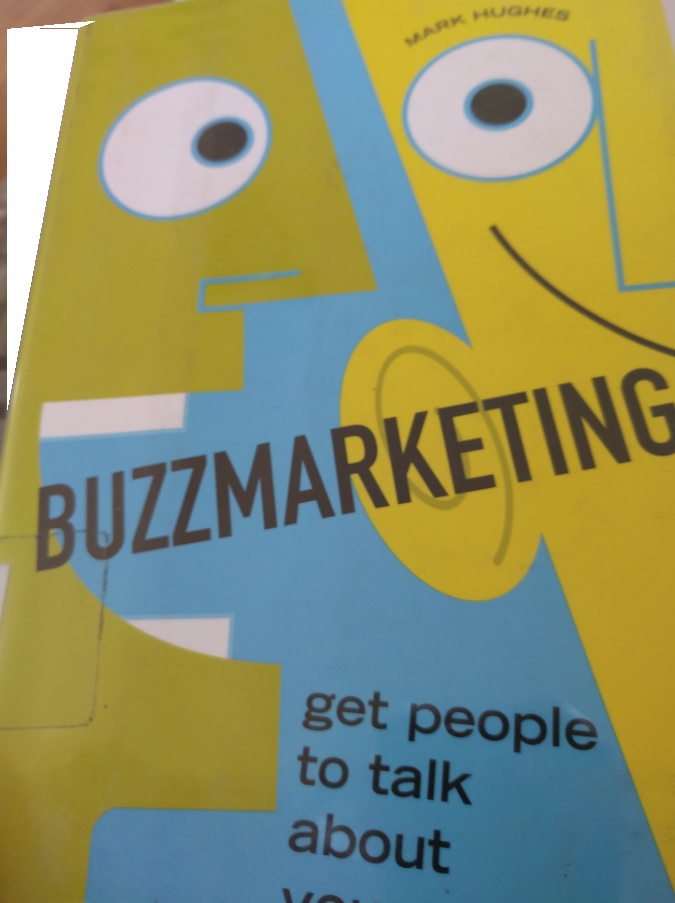
Here is the cover of the book:
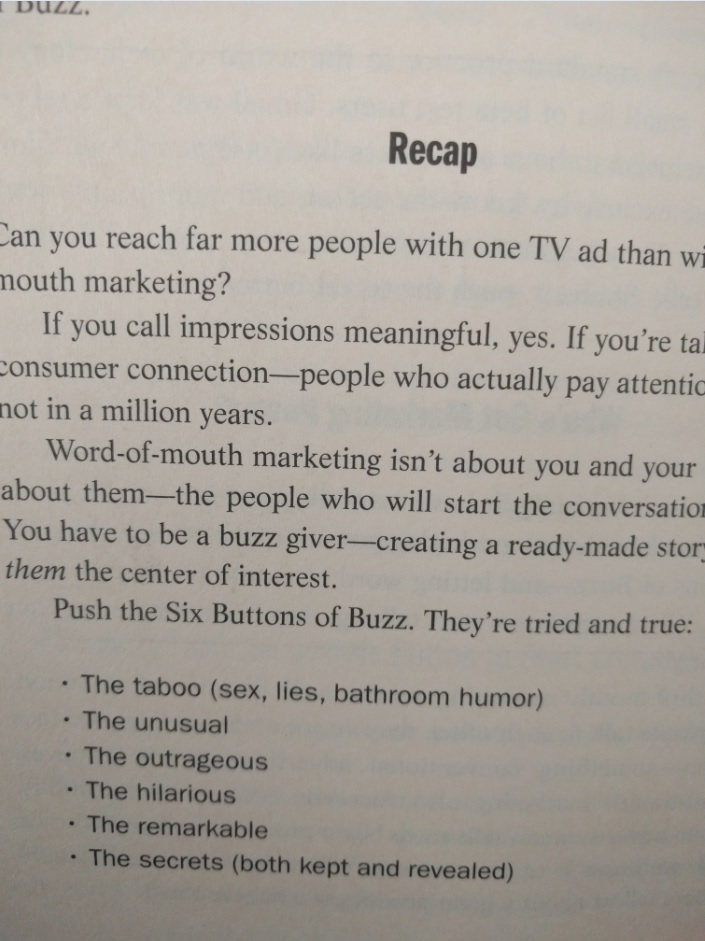
A recap on the six buttons of buzz. From what the book says I understood that human beings are so basic an gullable that whenever you push one of the buttons (the one of your preference, a million of them will jump at it)
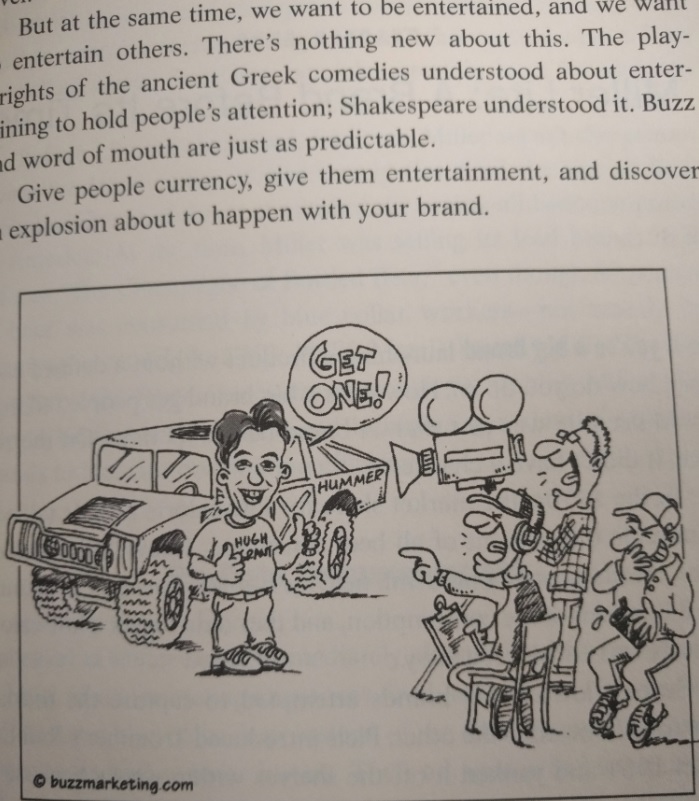
Here is a little musing about comedy, and how Shakespeare was a master of understanding basic human reactions to humor:
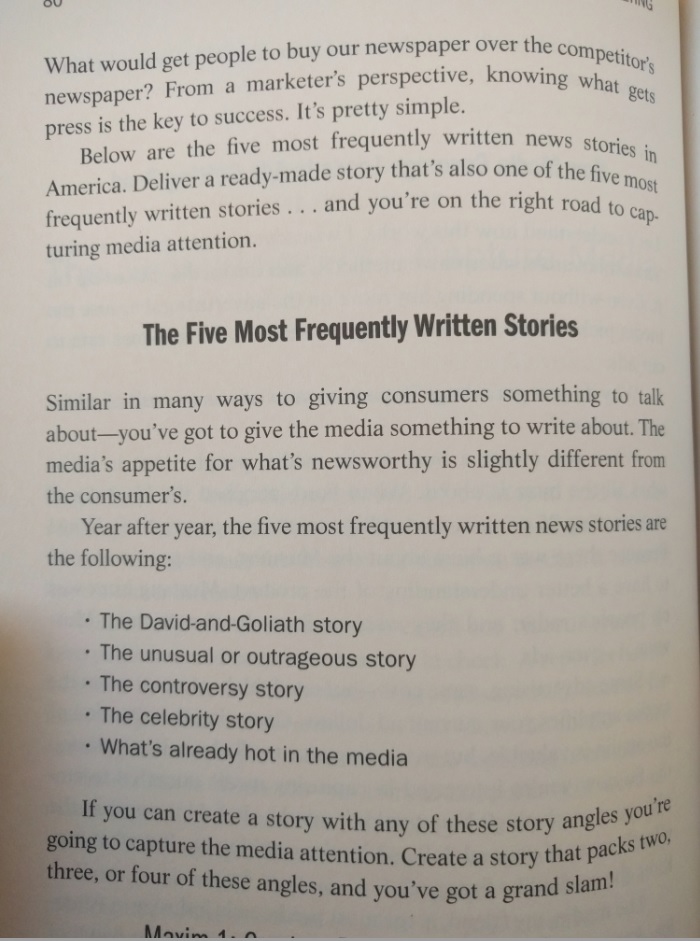
Here is a summary of the five most written (and popular) stories: David and Goliath (For example Susan Boyle), Unusual and outrageous (tan mom), Controversy story (Octomom), Celebrity story (Oscar Pistorius kills model girlfriend), What is already hot in the media (viral videos).
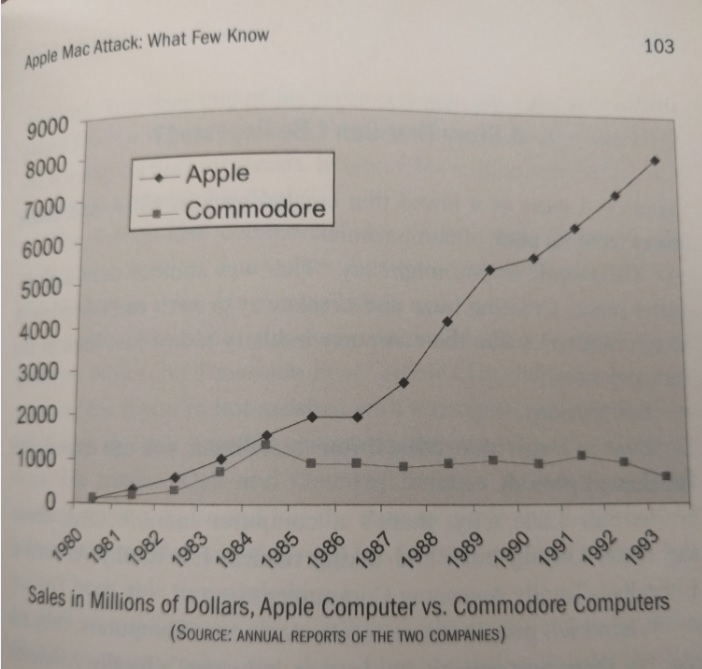
Finally, a study on how the sales of the apple machine were affected (skyrocketed) after the 1984 commercial:
In conclusion, I think this is a nice and interesting book with a good summary of all the things we already intuitively know about how the Internet works.
I hope you liked this entry. If you feel like viewing more of the books I read, you are welcome to visit my blog: http://lunairereadings.blogspot.com
Get people to talk about your stuff? Not alone, you won’t.
I love, love, love the idea of buzz marketing, and I really thought I’d love this book, but sadly, that is not what happened. Instead of the illuminating how-to guide I was expecting, “Buzzmarketing” turned out to be little more than a charming history of advertising and marketing campaigns. This did not help me. And unless you’re someone with a sizeable ad/marketing budget for support, or have some pretty good connections, it probably won’t help you either.
The book focused on stories of struggling companies and how they marketed their way to success. Brands such as Pepsi, Ben & Jerry’s, American Idol, Apple... (you get the idea), like any brand, struggle getting out of the gate, and stumble from time to time over the long term, so yes, the back stories and solutions that turned things around may have been interesting to learn, but interesting doesn’t make something helpful. This level of established success allows you the luxury of offering $100,000 to get a town to change its name and provides you with travel expenses and petty cash that enable you to spend some time in a key market demographic, buying rounds for bar patrons, while you do some market research. It gives you the budget to buy whimsical ad space on peanut vendor’s bags in Downtown Manhattan or to commission your own urinal screens to distribute and get people talking. I’m not saying some of these ideas weren’t eyebrow-raising and memorable, but they just aren’t feasible for the small business owner, as well as the multi-national conglomerate, which the book claims is its target audience.
Buzzmarketing did have a few useful nuggets to take away, those being the six buttons of buzz: six themes that will reliably start a conversation; and I wish more practical expertise on a local level was spent there, but most time was spent discussing ideas that, for many people (at least those who would read this book) are impractical.
I felt this book was geared more towards the errant marketing executive in the throes of a creative slump, than to the small business owner just trying to stay afloat after monthly expenses- for the most part. A small-time chiropractor mentioned did find a clever way to advertise his new local business, and the reminder of the old Burma Shave, multi-billboard approach was another nod to grassroots innovation. I also found it remarkable that Rit dye was given to artists and clothing designers to experiment with as a relatively nice and low budget campaign, but even that guy had a research and development team to help him come up with new ways to use his existing, though failing, product.
I find it ironic that the author’s mantra throughout the book is to out-think your competitors, as opposed to outspend them, when more than 90% of his buzzworthy examples have some serious financial support behind them. That said, if you’re looking for a book to help you understand the theory of buzz, this would be a pretty decent read. But if you’re trying to find buzzworthy advice that is of practical value, regardless of your circumstances, you’d be better off looking elsewhere.
"...a business book that's both entertaining and useful for big brands and start-ups alike." -- Steve Forbes, Editor-in-Chief, Forbes Magazine
"...an intriguing book about an intriguing new trend in marketing. It's rare to find a business book that teaches and entertains like this." -- Warren Phillips, former executive editor, The Wall Street Journal and CEO, Dow Jones
"There's fake corporate marketing and then there's real marketing. This is the real stuff for real people." -- Ben Cohen, Co-founder, Ben & Jerry's President, TrueMajority.org
"At last! A fun-to-read business book that delivers on its 'WoW' premise. Mark Hughes shows how his faith in a totally preposterous big idea paid off 40-fold. Buzzmarketing puts a spotlight on what makes word-of-mouth advertising score a knockout...just when cluttered tradtional media has lost its punch." -- Stan Rapp, Chairman of McCann Relationship Marketing. Author of MaxiMarketing and 5 other books selling over 500,000 copies
"...the book that makes it worth its weight in marketing gold" - London School of Economics Professor, Dr. Paul Marsden
"Buzzmarketing works. It's not just a nice-to-have, it's a must-have!" -- Brian Swette, former Chief Marketing Officer, Pepsi-Cola; former COO, eBay
Great book if you're interested in the power of word of mouth vs. traditional advertising. Basically what he's saying is that the most effective way to sell (insert product/service life does not require here) is to create "buzz" by making it, gee, I don't know, unique? Groundbreaking. He then goes over every product which sold well by creating buzz; from Britney Spears (using a snake as a stage prop) to iPods (by making the technogeek-chic crowd go crazy over them, flooding the blogosphere, or whatevz).
It's a decent read if you're really into the subject, but otherwise you will likely want to throw the book at the wall after the author proclaims for the twentieth time what a genius he is. I'm serious. He made like, 17 references to his godforsaken cranium. Kill me.
Very inspirational, thought-provoking book. Shows how a creative person with some good ideas can compete with the the big boys, and talks in great detail about the problems of "safe" marketing in a noisy world.
If it doesn't set off a cluster of tiny explosions in your creative mind, you're just not getting it. The kind of book that makes you look forward to thinking up that next advertising idea.
Very entertaining read of examples of buzz marketing. It makes me wonder whether our duo is creating a buzz simply by doing whatever we're doing, without advertising or trying to be known. Certainly traditional advertising doesn't deliver anymore. I'm not sure whether publicity does either --- that is, for audience development. Something more needs to happen. Perhaps collaboration to develop relationships BEFORE the event actually happens.
Desde Leader Summaries recomendamos la lectura del libro Buzzmarketing, de Mark Hughes. Las personas interesadas en las siguientes temáticas lo encontrarán práctico y útil: marketing y ventas, publicidad y relaciones públicas. En el siguiente enlace tienes el resumen del libro Buzzmarketing, Cómo funciona el marketing de boca a boca: Buzzmarketing
I nice, easy read. Some great new ideas about press and marketing. Namely - create content not ads. Short, to the point, not much fluff. The author is a little full of himself and talks a little too much about his accomplishments, but if you can get past his ego it's a very useful book.