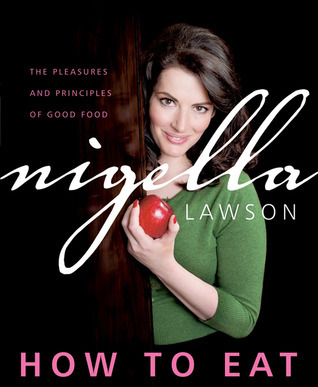
"A chatty, sometimes cheeky,celebration of home-cooked meals." —USA TodayThrough her wildly popular television shows, her five bestselling cookbooks, her line of kitchenware, and her frequent media appearances, Nigella Lawson has emerged as one of the food world's most seductive personalities. How to Eat is the book that started it all—Nigella's signature, all-purpose cookbook, brimming with easygoing mealtime strategies and 350 mouthwatering recipes, from a truly sublime Tarragon French Roast Chicken to a totally decadent Chocolate Raspberry Pudding Cake. Here is Nigella's total (and totally irresistible) approach to food—the book that lays bare her secrets for finding pleasure in the simple things that we cook and eat every day."[Nigella] brings you into her life and tells you how she thinks about food, how meals come together in her head . . . and how she cooks for family and friends . . . A breakthrough . . . with hundreds of appealing and accessible recipes." —Amanda Hesser, The New York Times"Nigella Lawson serves up irony and sensuality with her comforting recipes . . . the Queen of Come-On Cooking." —Los Angeles Times"Nigella Lawson is, whisks down, Britain's funniest and sexiest food writer, a raconteur who is delicious whether detailing every step on the way towards a heavenly roast chicken and root vegetable couscous or explaining why 'cooking is not just about joining the dots.'" —Richard Story, Vogue magazine
Nigella Lawson is the daughter of former Conservative cabinet minister Nigel Lawson (now Lord Lawson) and the late Vanessa Salmon, socialite and heir to the Lyons Corner House empire, who died of liver cancer in 1985. Lawson attended Godolphin and Latymer School and Westminster School before graduating from Lady Margaret Hall, Oxford, with a degree in Medieval and Modern Languages. Lawson wrote a restaurant column for the Spectator and a comment column for The Observer and became deputy literary editor of the Sunday Times in 1986. She became, among other things, a newspaper-reviewer on BBC1 Sunday-morning TV programme 'Breakfast with Frost'. She has also co-hosted, with David Aaronovitch, Channel 4 books discussion programme 'Booked' in the late 1990s, and was an occasional compere of BBC2's press review 'What the Papers Say', as well as appearing on BBC radio. Following slots as a culinary sidekick on Nigel Slater's 'Real Food Show' on Channel 4, she has fronted three eponymous TV cookery series broadcast in the UK on the channel. She has had two series of 'Nigella Bites' in 1999-2001, plus a 2001 Christmas special, and 'Forever Summer with Nigella' in 2002, both of which yielded accompanying recipe books. Her style of presentation is often gently mocked by comedians and commentators, particularly in a regularly-occurring impersonation of her in the BBC television comedy series 'Dead Ringers', who perceive that she plays overtly upon her attractiveness and sexuality as a device to engage viewers of her cookery programmes, despite Lawson's repeated denials that she does so. She was voted author of the year at the 2001 British Book Awards. More than 2 million copies of her books have been sold worldwide.
I don’t believe you can ever realy cook unless you love eating. Such love, of course, is not something that can be taught, but it can be conveyed—and maybe that’s the point. In writing this book, I wanted to make food and my slavering passion for it the starting point; indeed, for me it was the starting point. I have nothing to declare but my greed.
Well, I think I have purchased this book about 20 years ago when it was first published. I was studying in UK at that time and Nigella Lawson was already a famous TV persona with her own TV show. I loved Nigella Bites!
Anyway, I am absolutely positive that I have never tried making any of the recipes of this book. Still it is my favourite cooking book ever. And the reason is simple: Nigella's writing style and descriptions of food! I often open this book in random pages and read paragraphs. And I still enjoy reading it.
“Sometimes it's good just to be seduced by the particular cheeses spread out in front of you on a cheese counter.”
This is part cookbook, but don't buy it for that. Buy it for Nigella's lovely thoughts on how to cook, what to keep around, and a philosophy about food.
If you're trying to cook from it, this book may frustrate you-- sometimes I had to dig to find what I had remembered reading. Some are just simple paragraphs telling you what to toss in a pan.
I would hunker down on the couch on a Sunday morning and I could almost taste the ingredients as they were described. Happy times.
I just got round to reading Nigel Slater's tribute to this book in the article series Observer Food Monthly's Classic Cookbook. (It had been waiting for a fortnight in a forest of browser tabs.) It begins: How to Eat is easy to find on my bookshelf. It is the book in tatters. The one whose spine is torn, whose pages are smeared, smudged and scorched. The book that has clearly done service for 20 years.
My copy may not be quite that messy, but it's worn and spine-bent in a way that none of my other books ever have been, certainly none I bought new, and yes, it does have a few stains and splashes on the cover and pages.
If you're not old enough yet to have experienced the phenomenon of seeing books which still feel kind of newish to you dubbed 'classics', books which you bought brand new, after you'd left home (or worse still, after you'd left university), it is a mildly surreal experience that seems to signal 'middle age approaching'. (You'll have already got used to increasing numbers of sports stars, pop stars, film stars, and then more and more new writers and even a few politicians, being younger than you; and then to most sports stars being retired by your age.) You start to look differently at stuff that was talked about as a [modern] classic when you were a teenager or student; the journalist who was writing the NME article you once read was probably a fan of it when they were a teenager or student themselves and it was new.
Although I rarely cook whole recipes from How To Eat now, Slater's article reminded me of how much of an ethos of cooking it taught me.
My mother was often praised as a good cook by guests and relatives at big meals which happened a few times a year, but that was a different order of food from the dry boring pre-packaged stuff that was day to day fare, so I didn't feel that she was. This is as much as anything an indictment of the poor quality and choice of ready-made food available to a successful career woman in the 80s and early 90s who spent quite a lot on the grocery shop - in an area with no Waitrose or Sainsburys - but had little time and energy to cook in the evenings before sitting down to do more paperwork at home. These days an equivalent household has all manner of lush, fresh premium ready meals to choose from.
I may not have got much cooking practice directly at home, but I had the basic toolkit of school HE lessons and the conviction that there might be some kind of inherited ability - borne out by a handful of adventures when I went to the Tesco near my first student flat, noted down ingredients from interesting new-to-me ready meals such as chicken fajitas, bought the fresh stuff, and via basic, worn, chopping boards, knives and pots and pans, emerged with food that seemed to be really quite nice.
The late 90s was a time when cooking from scratch was just starting to be cool again, as were fatty natural ingredients I'd been brought up to be wary of and which had been demonised by the 80s/90s fashion for low-fat diets. I found I did not like the formerly verboten cream on its own - it really doesn't taste of much, although sour cream is another matter - but it can be a wonderful ingredient. As an over-enthusiastic reader of Sunday newspaper magazines I was already well aware of these trends, but the Nigella book, which I turned to over and over again, was a guide and reinforcement. I probably had the general confidence by dint of personality and upbringing to go my own way and be unafraid of missing out or substituting ingredients due to price, local unavailability, ethics, or allergy or sensitivity - but enough of Nigella's commentaries, like the words of a glamorous older sister or young aunt, mentioned swapping ingredients and not being subject to, as Slater repeats, 'the tyranny of recipes', that they gave me the permission I needed, and the ability to see it as a skilful rather than shameful or fussy thing to do. (Back then pretty much the only easily accessible equivalent of the likes of Jack Monroe was Grub on a Grant and its sequels.) She has a family, but also writes about eating alone, as a pleasure in itself and something worth cooking for. And Nigella talked my language, in a way that I'd never seen before in a cookery book: she described basic recipes as the cookery equivalent of key texts in literature; she was allusive; she had a similar frame of reference whilst also making me think; she made it about ideas at the same time as being casual, practical and friendly.
Even when I got a few other cookery books, including Slater's own Appetite (very good in its own right) and Jamie Oliver's infamous The Naked Chef (the latter just because I wanted to know what people were talking about, rather than because I liked the show), it was always How to Eat I ended up opening, to find out how to make something, or just because I liked reading bits of it. (Nigella's cakes-and-puddings sequel How to be a Domestic Goddess got used occasionally, but mostly I just looked at it. Like the other cookbooks in this paragraph, I'd shelved it years ago on Goodreads as 'part-read', whilst only 'How to Eat' of these big tomes was actually down as 'read'.) Now the internet is full of recipes, and cookery books aren't really necessary, but whenever I do make something based on an online recipe, I think there are elements of what I learned from How to Eat in there.
There are, of course, drawbacks to online food culture. (This is the Grumpy Old Women bit.) Several of the recent Goodreads reviews state that the lack of photos in this book is a problem because you don't know what the dishes are supposed to look like. ??!! This never occurred to me before in twenty years. The very point of this book was that it's home cooking, not restaurant food presented by a chef - and most of the time it didn't matter what that looked like: it's making it and eating it that count. (And it still doesn't matter if you're not obsessed with putting all your meals on Instagram, and don't hang out with people who are.) Besides, if you want to present something nicely, this is a book about gaining skills and the feel for cooking: and therefore, work out how to present what you have, rather than copying a photograph that was probably artificially styled with non-food items anyway. I think the lack of photos is a bonus: it frees the cook from another, at time of writing unanticipated, tyranny.
These days Nigella cookbooks can be seen as pretentious and hopelessly geared towards the well-off. (Or more likely, they always were.) It's very possible I needed to come from a certain sort of background and have a certain sort of confidence, in order to perceive just how much this book can be used as a basis and ethos for cheaper and basic scratch cooking during a life when the dizzy heights of earning £25k were only briefly, fleetingly experienced. But I feel that 'How to' in the title attests justly to its practicality and utility. And in the days before I had managed to adjust my thinking to my circumstances, and to find rightness and coolness in the low-budget and the anti-consumerist, the modern, intelligent glamour the book lent to improvising and adapting recipes, or to cooking traditional dishes that I'd previously only encountered in badly made versions in school dinners, was a sustaining comfort and inspiration.
I still haven't made the majority of the recipes in this book — that will take years — but almost every one I've made has turned out fantastically (and the ones that haven't have been through my own errors, not the recipe's). What's more, the book is a fabulous read; I can read it even when I'm not in the mood for cooking. Not for nothing did it win a Book of the Year award in Britain. Lawson's prose is fabulous.
I don't think it quite stood the test of time. The writing is interesting, as always (yes, I read Nigella Lawson's cookbooks for her style, so sue me), but the recipes / ingredients aged, and the way the book was published - with no pictures of the food - makes the recipes very easy to forget. The low fat chapter was among the most insincere pieces of writing committed to print. Oddly enough, though, the final chapter on feeding children was charming and informative.
I completely forgot to write a review on this book, i guess i wanted this book to be kept to myself but it's not good to be selfish, right?
While reading this book, i felt like i was transported back in time to see the Nigella i never watched (nor was i born yet to know her existence).
When Nigella said her late husband John suggested the title of this book because it evoked some level of curiousity and contravercy to a reader, he was right, cause this book wasn't too much about how to eat. This book felt like i was reading a journal/thoughts of how food, cooking and eating ENCOMPASSED Nigella's life at the time. Her chapter on feedling todlers was a wonderful read (despite my age).
The chapters on how to cook lunch, supper and dinner for people was in a strange way one of the most entertaining chapters. What also made the reading experience better was listening to Nigella herself narrate the book. I would listen to this book to help me sleep because her voice truly helps me relax and the fact the book is about food, makes me sleep comfortably faster.
Depite this book having zero pictures, it was still a good guide on how to cook recipes. I can't remember if i tried any recipes in the book, but i certainly took some techniques and tips she mentioned.
I love her writting, there was one part of the book where she described purade paw-paw as having a "sickly sweetness" i just loved that description so much!
Setting out to cook from How to Eat in 2023, what becomes most noticeable is the proportion of extravagant recipes - and quite possibly how the prices of some ingredients have changed relative to one another. (e.g. Mushrooms: I didn't try and buy shiitake or morels in the late 90s when I bought my first copy of HTE, but I suspect there wasn't such a price difference as the current £1.50 versus £13-18.) Yes, there are absolutely solid everyday recipes here; I gather that the Beef Stew with Anchovies is one of the most popular online these days, and the accidentally-vegan-and-gluten-free Clementine Cake is straightforward, needs few ingredients, and fits various dietary requirements more common now than 25 years ago. Comparing HTE, its tone and recipes, with Nigella's books from the last 8 years has been unexpectedly fascinating. I see a writer who started off addressing a coterie of London media types and foodies, not quite aware of how different ingredient availability and food culture was elsewhere in the UK and therefore how the more arch or breezy sentences, or the casual suggestion of a brace of quail for luch, might sometimes sound - and who has latterly been transformed by her divorce and her relationship with her online community to sound warmer and more inclusive whilst still being emphatically herself, the Nigella who has become a beloved gay icon.
Nigella Lawson is one of those people you just like watching on TV. She could be making a tuna noodle casserole with Campbell's cream of mushroom soup, but the way her satiny voice describes food and ingredients, you'd think she was making the most delicious dinner ever created. I find myself frequently hypnotized by her way with words and she never fails to make cooking feel like a sensual experience.
Part cookbook, part dissertation to the merits of understanding food, Nigella wins you over in the very first paragraph:
"Cooking is no about just joining the dots, following one recipe slavishly and then moving on to the next. It's about developing and understanding of food, a sense of assurance in the kitchen, about the simple desire to make yourself something to eat. And in cooking, as in writing, you must please yourself to please others."
I did not find a vast array of recipes that I will use without fail in this book. What I did find was the assurance that it's OK to trust your instincts in the kitchen and that a recipe doesn't have to be followed to the letter. As time goes by, I often find myself following recipes less and less. How to Eat gave me a new take on things. As Nigella says in the preface, "You need to acquire your own sense of what food is about rather than just a vast collection of recipes."
I love this book so much. The audiobook, which Nigella reads marvellously herself, is one I often have on overnight - waking up at 3am to a long description of Saturday lunch ideas is no trouble at all, then. It's beautiful, soothing, enabling, and so enthusiastic about food, I can dip into it anywhere, at any time, and, especially over the last few months, I've found it to be a true comfort.
I don't know why I'd never thought to read this one - I love Nigella - but it had slipped past me. Then a couple of weeks ago at Cookbook Confidential both Kay Plunkett-Hogge and Diana Henry recommended it so I got it. Genuinely wonderful prose and doable-sounding recipes. And no pictures. I actually read it cover to cover.
Never a big fan of Nigella but purchased this as an audio book on special offer as curious to see how a cook book translate into an audio book. The good news, for this book at least, is as this isn’t a traditional cook book it works very well. The original book doesn’t have any pictures so you don’t miss out there but was it does have is a narrative which works well in the audio format. That coupled with the fact that the structure of the recipes isn’t to fancy and Nigella narrates it makes for a really good listen. The book is of its age but there is nothing wrong with that, no tortured, intricate recipes requiring a plethora of modern day equipment and a brigade in your kitchen, just practical tasty meals. Ultimately this book has helped me get my cooking mojo back and there is no higher praise than that!
I always enjoy Nigella's writing, but this book really suffers for lack of photos, I would like to know what the end result should look like (even if I can't achieve it!). Also the layout doesn't give a clear delineation between recipes, but other than that, it's another must have cookbook from Nigella.
Listening to a cookery book was a novelty for me, but since it was Nigella's calm, enthousiastic and knowledgeable voice reading out her own delectable, scrumptious recipes, it was a pleasure (even if it might be hard to follow while cooking and also following lists of ingredients begs for reading with pen and paper in hand)
A genuinely incredible and gorgoeusly written book that I think might - if it's not too soon to tell - have changed my life. I am now eating better than I probably ever have. Cheers Nigella.
Despite being 20+ years old, How To Eat has stood the test of time - except perhaps for the low-fat/low-cal section. Some delicious recipes and Nigella’s turn of phrase is always enjoyable.
This has become one of my favorite new cookbooks (recommended by 1000cookbooks.com). Not only is the writing great but I love the way she talks about food. It's in the title. There's the same appreciation in the book everywhere. This book does have recipes but she doesn't expect you to follow them slavishly. I rather think she hopes that the reader might gain that same appreciation for good food and caring about what you eat that she has. And then there are fun quotes like "wisely eating custard with the apple crumble" or that the first and most important recipe is for roast chicken.
The book's chapters are also quite interesting: Basics, Dinner, Sunday Lunch, For Two, Low Fat, Feeding Children ... the lunches and dinners almost often are ideas for several courses to entertain different numbers of people and contain advice for how to organize the whole thing.
The book was written in the mid-90s. I think it has been updated somewhat. Neither the recipes nor the culinary advice seemed dated.
I own about two shelf-meters of cookbooks and this one has gained a place among my favorites immediately. I have already given another copy as a present and recommended it to friends.
This is a great cookbook for anyone who enjoys good food and wants to cook some at home.
Surely in this life we are blessed with a few spirit animals and I declare that Nigella is one of mine. She is a greedy girl after my own heart who loves indulging in food - not only tasting and eating - but also discussing it. I enjoy reading all of her cookbooks especially now knowing that she doesn't necessarily write linearly but she creates and collects recipes overtime and will feature them when it fits in with the sort of cookbook she is currently putting together. Colour me a lifelong fannette.
There are few things in the world as soothing as Nigella Lawson talking you through a recipe. But the book isn't quite as inspiring as her TV series.
Nigella is famous for her no-frills approach to cooking. (She loves good food but doesn't want to spend all day cooking it.) But since she was once a restaurant critic, she has very high standards for the kinds of food she eats. Her "simple" recipes for Grouse, Duck, Lamb, Squid and Oysters are not anything I would ever cook.
I love Nigella and this cookbook. I really resonate with when she says, "Restaurant food and home food are not the same thing." Her son is named Bruno, too!
How to eat Nigella wrote this book before she was a household name, and the book is designed to make good, home cooked, mostly British (lots of peas and lamb) food easily. In some ways it’s like a joy of cooking, an encyclopedic view of the dishes Nigella likes to cook, simple, basic and successfully. She encourages cooks to make the recipes their own, but this is not a cookbook about innovation or imagination. Like an encyclopedia, though, the book is written like a running text, and can be hard to follow though easy to read. There is no effort to separate recipes on their own pages, and sometimes no specific list of ingredients. The roast chicken recipe, for example, is “stick half a lemon up a chicken’s bottom, smear it with oil or butter, sprinkle with salt and cook at 400 for 15 minutes per pound plus 10 minutes.” There is a flow to this narrative as one recipe leads into another, bechamel leads to cheese sauce leads to parsley sauce leads to parsley and ham patties. . . Sadly, these secondary recipes are not included in the table of contents. Nigella has a chatty tone, relating her experiences as she talks about a recipe. There are no pictures. Nigella makes no excuses for her down home approach, but you will find a few special techniques and ingredients (oddly, she uses Italian 00 flour for pie dough and sponge cake, and other difficult ingredients include orange flower water and leaf gelatin) mixed in with the devil may care approach. Basically, if it tastes good, it’s fine (except when it isn’t). Make a cake in the food processor, just add some xtra baking powder since you won’t have the airy creaming. A food isn’t in season? Who cares, except for rhubarb, Seville oranges, asparagus, gooseberries, etc. And she isn’t beyond including what she thinks rather than double checking her info for the cookbook. For example, she states she likes the Valrhona lacte which she thinks has 35% cocoa solids. And, just before her recipe for orange marmalade, she indicates she has never made it (one wonders why it’s included here). There are exceptions to the laissez faire attitude like her complicated recipe for “real custard”, which requires filling your sink with water. I’ve made many, many custards and never filled my sink with water. And her asparagus which absolutely must be served with perfectly cooked soft-boiled eggs (for which she provides no recipe). Bacon must be mail ordered but bouillon cubes are fine. The book starts with Nigella’s basic dishes which includes bearnaise sauce, meringues and langue de chat, and Seville orange marmalade. These basics are probably not most people’s basics. In this section, she includes a list of foods to freeze (including wine-who knew?), and a pantry section, which basically says go buy stuff at the store when you need it. The other sections are organized similarly though the more complex sections have more officially written recipes. There are also menus included and how to cook the meals for that menu. The last section is unusual in that its aimed specifically at cooking for kids. I like a casual approach to cooking and appreciate it when Lawson gives multiple options like use sponge cake-homemade or store bought, challah or brioche in the trifle recipe. And her chapter on cooking for yourself is worth reading by any cook who feels a lot of anxiety about cooking. And her beginning sections for each chapter often include good tips. Her quick recipe section, for example, can go far to loosening up an uptight cook who can’t approach a recipe that isn’t fancy or for which he/she doesn’t have all the ingredients (she even shares a dish she makes with processed cheese because, hey, that’s all she had). This chapter is a surprising detour from most quick food chapter that often emphasize stir fries and pastas; to Lawson’s credit, these dishes are interesting, salmon scallops with warm balsamic vinaigrette or cinnamon hot rack of lamb. But, they may not be the recipes for which most of us already have ingredients on hand (which kind of defeats the 30 minute or less expectation). But I find some recipes lacking in steps that seem more essential than optional or at least worthy of note. Like in the moussaka recipe, for example. Lawson suggests leaving on half the peel on the eggplant, which some people will find unpleasant, and makes no mention of how greasy this is going to be if you just fry it without salting, at the least. I would like to know what I’m getting into if I go casual. This is a unique cookbook because it seems to have no guiding principle except for whatever Nigella likes. It’s rather like hanging out with your opinionated and maybe a bit disorganized sister while she cooks and chats. There are many great dishes in here and the book is quite fun to read, but you have to be relaxed in your approach to cooking (or need a book that will help you relax). If you appreciate this approach to cooking, you’ll like this cookbook.
If you love food AND you love reading, this is the book for the you. It’s deeply pleasurable to read, the kind of happiness that can only come from food or books - so how delightful to have both in one, huge volume.
While most recipe books do not lend themselves to Kindle very well, this one does. The actual 500 page book (my sister has the real thing), is a bit difficult to lug around. The kindle version of this book was very navigable, with easy to find recipes, and easy to read short passages.
I gave the book four stars, not five, because there are some things I will never make. This is a matter of personal taste, but more importantly there is plenty in here that I WOULD make.
It’s easily going to be my go-to- reference for a classic macaroni and cheese recipe (just waiting on Ocado not being sold out of basic 70p macaroni). The chocolate birthday cake and the Sunday lunch ‘how to’ on roast beef with Yorkshire pudding are what I see myself returning to, again and again. The lemon-y linguine, with double cream and egg yolk, sounds intriguing and well worth giving a go.
The book’s delight lies ultimately in its understated humour. Can there be any more genius description of the British summertime than ‘lunch, tentatively outside’?
I also very much enjoyed its musings on why you should never throw a dinner party if you never actually cook - there can only be stress in store for you if you go from naught to one hundred, directly to competition-level cookery.
Just relax, enjoy your food, enjoy cooking it, enjoy life. That’s the ethos of this book. I will happily sign up to it.
The first cookbook I’ve read cover to cover. Nigella has a knack for food writing and I could really sense her love of the craft by the way she describes food in such detail. She has a good sense of what works and what doesn’t and describes food in such a way that shows this isn’t just a career for her - it’s a lifelong passion and something she cares deeply about.
There is a cadence to the way she writes about food. Food takes on an almost spiritual presence in her life - it’s like prayer or meditation. She has a deep respect for all aspects of food. She describes in great detail the flavour, texture and colour of everything she cooks and therefore turns cooking into an enjoyable ritual rather than something that must be done out of necessity.
The recipes are not so challenging that one feels unmotivated to attempt them. There are a lot of recipes here that are a good basis for one’s foundational knowledge of cooking - such as, salads (never mix greens with tomatoes!), dressings and sauces, diet food, fast food. There is a recipe for any scenario you can think of, whether that be a dinner party for 8 or a quick meal for your kids.
This is more than a cookbook. It’s like a food bible. I suggest reading How to Eat cover to cover and then watching her television show. You will quickly see that Nigella is simply on a different level than the rest of the celebrity chefs and that the way you’ve been cooking your entire life is simply inferior. Let Nigella show you the way.
Revolutionary for its time, how to eat was the breakthrough cookbook for Nigella Lawson, and it's easy to see why.
The nineties were filled to the brim with uptight and rather 'to-the-rules' food writer types. Enter Nigella, a posh, no-nonsense cook whose mantra was good food in the least fancy way. A revelation for sure.
Does the book hold up to today's standards - no, not at all; however, that's not the point of the book. The main point was to teach you 'how to eat!'
From making mayonnaise to roasting a chicken, the methodology holds firm today. And while the book falls flat on that touch of glossy glamour we have come to expect from Nigella, it stays true to her natural writing flair while keeping you in the loop on keeping your cool in the kitchen.
Man has been cooking for thousands of years, but we have only just begun to understand how to eat. Start here, and the rest will follow.
While called How to Eat, this book really should be called How to Cook with Unusual Ingredients Unrealistically.
Divided into sections by type of meal, Nigella walks the reader through some prose on the topic then presents a variety of recipes.
While I enjoyed the first chapter of the book, where Nigelka is actually talking about eating, she lost me quite soon after. Too many recipes featuring quails and commentary such as "don't just use a baguette, make this using a flbtgbty bread," which I'd never heard of nor seen in a store. I threw in the towel on her chapter on low fat dieting, which was disproved over a decade ago. I'd love to see someone do a "julie and julia" with this, but it'll never be done by me, based on the ridiculous ingredients and meals in this book.
i was born the year this book was published, and so i grew up with nigella's presence as a (boozy, warm, loving) spectre in our kitchen. i didn't really know she was there, but i ate her pasta and lemon-bum-chicken, and jammy eton mess. imagine my surprise that when i inherited my mother's ratty, sunbleached edition of How To Eat i learnt that, no, all my childhood memories were a product of Nigella. reading this book is like pushing open the kitchen door in my childhood home. i wouldn't trade it for the world.
sometimes i do wish there were fewer recipes, though. Nigella's voice is so lovely to simply loose anchor and bob along in that the sprinkle of admittedly delicious and wholly-integral-to-the-concept-of-a-cookbook recipes are jarring. that might just be me, though?