I keep re-writing this review. I think that shows just how fraught these topics are and how scary it is to imagine being misunderstood on these topics. I keep imagining people reading this review and thinking that I hold regressive or anti-feminist views. I want to hedge hedge hedge, as if any of that will matter. It's probably my longest book review on Goodreads. At times, I feel inclined to overshare extremely personal stories about my own traumas to show that I know that "being tough" is not some panacea, that I know I can't avoid victimization just by avoiding victim-narratives.
Sometimes, in a relationship, you get to this stage where each of your "truths" is harmful to the other person, but where hiding those truths condemns the relationship's future. So you embark on this extremely painful process of revealing things to one another that seem to exacerbate the trouble between you, things that seem to make things worse -- that do make things worse -- in order to create hope for any future. And the whole time you are exposing each other to this horrible pain, you have no idea whether it will actually create space for healing, or if you'll just end up a broken husk of a person and have to end the relationship anyway. If you don't know what I'm talking about, oh man, I hope you never do.
I wonder if this is what women are doing to one another right now. If this is why conversations about feminism with other women can often feel so excruciating, so threatening. Why it's terrifying to deviate from what others think. Why we get so damn angry at one other for daring to have different experiences of womanhood, why we take it personally when some woman employs a different psychological defense to manage the world than our own preferred defense mechanism. Maybe this is what fourth-wave (or whatever) feminism is.
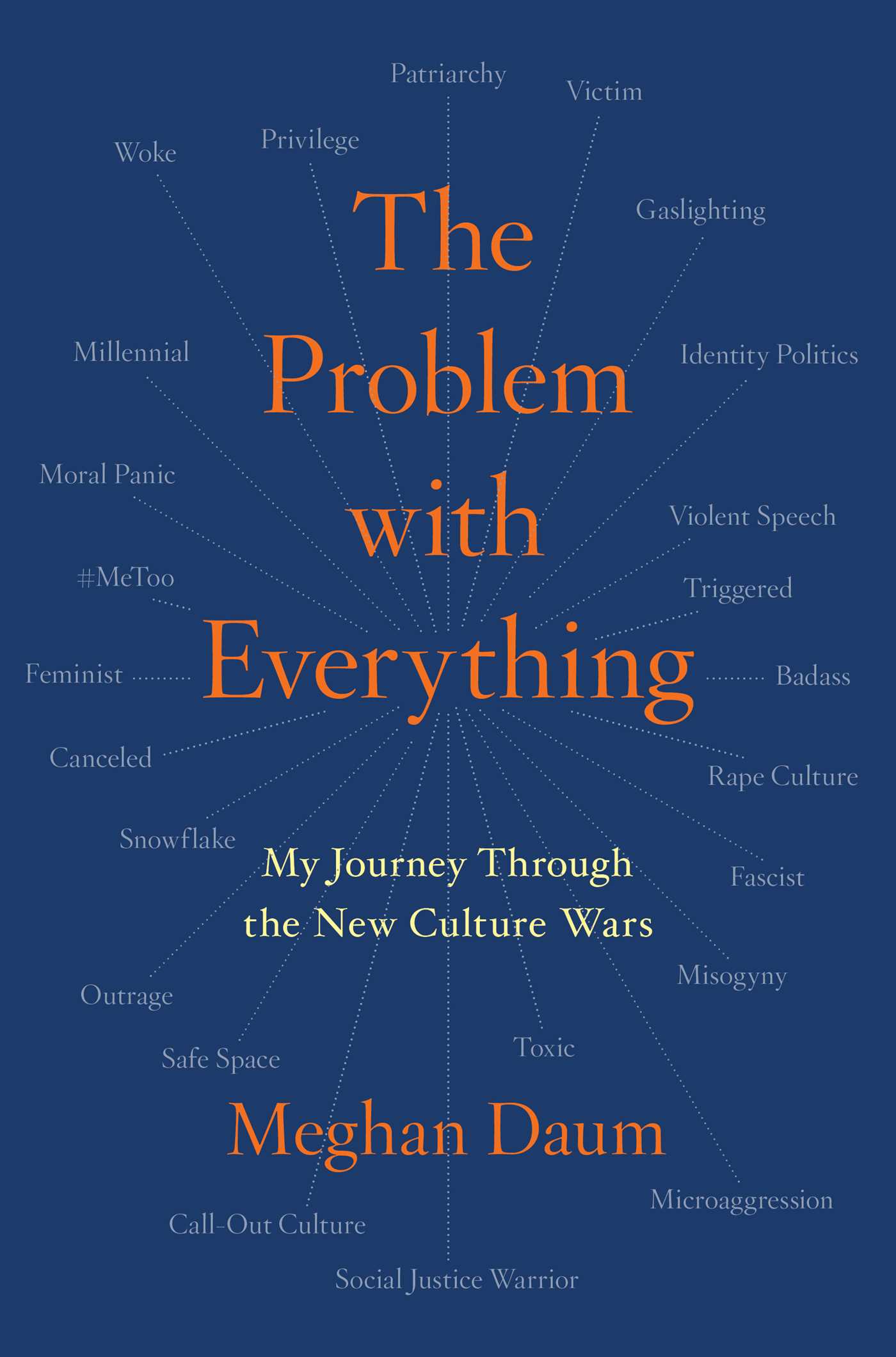
Ever since I discovered Meghan Daum's essays four years ago, I have rated her books three stars. But somehow I also excitedly keep buying her books and devouring them in a matter of days. Of all writers who write about their own lives, I relate most to Daum. I devour her because she articulates ideas I've had trouble articulating. I give her a middle-of-the-pack rating because, like my own thoughts, I'm never quite satisfied with hers.
Like Daum, I am conflicted about everything. I don't so much have opinions as leanings. One of my deepest held beliefs is that it's dangerous to hold beliefs deeply. I am morbidly curious about perspectives that I find abhorrent, and I dig into them with a gusto that likely leaves onlookers wondering whether I've adopted those abhorrent ways of thinking.
Like Daum, I'm a liberal who finds herself critiquing liberal thought frequently while occasionally defending conservative perspectives. Daum writes, "I would have taken equal, if not more, delight in criticizing the political right if there was anything remotely interesting or surprising about doing so." Oh Meghan with an h, this Megan without one feels you there. Many years before Trump, my mind began to go numb every time I listened to a critique of the right. It's all so obvious, all so true, all so very, very boring (Natalie Wynn being the exception that proves the rule). "Bashing the right, especially in the age of Trumpism, was... the conversational equivalent of banging out 'Chopsticks' on the piano."
That boredom with good ideas has fostered the fraught pastime of fishing bad ideas from the disposal, wiping them off, painting over the ugly parts, and repurposing them. The thoughts that emerge aren't elegant, but they aren't dull either.
The response to this book is polarized, and it seems like Meghan Daum intended that, or at least resigned herself to it (she instructs her writing students, "No one will love you unless somebody hates you.") One of the sources of contention is the generational divide she describes between genX feminists and millennial feminists, "We were obsessed with being tough. They are obsessed with being fair."
As an "elder millennial", "xennial", or at least "normal human being that doesn't perfectly fit broad-brush descriptions of any marketing category", I relate most deeply to Daum's "tough" feminists. I feel inspired and empowered, not insulted, when Daum says, "Feminism has achieved many of its goals" (a favorite pull-quote from skoffing critics). Call me crazy, but I like to be reminded of just how much women have accomplished over the last century: the passage of laws around equal pay and reproductive rights, the ability of wives to initiate divorce, access to education for women, etc. This isn't to hang a mission accomplished banner, but rather to reinforce just how much progress we can continue to make if we continue fight for it.
I tend to align myself most with those feminist ideas and policies that empower and inspire me. I don't feel empowered or convinced by the idea that all women must or should naturally be in near constant fear of predation (eg. "This fear of violence is as profound as violence itself because it shapes -- and narrows -- the lives of women in so many small ways: We forgo a nighttime event because we don't want to travel home alone afterward. We forgo an evening jog because running at night is a luxury only men possess.") Brief tangent: this concept is mostly put forth by women of privilege, as many women don't have the luxury of avoiding night shifts or "dangerous" neighborhoods. I spent a lot of time in the "dangerous" neighborhoods of DC and SF fifteen years ago, neighborhoods other women would sometimes tell me were too risky to visit during the day, let alone at night. These neighborhoods are people's homes. And these fears are more often racially and socioeconomically driven than they are gendered.
I don't feel empowered when we talk as though men's lives are enchanted, while ours are beleaguered. I prefer feminist works when they acknowledge men's disproportionate rates of unemployment, homelessness, and social isolation. I prefer feminist works that also analyze how toxic masculinity traps men, how sometimes it works out to women's benefit. (eg. I went to a violent school in 6th grade, where all boys either learned to fight or got beaten up regularly. Most of the girls also got into physical fights on occasion, but girls were also allowed to opt out if they chose. I relished being a girl that year.)
As Daum points out, "... too many women seem to have difficulty understanding why a homeless man who whistles at a young woman as she's off to her fancy internship every morning is not exactly a foot soldier for the patriarchy." There is plenty of great feminist criticism out there that acknowledges the complexity of power dynamics in these kinds of daily interactions, but few people actually read the good, deep, nuanced stuff, compared to those watch "10 hours of walking in NYC as a woman" and leave it there. It's fair to critique Daum for ignoring all the good work out there, but I don't think she mischaracterizes the broad trends.
Like Daum, I feel good when I feel tough and in control, and I don't when I see myself as a victim. When I think about the time a (drunk) late-middle-aged, married professor asked me to drink wine from his mouth and then probably docked my grade after I refused (his grading system was too obscure to know for sure), I feel sad for him, outraged for his wife, but personally unscathed. I was abroad, and my credits transferred as all pass/fail. In my version of the story, he's the impotent, pathetic character. I'm the one with the power to walk away, to humiliate him. I have my youth, my dignity. He has neither. Is this narrative more or less true than the one in which he wielded his patriarchal power within a culture of toxic masculinity to attempt to coerce me sexually? I don't know, but I know which one serves me better.
Daum writes, "I wonder if my real problem with young feminists... is that many of them are insufficiently awed by toughness. They don't boast about it as children. They don't value it inordinately as adults. They refuse to be shamed for vulnerability."
I think Daum's critics miss her irony here and throughout the book. She and I and all our tough feminist peers are so ashamed of our vulnerability, we can't admit to it. We'd rather blame ourselves for the stories where we didn't fare so well than see ourselves as victims. When others are "insufficiently awed by toughness," they strip us of our defenses. How dare they.
I'm not sure the tough/fair or tough/vulnerable dichotomy is really generational. I just think you have some people (including me and Daum) who take pride in toughness, and some people who resent having to be tough. If you've always resented having to be tough, these social changes are a huge relief. You can take off the mask, relax a bit. But if you've developed a sense of pride in your toughness like me, like Daum, then you're losing something right now: you're losing the opportunity to show off, even if only to yourself. To be clear, this is not a "good" emotional response-- I don't believe that emotions are good or bad. They just are. And what I'm describing are two real emotional responses that can set women at odds if we don't listen more carefully to one another.
A lot of critics seem to miss Daum's constant self-critique, self-skepticism, and the complexity of her perspective. But others critique complexity altogether. In a New Yorker review of the book, Emily Witt writes, "Like Daum, I think posting 'Fuck Trump' on Facebook is less helpful than encouraging nonviolence in word and deed. But, to rephrase Didion: to make an omelette, you need not only those broken eggs but someone with the certainty to break them. It was people unburdened by Daum’s ideas about 'nuance' who took to the streets after police shootings, and named the men responsible for serial sexual assault and harassment, and insisted on a widespread revision of language to acknowledge our gender identities. It is telling that Daum ignores the positive benefits of these movements, or the real risks to safety and reputation taken by the people who initiated them."
I'm mystified by this critique. Daum refers several times to a campus protest she witnessed while in college at Vassar. On the one hand, she can't imagine herself in their shoes. She acknowledges exactly what Didion suggests: she lacks the certainty to participate. And while she can't and won't find that kind of certainty in herself, she seems to admire it in the protesters: she sees the influence of their demands all over campus 25 years later at her reunion.
I think we need both kinds of people, those that tend towards certainty and the perennially conflicted, to do good work in the world. But hey, I'm on team conflicted, so of course I see it both ways.
More than that, I'm disturbed by the idea that the only way to arrive at certainty is to ignore nuance rather than to acknowledge it, analyse it, and determine that this action still needs to be taken within this complex world. By keeping your eye on those nuances, you are more likely to recognize when you need to course-correct.
I was sad to see Witt's review end with, "[Daum] has proclaimed independence by joining another herd." Witty, but reductive. If Daum has "joined" a herd, it's likely just to see where they take her and to check out the view. I don't think there's anything wrong with that, in fact, I think it is a core-liberal value that we should endeavor to see the world from as many vantage points as possible, to empathize with others rather than to patronize them.