

What do you think?

29 #1
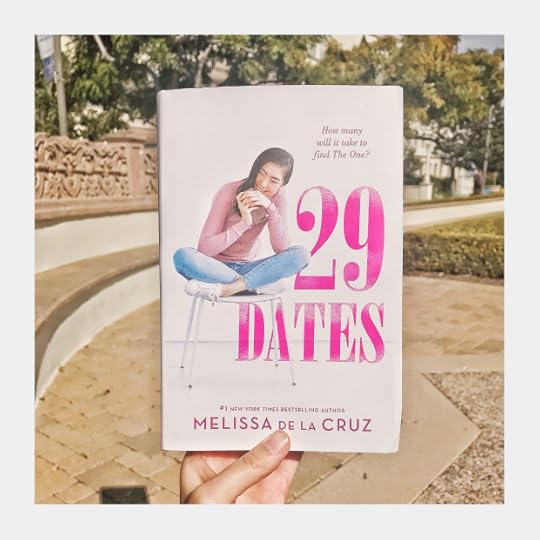
29 Dates: A South Korean Coming of Age Romantic Comedy About Choosing Your Own Path
How many dates will it take to find The One?
Jisu’s traditional South Korean parents believe working with Seoul’s premier matchmaker will ensure their daughter’s success. Jisu wants to figure out her own dreams, but she compromises by going on the recommended dates in the meantime to please her parents. When she flubs a test and then skips out on a date to spend time with friends, her fed-up parents ship her off to a private school in San Francisco, where she’ll shine academically—and be set up on more dates!
Just as she starts to feel comfortable in her new surroundings, attention from two very different boys sends Jisu into a tailspin of soul-searching. As she discovers her passion for photography, she begins to wonder if she even wants to find The One. And what if her One isn’t parent and matchmaker approved?
Jisu’s traditional South Korean parents believe working with Seoul’s premier matchmaker will ensure their daughter’s success. Jisu wants to figure out her own dreams, but she compromises by going on the recommended dates in the meantime to please her parents. When she flubs a test and then skips out on a date to spend time with friends, her fed-up parents ship her off to a private school in San Francisco, where she’ll shine academically—and be set up on more dates!
Just as she starts to feel comfortable in her new surroundings, attention from two very different boys sends Jisu into a tailspin of soul-searching. As she discovers her passion for photography, she begins to wonder if she even wants to find The One. And what if her One isn’t parent and matchmaker approved?
384 pages, Paperback
First published December 18, 2018
About the author
Melissa de la Cruz
154 books16.3k followersMelissa de la Cruz is the New York Times and USA Today best-selling author of many critically acclaimed and award-winning novels for teens including The Au Pairs series, the Blue Bloods series, the Ashleys series, the Angels on Sunset Boulevard series and the semi-autobiographical novel Fresh off the Boat.
Her books for adults include the novel Cat’s Meow, the anthology Girls Who Like Boys Who Like Boys and the tongue-in-chic handbooks How to Become Famous in Two Weeks or Less and The Fashionista Files: Adventures in Four-inch heels and Faux-Pas.
She has worked as a fashion and beauty editor and has written for many publications including The New York Times, Marie Claire, Harper’s Bazaar, Glamour, Cosmopolitan, Allure, The San Francisco Chronicle, McSweeney’s, Teen Vogue, CosmoGirl! and Seventeen. She has also appeared as an expert on fashion, trends and fame for CNN, E! and FoxNews.
Melissa grew up in Manila and moved to San Francisco with her family, where she graduated high school salutatorian from The Convent of the Sacred Heart. She majored in art history and English at Columbia University (and minored in nightclubs and shopping!).
She now divides her time between New York and Los Angeles, where she lives in the Hollywood Hills with her husband and daughter.
Her books for adults include the novel Cat’s Meow, the anthology Girls Who Like Boys Who Like Boys and the tongue-in-chic handbooks How to Become Famous in Two Weeks or Less and The Fashionista Files: Adventures in Four-inch heels and Faux-Pas.
She has worked as a fashion and beauty editor and has written for many publications including The New York Times, Marie Claire, Harper’s Bazaar, Glamour, Cosmopolitan, Allure, The San Francisco Chronicle, McSweeney’s, Teen Vogue, CosmoGirl! and Seventeen. She has also appeared as an expert on fashion, trends and fame for CNN, E! and FoxNews.
Melissa grew up in Manila and moved to San Francisco with her family, where she graduated high school salutatorian from The Convent of the Sacred Heart. She majored in art history and English at Columbia University (and minored in nightclubs and shopping!).
She now divides her time between New York and Los Angeles, where she lives in the Hollywood Hills with her husband and daughter.
Ratings & Reviews
Friends & Following
Create a free account to discover what your friends think of this book!
Community Reviews
Displaying 1 - 30 of 356 reviews

December 24, 2018
I have one question: why was it necessary for a non-Korean to write about a Korean and criticize Korean culture while she's at it? According to the author's note, the author is Filipino-American, learned about seons from a Korean friend, and dedicated this book to her Korean sister-in-law. The author states that seons typically take place during or post-college, but she says in the author's note, "as an author of fiction, I've taken some liberties with this practice."
You cannot take "liberties" with a culture that's not yours. It doesn't matter if you have friends or family-through-marriage of that culture. That's going out of your lane, and I'm disappointed that an author of color would make this mistake, given how much people of color already have to deal with in terms of appropriation and fetishization.
The nuance that this book would require is incredible. Jisu is Korean-born-and-raised, goes to a good Korean high school, and has hardworking, rich parents who adhere to strict cultural values, such as matchmaking and good grades. There is no way for a non-Korean to understand what the culture is like, much less understand how it is for a person who grew up in South Korea to suddenly move to America and go to a new school. Even I know this, and I'm South Asian.
Jisu and many of the other characters criticize Korean culture a lot. There is the "jansori" Jisu constantly mentions, and then the constant criticism of the seons and her parents' expectations of her grades. Yes, it's pretty much a universal Asian thing for parents to expect nothing less than a 110% from their kids, but cultural differences affect that a lot! You can't criticize a culture that's not yours. Maybe the author wanted to be authentic and show how much resentment Asian kids have towards their parents and culture (as an Asian-American kid, I testify), but I'm not going to understand how it is for a Korean kid and a Korean kid isn't going to understand how it's like for me. Same rule applies here. A Filipino-American can't write about Koreans. This goes for any culture, really. I'm pointing out what I see here.
The thing is, you can tell how awkward the writing is. The code-switching is unnatural and both Jisu's criticism and love for her culture seems forced. She talks too much about feminism and expectations and how much she misses home and her friends. Even her descriptions of the food is clunky, and it's especially noticeable because the description of the Filipino cuisine that comes up because of Austin is so, so much more authentic. I don't get why the author couldn't just write about Filipinos to begin with? If she was going to take liberties with Korean culture anyway, then why not.write her own and take liberties with it?
If we're talking about the actual writing, it was strange. I don't understand why Jisu was so critical of "teens" when she was a teen herself. It was the wrong mindset for a teenager. And then there's Austin, who has no chemistry at all with Jisu, yet gets pulled into this insta-love thing that is too confusing. And while I love Dave, I don't see why it was necessary to even give him a girlfriend when Sophie basically had no screen time, not to mention the fact that the author made a big deal out of Jisu choosing a Korean in the end. All of it was forced.
There's also the fact if Min and Euni. Aside from their naming (is Euni supposed to pronounced according to Korean romanization or the way the 'Eu' in Eunice is pronounced, given that's her full name) and did the author purposefully give Min a monosyllabic name and why? They seemed like promising friends, but we barely get to meet them before Jisu gets shipped to America and get only bits of texts from them. I can't even feel sorry for Euni's accident because I don't know her.
This reminds me— the whole plot with Jisu getting shipped to America was so stereotypical and sudden. She sneaks home late and wakes up to her parents handing her tickets and saying she's taking the afternoon flight to a new country, where she'll live for the next year. It doesn't make sense at all. And then we get absolutely nothing about how Jisu feels adjusting to new life in San Francisco (which is impossible anyway, given that the author isn't Korean).
I'm all for diverse casts. If there had been a Filipino MC and a Korean side character or even a love interest, it would be fine, but a non-Korean writing a Korean MC just doesn't work. Had this book been written by a Korean, I think it would've worked really well. If the author had written about Filipinos instead, it would've been even better, but you can't win everything, I guess.
This book was just a whole mess. I was looking forward to read ALEX AND ELIZA soon, but after this book, I don't think I can read anything else from this author. It'd just make me uncomfortable. I'm a bit upset at this turn of events, but it is what it is. I hope the author sticks to writing about Filipinos from here onwards.
You cannot take "liberties" with a culture that's not yours. It doesn't matter if you have friends or family-through-marriage of that culture. That's going out of your lane, and I'm disappointed that an author of color would make this mistake, given how much people of color already have to deal with in terms of appropriation and fetishization.
The nuance that this book would require is incredible. Jisu is Korean-born-and-raised, goes to a good Korean high school, and has hardworking, rich parents who adhere to strict cultural values, such as matchmaking and good grades. There is no way for a non-Korean to understand what the culture is like, much less understand how it is for a person who grew up in South Korea to suddenly move to America and go to a new school. Even I know this, and I'm South Asian.
Jisu and many of the other characters criticize Korean culture a lot. There is the "jansori" Jisu constantly mentions, and then the constant criticism of the seons and her parents' expectations of her grades. Yes, it's pretty much a universal Asian thing for parents to expect nothing less than a 110% from their kids, but cultural differences affect that a lot! You can't criticize a culture that's not yours. Maybe the author wanted to be authentic and show how much resentment Asian kids have towards their parents and culture (as an Asian-American kid, I testify), but I'm not going to understand how it is for a Korean kid and a Korean kid isn't going to understand how it's like for me. Same rule applies here. A Filipino-American can't write about Koreans. This goes for any culture, really. I'm pointing out what I see here.
The thing is, you can tell how awkward the writing is. The code-switching is unnatural and both Jisu's criticism and love for her culture seems forced. She talks too much about feminism and expectations and how much she misses home and her friends. Even her descriptions of the food is clunky, and it's especially noticeable because the description of the Filipino cuisine that comes up because of Austin is so, so much more authentic. I don't get why the author couldn't just write about Filipinos to begin with? If she was going to take liberties with Korean culture anyway, then why not.write her own and take liberties with it?
If we're talking about the actual writing, it was strange. I don't understand why Jisu was so critical of "teens" when she was a teen herself. It was the wrong mindset for a teenager. And then there's Austin, who has no chemistry at all with Jisu, yet gets pulled into this insta-love thing that is too confusing. And while I love Dave, I don't see why it was necessary to even give him a girlfriend when Sophie basically had no screen time, not to mention the fact that the author made a big deal out of Jisu choosing a Korean in the end. All of it was forced.
There's also the fact if Min and Euni. Aside from their naming (is Euni supposed to pronounced according to Korean romanization or the way the 'Eu' in Eunice is pronounced, given that's her full name) and did the author purposefully give Min a monosyllabic name and why? They seemed like promising friends, but we barely get to meet them before Jisu gets shipped to America and get only bits of texts from them. I can't even feel sorry for Euni's accident because I don't know her.
This reminds me— the whole plot with Jisu getting shipped to America was so stereotypical and sudden. She sneaks home late and wakes up to her parents handing her tickets and saying she's taking the afternoon flight to a new country, where she'll live for the next year. It doesn't make sense at all. And then we get absolutely nothing about how Jisu feels adjusting to new life in San Francisco (which is impossible anyway, given that the author isn't Korean).
I'm all for diverse casts. If there had been a Filipino MC and a Korean side character or even a love interest, it would be fine, but a non-Korean writing a Korean MC just doesn't work. Had this book been written by a Korean, I think it would've worked really well. If the author had written about Filipinos instead, it would've been even better, but you can't win everything, I guess.
This book was just a whole mess. I was looking forward to read ALEX AND ELIZA soon, but after this book, I don't think I can read anything else from this author. It'd just make me uncomfortable. I'm a bit upset at this turn of events, but it is what it is. I hope the author sticks to writing about Filipinos from here onwards.

January 31, 2019
I received this book for free from the publisher (Inkyard Press) in exchange for an honest review.
I give this book 4.5 stars which rounds up to 5.
This book doesn’t get the greatest reviews but I tend to rate books based on what they are. This was a YA romantic comedy and I thought it was a super cute one!
In the beginning it slightly reminded me of Melissa de la Cruz’s middle grade series, The Ashleys (which I read way back in middle school), because it had a slightly materialistic vibe and was set in San Francisco.
The romance itself was basic but still cute. I loved the little snippets from her 29 dates that were at the beginning of the chapters.
I really liked that the book touched upon the casual racism that Asians in America face daily such as people thinking Asians all look the same, people being surprised at how well an Asian person speaks English, and the notion that Asians are quiet.
Since I am Filipino, I also loved the inclusion of some Filipino representation. One of the love interests was Filipino and I loved seeing that. I enjoyed the chapter that explored his life because we got to see a little bit of Filipino culture such as Filipino food and karaoke.
I noticed at least one use of the word “hella” (pg. 353) which I was super happy to see because that is one of the most popular Bay Area slang words.
Lastly, I have to address the controversy that surrounds this book. Many people have issues with this book because a non-Korean (Melissa de la Cruz is Filipino) is writing about Korean culture. I think that is a fair and valid critique and I can’t really say much about the Korean aspects since I am not Korean. The one thing I will say however, and this may be controversial, but I do think some of the criticisms I’ve read are overly harsh. Going into this book, I knew this wasn’t going to be a deep book because Melissa de la Cruz’s books are never deep. Even the one book she wrote about a Filipino American immigrant experience still had that classic Melissa de la Cruz fluff. In my personal opinion (which you do not have to agree with), I think Melissa de la Cruz just wanted to write a fun cute story and she tried the best she could with the Korean aspects (which she addresses in her author’s note at the end). She wasn’t trying to make some grand statement about the Korean experience.
Overall, I really liked this book. Is it mind blowing? No. Is it fun? Yes. So if you’re looking for something fun and not super serious, then consider reading this book.
I give this book 4.5 stars which rounds up to 5.
This book doesn’t get the greatest reviews but I tend to rate books based on what they are. This was a YA romantic comedy and I thought it was a super cute one!
In the beginning it slightly reminded me of Melissa de la Cruz’s middle grade series, The Ashleys (which I read way back in middle school), because it had a slightly materialistic vibe and was set in San Francisco.
The romance itself was basic but still cute. I loved the little snippets from her 29 dates that were at the beginning of the chapters.
I really liked that the book touched upon the casual racism that Asians in America face daily such as people thinking Asians all look the same, people being surprised at how well an Asian person speaks English, and the notion that Asians are quiet.
Since I am Filipino, I also loved the inclusion of some Filipino representation. One of the love interests was Filipino and I loved seeing that. I enjoyed the chapter that explored his life because we got to see a little bit of Filipino culture such as Filipino food and karaoke.
I noticed at least one use of the word “hella” (pg. 353) which I was super happy to see because that is one of the most popular Bay Area slang words.
Lastly, I have to address the controversy that surrounds this book. Many people have issues with this book because a non-Korean (Melissa de la Cruz is Filipino) is writing about Korean culture. I think that is a fair and valid critique and I can’t really say much about the Korean aspects since I am not Korean. The one thing I will say however, and this may be controversial, but I do think some of the criticisms I’ve read are overly harsh. Going into this book, I knew this wasn’t going to be a deep book because Melissa de la Cruz’s books are never deep. Even the one book she wrote about a Filipino American immigrant experience still had that classic Melissa de la Cruz fluff. In my personal opinion (which you do not have to agree with), I think Melissa de la Cruz just wanted to write a fun cute story and she tried the best she could with the Korean aspects (which she addresses in her author’s note at the end). She wasn’t trying to make some grand statement about the Korean experience.
Overall, I really liked this book. Is it mind blowing? No. Is it fun? Yes. So if you’re looking for something fun and not super serious, then consider reading this book.
January 24, 2019
Sigh. Alright, this did not get a one-star rating because I'm a salty Korean American (I am) who gives bad ratings to non-Korean authors who write inaccurate/unrealistic Korean characters (I do). This got a one-star because for a contemporary romance there was no romance between the main character, Jisu, and her love interest. None. Zilch! Nada! It literally went from zero to one hundred.
Okay, if I'm being nice it went from like zero, to like ten, and then to a hundred. Jisu goes on seons and has a thing with a classmate but with the love interest? There was like zero development. They were all of a sudden super buddy buddy? All of their bonding scenes seemed to have happened off screen. Like if I'm going to read a romance novel I want to be sold on the end game couple? But there was no reason to be all like YES! THEY'RE FINALLY TOGETHER! Because there was no development. It literally was like flicking the lights from off to on.
Okay. Cool, now that I've established that. I'm about to poke a million holes in this book about Korean and Korean Americans and why I think this is a horrible book. If you're not interested in all that. Skip all the below and just pass because seriously. There is no romance. None. Literally what was the point of this novel?
The author states at the end in her note that "The story is not meant to be representative of the South Korean or Korean-American experience with a matchmaker, but a lighthearted romantic comedy set in a culture I am lucky enough to be feel part of through my friends and family." Seons, if you are unfamiliar with the term are for adults because they’re basically serious dates with marriage as the goal (in the near future). This is something she also states in her author’s note. She admits to taking creative liberties which is all fine and dandy. (Not really.) But why is this note at the back of the book? If you’re going to admit to just haphazardly writing a story with no respect to the accuracy of the actuality of how things work, then that disclaimer should be front and center.
Okay but Sarah she had actual Korean people read and help out and point out inaccuracies and stuff. Okay? So? Here’s the thing you can get all the terms right but none of the cultural nuances came across right. Listen to me, your intentions do not matter. You can have all the right intentions but the delivery was completely wrong. Cool, so she referenced actual places and things in Korea. So what if she got most things right on the superficial level? The heart was missing and that’s what makes me mad. So what if she states that this is not to be representative of South Koreans and Korean Americans. Why did you have to write this story? Because Korean pop culture has made itself into a cash cow to cash in on? Because K-pop and K-dramas and KBBQ are making moolah so you want a piece of that pie?
Despite being Korean born and raised, Jisu came across as very Korean American. Yes, she’s privileged enough to be fluent in English. But there’s a world of a difference between fluency in English and assimilating into American culture especially coming from Korean culture. But there was like no culture shock? Despite the fact that Jisu stays with a white American family and her “knowledge” of American high schools was based off of “Bring It On”.
Most, if not all, all of Korean and Korean American males that Jisu went on seons with came off as super superficial or jerks. Which I guess if all the guys in this book weren't jerks except for the end game love interest, I'd find it problematic. I still find it problematic. But whatever. There were maybe one or two that were decent-ish but really. Reading the seons was about as interesting as watching paint dry. She probably could have spent half those scenes developing an actual relationship to root for with the actual love interest.
Okay, I’m bored of this and am over poking more holes so here are some final thoughts.
+ Jisu has a friend named Eunice. That is not a Korean name. They nickname her Euni which is even weirder. (Is she supposed to be Yoo-ny or Eun-nee?) Maybe if Eunice was Korean American, I could see her having that name but it wouldn’t be her Korean name.
+ Jisu also has a friend named Min. Also skeptical about that. Is it supposed to be a nickname?
+ Like look I'm not saying Min isn't a legitimate Korean name but like between "Eunice" and "Min"? Way to "shortcut" Korean names and make them "easily accessible" to English readers. So like how about NO!?!!
+ Despite the story being in Jisu’s POV she refers to her parents as Mr. and Mrs. Kim which is weird. Especially because married Korean women don't take their husband's last name. That's a Western concept.
+ Jisu is homesick a lot but it just seems so contrived? She misses her friends but that’s like it. What about the culture shock?
+ The constant rehash of “jansori” was really annoying like we get it. You think Korean culture consists of a lot of jansori. You’re not wrong. But you’re also not right.
+ She references the Gwangju Uprising in the beginning but it’s so weirdly lighthearted when it was a big political movement and really super violent and really important? It’s so weird having it just tossed cavalier-y about
+ Also Jisu uses the word selfie. But I don’t know a single Korean person who actually uses the word selfie (Korean American sure, but not Korean Koreans). It's selca. They’ve had that term around for ages. Way before selfie became a thing and it’s not going to be magically replaced with selfie. So yeah wtf
+ There were just a lot of things that were right but also not right. Like I said Jisu came off as very Korean American despite this being her first time staying long term in the country.
TL;DR - For a contemporary romance there was no romance. For a story about a Korean girl she was more Korean American than Korean Korean. And yes, there is a difference. Alright, people we get it. You’re trying to cash in on the popularity of Korean pop culture. But stop it!!??!
Okay, if I'm being nice it went from like zero, to like ten, and then to a hundred. Jisu goes on seons and has a thing with a classmate but with the love interest? There was like zero development. They were all of a sudden super buddy buddy? All of their bonding scenes seemed to have happened off screen. Like if I'm going to read a romance novel I want to be sold on the end game couple? But there was no reason to be all like YES! THEY'RE FINALLY TOGETHER! Because there was no development. It literally was like flicking the lights from off to on.
Okay. Cool, now that I've established that. I'm about to poke a million holes in this book about Korean and Korean Americans and why I think this is a horrible book. If you're not interested in all that. Skip all the below and just pass because seriously. There is no romance. None. Literally what was the point of this novel?
The author states at the end in her note that "The story is not meant to be representative of the South Korean or Korean-American experience with a matchmaker, but a lighthearted romantic comedy set in a culture I am lucky enough to be feel part of through my friends and family." Seons, if you are unfamiliar with the term are for adults because they’re basically serious dates with marriage as the goal (in the near future). This is something she also states in her author’s note. She admits to taking creative liberties which is all fine and dandy. (Not really.) But why is this note at the back of the book? If you’re going to admit to just haphazardly writing a story with no respect to the accuracy of the actuality of how things work, then that disclaimer should be front and center.
Okay but Sarah she had actual Korean people read and help out and point out inaccuracies and stuff. Okay? So? Here’s the thing you can get all the terms right but none of the cultural nuances came across right. Listen to me, your intentions do not matter. You can have all the right intentions but the delivery was completely wrong. Cool, so she referenced actual places and things in Korea. So what if she got most things right on the superficial level? The heart was missing and that’s what makes me mad. So what if she states that this is not to be representative of South Koreans and Korean Americans. Why did you have to write this story? Because Korean pop culture has made itself into a cash cow to cash in on? Because K-pop and K-dramas and KBBQ are making moolah so you want a piece of that pie?
Despite being Korean born and raised, Jisu came across as very Korean American. Yes, she’s privileged enough to be fluent in English. But there’s a world of a difference between fluency in English and assimilating into American culture especially coming from Korean culture. But there was like no culture shock? Despite the fact that Jisu stays with a white American family and her “knowledge” of American high schools was based off of “Bring It On”.
Most, if not all, all of Korean and Korean American males that Jisu went on seons with came off as super superficial or jerks. Which I guess if all the guys in this book weren't jerks except for the end game love interest, I'd find it problematic. I still find it problematic. But whatever. There were maybe one or two that were decent-ish but really. Reading the seons was about as interesting as watching paint dry. She probably could have spent half those scenes developing an actual relationship to root for with the actual love interest.
Okay, I’m bored of this and am over poking more holes so here are some final thoughts.
+ Jisu has a friend named Eunice. That is not a Korean name. They nickname her Euni which is even weirder. (Is she supposed to be Yoo-ny or Eun-nee?) Maybe if Eunice was Korean American, I could see her having that name but it wouldn’t be her Korean name.
+ Jisu also has a friend named Min. Also skeptical about that. Is it supposed to be a nickname?
+ Like look I'm not saying Min isn't a legitimate Korean name but like between "Eunice" and "Min"? Way to "shortcut" Korean names and make them "easily accessible" to English readers. So like how about NO!?!!
+ Despite the story being in Jisu’s POV she refers to her parents as Mr. and Mrs. Kim which is weird. Especially because married Korean women don't take their husband's last name. That's a Western concept.
+ Jisu is homesick a lot but it just seems so contrived? She misses her friends but that’s like it. What about the culture shock?
+ The constant rehash of “jansori” was really annoying like we get it. You think Korean culture consists of a lot of jansori. You’re not wrong. But you’re also not right.
+ She references the Gwangju Uprising in the beginning but it’s so weirdly lighthearted when it was a big political movement and really super violent and really important? It’s so weird having it just tossed cavalier-y about
+ Also Jisu uses the word selfie. But I don’t know a single Korean person who actually uses the word selfie (Korean American sure, but not Korean Koreans). It's selca. They’ve had that term around for ages. Way before selfie became a thing and it’s not going to be magically replaced with selfie. So yeah wtf
+ There were just a lot of things that were right but also not right. Like I said Jisu came off as very Korean American despite this being her first time staying long term in the country.
TL;DR - For a contemporary romance there was no romance. For a story about a Korean girl she was more Korean American than Korean Korean. And yes, there is a difference. Alright, people we get it. You’re trying to cash in on the popularity of Korean pop culture. But stop it!!??!

February 27, 2019
This book was really cute! 😍
I loved the characters, the dates were interesting because they had nothing in common - each date had a different topic - and I guessed who the 29 date was!!! ❤️
I’m so glad that everything turned out to be perfect for Jisu! 🙏
I loved the characters, the dates were interesting because they had nothing in common - each date had a different topic - and I guessed who the 29 date was!!! ❤️
I’m so glad that everything turned out to be perfect for Jisu! 🙏

Read
January 8, 2019Mini review:
DNF
Trigger warning: None till the point I read.
I received this E-ARC via Inkyard Press and Netgalley in exchange for an honest review.
I liked the synopsis for this book. And decided to request it. Unfortunately I didn’t like it.
I did not like the main character at all. I felt that she was a bit too judgmental. The writing style didn’t help either. It was jarring which made it difficult to read.
Overall this wasn’t for me. Still recommend.
DNF
Trigger warning: None till the point I read.
I received this E-ARC via Inkyard Press and Netgalley in exchange for an honest review.
I liked the synopsis for this book. And decided to request it. Unfortunately I didn’t like it.
I did not like the main character at all. I felt that she was a bit too judgmental. The writing style didn’t help either. It was jarring which made it difficult to read.
Overall this wasn’t for me. Still recommend.
Read
March 27, 2019this book took me THREE MONTHS to read I am so glad it's over

November 24, 2018
Rating: 3.5 Stars
Jisu was devastated, when her parents shipped her off to San Francisco in hopes that she could perform better in an American school, but they may have given her the greatest gift, since her new environment did yield some stellar results.
• Pro: Jisu was easy to like and root for. My heart broke, when her whole life was uprooted, but I admired the way she took it in stride, and also commended her on fulfilling her filial duties. Beside being under the standard pressure to get into an Ivy League school and earn top grades, she also had to go on a myriad of blind dates, which she did with a more or less open mind.
• Pro: The dates were interesting. They were presented to us in a transcript format, and what I really liked was the way they paralleled something happening outside of the dates, as well as being a catalyst for Jisu's growth and change. She had discovered a lot about herself during these dates, even if she never happened to find "the one".
• Pro: I adored Dave, and thought the chemistry and dynamic between him and Jisu was fantastic. One of my favorite scenes was when Jisu met his mom. Totally couldn't wipe the smile off my face.
• Con: There were some really fun parts in this book and also, a lot of things I really enjoyed. I wish more of these things had been included. There were some times when the mood shifted, and it sort of made the story drag a little.
• Pro: It's really difficult for a teen to leave her friends, but Jisu was lucky to find such a great squad in San Francisco. I especially loved Hiba, who was fierce and not afraid to speak her mind.
• Pro: Jisu's grandfather was a most precious human. I loved and adored him so much, and was grateful that Jisu had such a phenomenal ally.
• Pro: The ending went in a direction that left me with a smile on my face. I was really happy with how de la Cruz finished Jisu's story (even if I wanted an epilogue, too)
Overall: A story of growth, change, family, friendship, and finding your passion, which was thoughtful and satisfying.
*ARC provided in exchange for an honest review.
BLOG | INSTAGRAM |TWITTER | BLOGLOVIN | FRIEND ME ON GOODREADS
Jisu was devastated, when her parents shipped her off to San Francisco in hopes that she could perform better in an American school, but they may have given her the greatest gift, since her new environment did yield some stellar results.
• Pro: Jisu was easy to like and root for. My heart broke, when her whole life was uprooted, but I admired the way she took it in stride, and also commended her on fulfilling her filial duties. Beside being under the standard pressure to get into an Ivy League school and earn top grades, she also had to go on a myriad of blind dates, which she did with a more or less open mind.
• Pro: The dates were interesting. They were presented to us in a transcript format, and what I really liked was the way they paralleled something happening outside of the dates, as well as being a catalyst for Jisu's growth and change. She had discovered a lot about herself during these dates, even if she never happened to find "the one".
• Pro: I adored Dave, and thought the chemistry and dynamic between him and Jisu was fantastic. One of my favorite scenes was when Jisu met his mom. Totally couldn't wipe the smile off my face.
• Con: There were some really fun parts in this book and also, a lot of things I really enjoyed. I wish more of these things had been included. There were some times when the mood shifted, and it sort of made the story drag a little.
• Pro: It's really difficult for a teen to leave her friends, but Jisu was lucky to find such a great squad in San Francisco. I especially loved Hiba, who was fierce and not afraid to speak her mind.
• Pro: Jisu's grandfather was a most precious human. I loved and adored him so much, and was grateful that Jisu had such a phenomenal ally.
• Pro: The ending went in a direction that left me with a smile on my face. I was really happy with how de la Cruz finished Jisu's story (even if I wanted an epilogue, too)
Overall: A story of growth, change, family, friendship, and finding your passion, which was thoughtful and satisfying.
*ARC provided in exchange for an honest review.
BLOG | INSTAGRAM |TWITTER | BLOGLOVIN | FRIEND ME ON GOODREADS


December 5, 2018
I was intrigued when I first saw 29 Dates by Melissa de la Cruz since I don’t know much about Korean culture, and the story sounded super cute. It tells the story of a girl who goes on dates set up by a matchmaker, and I loved reading about each of her 29 dates. The main character is also enjoyable, and I would say that this is the perfect pick-me-up.
Full Review on The Candid Cover
Full Review on The Candid Cover

Read
August 25, 2019not sure how to rate this one but one thing is certain - dave is a sweetie and deserves all the hugs (as well as his family)

June 6, 2020
DNF 41%
¿A quién voy a engañar? No lo voy a terminar... La autora no es para mi, ya leí hace años algo suyo y no me gustó. Ahora he querido probar con una comedia romántica que pintaba bastante bien y me he llevado otra decepción. Simplemente no conecto con las historias de la autora. Me ha resultado todo muy impersonal, la mayoría de personajes o me caían mal o me eran indiferentes además de que sentía que me vendía algo que yo no veía ni sentía. La prota supuestamente hace un montón de mejores amigos y los ha visto dos veces y de aquella manera, son meros conocidos (???) Después se supone que es una chica puramente coreana que viaja a américa y no he sentido nada de contraste cultural, yo aluciné más con los cambios cuando viajé a USA que esta chica que viene de un país TAN diferente. Además que no he sentido que la chica sea tan coreana, más bien parecía una chica americana-coreana (que después ella llama al chico americano-coreano un "falso coreano" y ella no parece más coreana que él. Que por cierto me parece insultante, ya tienen suficiente racismo allí para que venga la otra con el comentario gracioso)
En cuanto a la comedia romántica... ¿Dónde está el romance? Tal y donde lo he dejado sigo sin saber quién es el elemento romántico, lo sospecho porque no se junta con tantos personajes pero idk. No veo romance, no veo evolución, no veo relaciones, no veo contraste cultural... Veo a una chica saltando de momento en momento que son HIPER CORTOS (cuando va con el chico a surfear que se supone que van toda la tarde para enseñarle a ella como hacerlo y literalmente el surfeo ocupa UNA PÁGINA, WTF?) y... ya.
Btw, los capítulos alternan entre capítulos normales y diálogos de una de las citas que ha tenido la protagonista. Es algo que en un inicio resulta curioso pero conforme avanzaba sentía que no proporcionaba nada. Simplemente el libro no me estaba aportando nada.
¿A quién voy a engañar? No lo voy a terminar... La autora no es para mi, ya leí hace años algo suyo y no me gustó. Ahora he querido probar con una comedia romántica que pintaba bastante bien y me he llevado otra decepción. Simplemente no conecto con las historias de la autora. Me ha resultado todo muy impersonal, la mayoría de personajes o me caían mal o me eran indiferentes además de que sentía que me vendía algo que yo no veía ni sentía. La prota supuestamente hace un montón de mejores amigos y los ha visto dos veces y de aquella manera, son meros conocidos (???) Después se supone que es una chica puramente coreana que viaja a américa y no he sentido nada de contraste cultural, yo aluciné más con los cambios cuando viajé a USA que esta chica que viene de un país TAN diferente. Además que no he sentido que la chica sea tan coreana, más bien parecía una chica americana-coreana (que después ella llama al chico americano-coreano un "falso coreano" y ella no parece más coreana que él. Que por cierto me parece insultante, ya tienen suficiente racismo allí para que venga la otra con el comentario gracioso)
En cuanto a la comedia romántica... ¿Dónde está el romance? Tal y donde lo he dejado sigo sin saber quién es el elemento romántico, lo sospecho porque no se junta con tantos personajes pero idk. No veo romance, no veo evolución, no veo relaciones, no veo contraste cultural... Veo a una chica saltando de momento en momento que son HIPER CORTOS (cuando va con el chico a surfear que se supone que van toda la tarde para enseñarle a ella como hacerlo y literalmente el surfeo ocupa UNA PÁGINA, WTF?) y... ya.
Btw, los capítulos alternan entre capítulos normales y diálogos de una de las citas que ha tenido la protagonista. Es algo que en un inicio resulta curioso pero conforme avanzaba sentía que no proporcionaba nada. Simplemente el libro no me estaba aportando nada.

December 13, 2018
Rating ~2.5
Man I really wanted to love this book. Because I want to support books that have minorities in lead roles. But it just never clicked with me. Most of the book felt like a hollowed out K-drama with all the ridiculous family dynamics, but none of the heart.
It often felt too rushed and too easy, rather than authentic. The book was a light, quick read, but it was very predictable. I wouldn’t say it’s a bad book, but it isn’t particularly good either.
*More detailed review to come*
Man I really wanted to love this book. Because I want to support books that have minorities in lead roles. But it just never clicked with me. Most of the book felt like a hollowed out K-drama with all the ridiculous family dynamics, but none of the heart.
It often felt too rushed and too easy, rather than authentic. The book was a light, quick read, but it was very predictable. I wouldn’t say it’s a bad book, but it isn’t particularly good either.
*More detailed review to come*

February 13, 2019
alright so, i had a lot of problems with this book, but it ended in a really cute and cheesy way so that’s why it’s bumped to 3 stars.
first, it was a whole lot of cringe! i think the idea behind it was cute, but i didn’t like that it was told in this way. i went into this story expecting a really cute contemporary that would flow really nicely because Melissa De La Cruz is a popular author, but this is my first book i’ve read by her and... i’m not impressed. the main character was very annoying to me, she was judgmental and yeah!
i love kdramas, so much, and i thought this would be similar to that but it definitely wasn’t, it didn’t have the heart kdramas have. it needed more unfff and pizazz! (lol)
i also noticed this was a korean book written by a non-korean author, and it’s very noticeable.... it did not flow, the korean words and terms and things just seemed thrown in there and their conversations were so choppy. i also listened to the audiobook, and the narrator was slightly making it worse, just... no. how the book was written, especially the dates, it was hard to get into because it was written in text form even though it wasn’t.*
*example: jisu: hey. sorry i’m late.
dave: it’s okay, i already ordered.
anyways—the ending, as i mentioned, was cute and i like that it ended that way, it was a good ending and it’s why i gave it a nice little 3 star rating. i think some readers would enjoy this if you’re looking for a cute, quick, and simple read, i didn’t dislike it too much, i did really like a few of the friendships that were made.
first, it was a whole lot of cringe! i think the idea behind it was cute, but i didn’t like that it was told in this way. i went into this story expecting a really cute contemporary that would flow really nicely because Melissa De La Cruz is a popular author, but this is my first book i’ve read by her and... i’m not impressed. the main character was very annoying to me, she was judgmental and yeah!
i love kdramas, so much, and i thought this would be similar to that but it definitely wasn’t, it didn’t have the heart kdramas have. it needed more unfff and pizazz! (lol)
i also noticed this was a korean book written by a non-korean author, and it’s very noticeable.... it did not flow, the korean words and terms and things just seemed thrown in there and their conversations were so choppy. i also listened to the audiobook, and the narrator was slightly making it worse, just... no. how the book was written, especially the dates, it was hard to get into because it was written in text form even though it wasn’t.*
*example: jisu: hey. sorry i’m late.
dave: it’s okay, i already ordered.
anyways—the ending, as i mentioned, was cute and i like that it ended that way, it was a good ending and it’s why i gave it a nice little 3 star rating. i think some readers would enjoy this if you’re looking for a cute, quick, and simple read, i didn’t dislike it too much, i did really like a few of the friendships that were made.

January 8, 2023
forget all that: why is she writing abt Korean culture as a non-korean?????
it took me a long time to get into. i never really wanted to pick it up BUT whenever i was reading i didn't want to put it down. it was cute & flirty. it was sad watching her experience american racism for the first time. but that plot kind of goes away after the first half... the college stuff would have been stressful to read so thank god it's second semester 🙏🏻
it took me a long time to get into. i never really wanted to pick it up BUT whenever i was reading i didn't want to put it down. it was cute & flirty. it was sad watching her experience american racism for the first time. but that plot kind of goes away after the first half... the college stuff would have been stressful to read so thank god it's second semester 🙏🏻
December 27, 2018
I think Melissa de la Cruz is a fantastic author who has done wonderful things to bring more diverse books to teens.. But I'm not sure how I feel of her writing a Korean (not even Korean-American) MC with a detailed Korean background. I'm not Korean so I can't speak on how well of a representation this book was so I'm not going to. A lot of moments did feel a bit jarring for me as a reader, though. It was like watching a kdrama but without the heart and love poured into the story.
(One of the characters is Filipino-American, and honestly that one chapter spent with his family, THAT was the heart and love I wanted to feel from Jisu and her family.. But I just didn't?)
"Don't ignore your passions. Don't ignore that voice in your head. You know, the one that talks with your heart. If you ignore something like that long enough, it'll eventually explode and just make a huge mess!"
This book is light, fun, and a quick read.
I DID enjoy the main character a lot. She's the reason why I read until the end.
The friendships were fun. The romance was kind of a mess, to be honest. One was unnecessary and the other felt rushed. It was kind of a bummer since I think as an author it was supposed to come across as a romantic comedy, but sadly the romance just didn't work for me. I was only rooting for Jisu to fall in love with herself above everything else.
This book just wasn't for me. I believe some readers will definitely enjoy it, though! <3
(One of the characters is Filipino-American, and honestly that one chapter spent with his family, THAT was the heart and love I wanted to feel from Jisu and her family.. But I just didn't?)
"Don't ignore your passions. Don't ignore that voice in your head. You know, the one that talks with your heart. If you ignore something like that long enough, it'll eventually explode and just make a huge mess!"
This book is light, fun, and a quick read.
I DID enjoy the main character a lot. She's the reason why I read until the end.
The friendships were fun. The romance was kind of a mess, to be honest. One was unnecessary and the other felt rushed. It was kind of a bummer since I think as an author it was supposed to come across as a romantic comedy, but sadly the romance just didn't work for me. I was only rooting for Jisu to fall in love with herself above everything else.
This book just wasn't for me. I believe some readers will definitely enjoy it, though! <3

June 28, 2020
I picked up 29 Dates on a whim since I was seeking a fun YA Contemporary read for the summer months. It is inspired by K-Dramas and follows Jisu who lives in Korea with her family. Her parents want her to get the best grades and also sign her up for a matchmaker service to try and find her the right person to date. However, after flunking one too many tests, she finds herself transported over to San Francisco in a new school, away from her close Korean friends and still having to go on dates. I don't really know all my thoughts on this one. It just read too predictable and a little dramatic for me as the story went on. It does have good dialogue throughout which I appreciated!

January 31, 2019
First up, thanks to Hebban.nl for giving me a copy of the book so I could participate in the Reading Club for this book!
I have been meaning to read this book for some time so imagine my delight when there was a Reading Club coming up for this book and that they had a contest to select members. Then imagine my further delight when I was selected! Eep!
So this book was just a delight to read. Korea, friendship, strict parents, dates (so so many dates), moving to America for a school year, photography, cute boys, video chats, and more.
Jisu was such a fun character, though I had some problems with some of the things she did/said. For instance she was a bit judgemental towards people. Like with Sophie, Dave's girlfriend, she kept calling Sophie basic ALL THE TIME while she doesn't even know the girl. And also in other points she is quite judging towards other people, you can also see it clearly in the dates. It makes me sad as other than that she is such a fun character and she grows so much throughout this book. Really, she does. She has the chance to develop other likes and loves, she makes new friends, she discovers about what she wants to do in college, she does a ton of photography and is able to explore a lot of facets about it, she learns to stand up against her strict parents (though I think she still has to work on how she brings things and do a little less ragequitting), she learns about boys and relationships, she learns about how to be a teen, and much more. I just adore how much she grew and I kept rooting for her throughout the book.
She also felt a bit like me when I was 16/17, how do boys work? When is it a relationship and when isn't? How does dating work? How does one act like a teen? Yes, I was quite awkward and at times very confused, much like how Jisu was in this book.
I also wasn't all too happy with how she acted during the dates. I am all for feminism, but the way she brought out things was just a no-no. Like how she got pissed at a guy because he was in an all-male club. Then something I also saw a few months ago on Twitter, about kissing princess while they are asleep. She was just totally going on about that, and I really don't get why. It is fairy tale. It is not a make-out session it is just a chaste kiss to wake up their true love. Getting angry because you picked Wonder Woman and someone found that a funny coincidence as so many girls pick her and you just chew him out and I felt so sorry for the guy.
I didn't even notice THAT about Date 29 until the ending. I had totally forgotten THAT little detail. It was such a delight though and I was absolutely squealing.
I get that the parents wanted the best for their girl, and it is definitely a culture thing, but they just pissed me off so much. Sending your kid to the US for a year, without any notice, without her having a chance to say goodbye to friends? No. Just no. Their constant remarks, especially the mom had some really hurtful comments. And then came what they did during Xmas break, and while it was nice of them, if you know your daughter misses her friends...
The grandfather was just so sweet and I loved how he supported his granddaughter.
I loved reading the dates, some really were adorable and some were totally cringy. At times, as I already said, I was pissed at Jisu's attitude. I get that you are forced to go on these dates, but come on, at least treat the dudes with respect.
I was rooting for Jisu and Dave to get together. Yes, he had a girlfriend, and no I wasn't shipping them because they were Koreans (like Kaylee was doing), I shipped them because they had chemistry, they had a spark, they just had a connection, and I was just hoping for both of them to discover it. And then came the whole, who would know it first. :P
I wasn't rooting for her and Austin. Austin just had that vibe around him, that he wasn't in this for the seriousness, just a way to spend some time. And he really showed that it wasn't serious for him. Not answering Jisu's messages, treating her just as a friend when with people but totally different when she was with him.
I also loved Jisu's friends, both from Korea and America. They were just so much fun and I loved their friendship.
It was fun to see Jisu adept to live in America. Getting used to all the new things and I loved how eager she was to learn and explore.
The college applications, gee, I am glad I live in my country where all that stuff isn't necessary. Dear Lord, I feel sorry for the kids in America. The stress, the amount of things one has to do, and then comes the whole waiting for rejection or acceptation... or even the waitlist.
Holy, I could probably continue on for a bit longer about this book, but I think I have said what I wanted to say. Thank you Hebban.nl for giving me the opportunity to read his book. I had so much fun reading this one and I would recommend it to everyone looking for a cute and sweet book.
Review first posted at https://twirlingbookprincess.com/
I have been meaning to read this book for some time so imagine my delight when there was a Reading Club coming up for this book and that they had a contest to select members. Then imagine my further delight when I was selected! Eep!
So this book was just a delight to read. Korea, friendship, strict parents, dates (so so many dates), moving to America for a school year, photography, cute boys, video chats, and more.
Jisu was such a fun character, though I had some problems with some of the things she did/said. For instance she was a bit judgemental towards people. Like with Sophie, Dave's girlfriend, she kept calling Sophie basic ALL THE TIME while she doesn't even know the girl. And also in other points she is quite judging towards other people, you can also see it clearly in the dates. It makes me sad as other than that she is such a fun character and she grows so much throughout this book. Really, she does. She has the chance to develop other likes and loves, she makes new friends, she discovers about what she wants to do in college, she does a ton of photography and is able to explore a lot of facets about it, she learns to stand up against her strict parents (though I think she still has to work on how she brings things and do a little less ragequitting), she learns about boys and relationships, she learns about how to be a teen, and much more. I just adore how much she grew and I kept rooting for her throughout the book.
She also felt a bit like me when I was 16/17, how do boys work? When is it a relationship and when isn't? How does dating work? How does one act like a teen? Yes, I was quite awkward and at times very confused, much like how Jisu was in this book.
I also wasn't all too happy with how she acted during the dates. I am all for feminism, but the way she brought out things was just a no-no. Like how she got pissed at a guy because he was in an all-male club. Then something I also saw a few months ago on Twitter, about kissing princess while they are asleep. She was just totally going on about that, and I really don't get why. It is fairy tale. It is not a make-out session it is just a chaste kiss to wake up their true love. Getting angry because you picked Wonder Woman and someone found that a funny coincidence as so many girls pick her and you just chew him out and I felt so sorry for the guy.
I didn't even notice THAT about Date 29 until the ending. I had totally forgotten THAT little detail. It was such a delight though and I was absolutely squealing.
I get that the parents wanted the best for their girl, and it is definitely a culture thing, but they just pissed me off so much. Sending your kid to the US for a year, without any notice, without her having a chance to say goodbye to friends? No. Just no. Their constant remarks, especially the mom had some really hurtful comments. And then came what they did during Xmas break, and while it was nice of them, if you know your daughter misses her friends...
The grandfather was just so sweet and I loved how he supported his granddaughter.
I loved reading the dates, some really were adorable and some were totally cringy. At times, as I already said, I was pissed at Jisu's attitude. I get that you are forced to go on these dates, but come on, at least treat the dudes with respect.
I was rooting for Jisu and Dave to get together. Yes, he had a girlfriend, and no I wasn't shipping them because they were Koreans (like Kaylee was doing), I shipped them because they had chemistry, they had a spark, they just had a connection, and I was just hoping for both of them to discover it. And then came the whole, who would know it first. :P
I wasn't rooting for her and Austin. Austin just had that vibe around him, that he wasn't in this for the seriousness, just a way to spend some time. And he really showed that it wasn't serious for him. Not answering Jisu's messages, treating her just as a friend when with people but totally different when she was with him.
I also loved Jisu's friends, both from Korea and America. They were just so much fun and I loved their friendship.
It was fun to see Jisu adept to live in America. Getting used to all the new things and I loved how eager she was to learn and explore.
The college applications, gee, I am glad I live in my country where all that stuff isn't necessary. Dear Lord, I feel sorry for the kids in America. The stress, the amount of things one has to do, and then comes the whole waiting for rejection or acceptation... or even the waitlist.
Holy, I could probably continue on for a bit longer about this book, but I think I have said what I wanted to say. Thank you Hebban.nl for giving me the opportunity to read his book. I had so much fun reading this one and I would recommend it to everyone looking for a cute and sweet book.
Review first posted at https://twirlingbookprincess.com/

March 16, 2019
I have such grand reading plans over my break, I literally can not wait! However, I recently (last night) finished reading 29 Dates by Melissa De La Cruz, now I first want to apologize because this book should not have taken me this long to read but work has been taking up way too much of my time lately and whenever I go to read anything I just end up falling asleep. However, I finally have things set up for a while with work and now I am free to read at night again!
SPOILERS AHEAD
In this book, we meet Jisu a girl who lives in Korea with her parents and is feeling lots of pressure from them to be the best. She goes to one of the top schools in Korea and is expected by her family to get into one of the best colleges. However, Jisu is not doing so great at school, her grades are sub-par at best, she is spending more time on friends and her favorite hobby (photography) than her parents would like, and she is skipping Seons. Seons are where Jisu is set up by the matchmaker Ms. Moon on dates to find the perfect future high powered husband. However, after a bad test grade and a skipped date, Jisu’s parents have had enough and they send her to America to live with a host family and attend a prestigious school there, one they think she will have a better chance with. Jisu is devasted by this sudden move but once in San Fransico with her new host family, she finds so many new adventures, dates, and even maybe love on her own.
I have read many Melissa De La Cruz books and I really enjoy them. I think her stories are interesting and I will always be up for trying her new books. I was fortunate enough to be given this book as an ebook ARC on NetGalley a few days before it was published and I started it almost right away. I really loved this story and was interested in Jisu’s culture and would have loved to see more of her in Korea! I gave this book four and a half stars on Goodreads!
SPOILERS AHEAD
In this book, we meet Jisu a girl who lives in Korea with her parents and is feeling lots of pressure from them to be the best. She goes to one of the top schools in Korea and is expected by her family to get into one of the best colleges. However, Jisu is not doing so great at school, her grades are sub-par at best, she is spending more time on friends and her favorite hobby (photography) than her parents would like, and she is skipping Seons. Seons are where Jisu is set up by the matchmaker Ms. Moon on dates to find the perfect future high powered husband. However, after a bad test grade and a skipped date, Jisu’s parents have had enough and they send her to America to live with a host family and attend a prestigious school there, one they think she will have a better chance with. Jisu is devasted by this sudden move but once in San Fransico with her new host family, she finds so many new adventures, dates, and even maybe love on her own.
I have read many Melissa De La Cruz books and I really enjoy them. I think her stories are interesting and I will always be up for trying her new books. I was fortunate enough to be given this book as an ebook ARC on NetGalley a few days before it was published and I started it almost right away. I really loved this story and was interested in Jisu’s culture and would have loved to see more of her in Korea! I gave this book four and a half stars on Goodreads!

February 26, 2020
This was just the kind of predictable romance I like to listen to while I am working. Fun enough to keep my interest but basic enough that I can get away with doing other tasks while I'm listening. I was very pleased with the Korean representation especially considering that the author is of a different ethnicity and that doesn't always work out well. You can tell she did her homework and I appreciate it.
Definitely sits on the younger end of YA - there's a scene I don't want to forget where some of the characters were talking about Bring It On and how old the movie is. Which I thought was hilarious. Just another one of the perks for reading this genre.
Content Notes:
- Language: Mild swears
- Sexual Content: kissing
- Issues Addressed: mild cheating, controlling parents, academic related stress, Asian culture
Definitely sits on the younger end of YA - there's a scene I don't want to forget where some of the characters were talking about Bring It On and how old the movie is. Which I thought was hilarious. Just another one of the perks for reading this genre.
Content Notes:
- Language: Mild swears
- Sexual Content: kissing
- Issues Addressed: mild cheating, controlling parents, academic related stress, Asian culture

January 22, 2020
uhh I think a cultural and rom-com flop just about sums this one up

April 12, 2019
Rating: 4 stars
What a fun little novel! It was a super easy read, but I loved Jisu as a character and I adored the romance. The concept made this a great book, even if the writing felt juvenile a lot of the time.
Recommended for a fun, light read! Especially for seniors currently applying to colleges.
What a fun little novel! It was a super easy read, but I loved Jisu as a character and I adored the romance. The concept made this a great book, even if the writing felt juvenile a lot of the time.
Recommended for a fun, light read! Especially for seniors currently applying to colleges.

December 27, 2018
Jisu is about to start her last year of HS when her parents sent her to San Francisco. There she will focus on school, get great grades and get into a great College. I must say that school in Seoul sounds horrible, Jisu thinks so too. And at the same time she wants those good grades because that is what ger parents want. As for her parents, evil! They just said pack your bags, you are leaving tonight!
But San Francisco is great for her. She gets to be more on her own. She finds new friends, she gets to take more photographs without her parents telling her to study instead.
Of course one of the keypoints of the book is the matchmaking thing she is part of. Her parents wants her to find a good boyfriend, with good parents, and he has to have a good future. So she goes on dates and we take part of horrible ones, nice ones, but no amazing ones.
She continues these dates in SF, and she also crushes on a classmate.
I liked Jisu. She was at her best when idiot dates annoyed her. She sure knew how to speak back.
I also really want to try Korean food! Why can't someone open a restaurant!?
It was very YA. Cute, fun and everything working out in the end.
Narrator
I liked her Jisu voice. It made me want to be friends with her. And her Austin, omg I could so see him before me
But San Francisco is great for her. She gets to be more on her own. She finds new friends, she gets to take more photographs without her parents telling her to study instead.
Of course one of the keypoints of the book is the matchmaking thing she is part of. Her parents wants her to find a good boyfriend, with good parents, and he has to have a good future. So she goes on dates and we take part of horrible ones, nice ones, but no amazing ones.
She continues these dates in SF, and she also crushes on a classmate.
I liked Jisu. She was at her best when idiot dates annoyed her. She sure knew how to speak back.
I also really want to try Korean food! Why can't someone open a restaurant!?
It was very YA. Cute, fun and everything working out in the end.
Narrator
I liked her Jisu voice. It made me want to be friends with her. And her Austin, omg I could so see him before me

January 19, 2019
I wanted to love this book. Years ago I read Melissa de la Cruz's Fresh off the Boat and loved it. I've been waiting for her to write another book with an Asian protagonist that measures up since. Sadly the vast majority of the leads in her novels are white. But that's an entirely different discussion for another time.
I was so happy when Netgalley approved me for an arc of 29 Dates. Finally a teen book featuring an Asian girl and a fully Asian one not a half white one chasing white boys. Two potential Asian male love interests? It felt like a step in the right direction. But the goodwill soon ran out. Melissa should've written about a Filipina girl instead since that's familiar territory for her. Taking on another Asian culture did not feel authentic. At time the story felt like it was written by a Koreaboo. But this is what happens when you hop on trends and Korea is very trendy at the moment.
One thing I hate about these teen stories is the love triangle. They are never written in a way where you are truly torn over which guy the girl should choose. The clear choice is always evident from the beginning and usually there's no chemistry between the leading lady and one one of her men. And I went in with the expectation of her meeting 29 different guys with different personalities but the dates had no real effect on the thin plotline. I was over and done with this book by the 80% mark but trudged along to say I finished.
I was so happy when Netgalley approved me for an arc of 29 Dates. Finally a teen book featuring an Asian girl and a fully Asian one not a half white one chasing white boys. Two potential Asian male love interests? It felt like a step in the right direction. But the goodwill soon ran out. Melissa should've written about a Filipina girl instead since that's familiar territory for her. Taking on another Asian culture did not feel authentic. At time the story felt like it was written by a Koreaboo. But this is what happens when you hop on trends and Korea is very trendy at the moment.
One thing I hate about these teen stories is the love triangle. They are never written in a way where you are truly torn over which guy the girl should choose. The clear choice is always evident from the beginning and usually there's no chemistry between the leading lady and one one of her men. And I went in with the expectation of her meeting 29 different guys with different personalities but the dates had no real effect on the thin plotline. I was over and done with this book by the 80% mark but trudged along to say I finished.

January 17, 2019
***3-3.5 stars ***
I'm such a sucker for YA novels that I hope I never lose touch with them. They take me back in time; I always enjoy them and feel that I can relate to the story.
Melissa de la Cruz has been one of my favorite YA authors, specifically her Blue Bloods series.
29 Dates did not disappoint. Jisu, a girl from South Korea is sent by her family to San Francisco to complete her senior year of high school. In Korean culture, seons are arranged dates to help matchmaking within their culture. The story alternates between Jisu's high school experiences and applying to colleges with a transcript of each seon, which of course there are 29 of.
It's a quick and easy read that I really enjoyed and recommend if you're looking for something light-hearted.
**Special thanks to NetGalley and Inkyard Press for allowing me an ARC in exchange for an honest review.**
I'm such a sucker for YA novels that I hope I never lose touch with them. They take me back in time; I always enjoy them and feel that I can relate to the story.
Melissa de la Cruz has been one of my favorite YA authors, specifically her Blue Bloods series.
29 Dates did not disappoint. Jisu, a girl from South Korea is sent by her family to San Francisco to complete her senior year of high school. In Korean culture, seons are arranged dates to help matchmaking within their culture. The story alternates between Jisu's high school experiences and applying to colleges with a transcript of each seon, which of course there are 29 of.
It's a quick and easy read that I really enjoyed and recommend if you're looking for something light-hearted.
**Special thanks to NetGalley and Inkyard Press for allowing me an ARC in exchange for an honest review.**
February 22, 2019
[Short Review] 29 Dates is my 14th book this year, and I picked it up in an attempt to get out of my reading slump season. Perhaps reading something light and fluffy could bring my reading spirits up, and I was correct. I do feel like reading again now after reading this book!
I got this book with zero expectations and mixed reviews that I got from all social media platforms. Goodreads becomes the main platform that I rely on, and I scrolled through mixed reviews regarding this book. Some people do love it, but some people do not. I shall sign up for the ‘love it’ category, as I cannot lie to myself that reading 29 Dates for two days made me happy.
I have basic knowledge about Korea and Korean culture respectively, but I do feel like I shall get myself to do further research about the culture to learn more about it. I do accept the main character, Jisu’s personality, as I find her relatable to me at some points – getting controlled by her parents, for example. Being forced to go to San Francisco is a huge thing to hold on to. I can totally feel the homesickness she felt in the story. Other than that, I also love the diversity presented in this book.
There are certain things that I do not like, though. Perhaps the main character should be able to be braver, and more firm in life? I would prefer it if her passion in photography is widely and thoroughly explained and not just make it as the side point in the book. Furthermore, I do disagree with certain things that Jisu voiced out in the book. She could not simply call someone basic without knowing him or her personally. I do find that a bit rude and make her a bit narrow minded.
Overall, I think 29 Dates is a fluffy, light read and it is perfect for a quick read. I am going to rate this book a 4 out of 5 stars. It is highly recommended for those who want to have a light contemporary read to fill your lonely days.
I got this book with zero expectations and mixed reviews that I got from all social media platforms. Goodreads becomes the main platform that I rely on, and I scrolled through mixed reviews regarding this book. Some people do love it, but some people do not. I shall sign up for the ‘love it’ category, as I cannot lie to myself that reading 29 Dates for two days made me happy.
I have basic knowledge about Korea and Korean culture respectively, but I do feel like I shall get myself to do further research about the culture to learn more about it. I do accept the main character, Jisu’s personality, as I find her relatable to me at some points – getting controlled by her parents, for example. Being forced to go to San Francisco is a huge thing to hold on to. I can totally feel the homesickness she felt in the story. Other than that, I also love the diversity presented in this book.
There are certain things that I do not like, though. Perhaps the main character should be able to be braver, and more firm in life? I would prefer it if her passion in photography is widely and thoroughly explained and not just make it as the side point in the book. Furthermore, I do disagree with certain things that Jisu voiced out in the book. She could not simply call someone basic without knowing him or her personally. I do find that a bit rude and make her a bit narrow minded.
Overall, I think 29 Dates is a fluffy, light read and it is perfect for a quick read. I am going to rate this book a 4 out of 5 stars. It is highly recommended for those who want to have a light contemporary read to fill your lonely days.

March 26, 2020
Alright this book... was just a mess. There is no other way to describe it. Just a mess that I would have DNF if I wasn't desperate for audiobooks.
Ji-su's parents become concerned when they don't feel like she is paying proper attention to her schoolwork. They have also set her up with a matchmaker in hopes of finding the right boy for her that will also set her up for future success. But, when one test doesn't go as planned and she misses out on a date, Ji-su suddenly finds herself attending school in San Fransisco. Now, she has to navigate life in San Fransisco while still being set up on dates and shining academically.
Okay, I'm not Korean so I can't judge on that aspect of the book, but it did leave a bad taste in my mouth when in the acknowledgements the author mentioned that she took liberties with the Korean culturally aspects that she showcased throughout this story. It just felt dirty and sneaky for it to come in after the fact.
Also, so much of this just made no sense whatsoever. Ji-su moves to a new country, but doesn't seem to really have those moments where she is adjusting to the new culture? This would be a big culturally difference, but there never were those culture shock moments.
The dates she went on all felt the same. They were the same superficial jerks. Now, I get that when you want to set up a specific romance you don't want to add in this other character that could be rooted for, but still yet there couldn't be more variety? There couldn't be that nice guy, but they didn't click with one another? All the dates blended together so variety in that would have been nice.
The romance fell incredibly flat too. With Ji-su going on all the dates, there was no time to really develop a connection with the end game romance which made this entire romance book feel pointless.
If you feel like picking this book up, do yourself a favor, don't. Even if you are desperate for something to do. Don't do it.
Ji-su's parents become concerned when they don't feel like she is paying proper attention to her schoolwork. They have also set her up with a matchmaker in hopes of finding the right boy for her that will also set her up for future success. But, when one test doesn't go as planned and she misses out on a date, Ji-su suddenly finds herself attending school in San Fransisco. Now, she has to navigate life in San Fransisco while still being set up on dates and shining academically.
Okay, I'm not Korean so I can't judge on that aspect of the book, but it did leave a bad taste in my mouth when in the acknowledgements the author mentioned that she took liberties with the Korean culturally aspects that she showcased throughout this story. It just felt dirty and sneaky for it to come in after the fact.
Also, so much of this just made no sense whatsoever. Ji-su moves to a new country, but doesn't seem to really have those moments where she is adjusting to the new culture? This would be a big culturally difference, but there never were those culture shock moments.
The dates she went on all felt the same. They were the same superficial jerks. Now, I get that when you want to set up a specific romance you don't want to add in this other character that could be rooted for, but still yet there couldn't be more variety? There couldn't be that nice guy, but they didn't click with one another? All the dates blended together so variety in that would have been nice.
The romance fell incredibly flat too. With Ji-su going on all the dates, there was no time to really develop a connection with the end game romance which made this entire romance book feel pointless.
If you feel like picking this book up, do yourself a favor, don't. Even if you are desperate for something to do. Don't do it.

February 20, 2019
*2.5-3 stars*
While this was overall an enjoyable read, I have quite a number of issues with this book.
To begin with, Jisus' parents send her to the US to study because she isn't doing well enough in school. As an Asian, that alone is extremely unrealistic. In fact, pretty much the entire book made me roll my eyes.
Secondly, while I understood the need for a number of events that took place, I felt that it either needed to be fleshed out more or scraped all together. There were a number of times wherein the full effect of what was going on did not hit me because it wasn't done well enough.
Thirdly, pretty much every character except the love interest and one of the friends were extremely annoying. The was no proper development between the main character and the love interest and the final relationship just happened out of no where. In fact, everyone acted really immaturely and I personally felt that the main character more resembled a 12 year old pre pubescent kid than an 18 year old.
And finally, while I understand the basic critiques of the parental style of the culture and being an Asian myself, I do agree with said critiques, it is in no way okay for an author to take an element of a culture, mis-translate it in her/his work and then criticize the entire culture based on her/his own mistranslation.
Overall I more or less liked this read but I would not recommend it to anyone else...
While this was overall an enjoyable read, I have quite a number of issues with this book.
To begin with, Jisus' parents send her to the US to study because she isn't doing well enough in school. As an Asian, that alone is extremely unrealistic. In fact, pretty much the entire book made me roll my eyes.
Secondly, while I understood the need for a number of events that took place, I felt that it either needed to be fleshed out more or scraped all together. There were a number of times wherein the full effect of what was going on did not hit me because it wasn't done well enough.
Thirdly, pretty much every character except the love interest and one of the friends were extremely annoying. The was no proper development between the main character and the love interest and the final relationship just happened out of no where. In fact, everyone acted really immaturely and I personally felt that the main character more resembled a 12 year old pre pubescent kid than an 18 year old.
And finally, while I understand the basic critiques of the parental style of the culture and being an Asian myself, I do agree with said critiques, it is in no way okay for an author to take an element of a culture, mis-translate it in her/his work and then criticize the entire culture based on her/his own mistranslation.
Overall I more or less liked this read but I would not recommend it to anyone else...
This entire review has been hidden because of spoilers.

February 5, 2019
3.5 stars
Cute and I'm sure listening to this on audio rather than reading added to my enjoyment. The narrator was wonderful. Jisu was adorable and relatable and the romance was sweet.
Several large plot points went unresolved in favor of the romance when the book had previously been so focused on Jisu finding her own path.
Also, the author is not Korean/Korean American but wrote a book seemingly steeped in, what I believed to be while reading - Korean/Korean American culture - then at the end she left this authors note: "The story is not meant to be representative of the South Korean or Korean-American experience with a matchmaker, but a lighthearted romantic comedy set in a culture I am lucky enough to be feel part of through my friends and family." and that just feels wrong to do. A culture is not meant to be written & misinterpreted as your version of a rom com.
Cute and I'm sure listening to this on audio rather than reading added to my enjoyment. The narrator was wonderful. Jisu was adorable and relatable and the romance was sweet.
Several large plot points went unresolved in favor of the romance when the book had previously been so focused on Jisu finding her own path.
Also, the author is not Korean/Korean American but wrote a book seemingly steeped in, what I believed to be while reading - Korean/Korean American culture - then at the end she left this authors note: "The story is not meant to be representative of the South Korean or Korean-American experience with a matchmaker, but a lighthearted romantic comedy set in a culture I am lucky enough to be feel part of through my friends and family." and that just feels wrong to do. A culture is not meant to be written & misinterpreted as your version of a rom com.

June 13, 2020
29 citas es una novela young adult fresca, divertida, con preocupaciones adolescentes cotidianas y que nos invita a adentrarnos en la cultura coreana. Una comedia romántica ligera y amena para reflexionar sobre las citas a ciegas y el misterioso mundo de encontrar pareja.
Reseña: https://laestanteriadecho.blogspot.co...
Reseña: https://laestanteriadecho.blogspot.co...

July 15, 2019
⭐️⭐️⭐️⭐️💫/5 for 29 Dates by @authormelissadelacruz
.
❤️
❤️
Love this rom-com! Every other chapter is a date with a different Asian boy (seons arranged by a matchmaker on behalf of Jisu’s parents). Some are disasters and some are just unsuccessful, but they are all hilarious. (I think my favorite dates are the ones where Jisu calls the boy out for being sexist or cheap or a jerk 😂) Meanwhile, Jisu has been sent from South Korea to San Francisco to improve her chances to get into a competitive college. Two of her male classmates catch her eye, but what if they aren’t matchmaker-approved?
.
❤️
❤️
I will have absolutely no trouble getting this book into the hands of kids next year in my library. In fact, I’m pretty sure I need to buy 2 more copies!
.
❤️
❤️
Grades 8+. Book 30 for #30booksummer
.
❤️
❤️
#librariesofinstagram #middleschoollibrarian #yalit #yabooks #bookstagram #bookreview #29dates #melissaselacruz
.
❤️
❤️
Love this rom-com! Every other chapter is a date with a different Asian boy (seons arranged by a matchmaker on behalf of Jisu’s parents). Some are disasters and some are just unsuccessful, but they are all hilarious. (I think my favorite dates are the ones where Jisu calls the boy out for being sexist or cheap or a jerk 😂) Meanwhile, Jisu has been sent from South Korea to San Francisco to improve her chances to get into a competitive college. Two of her male classmates catch her eye, but what if they aren’t matchmaker-approved?
.
❤️
❤️
I will have absolutely no trouble getting this book into the hands of kids next year in my library. In fact, I’m pretty sure I need to buy 2 more copies!
.
❤️
❤️
Grades 8+. Book 30 for #30booksummer
.
❤️
❤️
#librariesofinstagram #middleschoollibrarian #yalit #yabooks #bookstagram #bookreview #29dates #melissaselacruz
Displaying 1 - 30 of 356 reviews