

What do you think?

Civilizația islamică în 30 de vieți: primii 1.000 de ani
Cine au fost gînditorii religioși, liderii politici, scriitorii și filosofii care au influențat timp de 1.400 de ani evoluția celei de-a doua religii ca mărime din lume? Ce știm despre viața lor și despre felul cum și-au lăsat amprenta asupra societăților în care au trăit? Civilizația islamică în 30 de vieți împletește biografiile unor personaje remarcabile într-o narațiune bogată, de la Profetul Mahomed în secolul al VII-lea la Timur-Lenk, cuceritorul lumii, și sultanul otoman Mehmed al II-lea în secolul al XV-lea. Pornind din Mecca și Peninsula Arabică și ajungînd la vest pînă în Africa de Nord și Peninsula Iberică și la est pînă în Asia Centrală și Orientală, Chase F. Robinson reconstituie ascensiunea și decăderea satelor islamice prin intermediul conducătorilor lor politici și militari și discută despre contribuțiile aduse de cărturari la dezvoltarea dreptului, științei și literaturii islamice. Autorul ne oferă astfel o imagine vie a lumii musulmane premoderne, în care figurile celebre – inclusiv ‘Ali, vărul lui Mahomed, Saladin, eroul anticruciat, și poetul Rumi – alternează cu personalități mai puțin cunoscute, precum Ibn Fadlan, călător neînfricat în perioada Califatului Abbasid, Karima al-Marwaziyya, o bună cunoscătoare din secolul al XI-lea a hadith-ului, și Abu al-Qasim Ramisht, un foarte bogat negustor din secolul al XII-lea.
280 pages, Paperback
First published October 1, 2016
About the author
Chase F. Robinson
19 books15 followersChase F Robinson is Distinguished Professor and Provost of the Graduate Center, The City University of New York. A specialist in early Islamic history and historiography, he is the author or editor of several books, most recently The New Cambridge History of Islam, Volume 1: The Formation of the Islamic World, Sixth to Eleventh Centuries (2011, ed).
Ratings & Reviews
Friends & Following
Create a free account to discover what your friends think of this book!
Community Reviews
Displaying 1 - 30 of 33 reviews

November 13, 2018
Meritorious book in the sense that it illustrates the wealth and diversity of the various Islamic empires on the basis of short biographies of striking figures: not only rulers (like Saladin, Timoer Lenk or Mehmed II), but also scholars (of course mostly Averroes and Ibn Khaldun), theologians (both rational and reactionary), merchants and even concubines (with 4 bio's, women are poorly represented, but of course this illustrates patriarchal reality).
The short introductions at the beginning of each time period and also the context paragraphs in the bio's themselves clearly indicate that Robinson knows quite a bit about the Islamic world, and offers very nuanced approaches. But that makes it surprising that he choose 'Islamic Civilization', in the singular, as the title of this book, while it clearly illustrates you’d better speak of civilizations in the plural. And in the same vein, it is very regrettable that Islamic empires outside the Arab world (especially in South and East Asia) remain completely out of the picture (for example, the Mogul empire in the Indies already existed at the end of the 15th century, but is left unmentioned). The chronological restriction to the first 1,000 years of Islamic history also suggests that the Islamic culture has never reached the same level again.
The short introductions at the beginning of each time period and also the context paragraphs in the bio's themselves clearly indicate that Robinson knows quite a bit about the Islamic world, and offers very nuanced approaches. But that makes it surprising that he choose 'Islamic Civilization', in the singular, as the title of this book, while it clearly illustrates you’d better speak of civilizations in the plural. And in the same vein, it is very regrettable that Islamic empires outside the Arab world (especially in South and East Asia) remain completely out of the picture (for example, the Mogul empire in the Indies already existed at the end of the 15th century, but is left unmentioned). The chronological restriction to the first 1,000 years of Islamic history also suggests that the Islamic culture has never reached the same level again.

February 5, 2018
.
.
ألف عام من تاريخ الحضارة الإسلامية قسمها الكاتب Chase F. Robinson إلى أربعة أجزاء وفي كل جزء قدم أهم الشخصيات التي لعبت دور كبير بها .
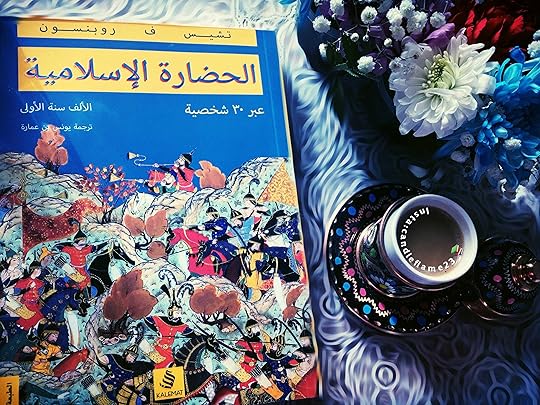
أن تقرأ كتاب يبدأ بجزء من سيرة المصطفى محمد عليه أفضل الصلاة والسلام وعلي إبن أبي طالب رضي الله عنه و حياة الصوفي جلال الدين الرومي ، وابن رشد ، ورابعة العدوية ، وشيخ الإسلام ابن تيمية والحلاج والحلي وزعيم الباطنية وصلاح الدين الرومي وابن خلدون وغيرهم الكثير ، كل سير هؤلاء بين دفتي هذا الكتاب ، بعمل مترجم بإحترافية واضحة فكيف إذا لا يعجبني ؟! .
زِد على ذلك اللوحات الفنية " المُنمنمات " التي احتواها الكتاب أضافت إلى الفائدة جمال ممتع للنظر ، لقد أحببت الكتاب فعلاً من " أول لمسة " ^^ خاصة وأن الغلاف أيضا مصمم بطريقة مميزة وجذابة جدا .
قراءة هذا الكتاب تجربة أثرت ذائقتي الأدبية والفنية معاً .
أنصح بقراءته ❤️
على الهامش : السطور الأولى في قصة ابن تيمية أرعبتني ! .
#أبجدية_فرح
#تقيمي 5/5
.
ألف عام من تاريخ الحضارة الإسلامية قسمها الكاتب Chase F. Robinson إلى أربعة أجزاء وفي كل جزء قدم أهم الشخصيات التي لعبت دور كبير بها .
أن تقرأ كتاب يبدأ بجزء من سيرة المصطفى محمد عليه أفضل الصلاة والسلام وعلي إبن أبي طالب رضي الله عنه و حياة الصوفي جلال الدين الرومي ، وابن رشد ، ورابعة العدوية ، وشيخ الإسلام ابن تيمية والحلاج والحلي وزعيم الباطنية وصلاح الدين الرومي وابن خلدون وغيرهم الكثير ، كل سير هؤلاء بين دفتي هذا الكتاب ، بعمل مترجم بإحترافية واضحة فكيف إذا لا يعجبني ؟! .
زِد على ذلك اللوحات الفنية " المُنمنمات " التي احتواها الكتاب أضافت إلى الفائدة جمال ممتع للنظر ، لقد أحببت الكتاب فعلاً من " أول لمسة " ^^ خاصة وأن الغلاف أيضا مصمم بطريقة مميزة وجذابة جدا .
قراءة هذا الكتاب تجربة أثرت ذائقتي الأدبية والفنية معاً .
أنصح بقراءته ❤️
على الهامش : السطور الأولى في قصة ابن تيمية أرعبتني ! .
#أبجدية_فرح
#تقيمي 5/5

April 9, 2020
A decent enough collection of mini biographies of various commanders, clerics, mystics, bureaucrats, and scholars that the author uses to chart the first millennium of Islamic history.
But holy fUCK does Robinson need to get over himself! I can’t remember the last time I came across an author, in any genre, who was this in love with their own vocabulary. I’m not suggesting that a writer should employ only the most rudimentary of words at all times, but when you’re putting together what’s supposed to be a general history of a subject that’s not exactly common knowledge maybe don’t go dropping such esoteric clunkers like “vituperatively”, “fissiparous”, and “grandiloquent”.
It reminds me of nothing so much as my lonely teenage self frantically trying to show off in front of classmates in order to show how *different* and *more accomplished* I was than them. Learn to write without constantly stroking your intellectual member, my dude.
But holy fUCK does Robinson need to get over himself! I can’t remember the last time I came across an author, in any genre, who was this in love with their own vocabulary. I’m not suggesting that a writer should employ only the most rudimentary of words at all times, but when you’re putting together what’s supposed to be a general history of a subject that’s not exactly common knowledge maybe don’t go dropping such esoteric clunkers like “vituperatively”, “fissiparous”, and “grandiloquent”.
It reminds me of nothing so much as my lonely teenage self frantically trying to show off in front of classmates in order to show how *different* and *more accomplished* I was than them. Learn to write without constantly stroking your intellectual member, my dude.

May 5, 2018
لم يكن السبب الرئيس لاقتنائي هذا الكتاب المعرفة الخالصة وذلك لدرايتي بمعظم الشخصيات الواردة فيه، إنما كان الهدف التعمق بقلم الكاتب الغربي ونظرته لعلمائنا وأدبائنا. ما وجدته أن الكاتب وضع معظم الشخصيات تحت مجهر الشك والاتهام وأورد عبارات لا نستخدمها نحن ، مثل: اللاهوتيين المسلمين .. ولقد ادعى جلال الدين الرومي نسبه لأبي بكر ( وهذا أمر لا شك فيه عندنا ) .. وبضاعة الحلاج هي العبارات الغير مألوفة ( أشعرني وكأن الحلاج بائع خضار ).
لا أنصح بقراءة الكتاب ولئن أحب أحد التعرف على مشايخنا وخلفائنا وأدبائنا وعلمائنا فليعد إلى المنبع
لا أنصح بقراءة الكتاب ولئن أحب أحد التعرف على مشايخنا وخلفائنا وأدبائنا وعلمائنا فليعد إلى المنبع

June 20, 2020
الف عام من قيام دولة الاسلام في الجزيرة العربية
من ٦٣٢ سنة وفاة النبي محمد صلوات الله عليه
حتى وفاة شاه اسماعيل زعيم الصفويين ١٥٢١
٣٠شخصية صنعت الحضارة الاسلامية ...بعضهم احدث خروقا في الاسلام لن يمحيها الدهر
ستقابل محمد الفاتح ...و عائشة المروزية و البيرونى و الطبري و الغزالي و ابن تيمية و تيمور لنك و ابن حزم و رابعة العدوية و عبد الملك بن مروان و عشرات غيرهم ...
ربما لم يكونوا الاشهر و لكنهم كانوا الاهم في تحويل مسار الفكر الاسلامي
كتاب جيد جدا
من ٦٣٢ سنة وفاة النبي محمد صلوات الله عليه
حتى وفاة شاه اسماعيل زعيم الصفويين ١٥٢١
٣٠شخصية صنعت الحضارة الاسلامية ...بعضهم احدث خروقا في الاسلام لن يمحيها الدهر
ستقابل محمد الفاتح ...و عائشة المروزية و البيرونى و الطبري و الغزالي و ابن تيمية و تيمور لنك و ابن حزم و رابعة العدوية و عبد الملك بن مروان و عشرات غيرهم ...
ربما لم يكونوا الاشهر و لكنهم كانوا الاهم في تحويل مسار الفكر الاسلامي
كتاب جيد جدا
February 2, 2020
The premise is fantastic and the individuals discussed in the book are truly note worthy individuals. This in itself makes the book attractive looking at 30 lives in chronological order. However, there is ( in my opinion) a lack of passion for the lives discussed and unfortunately this can be apparent at times which makes me have to think that if someone else who had more passion for the individuals (or at least some) wrote the book with this premise it could be even better.
I did enjoy the read on Ibn Taymiyah though and the mention of his perspective which has given influence to certain groups today.
I did enjoy the read on Ibn Taymiyah though and the mention of his perspective which has given influence to certain groups today.
November 22, 2019
Good reading for mainstream Reader. Atempt to Show the Islamic World by 30 biographies.. Splendid amount of book thickness.. Not too less and Not too much. Some Parts already known, others something New. Absolutely marvellous book Design and sensational text structure.

February 13, 2020
This is an ambitious work that comes out as kind of plotty and distracted. The writer, a professor of Islamic history has selected a number of important persons that have in one way or another shaped the history of Islam. Chase F. Robinson has selected 30 persons living between 600-1525 (Christian date) and has produced a biography for each of them.
Chase F. Robinson roughly draws up four periods in his work - Islam and Empire 600-800; The Islamic Commonwhealth 840-1050; A provinsonal Synthesis 1050-1250; and Disruption and Integration 1250-1525.
He has also an odd way of relating to historical periods whenever using the word "pre-industrial history" which isn't convincing. He's also seemingly in favour of Shiia personalities listing caliph Ali after a brief presentation of prophet Mohammad. As a contrasting example the reign of Uthman was of bigger importance and Uthman's redaction of the Quranic texts is much more of a contribution to Islamic History than any of Ali's.
He then writes about Mohammed's wife Aisha followed by the ummayyad caliph Malik's reign (reused material from his other research?). In the first period the poetess Rabia al Adawiyya has also been listed which is a really Good choice. From the muslim commonwhealth period Robinson presents al Tabbari, Ibn Fadlan....overall it's a heavy mix of interesting people. Not only rulers, but also poets and sufi saints. Guess many of them may be entirely new names to any reader. However the book is far from good. Among the 30 indviduals selected only three women are presented. Overall the number of 30 persons is too small to represent 1000 years of Muslim history.
Recommended as Reference, not more.
Chase F. Robinson roughly draws up four periods in his work - Islam and Empire 600-800; The Islamic Commonwhealth 840-1050; A provinsonal Synthesis 1050-1250; and Disruption and Integration 1250-1525.
He has also an odd way of relating to historical periods whenever using the word "pre-industrial history" which isn't convincing. He's also seemingly in favour of Shiia personalities listing caliph Ali after a brief presentation of prophet Mohammad. As a contrasting example the reign of Uthman was of bigger importance and Uthman's redaction of the Quranic texts is much more of a contribution to Islamic History than any of Ali's.
He then writes about Mohammed's wife Aisha followed by the ummayyad caliph Malik's reign (reused material from his other research?). In the first period the poetess Rabia al Adawiyya has also been listed which is a really Good choice. From the muslim commonwhealth period Robinson presents al Tabbari, Ibn Fadlan....overall it's a heavy mix of interesting people. Not only rulers, but also poets and sufi saints. Guess many of them may be entirely new names to any reader. However the book is far from good. Among the 30 indviduals selected only three women are presented. Overall the number of 30 persons is too small to represent 1000 years of Muslim history.
Recommended as Reference, not more.

January 28, 2021
Obra bem interessante e ricamente ilustrada com trinta minibiografias (5-10p cada) sobre personalidades da política, religião e da cultura dos primeiros mil anos das civilizações islâmicas (na contagem ocidental as biografias abrangem os anos 632dC-1524dC).
O livro aborda a vida de pessoas bem conhecidas no Ocidente como Saladino, Averróis e Rumi a personagens mais obscuros como Ali (precursor do xiismo), Rabia al'Adawiya (asceta), Arib (cortesã de califas) e Timur (ladrão de ovelhas e conquistador do mundo).
É uma pena que o autor manteve a limitação de páginas no caso das personalidades mais intrigantes como Mehmed II ou Ibn Khaldun, mas a proposta inicial do livro era de apresentar uma introdução aos biografados. No final há uma sugestão de bibliografia bem útil para aprofundar na vida dos biografados (cinco obras cada).
Um ponto negativo foi a negligência na seleção de personalidades femininas. Há apenas três mulheres biografadas entre trinta pessoas, fato que parece uma escolha bem equivocada do autor. Há alguns biografados (contei pelo menos uns 4) que poderiam facilmente ser substituídos por outras mulheres mais relevantes. As três mulheres biografadas têm vidas interessantíssimas. Com uma maior representatividade, o autor teria apresentado um panorama melhor desses mil anos. Apesar desse fato lamentável, acredito que vale a pena ler a obra.
Recomendo principalmente para quem tem interesse na história do Oriente Médio, do Norte da África ou do Islã.
O livro aborda a vida de pessoas bem conhecidas no Ocidente como Saladino, Averróis e Rumi a personagens mais obscuros como Ali (precursor do xiismo), Rabia al'Adawiya (asceta), Arib (cortesã de califas) e Timur (ladrão de ovelhas e conquistador do mundo).
É uma pena que o autor manteve a limitação de páginas no caso das personalidades mais intrigantes como Mehmed II ou Ibn Khaldun, mas a proposta inicial do livro era de apresentar uma introdução aos biografados. No final há uma sugestão de bibliografia bem útil para aprofundar na vida dos biografados (cinco obras cada).
Um ponto negativo foi a negligência na seleção de personalidades femininas. Há apenas três mulheres biografadas entre trinta pessoas, fato que parece uma escolha bem equivocada do autor. Há alguns biografados (contei pelo menos uns 4) que poderiam facilmente ser substituídos por outras mulheres mais relevantes. As três mulheres biografadas têm vidas interessantíssimas. Com uma maior representatividade, o autor teria apresentado um panorama melhor desses mil anos. Apesar desse fato lamentável, acredito que vale a pena ler a obra.
Recomendo principalmente para quem tem interesse na história do Oriente Médio, do Norte da África ou do Islã.

March 22, 2017
disappointing. clumsy language, disjointed narratives. could have been a compelling account of historic lives of early Islamic civilisation but just ended up as incredibly lazy and casual in its effect. theological explanations almost unreadable. a missed opportunity.

September 10, 2020
After one year of reading (not listening in audible but reading the fine print hardcover), I feel sad that the book is finished for me yesterday - Islamic Civilization in Thirty Lives: The First 1,000 Years. This is written by distinguished historian of Islam Professor Chase F. Robinson and published in 2016. I haven't found many books in English that describe major Islamic figures in the last one and half millennia. Something that came close was written in Bengali by Badr Azimbadi named Great Personalities in Islam, which I finished 3 years ago. But the quality of Chase Robinson's work is nowhere near comparable with any other books of similar category I can think of. My friend Nody first told me about this book when she shared with me a youtube video Professor Robinson's conversation with Sarah Chayes. I immediately ordered the book after watching it and started reading the book. It's been a pleasure to see the diversity Islam brought to the world over a long period of time through some of the well-known and unknown figures in this book. The book has been organized by describing the lives of a few persons in each century, order by their year of death. The 30th character in this book dies in 1524. I wish a follow up of this book is written for the last 5 centuries as well, perhaps picking another 10 lives?
Here are the biographies touched in this book.
Part 1: Islam & Empire (600-850)
(1) Muhammad- the Prophet (632)
(2) Ali - cousin, caliph and forefather of Shi'ism (661)
(3) A'isha - wife of the Prophet - (678)
(4) Abd al-Malik - engineering of the caliphate (705)
(5) Ibn al-Muqaffa - translator and essayist (759)
(6) Rabia al-Adawiyya - renunciant and saint (801)
(7) al-Mamun - caliph-patron (833)
Part 2: The Islamic Commonwealth (850-1050)
(8) Arib - courtesan of caliphs (890)
(9) al-Hallaj - the Truth (922)
(10) al-Tabari - traditionalist rationalist (923)
(11) Abu Bakr al-Razi - free thinking physician (925 or 935)
(12) Ibn Fadlan - intrepid envoy (fl. tenth century)
(13) Ibn Muqla - vizier, scribe, calligrapher? (940)
(14) Mahmud of Ghazana - conqueror and patron (1030)
(15) al-Biruni - catalog of nature and culture (c. 1050)
Part 3: A Provisional Synthesis (1050-1250)
(16) Ibn Hazm - polemicist, polymath (1064)
(17) Karima al-Marwaziyya - hadith scholar (1070)
(18) al-Ghazali - Renewer of Islam (1111)
(19) Abu al-Qasim Ramisht - merchant millionaire (c. 1150)
(20) al-Idrisi - cosmopolitan cartographer (1165)
(21) Saladin - anti-Crusader hero (1193)
(22) Ibn Rushd (Averroes) - Aristotelian monotheist (1198)
Part 4: Disruption & Integration (1250 - 1525)
(23) Rumi - Sufi poet (1273)
(24) Rashid al-Din - physician, courtier and global historian (1318)
(25) al-Hilli - paragon of Shi'ism ascendant (1325)
(26) Ibn Taymiyya - stubborn reactionary (1328)
(27) Timur - sheep-rustler, world-conqueror (1405)
(28) Ibn Khaldun - social theorist and historian (1406)
(29) Mehmed II - conqueror and renaissance man (1481)
(30) Shah Ismail - esoteric charismatic (1524)
Source: https://marqeta.atlassian.net/browse/...
Here are the biographies touched in this book.
Part 1: Islam & Empire (600-850)
(1) Muhammad- the Prophet (632)
(2) Ali - cousin, caliph and forefather of Shi'ism (661)
(3) A'isha - wife of the Prophet - (678)
(4) Abd al-Malik - engineering of the caliphate (705)
(5) Ibn al-Muqaffa - translator and essayist (759)
(6) Rabia al-Adawiyya - renunciant and saint (801)
(7) al-Mamun - caliph-patron (833)
Part 2: The Islamic Commonwealth (850-1050)
(8) Arib - courtesan of caliphs (890)
(9) al-Hallaj - the Truth (922)
(10) al-Tabari - traditionalist rationalist (923)
(11) Abu Bakr al-Razi - free thinking physician (925 or 935)
(12) Ibn Fadlan - intrepid envoy (fl. tenth century)
(13) Ibn Muqla - vizier, scribe, calligrapher? (940)
(14) Mahmud of Ghazana - conqueror and patron (1030)
(15) al-Biruni - catalog of nature and culture (c. 1050)
Part 3: A Provisional Synthesis (1050-1250)
(16) Ibn Hazm - polemicist, polymath (1064)
(17) Karima al-Marwaziyya - hadith scholar (1070)
(18) al-Ghazali - Renewer of Islam (1111)
(19) Abu al-Qasim Ramisht - merchant millionaire (c. 1150)
(20) al-Idrisi - cosmopolitan cartographer (1165)
(21) Saladin - anti-Crusader hero (1193)
(22) Ibn Rushd (Averroes) - Aristotelian monotheist (1198)
Part 4: Disruption & Integration (1250 - 1525)
(23) Rumi - Sufi poet (1273)
(24) Rashid al-Din - physician, courtier and global historian (1318)
(25) al-Hilli - paragon of Shi'ism ascendant (1325)
(26) Ibn Taymiyya - stubborn reactionary (1328)
(27) Timur - sheep-rustler, world-conqueror (1405)
(28) Ibn Khaldun - social theorist and historian (1406)
(29) Mehmed II - conqueror and renaissance man (1481)
(30) Shah Ismail - esoteric charismatic (1524)
Source: https://marqeta.atlassian.net/browse/...

May 17, 2019
اسم الكتاب : الحضارة الإسلامية عبر ٣٠ شخصية
الكاتب : تشيس ف روبنسون
التصنيف : تاريخ
عدد الصفحات : ٣٢٢
تقييمي : ٣/٥
نبذة عن الكتاب :
دائما ما اتعجب من اهتمام المستشرقين في التاريخ الاسلامي و اصداراتهم من الكتب و البحوث التي تخص هذا الموضوع ، تعجبي يكمن في كيفية حصولهم على المعلومات و الوثائق التاريخية و هل نقلوها بأمانة دون تنقيح او اضافة او حتى فهم مقصدها الصحيح ، خصوصا و ان اغلبها مدون باللغة العربية الفصحى القديمة الصعبة على العرب انفسهم في بعض الاحيان لاحتوائها على بعض المصطلحات و الكلمات المنقرضة نوعا ما في عصرنا الحالي ، في هذا الكتاب اختار المستشرق تشيس روبنسون بعض الشخصيات الاسلامية التي عاصرت الألف سنة الاولى من العصر الاسلامي و تحدث عنها بشكل مختصر قد يكون ظالم في بعض الاحيان لترجمة هذة الشخصيات و لكن في احيان اخرى نجدها عميقة حين تلقي الضوء على بعض الشخياص التي اهملها المؤرخين الاسلامين انفسهم امثال ( رابعة العدوية - عريب - ابن مقلة - محمود الغزنوي - كريمة المزروية - ابو القاسم راميشت ) ، في الواقع استمتعت في قراءة هذا الكتاب لانه من نوعية الكتب التي تجذبني و قرأت عن شخصيات لم اتطلع عليها من قبل ، و ما ميز الكاتب انه كان محايدا في التعريف عن جميع الشخصيات و قد يعود ذلك لعدم انتمائه لاي فرقة او طائفة اسلامية فهو مجرد ناقل و باحث يهمه نقل ما كتب عنهم دون ابداء رأيه الشخصي .
#القراءة_إكسير_العقل
الكاتب : تشيس ف روبنسون
التصنيف : تاريخ
عدد الصفحات : ٣٢٢
تقييمي : ٣/٥
نبذة عن الكتاب :
دائما ما اتعجب من اهتمام المستشرقين في التاريخ الاسلامي و اصداراتهم من الكتب و البحوث التي تخص هذا الموضوع ، تعجبي يكمن في كيفية حصولهم على المعلومات و الوثائق التاريخية و هل نقلوها بأمانة دون تنقيح او اضافة او حتى فهم مقصدها الصحيح ، خصوصا و ان اغلبها مدون باللغة العربية الفصحى القديمة الصعبة على العرب انفسهم في بعض الاحيان لاحتوائها على بعض المصطلحات و الكلمات المنقرضة نوعا ما في عصرنا الحالي ، في هذا الكتاب اختار المستشرق تشيس روبنسون بعض الشخصيات الاسلامية التي عاصرت الألف سنة الاولى من العصر الاسلامي و تحدث عنها بشكل مختصر قد يكون ظالم في بعض الاحيان لترجمة هذة الشخصيات و لكن في احيان اخرى نجدها عميقة حين تلقي الضوء على بعض الشخياص التي اهملها المؤرخين الاسلامين انفسهم امثال ( رابعة العدوية - عريب - ابن مقلة - محمود الغزنوي - كريمة المزروية - ابو القاسم راميشت ) ، في الواقع استمتعت في قراءة هذا الكتاب لانه من نوعية الكتب التي تجذبني و قرأت عن شخصيات لم اتطلع عليها من قبل ، و ما ميز الكاتب انه كان محايدا في التعريف عن جميع الشخصيات و قد يعود ذلك لعدم انتمائه لاي فرقة او طائفة اسلامية فهو مجرد ناقل و باحث يهمه نقل ما كتب عنهم دون ابداء رأيه الشخصي .
#القراءة_إكسير_العقل

February 21, 2018
It's hard to find a good survey of "Islamic" history (even that term has so many layers to it and potential pitfalls within it), and I feel like Robinson produced a pretty accessible, solid introduction to the history of Islamic empires up until the early modern period. When teaching Middle East history courses, or History of the Islamic[ate] world sources, it's always dicey finding a textbook but this is a solid option that I'd use again, since it demonstrates history through the exploration of different personages without endorsing a Great Man Theory of history. The images and paper are top notch quality as well - beautiful selection of manuscripts and miniatures that he included.

July 5, 2018
Um livro bem enxuto e de fácil leitura que permite uma visão bem geral da rica história islâmica. As biografias são curtas e bem diretas, seguindo um estrutura onde começa com uma contextualização do momento em que se passava o mundo muçulmano, seguido por uma breve trajetória de vida da personagem em questão e finalizando como essa pessoa sintetiza as mudanças e as características daquele determinado momento. As biografias são das mais diversas figuras, cortesãs, filósofos, juristas, tiranos e poetas, que representam a sofisticação das ciências na civilização islâmica, de fanatismos, rixas sectárias entre outros tópicos que permitem entender um pouco do que acontece hoje no oriente médio.

September 8, 2025
With many insightful ideas that I've found for the first time, this book is definitely better than average and less than excellent. Full of information that I've been exposed to for the first time.
One bummer is that Al-Maari—the philosopher of the poets and the poet of the philosophers—who could be placed as one of the top 5 scholars and philosophers of the Islamic civilization, the author didn't include in the list. The second was omitting Abu Moslem Al Khurasani, the military commander who was able to install the Islamic dynasty that developed the “Islamic Golden Age”—the Abbasids.
One bummer is that Al-Maari—the philosopher of the poets and the poet of the philosophers—who could be placed as one of the top 5 scholars and philosophers of the Islamic civilization, the author didn't include in the list. The second was omitting Abu Moslem Al Khurasani, the military commander who was able to install the Islamic dynasty that developed the “Islamic Golden Age”—the Abbasids.
September 9, 2018
Beautifully written, easy to digest biographies spanning the first 1000 years of Islamic Civilisations. The figures chosen are varied and intriguing - some common names, others I’d never heard of. The introductions to each period set the scene well and give a helpful overview of the time in which the individuals lived. Highly recommend this book to anyone who already has some understanding of Islamic history and is interested in individual stories.
February 18, 2019
Insightful and enlightening. I had no frame of reference into Islamic heritage so it was all new to me. Great profiles on various people that are famous in Islam. A bit academic, but also easy to read. Each profile was a fascinating story and look into the history of the Islamic culture,from Spain all the way over to India..
August 7, 2018
Intereeting reading and you may being introduced with new person in Islam civilization, apart you also noticed some of history that may not reveal in others books. Even this books share some of controversy person in Islam history.

January 22, 2019
الكتاب جيد للمبتدئين بقراءة التاريخ .
يتناول شخصيات وأحداث منذ بزوغ فجر الاسلام الى سقوط الدولة العثمانية .
الأسلوب سلس والمعلومات قيمة .
كان على الكاتب أن يتحلى بحيادية أكثر ، وأن يتوسع أكثر في شرح الأحداث فالمعلومات الواردة مقتضبة جداً .
يتناول شخصيات وأحداث منذ بزوغ فجر الاسلام الى سقوط الدولة العثمانية .
الأسلوب سلس والمعلومات قيمة .
كان على الكاتب أن يتحلى بحيادية أكثر ، وأن يتوسع أكثر في شرح الأحداث فالمعلومات الواردة مقتضبة جداً .
December 9, 2019
A good introduction into Islamic civilization from the start. It discusses relevant figures throughout the years, somewhat short but easy to follow. It gave a nice overview. At times it was a little bit dry, but I'd say that's also due to my concentration span and not just the writing.

March 5, 2017
A great, accessible survey of great (or at least memorable) figures from Islamic history. Lots of beautiful photography, too.
November 18, 2018
A great book on Islamic History until the 16th century.
Very informative.
Very informative.

Read
June 28, 2020Had to DNF. Many things weren’t that accurate.

October 19, 2021
More of an unorthodox/oriental work than from a strict Islamic orthodox perspective. Still quite useful in learning about some figures that may be lesser known.

January 21, 2022
A really really interesting read and I definitely learnt alot. You can really tell that the author knows his stuff (and is passionate) especially as it's so accessible.

February 23, 2023
Robinson offers a fresh, unbiased view of the Islamic Golden Age, showcasing the Muslim advances in literature, mathematics, and science while Europe was still in the dark ages.

February 24, 2024
كتاب تاريخي جميل و يفتح آفاق جديدة لبعض الشخصيات الإسلامية
January 7, 2025
Quite boring set of small biographies of 30 scholars, philosophers, historians, geographs, clerics, sultans, caliphs - the first 1000 years of Islam.

July 15, 2026
Not my favourite biographical book, this is sadly missing so many amazing personalities who have had such immense influence on islamic history.
Displaying 1 - 30 of 33 reviews