

What do you think?

Stakes Is High: Life After the American Dream
Brave, clear-eyed, and passionate, Stakes Is High is the book we need to guide us past crisis mode and through an uncertain future.
The events of the past decade have forced us to reckon with who we are and who we want to be. We have been invested in a set of beliefs about our American identity: our exceptionalism, the inevitable rightness of our path, the promise that hard work and determination will carry us to freedom. But in Stakes Is High, Mychal Denzel Smith confronts the shortcomings of these stories -- and with the American Dream itself -- and calls on us to live up to the principles we profess but fail to realize.
In a series of incisive essays, Smith exposes the stark contradictions at the heart of American life, holding all of us, individually and as a nation, to account. We've gotten used to looking away, but the fissures and casual violence of institutional oppression are ever-present.
There is a future that is not as grim as our past. In this profound work, Smith helps us envision it with care, honesty, and imagination.
The events of the past decade have forced us to reckon with who we are and who we want to be. We have been invested in a set of beliefs about our American identity: our exceptionalism, the inevitable rightness of our path, the promise that hard work and determination will carry us to freedom. But in Stakes Is High, Mychal Denzel Smith confronts the shortcomings of these stories -- and with the American Dream itself -- and calls on us to live up to the principles we profess but fail to realize.
In a series of incisive essays, Smith exposes the stark contradictions at the heart of American life, holding all of us, individually and as a nation, to account. We've gotten used to looking away, but the fissures and casual violence of institutional oppression are ever-present.
There is a future that is not as grim as our past. In this profound work, Smith helps us envision it with care, honesty, and imagination.
193 pages, Hardcover
First published September 15, 2020
Ratings & Reviews
Friends & Following
Create a free account to discover what your friends think of this book!
Community Reviews
Displaying 1 - 30 of 132 reviews

October 6, 2020
A powerful work of nonfiction about the falseness of the American Dream and what we must do as a country to combat our longstanding adherence to white supremacy, patriarchy, and capitalism. Mychal Denzel Smith’s tone is disillusioned, which feels appropriate given the many issues he writes about with passion and conviction – the grotesqueness of prisons, the pervasiveness of rape culture, the injustices perpetuated by police, and more. Toward the end he admits that the election of Donald Trump, though only a symptom of the United States’ alignment with white supremacy, contributed to his struggle with depression. At the same time, Smith shows through this work that through acknowledging how bad things really are, we may then take action to make them better, even if at times we still feel hopeless.
Because I read, research, and organize around a lot of the topics in this book, I did not feel like I learned much new information. I still enjoyed reading this book because of the way Smith integrates these subjects of social justice and connects them to his own perspective, like how he observes gentrification and the proliferation of policing in New York City. At times I wanted a bit more focus or depth because each section tends to cover a range of topics in fluid ways. Still, I’d recommend this book to those who want a powerful call to action that targets the interlocking systems of oppression that pervade the United States.
Because I read, research, and organize around a lot of the topics in this book, I did not feel like I learned much new information. I still enjoyed reading this book because of the way Smith integrates these subjects of social justice and connects them to his own perspective, like how he observes gentrification and the proliferation of policing in New York City. At times I wanted a bit more focus or depth because each section tends to cover a range of topics in fluid ways. Still, I’d recommend this book to those who want a powerful call to action that targets the interlocking systems of oppression that pervade the United States.

December 27, 2020
One of the best critiques of America as it stands right now. Succinct. Clear. Searing. There is no coddling of the reader against the truths that are presented. It’s Baldwin-esque. It’s brilliant.
Reread: still holds up. Still incredible. Read this book.
Reread: still holds up. Still incredible. Read this book.

October 12, 2020
These are good and insightful essays, but they don't really amount to a whole book. I like his voice and I could read his essays all day, but I am not sure there was a unifying theme.

June 24, 2020
A fresh, modern, thrilling call for humanity to come together as well as a brilliant investigation into what it means to be an American. Stakes Is High is required reading.

June 29, 2020
Originally published on my book blog, TheBibliophage.com.
Mychal Denzel Smith crafted a group of stunning essays in his new book, Stakes is High: Life After the American Dream. These essays are so spot on and relevant to current events as to be fully prescient. When in fact, they’re discussing complex conditions that have existed for a ridiculously long time.
Smith’s first book shares the internal journey of a young black man. And now he’s turned the same insightful eye outwards to the U.S. and its myth of the American Dream. He takes on issues that affect all of us, most especially people of color.
Raised in Virginia, Smith moved to New York City as a young man. Much of his essays are NYC-centric, simply because he lives there. It’s his frame of thought, but in no way a “coastal elite” perspective. And there are plenty of moments that encompass issues people in all areas will relate to.
The myth of the American Dream
Like so many essays published recently, this book starts with Smith’s reaction to the 2016 election results. So naturally he analyzes our current president and administration. But rather than addressing specific political actions, he considers how the 2016 election was a function of the myth of the American Dream.
Smith posits that the idea of our country as a merit-based American Dream has always been B.S. Collectively, we suffer from the long-term personal and political effects of this myth. We’re taught that all you have to do is work hard and you can attain that dream. And people of color are taught how much harder they must work to reach those goals. Personally, Smith discusses what happens when people get demoralized by the myth. Then politically, he reminds us that expecting politicians to solve problems and deliver on the myth will never happen.
This essay is the most political, although the myth threads its way throughout the book. Smith discusses the way we elect presidents (hello Electoral College), and why we put so much stake in who that one person in our government is. When in fact, the government is so much more. Adding the story of Shirley Chisholm’s political career to the mix here brings weight to Smith’s conclusions.
Here’s also where a lot of his Trump commentary comes in, because Trump is an example of one man creating an American Dream myth about his life. When, contrary to the myth, his money and success depended on a huge inheritance and possibly shady financing. And the average person, particularly a person of color, never would have that opportunity because of centuries of systemic racism and oppression.
A variety of topics
In 6 short essays, Smith hits hard, over and over. He discusses Dr. Martin Luther King, Jr. and his legacy. He illuminates what it is, but more importantly, what it isn’t. And in one related section, Smith reminds us that uprisings led by oppressed people are not new. But they aren’t taught in most history lessons. Or they’re taught with a unbalanced perspective. We think they’re happening for the first time, but that’s not so.
Smith essays are wide ranging as well. Yes, he addresses justice versus patriotism. For example, the seemingly simple question of why there are few publicly-available trash cans in his Brooklyn neighborhood, but plenty of police presence. Smith then extends this and questions the concept of “protect and serve” versus police as soldiers in battle.
Again using his city as an example, Smith considers the effect of a primarily cashless society on the homeless. When we carry no cash to give to that person living on our corner. Or what happens when the homeless person scrounges a few bills, and can’t use them to buy a few things at the corner bodega because it takes only plastic.
Jumping into gender and its fluid possibilities, Smith talks about the cis gender, heteronormative culture of the American Dream myth. He discusses its negative effects on trans people, and especially trans women of color.
My conclusions
I’ll just leave you with one quote from my heavily-highlighted copy, although I’d love to share many more. This may change in all or part in the book when it’s released.
“Where America has fucked up is by telling the myth as history—pretending that who we want to be is who we have always been—then building a proud and belligerent national identity out of the myth. American myths obscure a shameful past and protect the powerful.”
Smith covers so much ground. From poverty and homelessness to racism, classism, and how all of these things play into the rise of Donald Trump. His retelling is honest, radical, and necessary. Not just for this moment in time, but in all moments in time. Smith does not shout, but it would be okay if he did. He ponders, analyzes, and connects events to emotion. And then he uses his writing to shout—or as the saying goes, “speak truth to power.”
It is precisely because the stakes are so high that we need to slough off this American dream myth, deal with the brutal realities of our culture, and do what is necessary to make change. For me in my fifties, I’m not protesting for myself. I do it for my multiracial kids and grandkids, and for the world they are inheriting.
If reading diverse voices with social justice content matters to you, please support this author and pre-order his book now. It publishes in September 2020.
Acknowledgements
Many thanks to NetGalley, Perseus Books, Public Affairs / Bold Type Books, and the author for a digital advanced reader’s copy in exchange for this honest review.
Mychal Denzel Smith crafted a group of stunning essays in his new book, Stakes is High: Life After the American Dream. These essays are so spot on and relevant to current events as to be fully prescient. When in fact, they’re discussing complex conditions that have existed for a ridiculously long time.
Smith’s first book shares the internal journey of a young black man. And now he’s turned the same insightful eye outwards to the U.S. and its myth of the American Dream. He takes on issues that affect all of us, most especially people of color.
Raised in Virginia, Smith moved to New York City as a young man. Much of his essays are NYC-centric, simply because he lives there. It’s his frame of thought, but in no way a “coastal elite” perspective. And there are plenty of moments that encompass issues people in all areas will relate to.
The myth of the American Dream
Like so many essays published recently, this book starts with Smith’s reaction to the 2016 election results. So naturally he analyzes our current president and administration. But rather than addressing specific political actions, he considers how the 2016 election was a function of the myth of the American Dream.
Smith posits that the idea of our country as a merit-based American Dream has always been B.S. Collectively, we suffer from the long-term personal and political effects of this myth. We’re taught that all you have to do is work hard and you can attain that dream. And people of color are taught how much harder they must work to reach those goals. Personally, Smith discusses what happens when people get demoralized by the myth. Then politically, he reminds us that expecting politicians to solve problems and deliver on the myth will never happen.
This essay is the most political, although the myth threads its way throughout the book. Smith discusses the way we elect presidents (hello Electoral College), and why we put so much stake in who that one person in our government is. When in fact, the government is so much more. Adding the story of Shirley Chisholm’s political career to the mix here brings weight to Smith’s conclusions.
Here’s also where a lot of his Trump commentary comes in, because Trump is an example of one man creating an American Dream myth about his life. When, contrary to the myth, his money and success depended on a huge inheritance and possibly shady financing. And the average person, particularly a person of color, never would have that opportunity because of centuries of systemic racism and oppression.
A variety of topics
In 6 short essays, Smith hits hard, over and over. He discusses Dr. Martin Luther King, Jr. and his legacy. He illuminates what it is, but more importantly, what it isn’t. And in one related section, Smith reminds us that uprisings led by oppressed people are not new. But they aren’t taught in most history lessons. Or they’re taught with a unbalanced perspective. We think they’re happening for the first time, but that’s not so.
Smith essays are wide ranging as well. Yes, he addresses justice versus patriotism. For example, the seemingly simple question of why there are few publicly-available trash cans in his Brooklyn neighborhood, but plenty of police presence. Smith then extends this and questions the concept of “protect and serve” versus police as soldiers in battle.
Again using his city as an example, Smith considers the effect of a primarily cashless society on the homeless. When we carry no cash to give to that person living on our corner. Or what happens when the homeless person scrounges a few bills, and can’t use them to buy a few things at the corner bodega because it takes only plastic.
Jumping into gender and its fluid possibilities, Smith talks about the cis gender, heteronormative culture of the American Dream myth. He discusses its negative effects on trans people, and especially trans women of color.
My conclusions
I’ll just leave you with one quote from my heavily-highlighted copy, although I’d love to share many more. This may change in all or part in the book when it’s released.
“Where America has fucked up is by telling the myth as history—pretending that who we want to be is who we have always been—then building a proud and belligerent national identity out of the myth. American myths obscure a shameful past and protect the powerful.”
Smith covers so much ground. From poverty and homelessness to racism, classism, and how all of these things play into the rise of Donald Trump. His retelling is honest, radical, and necessary. Not just for this moment in time, but in all moments in time. Smith does not shout, but it would be okay if he did. He ponders, analyzes, and connects events to emotion. And then he uses his writing to shout—or as the saying goes, “speak truth to power.”
It is precisely because the stakes are so high that we need to slough off this American dream myth, deal with the brutal realities of our culture, and do what is necessary to make change. For me in my fifties, I’m not protesting for myself. I do it for my multiracial kids and grandkids, and for the world they are inheriting.
If reading diverse voices with social justice content matters to you, please support this author and pre-order his book now. It publishes in September 2020.
Acknowledgements
Many thanks to NetGalley, Perseus Books, Public Affairs / Bold Type Books, and the author for a digital advanced reader’s copy in exchange for this honest review.

February 9, 2025
Collection of essays on the state of America. Point of View, young African American male. Fascinating and well written. I was more moved by the first half of the collection. Worth a read if only to try to comprehend a point of view other than my own. Smith is a great writer!
4ish Stars
Read on kindle
4ish Stars
Read on kindle

September 15, 2020
“Contrary to what personal finance charlatans would have us believe, poverty is not a mindset—it is the inevitable and necessary by-product of a system wherein life is only guaranteed to those who have wealth and wealth is distributed via ownership and not labor. Poverty is a capitalists’s main resource, as it ensures there will always be a class of people to exploit.”
Special thanks to Bold Type Books for the gifted finished copy of this marvelous book. STAKES IS HIGH is out today, and I believe it’s one that we’re gonna be referencing for a long time to come.
Mychal Denzel Smith divides his book into four parts—Delusions, Justice, Accountability, and Freedom—each of which breaks down the American Dream into its unsatisfactory and contradictory components. Through these sections Smith sets out to argue that this moment in American history is, “not an aberration, that it is the course this country has always been on because the power of the narrative we have all contributed to has propelled us here.” It’s perhaps the most compelling, important argument I’ve ever read.
“Delusions” tackles the idea that cultural touchstones arise independent of any ideology or agenda. Smith notes that even highways are political when you stop to question whose homes were destroyed to make way for them.
“Justice” provides an erudite argument for why we must abolish the police in order to attain peace. His definition of justice is particularly insightful: “justice is a proactive commitment to providing each person with the material and social conditions in which they can both survive and thrive as a healthy and self-actualized human being.” Police can do two things, arrest or kill, and neither of those is going to deliver justice.
In “Accountability,” through the example of the crime of rape, Smith explains the difference between apology and accountability, and why the latter is not being held up as the standard in our society. For that to be the case would require a vastly different system of adjudication. Smith builds on Angela Davis’s argument that “prisons are obsolete” and provides an honest examination of our own shortcomings.
In “Freedom,” Smith traces his family history back to slavery and uses this framework to analyze the contradictions and impossibilities of America’s ‘individualistic freedoms.’ Freedom should not require luck, and so none of us are free.
Smith notes that writing this book did not cure his Trump-era depression, and reading it sure as hell didn’t cure mine. But, I found a kindred spirit in Smith’s words which at least made me feel less alone in my despair at the world, maybe even optimistic. He doesn’t profess to have all of the answers, but to suggest that the most important thing we can do in this moment is to come together as a community. “We must choose us,” he writes. Reading this collection reminded me of what that means. He also urges that he’d like the main takeaway from this book to be that we need to—my goodness we need to—abolish the police, so I’ll include that here as well. Abolish the police, there is no clearer way to say it.
This is perhaps the most important book I’ve read this year, and it should be required reading for every American, or anyone looking at us dumbfounded. If my funds allowed (ha!) I would gift a copy of this collection to everyone I know.
Special thanks to Bold Type Books for the gifted finished copy of this marvelous book. STAKES IS HIGH is out today, and I believe it’s one that we’re gonna be referencing for a long time to come.
Mychal Denzel Smith divides his book into four parts—Delusions, Justice, Accountability, and Freedom—each of which breaks down the American Dream into its unsatisfactory and contradictory components. Through these sections Smith sets out to argue that this moment in American history is, “not an aberration, that it is the course this country has always been on because the power of the narrative we have all contributed to has propelled us here.” It’s perhaps the most compelling, important argument I’ve ever read.
“Delusions” tackles the idea that cultural touchstones arise independent of any ideology or agenda. Smith notes that even highways are political when you stop to question whose homes were destroyed to make way for them.
“Justice” provides an erudite argument for why we must abolish the police in order to attain peace. His definition of justice is particularly insightful: “justice is a proactive commitment to providing each person with the material and social conditions in which they can both survive and thrive as a healthy and self-actualized human being.” Police can do two things, arrest or kill, and neither of those is going to deliver justice.
In “Accountability,” through the example of the crime of rape, Smith explains the difference between apology and accountability, and why the latter is not being held up as the standard in our society. For that to be the case would require a vastly different system of adjudication. Smith builds on Angela Davis’s argument that “prisons are obsolete” and provides an honest examination of our own shortcomings.
In “Freedom,” Smith traces his family history back to slavery and uses this framework to analyze the contradictions and impossibilities of America’s ‘individualistic freedoms.’ Freedom should not require luck, and so none of us are free.
Smith notes that writing this book did not cure his Trump-era depression, and reading it sure as hell didn’t cure mine. But, I found a kindred spirit in Smith’s words which at least made me feel less alone in my despair at the world, maybe even optimistic. He doesn’t profess to have all of the answers, but to suggest that the most important thing we can do in this moment is to come together as a community. “We must choose us,” he writes. Reading this collection reminded me of what that means. He also urges that he’d like the main takeaway from this book to be that we need to—my goodness we need to—abolish the police, so I’ll include that here as well. Abolish the police, there is no clearer way to say it.
This is perhaps the most important book I’ve read this year, and it should be required reading for every American, or anyone looking at us dumbfounded. If my funds allowed (ha!) I would gift a copy of this collection to everyone I know.

March 10, 2021
My biggest problem with this book was its lack of a clear, underlying theme. In other words, this book was all over the place. I wish Mychal Denzel Smith spent more time concentrating on one topic at a time. Here we have many bold ideas, but not much information on how to successfully implement them. This book reads like a work of nonfiction with a lot of passion behind it (and that is completely understandable given the time we live in). I just wish there was more information on practical implementation of the author's very legitimate concerns and ideas. Having said that, I am glad I've read it. This is a short read that will benefit everyone.

December 29, 2023
This book is powerful in the way that only the most brutal of truths can be. I felt called out mere minutes into listening to this when Smith was talking about the (generally white, educated, liberal, and women) people who proclaimed the intent (real or not) of moving to Canada after Trump was elected, and the privilege that even saying so implied - that they (WE, because I definitely said this) were above those (generally people of color, and lower income/class) people who would be left behind, that we didn't have to or want to do the work, and instead, we could just go somewhere else and wash our hands of the whole thing.
Ouch. That hurt a little bit. But he isn't wrong. I never considered this perspective at all in my upset over the 2016 election results. I sincerely DID want to leave and wash my hands of the whole fucking mess, and gave little consideration to those who didn't have that ability. I'm human and flawed and sometimes shitty and selfish. I do not and will not apologize for being (CORRECTLY) upset that Trump was "elected", or for recognizing what Trump was, what he represented, what he did and would do as president and still fucking WANTS to do if he is allowed to take office again. (And I do mean "take".) But I do feel bad about taking so long to realize that I need to be part of the solution, not just dodge the problem(s).
This book is full of essays on varying topics that offer an honest and sometimes pretty hard pill to swallow perspective on the US, our history, our culture, and our extremely convenient blind-spots and selective deafness when it comes to some areas of them. It's a scathing criticism of many of our institutions and laws and the biases and isms, that form the structure for the creation and maintenance of them.
Very important reading.
Ouch. That hurt a little bit. But he isn't wrong. I never considered this perspective at all in my upset over the 2016 election results. I sincerely DID want to leave and wash my hands of the whole fucking mess, and gave little consideration to those who didn't have that ability. I'm human and flawed and sometimes shitty and selfish. I do not and will not apologize for being (CORRECTLY) upset that Trump was "elected", or for recognizing what Trump was, what he represented, what he did and would do as president and still fucking WANTS to do if he is allowed to take office again. (And I do mean "take".) But I do feel bad about taking so long to realize that I need to be part of the solution, not just dodge the problem(s).
This book is full of essays on varying topics that offer an honest and sometimes pretty hard pill to swallow perspective on the US, our history, our culture, and our extremely convenient blind-spots and selective deafness when it comes to some areas of them. It's a scathing criticism of many of our institutions and laws and the biases and isms, that form the structure for the creation and maintenance of them.
Very important reading.

January 20, 2023
The stakes are indeed high! And time is running short. Mychal Denzel Smith is writing herewith a sense of urgency. “There is a future that is not as grim as our past. But it is a future that depends on a bravery this country has never exhibited. It requires excess honesty and a radical retelling of who America has been. It will mean letting go of our myths and fashioning new selves based around principles we have thus far found difficult to live up to. We will have to relinquish old dreams and replace them with ones that meet the challenges we now face. We will have to do it quickly.” After this quote from the forethought, Mr. Smith takes us through four parts; Delusions, Justice, Accountability, and Freedom. Each part is essentially an extended essay written in searing prose that is intended to singe the consciousness. If America is to survive as a civilized democracy, then change must happen yesterday according to Mr. Smith. Stop with the myth making! Abolish the police! I’m sure he’s in for major pushback on that one. But hear him out on what that could look like. The statement itself, without context sounds incendiary, but that is of course why one reads, to gain a deeper understanding, right?
So, all in all, Mr. Smith is challenging “Americans” to decide what kind of country you want to live in. There is no soft shoe, it’s tough love and digestion of these challenges may be tough for most, but you will be a more informed person for sure, from having read Mr. Smith’s ideas. Go get it!
So, all in all, Mr. Smith is challenging “Americans” to decide what kind of country you want to live in. There is no soft shoe, it’s tough love and digestion of these challenges may be tough for most, but you will be a more informed person for sure, from having read Mr. Smith’s ideas. Go get it!

August 30, 2020
An incredibly cogent call to revolution. The author is perhaps a cynic at heart (like me), but makes a great case that no matter how messed up this country is, it's not too late to change if everyone digs in and does the work of facing and dismantling our systems of oppression. The so-called American Dream is something that has never really been available to anyone. Mychal Denzel Smith eloquently explains how the American Dream is just a myth told as history, and why that is so dangerous. It's what made Trumpism inevitable, and why we have to reverse course as fast as we can.
A timely book that I hope will be widely read.
** I received a Review Copy of this book via NetGalley **
A timely book that I hope will be widely read.
** I received a Review Copy of this book via NetGalley **

October 8, 2020
2.5 really. It is well written but I guess I thought I was going to read something more factual than just opinion. While I don’t agree with all the authors points, I often want a challenge to my person opinions so I can better understand both others and myself-which I was looking for here. However, opinions don’t challenge. While informative this just didn’t hold up to expectations.

May 9, 2020
A very good call to arms and critique of the state of the nation. It's not pretty, but Smith's wide-lens view is smart and lays out the root of American problems succinctly, shining a hard light on endemic racism, toxic masculinity, capitalism, the justice system, politics, and the longstanding delusion labeled the American dream. There are no easy answers or binary rhetoric, which makes this a good book to read right now. How we got to this place—or the place we were at when Smith wrote the book, which is just short of this even harsher point in time—is not easily answerable, but it is understandable, and he does a good job of making the case for a broad and deep revolution.

Read
April 29, 2021Woahhhh. Talk about an unflinching CRITIQUE of the myths, lies and fragility around the “American Dream!!!”

March 30, 2021
The end of this one really got to me, mostly because I don’t encounter a lot of people expressing the same sort of existential despair I feel every day. I appreciate the vulnerability, and also the way this volume helped me re-examine some of my thoughts and clarified certain positions. I will be gifting it this year.

March 19, 2020
Thank you to the publisher and NetGalley for an ARC.
Simultaneously heartrending and a balm to the soul, the core of Stakes Is High is the present state of our country and our politics are not aberrations but instead reflect the path we've been on for years. As the author puts so eloquently, Trump is "a full expression of America's basest desires" and the "inevitable result of holding tight to the American Dream." And that American Dream is a farce, not "because of its relative unlikelihood, but because it rests on the very idea that inequality is natural and good."
As short as it is, this is a challenging and painful book to read, but Smith's skill with prose and his laser-like precision for describing our collective id make it well worth it.
Simultaneously heartrending and a balm to the soul, the core of Stakes Is High is the present state of our country and our politics are not aberrations but instead reflect the path we've been on for years. As the author puts so eloquently, Trump is "a full expression of America's basest desires" and the "inevitable result of holding tight to the American Dream." And that American Dream is a farce, not "because of its relative unlikelihood, but because it rests on the very idea that inequality is natural and good."
As short as it is, this is a challenging and painful book to read, but Smith's skill with prose and his laser-like precision for describing our collective id make it well worth it.

January 19, 2021
The stand-out essay from this book was "Accountability," an exploration of the connections between incarceration, patriarchy, sexual abuse, and justice in which Smith forges new and persuasive connections.
This is a perfect counterpart to Eddie Glaude's Begin Again; both have greatly informed my stance on America's current political landscape as we transition out of Trump's presidency.
This is a perfect counterpart to Eddie Glaude's Begin Again; both have greatly informed my stance on America's current political landscape as we transition out of Trump's presidency.

January 14, 2021
There were so many times as I was reading this that I felt utter anger. At our society, our political climate, our history as a nation, but ultimately at myself. As good of a person as I believe I am, this book grabbed me by the collar and forced me to look in the mirror at the harm I have caused others by my good intentions, and my compliance of the racial injustices that have plagued our nation for centuries.
Broken down into 4 parts: Delusions, Justice, Accountability, and Freedom, Smith walks us through our history of what it means to be American, how we got to where we are today, and how we can move forward leaving the reader with the urgent message that “…stakes is high. They have never been higher. Our very survival is on the line.”
After the election of Donald Trump, many Americans were left asking, “how could this have happened?” and stating, “this is not who we are”, when in fact the lead up to his presidency has been coming since America was colonized and it is indeed “who we are”. After the election of Trump, “good white liberal folks….have since been in mourning of their America, where it was promised that hard work and determination would grant upon anyone who desired it the opportunity for a better life.” While it is no secret that the idea of lifting oneself up by his own bootstraps is racist in and of itself, Smith’s breakdown of how white liberals viewed this presidency was spot-on. Folks who want us to “get back to normal” must realize that “’normal is no solution for those who never existed in normal's good graces’”.
Smith points out that the scarceness of trash cans (and city workers to empty them) in “the hood” in NYC leads to more litter, which leads to outsiders believing its inhabitants simply don’t care about their surroundings and that there is a lack of respect for the environment when in reality it is a simple example of a conscious governmental decision to not provide Black and Brown communities the basic resources needed.
He covers how the Cosby show and its (inaccurate) demonstration of being Black in America gave white people a pass, “For thirty minutes, a color-blind reality, wherein white people had no responsibility for black success or failure, was possible.”
I really appreciated the quotes from Audre Lorde, Otessa Moshfegh, Rebecca Solnit, Shirley Chisolm, and others. My one critique is that I found most of the book to be hyper-focused on New York, and felt it would be more powerful had he included other cultural landscapes.
Here are a few of my favorite quotes:
“..Justice is a proactive commitment to providing each person with the material and social conditions in which they can both survive and thrive as a healthy and self-actualized human being”.
On accountability, he quotes Angela Davis, “Prison relieves us of the responsibility of serious engaging with the problems of our society”.
“…what becomes illegal is…that which the powerful have deemed inconvenient to their maintenance of power”.
“Where America has fucked up is by telling the myth as history- pretending that who we want to be is who we have always been- then building a proud and belligerent national identity out of the myth. American myths obscure a shameful past and protect the powerful”.
“Choosing a new story cannot mean denying the old one. Doing so only leaves you with delusions of your own making.”
“Hard work is not in and of itself virtuous, though the unofficial American credo would have us believe otherwise. But convincing people that hard work is its own reward is a prime tool in the arsenal deployed by the capitalist class to ensure they never have to relinquish their ill-gotten wealth. They convince others that they already have their share.”
“Revolution must be swift and uncompromising; it will be scary and potentially violent. Before it can be any of those things, it must be thought of a possible. It must be a meaningful political stance that we take, to believe our future is worth the fight, worth the sacrifice. It will require our radical honesty about who we have been, who we are now, and the courage to move past the discomfort of such honesty toward the tremendous tsk of building a future worthy of our best ideals. It will ask us to have faith”
"The tradition of the oppressed teaches us that the 'state of emergency' in which we live is not the exception but the rule', philosopher Walter Benjamin wrote in On the Concept of History in 1940, and it endures. The nation finds itself in crisis, fretting over what comes next, debating what temporary measures can be taken to bring back normality even as it slips further away. But normal is no solution for those who never existed in normal's good graces. There ar those of us who can retreat to a fantastical America, and those of us who are always here- stuck".
Broken down into 4 parts: Delusions, Justice, Accountability, and Freedom, Smith walks us through our history of what it means to be American, how we got to where we are today, and how we can move forward leaving the reader with the urgent message that “…stakes is high. They have never been higher. Our very survival is on the line.”
After the election of Donald Trump, many Americans were left asking, “how could this have happened?” and stating, “this is not who we are”, when in fact the lead up to his presidency has been coming since America was colonized and it is indeed “who we are”. After the election of Trump, “good white liberal folks….have since been in mourning of their America, where it was promised that hard work and determination would grant upon anyone who desired it the opportunity for a better life.” While it is no secret that the idea of lifting oneself up by his own bootstraps is racist in and of itself, Smith’s breakdown of how white liberals viewed this presidency was spot-on. Folks who want us to “get back to normal” must realize that “’normal is no solution for those who never existed in normal's good graces’”.
Smith points out that the scarceness of trash cans (and city workers to empty them) in “the hood” in NYC leads to more litter, which leads to outsiders believing its inhabitants simply don’t care about their surroundings and that there is a lack of respect for the environment when in reality it is a simple example of a conscious governmental decision to not provide Black and Brown communities the basic resources needed.
He covers how the Cosby show and its (inaccurate) demonstration of being Black in America gave white people a pass, “For thirty minutes, a color-blind reality, wherein white people had no responsibility for black success or failure, was possible.”
I really appreciated the quotes from Audre Lorde, Otessa Moshfegh, Rebecca Solnit, Shirley Chisolm, and others. My one critique is that I found most of the book to be hyper-focused on New York, and felt it would be more powerful had he included other cultural landscapes.
Here are a few of my favorite quotes:
“..Justice is a proactive commitment to providing each person with the material and social conditions in which they can both survive and thrive as a healthy and self-actualized human being”.
On accountability, he quotes Angela Davis, “Prison relieves us of the responsibility of serious engaging with the problems of our society”.
“…what becomes illegal is…that which the powerful have deemed inconvenient to their maintenance of power”.
“Where America has fucked up is by telling the myth as history- pretending that who we want to be is who we have always been- then building a proud and belligerent national identity out of the myth. American myths obscure a shameful past and protect the powerful”.
“Choosing a new story cannot mean denying the old one. Doing so only leaves you with delusions of your own making.”
“Hard work is not in and of itself virtuous, though the unofficial American credo would have us believe otherwise. But convincing people that hard work is its own reward is a prime tool in the arsenal deployed by the capitalist class to ensure they never have to relinquish their ill-gotten wealth. They convince others that they already have their share.”
“Revolution must be swift and uncompromising; it will be scary and potentially violent. Before it can be any of those things, it must be thought of a possible. It must be a meaningful political stance that we take, to believe our future is worth the fight, worth the sacrifice. It will require our radical honesty about who we have been, who we are now, and the courage to move past the discomfort of such honesty toward the tremendous tsk of building a future worthy of our best ideals. It will ask us to have faith”
"The tradition of the oppressed teaches us that the 'state of emergency' in which we live is not the exception but the rule', philosopher Walter Benjamin wrote in On the Concept of History in 1940, and it endures. The nation finds itself in crisis, fretting over what comes next, debating what temporary measures can be taken to bring back normality even as it slips further away. But normal is no solution for those who never existed in normal's good graces. There ar those of us who can retreat to a fantastical America, and those of us who are always here- stuck".

October 27, 2020
Summary: Really thoughtful look at the American self-conception vs reality, but I had a hard time slowing down and engaging with it.
Stakes is High is one of the first books I've read on racism and other structural inequality in the US that post-dates Trump's election. It sounds as though that election is part of what drove Smith to write this book. The election certainly fits into the compelling framework he's developed here, contrasting the American dream with the historical reality of the US. He makes a strong argument that dreams are valuable as something to aspire to, but can prevent us from correcting our flaws when we act as though those dreams are already true.
This book was impressively well written. The author makes a lot of good points, passionately and clearly, about problems in our society. He ties all of these problems back to his examination of flaws in the 'American Dream', inaccuracies in the way we imagine the US to be. These are complex ideas that the author made easy to follow. Unfortunately, I've noticed that writing can actually be too concise and approachable for me. If I don't have to work at reading at all, it can make it harder for me to fully engage my brain. These essays are written very clearly and concisely. They're pretty short and the font and margins are large. I also already agree with the author, so it was very easy for me to nod along and breeze through this book. I think I may actually prefer a book that makes me slow down a little to fully absorb an author's points. Although this was a problem for me, I think the clarity and accessibility of this book could be a strength for other readers. It would make this a good starting point for someone who is just beginning to read about racism in the US.
Something that made this book work less well for me is that I have been reading a lot of books on racism in the US already. Enough so that many of the facts and even specific anecdotes in this book weren't new to me. There were still several places where the author's perspective felt like a flash of insight, allowing me to understand US history and the present in a way I hadn't before. I was surprised to find this book included a section on feminism that was especially good. I've not read a lot on feminist theory, so much of this section was new to me. Overall, this was a really informative, insightful book. However, the overlap of content with books I've already read and the fact that I had a hard time slowing down and digging into it kept this from replacing Fathoms as my current favorite for the Kirkus Prize win.This review was originally posted on Doing Dewey
Stakes is High is one of the first books I've read on racism and other structural inequality in the US that post-dates Trump's election. It sounds as though that election is part of what drove Smith to write this book. The election certainly fits into the compelling framework he's developed here, contrasting the American dream with the historical reality of the US. He makes a strong argument that dreams are valuable as something to aspire to, but can prevent us from correcting our flaws when we act as though those dreams are already true.
This book was impressively well written. The author makes a lot of good points, passionately and clearly, about problems in our society. He ties all of these problems back to his examination of flaws in the 'American Dream', inaccuracies in the way we imagine the US to be. These are complex ideas that the author made easy to follow. Unfortunately, I've noticed that writing can actually be too concise and approachable for me. If I don't have to work at reading at all, it can make it harder for me to fully engage my brain. These essays are written very clearly and concisely. They're pretty short and the font and margins are large. I also already agree with the author, so it was very easy for me to nod along and breeze through this book. I think I may actually prefer a book that makes me slow down a little to fully absorb an author's points. Although this was a problem for me, I think the clarity and accessibility of this book could be a strength for other readers. It would make this a good starting point for someone who is just beginning to read about racism in the US.
Something that made this book work less well for me is that I have been reading a lot of books on racism in the US already. Enough so that many of the facts and even specific anecdotes in this book weren't new to me. There were still several places where the author's perspective felt like a flash of insight, allowing me to understand US history and the present in a way I hadn't before. I was surprised to find this book included a section on feminism that was especially good. I've not read a lot on feminist theory, so much of this section was new to me. Overall, this was a really informative, insightful book. However, the overlap of content with books I've already read and the fact that I had a hard time slowing down and digging into it kept this from replacing Fathoms as my current favorite for the Kirkus Prize win.This review was originally posted on Doing Dewey

August 31, 2020
In Stakes is High, Michael Denzel Smith states that he intended to write a book without mentioning Trump but that he was unable to get past the first sentence without doing so. He argues that Trump is not an aberration in the system but the end result of years of systemic racism, misogyny, inequality, and beliefs and policies that have led the country here:
Donald Trump is the inevitable result of holding tight to the American Dream. He was inevitable in 2016 and, barring a revolutionary turn...he will be inevitable in our future. He is the end result of allowing the delusion about our history, of making freedom synonymous with capitalist accumulation, of unearned arrogance and untempered individual ambition...he is all the things that create American culture, whether they are acknowledged or not.
Using history as well as an unflinchingly clear analysis, Stake is High is, in fact, a call to arms. He looks at the roots of racism by showing the many small indignities in Black neighbourhoods, including the lack of garbage bins on corners compared to white neighbourhoods, that add up to huge inequalities. He also talks about his own ancestor born into slavery and denied the right to learn to read and write meaning that he left no record of his life.
He examines systemic racism as well as misogyny and toxic masculinity; the failures of the justice and political system; police brutality and how the purpose of the police has, from its inception, been to protect private property; and he lays out the lie behind the myth of the 'American Dream'.
He argues that it is all inextricably tethered to 'white supremacist patriarchal capitalism", that he once believed that, although he would not see its end in his lifetime, his friends' children might live in a world without it. But that belief changed on November 8, 2016 and that is why he wrote this book:
I hope you already know, already feel, or if you don't, I hope I can convince you to feel along side me: stakes is high. Our very survival is on the line....[b]ut that something can be done about it. Revolution must be swift and uncompromising; it will be scary and potentially violent. Before it can be any of these things, it must be thought of as possible
This was not always an easy book. Many, no doubt, will agree with his analysis of the causes of the state of the nation but reject his conclusion. But, given what is happening right now in the United States, it is an important book and I recommend it highly.
Thanks to Netgalley and Perseus Books for the opportunity to read this book in exchange for an honest review
Donald Trump is the inevitable result of holding tight to the American Dream. He was inevitable in 2016 and, barring a revolutionary turn...he will be inevitable in our future. He is the end result of allowing the delusion about our history, of making freedom synonymous with capitalist accumulation, of unearned arrogance and untempered individual ambition...he is all the things that create American culture, whether they are acknowledged or not.
Using history as well as an unflinchingly clear analysis, Stake is High is, in fact, a call to arms. He looks at the roots of racism by showing the many small indignities in Black neighbourhoods, including the lack of garbage bins on corners compared to white neighbourhoods, that add up to huge inequalities. He also talks about his own ancestor born into slavery and denied the right to learn to read and write meaning that he left no record of his life.
He examines systemic racism as well as misogyny and toxic masculinity; the failures of the justice and political system; police brutality and how the purpose of the police has, from its inception, been to protect private property; and he lays out the lie behind the myth of the 'American Dream'.
He argues that it is all inextricably tethered to 'white supremacist patriarchal capitalism", that he once believed that, although he would not see its end in his lifetime, his friends' children might live in a world without it. But that belief changed on November 8, 2016 and that is why he wrote this book:
I hope you already know, already feel, or if you don't, I hope I can convince you to feel along side me: stakes is high. Our very survival is on the line....[b]ut that something can be done about it. Revolution must be swift and uncompromising; it will be scary and potentially violent. Before it can be any of these things, it must be thought of as possible
This was not always an easy book. Many, no doubt, will agree with his analysis of the causes of the state of the nation but reject his conclusion. But, given what is happening right now in the United States, it is an important book and I recommend it highly.
Thanks to Netgalley and Perseus Books for the opportunity to read this book in exchange for an honest review

July 21, 2022
Nonfiction book of essays scathingly assessing the myth of the American Dream. This is a very intellectual examination of the dire problems in America of the last 10 years (institutional racism, the forces that got Trump elected, the myth of being able to pull yourself up by your bootstraps, the horrors of police brutality, etc.). Very, very thought-provoking and dense (but great) writing here. So much to think about. Some insightful quotes:
"Progress is wrestling concessions from the behemoth of systematized oppression."
And of Dr. King, who is says is used as a convenient mouthpiece for right-wing Americans, who, he feels, has absolved themselves of dealing with racism by making MLK Day a holiday:
"Reduced to an apolitical dreamer, he can be a tool to divert energy away from forming structural solutions to inequality and injustice while spreading grade-school-level bromides in favor of kindness."
See what I mean? The writing is amazing but requires focus. He said something insightful about how regarding poor Dr. King, you can make dead people think whatever you want them to think. He's got so much to say, and while I didn't agree with it all, I agreed on most things and he sure convinced me of a lot.
"Progress is wrestling concessions from the behemoth of systematized oppression."
And of Dr. King, who is says is used as a convenient mouthpiece for right-wing Americans, who, he feels, has absolved themselves of dealing with racism by making MLK Day a holiday:
"Reduced to an apolitical dreamer, he can be a tool to divert energy away from forming structural solutions to inequality and injustice while spreading grade-school-level bromides in favor of kindness."
See what I mean? The writing is amazing but requires focus. He said something insightful about how regarding poor Dr. King, you can make dead people think whatever you want them to think. He's got so much to say, and while I didn't agree with it all, I agreed on most things and he sure convinced me of a lot.

December 13, 2020
Thank you to @netgalley @perseus_books and @boldtypebooks for the free review ARC of Stakes Is High: Life After the American Dream by Mychal Denzel Smith. This book is a must read for anyone who still has questions about prison reform, defunding the police, and what the implications of “the American Dream” really are. While this book was not written for me as a white woman, it is still so important to read, learn, understand, change, act, and speak up. This is the second book I have read by Mychal Denzel Smith, and I am again so grateful for his eloquent words and profound insight into who we are as a nation and what has to change.
.
Synopsis from the publisher: The events of the past decade have forced us to reckon with who we are and who we want to be. We have been invested in a set of beliefs about our American identity: our exceptionalism, the inevitable rightness of our path, the promise that hard work and determination will carry us to freedom. But in Stakes Is High, Mychal Denzel Smith confronts the shortcomings of these stories – and with the American Dream itself – and calls on us to live up to the principles we profess but fail to realize.In a series of incisive essays, Smith exposes the stark contradictions at the heart of American life, holding all of us, individually and as a nation, to account. We’ve gotten used to looking away, but the fissures and casual violence of institutional oppression are ever-present. There is a future that is not as grim as our past. In this profound work, Smith helps us envision it with care, honesty, and imagination.
.
Synopsis from the publisher: The events of the past decade have forced us to reckon with who we are and who we want to be. We have been invested in a set of beliefs about our American identity: our exceptionalism, the inevitable rightness of our path, the promise that hard work and determination will carry us to freedom. But in Stakes Is High, Mychal Denzel Smith confronts the shortcomings of these stories – and with the American Dream itself – and calls on us to live up to the principles we profess but fail to realize.In a series of incisive essays, Smith exposes the stark contradictions at the heart of American life, holding all of us, individually and as a nation, to account. We’ve gotten used to looking away, but the fissures and casual violence of institutional oppression are ever-present. There is a future that is not as grim as our past. In this profound work, Smith helps us envision it with care, honesty, and imagination.
September 30, 2020
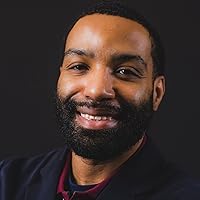
Mychal is brilliant, engaging, and a very refreshing transparent Black man. I really enjoyed his second book, which asks us to examine past myths which have taken on dangerous new lives. He gives us hope and ideas on how to live in a better America.
Mychal asks, “Is the potential for the American Dream worth enduring the brutality of American Life?”
My answer is a hard NO. I appreciate that Mychal reminds us that we can persevere and fight off various evils, together. 5 solid stars. I will continue to read his works.
I finished this book during the completely embarrassing first Presidential debate 2020. Mychal’s words are the only thing holding me right now. Thank you.
Mychal asks, “Is the potential for the American Dream worth enduring the brutality of American Life?”
My answer is a hard NO. I appreciate that Mychal reminds us that we can persevere and fight off various evils, together. 5 solid stars. I will continue to read his works.
I finished this book during the completely embarrassing first Presidential debate 2020. Mychal’s words are the only thing holding me right now. Thank you.

January 19, 2021
I listened to this book, which I recommend since his voice is passionate and clear and lovely. I had high hopes after his first book, but this collection of essays is short and somewhat meandering. A very direct confrontation of America post Trump (which is really the same as America pre-Trump). If non-fiction interests you, especially from a direct black man who pulls no lunches, then this is for you.

June 22, 2021
3.5 stars for this short and powerful read. Some compelling punctures in the myth of capitalism and Americanism and arguments for revolution. Really appreciated the essay on accountability. Also enjoyed the multiple references to our shared neighborhood.
That being said, much of this book felt too reactionary to a moment and I’m not sure all of it will last the test of time.
That being said, much of this book felt too reactionary to a moment and I’m not sure all of it will last the test of time.
December 20, 2020
On par with Thick and Hood Feminism for best essays / criticism I read this year. Very powerful.

February 20, 2021
I love Mychal Denzel Smith and I think the writing here is well worth reading, but it felt like something I've already read before?

April 2, 2021
Perpetual mic-drops.

September 7, 2021
A quick, excellent read.

September 26, 2020
In Stakes is High, Mychael Denzel Smith challenges us to wrestle with what it means to be an "American" as well as the concept of American exceptionalism. In the backdrop are analyses of racism, misogyny, capitalism, and poverty. Smith also prompts us to expand our imagination of what our society could be in his discussion what is needed for a world without police or prisons.
One thing I appreciated in particular was how much historical context is a part of Smith analysis. Not only is there history, but there are the voices of many groundbreaking theorists, political figures, artists, and activists echoed throughout this book from Shirley Chisolm and Angela Davis to Gil Scott Herron and Ralph Ellison. It's also a highlight in the sense that the current moment of Trump and vocal white supremacist sentiment isn't discussed as existing in a sociopolitical vacuum or as an aberration, but rather, an inevitability. In discussing Trump, Smith says:
"America always returns to itself... Trump secured the nomination because at least one major American political party has always explicitly or implicitly endorsed white supremacy as the ruling ideology... An institution created for the protection of white supremacy installed that white supremacist into the nation’s highest office. The system worked precisely as it was intended to."
A brilliant, truthful and timely read that helps to make sense of our seemingly senseless times and leads us to interrogate our view of society as it is while opening up our political and social imaginations to work toward what it could be.
One thing I appreciated in particular was how much historical context is a part of Smith analysis. Not only is there history, but there are the voices of many groundbreaking theorists, political figures, artists, and activists echoed throughout this book from Shirley Chisolm and Angela Davis to Gil Scott Herron and Ralph Ellison. It's also a highlight in the sense that the current moment of Trump and vocal white supremacist sentiment isn't discussed as existing in a sociopolitical vacuum or as an aberration, but rather, an inevitability. In discussing Trump, Smith says:
"America always returns to itself... Trump secured the nomination because at least one major American political party has always explicitly or implicitly endorsed white supremacy as the ruling ideology... An institution created for the protection of white supremacy installed that white supremacist into the nation’s highest office. The system worked precisely as it was intended to."
A brilliant, truthful and timely read that helps to make sense of our seemingly senseless times and leads us to interrogate our view of society as it is while opening up our political and social imaginations to work toward what it could be.
Displaying 1 - 30 of 132 reviews