

What do you think?

The Bugle Boy
Eighty-five-year-old Marcel lives alone with his memories of World War II — his short-lived days as a soldier before his capture and imprisonment by the Germans. He’s got one thing left to do before he dies: find the bugle he buried by the Maginot Line. When his granddaughter Andrea stops by with her burgeoning rural taxi business, he hops a ride to the site of his regiment’s defeat… only to find things have changed. This is Alexandre Clérisse's fierce, tender, and timely rumination on the horrors of war and the lies we tell ourselves.
64 pages, Kindle Edition
First published April 17, 2009
About the author
Alexandre Clérisse
12 books12 followersNé le 30 octobre 1980 à Aurillac, Alexandre Clérisse passe son enfance à Saint-Cère, dans le Lot, où il obtient son bac en 1999.
Encouragé par Michel Lablanquie (créateur des éditions Rackam), il crée, à cette époque, le collectif de musique et de BD La Pie lotoise, grâce auquel il expérimente ses premiers fanzines et l'autoédition.
En 2000, il entame une première année d'histoire de l'art à l'université du Mirail, à Toulouse mais décide finalement de rentrer à Aurillac pour suivre un BTS de communication visuelle (graphisme, édition...). Il obtient son diplôme en 2002. Il s'intéresse alors à l'infographie et à l'illustration jeunesse.
S'ensuit une période de travaux variés – affiches, maquettes et illustrations –, pour plusieurs organismes citoyens, associations culturelles, festivals, conseils généraux et agences de communication.
Mais, en 2003, il se tourne à nouveau vers la bande dessinée et intègre l'École européenne supérieure de l'image, à Angoulême. Il y rencontre Tony Neveux et François Henninger, avec lesquels il conçoit la revue collective ‘Le Mouchoir' (BD pliable). L'année suivante, il réalise, avec Tony Neveux et Violaine Cousty, la maquette et la communication de l'exposition "Au fil du Nil", du nom de la revue annuelle de l'ÉESI. C'est avec la mention félicitations du jury qu'il décroche son DNAP de bande dessinée en 2005.
Toujours avec l'équipe du ‘Fil du Nil', il réalise le plan du 33e Festival international de la BD d'Angoulême, en 2006. On commence à découvrir quelques-unes de ses réalisations dans la presse locale et nationale, et dans certains magazines, comme ‘Choco Creed' ou ‘Toboggan'...
À la même période, il rencontre David Prudhomme, un de ses auteurs préférés, qui lui propose de mettre en couleur "La Farce de maître Pathelin" (Éditions de l'an 2, 2006). 2006 toujours, il illustre "Le Fruit défendu" (L'Arbre vengeur), de Théodore Francos Powys. En 2007, il publie "Jazz Club" (Dargaud) en solo (qui connaît une re masterisation en 2022 sous le titre "Les déboires de Norman Bold, disparition au Jazz Club") et entame de fructueuses collaborations.
Il se lance également dans de nouveaux projets, dont Ginko (avec le collectif Café Creed), un programme qui initie les enfants à l'écologie par la bande dessinée.
En 2009, il signe seul "Trompe la mort" (Dargaud) et entre dans un nouvel atelier, Le Gratin, toujours à Angoulême. L'année suivante sort "L'École des lutins" (Glénat, 2010), un livre jeunesse qu'il réalise à quatre mains avec Mylène Rigaudie.
En 2013 paraît "Souvenirs de l'empire de l'Atome" (Dargaud), ouvrage de longue haleine, sur un scénario de Thierry Smolderen. La collaboration entre les deux hommes ne s'arrête pas là puisqu'en 2015 sort "L'Été diabolik".
Et, en 2019, ils se retrouvent une troisième fois autour, cette fois, des années 1980 avec "Une année sans Cthulhu" (Dargaud).
Dans un même temps, "Alfred, Quentin & Pedro sont sur un plateau" (Dargaud, 2019), un jeu « cherche et trouve » autour de l'univers des plus grands réalisateurs : Hitchcock, Almodovar, Tarantino, etc. est réédité pour le plus grand bonheur des cinéphiles de 7 à 107 ans !
En 2022 il se consacre seul à une aventure humaine et historique célébrant la bande dessinée, "Feuilles Volantes" (Dargaud).
Encouragé par Michel Lablanquie (créateur des éditions Rackam), il crée, à cette époque, le collectif de musique et de BD La Pie lotoise, grâce auquel il expérimente ses premiers fanzines et l'autoédition.
En 2000, il entame une première année d'histoire de l'art à l'université du Mirail, à Toulouse mais décide finalement de rentrer à Aurillac pour suivre un BTS de communication visuelle (graphisme, édition...). Il obtient son diplôme en 2002. Il s'intéresse alors à l'infographie et à l'illustration jeunesse.
S'ensuit une période de travaux variés – affiches, maquettes et illustrations –, pour plusieurs organismes citoyens, associations culturelles, festivals, conseils généraux et agences de communication.
Mais, en 2003, il se tourne à nouveau vers la bande dessinée et intègre l'École européenne supérieure de l'image, à Angoulême. Il y rencontre Tony Neveux et François Henninger, avec lesquels il conçoit la revue collective ‘Le Mouchoir' (BD pliable). L'année suivante, il réalise, avec Tony Neveux et Violaine Cousty, la maquette et la communication de l'exposition "Au fil du Nil", du nom de la revue annuelle de l'ÉESI. C'est avec la mention félicitations du jury qu'il décroche son DNAP de bande dessinée en 2005.
Toujours avec l'équipe du ‘Fil du Nil', il réalise le plan du 33e Festival international de la BD d'Angoulême, en 2006. On commence à découvrir quelques-unes de ses réalisations dans la presse locale et nationale, et dans certains magazines, comme ‘Choco Creed' ou ‘Toboggan'...
À la même période, il rencontre David Prudhomme, un de ses auteurs préférés, qui lui propose de mettre en couleur "La Farce de maître Pathelin" (Éditions de l'an 2, 2006). 2006 toujours, il illustre "Le Fruit défendu" (L'Arbre vengeur), de Théodore Francos Powys. En 2007, il publie "Jazz Club" (Dargaud) en solo (qui connaît une re masterisation en 2022 sous le titre "Les déboires de Norman Bold, disparition au Jazz Club") et entame de fructueuses collaborations.
Il se lance également dans de nouveaux projets, dont Ginko (avec le collectif Café Creed), un programme qui initie les enfants à l'écologie par la bande dessinée.
En 2009, il signe seul "Trompe la mort" (Dargaud) et entre dans un nouvel atelier, Le Gratin, toujours à Angoulême. L'année suivante sort "L'École des lutins" (Glénat, 2010), un livre jeunesse qu'il réalise à quatre mains avec Mylène Rigaudie.
En 2013 paraît "Souvenirs de l'empire de l'Atome" (Dargaud), ouvrage de longue haleine, sur un scénario de Thierry Smolderen. La collaboration entre les deux hommes ne s'arrête pas là puisqu'en 2015 sort "L'Été diabolik".
Et, en 2019, ils se retrouvent une troisième fois autour, cette fois, des années 1980 avec "Une année sans Cthulhu" (Dargaud).
Dans un même temps, "Alfred, Quentin & Pedro sont sur un plateau" (Dargaud, 2019), un jeu « cherche et trouve » autour de l'univers des plus grands réalisateurs : Hitchcock, Almodovar, Tarantino, etc. est réédité pour le plus grand bonheur des cinéphiles de 7 à 107 ans !
En 2022 il se consacre seul à une aventure humaine et historique célébrant la bande dessinée, "Feuilles Volantes" (Dargaud).
Ratings & Reviews
Friends & Following
Create a free account to discover what your friends think of this book!
Community Reviews
Displaying 1 - 18 of 18 reviews

April 29, 2019
This was not a good pick for me. I really liked the art style, but the story bored me to no end, and I found the text difficult to read.
2 stars for the art in this one.
Thanks to NetGalley and Europe Comics for providing me with a DRC of this book.
2 stars for the art in this one.
Thanks to NetGalley and Europe Comics for providing me with a DRC of this book.
April 8, 2019
At first I was liking this old man, but after reading around a third of it, it became more and more detestable and it kind of ruined it for me. The story was interesting but too slow pace for me. Big thumb up for the illustrations that I find original and really good!

August 11, 2020
An interesting bittersweet story...

July 25, 2019
Told partly in flashbacks, this story of a now 85 year old man who was once a bugle boy for the French Army during WWII shows that in war there are actually 3 sides to every story: what they say happened, what you say happened and what ACTUALLY happened.
It's an interesting war story because the author makes absolutely no attempt to make Marcel, the main character, at all likable or endearing. He's a mean crotchety old man who really only likes his grand-daughter but still spends a lot of time complaining about how she lives. When she buys a taxi-bus he talks her into taking him back to where he "lost" his bugle during the war, and slowly we start to the see that the REAL story of the war is completely different from what Marcel has told his family, or what the official government report says happened.
It's an interesting war story because the author makes absolutely no attempt to make Marcel, the main character, at all likable or endearing. He's a mean crotchety old man who really only likes his grand-daughter but still spends a lot of time complaining about how she lives. When she buys a taxi-bus he talks her into taking him back to where he "lost" his bugle during the war, and slowly we start to the see that the REAL story of the war is completely different from what Marcel has told his family, or what the official government report says happened.

April 12, 2019
I loved the drawing style, and the story was very sweet and quite poignant. My issue is the main character - as a young man he was so nice and gentle, but as a old man he was unpleasant and mean at times. I guess it does happen for some people as they get older, but it made it difficult to get attached to the man. Thankfully the ending was worth it and redeemed the whole thing.
Disclaimer - I received a free digital copy in exchange for an honest review courtesy of Europe Comics and NetGalley.
Disclaimer - I received a free digital copy in exchange for an honest review courtesy of Europe Comics and NetGalley.

April 13, 2019
I really enjoyed the artwork and this story which is about an elderly man who was a bugler in the French army in the second world war.
Now all these years later he wants to find his bugle which he was forced to bury when his battalion was trapped by German soldiers. When he eventually finds the bugle he also finds a opportunity to tell the real story of what happened to him in the war.
This is an endearing tale with well developed characters, and great artwork.
Copy provided by Europe Comics via Netgalley in exchange for an unbiased review.
Now all these years later he wants to find his bugle which he was forced to bury when his battalion was trapped by German soldiers. When he eventually finds the bugle he also finds a opportunity to tell the real story of what happened to him in the war.
This is an endearing tale with well developed characters, and great artwork.
Copy provided by Europe Comics via Netgalley in exchange for an unbiased review.

December 6, 2022
'The Bugle Boy' with story and art by Alexandre Clerisse is a graphic novel about a WWII vet who just wants to find his old bugle.
Marcel lives alone and buys eclectic items like an electric corkscrew or a 12 person raclette set. When he sees an old bugle, it stirs old memories. When his granddaughter shows up, he sees a chance to visit the battlefield, he takes it, but the past is not always as glorious as others like to think it is.
I liked this story of an 85 year old man and his antics. There is heart and humor here and the art is pretty great as well.
Marcel lives alone and buys eclectic items like an electric corkscrew or a 12 person raclette set. When he sees an old bugle, it stirs old memories. When his granddaughter shows up, he sees a chance to visit the battlefield, he takes it, but the past is not always as glorious as others like to think it is.
I liked this story of an 85 year old man and his antics. There is heart and humor here and the art is pretty great as well.
April 16, 2019
I received an uncorrected proof copy of this ebook from the publishers via NetGalley in exchange for an honest review.
85 Year Old Marcel discovers an old bugle on a market stall and his memories of the war are awakened. He sets out on a mission: to find the bugle he carried, then buried, during the Second World War before he dies.
This was a moving graphic novel seamlessly weaving together memories of the past with events of the present through pictures and speech.
There were moments of humour, frustration, fear and education, as the main character travels through France on the hunt for the missing bugle, and learns that what really happened has been misunderstood and changed to make him a patriot and hero who he doesn't believe he is.
There were a couple of moments where the translation did not feel to flow correctly, however as this was an uncorrected proof this may have been picked up in editing.
This was an easy read with clear pictures telling the story, with no need for extra script other than speech between the characters. I will certainly look out for more by this author.
85 Year Old Marcel discovers an old bugle on a market stall and his memories of the war are awakened. He sets out on a mission: to find the bugle he carried, then buried, during the Second World War before he dies.
This was a moving graphic novel seamlessly weaving together memories of the past with events of the present through pictures and speech.
There were moments of humour, frustration, fear and education, as the main character travels through France on the hunt for the missing bugle, and learns that what really happened has been misunderstood and changed to make him a patriot and hero who he doesn't believe he is.
There were a couple of moments where the translation did not feel to flow correctly, however as this was an uncorrected proof this may have been picked up in editing.
This was an easy read with clear pictures telling the story, with no need for extra script other than speech between the characters. I will certainly look out for more by this author.
May 14, 2019
A knockabout story with some heart. I have a rule that comic books from foreign languages show their worth by how quickly they're translated, but in this instance my rule fails, as this should have been picked up a long time ago for the English market. An elderly, dribbling and partly (at least) senile chap has a whim to find the very bugle he used in WW2, thus beginning a time-bending adventure, as his granddaughter (and her collection of minibus passengers) is led a merry dance to keep him safe and well. The thing is, just how unsafe and unwell was he back behind the Maginot Line? A good colour scheme – not exactly realistic, but definitely artistic – and some nice design and direction show this story off very well, which will assuredly bring a smile in amongst its obvious messages. Only the fact that the old boy shows more vim than his story at times keeps this from a really high mark.

February 22, 2025
24×32 'Long Courrier' ¦ D.L. 04/2009 ¦ prix DA07 = eo(noté)
Narrative: *****
I'm totally sold on the talent of this complete package creator, who even colors himself, and lost all hesitation to acquire his work. That said, I believe that if he had written the whole thing and then JeanVanHanded it off to said master to write his script, this could have been a masterpiece! The flashbackery and finish were a bit awkward but Clérisse still has many years ahead to work on making his plots read in a smoother fashion.
Visual: ****
His unique art, viewed 'still' in a panel, can look a bit too goofy to be taken seriously for telling the the very dramatic such as this- but somehow works wonderfully once it's moving sequentially through the pages.
Narrative: *****
I'm totally sold on the talent of this complete package creator, who even colors himself, and lost all hesitation to acquire his work. That said, I believe that if he had written the whole thing and then JeanVanHanded it off to said master to write his script, this could have been a masterpiece! The flashbackery and finish were a bit awkward but Clérisse still has many years ahead to work on making his plots read in a smoother fashion.
Visual: ****
His unique art, viewed 'still' in a panel, can look a bit too goofy to be taken seriously for telling the the very dramatic such as this- but somehow works wonderfully once it's moving sequentially through the pages.

April 16, 2019
This graphic novel narrates the adventure of a French veteran.
I loved the illustrations and the palette of colors used .The main character was nice in the beginning but as he grew older, he became a little less kind and relatable. The plot is however very interesting and poignant.;the ending teaches a lesson and make this book worth to be read.
Thanks to NetGalley for the advance copy of this ARC in exchange of an honest review.
I loved the illustrations and the palette of colors used .The main character was nice in the beginning but as he grew older, he became a little less kind and relatable. The plot is however very interesting and poignant.;the ending teaches a lesson and make this book worth to be read.
Thanks to NetGalley for the advance copy of this ARC in exchange of an honest review.

September 16, 2022
This was an interesting graphic novel. I enjoyed reading all about Marcel and his time in the military being a bugle boy. I knew that bugle boys existed but I've never given them much thought so it was nice to read about one of them. The art style was nice as well as the colors. Overall, I think that this is a great graphic novel.
September 11, 2022
Really loved the art is this one. The story was great - could totally see it as a film - but I was a little too short and I would have enjoyed more fleshing out of the characters and something a little longer. But really liked it.

June 25, 2023
An old soldier wishes to find the bugle he lost in WWII. He heads north with his granddaughter where he buried it only to find a whole other thing going on with it. This was a strange story. Straight up goofy at times and not very interesting for a WWII story.

July 27, 2023
Inspired by a true story, Alexandre Clerisse`s The Bugle Boy is a simple and beautifully drawn graphic memoir.
85-year-old Marcel got one thing to do before he dies - find the bugle he buried, before being captured by the Germans.
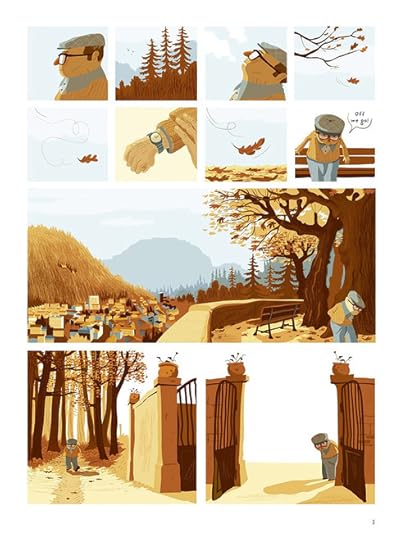
85-year-old Marcel got one thing to do before he dies - find the bugle he buried, before being captured by the Germans.

Want to Read
March 12, 2020Note: I received a digital review copy of this book from the publisher through NetGalley.

January 8, 2023
Une histoire presque toute simple mais touchante et portée par des graphismes très agréables.

May 28, 2019
The Bugle Boy by Alexandre Clerisse tells the story of Marcel, a veteran of the Second World War, as he seeks the bugle he played and buried on the battlefield before being captured. Plit between now and then, this graphic novel is both cute and dark, and it makes for an interesting look into the war.
I think the art was one f my favourite aspects of this book. It manages to work for scenarios that were both light and dark, and the cute and pretty style suited the story throughout.
The story itself was interesting. It had enough twists and turns (especially for its short length) to keep me intrigued and guessing. I did find it pretty difficult to care about the characters at times, which honestly pulled me out of the story a bit. It was also a bit difficult at times for me to connect with the overwhelming Frenchness of it, but I am sure those aspects would be a plus to many. I actually did enjoy the climax and ending a lot.
Overall, this won't be a new favourite for me, but I did enjoy the ride. I would recommend it to fans of graphic novels with an interest in war stories or French stories.
I think the art was one f my favourite aspects of this book. It manages to work for scenarios that were both light and dark, and the cute and pretty style suited the story throughout.
The story itself was interesting. It had enough twists and turns (especially for its short length) to keep me intrigued and guessing. I did find it pretty difficult to care about the characters at times, which honestly pulled me out of the story a bit. It was also a bit difficult at times for me to connect with the overwhelming Frenchness of it, but I am sure those aspects would be a plus to many. I actually did enjoy the climax and ending a lot.
Overall, this won't be a new favourite for me, but I did enjoy the ride. I would recommend it to fans of graphic novels with an interest in war stories or French stories.
Displaying 1 - 18 of 18 reviews