

What do you think?

Anna, Duchess of Cleves: The King's Beloved Sister
Anna was the ‘last woman standing’ of Henry VIII’s wives ‒ and the only one buried in Westminster Abbey. How did she manage it?
Anna, Duchess of Cleves: The King's ‘Beloved Sister' looks at Anna from a new perspective, as a woman from the Holy Roman Empire and not as a woman living almost by accident in England. Starting with what Anna’s life as a child and young woman was like, the author describes the climate of the Cleves court, and the achievements of Anna’s siblings. It looks at the political issues on the Continent that transformed Anna’s native land of Cleves ‒ notably the court of Anna’s brother-in-law, and its influence on Lutheranism ‒ and Anna’s blighted marriage. Finally, Heather Darsie explores ways in which Anna influenced her step-daughters Elizabeth and Mary, and the evidence of their good relationships with her.
Was the Duchess Anna in fact a political refugee, supported by Henry VIII? Was she a role model for Elizabeth I? Why was the marriage doomed from the outset? By returning to the primary sources and visiting archives and museums all over Europe (the author is fluent in German, and proficient in French and Spanish) a very different figure emerges to the 'Flanders Mare'.
Anna, Duchess of Cleves: The King's ‘Beloved Sister' looks at Anna from a new perspective, as a woman from the Holy Roman Empire and not as a woman living almost by accident in England. Starting with what Anna’s life as a child and young woman was like, the author describes the climate of the Cleves court, and the achievements of Anna’s siblings. It looks at the political issues on the Continent that transformed Anna’s native land of Cleves ‒ notably the court of Anna’s brother-in-law, and its influence on Lutheranism ‒ and Anna’s blighted marriage. Finally, Heather Darsie explores ways in which Anna influenced her step-daughters Elizabeth and Mary, and the evidence of their good relationships with her.
Was the Duchess Anna in fact a political refugee, supported by Henry VIII? Was she a role model for Elizabeth I? Why was the marriage doomed from the outset? By returning to the primary sources and visiting archives and museums all over Europe (the author is fluent in German, and proficient in French and Spanish) a very different figure emerges to the 'Flanders Mare'.
288 pages, Kindle Edition
First published January 1, 2019
Ratings & Reviews
Friends & Following
Create a free account to discover what your friends think of this book!
Community Reviews
Displaying 1 - 28 of 28 reviews

January 21, 2022
A proper history book, which sets the record straight about Anna of Cleves. There are many myths around Henry VIII’s fourth wife which Darsie debunks. There is a good deal of dry political stuff which sets the background in the German and Dutch states of duchies. The two superpowers were the French and the Holy Roman Empire led by Francis I and Charles V respectively. The political situation in the various German states and the Schmalkaldic League was complex and Charles and Francis vied for influence with a combination of bribes and threats. England was on the edge of all this, but had influence. Henry has broken with Rome and moved towards the increasingly Protestant states on the continent. However Henry was at this time backpeddling in terms of religion. In actuality Cromwell was pushing the wedding with Anna and this would have alienated Charles V as it would put England more firmly in the Protestant camp. It had taken some time to set the wedding up and by the time it happened Henry’s sense of what was wise in relation to continental relations had changed and he was aiming to be friendlier with Charles. Annulling the marriage with Anna achieved this.
Darsie gives a good account of Anna’s life and she remained on good terms with Henry, even after the end of the marriage. She was also on good terms with Edward VI and Mary and was eventually buried in Westminster Abbey. There was no portrait by Holbein exaggerating her beauty and the term “Flanders Mare” was a seventeenth century addition to the tale. The story about Henry and Anna’s first meeting being a disaster is also incorrect.
All of what you thought you knew about Anna of Cleves is probably wrong. Darsie has done some meticulous research and has pieced together what we really do know. It is a bit dry at times, but it’s an important counter to the story handed down.
Darsie gives a good account of Anna’s life and she remained on good terms with Henry, even after the end of the marriage. She was also on good terms with Edward VI and Mary and was eventually buried in Westminster Abbey. There was no portrait by Holbein exaggerating her beauty and the term “Flanders Mare” was a seventeenth century addition to the tale. The story about Henry and Anna’s first meeting being a disaster is also incorrect.
All of what you thought you knew about Anna of Cleves is probably wrong. Darsie has done some meticulous research and has pieced together what we really do know. It is a bit dry at times, but it’s an important counter to the story handed down.

April 9, 2021
Good, factual and a book that needed to be written given the woeful lack of biographies of this fascinating woman, one of my favourites of the women of the Tudor era- a true survivor- but I found the writing quite dry and I am sorry to say a little dull. One of the breakthrough moments was at the end, where the author dared to draw an interesting thought out- that Elizbeth I may have been highly influenced by the example of Anna of Cleves, a successful, single woman- which I thought was most insightful, and I would have welcomed more insights/theories like this. Clearly they were in the author's mind, but the book was more a catalogue of events and dates, rather than a sharing of conclusions/ theories drawn about Anna and her life, which would have made the book richer.
A good read, but I would welcome more of the author's insights.
A good read, but I would welcome more of the author's insights.

February 7, 2020
While the book gives a solid look at the political-religious situation in Europe in the mid-16th century, Anna herself becomes lost in the greater picture.
I never had a sense from this book of what Anna-the-human was like, since we only see her here through the lens of what she symbolized as a pawn on the European chessboard at the time, as all the countries jockeyed for power, and marriage was just another item on the agenda for alliance-building strategy meetings.
It’s a creative question for Darsie to ask if the marriage was broken only for political reasons and everything we think we “know” about the six month marriage was fabricated from thin air… but I think there was at least some fire to all that smoke. Henry VIII always made the personal political – he wouldn’t be that concerned with the politics if there wasn’t a personal aspect to it for him.

June 1, 2019
The wives of Henry VIII are some of the most hotly-discussed women of the Tudor Dynasty. They all had unique lives and origins before and after they met the man that connects them all. Two of his brides, Catherine of Aragon and Anna, Duchess of Cleves, were foreign princesses and their marriages were used to create alliances with Spain and Germany respectfully. While Catherine of Aragon and the rest of the wives of Henry VIII get a ton of attention, Anna Duchess of Cleves tends to be brushed aside. She is often seen as the wife that Henry did not approve of because of her looks. However, Heather R. Darsie decided to change how we view Anna with her groundbreaking debut biography, “Anna, Duchess of Cleves: The King’s ‘Beloved Sister’”.
I would like to thank Amberley Publishing for sending me a copy of this wonderful book. Anna, Duchess of Cleves has been one of those women who I wanted to learn more about, so I was very excited to read a biography about her.
Anna’s story is often told through the English perspective, but it does not tell the entire story. Anna was born in Germany so it makes sense to tell her story using both English and German sources. Darsie explains her approach to this book and her purpose for writing her biography of Anna in the way she does:
Anna’s life and experiences from the German experiences are very different in some ways than what has been described in English-language books. This is not to say that any English biographies about Anna are wrong, but rather that the German sources help make more sense of Anna’s life and short marriage. The German sources show what a valuable bride Anna was to any suitor , and why she stayed on in England after moving there in December 1539. It is my sincere hope that this biography augments the generally accepted view of Anna, her family, and the political entanglements in which she was enmeshed. I also hope it brings more knowledge about German history to English speakers. (Darsie, 8-9).
Darsie brings a fresh new perspective to Anna’s life by explaining her foundations and her family in the German court. This is critical for understanding what kind of woman Anna was like and why the marriage between Anna and Henry was necessary. We are introduced to Anna’s family; her mother Anna, her brother Wilhelm, and her sisters Sybylla and Amalia, who all play a crucial role in shaping the path Anna’s life will take. Anna’s family had a huge influence in German and European politics and the decisions that they made will shape not only German history, but European history forever. This was also the start of the Protestant Reformation and the battle between Lutheranism and Catholicism ensues with Anna’s family caught directly in the middle.
This book is an eye-opening read. By exploring the political and religious factors of the time, as well as the German and English primary sources, Darsie is able to tell a complete story of Anna, Duchess of Cleves. She was not just some footnote in history. She was a strong, independent German princess who was doing what she could in order to survive. Darsie’s engaging writing style combined with her knowledge of not only German history, but legal documents which shaped the agreements of Henry and Anna’s relationship as well as the understanding of the religious conflicts of the time, blend together masterfully to create a stunning debut. “Anna, Duchess of Cleves: The King’s ‘Beloved Sister’” by Heather R. Darsie is an absolute game-changer when it comes to studying the marriage between Henry VIII and his fourth wife Anna Duchess of Cleves and I highly recommend Tudor fans to read this book. This may be Heather R. Darsie’s first book, but I look forward to reading more of her books.
I would like to thank Amberley Publishing for sending me a copy of this wonderful book. Anna, Duchess of Cleves has been one of those women who I wanted to learn more about, so I was very excited to read a biography about her.
Anna’s story is often told through the English perspective, but it does not tell the entire story. Anna was born in Germany so it makes sense to tell her story using both English and German sources. Darsie explains her approach to this book and her purpose for writing her biography of Anna in the way she does:
Anna’s life and experiences from the German experiences are very different in some ways than what has been described in English-language books. This is not to say that any English biographies about Anna are wrong, but rather that the German sources help make more sense of Anna’s life and short marriage. The German sources show what a valuable bride Anna was to any suitor , and why she stayed on in England after moving there in December 1539. It is my sincere hope that this biography augments the generally accepted view of Anna, her family, and the political entanglements in which she was enmeshed. I also hope it brings more knowledge about German history to English speakers. (Darsie, 8-9).
Darsie brings a fresh new perspective to Anna’s life by explaining her foundations and her family in the German court. This is critical for understanding what kind of woman Anna was like and why the marriage between Anna and Henry was necessary. We are introduced to Anna’s family; her mother Anna, her brother Wilhelm, and her sisters Sybylla and Amalia, who all play a crucial role in shaping the path Anna’s life will take. Anna’s family had a huge influence in German and European politics and the decisions that they made will shape not only German history, but European history forever. This was also the start of the Protestant Reformation and the battle between Lutheranism and Catholicism ensues with Anna’s family caught directly in the middle.
This book is an eye-opening read. By exploring the political and religious factors of the time, as well as the German and English primary sources, Darsie is able to tell a complete story of Anna, Duchess of Cleves. She was not just some footnote in history. She was a strong, independent German princess who was doing what she could in order to survive. Darsie’s engaging writing style combined with her knowledge of not only German history, but legal documents which shaped the agreements of Henry and Anna’s relationship as well as the understanding of the religious conflicts of the time, blend together masterfully to create a stunning debut. “Anna, Duchess of Cleves: The King’s ‘Beloved Sister’” by Heather R. Darsie is an absolute game-changer when it comes to studying the marriage between Henry VIII and his fourth wife Anna Duchess of Cleves and I highly recommend Tudor fans to read this book. This may be Heather R. Darsie’s first book, but I look forward to reading more of her books.
May 2, 2019
First off I LOVE Anne of Cleves and I'm constantly frustrated at the lack of books about her but in come Heather R Darcie with her fantastic book about a fantastic woman.
This book is highly researched and feels very much like a passion project for the author. I loved reading it, saying that at some points especially a chunk in the middle gets very hard to follow as a lot happens at once but stick with it. The book was a little more political than I thought it would have been with a lot of the book containing information about Annas brother and Charles V. A must read for any-one who wants to know more about Anna rather than just the garbage rumours about her appearance, it shows Anna for what she was, a strong, witty and intelligent young woman who moved to a completely new place she didn't understand and come through it.
This book is highly researched and feels very much like a passion project for the author. I loved reading it, saying that at some points especially a chunk in the middle gets very hard to follow as a lot happens at once but stick with it. The book was a little more political than I thought it would have been with a lot of the book containing information about Annas brother and Charles V. A must read for any-one who wants to know more about Anna rather than just the garbage rumours about her appearance, it shows Anna for what she was, a strong, witty and intelligent young woman who moved to a completely new place she didn't understand and come through it.

August 3, 2024
Reads like a rushed-together thesis, with numerous repeating of names a sentence or two apart. Badly needed an editor.
Do we need to know that “Anna’s brother Wilhelm of Julich-Cleves-Berg sent a letter to Christian III of Denmark? Christian III of Denmark was Protestant. His cousin Christina of Denmark was Catholic. Christian III of Denmark was so-and-so,” when a sentence like “Anna’s brother Wilhelm sent a letter to the King of Denmark, Christian III, whose Protestant leanings were at odds with his cousin Christina,” or something like that would do.
And I’m disappointed in the very few quotations other than long blocks of text.
It’s a shame because Anne of Cleves is such an interesting woman.
Do we need to know that “Anna’s brother Wilhelm of Julich-Cleves-Berg sent a letter to Christian III of Denmark? Christian III of Denmark was Protestant. His cousin Christina of Denmark was Catholic. Christian III of Denmark was so-and-so,” when a sentence like “Anna’s brother Wilhelm sent a letter to the King of Denmark, Christian III, whose Protestant leanings were at odds with his cousin Christina,” or something like that would do.
And I’m disappointed in the very few quotations other than long blocks of text.
It’s a shame because Anne of Cleves is such an interesting woman.
May 7, 2019
This is a wonderful book, a fresh view of Anne of Cleves... we meet Anna von der Mark, Born Duchess of Julich-Cleves-Berg, and have a look at her as a whole person rather then the traditional view of her as "the Flanders mare," the cast aside survivor wife of King Henry VIII, or even as the smart survivor wife. The author researched and loving covers Anna's early (German) life, and her immediate and dynastic family, as well as the politics and relationships with King Henry VIII and his children which helped drive the narrative her life. She paints for the reader a vibrant picture of the graceful, wise, humble, patient and kind lady.

May 17, 2026
Really interesting well researched book about Anne of Cleves, her childhood, the lead up to her marriage to Henry VIII and subsequent annulment. Packed with information the book delves into the real reasons for the alliance and subsequent abandoning of it. Anna comes across as a capable woman who made the best of things when becoming a pawn of Kings and Princes.

September 12, 2019
This book was excellent! I have read many books on Henry’s wives and Anna is very intriguing to me. This is the first biography on her that I have read and I feel like I now how much more insight in terms of the politics surrounding the marriage. Of particular interest to me was the rumor that Anna was ugly. Based on her portraits I always thought she was quite beautiful. This book addresses that rumor and is rather enlightening on the matter.
September 20, 2022
This biography of Henry VIII's 4th Queen does an excellent job of putting Anna's life in the context of her German political background. The hasty divorce comes more out of political expediency rather than the tired and not from the time period stereotype of the Flanders Mare. In fact, Darsie covers the brief marriage showing that there wasn't any hints that the annulment was coming until it did. Most of the evidence for Henry's dislike of Anna comes from the final letter of Thomas Cromwell, after his arrrest for heresy and treason where he is clearly trying to please his master one last time in hopes of "mercy, mercy, mercy". Where the book is lacking is the need for an editor particularly in the early chapters. There is a lot of repetition and moving around the timeline that becomes confusing. Overall this book is a fresh take on Anna of Cleves and is worth a read.
May 5, 2020
This is a history taking into account the political aspect of the marriage of Anna of Cleves very much from the viewpoint of continental Europe. Rather than Henry finding Anne unattractive, we learn that this may be myth and supposition. The advantages of alignment in Europe ebbed and flowed whether Protestant or Catholic. I learned little about Anna. I do now have a much better understanding of the context.

August 22, 2020
Link to my review of this book:
https://flhwnotesandreviews.com/2020/...
https://flhwnotesandreviews.com/2020/...

January 25, 2023
Good biography but could have used more depth

July 1, 2026
I muddled my way through this frustrating book, waiting to learn something about Anna, Duchess of Cleves. Around the middle of the book, author Heather Darsie managed to give me some new information: apparently, Henry VIII didn't find her unattractive and disgusting. There were world events that influenced his desire to be rid of her. And I'm sure the presence of the pretty Katherine Howard didn't help.
Most of the book concerns Anna's brother, Duke of Cleves, and his problems with France and the Holy Roman Empire. That's not why I picked up this book. There's a lot of primary source evidence for these events. Unfortunately, there's little primary source material for Anna, and Darsie doesn't have the gift of writing history without direct primary sources, the way someone like Paul Strathern or Dan Jones does.
Rather than the machinations of the Duke, Darsie could have explored what life was like for a young woman like Anna. She could have placed her in the buildings she inhabited, describing the rooms and the kinds of things that went on there. She does this a bit with the Frauenzimmer, a kind of great hall where German ladies spent a lot of their time. Darsie claims Anna had a great deal of influence on her stepdaughters Mary and Elizabeth, but she has no primary evidence to support that. It's something of a shock, after reading such detailed primary accounts of the Duke, to discover there's nothing to back up that assertion beyond Darsie's conjecture.
The problem, of course, is that Darsie couldn't have managed 275 pages on just Anna. There were more interesting people she could have detailed than the Duke, but if she wanted to write about Anna, she needed to recognize that she couldn't do so on primary sources alone.
Most of the book concerns Anna's brother, Duke of Cleves, and his problems with France and the Holy Roman Empire. That's not why I picked up this book. There's a lot of primary source evidence for these events. Unfortunately, there's little primary source material for Anna, and Darsie doesn't have the gift of writing history without direct primary sources, the way someone like Paul Strathern or Dan Jones does.
Rather than the machinations of the Duke, Darsie could have explored what life was like for a young woman like Anna. She could have placed her in the buildings she inhabited, describing the rooms and the kinds of things that went on there. She does this a bit with the Frauenzimmer, a kind of great hall where German ladies spent a lot of their time. Darsie claims Anna had a great deal of influence on her stepdaughters Mary and Elizabeth, but she has no primary evidence to support that. It's something of a shock, after reading such detailed primary accounts of the Duke, to discover there's nothing to back up that assertion beyond Darsie's conjecture.
The problem, of course, is that Darsie couldn't have managed 275 pages on just Anna. There were more interesting people she could have detailed than the Duke, but if she wanted to write about Anna, she needed to recognize that she couldn't do so on primary sources alone.
May 1, 2024
Didn't finish this one, it's not the most enjoyable read since it drags a bit and gets into topics I'm just not that interested. Also I know this is a weird thing but once I noticed how short the sentences were (not much variety in length) it started to bother me.
I'm not that convinced by the book's assertion that the Cleves marriage was annulled for political reasons only (to avoid being dragged into a war with Charles V), and was surprised to see reviews online mostly just accepting this as a certain fact now rather than getting into discussion of the idea. Henry VIII did have an odd romantic side to him and chose most of his wives because he was in love with them (or at least so he seems to have convinced himself), so him ditching one because he wasn't instantly attracted to her has never struck me as unlikely. There could be more than one reason for him wanting to annul the marriage, of course. (And to be clear, I don't personally believe she was ugly and nor do most people writing about her these days, as far as I've seen.)
I might go back to this book at some later date, but for now I'm leaving it unfinished. Partly because it's spending a lot of time on things I don't really want to spend time reading about (sorry, Guelders) and partly the style of writing makes it a bit of a slog at times.
I'm not that convinced by the book's assertion that the Cleves marriage was annulled for political reasons only (to avoid being dragged into a war with Charles V), and was surprised to see reviews online mostly just accepting this as a certain fact now rather than getting into discussion of the idea. Henry VIII did have an odd romantic side to him and chose most of his wives because he was in love with them (or at least so he seems to have convinced himself), so him ditching one because he wasn't instantly attracted to her has never struck me as unlikely. There could be more than one reason for him wanting to annul the marriage, of course. (And to be clear, I don't personally believe she was ugly and nor do most people writing about her these days, as far as I've seen.)
I might go back to this book at some later date, but for now I'm leaving it unfinished. Partly because it's spending a lot of time on things I don't really want to spend time reading about (sorry, Guelders) and partly the style of writing makes it a bit of a slog at times.

December 14, 2019
This was a bit of an effort but it was totally worth it. I was expecting a straightforward biography of Anne of Cleves but there was so much more, and I haven't seen her treated this way by any other historians. While the background and descriptions of the state of Dutch/German/French politics of the time were confusing, that isn't because of the writing: they were genuinely confusing. And absolutely necessary to understanding Henry VIII's treatment of his 4th wife. There is a humanity, a personality and an empathy here for Anne that has been so-far missing from other descriptions of the six wives as a herd of victims. It also gives a strange insight into Henry's personality, both the disgusting degree to which he allowed his council to keep him insulated from the mess he created, but also how happy and kind he could be when things went his way.
I would have liked more substantial referencing, and after the end of the war of Guelders succession it seems to come to a very quick end, it would have been nice to explore Anne's later life and have more evidence of her personality fro her surviving letters but beyond that this was an enlightening book that gave me a whole new take on this overlooked but quietly strong woman.
I would have liked more substantial referencing, and after the end of the war of Guelders succession it seems to come to a very quick end, it would have been nice to explore Anne's later life and have more evidence of her personality fro her surviving letters but beyond that this was an enlightening book that gave me a whole new take on this overlooked but quietly strong woman.
January 23, 2020
I finished this book last week, after a very enjoyable and informative read. What impressed me the most was Heather’s approach to the book. There are often one sided accepted histories passed down, almost like tabloid newspapers are popularised....the held view of Anne of Cleves, is largely taken from the Tudor/English source, much of which was obtained from a condemned Thomas Cromwell, shortly before his execution. Heather’s meticulous research into the German documents, showing the contemporary accounts of Anna, the delicate balance of power in Europe, and how often women were tools of alliance between countries, illustrates what happened to bring about the annulment of Anna’s marriage to Henry VIII. There are lots of facts & figures in this book, and ever changing alliances & their effect on the balance of power, so there is a lot of information to take in. Crucially, there are no contemporary accounts showing any displeasure between Henry and Anna, and you have to wonder how and why history tainted Anna as the “Flemish Mare.” This book answers these questions, and I would recommend this to anyone wanting a more balanced account of Anna’s life.

December 24, 2021
BOOK REVIEW ⭐️⭐️⭐️
I appreciate new exploration that challenges the received stories of historical persons. Thus it is here: a new and more balanced history of Anna (Anne) of Cleves, Henry VIII’s fourth wife (“divorced”, “the ugly one”) which reaches beyond mere English sources into her native Cleves/Germany. What emerges is interesting: Henry’s divorced, ugly, Protestant, doormat wife was in fact none of these things. So this was very cool. Heather Darsie has added much to challenge the old tropes, and I for one applaud her. At times she becomes mired in repetition, and is stylistically uneven. But she’s new to this work, and I look forward to her next forays.
#bibliophile #book #bookish #booklover #books #books2021 #booksofinstagram #bookstagram #bookstagrammer #bookstagrammers #bookworm #goodreads #homelibrary #instabook #instabooks #reader #readers #reading #readingroom #readersofinstagram #bookreview
2021📚 85
I appreciate new exploration that challenges the received stories of historical persons. Thus it is here: a new and more balanced history of Anna (Anne) of Cleves, Henry VIII’s fourth wife (“divorced”, “the ugly one”) which reaches beyond mere English sources into her native Cleves/Germany. What emerges is interesting: Henry’s divorced, ugly, Protestant, doormat wife was in fact none of these things. So this was very cool. Heather Darsie has added much to challenge the old tropes, and I for one applaud her. At times she becomes mired in repetition, and is stylistically uneven. But she’s new to this work, and I look forward to her next forays.
#bibliophile #book #bookish #booklover #books #books2021 #booksofinstagram #bookstagram #bookstagrammer #bookstagrammers #bookworm #goodreads #homelibrary #instabook #instabooks #reader #readers #reading #readingroom #readersofinstagram #bookreview
2021📚 85

November 22, 2025
I appreciate the fact that this book focused on German sources and political reasons for the end of Cleves marriage versus it simply being a case of Henry not living Anna.
That said, this book was poorly organized, dryly written, and so unfathomable boring I was dragging my feet to read it. You as the reader are repeatedly bombarded with the family trees of even the most unimportant character, to the point that it feels like you’re reading the genealogy lists in the bible. It also suffers from what
I consider to be a nonfiction cardinal sin: the quotations from sources rival the actual text of the book. It’s mind-numbing how much of this was just large chunks of primary source - which is, frankly, lazy.
Most dating of all, somehow, Anna of Cleves is a tertiary character in her own book.
I understand there’s not much out there on her - but come on. There isn’t even time devoted to speculating on her lived experiences. You get more on Anna of Cleves from her song in Six.
That said, this book was poorly organized, dryly written, and so unfathomable boring I was dragging my feet to read it. You as the reader are repeatedly bombarded with the family trees of even the most unimportant character, to the point that it feels like you’re reading the genealogy lists in the bible. It also suffers from what
I consider to be a nonfiction cardinal sin: the quotations from sources rival the actual text of the book. It’s mind-numbing how much of this was just large chunks of primary source - which is, frankly, lazy.
Most dating of all, somehow, Anna of Cleves is a tertiary character in her own book.
I understand there’s not much out there on her - but come on. There isn’t even time devoted to speculating on her lived experiences. You get more on Anna of Cleves from her song in Six.

May 22, 2023
This was an excellent book, well-researched and detailed. It explores the family of Anna before her birth, their linage and place on the European stage. The research that Ms. Darsie did makes it understandable how Anna came to be a prospective bride for Henry Vlll. More importantly it gives the factual reasons for Henry's need for an annulment which were not her unpleasant appearance. Ms. Darsie also refutes the popular belief that Anna was lucky or smart in the way she avoided being married to Henry for longer than she was. This book needs to be read by all Tudor fans.
March 18, 2025
I haven't read a book solely focused on Anna of Cleves, so I liked it from that perspective. However, maybe this was just the Kindle version, but there were several typos/duplicate sentences/duplicate words in sentences that could have been fixed. This also reads more of events that happen and sometimes it a bit choppy. In addition, there's a lot of repetition of people's titles when they were just talked about, which could have also been cut. But it was interesting and since it's one of the only biographies in English focused on Anna, I'd recommend it.

April 24, 2025
I had high hopes for this biography, but ultimately found it disappointing. I appreciated that Darsie tried to dispel a lot of the inaccurate beliefs and portrayal of Anne of Cleves. However, there was very little about Anne herself, and despite being in the synopsis, very little about her interactions and relationships with Henry's children.
Additionally, this book needed a much deeper developmental edit (or Darsie needed to actually listen to her editor) and desperately needed a copy editor. The lack made it a poor read.
Additionally, this book needed a much deeper developmental edit (or Darsie needed to actually listen to her editor) and desperately needed a copy editor. The lack made it a poor read.

October 14, 2022
Very informative book but quite abrupt writing style - short sentences and facts over more lyrical prose. I learned a lot about the context around the woman history has painted as “the ugly one”. Well worth a look.
May 3, 2025
I picked this book up out of curiosity, thinking I would just read a chapter or two to learn about Anna but I could not put it down once I started reading! This book is absolutely fascinating, everyone should read it.

November 4, 2019
Fresh biography with German sources and a whole lot of political background and intrigue. I appreciate the different look at this Tudor Queen who survived Henry VIII and was able to maintain her independence and strong will. Of his wives, Anne of Cleves is the one I've read the least about. I'm happy this book was written and able to fill that hole.
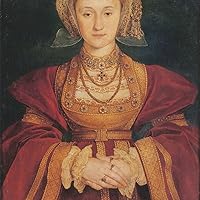
On my list of life things: Go see her portrait that Hans Holbein painted that hangs in the Louvre.
Library read.
On my list of life things: Go see her portrait that Hans Holbein painted that hangs in the Louvre.
Library read.

March 6, 2022
3.5 stars
June 24, 2019
Heather R Darsie, dissatisfied with the research and orthodox accounts of Anna von Kleve's life, set out to thoroughly research the life of Henry VIII's maligned fourth queen. In this endeavour, Darsie has been successful, and we learn much more of Anna's formative years and the social and political events that both forged, and potentially helped end her marriage.
Darsie's research challenges much of our beliefs on Anna's early life. In particular, we learn more about where Kleve is situated, in the relationship of European courts, and their influences on Anna's home life. There is a thorough look at the machinations that led to her marriage. More importantly, Darsie challenges our views on why the marriage failed and the rumours and accusations that have been accepted as facts. Examining the conflict between the Emperor and Anna's sister's husband help us understand the strange relationship and settlement that ensued after Anna's annulment.
I enjoyed Darsie's book. It's clear that much research was undertaken, but some of that work is lost and not well-argued or cited. Also, Darsie does have a habit of digression, which is fine, but Anna gets lost. However, I did enjoy the book and would recommend it highly.
Darsie's research challenges much of our beliefs on Anna's early life. In particular, we learn more about where Kleve is situated, in the relationship of European courts, and their influences on Anna's home life. There is a thorough look at the machinations that led to her marriage. More importantly, Darsie challenges our views on why the marriage failed and the rumours and accusations that have been accepted as facts. Examining the conflict between the Emperor and Anna's sister's husband help us understand the strange relationship and settlement that ensued after Anna's annulment.
I enjoyed Darsie's book. It's clear that much research was undertaken, but some of that work is lost and not well-argued or cited. Also, Darsie does have a habit of digression, which is fine, but Anna gets lost. However, I did enjoy the book and would recommend it highly.
February 26, 2024
Most books on Anne of Cleves recycle the same material. She was too ugly for Henry to bed. She smelled bad. Her body was not that of a virgin. Yet, there doesn’t seem to be any plausible explanation for why a young woman who was described as attractive by everyone else, whose very portrait refuted Henry VIII’s claims, should be declared just the opposite by her own husband.
Perhaps there was more to the story? Yes, there was! And it’s an entire book’s worth. “Anna, Duchess of Cleves: The King’s Beloved Sister” recounts how the marriage came to be. It describes Anne’s upbringing, her sense of humor, her warmth, her family relations, and the turbulent religious and political climate of the time.
It also explains the reasons for both this union and its end. It wasn’t a marriage of two people, but of the duchy of Cleves and England.
Heather R.Darcie travelled to Germany and researched the other side of this story using contemporary sources. This is not a light history book for the casual reader. This is a fact-filled treasure trove of information for those who are willing to delve deeper and learn the real story of Anna, Duchess of Cleves.
Perhaps there was more to the story? Yes, there was! And it’s an entire book’s worth. “Anna, Duchess of Cleves: The King’s Beloved Sister” recounts how the marriage came to be. It describes Anne’s upbringing, her sense of humor, her warmth, her family relations, and the turbulent religious and political climate of the time.
It also explains the reasons for both this union and its end. It wasn’t a marriage of two people, but of the duchy of Cleves and England.
Heather R.Darcie travelled to Germany and researched the other side of this story using contemporary sources. This is not a light history book for the casual reader. This is a fact-filled treasure trove of information for those who are willing to delve deeper and learn the real story of Anna, Duchess of Cleves.
Displaying 1 - 28 of 28 reviews