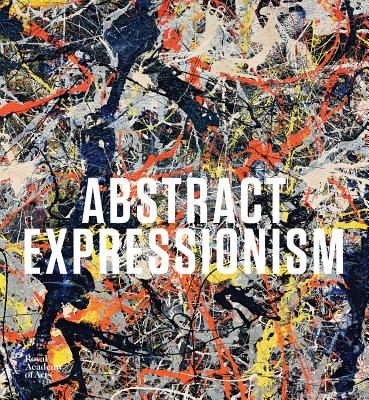
The definitive study of the most important movement in postwar American art, now in paperback Now available in paperback, this is the definitive book on abstract expressionism, with superb color plates of major works by the protagonists of the movement as well as lesser-known figures, and essays by key scholars. Working primarily in New York and San Francisco from the 1940s on, a generation of American artists injected a new sense of confidence in painting, experimenting with improvisation, spontaneity and color. This bold publication reevaluates the movement, making the case that, far from being unified, abstract expressionism was in fact complex and ever-changing. Included here are full-color plates of works by Willem de Kooning, Sam Francis, Helen Frankenthaler, Arshile Gorky, Adolph Gottlieb, Philip Guston, Franz Kline, Lee Krasner, Joan Mitchell, Robert Motherwell, Barnett Newman, Jackson Pollock, Richard Pousette-Dart, Mark Rothko, David Smith, Clyfford Still, Ad Reinhardt, Mark Tobey, Bradley Walker Tomlin and Jack Tworkov, among others. Among the abundant archival materials are images of Hans Hofmann’s famous classes; artists such as Krasner, Frankenthaler, Pollock and de Kooning in their studios; installation shots of some of the key international exhibitions of the era, both internationally and at the galleries of Betty Parsons and others; and photos of famous locations where these artists thrashed out their aesthetic concerns, such as the Cedar Street Tavern. Also featuring a superb chronology of the period, this landmark publication is a thrilling survey of an incredibly energetic moment in American art.
--An Unending Equation, David Anfam --'A New Spirit of Freedom': Abstract Expressionism in Europe in the Aftermath of War, Jeremy Lewison --An Improvised Community, Carter Ratcliff --Feminism for the Most Masculine: How Two Women Launched an Art Market, Susan Davidson
--Chronology, Edith Devaney with Christian Wurst
Catalogue Plates --Painting and Sculpture --Works on Paper and Photography
Lenders to the Exhibition Endnotes Select Bibliography Photographic Acknowledgements Index
The human mind always develops a serious passion for two things – things that it couldn’t understand and things it couldn’t attain. Abstract art has been one such a passion of mine, one of those many things that I never understood, no matter how much I tried. Picking this book was one attempt of mine to grasp that art form called ‘Abstract Expressionism’. But little did I glean after having gone through this book.
Abstract Expressionism, or Gestural Abstraction, as it is called in another of many ways, is a form of art that is more visceral and volatile than any bit formal or constructed. Of course, even such a visceral art gets constructed by the artist through serious and sincere focus. And, all that I wanted to learn was about the stimuli and milieu that led to the genesis of this art form. I also wanted to learn as to what constitutes ‘abstract expressionism’ and other such qualifiers. David Anfam has done a good job with all that introduction, but the trouble begins with his delving deep in abstract terms to tackle his task of defining the history of Abstract Art forms.
I always love artworks that don’t reveal everything in mere lines, forms and colors, instead carrying a mysterious aura around them, taunting the viewer to look deeper to discern the same. Such works are what art is all about – an expression of the soul, catharsis for the pent up emotions and passions. While Abstract Art easily wins this award hands down, I don’t believe in artists merely splashing paint on a canvas and calling it abstract painting, letting the wannabe’ intellectuals offer any and every meaning that they can dig out of it, thus heaping undeserving glory on the ‘artist’. An artist expressing something of real sense through his work and allowing the viewer to discern the meaning out of it is one thing, while the artist doing the 'splashing' and letting the viewer’s perceptions allot a lofty sense and purpose to an otherwise ‘accidental’ art is something altogether different. The first part is what Abstract Expressionism is all about, whereas the second one is merely a sophisticated sham!
Coming back to this book, many of the artworks appear more like what you or I can do in a simple notebook, but David helps us delve deeper into their meanings and see beyond their seemingly simple exteriors – something that I always dread. If an art aficionado finds more meaning in a work of art - more than even what the artist had really intended to convey – what do you make of such a work? Is the artist to be glorified for encouraging such a thought process or is the viewer to be praised for assigning a meaning - when there were none (or not as much as was made out to be)?!
This and many more such questions of mine about Abstract Art were left unanswered as I closed the book. Little did I learn from this book and I feel that only I am to be blamed. Being a budding artist – of course, I can call myself so and still remain a humble being – I couldn’t understand all that greatness of the works of masters like Jackson Pollock and de Kooning. I can pin the blame on none other than Anfam for making the book a tad difficult for beginners like myself. May be I will revisit the book once I grow wise in life and art. May be then I will be able to understand this book better and revise my rating, but for the time being I can offer it nothing more than two-stars!
A historical art book full of artists and paintings and how the movement started and develop, their message etc. Pollock was mentioned zillion times.
They say illusion of depth (when you draw a 3D cube in a piece of paper) is really an illusion, tear down these illusions and draw Abstract (2D)!
They also attack Surrealism and its illusions and Freudian "subconscious".
Myth, Symbolism (this canvas that has only a big circle and a dot in the middle represent gravity and this line represent government oppression, stuff like that I guess), and also the "this painting is just what it is, three blue squares", are common themes of Abstract Expressionism. Is art is only for Art sake? Most Abstracters say otherwise, "our paintings have deep meanings"
I have to admit that I really dislike AE (I would give the book 1 star but I'm trying to be unbiased, it works just fine as a historical reference, which I dislike: there is not so much arguing etc, just a long boring history class), but the book as a whole was helpful to understand the movement. However, concerning the "deep meanings", I think AE is so similar to the tale of the king's tailor where everyone is faking admiring the awesome dress tho they don't see it only not to look like an idiot among the others around..
This is the second overview I've read about the Abstract Expressionists. The first, a slim 80 page overview by Debra Bricker Balken, was meant to get my feet wet, acquaint me with the major artists in the movement, making more in-depth study easier down the line. Turns out, the opposite happened -- Balken's book implied enough prior knowledge that I found myself more lost than ever, as long, comparative lists of artists whose work I had never seen were trotted out to prove every point. Although Anfam's book is twice as long and more detailed, I actually found it significantly easier to follow, and came away with a deeper understanding of the "movement" (in quotes because of the lack of blanket idea or direction joining this disparate group of artists). THIS is the primer I was looking for.
Things Anfam gets right: he explores each artist from their earliest point of development, so you get to see the representational, almost traditional works from Pollack, Rothko, Kline, and Guston, before they became what they became, as well as all the incremental progress along the way. Illustrated with art pieces from other eras (cubist especially) and other representational styles of the time, you get a clear sense of what artistic and emotional walls the Abstract Expressionists where trying to batter down. In doing so, you come to realize that the Abstract Expressionist "era" is a shockingly short period of time in the span of these artists' development (seven to eight years, tops...roughly as long as the Beatles...and maybe only four of those are really concentrated into the style we think of).
Most helpfully, descriptions of certain paintings are footnoted in the margins, corresponding numerically to the illustrations in the book. Anfam will continue to refer to the same paintings over and over, regardless of where they land in the book, meaning that the reader will have to flip back 40 pages to see said de Kooning painting again. This is extremely helpful, however, because it examines certain key paintings from several different angles, not just the physical process, but also where it stands in the artist's conceptual development, how it was received by the art world, and where the artist took it next. I also like that Anfam referred to the outside world's perception of Abstract Expressionist art (and "modern art" in general) via New Yorker cartoons, Norman Rockwell parodies, etc. as well as techniques in photography and sculpture that mirrored Abstract Expressionist concepts.
In my limited readings and viewings on this subject, I'd call this book the essential introduction to the era.
My only major complaint (and it is rather major) was that many (maybe even most) of the illustrations were printed in black and white (presumably for budgetary reasons), even though the painting is in color. Why the publishers chose to cut corners in this way is beyond me. Sure, it's a budget introduction, but it seems like a bump up from $16.95 to, say, $24.95 could have covered the extra color printing. When discussing an artist's "evocative use of deep ochres against sensuous crimsons," and then you look at the painting and it's gray, it feels like a major misstep. Also, the final illustration shown is one of Ad Reinhardt's nine-panel "black on black" paintings. This is represented in the book as a solid black square, free of nuance or detail. Yet, the text painstakingly notes that Reinhardt's blacks were not really black -- they were ultra-dark reds, browns, greens, and blues that bump up against the very edge of ocular differentiation, and require focused attention to note the variations. I suppose a full-sized Rheinhardt book might be able to reproduce this, but just printing a black square with no nuance and saying it's a Rheinhardt was a really insulting end to a stupendous book.
Abstract expressionist painting has had a profound effect on how all art is viewed today. Recognizable by almost everyone, yet often seen as something a child could replicate, the art and the movement behind it are often overlooked and misunderstood. This book, while at times a little too scholarly, is an excellent introduction to understanding where abstract expressionism came from and who the major players were. Beginning with the early days of each of the major abstract expressionists and continuing until the end of the movement and influence on contemporary art, the history is well outlined and easy to follow. The origins of Still and Pollock in the American West near Native American and outdoor communities, the influence of cubism, the traumas of World War I, the commissions from depression era government programs, and people groups fleeing the violence leading to World War II, created the conditions for this new art movement in New York City. Rather than a single stroke of inspiration, abstract expressionism moved from realism to pictorial and hieroglyphic depictions, to symbolic expression, and then finally complete abstraction. The famous drip paintings of Pollock, the cloudlike forms of Rothko, and the zip lines of Newman came after years of gradual inspiration and innovation. This book provides a clear narrative to the movement, coupled with dozens of images of the art. The context and progression are accessible and instructive. The book is attractive to someone with little knowledge of art and the abstract expressionists as well as to someone with substantive knowledge.
Rereading. A confident overview of AbEx that switches seamlessly from the trajectories of careers to artistic schools to the wider culture. Maybe a bit too confident though since Anfam sometimes is more glib than insightful in his reliance on his own style to make connections, delivery judgements. I’m also wary about the impact of gigantic historical facts (the Holocaust, the Bomb) on specific artistic practice. Does a good job elevating David Smith back to the first rank.
Paintings do be looking like that nice history and overview of movement and evolution tracing pollock, still, newman, gorky, smith, kline, rothko, and de kooning though none very comprehensively i do love abstract expressionism tho so did find very useful and interesting
This is not a beginners book. The language is incredibly cloudy and removed while trying to sound scholarly. It does a great job of covering many moving artists and moments but seemingly jumps from place to place in times. I wish it was more beginner friendly (I have quite a bit of background and still found some of the language challenging).
This is a collection of essays and then a long catalogue of images of famous AE works. Besides the catalogue, the essay about Parsons and Guggenheim's contributions to popularizing AE and the full timeline history of AE are the highlights here. However, the ther essays are more style over substance and lose the reader in their own abstract flourishes.
A great well presented book. Opening up the world of abstract expressionism for the painter and academic alike. Good use of the visual, good quality pictures and explanation of the development of this art movement.
A nice medium-weight treatment. Suffers the typical elision of an author overly familiar with a subject and thereby forgetting what he once didn’t know. Art books can be frustratingly insular in that way, and this one is no exception. But filled with lots of gold nuggets. And some truly wonderful color reproductions. Though I echo others’ complaints about the scattered black and white plates. WTHF?! The Pond” by Baziotes was rendered all but useless by this gross negligence (absolutely lovely in chromatic). Thank god for Google; it should be your constant companion through this worthy campaign.
This book was a gift to me from my boyfriend who is in love with the abstract expressionism movement and wanted to introduce me to the movement. This book is a great little book for anyone interested in American art, specifically for the abstract expressionist movement (as the book title implies). The information is digestible for those who are brand new to abstract expressionism. The image quality is also great!
If there's any art history professors out there reading this, I strongly recommend this book to at least sample from if you talking about contemporary (specifically 1940s-1960s) American art.
When I took art history at college, I though this school of art was just so much b.s. But over time, it's grown on me. Not enough pictures to make it a great art book.