Jump to ratings and reviews
Rate this book

Outcaste: A Novel

Rate this book
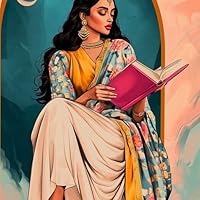
Outcaste ( Brushte in the original Malayalam) is a powerful story of the revenge a single woman named Paptikutty wreaks on her community for the monstrous injustice done to her. It is based on the 1905 trial of a Namboodiri woman for adultery and the revenge she exacted on her sixty-four lovers, who belonged to the most powerful families of the land. In the novel, Paptikutty is an avatar of Goddess Kali herself, bringing justice and revolution wherever there is corruption and sin.

The Namboodiri Brahmins were the most powerful community in Kerala in the period in which the novel is set, more powerful than the King himself. Bound by rigid customs and rules, they silenced everyone who opposed them in their quest for more wealth and power. Namboodiri women were confined to the inner quarters of the house, where they lived in squalor and degradation. The influence of the Namboodiris grew unchecked until the end of the nineteenth century, when Paptikutty’s act of vengeance weakened the community from within. Passionate and gripping, Outcaste is an unforgettable indictment of the injustices perpetuated by upper caste men—a continuing problem in Indian society.

256 pages, Paperback

Published April 1, 2019

17 people are currently reading
173 people want to read

About the author

Ratings & Reviews

What do you think?
Rate this book

Friends & Following

Create a free account to discover what your friends think of this book!

Community Reviews

5 stars
22 (28%)
4 stars
38 (50%)
3 stars
12 (15%)
2 stars
4 (5%)
1 star
0 (0%)
Displaying 1 - 12 of 13 reviews
Profile Image for Swati.
478 reviews68 followers
September 20, 2021
Recently, I’ve been watching some old Malayalam movies. I’ve watched most of them years ago but I just seem to have forgotten their plotlines entirely. ‘Parinayam’ was one of those movies. Set in the early 20th century, it’s about the trial for adultery (smarthavicharam) of a young Namboodiri widow who gets pregnant. It’s loosely based on the true, sensational case of Kuriyedathu Thathri, an incident which shook the foundations and very functioning of the Namboodiri community. I loved the movie (brilliant acting and music!) and when I came across Matampu Kunjukuttan’s ‘Outcaste’, I simply had to read it.

In Outcaste, it’s Paptikutty who undergoes smarthavicharam for having had liaisons with multiple Namboodiris and other powerful men in the society. She names 64 men and is stopped just short of the 65th by the King himself who is present at the trial. Rumour has it that it’s because he knew he was up next.

Paptikutty is an extremely beautiful and intelligent woman who is married off to Neelan, one of the prominent Namboodiris at a young age as was the custom. However, on the first night it’s her husband’s brother who enters the room.

“For a Namboodiri woman who was forbidden to even see the sun’s rays, looking at any man other than her husband was equal to adultery.”

And that’s when Paptikutty realises her purpose through the haze of emotional hurt and anger. She was Paptikutty the “Goddess of Revenge”. From there on, Paptikutty, the “Personification of Power” lives only to execute her plan of action where she “must seduce all Namboodiris, nay, men”.

“Outcaste” shines with Paptikutty’s presence but the book is much more than her story. Interweaving the stories of a central character each from different Namboodiri families, the book gives us a good picture of the suffocating customs and practices prevalent in those times. Namboodiri women had an elite status only in name. Once married, they spent their entire lives in the dark confines of the illam (ancestral home) never to be seen or heard again.

Paptikutty is symbolic of all these women, thwarted of their desires and individualities, alive but not living. She is the Goddess Kali who rises up against the demons of patriarchy and emerges triumphant.

As I mentioned, the story goes beyond Paptikutty to interweave different stories. This is where the book gets a bit confusing with many characters and a jumpy timeline. It’s a tiresome read in some places but rewarding in the end. The extensive footnotes really help too. I think this book must have been extremely tough to translate as I believe the original is not written in contemporary Malayalam. A wonderful translation from Vasanthi Sankaranarayanan that preserves the atmosphere of the Namboodiri community and Kerala at the turn of the century.

Matampu Kunjukuttan was the grandson of the chief priest who conducted Thathri’s trial. By writing such a compelling narrative that goes against everything his grandfather stood for, he continues what the Paptikuttys and the Thathris of the world set out to do. Rise against patriarchy.
Profile Image for Chitra Ahanthem.
395 reviews208 followers
April 11, 2019
Outcaste ( Brushte in Malayalam) is a powerful indictment on the male privilege that the Namboodiri Brahmins in Kerala enjoyed for years till a woman shook its very foundations by making 64 high caste Brahmins as outcaste. Based on real life trail of a Namboodiri woman for adultery in 1905, this work of fiction brings alive the patriarchy of the Namboodiri Brahmin men who totally sequestered their women while they were free to marry or leave women languishing behind the walls of the home.

The young and beautiful Paptikutty is married to the younger brother of a powerful Namboodiri Brahmin and to her horror finds the elder brother coming to the marital bed. Paptikutty, who is described as Goddess Kali bent on cleansing the social ills of the time decides to entice men and keep note of who, what and when. She notes down intimate physical descriptions and when put on trail, names every one of the 64 men on her list.

I would recommend this book for readers who love to read translated Indian literature and who are looking to discover some unknown gems. The translation was a bit heavy in parts but I guess that would be keeping in spirit with the flowery prose that would perhaps have been used in the original language. The beauty of this book though is that none of these slight drawbacks take away the voice of reason and questioning that it raises.
Profile Image for Smitha Murthy.
Author 2 books418 followers
March 23, 2021
I am so confused after reading this book. I love its themes: feminism, patriarchy, Brahminism. But the telling of the story of one woman and her 64 lovers was all over the place for me. Authorial interventions didn’t make sense to me. Too many names. Too many scattered incidents.

Probably, a bit too much for my perpetually muddled head, but a classic in Malayalam literature.

Profile Image for Areeb Ahmad (Bankrupt_Bookworm).
753 reviews262 followers
September 14, 2022
"How could Paptikutty be moved, when she had waited for this hour of trial from the night of her nuptials! She could recall the passion and warmth of a thousand nights. She opened and read the destinies she had written with a blunt pencil point and silently enjoyed the implications. Those great men who had fallen at her feet and begged, one after the other! Here in her hands lay the horoscope of their future days!"


In 1905, Kuriyedathu Thatri was put on trial for adultery. She named sixty-four men belonging to the most powerful families of the region as her lovers. All were excommunicated and their trial changed the perception of Antharjanams, Namboodiri women, forever, highlighting their conditions. Modern retellings, for Devika, "cast Thatri as the embodiment of cosmic female energy sweeping away the decadence of the Brahmins." Outcaste shows "the transformation of the Malayali Brahmin community in the 20th Century and the changing nature of women and their agency in [these] traditional communities."

Kunhukuttan's depiction of the plight of women from the Namboodiri Brahmin community, and especially Paptikutty (his version of Thatri), is alarming enough but it still feels understated. He takes the real incident, fictionalizes certain aspects of it, and turns it into a cautionary tale about the cost of debauchery and depravity. In his novel, Paptikutty is a sub for Goddess Kali, a self-declared Goddess of Revenge come to cleanse the community of waywardness and complacency—especially the men who had no qualms about exploiting women—and putting an end to regressive practices and customs.
Profile Image for Tejaswini.
118 reviews22 followers
February 25, 2020
Could we imagine a 'woman' in early 20th century standing against a complete clan keeping her chastity at stake ? Could we imagine the seeds of women empowerment were sown way back in 1905? Could we imagine prevailing 'Metoo' moment has its slight traces almost a century ago?
Yes! Kuriyedathu Thatri from Kochin , Kerala along with her 64 paramours whom she had allegedly reported were excommunicated and outcasted. Basing on this true incident , a fictional story was written originally in Malayalam by Matampu Kunhukuttan in the name ' Brushtu' , translated to English by Vasanthi Sankaranarayanan in the name 'Outcaste'.
🔥
The story was set during the days in Kerala where ' Namboodari ' clan reigned over all other sects of Brahminsm. Namboodaris were at their peaks in dictating other clans but cleverly wagging their tails before King for their royal benifits. The dictate was such that the Namboodari men could marry more than one wife legally and maintain liasions illicitly with courtesans. But in the case of women , they were prevented from touching even the rays of sun escaping from a crack of their walls. They lived as inmates in their very own women quarters of Namboodari houses. The egoistic supremacy made their entire clan downfall in due course of time.
🔥
Papikutty on her martial bed awaiting her husband, by seeing her husband's brother instead of her husband rages with fury . She feels shattered , humiliated and ensnared and then she discovers her reason of birth. She incarnates as "Goddess of Revenge" at that very instant searing off the 'suffocating' cultural veil of her clan and breaking the 'rusted' shackles that her cast had tied around her. Though it started as a personal revenge, she decides to extinguish the ostentatious pride of Namboodari men by ostracizing the entire clan. Then in trial session called ' smartavicharam ', she names 64 men who were intimate with her thus outcasting them.The author had made many references to protoganist and my favourite is with Goddess Sita. The way he articulated comparing Papikutty with Goddess Sita is exquisitely beautiful.
Here it goes like this:

"The Daughter of Earth( Sita) aeons ago, at the hour of the second fire test, hid herself in the bosom of Mother Earth. Now, faced with a new fire test by Vedic scholars ready to ignite the flames, she spat. Time, defaced by that spittle, sat huddled, waiting for another incarnation before it could wash its face."
🔥
Nothing much to say about original writer Manhapu kunhukuttan as he evidently kept his soul penning down carving a fictional character ' Papikutty' bold enough to perceive the riveting personality of Kuriyedathu Thatri. The translation was to be honest a bit heavy here and there but the translator has done brilliant job. It's not that easy to put an age old novel written in sanskritised regional language into reader friendly ; her efforts were really commendable. Footnotes make the reader's job easy to understand the context.
🔥
This novel has its own aura of feminism with handful of female characters besides Papikutty each having their own prominence. This is a pure gem of Indian Translated literature.
Profile Image for Krutika.
780 reviews306 followers
June 20, 2019
Outcaste.
~
"Paptikutty's inner eye opened. The purpose of her birth was revealed to her in that moment. Her weariness and inertia vanished. The concept of Illusion reared its head. The primal figure of the Mother Goddess in a graveyard, wearing a garland of skills, gleefully sucking the blood trickling from the decapitated demon's head, appeared in her mind's eye." - Matampu Kunhukuttan.
~
Originally written in Malayalam by Matampu and later translated into English by Vasanthi Sankaranarayanan, Outcaste is a fierce novel about everything that's wrong with the patriarchal society. I've come to enjoy translated books lately for the fact that it is poetic in it's writing while narrating the events that are most often related to our history. Outcaste is based on the 1905 trial of a Namboodiri woman for adultery. This book is about revenge that a woman seeked while bringing down the entire Namboodiri community.
~
Paptikutty was a vision of beauty and grace but when she gets exploited by her husband and brother-in-law on the night of her wedding, she steels her heart and decides to take revenge on all the men. She seeks out 64 men from the most powerful families and lures them in with her seductive beauty. While on trail, she even lists down their names and intimate physical descriptions that they shared. The above quote refers to Paptikutty being an reincarnation of Goddess Kaali while purifying the patriarchal society. First half of the book describes the historic Kerala where the author explains about how the Namboodiri community used to work. I learnt about resident husbands, the era of prostitution being considered as high class amongst other things.
~
This book is tough to read at one go for the translation is very difficult to comprehend. There are meanings of most of the words that we aren't aware of but I'm afraid many readers will choose to abandon this due to the level of difficulty. If you're interested in learning about the ancient culture of Kerala, then I assure you that you'll love the book. I, for one, enjoyed the book for I decided to give it time.
~
Thank you @alephbookco for sending this gorgeous book :)
~
Rating - 4/5.
Profile Image for GenevieveAudrey.
401 reviews4 followers
April 6, 2024
3.5 ⭐️stars

Set in the early years of the 20th cen​tury, this book is a fascinating look into the lives of Namboodiri​ Brahmins​ of Kerala, the most powerful community in the state at that time.

It is based on the real life trial of a Namboodiri woman, Paptikutty She was accused of adultery and during her trial, named 64 Namboodiri men (from the most powerful and highly esteemed families of the community) as her lovers. This was an act of revenge for a serious grievance done to her. The trial concluded with all 65 people involved being declared outcast and exiled from their homes, families and community. It also caused the beginnings of the downfall of the Namboodiri community who, until that time, lived in great decadence and excess..... or rather, only the men lived like that.

The Namboodiri women were confined to the inner courtyards of their homes and were kept ignorant of events outside their own small sphe​res. They were forced to bear the heavy burden of the honour and virtue of their community on their shoulders while a Namboodiri man's chastity was never up for discussion. Restrictions on ​these women’s moral behaviour w​ere severe but in the case of Namboodiri men​, these restrictions were nonexistent.

​I found it hard to understand how a community that extolled the matrilineal line ​of the family could still subjugat​e its women​ to stringent, complicated rules and beliefs.

​This book was set a long time ago but the themes discussed are still very relevant today. Male oppression of women. Patriarchy. These are still issues that women are challenged with today. It wouldn't be too outlandish to say that Paptikutty was one of the first to strike a blow for the Me Too women’s empowerment movement.

I liked this book. Admittedly there were times when I felt a little lost or confused with the style of the writing. There were also many characters mentioned from various families and it took me a long time to get them all straight. I would suggest that you read the Afterword first before starting the actual story. It will help in understanding the story so much better.

The true impact of Paptikutty's trial on social, political and cultural events in Kerala cannot be underestimated.
Profile Image for Sukanya.
85 reviews7 followers
October 31, 2023
Absolutely brilliant in how compact it is with its motifs. The opening invocation is very reminiscent of Indian plays, which is an interesting way for the book to highlight the sensationalisation of that particular trial. It also introduced me to the real lady who insired the play - Thathrikutti - and boy, do I have major respect and awe for her. The book did a great job in showing how the case was remembered not for the grievance it caused women, but for the revolution it led to with the downfall of feudalism and customs that took advantage of women in that era. In that sense, more than Paptikutty or any family in particular, it is the corruption of Brahminism itself that is the main character. That's what amazes me the most about this novel — rather than a living, breathing character, it is the twisting of an ideology that is the central character.
I love the dry and sarcastic wit of the descriptions, and the amount of thought and research put into it by both the writer and the translator.
Profile Image for Shweta Ganesh Kumar.
Author 15 books147 followers
July 22, 2019
Slightly tedious read as the original book is in Sanskritized Malayalam and the translation has tried to remain true. But an important read in these times of #TimesUp and #MeToo to understand that the revolution has been brewing since the early 1900s. The book also helps us understand the socio-political history of Kerala and the beginning of the end of the brutal patriarchy of the Malayali Brahmanical class, Namboodiris.
249 reviews2 followers
September 15, 2019
A well written literary work with good footnotes for better understanding. It was slightly tough to understand the characters at times as the names were typical and confusing but persistence pays well.
My only wish is that there was a family chart of some of the key families around which the story plays. The introduction to the first translation in the end was very helpful but I would suggest not reading it in the beginning as it's given in the end for a reason.
Profile Image for Gaaaauri.
23 reviews
July 27, 2025
Paptikutty (or in real life known as Kuriyedath Thathri) did what was considered to be unthinkable for an antharjanam. Her determination to bring wrath upon Namboodiri houses by engaging in sexual relations with men of famed titles. She questioned the system upon which many women like her were imprisoned, one where a Brahmin woman had to be pious while her husband was free to have multiple wives and prostitutes. Thathri's story would remain as scandalous as her life.
This entire review has been hidden because of spoilers.
Profile Image for Mridula.
35 reviews6 followers
Read
December 19, 2021
This is a story that remains short of being truly critical of Brahminism and the evils of caste system. There are Brahmin figures who are shown godly till the end and the protagonist who is turned into a deity, thus turning her radical actions into a one-off instance. Other than that, the characters are too many and too confusing, making it hard to keep track of the story line.
Displaying 1 - 12 of 13 reviews

Can't find what you're looking for?

Get help and learn more about the design.