

What do you think?

The Course of History: Ten Meals That Changed the World
An entertaining seat at the table of ten power meals that shaped history—including the menus and recreated recipes!Some of the most consequential decisions in history were decided at the dinner table, accompanied-and perhaps influenced-by copious amounts of food and drink. This fascinating book explores ten of those pivotal meals, presenting the contexts, key participants, table talk, and outcomes of each. It offers unique insight into the minds and appetites of some of history’s most famous and notorious characters, including Bonnie Prince Charlie, George Washington, Alexander Hamilton, Thomas Jefferson, Adolf Hitler, Winston Churchill, Joseph Stalin, Mao Zedong, and Richard Nixon. Feasting on leg of lamb, Bonnie Prince Charlie doomed the Jacobite Army at Culloden. A uniquely American menu served with French wine lubricated the conversation between rivals Jefferson and Hamilton that led to the founding of the US financial system and the location of the nation’s capital in Washington. After schweinwürst and sauerkraut with Adolf Hitler at his Berghof residence, Austrian chancellor Kurt von Schuschnigg agreed to the complete integration of Austria into the Third Reich. Celebrity chef Tony Singh has researched the menus and recipes for all ten dinners down to the last detail and recreates them here. The book contains fifty-five recipes from soup to desert and lists the spirits as well.
318 pages, Kindle Edition
First published October 1, 2017
Ratings & Reviews
Friends & Following
Create a free account to discover what your friends think of this book!
Community Reviews
Displaying 1 - 30 of 50 reviews

December 10, 2020
The Course of History: Ten Meals That Changed The World is alas a book you can really sink your teeth into, so to speak. It is also a book that combines pivotal moments in history with some classic cuisine & recipes for the food that buttressed those moments. The 10 meals, most of them rather grand, constitute what Winston Churchill referred to as "dining diplomacy", as conceived by Struan Stevenson, a lifelong British politician & former Conservative member of Parliament, with Tony Singh, a "foremost chef in the U.K." providing the culinary details, should the reader wish to duplicate any of the fateful repasts.
No, the Last Supper involving Christ & his Apostles is not included, in part because the level of dining may not have met Mr. Stevenson's concept for the book and the specific vittles may not have extended much beyond coarse bread & some local wine.
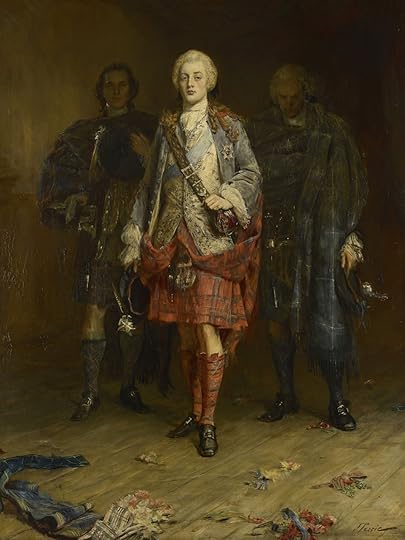
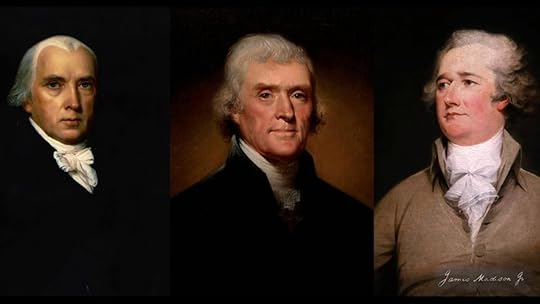
However, among the 10 historic meals are the supper served to Bonnie Prince Charlie & various Highland Land Chiefs on April 14th, 1746 on the eve of the Battle of Culloden that featured Mussel Brose, Rack of Lamb with Neeps & Tattie Cakes; and also the repast planned by Thomas Jefferson for Alexander Hamilton & James Madison at Jefferson's New York City home on June 20th, 1790, with the subject at hand the plan to move the young American nation's capital from Philadelphia to Virginia, or what became Washington, D.C., featuring Capon stuffed with Virginia Ham, Boeuf A La Mode, Ice Cream in a Warm Meringue + Champagne, Bordeaux Wines & Cognac from Jefferson's own cellar.
The author precedes the menu for each of the meals with a helpful explanatory account of what led up to the gathering & also what transpired afterwards. As an example, the chapter entitled "Forging 100 Years of Peace at the Congress of Vienna" on October 2nd, 1815 & featuring the Emperor Francis I, the Empress of Austria, Prince Metternich, Prince Talleyrand, Russia's Czar Alexander I, King Frederich of Prussia, King Frederick William III of Denmark & other counts, viscounts & princesses, a duchess or 2 + the British Foreign Secretary, was preceded by a formal Masked Ball in Vienna.
The dinner itself included gallons of soup, ham, partridges, pheasants, hares, large white turkeys, wild boar + pastries, pies, cookies, Gugelhupf sponge cakes & cheeses, followed by glasses of Château d'Yquem, the finest sweet wine in the world. (Are you hungry yet?) All of this impressively composed & delivered to the assembled guests by leading chefs, aimed at putting the leaders of Europe in a most peaceful state of mind. That said, during the extended proceedings before documents were signed, Britain was at war with the new nation of America and Napoleon Bonaparte was on the run, this prior to his eventual capture & exile to the distant & quite inaccessible island of St. Helena.
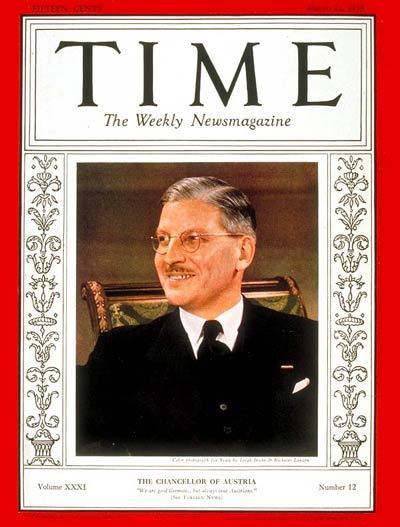
What led me to this book was the presence of a meal at the Berghof, Adolph Hitler's retreat at Berchtesgarten on February 12th, 1938 that set in place the course of the Anschluss, the Austrian annexation by the Nazis a few days later, wherein the Austrian Chancellor, Kurt von Schuschnigg, was summoned to Hitler's mountain residence & dictated the terms for the surrender of Austrian independence. I remember Dr. von Schuschnigg as my professor of International Law & Foreign Relations for 3 courses while a university student, a genteel, formal, rather old-world figure, or Der Alte Professor as some called him. I was also fortunate enough to visit him at his retirement home at Mutters-bei-Innsbruck in Austria.
In this telling, the author paints my beloved professor as a ineffectual, rigid, slovenly, cigarette-addicted fellow & over-matched negotiator. To be sure, Hitler was an overpowering presence at this gathering on his home turf, also attended by Martin Bormann, Joachim von Ribbentrop, General Wilhelm Keitel & the pro-Nazi German ambassador to Austria. Schuschnigg had only an Austrian foreign minister, Guido Schmidt for reinforcement against the wrath of Hitler, with a planned invasion of Austria already in the works.
To be sure, history is often dedicated to the victors & not those who end up taking a back seat to it. However, Struan Stevenson makes the encounter seem completely one-sided, not that it was a meeting of equals at the time. It might have been good to at explain that Schuschnigg had reached out to both Italy & Hungary for support against the prospect of invasion of tiny Austria but with that attempt at diplomacy a failure. Austria stood about as much chance of survival against Hitler's Wehrmacht & the Luftwaffe as did Denmark, Norway, the Netherlands or Poland. Quite naturally, Kurt von Schuschnigg casts a rather different portrait of the encounter in his own book, Austrian Requiem.
But just for the record, the menu for the Kurt von Schusnigg's meeting with Hitler included Graupensuppe (Barley Broth), Griesnudeln or Noodles with Egg & Green Salad, Pork Sausages, Sauerkraut & Potatoes + Cheese & a Fruit Pudding for dessert. Also available were a French Saint-Emilion wine, an Alsatian Riesling + Apple Schnapps. Hitler, being a vegetarian & non-drinker/non-smoker was a virtual spectator as his intimidated "guest of honor" ate. To be sure, I am standing in defense of my former professor & not the "blood-thirsty guttersnipe" (as he was called by Churchill), Corporal Hitler.
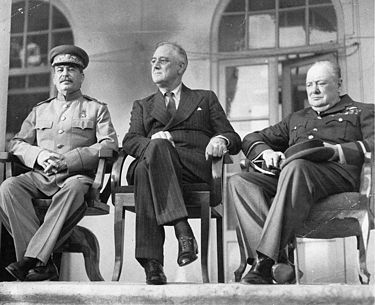
Speaking of Mr. Churchill, one of the chapters focuses on "Churchill's Birthday Banquet in Tehran" on November 30th, 1943 & attended by Franklin Roosevelt, Joseph Stalin & 30 other diplomats, relatives & soldiers, at a time when WWII was at the "tipping point" after the Russians had prevailed in the Battle of Stalingrad but a 2nd European Front still in the offing. Stalin initially balked at attending but even with FDR & Churchill insisting on a neutral site for the meeting, he became further irate, continuing his refusal to attend before ultimately agreeing to be present.
Churchill's 69th birthday celebration was only a part of the conference but it featured a great amount of alcohol, including Bloody Mary's, Champagne & Johnny Walker Whisky, as well as Persian Barley Soup, Poached Salmon with Beluga Caviar, Roast Turkey, Persian Saffron Ice Cream & a Cheese Soufflé, washed down with 1936 Louis Jadot Chablis, 1934 Domaine Laurent Crozes-Hermitage & Graham's Vintage Port. A very tired FDR could not hold the drinking pace with Churchill & Stalin & took his leave soon after the dessert was rendered, while his two fellow diners lasted far into the night. In spite of that, the dinner had a great impact on post WWII diplomacy.
The dinner served to Archduke Franz Ferdinand & his wife Duchess Sophie at Sarajevo's Hotel Bosna on June 27th 1914, on the eve of the archduke's assassination, launching the outbreak of WWI and "Nixon in China", the very elaborate dinner on February 21st 1972 at the Great Hall of the People in Beijing, feted by Zhou Enlai, the Chinese Premier and with Pat Nixon, Henry Kissinger & the U.S. Secretary of State Wm. Rogers also in attendance are two other included dinners, matched by appropriate recipes & commentary.
And going back father in American history, "Sowing the Seeds of the American Revolution", a dinner hosted by John Carlyle (merchant, landowner & keeper of the king's storehouses) for George Washington, Gen. Edward Braddock (Commander-in-Chief of King George II's North American forces) + the governors of 5 American colonies on April 14th, 1755 offered interesting commentary (though from a British perspective), with recipes for a smaller scale dinner.
The idea for this book proved more appealing than the resulting published effort but I will say that when read on an empty stomach, it does become rather more mouth-watering.
*Among the images within my review are: Bonnie Prince Charlie (at center); Hamilton, Jefferson & Madison; A Time magazine cover with Austrian Chancellor, Kurt von Schuschnigg; Stalin, Roosevelt & Churchill at their Tehran meeting.
No, the Last Supper involving Christ & his Apostles is not included, in part because the level of dining may not have met Mr. Stevenson's concept for the book and the specific vittles may not have extended much beyond coarse bread & some local wine.
However, among the 10 historic meals are the supper served to Bonnie Prince Charlie & various Highland Land Chiefs on April 14th, 1746 on the eve of the Battle of Culloden that featured Mussel Brose, Rack of Lamb with Neeps & Tattie Cakes; and also the repast planned by Thomas Jefferson for Alexander Hamilton & James Madison at Jefferson's New York City home on June 20th, 1790, with the subject at hand the plan to move the young American nation's capital from Philadelphia to Virginia, or what became Washington, D.C., featuring Capon stuffed with Virginia Ham, Boeuf A La Mode, Ice Cream in a Warm Meringue + Champagne, Bordeaux Wines & Cognac from Jefferson's own cellar.
The author precedes the menu for each of the meals with a helpful explanatory account of what led up to the gathering & also what transpired afterwards. As an example, the chapter entitled "Forging 100 Years of Peace at the Congress of Vienna" on October 2nd, 1815 & featuring the Emperor Francis I, the Empress of Austria, Prince Metternich, Prince Talleyrand, Russia's Czar Alexander I, King Frederich of Prussia, King Frederick William III of Denmark & other counts, viscounts & princesses, a duchess or 2 + the British Foreign Secretary, was preceded by a formal Masked Ball in Vienna.
The dinner itself included gallons of soup, ham, partridges, pheasants, hares, large white turkeys, wild boar + pastries, pies, cookies, Gugelhupf sponge cakes & cheeses, followed by glasses of Château d'Yquem, the finest sweet wine in the world. (Are you hungry yet?) All of this impressively composed & delivered to the assembled guests by leading chefs, aimed at putting the leaders of Europe in a most peaceful state of mind. That said, during the extended proceedings before documents were signed, Britain was at war with the new nation of America and Napoleon Bonaparte was on the run, this prior to his eventual capture & exile to the distant & quite inaccessible island of St. Helena.
What led me to this book was the presence of a meal at the Berghof, Adolph Hitler's retreat at Berchtesgarten on February 12th, 1938 that set in place the course of the Anschluss, the Austrian annexation by the Nazis a few days later, wherein the Austrian Chancellor, Kurt von Schuschnigg, was summoned to Hitler's mountain residence & dictated the terms for the surrender of Austrian independence. I remember Dr. von Schuschnigg as my professor of International Law & Foreign Relations for 3 courses while a university student, a genteel, formal, rather old-world figure, or Der Alte Professor as some called him. I was also fortunate enough to visit him at his retirement home at Mutters-bei-Innsbruck in Austria.
In this telling, the author paints my beloved professor as a ineffectual, rigid, slovenly, cigarette-addicted fellow & over-matched negotiator. To be sure, Hitler was an overpowering presence at this gathering on his home turf, also attended by Martin Bormann, Joachim von Ribbentrop, General Wilhelm Keitel & the pro-Nazi German ambassador to Austria. Schuschnigg had only an Austrian foreign minister, Guido Schmidt for reinforcement against the wrath of Hitler, with a planned invasion of Austria already in the works.
To be sure, history is often dedicated to the victors & not those who end up taking a back seat to it. However, Struan Stevenson makes the encounter seem completely one-sided, not that it was a meeting of equals at the time. It might have been good to at explain that Schuschnigg had reached out to both Italy & Hungary for support against the prospect of invasion of tiny Austria but with that attempt at diplomacy a failure. Austria stood about as much chance of survival against Hitler's Wehrmacht & the Luftwaffe as did Denmark, Norway, the Netherlands or Poland. Quite naturally, Kurt von Schuschnigg casts a rather different portrait of the encounter in his own book, Austrian Requiem.
But just for the record, the menu for the Kurt von Schusnigg's meeting with Hitler included Graupensuppe (Barley Broth), Griesnudeln or Noodles with Egg & Green Salad, Pork Sausages, Sauerkraut & Potatoes + Cheese & a Fruit Pudding for dessert. Also available were a French Saint-Emilion wine, an Alsatian Riesling + Apple Schnapps. Hitler, being a vegetarian & non-drinker/non-smoker was a virtual spectator as his intimidated "guest of honor" ate. To be sure, I am standing in defense of my former professor & not the "blood-thirsty guttersnipe" (as he was called by Churchill), Corporal Hitler.
Speaking of Mr. Churchill, one of the chapters focuses on "Churchill's Birthday Banquet in Tehran" on November 30th, 1943 & attended by Franklin Roosevelt, Joseph Stalin & 30 other diplomats, relatives & soldiers, at a time when WWII was at the "tipping point" after the Russians had prevailed in the Battle of Stalingrad but a 2nd European Front still in the offing. Stalin initially balked at attending but even with FDR & Churchill insisting on a neutral site for the meeting, he became further irate, continuing his refusal to attend before ultimately agreeing to be present.
Churchill's 69th birthday celebration was only a part of the conference but it featured a great amount of alcohol, including Bloody Mary's, Champagne & Johnny Walker Whisky, as well as Persian Barley Soup, Poached Salmon with Beluga Caviar, Roast Turkey, Persian Saffron Ice Cream & a Cheese Soufflé, washed down with 1936 Louis Jadot Chablis, 1934 Domaine Laurent Crozes-Hermitage & Graham's Vintage Port. A very tired FDR could not hold the drinking pace with Churchill & Stalin & took his leave soon after the dessert was rendered, while his two fellow diners lasted far into the night. In spite of that, the dinner had a great impact on post WWII diplomacy.
The dinner served to Archduke Franz Ferdinand & his wife Duchess Sophie at Sarajevo's Hotel Bosna on June 27th 1914, on the eve of the archduke's assassination, launching the outbreak of WWI and "Nixon in China", the very elaborate dinner on February 21st 1972 at the Great Hall of the People in Beijing, feted by Zhou Enlai, the Chinese Premier and with Pat Nixon, Henry Kissinger & the U.S. Secretary of State Wm. Rogers also in attendance are two other included dinners, matched by appropriate recipes & commentary.
And going back father in American history, "Sowing the Seeds of the American Revolution", a dinner hosted by John Carlyle (merchant, landowner & keeper of the king's storehouses) for George Washington, Gen. Edward Braddock (Commander-in-Chief of King George II's North American forces) + the governors of 5 American colonies on April 14th, 1755 offered interesting commentary (though from a British perspective), with recipes for a smaller scale dinner.
The idea for this book proved more appealing than the resulting published effort but I will say that when read on an empty stomach, it does become rather more mouth-watering.
*Among the images within my review are: Bonnie Prince Charlie (at center); Hamilton, Jefferson & Madison; A Time magazine cover with Austrian Chancellor, Kurt von Schuschnigg; Stalin, Roosevelt & Churchill at their Tehran meeting.

April 23, 2018
I’m normally suspicious of any non-fiction book that has the phrase “changed the world” in its subtitle, but I was intrigued by this one after reading that one of the meals featured took place in Achnacarry Castle, about 20 miles north of where I live.
The lead author, who is a former (Conservative) Member of the Scottish Parliament, presents us with 10 meetings at which he suggests significant political or economic decisions were taken during discussion over a meal. For each chapter we get a description of the participants and location, and of what was decided. There’s also a recipe and cooking instructions for each dish served at the meal in question, for anyone who wants to recreate them. Not being a gastronome myself, I pretty much skipped past those sections.
The author’s argument is that good food tends to put people in a good mood and makes them more agreeable to suggestion. Most of the meals featured also involved heavy consumption of alcohol, which of course affects judgement. There’s a nugget of truth in the author’s claims, but personally I think there are underlying causes to explain the outcome of historical events, and I am not persuaded that history has turned on certain individuals getting some decent noms and a particularly fine vintage of Chateauneuf-du-Pape. In the chapter “Nixon in China” the author even concedes that President and Mrs Nixon found the state banquet they attended a bit of a trial, not least because Zhou Enlai, in an apparent attempt to be helpful, would use his own chopsticks (that he had been using to eat his own food) to pick tasty morsels from the central dishes and place them on Mr and Mrs Nixon’s plates. It’s a good example of the weakness of the book in general. The rapprochement between the USA and China happened not because of a state banquet, but because both countries viewed the USSR as their biggest threat.
The chapter featuring Achnacarry Castle was one of the most interesting, not just because of the (for me) local interest, but because it featured a 1928 meeting between the Chairmen of the 4 largest oil companies in the world, who drew up a secret, and illegal, cartel to control oil production and prices. Again though, it was the meeting itself that mattered. The fact that the agreement was made over dinner was secondary. I also enjoyed the chapter on Churchill’s birthday dinner during the 1943 Tehran Conference, and the account of the 1790 dinner at which Thomas Jefferson, James Madison and Alexander Hamilton agreed that the USA’s capital should be a new city built on the banks of the Potomac.
In most cases though the author tried to stretch his point too far. Perhaps this book would be best for a reader who, like the author, has an interest in both food and drink and history.
The lead author, who is a former (Conservative) Member of the Scottish Parliament, presents us with 10 meetings at which he suggests significant political or economic decisions were taken during discussion over a meal. For each chapter we get a description of the participants and location, and of what was decided. There’s also a recipe and cooking instructions for each dish served at the meal in question, for anyone who wants to recreate them. Not being a gastronome myself, I pretty much skipped past those sections.
The author’s argument is that good food tends to put people in a good mood and makes them more agreeable to suggestion. Most of the meals featured also involved heavy consumption of alcohol, which of course affects judgement. There’s a nugget of truth in the author’s claims, but personally I think there are underlying causes to explain the outcome of historical events, and I am not persuaded that history has turned on certain individuals getting some decent noms and a particularly fine vintage of Chateauneuf-du-Pape. In the chapter “Nixon in China” the author even concedes that President and Mrs Nixon found the state banquet they attended a bit of a trial, not least because Zhou Enlai, in an apparent attempt to be helpful, would use his own chopsticks (that he had been using to eat his own food) to pick tasty morsels from the central dishes and place them on Mr and Mrs Nixon’s plates. It’s a good example of the weakness of the book in general. The rapprochement between the USA and China happened not because of a state banquet, but because both countries viewed the USSR as their biggest threat.
The chapter featuring Achnacarry Castle was one of the most interesting, not just because of the (for me) local interest, but because it featured a 1928 meeting between the Chairmen of the 4 largest oil companies in the world, who drew up a secret, and illegal, cartel to control oil production and prices. Again though, it was the meeting itself that mattered. The fact that the agreement was made over dinner was secondary. I also enjoyed the chapter on Churchill’s birthday dinner during the 1943 Tehran Conference, and the account of the 1790 dinner at which Thomas Jefferson, James Madison and Alexander Hamilton agreed that the USA’s capital should be a new city built on the banks of the Potomac.
In most cases though the author tried to stretch his point too far. Perhaps this book would be best for a reader who, like the author, has an interest in both food and drink and history.

June 7, 2019
It was not close to what I expected. Hard to describe why. I won't try. But do know that there is so much context to each dinner that it strongly resembles in large portions the name call/ title drop, dates, cultural / geographic placements of reading a finely detailed history book.
But as much as a few of these underwhelmed me, the dinner with Roosevelt, Churchill, and Stalin in Tehran, Iran in 1943 was worth the time I spent on the entire book. That one was 4 stars, maybe 4.5 stars.
How Roosevelt bullied along with Stalin and flipped terror jokes to put Churchill in his "place" for agreements? And what, how Stalin dished in this! It was enlightening, to say the least. Especially since Poland and the smaller Northern countries (Lithuania, Estonia etc.) were freely given away to Stalin's ownership somewhere in this pecking order process of the last evening. It was read too (ironically) on the 75th anniversary of D-Day on Normandy Beach, on top of it. Here they were arguing so heavily that it had to be in May for the weather! (Wrong beach, month of terrible weather etc. - and that is why so many men drowned.)
Well, factual and physical ignorance of male hubris and abuse of pecking order placements on the whole! Down to most or all viscous verbal attacks working (bullies do bully for a reason)- in at least 1/2 of these dinners did truly paint a picture of what and why and where "negotiations" work. Bottom line when it counts, it seems diplomacy has little to do with it- despite outward appearances?
And I would never want any of this Scottish or Victorian era high end grub, to be truthful. So very processed regardless of the "original" ingredients. All 30 steps to make it pulp. LOL!
That first chief under Napoleon and his aftermath (Metternich etc.)- he sounded like a real keeper.
But as much as a few of these underwhelmed me, the dinner with Roosevelt, Churchill, and Stalin in Tehran, Iran in 1943 was worth the time I spent on the entire book. That one was 4 stars, maybe 4.5 stars.
How Roosevelt bullied along with Stalin and flipped terror jokes to put Churchill in his "place" for agreements? And what, how Stalin dished in this! It was enlightening, to say the least. Especially since Poland and the smaller Northern countries (Lithuania, Estonia etc.) were freely given away to Stalin's ownership somewhere in this pecking order process of the last evening. It was read too (ironically) on the 75th anniversary of D-Day on Normandy Beach, on top of it. Here they were arguing so heavily that it had to be in May for the weather! (Wrong beach, month of terrible weather etc. - and that is why so many men drowned.)
Well, factual and physical ignorance of male hubris and abuse of pecking order placements on the whole! Down to most or all viscous verbal attacks working (bullies do bully for a reason)- in at least 1/2 of these dinners did truly paint a picture of what and why and where "negotiations" work. Bottom line when it counts, it seems diplomacy has little to do with it- despite outward appearances?
And I would never want any of this Scottish or Victorian era high end grub, to be truthful. So very processed regardless of the "original" ingredients. All 30 steps to make it pulp. LOL!
That first chief under Napoleon and his aftermath (Metternich etc.)- he sounded like a real keeper.

December 19, 2020
I’m not a huge fan of military history. This book focused on important meals before or during major offenses throughout history. I liked it as it presented snippets of wartime history without the cavalcade of facts that don’t interest me. Not for everyone, but I found this one amusing and light. Very good!
September 17, 2022
Pleasant read. Light history. Not sure I’d try any of the recipes.
February 8, 2024
I love cooking and I love history - this has both! Seeing history through the lens of well prepared food and diplomacy over lunch, a birthday dinner, and many other forms of meals was a refreshing take on some of the world’s key moments in history. Not to mention the recipes provided so you can eat how these historical figures did.

November 22, 2020
A curious read, but fairly effortless and enjoyable. It's not going to tell any informed student of history what he or she doesn't already know about the chosen events, but the focus on food is fascinating, if a bit esoteric for my taste. I must say, the recipes on their own are actually the most intriguing part of the book, showcasing the evolving and exotic tastes of different parts of the world over the last 200 years.

April 8, 2019
I love foodways history and as this book was a great read on the topic. The way in which the food and the overall facts of history were wove together was extremely engaging.

August 20, 2019
The Course of History: Ten Meals That Changed the World by Struan Stevenson presents ten moments in history where a meal played some role in the result of that moment, thus "chang[ing] the world."
There does seem to be a couple ways readers are understanding what Stevenson is doing with this coupling of food and historical moments. Some appear to believe that Stevenson is saying these meals 'singlehandedly' changed history, that because of these meals actions were taken or agreements were made. I did not understand that to be his thesis. I understood something closer to these meals playing a role in these moments, whether enforcing pecking orders, creating camaraderie, causing hangovers, or whatever. As such, they played a role in what transpired but was not THE thing that changed history. How one understands Stevenson's thesis here will play a large part in one's enjoyment of the book. I lean toward the view I do from both the text itself and from the idea that a politician understand the many roles a meal can play when meetings and/or negotiations are being held (and I can't imagine even the most conservative of politicians thinking a meal will, in and of itself, make THE difference).
Having gotten that out of the way, there were two main areas of interest for me here. I like food, meals, recipes, and that sort of thing, so looking at the menus and the recipes was fun and interesting in its own right. The other was the approach taken with describing the historical events themselves. The contextualization of each meal read like most history, not a lot of license taken to embellish. The descriptions of the meals, though, and the possible thoughts of those there, reads more like fictionalized history (and I don't mean historical fiction, significantly different). Using whatever sources are available from each actual meal, Stevenson fills in the gaps to make the meals read as if we were there as compared to just outlining whatever facts might be known. This is not unusual even in academic history texts, some conjecture must be added to make history and actual narrative rather than a list. The difference here is one largely of degree and, a couple of times, of importance to the larger events. This is hardly an academic book so I was not bothered by the liberties Stevenson took. If this had been presented as a more accurate account, it might have been problematic in a chapter or two.
I would recommend this to readers who like to see what the periphery of larger events look like in history. Take the meals as a possible, even probable in a few cases, account of what happened. If you have no interest in the food aspect I think this might disappoint a little because you may be thinking of this as a 'serious' history book. If you're thinking of getting this as a gift for someone, as I am, think about whether the recipient enjoys history for their own pleasure, which will possibly mean they can read this type of book and accept the accounts of each meal as mostly accurate with some things filled in. If they enjoy history more because they like to tell people they like history, maybe another book would be better since they will likely use this as a way to show just how smart they are by complaining about little things that keep it from being, well, from being what it isn't even trying to be.
Reviewed from a copy made available by the publisher via Edelweiss.
There does seem to be a couple ways readers are understanding what Stevenson is doing with this coupling of food and historical moments. Some appear to believe that Stevenson is saying these meals 'singlehandedly' changed history, that because of these meals actions were taken or agreements were made. I did not understand that to be his thesis. I understood something closer to these meals playing a role in these moments, whether enforcing pecking orders, creating camaraderie, causing hangovers, or whatever. As such, they played a role in what transpired but was not THE thing that changed history. How one understands Stevenson's thesis here will play a large part in one's enjoyment of the book. I lean toward the view I do from both the text itself and from the idea that a politician understand the many roles a meal can play when meetings and/or negotiations are being held (and I can't imagine even the most conservative of politicians thinking a meal will, in and of itself, make THE difference).
Having gotten that out of the way, there were two main areas of interest for me here. I like food, meals, recipes, and that sort of thing, so looking at the menus and the recipes was fun and interesting in its own right. The other was the approach taken with describing the historical events themselves. The contextualization of each meal read like most history, not a lot of license taken to embellish. The descriptions of the meals, though, and the possible thoughts of those there, reads more like fictionalized history (and I don't mean historical fiction, significantly different). Using whatever sources are available from each actual meal, Stevenson fills in the gaps to make the meals read as if we were there as compared to just outlining whatever facts might be known. This is not unusual even in academic history texts, some conjecture must be added to make history and actual narrative rather than a list. The difference here is one largely of degree and, a couple of times, of importance to the larger events. This is hardly an academic book so I was not bothered by the liberties Stevenson took. If this had been presented as a more accurate account, it might have been problematic in a chapter or two.
I would recommend this to readers who like to see what the periphery of larger events look like in history. Take the meals as a possible, even probable in a few cases, account of what happened. If you have no interest in the food aspect I think this might disappoint a little because you may be thinking of this as a 'serious' history book. If you're thinking of getting this as a gift for someone, as I am, think about whether the recipient enjoys history for their own pleasure, which will possibly mean they can read this type of book and accept the accounts of each meal as mostly accurate with some things filled in. If they enjoy history more because they like to tell people they like history, maybe another book would be better since they will likely use this as a way to show just how smart they are by complaining about little things that keep it from being, well, from being what it isn't even trying to be.
Reviewed from a copy made available by the publisher via Edelweiss.

June 3, 2019
What a fun idea for a book! If you like food and enjoy history, what's not to like about this book? The author has chosen 10 different meals that have preceded an important event in history. The book starts chronologically, beginning with the meal that came before the Battle of Culloden. Each chapter gives the relevant history around meal, both what happened before and the aftermath of the event itself. Each chapter ends with recipes for the pivotal meal. These may or may not have come from documentation of the actual dinner, but they all do reflect what would have comprised such a meal at that point in time.
I found the historical context of these meals to be a fascinating, and the author actually succeeded in making them a riveting read. As a history buff, I knew about many of these events, some in good detail, but I learned much from each little snippet of history. For instance, I went to Scotland last year and visited the amazing visitor center at Culloden Moor. While I learned much of the events that came before the battle and the social milieu through the amazing exhibits there, this book showed me more about the disparity between the existence of Bonnie Prince Charlie and his Highlanders. I also liked how the second chapter pointed out the seeds of rebellion for the American Revolution, as the host of that meal was the first to recommend to those back in England that the colonists should be taxed.
My only quibble with the book is I thought it should explore the aftermath of the historical event in more detail. The author is fantastic at the set up for the meal, but I felt something was lacking in the description of the actual reverberations of decisions made at these pivotal meals as they rippled out through history. For instance, in the Culloden chapter, we hear in some detail about what happened to Bonnie Prince Charlie after Culloden, but we don't hear a lot about how this changed the course of Scottish history forever and perhaps even laid the basis for the American Revolution because the Hanoverian Dynasty was in desperate need of cash after fighting wars on several fronts.
That said, I thoroughly enjoyed this book. If you enjoy history or are a foodie, you might enjoy this historical slice of life around pivotal events in the last 300 years.
I received a free copy of this book, but that did not affect my review.
Read my other reviews at https://www.readingfanaticreviews.com
I found the historical context of these meals to be a fascinating, and the author actually succeeded in making them a riveting read. As a history buff, I knew about many of these events, some in good detail, but I learned much from each little snippet of history. For instance, I went to Scotland last year and visited the amazing visitor center at Culloden Moor. While I learned much of the events that came before the battle and the social milieu through the amazing exhibits there, this book showed me more about the disparity between the existence of Bonnie Prince Charlie and his Highlanders. I also liked how the second chapter pointed out the seeds of rebellion for the American Revolution, as the host of that meal was the first to recommend to those back in England that the colonists should be taxed.
My only quibble with the book is I thought it should explore the aftermath of the historical event in more detail. The author is fantastic at the set up for the meal, but I felt something was lacking in the description of the actual reverberations of decisions made at these pivotal meals as they rippled out through history. For instance, in the Culloden chapter, we hear in some detail about what happened to Bonnie Prince Charlie after Culloden, but we don't hear a lot about how this changed the course of Scottish history forever and perhaps even laid the basis for the American Revolution because the Hanoverian Dynasty was in desperate need of cash after fighting wars on several fronts.
That said, I thoroughly enjoyed this book. If you enjoy history or are a foodie, you might enjoy this historical slice of life around pivotal events in the last 300 years.
I received a free copy of this book, but that did not affect my review.
Read my other reviews at https://www.readingfanaticreviews.com

May 4, 2019
This book seemed perfect for me because I love reading history and trying new recipes. However, while there seemed to be so much to love about this book, I just couldn’t.
Each of the ten chapters of the book was divided into two sections: the historical narrative about the meal and the recipes for the menu. Just that division made the book feel choppy to me, especially since at the end of historical narrative the author tried his best to tie that particular event to the next event.
My primary struggle with this book was that it tried to do too much with too little. The early chapters felt more like historical fiction, as I was dubious that all the details of the dinners that the author recounted were actually recorded for posterity. While, in some cases, the authors were careful to disclose that the menu was representative of a typical meal for the period, in other cases that care was absent. I was also dubious that the meals cited played the pivotal roles attributed to them, and that perhaps the importance of single meals was being overstated.
That being said, I thought that the historical narratives were compelling reads. They were a little uneven in how much time was spent on the details of the meal, as opposed to situating the meal in time and to describing the aftermath of the decisions made at the meal. I easily finished the book in less than a week because I kept wanting to return to it to read the next chapter.
I received this book as a digital advance reader copy from NetGalley in exchange for an honest review.
Each of the ten chapters of the book was divided into two sections: the historical narrative about the meal and the recipes for the menu. Just that division made the book feel choppy to me, especially since at the end of historical narrative the author tried his best to tie that particular event to the next event.
My primary struggle with this book was that it tried to do too much with too little. The early chapters felt more like historical fiction, as I was dubious that all the details of the dinners that the author recounted were actually recorded for posterity. While, in some cases, the authors were careful to disclose that the menu was representative of a typical meal for the period, in other cases that care was absent. I was also dubious that the meals cited played the pivotal roles attributed to them, and that perhaps the importance of single meals was being overstated.
That being said, I thought that the historical narratives were compelling reads. They were a little uneven in how much time was spent on the details of the meal, as opposed to situating the meal in time and to describing the aftermath of the decisions made at the meal. I easily finished the book in less than a week because I kept wanting to return to it to read the next chapter.
I received this book as a digital advance reader copy from NetGalley in exchange for an honest review.
August 9, 2019
I was intrigued by this book, and there were many interesting facts. However, the author worked too hard trying to meld the facts to fit his hypothesis of the effects the various meals had on the proceedings.
While it is true that a good meal and good alcohol can put someone in a more agreeable state, the author is over-exaggerating the importance in many of the situations.
Also, some of the descriptions played out weird. Some of the events were described like a book version of a dramatic re-enactment. In some cases there isn’t a record of the actual meal, so the author just substituted in meals that were typical of the time and the particular chefs.
While it is true that a good meal and good alcohol can put someone in a more agreeable state, the author is over-exaggerating the importance in many of the situations.
Also, some of the descriptions played out weird. Some of the events were described like a book version of a dramatic re-enactment. In some cases there isn’t a record of the actual meal, so the author just substituted in meals that were typical of the time and the particular chefs.

March 28, 2021
An interesting look at both food and history in which the author selects 10 pivot points in history and how food was used to gain an advantage. A master chef Tony Singh, MBE also explains how to prepare each course and has a brief discussion of the wine or spirits that was serve.

August 19, 2019
This book almost makes me regret signing up for Netgally. What a slog. I did get this book from Netgally in exchange for an honest review.
I love history and I love food, so this should have been right up my alley. It was not. The book isn’t badly written, but there is an air of smugness about it that set me teeth on edge. Struan Stevenson’s writing bounces between quoting from historical record to offering observations as if he was present at these meals. At times he seemed overly enthusiastic about the matching livery of Thomas Jefferson’s slaves, or patronizingly smug about oil company leaders “smacking their lips” while enjoying a fine single malt. By inserting observations that he could not have made himself as if he had observed them, he gives the impression that he wanted very much to be in the room where it happened.
Stevenson declares himself intrigued by dining diplomacy, but then doesn’t really articulate why the meals he has chosen fit his thesis – how did they change the course of history? The first meal – Bonnie Prince Charlie’s meal the night before the Battle of Culloden is a great example. I know that the Jacobite leadership feasted well and lavishly while the English were more restrained in their pre-battle dinner, but Stevenson makes no connection between the what happened at those dinners and the butchery that happened on the battlefield the next day. I would also argue that the dinner Hitler had with Austrian Chancellor Schuschnigg was irrelevant. The Anschluss was going to happen and the dinner did nothing to alter Hitler’s plans for Austria. If there is a case to be made that the dinner held some history changing significance, Stevenson did not articulate it.
The dinner that Stevenson was clearly most interested in was Winston Churchill’s birthday dinner with Stalin and Roosevelt in Tehran. A couple of weeks after finishing the book, it is the only section of the book that has stuck with me. Even in this section though, Stevenson could have done a lot more to talk about how soft diplomacy improved the relationship between the three and how that impacted the end of World War Two.
There are recipes at the end of each chapter, but they left me feeling flat.
This book is very male, very Western and leaves me feeling like Stevenson longs for the days when white men made major decisions together behind closed doors.
I love history and I love food, so this should have been right up my alley. It was not. The book isn’t badly written, but there is an air of smugness about it that set me teeth on edge. Struan Stevenson’s writing bounces between quoting from historical record to offering observations as if he was present at these meals. At times he seemed overly enthusiastic about the matching livery of Thomas Jefferson’s slaves, or patronizingly smug about oil company leaders “smacking their lips” while enjoying a fine single malt. By inserting observations that he could not have made himself as if he had observed them, he gives the impression that he wanted very much to be in the room where it happened.
Stevenson declares himself intrigued by dining diplomacy, but then doesn’t really articulate why the meals he has chosen fit his thesis – how did they change the course of history? The first meal – Bonnie Prince Charlie’s meal the night before the Battle of Culloden is a great example. I know that the Jacobite leadership feasted well and lavishly while the English were more restrained in their pre-battle dinner, but Stevenson makes no connection between the what happened at those dinners and the butchery that happened on the battlefield the next day. I would also argue that the dinner Hitler had with Austrian Chancellor Schuschnigg was irrelevant. The Anschluss was going to happen and the dinner did nothing to alter Hitler’s plans for Austria. If there is a case to be made that the dinner held some history changing significance, Stevenson did not articulate it.
The dinner that Stevenson was clearly most interested in was Winston Churchill’s birthday dinner with Stalin and Roosevelt in Tehran. A couple of weeks after finishing the book, it is the only section of the book that has stuck with me. Even in this section though, Stevenson could have done a lot more to talk about how soft diplomacy improved the relationship between the three and how that impacted the end of World War Two.
There are recipes at the end of each chapter, but they left me feeling flat.
This book is very male, very Western and leaves me feeling like Stevenson longs for the days when white men made major decisions together behind closed doors.

August 17, 2023
As an American with no particular [i.e., a deficient] education in European history, I learned at least as much about history as I did about cooking. Indeed, the author’s rich detail and thoughtful perspective on morale and diplomacy convey a strong sense of the place and time for each meal.
The original texts are somewhat modernized to give a modicum of flavor. For example, the original text from about 1755
becomes
But then again, this is not necessarily the author’s doing; he cites a docent manual for this quote, which may well have modernized the style somewhat. His expertise is in politics and international diplomacy. A historian would have cited the primary source directly, but a historian would have related these stories from a different perspective.
And that’s the author’s real strength. As a seasoned politician and former MEP, he has a lifetime of understanding about how sharing even a cup of tea can set the stage for success or disaster. That’s the best reason to read this book.
The original texts are somewhat modernized to give a modicum of flavor. For example, the original text from about 1755
“[B]y Sum means or another came in So prejudiced against us, our Country, &c. that they used us Like an Enemy Country & Took everything they wanted & paid Nothing, or Very little for it, & when Complaints was made to the Comdg Officers, they Curst the Country, & Inhabitants, Calling us the Spawn of Convicts the Sweepings of the Gaols &c., which made their Company very disagreeable.”
becomes
“By sum means or another came in so prejudiced against us, our country etc. that they used us like an enemy country and took everything they wanted and paid nothing, or very little for it, and when complaints was made to the comdg officers, they curst the country, and inhabitants, calling us spawn of convicts, the sweepings of the gaols etc, which made their company very disagreeable.”
But then again, this is not necessarily the author’s doing; he cites a docent manual for this quote, which may well have modernized the style somewhat. His expertise is in politics and international diplomacy. A historian would have cited the primary source directly, but a historian would have related these stories from a different perspective.
And that’s the author’s real strength. As a seasoned politician and former MEP, he has a lifetime of understanding about how sharing even a cup of tea can set the stage for success or disaster. That’s the best reason to read this book.

July 13, 2019
This book represents an interesting way of looking at history -- through the lens of food (or dining table) diplomacy. The author selects ten events he deems historical turning points (among them the Battle of Culloden, the Congress of Vienna, the assassination of Austrian Archduke Franz Ferdinand, and the Camp David Accords) and shows how food played an important, if not crucial, role in affecting the outcome of the event. He does a good job at sketching out the backdrop for each dinner he highlights; he even manages to link the events in a chain of cause-and-effect, which, while sometimes appearing contrived, manages to depict history as everflowing stream of events. I was especially interested in reading about the 1928 meeting in the Scottish Highlands of the four big oil tycoons of the day and their collusion at insuring high profit margins for their industry. -- The book is marred by some inaccuracies, however: for one, Thomas Jefferson served BOTH of his terms as President in Washington, D.C. (not merely the second one, as Stevenson contends); for another, Alexander Hamilton was not, as described, "a tall, slim figure"; he was actually a rather short man. -- Another fascinating aspect of this book is the author's collaboration with Scottish chef and restaurateur Tony Singh, who provides recipes and instructions for making the food served at these ten dinners. Some of the recipes are quite elaborate -- I'm not altogether sure how many folks will want to replicate, for example, the food served to Richard Nixon during his state dinner in Beijing, but this is nevertheless an attractive addition to the discussion, adding a bit of immediacy and identification for the reader.
June 7, 2020
I really wanted to like this book. I love reading books like this were history is framed by something that’s relatable. However I had one hell of a time getting through this book. It was just a slog. It literally took me ten months to get through this book. The content was interesting enough but it took me sooo long to read.
But the biggest problem I had with this book was it’s weird casual racism. It especially stuck out in the second chapter. There was a gross paternalistic view of the slaves who worked in Carlyle’s house. And then Stevenson goes on to call the slaves “Negros”. It was not in the context of a historical document or quoting a person he was talking about. This book was published in 2019, how did this get past multiple editors?!?! And then there was the truly disgusting portrayal of the Native Americans. Like they were described as gleefully scalping dead British soldiers. There was a passage from a primary source describing the “savagery” of the Native Americans and the author just took it at face value. No discussion of why the primary source had these views. No discussion of the inherent colonialist attitude of why the English would think this way. Idk why this in particular made me so heated but I just found it awful. I’m sure the later chapters also had a lot of casual racism but after reading chapter two I decided to just kind of skim the rest of the book.
The only reason I’m giving this book two stars instead of one is because I loved the recipes. So good job on those
But the biggest problem I had with this book was it’s weird casual racism. It especially stuck out in the second chapter. There was a gross paternalistic view of the slaves who worked in Carlyle’s house. And then Stevenson goes on to call the slaves “Negros”. It was not in the context of a historical document or quoting a person he was talking about. This book was published in 2019, how did this get past multiple editors?!?! And then there was the truly disgusting portrayal of the Native Americans. Like they were described as gleefully scalping dead British soldiers. There was a passage from a primary source describing the “savagery” of the Native Americans and the author just took it at face value. No discussion of why the primary source had these views. No discussion of the inherent colonialist attitude of why the English would think this way. Idk why this in particular made me so heated but I just found it awful. I’m sure the later chapters also had a lot of casual racism but after reading chapter two I decided to just kind of skim the rest of the book.
The only reason I’m giving this book two stars instead of one is because I loved the recipes. So good job on those

February 28, 2020
This book consists of a series of interesting vignettes broken into individual chapters. They recreate historical events by focusing on sumptuous meals around which they allegedly occurred. It's an interesting concept, especially when Mr. Singh adds his culinary commentary, and recipes for the elements of said banquets, at the end of each chapter.
My only complaint is that I'm not sure this is real history. Reading through the notes at the back of the book, it appears Mr.. Stevenson took a fair amount of artistic license recounting and recreating the conversations and menus for many of the meals. Some of them seem to rely on generous interpretations of said history.
That said, it's a fun, easy and interesting read; Stevenson keeps the pages turning. If you're looking for something deep, this isn't the book for you.
I'm curious how and why Stevenson chose the meals he did, possibly at the expense of others? It's not deep enough for a history lover, and too deep for the cookbook reader.
How do I put this? It's akin to reading People Magazine. You'll be mildly entertained and might even learn something; however, you don't want anybody to know that is where you gathered the information you'll want to recount.
My only complaint is that I'm not sure this is real history. Reading through the notes at the back of the book, it appears Mr.. Stevenson took a fair amount of artistic license recounting and recreating the conversations and menus for many of the meals. Some of them seem to rely on generous interpretations of said history.
That said, it's a fun, easy and interesting read; Stevenson keeps the pages turning. If you're looking for something deep, this isn't the book for you.
I'm curious how and why Stevenson chose the meals he did, possibly at the expense of others? It's not deep enough for a history lover, and too deep for the cookbook reader.
How do I put this? It's akin to reading People Magazine. You'll be mildly entertained and might even learn something; however, you don't want anybody to know that is where you gathered the information you'll want to recount.

March 5, 2020
So it's unclear what Struan Stevenson had in mind with "The Course of History," because as it turned out, the book is sort-of history and sort-of cooking, and like a meal that doesn't mesh, is less than the sum of its parts.
The conceit is this: Stevenson would write an essay about a meal that preceded a great event in history -- the Yalta Conference, Archduke Franz-Ferdinand's assassination -- and then chef Tony Singh would give the modern recipes of the dishes served at that meal.
Fair enough, but the problem is that Stevenson's brief essays don't really count as history, and Singh's recipes are designed for modern cooks, which means, I guess, that people are supposed to make the historical meals and then engage in lively chatter about Bonnie Prince Charlie's army of Scotsmen getting slaughtered at the Battle of Bannockburn.
Like many menu items, it sounds better than it works when it's in front of you, and though some of the essays are of interest, for the most part, there are too many empty calories to make up a satisfying meal.
The conceit is this: Stevenson would write an essay about a meal that preceded a great event in history -- the Yalta Conference, Archduke Franz-Ferdinand's assassination -- and then chef Tony Singh would give the modern recipes of the dishes served at that meal.
Fair enough, but the problem is that Stevenson's brief essays don't really count as history, and Singh's recipes are designed for modern cooks, which means, I guess, that people are supposed to make the historical meals and then engage in lively chatter about Bonnie Prince Charlie's army of Scotsmen getting slaughtered at the Battle of Bannockburn.
Like many menu items, it sounds better than it works when it's in front of you, and though some of the essays are of interest, for the most part, there are too many empty calories to make up a satisfying meal.
November 11, 2022
This is an interesting, enjoyable take on historical events: lots of information about the history, followed by the recipes for the elaborate meals (well, except for Hitler's--he basically served sausages and sauerkraut; make of that what you will). An idea that runs underneath each section is how excessive the wealthy and powerful are--these elaborate, indulgent feasts, all conducted with the aim of maintaining that wealth and power. The section that really brought this home to me was the one detailing the assemblage of the crowned heads of Europe: what could not be overlooked was the absurdity of some people proclaiming themselves kings or princes, empresses or duchesses, etc., etc.--all in order to grab power and wealth for themselves and to keep it all from one generation to the next: to have themselves designated as, somehow, some way, BETTER than ordinary humans and so entitled to this excess. Must be nice; you just have to convince the majority of the lower folks to buy into the idea......

July 11, 2019
Incredibly interesting and unusual book on the moments that changed history and the meals served at those moments. Covering dinners such as those served to Richard Nixon in China (a most humorous description of the actual meal and the food served and the cigarettes and chopsticks, which caused me to chuckle while reading in the middle of the night!), to the meal Hitler served the Chancellor of Austria while berating him and threatening his country, and on to the dinner enjoyed by Jimmy Carter, Menachem Begin and Anwar Sadat at a crucial time in the Middle East peace discussions, this is an excellent source of history and the special selection of items served at dinners connected with these important events. It includes the menu and even recipes (should you be so daring as to give them a try). If you are a food lover and a history lover, this book is absolutely perfect. I hope there'll be a part two covering more recent events.
July 29, 2026
A unique and mouth- watering excursion into history. From Bonnie Prince Charlie in 1746, through Nixon in China and Carter brokering peace between enemies Egypt and Israel, the dinner table, a feast, a symphony of alcohol fueled toasts have coursed through history as a means of overcoming animosities and war. Struan Stevenson is lively and grounded historian, but the book is seasoned with curated dinner menus, if not drawn for actual historical documents of the event, then from recipes known to be favored by the hosts (Thomas Jefferson's "baked Alaska" as it was later known-and I'll bet Tom set a more interesting table than Hamilton!). The pre assassination banquet for Archduke Ferdinand and poor wife Sophie is poignant; the dinners and picnic baskets prepared for pioneers of the oil cartel in Scotland will send the cholesterol count soaring. AND THE AMOUNTS OF WINE AND LIQUORS CONSUMED! From Churchill's birthday dinner to Nixon in China. Entertaining and educating!

April 20, 2019
We all need to eat so why not put differences aside and break bread.
This book talks about 10 meals that had major effects on the world throughout history. They run in chronological order and start with Culloden and end with the Egypt/Israel peace accords. What is interesting is the interactions between the people and how they felt about each other going in. In most cases the parties did not like each other but through a common meal were able to converse in such a way that they could accomplish things (not all good). Each chapter also includes recipes from that meal. The one recipe that through me though was the soup that Hitler ate because he was a vegetarian (and this is mentioned in the chapter) but the soup was made with ham hock and chicken broth.
If you are a fan of micro-histories given this one a try.
This book talks about 10 meals that had major effects on the world throughout history. They run in chronological order and start with Culloden and end with the Egypt/Israel peace accords. What is interesting is the interactions between the people and how they felt about each other going in. In most cases the parties did not like each other but through a common meal were able to converse in such a way that they could accomplish things (not all good). Each chapter also includes recipes from that meal. The one recipe that through me though was the soup that Hitler ate because he was a vegetarian (and this is mentioned in the chapter) but the soup was made with ham hock and chicken broth.
If you are a fan of micro-histories given this one a try.
March 30, 2019
I’m a history buff and foodie and absolutely enjoyed this book. The history leading to how each dinner came about is a great lead up to the menu and recipes. These are major historical meetings and events that are concisely summed up and will help even the non history buff understand some of the major events in history…and how they ate as well.
There are a few recipes I will definitely try from here, but quite a few I won’t. If only a few of the wine selections were available to go with the meals, it would be amazing. A girl can dream, but I’ll make some of my own wine selections and skip the aperitifs, which are not as big a deal as they were back in older times.
A great read for the history loving foodies out there!
There are a few recipes I will definitely try from here, but quite a few I won’t. If only a few of the wine selections were available to go with the meals, it would be amazing. A girl can dream, but I’ll make some of my own wine selections and skip the aperitifs, which are not as big a deal as they were back in older times.
A great read for the history loving foodies out there!
March 26, 2022
What a unique idea - ten pivotal points in history ranging from mid-1700's with Bonnie Prince Charlie totally missing the mark with his war with the Jacobites to President Carter's Camp David peace accord with Sadat and Begin in 1978. The author presents a compact blast of history with some twists that don't make the history books. Then he couples it with a meal that many believe contributed to the success or failure of said historical event. The meal is complete with a list of attendees, the menu and the recipes! Fortunately the recipes have had some updates to we don't have to go find wild boar or try to get the campfire blaze to a set degree for cooking. It's a unique blend that I thoroughly enjoyed.
March 22, 2019
I wanted to like this book. I love food and I thought I loved history. But after reading this, I've decided that some history just isn't as interesting as other history. I found the "descriptions" of the events to be way too long and tedious. I wanted more description about the meal...not just the food, but the conversation, setting, etc. I guess that might be too short of a book because the bulk of this book was the historical lead-up to and aftermath of the meal. There were way too many people involved in each story to keep my interest. That being said, there are definitely some recipes I'll be trying.
Read
June 1, 2019Kids who want or have recently received a dog, will appreciate this story! A new dog needs to be trained and if they aren't well....there are consequences! This story is humorous, but shows what it's like for a family to get a dog. Dogs need to worked with and owners need patience. . That is a hard lesson to learn (I remember it well....) but the book offers up dog training advice. Fun summer read!
Pt. 1 of what looks to be a fun series!
I received a Kindle arc from Netgalley in exchange for a fair review.
Pt. 1 of what looks to be a fun series!
I received a Kindle arc from Netgalley in exchange for a fair review.

July 12, 2019
An interesting and entertaining way to look at 10 pieces of history. We are always looking for new ways to make learning more fun so easier for our children to learn and understand. This book sets the stage as if we are watching a one act play. How wonderful...just like we were spying at the actual event. How many more events could we attach the same principle to and make learning fun for everyone? HMMMM
July 4, 2019
ten major historical events - in chronological order - and the meals that preceded them. did the meal influence the outcome of history? or is it just coincidental that a wonderfully planned and prepared repast was prelude to changing history? either way, the book is a delight - particularly if you like to cook.
February 3, 2020
Ten historic event that included memorable meals. A few of them were dull but others made the book worth reading. The chapter on Archduke Ferdinand and events leading to his assassination was amazing. Also Hitler’s meeting with Austrian leaders was interesting.
I doubt if I’d try many of the recipes. Many would be very rich.
I doubt if I’d try many of the recipes. Many would be very rich.
Displaying 1 - 30 of 50 reviews