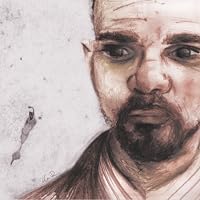
Peter Weiss (1916-1982) was virtually unknown in the mid-1960s when Peter Brook made Marat/Sade into a film. The weaving of time, space, plot, real-and-imagined characters, sexual liberation, and surrealist imagery made Marat/Sade a sensation. Little did audiences realize that this counterculture classic was written by a German Jew. At that time, Weiss was also at work on a play about Auschwitz: The Investigation. These two dramas are in this volume along with The Shadow of the Body of the Coachman. All are cogently introduced and edited by Robert Cohen.
Peter Ulrich Weiss was a German writer, painter, and artist of adopted Swedish nationality. He is particularly known for his play Marat/Sade and his novel The Aesthetics of Resistance.
Weiss' first art exhibition took place in 1936. His first produced play was Der Turm in 1950. In 1952 he joined the Swedish Experimental Film Studio, where he made films for several years. During this period, he also taught painting at Stockholm's People's University, and illustrated a Swedish edition of The Book of One Thousand and One Nights. Until the early 1960s, Weiss also wrote prose. His work consists of short and intense novels with Kafkaesque details and feelings, often with autobiographical background. One of the most known films made by Peter Weiss is an experimental one, The Mirage (1959) and the second one - it is very seldom mentioned - is a film Weiss directed in Paris 1960 together with Barbro Boman, titled Play Girls or The Flamboyant Sex (Schwedische Mädchen in Paris or Verlockung in German). Among the short films by Weiss, The Studio of Doctor Faust (1956) shows the extremely strong link of Weiss to a German cultural background.
Weiss' best-known work is the play Marat/Sade (1963), first performed in West Berlin in 1964, which brought him widespread international attention. The following year, legendary director Peter Brook staged a famous production in New York City. It studies the power in society through two extreme and extremely different historical persons, Jean-Paul Marat, a brutal hero of the French Revolution, and the Marquis de Sade, for whom sadism was named. In Marat/Sade, Weiss uses a technique which, to quote from the play itself, speaks of the play within a play within itself: "Our play's chief aim has been to take to bits great propositions and their opposites, see how they work, and let them fight it out." The play is considered a classic, and is still performed, although less regularly.
Weiss was honored with the Charles Veillon Award, 1963; the Lessing Prize, 1965; the Heinrich Mann Prize, 1966; the Carl Albert Anderson Prize, 1967; the Thomas Dehler Prize, 1978; the Cologne Literature Prize, 1981; the Bremen Literature Prize, 1982; the De Nios Prize, 1982; the Swedish Theatre Critics Prize, 1982; and the Georg Büchner Prize, 1982.
A translation of Weiss' L'instruction (Die Ermittlung) was performed at London's Young Vic theater by a Rwandan company in November 2007. The production presented a dramatic contrast between the play's view on the Holocaust and the Rwandan actors' own experience with their nation's genocide.
Marat-Sade, is one of the best plays I have read. The whole play is a play inside a play which the regisseur is one of the greatest philosophers of eighteenth century, Marquis De Sade, father of Sadism.
Sade believed that revolution is only changing a bad king to another and nothing will change until revolution starts inside every individual. But Marat's perspective is we need revolution right now. So the play is a philosophical conversation between Marat and Sade.
I think the both ideas are right and realistic, there is injustice, people die from hunger so we think revolute. However revolution can't find you a job, a better shoes, or make your wife more beautiful. And that is a paradox that I think there is no solution for it.
What I liked is the actors of the play of Sade are all sick people of a hospital and during all the play the forget the text, they sleep and they do something that is not in the Sade's play.
I liked the idea. I liked the way of writing. I like Peter Weiss.
العمل الأبرز والأشهر للكاتب الألماني الشهير بيتر فايس الذي تعرفت عليه من مسرحيتيه البرج وكيف يتخلص السيد موكينبوت من متاعبه.اتبع فايس في هذه المسرحية أسلوب بريخت في المسرح الملحمي من حيث مخاطبة الجمهور مباشرة وإستخدام الكورس والأغاني لكنه زاد على ذلك بإستخدام البانتومايم أيضا مع ديكور بسيط .وبالطبع حوار تحريضي يماثل الحوار البريختي مع وجود نغمة يائسة كئيبة وتلك هي العادة في مسرحيات فايس هذا من ناحية الشكل اما من ناحية المضمون فالمسرحية تعرض آخر أيام مارا أحد قادة اليعاقبة في الثورة الفرنسية ورمز مايسمى بعصر الإرهاب قبل مقتله على يد شارلوت كوردي من خلال مسرحية يعرضها المركيز دي صاد أثناء إحتجازه في مصحة شارنتون وقد كان دي صاد معاصرا لمارا وتعرض المسرحية وجهتي نظر ثائرين أحدهما دي صاد من إجل الحرية الفردية واللذة والآخر من أجل الجميع للقضاء على الفقر والإستبداد والإستغلال وتنصف المسرحية مارا بعض الشىء فلاتصوره بصورة الارهابي سافك الدماء المسرحية أكثر من رائعة سواء في الشكل او المضمون
"The Assassination of Jean-Paul Marat as Performed by the Inmates at the Asylum of Charenton Under the Direction of the Marquis De Sade." A revolution inside an insane asylum. A play within a play. Revolution as playacting or vice-versa? Peter Weiss shook the world with this provocative meditation on sex, beyond bourgeois boundaries political murder and the Charlotte Corday Syndrome."
ما الذي يحدث عندما يسيطر علينا الآخرون باسم الحرية؟ كيف يصبح الثائر سجانًا لمؤيديه قبل أعدائه حينما يستبد برأيه؟ في مسرحية (مارا صاد) يروي لنا ( بيتر فايس) كل هذا عن طريق أبطاله.. والأهم أنه يعرض لنا النهاية المأساوية الناتجة عن هذا التغيير في إطار سردي محكم ومميز.
ما الذي يحدث عندما يسيطر علينا الآخرون باسم الحرية؟ كيف يصبح الثائر سجانًا لمؤيديه قبل أعدائه حينما يستبد برأيه؟ في مسرحية (مارا صاد) يروي لنا ( بيتر فايس) كل هذا عن طريق أبطاله.. والأهم أنه يعرض لنا النهاية المأساوية الناتجة عن هذا التغيير في إطار سردي محكم ومميز.
حاولت قراءتها بتمعن كي تعجبني أو حتي أتمكن من الحكم عليها لكن للأسف لم أطق عليها صبرا فتصفحتها في الغالب المسرح عموما مش من السهل أنه يعجبني نادرا ما أحب مسرحية أو كاتب مسرحي
Presenting two perspectives of Artaud's "Theater of Cruelty" and Brecht's "distancing", Peter Weiss, a Marxist, mixes historical facts and imaginary scenes to place Jean Paul Marat, the French political theorist and journalist during the French Revolution and Marquis de Sade, a writer famous for his "literary depictions of libertine sexuality as well as numerous accusations of sex crimes" in an asylum called Charenton. While the patients perform their roles in one of de Sade's imaginary plays (within Weiss's play), these two characters discuss thought-provoking issues related to Revolution, human existence, and sex. Meanwhile, Coulmier, the director of Charenton, interrupts and censors any lines in the play that is critical of Napoleon or the French Revolution in Sade's play.
Marat/Sade takes the idea of a play within a play to a whole new level. The play is performed for Coulmier, the asylum director, who, thanks to the liberties granted by the ongoing French Revolution, is able to put into practice his philosophy that the mentally ill can be healed "through education and especially art."
What follows is a brief interpretation of what I thought the play's message was: One of most important messages of the play is that authoritarianism underlies any attempt to impose "order" in society. It also emphasizes the absurdity of theorizing about what society's wants and wishes. Throughout the play, Sade does nothing to stop the inmates' excesses, which ultimately forces Coulmier to call for the restraining of the inmates. The director had hoped that Sade would imbue the inmates with patriotic zeal, but instead Sade reenacts the violence of the revolution: The inmates are taught the "wrong" lessons about the new society imposed by the French Revolution. Furthermore, Sade mocks the idealism of Coulmier via the character of Marat. Marat is painted as a revolutionary martyr who, ironically, is incredibly alienated from society: his whole life consists of failures to be accepted. It is strongly implied that Marat's revolutionary zeal is a messianic delusion arising from deep-set insecurities. The staging of the play also works as an attempt to demonstrate the absurdity of the ongoing French Revolution itself: the asylum patients do not follow the script of the play, just like the French people at large act as they please regardless of what Marat puts down in paper.
Admittedly, while I own the edition with the three plays, I've only read Marat/Sade . I also watched a film version of the play. I found it interesting, but was put off by some of the imagery.