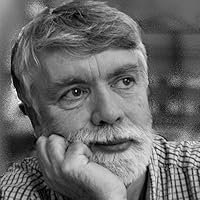
William Somerset Maugham was born in Paris in 1874. He spoke French even before he spoke a word of English, a fact to which some critics attribute the purity of his style.
His parents died early and, after an unhappy boyhood, which he recorded poignantly in Of Human Bondage, Maugham became a qualified physician. But writing was his true vocation. For ten years before his first success, he almost literally starved while pouring out novels and plays.
Maugham wrote at a time when experimental modernist literature such as that of William Faulkner, Thomas Mann, James Joyce and Virginia Woolf was gaining increasing popularity and winning critical acclaim. In this context, his plain prose style was criticized as 'such a tissue of clichés' that one's wonder is finally aroused at the writer's ability to assemble so many and at his unfailing inability to put anything in an individual way.
During World War I, Maugham worked for the British Secret Service . He travelled all over the world, and made many visits to America. After World War II, Maugham made his home in south of France and continued to move between England and Nice till his death in 1965.
At the time of Maugham's birth, French law was such that all foreign boys born in France became liable for conscription. Thus, Maugham was born within the Embassy, legally recognized as UK territory.
يكتب سومرست موم في كثير من أعماله عن ماهية الحب المعقدة فما ان يتملك الحب من القلب حتى يتخلى الانسان عن العقل بإرادته ويُصر على المضي في طريق قد يندم أحيانا عند الوصول لنهايته هي حكاية واحدة لامرأتين بينهما أكثر من ثلاثين سنة كلا منهما تعيش حياة ثرية ومريحة لكنها لا تكفي بدون حب
الحياة تغيرت عن زمن كتابة المسرحية لكن بعض الأحكام المجتمعية لا تتغير بمرور الزمن وكعادة موم في كتاباته يرفض ويسخر من المظاهر والإدعاء وعادات الحياة الفارغة لطبقات المجتمع المُرفهة
PERSONS OF THE PLAY: Clive Champion-Cheney Arnold Champion-Cheney, M.P. Lord Porteous Edward Luton Lady Catherine Champion-Cheney Elizabeth Mrs. Shenstone. The action takes place at Aston-Adey, Arnold Champion-Cheney’s house in Dorset.
The opening: THE FIRST ACT
The Scene is a stately drawing-room at Aston-Adey, with fine pictures on the walls and Georgian furniture. Aston-Adey has been described, with many illustrations, in Country Life. It is not a house, but a place. Its owner takes a great pride in it, and there is nothing in the room which is not of the period. Through the French windows at the back can be seen the beautiful gardens which are one of the features.
It is a fine summer morning.
Arnold comes in. He is a man of about thirty-five, tall and good-looking, fair, with a clean-cut, sensitive face. He has a look that is intellectual, but somewhat bloodless. He is very well dressed.
A play of its time and as such, a snooze-fest that was a quick read. Try WSM's 'Of Human Bondage' or 'The Razor's Edge' to see how good he was.
5* Of Human Bondage 4* The Razor's Edge 4* The Painted Veil 4* The Moon and Sixpence 4* Collected Stories 3* The Magician 3* Ashenden 2* The Circle
The Scene is a stately drawing-room at Aston-Adey, with fine pictures on the walls and Georgian furniture. Aston-Adey has been described, with many illustrations, in Country Life. It is not a house, but a place. Its owner takes a great pride in it, and there is nothing in the room which is not of the period. Through the French windows at the back can be seen the beautiful gardens which are one of the features.
Circuitous life forms of the fashionably well-heeled.
Now, I feel a bit of a heel. Sandwiched between Noel Coward's Private Lives and GBS' Heartbreak House, there's this charming but light little fancy froth on the obsessions of the well-to-do, namely fusty houses, fabulous furniture and frollicking adults indulging in adultery with a spot of tennis thrown in.
It's easy to read as Maugham was a very straightforward chap in his words and plays, but ultimately has very little to actually take home. It's entertainment certainly but the foreshadowing is evident from the start.Saying anything more would require the use of a spoiler tag, which I do not wish to justify.
He's undoubtedly a good playwright but the lack of a film adaptation beyond 1925, as per Wikipedia, surely tells you something. This is really a poor representation of his work and its inclusion in "14 Great Plays" surprises me.
The characters are shallow and depend on good actors to invest them with additional characteristics/mannerisms to embellish the absence of interesting dialogue or plot. Comedy, humph, is rather wanting!
I was going to give it 2.75* but on reflection, 2.5 is adequate.
"When you've loved as she's loved you may grow old, but you grow old beautifully."
. . . "But she loved and she dared. Romance is such an illusive thing, you read of it in books, but it is seldom you see it face to face. I can't help it if it thrills me."
"Are you shocked? One sacrifices one's life for love and then one finds that love doesn't last. The tragedy of love isn't death or separation. One gets over them. The tragedy of love is indifference."
. . . "After all, a man marries to have a home, but also because he doesn't want to be bothered with sex and all that sort of thing . . ."
"I don't offer you peace and quietness. I offer you unrest and anxiety. I don't offer you happiness. I offer you love."
I do not think this is among the author's best works, for at present the only work of the author's I read about in other books is his classic novel Of Human Bondage. However, when one looks at this book, there is certainly a great deal of value here. Without knowing more about the life of the author, it is unclear exactly what circumstances led him to write this sort of play, but what is clear is that the author is profoundly interested in questions of morality and in the fragility of respectability and the insecurity of relationships. In this play, we see a "comedy" that is really a domestic tragedy of generational curses being passed down from one generation to another. Although this play is obscure nowadays, once upon a time it was performed in London with noted actors like John Gielgud. At any rate, although this play is not well known today, at least to my knowledge, it is a play whose content and approach deserves to be better known, for it addresses issues that I have seen in my own experience, and portrays sympathetically a character who is particularly Nathanish, it must be noted.
This particular play is a drama in three acts. The setup of the play is interesting, in which a man, Arnold Champion-Chaney, meets up with his mother and her longtime paramour a quarter a century after she left his honorable and decent father. Meanwhile, his wife is plotting to leave him with someone else to perpetuate the family's cycle of abandonment and unhappiness. In the first act we see the worthless fellow propose to take the bored housewife away with him to India. In the second act, we see the son attempt to succeed where his father failed in keeping his wife and trying to persuade her to stay, and in the third act we see the mother and her paramour try to convince her that the young wife will lose a great deal in reputation as well as honor by leaving, and that it will be viewed as a betrayal of the community spirit of mankind and will also make the woman dependent on a worthless man. There are some laughs, but this play does not strike me as a comedy the way it seems to have struck other people. Any laughs that many people have at this play's bitter and sardonic and witty dialogue is likely to be hollow indeed, to laugh so that one does not cry.
After all, this play has a lot to say about contemporary problems regarding families. The play comments that women do not tend to like intelligent men because they are boring and not very much fun, and it is much harder to romanticize intelligent and driven men than it is to romanticize bullies and rascals. In the dialogue of this play we see the way that people act coldly and harshly to those they have wronged as a way of trying to see themselves as not very bad people, or the people they wrong as having been worth the ill-treatment they receive in that cruel form of double victimization. We also see that the lures of adultery in terms of the way that they are viewed romantically do not pan out, and also the way that women without a profession are highly vulnerable in relationships where there is no marriage. The author paints marriage in a highly prudential light as supplying both men and women with the opportunity for success and happiness, and how it is easy to give up this happiness for illusions, without the chance to get it back.
A play very much of its time, The Circle, nevertheless touches lightly on themes which continue to have relevance today. Superficially dealing with infidelity and its consequences, there are deeper threads that weave around the war of the sexes, real love, class and sex. It’s set in the home of a man of independent wealth, a man who is also a Member of Parliament with a ‘position’ in society. His wife is, of course, beautiful and much younger. She is also, predictably, bored by her life of privilege and ease. The plot revolves around the fact that the MP’s father was deserted by his equally beautiful and superficial wife in the name of love, and he is quickly revealed to be in the same boat as his father shortly after the play opens. Just in case you’ve either never heard of the play, or might have the chance to see it, I won’t spoil the ending by revealing the outcome. As a seed bed for comedy, the situation ought to be bursting with potential life. Unfortunately, the comedy of manners here doesn’t travel through time as well as the famous Pride and Prejudice. I think the reason for that is that it’s very difficult for a modern reader to have any true empathy with any of the characters. The only ‘common’ man in the cast is as difficult to like as are the spoilt brats of the upper classes that take most of the roles. There’s some amusement to be had by laughing at rather than with the players at times. But I found it sparse for a play that’s described as ‘comedy in three acts’. I was mostly either appalled at the utter hypocrisy and shallowness of the people portrayed or indifferent to their perceived problems or their fate. It wasn’t that their problems were unreal, merely that they, as individuals, failed to convince me that I should give a damn. I’ve no doubt that gifted actors and a bright director could bring more to this play than I gleaned from the page. But I wouldn’t be tempted to make a trip to the theatre to watch it. Just possibly, were it to appear on the goggle box on a wet afternoon when I had nothing else to do, I might start watching it. For me, it lacked the wit that lifts Wilde’s plays above such considerations and it left a taste of self-satisfaction and smugness in the mouth.
History repeats itself in this 1920s English comedy. Lady Kitty abandoned her husband and young son decades ago, and upon returning to the family estate with her husband in tow, finds that her daughter-in-law is now contemplating a similar move. That Lady Kitty’s husband is a former friend of her husband’s adds a nice layer to the story.
If written today, my guess is a playwright would go for lots of existential melodramatics and screaming and dysfunction. Maugham, however, mines both the subtle details of interpersonal relationships and the humor of the situation for a funny play that ends up much deeper than its modern, angsty brethren. It’s easy to see why The Circle is considered not only one of Maugham’s finest works but also one of the best works of 20th-century English theatre. Highly recommended.
I thoroughly enjoyed reading this play by S. Maugham, although I would hesitate to call this 'A Comedy in Three Acts'... I can think of many other 'comedies' written and performed around the same time as The Circle that were far more funny. Over all it read very smoothly, constantly engaging with notes about character movement, facial changes, somewhat witty banter. I would recommend this play.
ما هي حدود الغفران عند البشر؟ أيمكن للإنسان أن يعفو ويصفح عمن كانوا سببًا في إيذاءه طيلة العمر؟ وهل عاطفة الأمومة أقوىٰ.. أم أن الرغبة في الحرية أبقىٰ؟
في مسرحية (الدائرة) يعرض علينا الكاتب/ سومرست موم كل هذه الأسئلة علىٰ ألسنة شخصياته القليلة ( الأب، الأم، زوج الأم، الابن، زوجة الابن) بأسلوب سلس وحوار متميز تُرجم بعناية ودقة؛ مما يدفع القاريء لإنهاء العمل سريعًا.
“Men are extraordinary. They can't stand the smallest discomfort. Why, a woman's life is uncomfortable from the moment she gets up in the morning till she goes to the bed at night. And d'you think it's comfortable to sleep with a mask on your face? ”
This entire review has been hidden because of spoilers.
Really liked this one. Would see it in a heartbeat. In addition to its copious usage of the term “ripper” which I guess is the 1920s version of “it’s lit”, and its accidental foretelling of the DiCaprio “no chicks over 25” rule, it's a very funny and fairly knowing read. The characters discuss and react to the fleetingness of love as if they’re dealing with a natural resource shortage. It’s also fascinating to see how clear it is about the fact that occur financial inequity across gender affects everything else. There is a really weird and unfortunate joke around the threat of domestic violence in the last couple minutes of the play, but I'm choosing to let that one go under the guise of "it was written a hundred years go".
بخشی از کتاب نمایشنامه "حلقه: کمدی در سه پرده" نوشته ویلیام سامرست موام، نمایشنامهنویس و رماننویس بنام بریتانیایی: " من به تو وعده ی آرامش و سکوت نمی دهم. ناآرامی و اضطراب در پیش است. من به تو خوشبختی وعده نمی دهم. من به تو عشق وعده می دهم." این نمایشنامه در خانهای روستایی در انگلستان میگذرد و به مشکلات عاشقانه و اجتماعی انسانها میپردازد.
play reading szn to meet reading goal!! a huge win for maughm for me after hating the magician, his humor worked well in this format. simple story simple setting but complex and knowable characters, could be very fun with a good cast
A fine old-fashioned well-made play. It lacks the wit and sparkle of Coward, but as Chichester's stylish revival proved, there's life in the old drama yet.
This was a fun comedy. We did it for a virtual play reading and, despite some of its historical problems, everyone really enjoyed it. I would really like to see it staged.
Fluffy. Very fluffy. Some cute bits, and a few passes of inspired dialogue. Beyond dated -- cultural misogyny is on unabashed display. Importance of Being Earnest is of a similar kine and far more inspired.