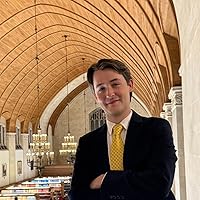
An immensely readable introduction to John Paul II’s philosophy of the human person by John F. Crosby, friend and student of Dietrich von Hildebrand, and co-founder of the Hildebrand Project.
Professor Crosby is known internationally for his work on John Henry Newman, Max Scheler, Karol Wojtyła, and Dietrich von Hildebrand. He has made a significant contribution to the area of philosophical anthropology or philosophy of the human person and has played a major role in the contemporary interest and discussion of that field through his two books, The Selfhood of the Human Person and Personalist Papers each published by Catholic University of America Press. He has also worked in the areas of ethics, phenomenological realism, and axiology, or value theory.
Dr. Crosby worked with his son John Henry Crosby in founding the Dietrich von Hildebrand Legacy Project, and now serves as a Senior Fellow of the Project and a General Editor of the publishing division of the Project.
John Crosby studied at Georgetown University, where he received a B.A., and the University of Salzburg where he received his Ph.D. Before coming to Franciscan University of Steubenville in 1990 he taught at the University of Dallas, and later held the Prince Franz Josef and Princess Gina Chair for Ethics, at the International Academy of Philosophy in Liechtenstein. He has previously served as chair of the philosophy department at Franciscan University of Steubenville as well as the director of the M.A. Philosophy Program, a program he helped found. In 1997 he received Senior Faculty Award for Excellence in Teaching at Franciscan University of Steubenville.
He is a member of American Catholic Philosophical Association, where he has also served on the Executive Committee; the American Philosophical Association; the Newman Association of America, and the University Faculty for Life.
John Paul II’s wisdom and thought continues to be unraveled in the present age. Part of this fascination is due to the mass and diverse array of topics that John Paul II discussed. It is overwhelming. This book, “The Personalism of John Paul II,” considers many of these topics by identifying the one principle that unites them all: the personalist norm. The personalist norm refers to the way that humans are a “good toward which the only proper and adequate attitude is love.” John Crosby shows how this principle animates the pope’s claims regarding the use of reason alongside Revelation, the interiority and unrepeatability of the person, freedom, truth, embodiment, morality, and solidarity. These topics are all intertwined given the personalist norm. Crosby explains and maintains the balance between several paradoxes here, namely John Paul II’s emphasis on the subjectivity of each individual while reverencing a common human nature; the givenness of the principles of morality from Revelation and the value of an individual “coming to” principles of morality by exerting their reason; and the dignity of both the interior, spiritual qualities of the human person and the embodied, material ones.
This book should be read both by those who are new to John Paul II’s thought because of its accessible language and also the reader more familiar with John Paul II who is seeking a new perspective on his teaching. Anyone interested in personalism as a school of thought can also benefit from Crosby's plain description of personalism and its main tenets. I greatly enjoyed reading this book. Its practical application through insightful examples, such as the way an employer can interact with employees in a personalist way, and the answers provided to objections to personalism offered me new clarity to the pope’s teachings. Through this book, the reader can attain valuable insight to the great passion John Paul II had for human dignity and the way it impacted all of his life and thought.
A good, very concise, introduction to JPII’s theology centered on the human person. I do wish the author including a clear list of recommended reading list for those wanting to dive deeper into these ideas and themes in JPII’s vast body of work.
Read this little by little over the span of a couple months. Very slim introduction to the personalist philosophy of PJPII. Recommend to anyone wanting an easy to digest primer before diving into more in depth reading. I enjoyed reading it little by little and spending time thinking about it. However, it was a bit too much of an introductory text for me to give higher than 3 stars, having already been exposed to the material throughout the course of my theology education and having read primary source texts it extracts from, such as Laborem Exercens. Still, it was a worthwhile read, seeing the same ideas expressed in different ways and getting a simple refresher on ideas you’re familiar with is never a bad thing. Really enjoyed it.
"The evil of our times consists in the first place in a kind of degradation, indeed in a pulverisation, of the fundamental uniqueness of each human person." ~ Pope John Paul II
This was surprisingly a rather quick read. The book delves into various aspects of personalism (i.e. the unrepeatability & interiority of the human person, Man's freedom, and freedom in relation to Truth) and where JPII differs from other strands of personalism.
What I love about JPII's take on personalism is that he's found a way to contribute to broader philosophical thought, while being faithful to what the Catholic Church teaches and affirms about personhood and the dignity of the human person. JPII recognises the importance of seeking out common ground between secular thought and Catholicism by means of philosophical reason -- "Faith and reason are like two wings which the human spirit rises to the contemplation of Truth".
At the end of this book, I'm left with the conviction that the human person is - unrepeatable, bestowed with the gift of interiority, and is free. And yet, written in man's heart is the desire to discover truth, and in order to live in freedom of that truth - he is to be a sincere gift of himself to others.
Love love love this book (and JPII). 100% would recommend.
In most cases to understand theology beyond the superficial level one needs a deep background in philosophy. I'm interested in Catholic theology but I don't have the philsophy credentials to read many of the important books. This book is the exception. Graham makes the philosophy easy so as to get a clear view of JPII's view of the person...peronalism. One thing I love about this book is it expalins why JPII disliked sterotypes. Sterotypes get in the way of the person within. In these days in which we all shout at each other this is good book to remind us why respect is essential to the Christian life or just a life well lived. I don't think you need to be Catholic or even Christian to learn from this book. I think those who read it with an open mind will be better for it.
I thought this book was very good introduction to John Paul II’s personalism. I thought the essay, “What is Personalism?,” was a very helpful summary. Crosby does a good job of letting the reader know how the subjects build upon each other and are related, particularly at the beginning of each chapter when he says where he came from and where he is going. My one critique of the work is the lack of citations. I think it would be a lot more helpful if there were footnotes or endnotes that could direct the reader to where exactly John Paul is saying these things. There are a few references but not enough. Likewise, I would have appreciated a bibliography at the end of the work so that I had places where I could go to read more on the topic.
Brilliant breakdown of this Papal Power- House's personalist philosophy. A must read for those wanting to understand the lens through which the Holy Father saw the world.
A very helpful overview of John Paul II’s personalism, but the omission of citations (at least in the edition I read) really does a disservice to those who want to track down other sources and dig deeper.