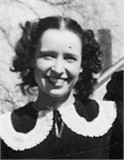
American historian and author specializing in the American Civil War. He graduated cum laude with a B.A. from Lock Haven University, and a M.A. from The Pennsylvania State University, both in History. He worked for many years as a history teacher at Penns Valley Area High School in Spring Mills, Pennsylvania.
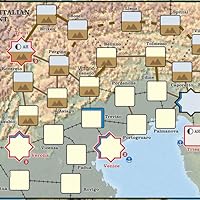
Well according to some reviews there have been better recent accounts of the 1864 Shenandoah campaign but reading Wert's account in conjunction with listening on CD to Ralph Peter's excellent 'Shadow of the Valley" gave me about as much as I need for now. This is a fairly thorough account though not overwhelming and clearly well researched and documented. The maps unfortunately are substandard (luckily I have plenty of wargame maps to supplement) and I would call the writing borderline dry. In battle accounts he moves ceaselessly among regiments, brigades, divisions and their officers and it can be as confusing as those battles must have been. For a non-Civil War 'buff' this is going to be hard going. In terms of style it almost seems as if he is concerned that dramatizing things a bit might somehow detract from the level of scholarship. Interesting that Jeffery D. Wert was 'only' a high school teacher in Pennsylvania and perhaps he worried about the reception of his work from the professional historian class, small as it might be. Who knows, but this was his very first book, written in 1987. He has written a total of ten now (two others of which I have read). He gives a fair summary of the 1864 Valley campaign in the final chapter and an assessment of the relative performances of the generals Early and Sheridan. In this campaign like the entire Civil War, it was always going to be long odds for the Confederacy against the numbers and industrial superiority of the North. Union cavalry in the 1864 Valley campaign alone outnumbered Confederate by something like 7 to 1 with fresh horses and armed with Spencer repeaters. Infantry odds were more like 3 or 4 to 1. That the South came close to prevailing remains somewhat astounding, just as they almost prevailed at Cedar Creek (Oct. 19, 1864). In his conclusion, Wert suggests that the Battle of Cedar Creek could almost stand as a microcosm of the entire war and I had the exact same thought before I came across that very line. Solid 3.5 stars, rounded up.
A classic history of Sheridan’s final Shenandoah campaign, told in a detailed, blow-by-blow fashion. Wert provides plenty of detail on the leadership of the various commanders, especially Sheridan and Early, as well as an analysis of their goals. Wert also details the actions of almost every single unit involved in the campaign, and this will likely affect your enjoyment of the book, based on your level of interest. According to Wert, Sheridan was not a particularly brilliant strategist or tactician; however, his ability to inspire his troops was unmatched, Wert argues. He also concludes that Sheridan was the best cavalry commander on either side of the war, and his ability to adapt to fluid battlefield conditions was matched by few others.
Wert’s writing is engaging but never simplistic, and he strikes a good balance between the right amount of detail and accommodating the reader’s attention span. The book could have used more detailed maps though, and maybe even more of them. The writing is also a little dry at parts.
Well-written and recommended for Civil War enthusiasts.
This dates from 1987 and, while the depiction of Third Winchester has been overtaken by Patchan's "Last Battle of Winchester", Wert's coverage of Fisher's Hill and Cedar Creek remain the standard. Wert's usual good writing in this volume, but especially notable was his incisive critical analysis throughout the book of tactical and strategic decisions by Early and Sheridan.
In From Winchester to Cedar Creek: The Shenandoah Campaign of 1864, Jeffry D. Wert charts Union General Philip Sheridan’s victory over Confederate General Jubal Early in Virginia’s Shenandoah Valley during the closing months of the American Civil War. Sheridan’s campaign ensured Confederate defeat in Virginia and ultimately contributed to President Abraham Lincoln’s reelection. Drawing on manuscript collections and many published sources, Wert offers vivid descriptions of the battles of Third Winchester, Fisher’s Hill, Tom’s Brook, and Cedar Creek.
First published in 1987, From Winchester to Cedar Creek explores how interplay of the strengths and weaknesses of the Union and Confederate commanders, Sheridan and Early, resulted in victories for Sheridan’s Army of the Shenandoah. It not only documents and dynamically recounts these events, but it also details the political, strategic, and tactical forces that made the 1864 Shenandoah Valley Campaign so important to the outcome of the Civil War.
As Philip Sheridan’s star rose, Jubal Early’s fell. In June 1864, Confederate General Robert E. Lee sent Early and approximately 15,000 men up the Shenandoah Valley to clear Union troops from the area and menace Washington, D.C., in an effort to repeat Thomas “Stonewall” Jackson’s successes in 1862. Early, however, was no Jackson. Despite early success, by August he was on the defensive. General Ulysses S. Grant sent his cavalry commander, Philip Sheridan, to command all Union troops in the Valley and destroy Early. This is where From Winchester to Cedar Creek picks up the story.
Philip Sheridan was one of the few cavalry commanders who successfully transitioned to overall command of an army. His unique experience allowed him to better integrate infantry and cavalry. During the Civil War, it was considered suicidal for mounted cavalry to directly engage infantry, but at the Battle of Third Winchester, September 19, 1864, Brig. Gen. Wesley Merritt’s cavalry division broke Early’s defensive line with a classic Napoleonic cavalry charge.
Down but not out, Early’s beleaguered units surprised Sheridan’s Army of the Shenandoah in fog at the Battle of Cedar Creek. While the Confederates paused to regroup, Sheridan dramatically rode down from Winchester just in time to rally his men and turn the tide. After the war, Early blamed soldiers who stopped and looted Union camps for the critical delay. Wert argues the dense fog, and Early himself, was largely to blame. Neither Early nor his subordinates recognized the importance of the Valley Turnpike north of Middletown, where they could have turned the Union flank and prevented Sheridan’s reinforcements from arriving in time.
Because General Early permanently lost the Shenandoah for the Confederacy, history has not been kind. Sheridan’s Valley Campaign, on the other hand, made Sheridan a legend and a national hero. But Wert argues Early did the best he could with what he had. He had taken the war to the outskirts of Washington, D.C., diverted men and material away from Grant’s army around Richmond and Petersburg, and inflicted higher casualties against forces that outnumbered him 3-to-1. “Burdened with his disadvantages, Jubal Early displayed superior generalship when compared to his Union counterpart,” he argued.
Beyond a firm grasp of strategy and tactics, Wert offers compelling accounts of how the average soldier fought and died during the Civil War. He pauses to explain how it was a common experience that once under fire, a soldier’s nerves steadied and fear seemed to vanish. One account of a visitor on the Third Winchester battlefield described the expressions on the faces of the men who died–surprise, pain, and even peacefulness. Men died instantly with looks of surprise frozen on their faces. Others had time to make peace with their fate. It’s an intimate, chilling side of battle you rarely read.
Jeffry D. Wert (born May 8, 1946) has a B.A. in History from Lock Haven University and M.A. in History from Pennsylvania University. He taught history at Penns Valley Area High School in Spring Mills, Pennsylvania, and has written extensively on the American Civil War, particularly the Eastern Theater. He received the William Woods Hassier Award in 2002. His other books include General James Longstreet: The Confederacy’s Most Controversial Soldier (1994), Gettysburg, Day Three (2002), and A Glorious Army: Robert E. Lee’s Triumph, 1862-1863 (2011).
This book and author have a positive reputation that precede them in Civil War circles. Written and published in the 1980s, this work was on the leading edge of what could be considered modern Civil War scholarship. The book covers the last part of the Shenandoah Valley Campaign of 1864, between Sheridan and Early.
The first three chapters given context to the situation in the Shenandoah, cover the armies and generals involved, and summarize the events leading up to Third Winchester / Opequon. Three chapters cover the battle itself. Fisher's Hill is covered in two chapters. The operations by and against John Mosby related to this campaign get a chapter, which would have fit better as an appendix. A chapter covers the events leading up to Cedar Creek. The Burning is pretty much covered in a single page, and Tom's Brook aka The Woodstock Races gets a short treatment. Three chapters cover Cedar Creek, and a final chapter gives some further analysis of the campaign and provides a brief epilogue about the two armies up through Early's final defeat at Waynesboro.
Pros: Wert clear did a lot of research as reflected by the extensive endnotes. Probably nothing of this scale had been done on this campaign up to that point. Wert also gives a pretty balanced and nuanced assessment of Sheridan and Early, neither of whom come out looking great. He also analyzes John Gordon's post-war criticism of Early and finds may flaws in his allegations, which up until that time had probably been taken at face value.
Cons: Maps are few and of poor quality; Civil War cartography and its publishing has come a long way since the 1980s. The month of thrust and parry prior to Third Winchester is covered in less than 20 pages. Other events, like The Burning, feel skimmed over. The main text is 251 pages, which easily feels 50-100 pages shorter than it needs to be to really cover this campaign. The two titular day-long battles are the tentpoles of this book, and almost everything else feels like it's just there to support them. Overall, I found Wert's writing to be...meh. It's not dry or otherwise terrible, but something is lacking. Maybe it just needed more editing. It probably didn't help that this was his first ever published book, and I think he wrote it while working as a high school history teacher. It didn't help that I've recently also read three books by Scott Patchan about parts of the 1864 Shenandoah Campaigns, all published in the last 15 years; Wert can't really compete.
I think there have been newer editions of this book than the original 1987 version I read; I don't know if any of them reflect improvements and updates.
If you have no familiarity with the campaign, this is still a fine book to start. Otherwise, I would definitely look toward more recent works, especially Patchan. Moderate recommendation.
I thought this was really good. I wanted to learn more about this seminal Civil War campaign since reading Ralph Peters great novel Valley of the Shadow and I think this book fit that bill. Recommend to anyone looking to learn more about the Shenandoah Campaign.
Overall a good volume that covers most all of Sheridan's Shenandoah campaign. Covers the three big battles (Winchester, Fisher's Hill, Cedar Creek).
The lack of quality maps is unfortunate. It makes it difficult to follow the action. In addition, the author basically completely skips over 'The Burning".
Civil War writing was so much better in the 20th Century than the 21rst. Stuff like this has to be second only to Wiley Sword in entertaining historical reads.
This is the only title I know (based on modern scholarship) that covers Sheridan's drive at this level of detail But it's awkwardly written, and I set the book aside after 80 pages. Picking it up again months later I found that within a few pages, as the tide turned for the Union forces at Winchester, the author's prose became more fluid. The paragraphs clogged with names and the strange grammatical choices gave way to a more engaging style.
It's almost as if the author found writing about detailed movements on the battlefield difficult, or perhaps the more strategic passages were better edited.
Regardless, the remainder of the book didn't disappoint.
This book relates the events in the Shenandoah Valley in the Fall of 1864 after Phil Sheridan is given command. It relates a great deal of factual details but does get a little too detailed at times. However, you get a very good idea of what happened and how it developed. Upon finishing the book, you will know why the Army of the Shenandoah won as well as how it won. If you are researching the events it gives enough detail that you can use it as a reliable source.
A good campaign history, Wert includes a very nice bibliography and Table of Organizations for both Union and Confederate forces. Covering the actions in the Shenandoah through the summer and fall of 1864, the book gives a good look at the generalship of Sheridan and Early in their respective roles.
This is a great research book. My Great Grandfather was shot in the head during the battle of Cedar Creek. This opened up a wealth of knowledge surrounding the days leading up to, the actual battle, and the days following.