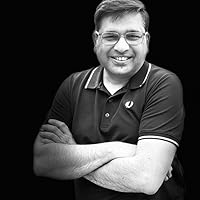
Beyond the Breath is one of the first books to give a complete overview and description of sensation based vipassana meditation, the form of mediation thought of as the original method of meditation as used by the Buddha 2,500 years ago. This form of meditation, brought to the West by S.N. Geoneka, provides a means to experience emotions directly and nonverbally--accessing the mind through the body. One of the main principles of this school of meditation is that meditation alone is not sufficient practice, but that it must be combined with a whole-life and ethical commitment.
M.Glickman's approach is unique--he takes a mediation practice deeply rooted within a historic Buddhist framework, and gives it a modern-day, scientific spin--he presents sensation based viapassana meditaiton and Buddhist principles in 20th-century language, secularizing ideas that may sound exotic, off-putting, or out-dated. Glickman's passion for the topic, as well as his great understanding of Buddhist concepts, make this an inspiring read.
This is a sort of How To manual for S.N. Goenka's meditation technique. I say that with the caveat that Glickman does not imply his book is in any way a substitute for the actual teachings; he encourages readers to sit the official 10 Day Vipassana Course in order to truly experience the technique as intended by Goenka. But having done so, I have to say I was glad to have read this before attending the intensive. And I've referred to it many times in processing what I experienced during the ten days of the silent retreat. Goenka's tradition (which originated in Burma, from his teacher Sayagyi U Ba Khin) espouses the need for the student to have experiential education in meditation guided by a very specific regimen and a very specifically trained "assistant teacher." As such, there are few sources of detailed instruction on the meditation technique. (If you've not already, you can read more about this at www.dhamma.org - Glickman states there are more than 80 Goenka centers world-wide, serving 50,000 retreatants/year).
Enter "Beyond the Breath," a simple and accessible volume laying out the basic tenets of both Buddhism and the thousand-year-old Vipassana* tradition of meditation (as espoused by Goenka / U Ba Khin). Glickman does a nice job of conveying the importance of development of concentration skills and the ensuing tenets of Vipassana: impermanence, unsatisfactoriness, and the realization of no "self." The idea is that coming into a deep understanding results naturally from the use of the specific techniques set forth in this tradition. Chapter 1 opens with this quote from U Ba Khin "The experience of impermanence, when properly developed, strikes at the root of one's physical and mental ills and removes gradually whatever is bad in him....This experience is not reserved for men who have renounced the world for the homeless life." Mainly, Beyond the Breath gives an every-man (or woman, as is the case for me) approachable discussion of what to expect and how to work with what comes up as you begin to churn up your stuff in the practice. All in all, I would recommend this as a helpful starting point for one interested in this particular style/school of meditation, certainly if that one were contemplating going to a 10 day retreat.
*Vipassana = insight, or a clear awareness of exactly what is happening, as it happens
I can't tell you that you'll get anything out of this book, but this book for me was exactly what i needed at the time i needed it. It had answers to questions that were specific to what i was going through and because of it, I ended up attended a 10 day Vipassana retreat. I won't over praise it's prose (although it had its moments) and at another time in my life, this may have been complete nonsense, but for me, this was a cornerstone in my literary meditation adventures.
S.N. Goenka's technique is of course very valid and will get you the results it promises. The author of this book however is not an expert, he explicitly says so, and this book will give you the basics and many useful tips, but it's not by any means a comprehensive or in-depth guide. There are also some errors of form such as a quote attributed to Einsten which he didn't really say.
Anyone who has ever tried quickly realizes that any form of meditation isn't easy. More often than not the mind is an unquiet place and we tend to be assailed second to second by an insistent voice urging us to do this or that; to fulfil our role as a human doing rather than a human being! The good news is that with this form of meditation, which does not require focussing on a particular point, design or flame etc. whilst chanting the same word repeatedly, the meditator takes careful note of the various sensations he or she notices. Indeed, as the name suggests, this is the very object of Vipassana, or sensation-based meditation. Of course, some sensations are more pleasant than others but the object of the exercise is to notice in a detached way whatever the sensation may be and not to reject or accept any however pleasant or unpleasant.
Before outlining meditation techniques, Glickman provides a brief history of his belief system, Buddhism and its development, through a potted history of the Buddha's own search for enlightenment but, though highlighting that there is good evidence to suppose that Vipassana is the meditation method that Buddha himself developed, points out that his readers do not have to be Buddhists themselves to benefit from the form of meditation he espouses.
For anyone seeking a comprehensive introduction to mindfulness and sensation-based meditation written in an entertaining and engaging style this book provides the perfect starting point. However, as the author himself is careful to stress, that is exactly what it is - merely a starting point - and no substitute for practice over a sustained supervised period from a trained teacher, something commonly to be found on 10 day retreats.
This is very good summary of a 10 day Vipassana course. Marshall explains the fundamentals of the vipassana technique and also explained the scientific aspect of the practice. Anyone who has done Goenka's 10 days retreat should read this book for further enrichment. I specially like the subtle details of the neuro-chemistry that may happen during different psychological states and how meditation plays a vital role in altering them. A very good read and highly recommended for Vipassana meditators.
After completing a ten-day course, I was looking for a good resource. This answered a lot of questions and gave me some new insights into the vipassana technique.
"Beyond the Breath" by Marshal Glickman is an overview and description of the basic tenets of Buddhism and the description of sensation based Vipassana Meditation as outlined by S.N. Goenka. This form of Vipassana Meditation is thought to be the original meditation used by Buddha 2500 years ago. From my understanding, this is the most thorough manual available; however, the author strongly encourages the reader to attend the official 10 day Vipassana Course. Based on other reviews, the author's book offers an excellent precursor to attending this course and an excellent review for those who want to continue practice after the 10 day course. My only reservation concerning this form of Vipassana is that it may by most physically and mentally demanding challenging to some practitioners.
After completing Vipassana recently, I find this book as an excellent revision. It’s perfectly balanced book that captures all the essence of the meditation technique. I recommend it to all the seekers…
Although the book focuses on Goenka's style of Vipassna, it also serves as a very accessible (if possibly incomplete) introduction to Buddhism. Topics like suffering and no-self are explained in a logical, down to earth, and honest way.