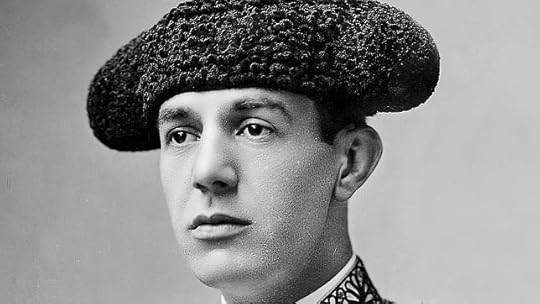
Jump to ratings and reviews
Rate this book

Θρήνος για τον Ιγνάθιο Σάντσεθ Μεχίας

Rate this book
This volume contains the last long poem Lorca wrote, plus five other long poems. The introduction illuminates the two conflicting trends--Europeanization (the intellectual spirit and formal rhetoric) and Africanization (popular song and oral tradition) in modern Spain's greatest poet.

26 pages, Paperback

First published January 1, 1935

6 people are currently reading
188 people want to read

About the author

Federico García Lorca

1,581 books3,084 followers
Born in Fuente Vaqueros, Granada, Spain, June 5 1898; died near Granada, August 19 1936, García Lorca is one of Spain's most deeply appreciated and highly revered poets and dramatists. His murder by the Nationalists at the start of the Spanish civil war brought sudden international fame, accompanied by an excess of political rhetoric which led a later generation to question his merits; after the inevitable slump, his reputation has recovered (largely with a shift in interest to the less obvious works). He must now be bracketed with Machado as one of the two greatest poets Spain has produced in the 20th century, and he is certainly Spain's greatest dramatist since the Golden Age.

Ratings & Reviews

What do you think?
Rate this book

Friends & Following

Create a free account to discover what your friends think of this book!

Community Reviews

5 stars
158 (43%)
4 stars
123 (33%)
3 stars
69 (18%)
2 stars
11 (3%)
1 star
4 (1%)
Displaying 1 - 30 of 34 reviews
Profile Image for Sheziss.
1,367 reviews486 followers
Want to read
March 4, 2021
Elegía publicada en 1935, dedicada al torero Ignacio Sánchez Mejía. El primer poema es una maravilla:


LA COGIDA Y LA MUERTE

A las cinco de la tarde.
Eran las cinco en punto de la tarde.
Un niño trajo la blanca sábana
a las cinco de la tarde.
Una espuerta de cal ya prevenida
a las cinco de la tarde.
Lo demás era muerte y sólo muerte
a las cinco de la tarde.

El viento se llevó los algodones
a las cinco de la tarde.
Y el óxido sembró cristal y níquel
a las cinco de la tarde.
Ya luchan la paloma y el leopardo
a las cinco de la tarde.
Y un muslo con un asta desolada
a las cinco de la tarde.
Comenzaron los sones de bordón
a las cinco de la tarde.
Las campanas de arsénico y el humo
a las cinco de la tarde.
En las esquinas grupos de silencio
a las cinco de la tarde.
¡Y el toro solo corazón arriba!
a las cinco de la tarde.
Cuando el sudor de nieve fue llegando
a las cinco de la tarde
cuando la plaza se cubrió de yodo
a las cinco de la tarde,
la muerte puso huevos en la herida
a las cinco de la tarde.
A las cinco de la tarde.
A las cinco en punto de la tarde.

Un ataúd con ruedas es la cama
a las cinco de la tarde.
Huesos y flautas suenan en su oído
a las cinco de la tarde.
El toro ya mugía por su frente
a las cinco de la tarde.
El cuarto se irisaba de agonía
a las cinco de la tarde.
A lo lejos ya viene la gangrena
a las cinco de la tarde.
Trompa de lirio por las verdes ingles
a las cinco de la tarde.
Las heridas quemaban como soles
a las cinco de la tarde,
y el gentío rompía las ventanas
a las cinco de la tarde.
A las cinco de la tarde.
¡Ay, qué terribles cinco de la tarde!
¡Eran las cinco en todos los relojes!
¡Eran las cinco en sombra de la tarde!
Profile Image for Meriouma.
39 reviews14 followers
August 29, 2019
Ô mur blanc de l'Espagne !
Ô noir taureau de peine !
Ô sang dur d'Ignacio !
Ô rossignol de ses veines !
Non.
Je ne veux pas le voir !
Car il n'y pas de calice pour le contenir,
pas de givre de lumière pour le glacer,
pas de chant, de déluge de lys,
pas de cristal pour le couvrir d'argent.
Non.
Je ne veux pas le voir !!
Profile Image for Dimitris.
456 reviews
February 24, 2024
Ό,τι καλύτερο έγραψε σε ποίημα.

Συνεχίζω να πιστεύω πως για να καταλάβει κανείς τον Λόρκα πρέπει να ξέρει τα πάντα για την Ισπανία των αρχών του 20ού αιώνα, για τον Νότο της Ανδαλουθία, τα ήθη, τις μουσικές, τους τσιγγάνους, τους παλιούς ποιητές του 1700 που θαύμαζε και απέτειε φόρο τιμής, την πολιτική κατάσταση τότε, τα αισθηματικά του. Για να μην πω πως πρέπει να ξέρει ισπανικά ή και να είναι Ισπανός!

Διαβάζω παντού πως είναι ο πιο πολυμεταφρασμένος. Δεν μου λέει τίποτα. Μεταφράζονται πραγματικά αυτά που εννοεί και γράφει σε άλλες γλώσσες;...
Profile Image for Ahmed Ibrahim.
1,199 reviews1,916 followers
April 17, 2016
ديوان رائع من أربع قصائد في رثاء لوركا لصديقه.

لن ينظر أحد عينيك
لأنك مت إلى أبد الآبدين.
كسائر أموات الأنام،
كسائر الأموات يطويهم النسيان
في ركام كلاب خامدين.
Profile Image for Mohamed Awada.
66 reviews16 followers
November 1, 2014
Es unas de las paradojas que nunca entenderé: es casi ley que los hechos reales mas tristes llevan a la poesía mas bella.
Profile Image for iris irimia.
154 reviews11 followers
November 16, 2020
la vida desconoce lo muerto, pero a veces, caminando entre la tarde, llegan a la piel las voces, susurra en el oído el recuerdo de una brisa triste por los olivos
Profile Image for Walter Schutjens.
358 reviews43 followers
March 10, 2025
I have developed the opening section of this poem, which I adore, with my own commentary and a painting with which it deserves to enter in conversation. Below an original poem by Jack Verschoyle on the same theme.
__________
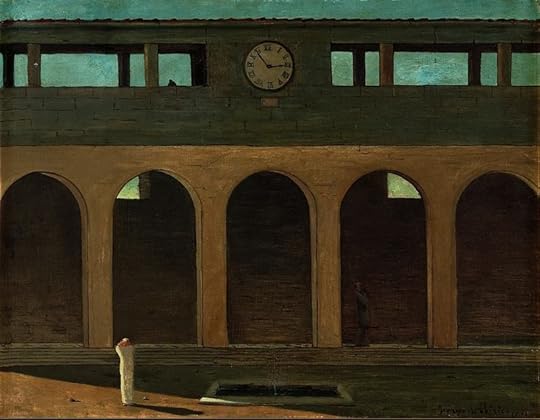
Enigma of the Hour - Giorgio de Chirico


The exact moment of a death is arbitrary. Despite being where the timeless borders our own world, a wind of ceaseless change will pass and throw closed the gates in the faces of the bereaved. The moment thus becomes absurd, unholy. Lorca's' repeated cries of the exact hour of death is thus an existential lament, a dramatic tolling of empty bells. In his 'Enigma of the Hour' (above), de Chirico manages to capture these shifting forces that propel the future into the past. Just as the Impressionists' 'chiaroscuro of change' managed to capture exactly the moment when a turn of the wind throws new light upon a valley, de Chirico manages to capture the moment of the changing of the mortal guard. Broad shadows stand ready to sweep an anxious figure into darkness, the clock stood at an unremarkable time, the square empty but for a cloaked figure stalking the plazas arched palisades. Time here is found compressed to a point. Here some forceful tragedy, in my telling, one experienced by Lorca, has swept a recognizable past out of reach.

'At five in the afternoon
Five on the dot after noon
A boy fetched the white sheet
At five in the afternoon'


We can imagine Lorca reciting these words, stood abandoned on the public square of the small Spanish town of Manzanares. It is late July in 1934, winds of ceaseless change are passing through Spain. Overwhelmed and bereaved he would have drifted here, away from the procession held in name of his friend, the storied matador Ignacio Sanchez Mejias. Hemingway writes "All stories, if continued far enough, end in death", and so it was for Ignacio; at the end of his final battle his spirit had been eternalized. This was only a few years after Ignacio himself had, in the same town, carried on his shoulder the coffin of his half-brother. He too had found his end in the ring, killed by a bull which Ignacio, now locked in a traditional blood-feud between beast and man, managed to finish off in a consequent match. With his words Lorca would revenge Ignacio. Only a few years later he himself would be shot and buried in an unmarked grave by Fascist forces.

'A basket of limes waiting
At five in the afternoon
After that death and only death
At five in the afternoon.'


A high summers sun beating down on his brow, his Sunday suit would be stained with dust and sweated at the cuffs. Placing one hand on his knee and taking out his handkerchief to pat dry his face, he would then squint his eyes and look around before allowing himself to be overcome once more by grief. Despite not noticing the figure in black standing in the plaza's wings, (see the painting - Death), and despite the words sounding hollow as he heaves them up from heavy heart, he would then continue this prayer in prose. The phrases swing dramatically as the priests thurible had at procession. The words that escape his lips weightless yet presential as the scented incense which suffused the scene:

'The bass drone began
At five in the afternoon
Arsenic bells and smoke
At five in the afternoon'


In his lively imagination the scene would arise again from that smoke. The carried coffin passing through, banking black on its vapours, as Charon's boat upon the Styx. Villagers would mill around close, making sure however not to touch the grieving circle that cusioned its passage. A reserved propriety for the tragedy of the situtation would inspire a ritual mutuness in the crowd. This muteness too a shared private guilt for having themselves cheered and yowled across banisters for this tragedy to occur. They had cheered on its cast as posters had papered the alleyways of the oldtown in the months past. Ignacio's name printed large as he had been in life. And this eagerness despite knowing it was not they who cast the dice on the final roles assumed in the tragedy.

'On corners groups of silence
At five in the afternoon
And the bull alone elated
At five in the afternoon'


Pain triumphs death in its ability to make first advance an assault on the heart of unfortunate bystander. Eventual death is more the balm whose working and reality is only slowly understood. Those guilty of watching the first tormented throes will carry the image with them forever. Thus in the arena that afternoon, for most what rose from that blooming of red in the sand, was a stiffening panic of internal conflict. A sudden gutting of expectation and choking of elation. And thus despite their sanctity of remove, with limbs neatly collected, the calamity had turned to catastrophe. In the arena confused voices had found each other and collected themselves in ever greater cries of disbelief and remorse.

Only one, however, sits still. Throat and eyes locked, heart refusing function. For Lorca in his ever happening vision, with his eyes trained on his friend, had apprehended those forces that propel the future into the past, that stand guard at moments of eternity.

'The wounds burned like suns
At five in the afternoon
And the crowds smashed the windows
At five in the afternoon'

_______

The Internment of the Matador

It was a very long time ago,
that the wind last levelled the dirt
or ruffled the thick hem of his cloak
or the crowd, its silent gestalt,
before he took the bull under his arm.

And still the men have summoned
my matador and I. We heard
that we were of one and the same,
but he boarded the line and I remain,
and I enter their sparing passages.
At the nascence of every day,
stripped down to my long bones,
I look at them through quiet eyes
like the red eyes of Charon, whose coals
have unlearned how they smoulder
and burden shoulder after shoulder,
like two narcotic pills or sweet drogues
dissolving under foxish tongues.
I would move this place far on,
but I have the eyes of Charon;
my throat is a padlock,
and all these men are ages.
If the stopped thumb would fall
on the forehead of this labyrinth,
it would be forever. If it is time to call,
it will be char and this wreath will become
a counterfactual and no place will
have ever known one petal.
The flora is a weed of time. The oil
has smuggled me inside;
like the pervert of time, its arid skirt,
its breath from the azure oil, the arch.

There was a time when,
these figures stood in their own epic,
but now they are the faint,
the ghost of ghosts, and so on;
the ghoulish of ghoulish who lost,
in a burrow of gods, their matador.
The one to be the last of them:
it will be me who joins my matador
and I will drink, to the last drop of wine,
all that was left by my tall matador.
Profile Image for Antonio de la Mano.
466 reviews62 followers
January 14, 2018
Ojalá alguien me dedicase versos tan bonitos como estos el día en que yo muera. A las cinco de la tarde. Junto a las Coplas de Jorge Manrique, todo el mundo cataloga esta como la segunda mejor elegía de nuestra lengua. Y vaya si tienen razón. A las cinco de la tarde. Qué forma tan bella y lírica de describir algo duro. ¡Ay qué terribles cinco de la tarde! ¡Eran las cinco en todos los relojes! ¡Eran las cinco en sombra de la tarde!
Profile Image for sahar.
63 reviews13 followers
Read
August 30, 2021
نمی‌خواهم چهره‌اش را به دستمالی فروپوشند
تا به مرگی که در اوست خو کند.
برو،ایگناسیو!به هیابانگ شورانگیز حسرت مخور!
بخسب!پرواز کن!بیارام!دریا نیز می‌میرد.
Profile Image for Felicidad.
90 reviews1 follower
December 2, 2024
Me ha gustado muchísimo. En mi lista de elegías leídas, la sitúo en el top 3. Esta poesía de Lorca sí que me gusta.
Profile Image for Erika.
148 reviews4 followers
November 25, 2024
(I read this in the English translation by Robert Bly)

Wonderfully melancholic and poignant. I especially loved the first part, where five o'clock was repeated, it read like some twisted nursery rhyme. Generation '27 writers in general are fascinating to me, there's always such lush imagery in their works.
Profile Image for AL أل.
223 reviews16 followers
December 6, 2018
Dels fets més tràgics i tristos surt sempre la millor poesia. Realment preciós però encara tinc l'estómac encongit. Dels darrers poemes de Lorca, l'any 1935, elegies sempre en forma de cançó tràgica i simbòlica.
Profile Image for Irini Gergianaki.
453 reviews31 followers
December 29, 2019
Μια ποιητική συλλογή που γράφτηκε το 1934 στη Μαδρίτη για το θάνατο του αγαπημένου του φίλου Ιγνάθιο Σάντσεθ Μεχίας που ηταν ξακουστός ταυρομάχος.

"Η πέτρα είναι ένα μέτωπο όπου τα όνειρα στενάζουν
δίχως κυρτό νερό και δίχως κυπαρίσσια παγωμένα.

Η πέτρα είναι μια σπάλα μέσα στο χρόνο να τη στηρίζει
με τα δέντρα των δακρίων, κορδέλες και πλανήτες"
Profile Image for Alberto.
12 reviews
November 14, 2010
Un gran libro de poesías dedicadas al gran torero español Ignacio Sánchez Mejías.
Profile Image for Ronnie.
446 reviews20 followers
February 10, 2015
"Pero ya duerme sin fin.
Ya los musgos y la hierba
abren con dedos seguros
la flor de su calavera."
Profile Image for Adi.
981 reviews
October 15, 2016
The poems were quite sad and dark (the main topic was death), but somehow I liked them.
Profile Image for Hernán.
140 reviews
December 8, 2016
"Por que te has muerto para siempre,
como todos los muertos de la tierra,
como todos los muertos que se olvidan
en un montón de perros apagados"
Profile Image for Marian.
294 reviews25 followers
February 19, 2023
Apasionado, desgarrador e intenso. Me encantó.
Profile Image for tomás.
84 reviews8 followers
December 22, 2023
Porque te has muerto para siempre,
como todos los muertos de la Tierra,
como todos los muertos que se olvidan
en un montón de perros apagados.

No te conoce nadie. No. Pero yo te canto.
Yo canto para luego tu perfil y tu gracia.
La madurez insigne de tu conocimiento.
Tu apetencia de muerte y el gusto de su boca.
La tristeza que tuvo tu valiente alegría.

Tardará mucho tiempo en nacer, si es que nace,
un andaluz tan claro, tan rico de aventura.
Yo canto su elegancia con palabras que gimen
y recuerdo una brisa triste por los olivos.
8 reviews
March 17, 2022
3,5
És molt curtet i molt ameno de llegir, en un moment ho tens. És la primera cosa que em llegisc de Lorca i no ha estat mal, però igualment jo no soc de poesia aixina que ja em llegiré algo d'ell en prosa.
Profile Image for Maria Canet.
71 reviews
April 27, 2022
3,5
És molt curtet i molt ameno de llegir, en un moment ho tens. És la primera cosa que em llegisc de Lorca i no ha estat mal, però igualment jo no soc de poesia aixina que ja em llegiré algo d'ell en prosa.
Profile Image for Luz Delgado.
9 reviews1 follower
March 21, 2020

Para mi gusto, en lo poético, el Llanto es lo mejor que escribió Federico, hondo, emotivo, perfecto en su forma y fondo.
Profile Image for Paky.
1,037 reviews13 followers
October 25, 2022
Una gran elegía, que muestra un gran dolor y homenajea al querido torero. Bien podría haberse titulado "A las cinco de la tarde".
Profile Image for Mattia Agnelli.
166 reviews6 followers
May 8, 2024
“Los esqueletos de mil mariposas
duermen en mi recinto.”
Profile Image for Victoria.
36 reviews
June 10, 2024
Federico García Lorca, eres inigualable. Me haces sentir la sangre que va corriendo por las venas cuando te leo.
Profile Image for ines.
18 reviews
July 14, 2025
"Duerme, vuela, reposa: ¡También se muere el mar!"
Displaying 1 - 30 of 34 reviews

Can't find what you're looking for?

Get help and learn more about the design.