

What do you think?
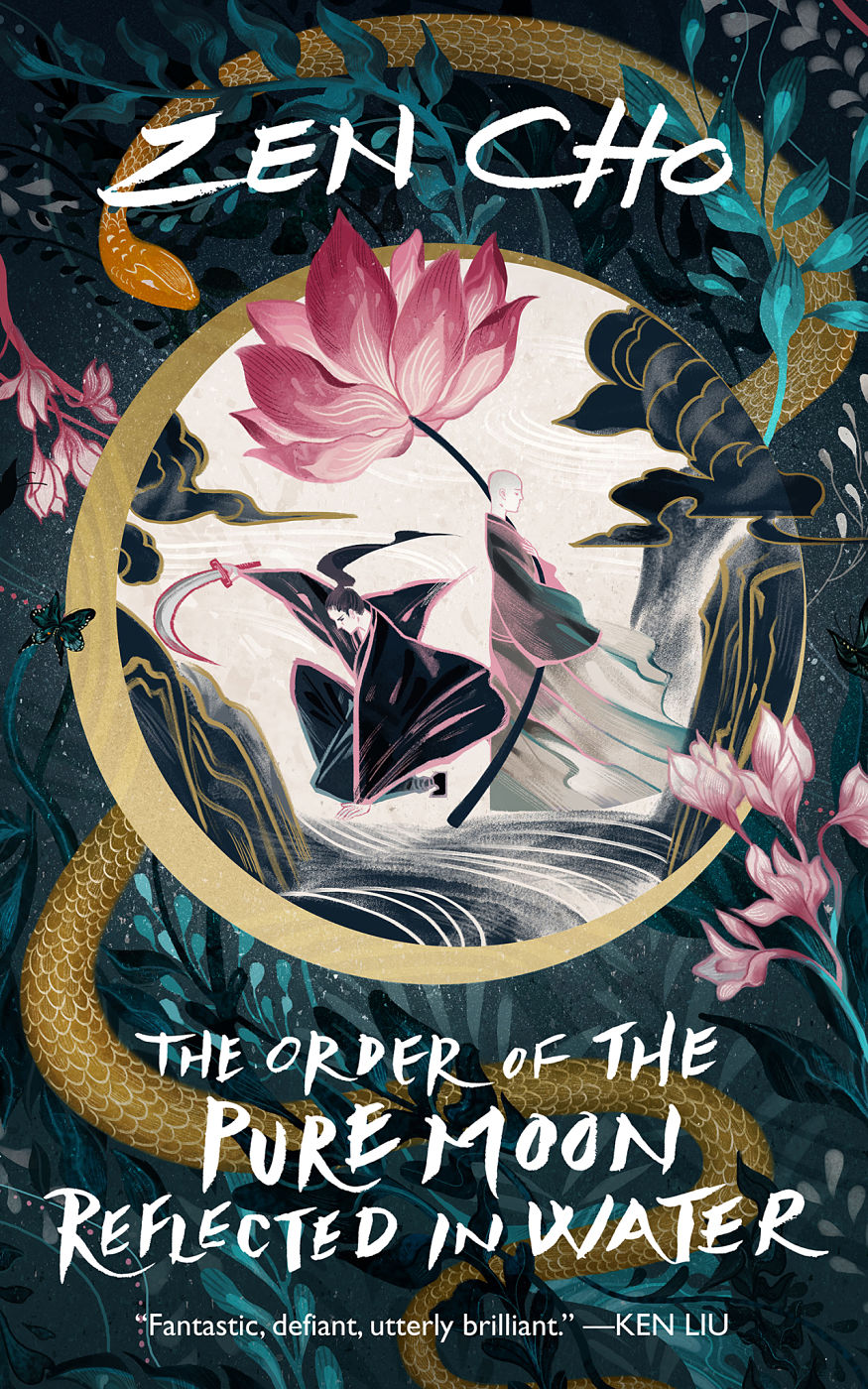
The Order of the Pure Moon Reflected in Water
Zen Cho returns with a found family wuxia fantasy that combines the vibrancy of old school martial arts movies with characters drawn from the margins of history.
A bandit walks into a coffeehouse, and it all goes downhill from there. Guet Imm, a young votary of the Order of the Pure Moon, joins up with an eclectic group of thieves (whether they like it or not) in order to protect a sacred object, and finds herself in a far more complicated situation than she could have ever imagined.
A bandit walks into a coffeehouse, and it all goes downhill from there. Guet Imm, a young votary of the Order of the Pure Moon, joins up with an eclectic group of thieves (whether they like it or not) in order to protect a sacred object, and finds herself in a far more complicated situation than she could have ever imagined.
176 pages, ebook
First published June 23, 2020
About the author
Zen Cho
60 books2,716 followersI'm a Malaysian fantasy writer based in the UK. Find out more about my work here: http://zencho.org
Ratings & Reviews
Friends & Following
Create a free account to discover what your friends think of this book!
Community Reviews
Displaying 1 - 30 of 1,673 reviews

March 19, 2021
This is a story brimming with so much potential, but in the end it felt not quite realized. It needed to be a full fantasy novel but ended up confined in a light novella which did not do it justice.
In the end, I was left wanting more. Because this light and airy novella flowed well, but left me unimpressed and unsatisfied in the end precisely because of how light it was. Light on the plot, the characters development and worldbuilding — but with enough snappy banter (almost romcom style, really) to last me for at least a month. In the end, it really seemed like a lengthy set up for a larger story, an extended prologue, an overlong first chapter. There was something almost fanfic about it — a feeling that we are visiting the world with which I’m expected to be familiar through, perhaps, an earlier story, the world that therefore needed little but basic sketching out. Because as is, I got only very vague idea of the place, and little but vague idea of the characters — but snappy banter overload.
As the blurb promises, the story starts with a bandit in a Malaysian coffeehouse and quickly becomes the story of a young nun Guet Imm from the destroyed tokong of the titular Order of the Pure Moon Reflected in Water joining despite their protestations a ragtag gang of sorta-bandits on a quest to deliver some secret goods — joined by the story of the gang secon-in-command Tet Sang. They are in a war-torn country, now in the grip of conflicts between the Protectorate and the reformers who become “bandits” as they oppose those in power. Friendships and quiet romance follow, and we learn that nothing is as it seems, and far from being a damsel in distress our heroine Guet Imm has skills and depths that take her initially reluctant companions by surprise.
This is the premise I definitely can get behind, and yes, it’s quite readable, but in the end the lightness of the story execution became a barrier that prevented me from appreciating it and connecting with it enough. I kept feeling as though I’m a spectator watching a stage play or a film, never feeling like I can actually immerse myself in the story. All the promising parts that were briefly mentioned - the war, the titular Order that ended up being much more than expected, the shock of a woman who came out of a decade of seclusion just to belatedly realize months later that there was an invisible war around, the political tensions, the background of our characters — all that needed a much longer treatment to be fleshed out and realized. All the potential is there, but the story still remains bare bones, with little plot and substance to balance out all that ever-present snappy banter.
And, sadly — because I love stories told through the prism of humor — this book would have benefitted from a tonal shift to more seriousness, as the lighthearted amusement and never ending banter to me cheapened the more poignant moments and revelations. But that may just be me and my reading tastes.
It’s not a bad story but it’s also not a particularly memorable one either.
2.5 - 3 stars, rounding up.
In the end, I was left wanting more. Because this light and airy novella flowed well, but left me unimpressed and unsatisfied in the end precisely because of how light it was. Light on the plot, the characters development and worldbuilding — but with enough snappy banter (almost romcom style, really) to last me for at least a month. In the end, it really seemed like a lengthy set up for a larger story, an extended prologue, an overlong first chapter. There was something almost fanfic about it — a feeling that we are visiting the world with which I’m expected to be familiar through, perhaps, an earlier story, the world that therefore needed little but basic sketching out. Because as is, I got only very vague idea of the place, and little but vague idea of the characters — but snappy banter overload.
As the blurb promises, the story starts with a bandit in a Malaysian coffeehouse and quickly becomes the story of a young nun Guet Imm from the destroyed tokong of the titular Order of the Pure Moon Reflected in Water joining despite their protestations a ragtag gang of sorta-bandits on a quest to deliver some secret goods — joined by the story of the gang secon-in-command Tet Sang. They are in a war-torn country, now in the grip of conflicts between the Protectorate and the reformers who become “bandits” as they oppose those in power. Friendships and quiet romance follow, and we learn that nothing is as it seems, and far from being a damsel in distress our heroine Guet Imm has skills and depths that take her initially reluctant companions by surprise.
This is the premise I definitely can get behind, and yes, it’s quite readable, but in the end the lightness of the story execution became a barrier that prevented me from appreciating it and connecting with it enough. I kept feeling as though I’m a spectator watching a stage play or a film, never feeling like I can actually immerse myself in the story. All the promising parts that were briefly mentioned - the war, the titular Order that ended up being much more than expected, the shock of a woman who came out of a decade of seclusion just to belatedly realize months later that there was an invisible war around, the political tensions, the background of our characters — all that needed a much longer treatment to be fleshed out and realized. All the potential is there, but the story still remains bare bones, with little plot and substance to balance out all that ever-present snappy banter.
And, sadly — because I love stories told through the prism of humor — this book would have benefitted from a tonal shift to more seriousness, as the lighthearted amusement and never ending banter to me cheapened the more poignant moments and revelations. But that may just be me and my reading tastes.
It’s not a bad story but it’s also not a particularly memorable one either.
2.5 - 3 stars, rounding up.

March 25, 2020
3.5 stars. Now on sale! Full review, first posted on Fantasy Literature:
The Order of the Pure Moon Reflected in Water is a surprisingly warmhearted fantasy novella set in a war-torn Asian country. It’s a queer take on wuxia, a time-honored genre of Chinese fiction based on heroes skilled in the martial arts, frequently in superhuman, fantastical ways (think Crouching Tiger, Hidden Dragon or even Kung Fu Panda).
One day, in a small coffeehouse, a customer angrily accuses his waitress of using jampi witchcraft on him. The quarrel degenerates, a handsome bandit intervenes, dishes fly, daggers are pulled. In the aftermath, the waitress, Guet Imm, gets fired from her job and tracks down the bandit’s gang in their camp outside of town, and somehow convinces the bandits’ leader to let her join their group, promising help with cooking and cleaning. Guet Imm is a former nun with a shaved head from a burnt-out tokong. She’s not much of a cook … in fact, she can’t cook at all, nor will she sleep with the men (it would require a cleansing sacrifice to her goddess, in the form of chopping off their dicks). She does, however, manage to “part the men from their filthy clothes and launder them, in the teeth of the men’s appalled resistance.”
After a somewhat rocky start, Guet Imm becomes friends with one of the bandits, Tet Sang, who is the right-hand man of the handsome leader of the bandits. But trouble is brewing, and it has to do with something secret that the roving bandits are planning to sell, as well as personal secrets that some of the characters are keeping.
The Order of the Pure Moon Reflected in Water is set in the pre-industrial era, in a period called the Protectorate, in an mythical Asian country that, according to Cho’s website, “draws on both the semi-mythic China of wuxia and the Malaya of the Emergency.” Zen Cho, a Chinese Malaysian author, frequently uses Malay names and words in this novella, like tokong (a Malay temple), jampi (incantation or spell) and pahala (reward). Though the setting is a mix of cultures, it feels cohesive and organic to the plot.
The story focuses on Guet Imm and Tet Sang. While Tet Sang may be concealing the bigger secrets, Guet Imm is, I think, the heart of the tale. She combines wide-eyed earnestness with a sarcastic sense of humor, and a serene and profound faith in her deity with a canny understanding of human nature. Cho’s dryly humorous prose lends itself well to the affectionate bickering between the characters.
The Order of the Pure Moon Reflected in Water is a pleasant read, more understated and tranquil than one might expect from a story about a group of bandits and stolen treasure that’s set in the midst of political turmoil. It’s more about interpersonal relationships and finding oneself and one’s family, than heart-pounding adventure and martial arts fighting, although there’s some of that as well. Zen Cho knows both wuxia traditions and Asian history and culture, and that shines through. I’d recommend it if you’re a fan of either wuxia or queer fantasy.
Thanks to Tor for the ARC!
The Order of the Pure Moon Reflected in Water is a surprisingly warmhearted fantasy novella set in a war-torn Asian country. It’s a queer take on wuxia, a time-honored genre of Chinese fiction based on heroes skilled in the martial arts, frequently in superhuman, fantastical ways (think Crouching Tiger, Hidden Dragon or even Kung Fu Panda).
One day, in a small coffeehouse, a customer angrily accuses his waitress of using jampi witchcraft on him. The quarrel degenerates, a handsome bandit intervenes, dishes fly, daggers are pulled. In the aftermath, the waitress, Guet Imm, gets fired from her job and tracks down the bandit’s gang in their camp outside of town, and somehow convinces the bandits’ leader to let her join their group, promising help with cooking and cleaning. Guet Imm is a former nun with a shaved head from a burnt-out tokong. She’s not much of a cook … in fact, she can’t cook at all, nor will she sleep with the men (it would require a cleansing sacrifice to her goddess, in the form of chopping off their dicks). She does, however, manage to “part the men from their filthy clothes and launder them, in the teeth of the men’s appalled resistance.”
After a somewhat rocky start, Guet Imm becomes friends with one of the bandits, Tet Sang, who is the right-hand man of the handsome leader of the bandits. But trouble is brewing, and it has to do with something secret that the roving bandits are planning to sell, as well as personal secrets that some of the characters are keeping.
The Order of the Pure Moon Reflected in Water is set in the pre-industrial era, in a period called the Protectorate, in an mythical Asian country that, according to Cho’s website, “draws on both the semi-mythic China of wuxia and the Malaya of the Emergency.” Zen Cho, a Chinese Malaysian author, frequently uses Malay names and words in this novella, like tokong (a Malay temple), jampi (incantation or spell) and pahala (reward). Though the setting is a mix of cultures, it feels cohesive and organic to the plot.
The story focuses on Guet Imm and Tet Sang. While Tet Sang may be concealing the bigger secrets, Guet Imm is, I think, the heart of the tale. She combines wide-eyed earnestness with a sarcastic sense of humor, and a serene and profound faith in her deity with a canny understanding of human nature. Cho’s dryly humorous prose lends itself well to the affectionate bickering between the characters.
The Order of the Pure Moon Reflected in Water is a pleasant read, more understated and tranquil than one might expect from a story about a group of bandits and stolen treasure that’s set in the midst of political turmoil. It’s more about interpersonal relationships and finding oneself and one’s family, than heart-pounding adventure and martial arts fighting, although there’s some of that as well. Zen Cho knows both wuxia traditions and Asian history and culture, and that shines through. I’d recommend it if you’re a fan of either wuxia or queer fantasy.
Thanks to Tor for the ARC!

April 9, 2021
Be sure to visit Bantering Books to read all my latest reviews.
Gimme more. I want more.
In her wuxia fantasy novella, The Order of the Pure Moon Reflected in Water, Zen Cho tells the entertaining tale of Guet Imm, a young Asian votary who joins a band of thieves to protect a sacred religious artifact.
What’s wuxia fantasy? Think, Crouching Tiger, Hidden Dragon. In a book.
No doubt, Pure Moon is pure fun. The story, fueled by both magic and martial arts, has some great action and fantastical fight scenes. But it’s also lighthearted and surprisingly sweet, with its focus being more on the theme of found family rather than kung fu. Guet Imm and the thieves are a likable, ragtag group, and their interplay is wittily amusing and heartwarming.
The novella, though, is too sparse. There isn’t much in the way of characterization and world-building, and the historical era and setting of the story are remarkably vague. Plus, it’s hard to grasp the true nature of the society in which Guet Imm lives, as it seems to be oddly both patriarchal and progressive.
But you know, fantasy novellas are tough. It’s really hard to write them well. With an average length of only 200 pages, it’s challenging to fully develop a story and flesh out a new world. I think it’s why many authors struggle to write them, and why I often struggle to read them.
Because again, I always seem to want more. As I do now.
So, a solid three stars for The Order of the Pure Moon Reflected in Water. I’m not gonna tell you to read it. But I’m not gonna tell you not to read it either.
Bantering Books
Instagram
Twitter
Facebook
Gimme more. I want more.
In her wuxia fantasy novella, The Order of the Pure Moon Reflected in Water, Zen Cho tells the entertaining tale of Guet Imm, a young Asian votary who joins a band of thieves to protect a sacred religious artifact.
What’s wuxia fantasy? Think, Crouching Tiger, Hidden Dragon. In a book.
No doubt, Pure Moon is pure fun. The story, fueled by both magic and martial arts, has some great action and fantastical fight scenes. But it’s also lighthearted and surprisingly sweet, with its focus being more on the theme of found family rather than kung fu. Guet Imm and the thieves are a likable, ragtag group, and their interplay is wittily amusing and heartwarming.
The novella, though, is too sparse. There isn’t much in the way of characterization and world-building, and the historical era and setting of the story are remarkably vague. Plus, it’s hard to grasp the true nature of the society in which Guet Imm lives, as it seems to be oddly both patriarchal and progressive.
But you know, fantasy novellas are tough. It’s really hard to write them well. With an average length of only 200 pages, it’s challenging to fully develop a story and flesh out a new world. I think it’s why many authors struggle to write them, and why I often struggle to read them.
Because again, I always seem to want more. As I do now.
So, a solid three stars for The Order of the Pure Moon Reflected in Water. I’m not gonna tell you to read it. But I’m not gonna tell you not to read it either.
Bantering Books

May 18, 2023
The wuxia fever is real. My first foray into this genre came in 2000, when I watched CROUCHING TIGER, HIDDEN DRAGON for the first time. The idea that death is a sort of freedom has never left me since.
Who knew this genre could be translated so well in books? You all, I suppose. This short novella is a reread. If you're not a fast reader and want to add something to your API count this month, I'd choose this. We've got bandits, found family, and tons of queer rep, which is lovely to see in Asian literature. So I suppose you could save this for next month, if you're also doing themed reads then. I'll be. Send me what you're planning to read.
There is some misgendering that occurs, so if that's a trigger for you, steer clear. Some of the language is harsh, but the bandits are men. I'm not saying women, or anyone else, can't curse up a storm. I do. It is what it is.
I'm not really doing a good job describing this, but there is a small quest of sorts. The more Asian literature I read, the more connected I feel with my own roots. The Chinese myths book I'm currently reading is helping to clarify some of this for me, as I didn't grow up with any of these tales. It'd be curious to learn how much I'm missing out on by reading them in English.
Who knew this genre could be translated so well in books? You all, I suppose. This short novella is a reread. If you're not a fast reader and want to add something to your API count this month, I'd choose this. We've got bandits, found family, and tons of queer rep, which is lovely to see in Asian literature. So I suppose you could save this for next month, if you're also doing themed reads then. I'll be. Send me what you're planning to read.
There is some misgendering that occurs, so if that's a trigger for you, steer clear. Some of the language is harsh, but the bandits are men. I'm not saying women, or anyone else, can't curse up a storm. I do. It is what it is.
I'm not really doing a good job describing this, but there is a small quest of sorts. The more Asian literature I read, the more connected I feel with my own roots. The Chinese myths book I'm currently reading is helping to clarify some of this for me, as I didn't grow up with any of these tales. It'd be curious to learn how much I'm missing out on by reading them in English.

Read
August 13, 2020“But when she said there was nobody in the house, that made me wonder who counted as somebody.”
So What’s It About?
A bandit walks into a coffeehouse, and it all goes downhill from there. Guet Imm, a young votary of the Order of the Pure Moon, joins up with an eclectic group of thieves (whether they like it or not) in order to protect a sacred object, and finds herself in a far more complicated situation than she could have ever imagined.
What I Thought
Last year I delighted in Zen Cho’s Sorcerer Royal series, and I’m glad to say that I enjoyed her new novella just as much. Cho has a wonderful sly-wry-gentle sense of humor and an especially charming way of conveying it. In this case, as we’re dealing with bandits, things are a little dirtier than they were in her Regency era novels, and I enjoyed that just as much.
I also think Zen Cho writes very clever plots and this book’s plot was no exception. There are often messes to be untangled and ingenious solutions to be found and while this book was a little simpler than the others I’ve read by her it still kept me well-engaged all the way through, with a wonderful ending that I’ll describe a little later.
The novella is advertised as a wuxia-inspired found family story, and I have to say that it isn’t one of the best examples of a found family story I’ve ever encountered. There are a lot of bandits and only a little bit of pagetime for most of them, with mainly just the three central characters bonding with each other instead.
I loved the fantasy-Malaysian setting, especially the inclusion of Malaysian terms and turns of phrase/dialect. The terms aren’t translated and an English reader has to figure them out by looking them up or puzzling it out through context, which I thought was a great subtle way to challenge the Anglo-centricity that is often still demanded of non-Western writing.
This novella follows a guerilla war against an imperialist force and it does an excellent job of demonstrating the chaos and destruction birthed by such a conflict, from the obliteration of religious orders to the incredibly difficult decisions that must be made, like the decision to save precious religious relics instead of human lives. According to Cho’s website the conflict in this story was inspired by the Malaysian Emergency, a guerilla war fought against the British and the Commonwealth.
I’m consistently delighted by Cho’s female characters, who are oftentimes hilarious and determined to cause trouble and implacably unwilling to follow the rules. Guet Imm has a sly sense of humor and a deep dedication to her order, and I loved following her through the story. Her solution to the story’s final problem is to re-evaluate who counts as a person, including women instead of overlooking them in a wonderful feminist statement.
Guet Imm learns eventually that her love interest, the bandit Tet Sang, is a trans man. Guet Imm then refers to Tet Sang as brother and uses masculine pronouns, and she reflects on the way that her order only accepted women but let each individual person identify as a woman or not despite what they were assigned at birth. At another point Tet Sang meets someone from his pre-transition past and corrects her misgendering.
I mostly just wish that there had been more to this story, honestly. If you’re looking for loads of action because you heard “wuxia” you won’t really find it, but instead you’ll find a wry, warm, clever story of identity and connection in a well-wrought Malaysian setting.
So What’s It About?
A bandit walks into a coffeehouse, and it all goes downhill from there. Guet Imm, a young votary of the Order of the Pure Moon, joins up with an eclectic group of thieves (whether they like it or not) in order to protect a sacred object, and finds herself in a far more complicated situation than she could have ever imagined.
What I Thought
Last year I delighted in Zen Cho’s Sorcerer Royal series, and I’m glad to say that I enjoyed her new novella just as much. Cho has a wonderful sly-wry-gentle sense of humor and an especially charming way of conveying it. In this case, as we’re dealing with bandits, things are a little dirtier than they were in her Regency era novels, and I enjoyed that just as much.
I also think Zen Cho writes very clever plots and this book’s plot was no exception. There are often messes to be untangled and ingenious solutions to be found and while this book was a little simpler than the others I’ve read by her it still kept me well-engaged all the way through, with a wonderful ending that I’ll describe a little later.
The novella is advertised as a wuxia-inspired found family story, and I have to say that it isn’t one of the best examples of a found family story I’ve ever encountered. There are a lot of bandits and only a little bit of pagetime for most of them, with mainly just the three central characters bonding with each other instead.
I loved the fantasy-Malaysian setting, especially the inclusion of Malaysian terms and turns of phrase/dialect. The terms aren’t translated and an English reader has to figure them out by looking them up or puzzling it out through context, which I thought was a great subtle way to challenge the Anglo-centricity that is often still demanded of non-Western writing.
This novella follows a guerilla war against an imperialist force and it does an excellent job of demonstrating the chaos and destruction birthed by such a conflict, from the obliteration of religious orders to the incredibly difficult decisions that must be made, like the decision to save precious religious relics instead of human lives. According to Cho’s website the conflict in this story was inspired by the Malaysian Emergency, a guerilla war fought against the British and the Commonwealth.
I’m consistently delighted by Cho’s female characters, who are oftentimes hilarious and determined to cause trouble and implacably unwilling to follow the rules. Guet Imm has a sly sense of humor and a deep dedication to her order, and I loved following her through the story. Her solution to the story’s final problem is to re-evaluate who counts as a person, including women instead of overlooking them in a wonderful feminist statement.
Guet Imm learns eventually that her love interest, the bandit Tet Sang, is a trans man. Guet Imm then refers to Tet Sang as brother and uses masculine pronouns, and she reflects on the way that her order only accepted women but let each individual person identify as a woman or not despite what they were assigned at birth. At another point Tet Sang meets someone from his pre-transition past and corrects her misgendering.
I mostly just wish that there had been more to this story, honestly. If you’re looking for loads of action because you heard “wuxia” you won’t really find it, but instead you’ll find a wry, warm, clever story of identity and connection in a well-wrought Malaysian setting.

Read
October 20, 2020An utter delight. Charming, appropriately violent, lovely relationships, apparently effortless and limpid worldbuilding that conveys an amazing amount in very little space. Beautifully written, of course, with funny dialogue and delightful characters covering some deep and serious themes. Zen Cho really is outstandingly good.

January 12, 2021
A light-hearted novella about identity, spirituality, gender and found family with some great character banter and a few brief but fun action scenes. A nice escape for an afternoon.

March 24, 2024
The Order of the Pure Moon Reflected in Water was like nothing I've read before. I absolutely loved it. Set during a time of revolution/civil unrest, the underlying backdrop is the conflict between the "bandits" and the "protectorate". Throw in the remnants of a religious order and you have a recipe for a rollicking fun read. This short novel is screaming to be an animated movie or series. It has the feel of Ken Liu's short stories, especially those that has been featured on Love, Death, and Robots. For me, that is high praise.
I loved all of the characters, but especially the nun, Guet Imm. She is equal parts feisty and funny! The array of bandits are equally likable with their own unique personalities. In general, I would call this a quest story, with the quest evolving with the narrative. But it is also a story of transformation and reconciliation with the past. Above all, it is a story of fate. I loved the quote, "When fate decides, it is not for us to quarrel."
I listened for free with Audible Plus (which felt like hearing the story being passed down through the oral tradition) and followed along with the book from my local library. I cannot recommend the audio and this author enough. Zen Cho has quickly become one of my favorite, and go to, authors. Thank you to all of my Goodreads friends for reviewing her books and sharing your reading experience.
I loved all of the characters, but especially the nun, Guet Imm. She is equal parts feisty and funny! The array of bandits are equally likable with their own unique personalities. In general, I would call this a quest story, with the quest evolving with the narrative. But it is also a story of transformation and reconciliation with the past. Above all, it is a story of fate. I loved the quote, "When fate decides, it is not for us to quarrel."
I listened for free with Audible Plus (which felt like hearing the story being passed down through the oral tradition) and followed along with the book from my local library. I cannot recommend the audio and this author enough. Zen Cho has quickly become one of my favorite, and go to, authors. Thank you to all of my Goodreads friends for reviewing her books and sharing your reading experience.

February 4, 2021
A very enjoyable read. I loved the wuxia elements, the banter, and the way it portrayed the war and the taking of cultural heritage items by the invaders. Unfortunately, the second half felt a bit weaker to me since it shone very bad light onto some of the found family members (not much of a found family beyond the main three turns out), and the ending was pretty unsatisfying.

January 6, 2023
“He said I fucked cows.”
“Who hasn’t said you fuck cows? We’ve all said it.”
The Order of the Pale Moon Reflected In Water follows waitress and nun of The Order of the Pale Moon Guet Imm joins a wandering band of bandits, led by Fung Cheung, as they plan to sell an important artifact. But Tet Sang, their second in command, holds secrets of his own.
My main review? This novella is delightfully funny. I can’t tell you how much fun I had with Zen Cho’s sharp, witty writing.
She is a nun. How can you blame her for not fucking people? It’s like it I blame you for not knowing how to behave.
The twists and turns of the plot are a treat to read. Cho does a fantastic job hinting at future plot points to come with subtlety; I think on reread, this novella would only compel me more. And the lead characters are fantastic as well. Even with little pagetime, Tet Sang and Guet Imm were both easy to get invested in. I especially appreciated that every distinct member of the little band had a distinct and strong voice.
Incredible narrative voice and a strong new novella! I'll definitely be reading more by Zen Cho.
Blog | Youtube | Twitter | Instagram | Spotify | About |
November 1, 2020
4.5 stars, rounded up
taking off .5 just because i agree with most people that i think this would’ve worked a lot better as a full-length novel rather than a novella. i feel like i just wanted more out of it but only because i loved what i was reading so much
would not mind more queer found-family wuxia in my life if I’m being honest :’)
taking off .5 just because i agree with most people that i think this would’ve worked a lot better as a full-length novel rather than a novella. i feel like i just wanted more out of it but only because i loved what i was reading so much
would not mind more queer found-family wuxia in my life if I’m being honest :’)

November 10, 2019
This is a tough novella to review without wading into spoiler territory.
The way that Zen Cho's new novella The Order of the Pure Moon Reflected in Water began was a major feint. It seemed like it was going to lean into an action-oriented saga of black magic and banditry, bounty hunting and showdowns. Instead, it throws a massive curveball and tells a powerful story of identity and how it evolves across different people, customs, and lands. An underlying theme I took away is discovering your true self even though circumstances around you are in a constant state of change.
Cho deftly weaves elegant prose, quite a few eyebrow-raising moments, and many thought-provoking themes throughout this story of a nun who joins a group of roving bandits who are much more than they seem. The nun has been in solitary seclusion for over a decade, and her earnestness is akin to a newborn when she emerges into this new, 'silent war'-torn era. She forms fragile bonds with the bandit group -- some more delicate than others -- that threaten to shatter as histories and intentions come to light. What follows is a beautiful and tragic sequence of events that extinguishes long-held beliefs while kindling new fires of hope.
Vague enough for you? I realize I sound a bit like a movie trailer, but since I hate spoiling anything of importance in a review, just take my word for it and go into this story blind. The most you'll miss is an afternoon, but there's some wonderful perspective to gain, not to mention a marvelously talented author you could start adding to your future book searches.
8.0 / 10
The way that Zen Cho's new novella The Order of the Pure Moon Reflected in Water began was a major feint. It seemed like it was going to lean into an action-oriented saga of black magic and banditry, bounty hunting and showdowns. Instead, it throws a massive curveball and tells a powerful story of identity and how it evolves across different people, customs, and lands. An underlying theme I took away is discovering your true self even though circumstances around you are in a constant state of change.
Cho deftly weaves elegant prose, quite a few eyebrow-raising moments, and many thought-provoking themes throughout this story of a nun who joins a group of roving bandits who are much more than they seem. The nun has been in solitary seclusion for over a decade, and her earnestness is akin to a newborn when she emerges into this new, 'silent war'-torn era. She forms fragile bonds with the bandit group -- some more delicate than others -- that threaten to shatter as histories and intentions come to light. What follows is a beautiful and tragic sequence of events that extinguishes long-held beliefs while kindling new fires of hope.
Vague enough for you? I realize I sound a bit like a movie trailer, but since I hate spoiling anything of importance in a review, just take my word for it and go into this story blind. The most you'll miss is an afternoon, but there's some wonderful perspective to gain, not to mention a marvelously talented author you could start adding to your future book searches.
8.0 / 10

June 17, 2020
I really wanted to love this! When I read it (almost a year and a half ago now), I even waited to rate it in hopes that dwelling on it a bit would make me like it more — you know how sometimes books can "sit" with us a while and we suddenly realize something we missed, that makes them even better? Yeah... sadly, that didn't happen here.
While there a lot of redeeming qualities, none of them were able to over-power how much I disliked the narrative voice or the personalities of most characters. It didn't work for me, but I'd be willing to give this author's work another try someday.
Thank you so much to the publisher for providing me with this review copy in exchange for an honest review!
———
twitter | booktok | bookstagram | blog
While there a lot of redeeming qualities, none of them were able to over-power how much I disliked the narrative voice or the personalities of most characters. It didn't work for me, but I'd be willing to give this author's work another try someday.
Thank you so much to the publisher for providing me with this review copy in exchange for an honest review!
———
twitter | booktok | bookstagram | blog

January 11, 2021
A very pretty, almost delicate tale, as beautifully woven as the cover was drawn.
After a chance meeting (or was it?) in a coffee house, nun Guet Imm joins a band of bandits. As she discovers to her shock, her country is at war, the old faiths are being eradicated. Thus, a sacred object is not only dangerous to possess but also valuable and therefore difficult to protect. But that is exactly what they do.
I was indeed reminded of some martial arts movies like Crouching Tiger, Hidden Dragon. There isn't too much actual fisticuffs in here (though the bits we got were marvellous). Instead, the tale brilliantly applies slyness (considered hexing back in those days) as well as what was perceived as "magic".
The writing style was pretty great and nicely descriptive of the characters - I just wished it would have been as descriptive of the characters' surroundings. Maybe it's me being overly sentimental but those aforementioned martial arts movies all had fantastic and sprawling nature scenes in them so I was hoping for a translation of that, here too.
Anyway, very cool Asian tale about gods and the people worshipping them, about corruption and making a family of one's own.
After a chance meeting (or was it?) in a coffee house, nun Guet Imm joins a band of bandits. As she discovers to her shock, her country is at war, the old faiths are being eradicated. Thus, a sacred object is not only dangerous to possess but also valuable and therefore difficult to protect. But that is exactly what they do.
I was indeed reminded of some martial arts movies like Crouching Tiger, Hidden Dragon. There isn't too much actual fisticuffs in here (though the bits we got were marvellous). Instead, the tale brilliantly applies slyness (considered hexing back in those days) as well as what was perceived as "magic".
The writing style was pretty great and nicely descriptive of the characters - I just wished it would have been as descriptive of the characters' surroundings. Maybe it's me being overly sentimental but those aforementioned martial arts movies all had fantastic and sprawling nature scenes in them so I was hoping for a translation of that, here too.
Anyway, very cool Asian tale about gods and the people worshipping them, about corruption and making a family of one's own.

January 11, 2021
Delightful, fast-paced silkpunk.
Part woman-civilizes-men, part banditry, part heart-warming friendships, this quasi-kung-fu tale was just what the Holy Woman called for.
Honestly, I got serious Avatar vibes from this novella. Tea shop scenes. :)
I'll definitely keep my eyes open for more like this.
Part woman-civilizes-men, part banditry, part heart-warming friendships, this quasi-kung-fu tale was just what the Holy Woman called for.
Honestly, I got serious Avatar vibes from this novella. Tea shop scenes. :)
I'll definitely keep my eyes open for more like this.

June 30, 2020
This is cute and I genuinely did not expect that twist. I didn’t buy the romantic endgame (kinda came out of the left field), but the religious discussion and adventure subplot are fun. Glad that my library hold came in so quickly after release day. Yay, libraries!

July 12, 2021
Representation: Malaysian and Chinese inspired world and characters, nonbinary/genderfluid main character, gay side character, other queer characters (no labels used on page)
In this story, a nun joins a band of thieves and tries to make her way in an unfamiliar war-torn world after spending years in spiritual seclusion. As she travels and engages with them, she quickly discovers that this world and all she knows are much more complicated.
I do think I went into this with not the most correct expectations and I feel like the blurb for this is a bit misleading. While there definitely are elements of wuxia fantasy and the characters so know martial arts, that is not at all the main focus of the story. There are no dramatic high-stakes fight scenes, which is a bit disappointing, but the story is still unique and lovely done.
I loved the Malaysian-inspired setting mixed with Chinese fantasy. The world-building and writing is SO good! And that much more impressive in such a short novel. The banter in this was really funny, especially between Guet Imm and Tet Sang. I really liked their 'old-married-couple' dynamic and the way they opened up to one another throughout the story. There was also an amazing conversation on gender in this which I was not expecting but absolutely loved.
As I said, though, this book definitely wasn't what it was marketed as, which left me somewhat disappointed. For such a short story, there were luls. And I found it odd, and it sort of took me out of the story at times, how the characters sounded and acted very modern, especially since this story takes place in ancient times. I also was expecting some good found family aspects in this story but didn't really get that.
Overall, I enjoyed and had a good time, but I wish I went into it without reading the blurb and without any expectations of it, because I feel I would have enjoyed it much more.
In this story, a nun joins a band of thieves and tries to make her way in an unfamiliar war-torn world after spending years in spiritual seclusion. As she travels and engages with them, she quickly discovers that this world and all she knows are much more complicated.
I do think I went into this with not the most correct expectations and I feel like the blurb for this is a bit misleading. While there definitely are elements of wuxia fantasy and the characters so know martial arts, that is not at all the main focus of the story. There are no dramatic high-stakes fight scenes, which is a bit disappointing, but the story is still unique and lovely done.
I loved the Malaysian-inspired setting mixed with Chinese fantasy. The world-building and writing is SO good! And that much more impressive in such a short novel. The banter in this was really funny, especially between Guet Imm and Tet Sang. I really liked their 'old-married-couple' dynamic and the way they opened up to one another throughout the story. There was also an amazing conversation on gender in this which I was not expecting but absolutely loved.
As I said, though, this book definitely wasn't what it was marketed as, which left me somewhat disappointed. For such a short story, there were luls. And I found it odd, and it sort of took me out of the story at times, how the characters sounded and acted very modern, especially since this story takes place in ancient times. I also was expecting some good found family aspects in this story but didn't really get that.
Overall, I enjoyed and had a good time, but I wish I went into it without reading the blurb and without any expectations of it, because I feel I would have enjoyed it much more.

May 2, 2020
Reread Review
I don’t think my thoughts about this novella have changed much since my first read except I’m upping my rating to a 4. But I do have some things I noticed this time which I seem to have missed before.
I really liked how feminist this book is without ever overtly spelling it out. Right from the first moment Guet Imm hexes a customer because he can’t keep his hands to himself, she is a character who exercises her agency and never lets anyone reduce her to her gender. She is smart and resourceful and and when she has ideas, she is bold enough to bring them forth. The author also makes a point to mention how some religious orders are accepting of transgender people but it’s all said in a very matter of fact way, which makes it an integral part of world building without putting emphasis on it. I also liked how when the group is in trouble, it’s an independent wealthy woman whom they turn towards to for help and who is brave enough to help despite some dangerous times.
After having read more wuxia novels and watched quite a few cdramas, I think I appreciate this story now much more. I can very much see the Jin Yong Condor Heroes vibes this time and that made for a lovely read. While I also enjoyed the author’s Black Water Sister, I hope she will also write more books like this.
First Read Review
It’s more of a solid 3.5.
To tell the truth, I’ve not read any of the author’s previous novels nor have I ever felt interested to. But this novella instantly captured my interest with that gorgeous cover, and maybe that’s me being vain, but I was captivated and the premise also sounded quite promising. So I was very happy when I got the ARC and even more when I picked to read it on the first day of Asian Heritage month.
I have to admit I felt slightly misguided by the blurb. I’m a huge fan of martial arts movies, so I went into this book expecting a lot of fun action sequences but I was disappointed because it isn’t that kind of a story. It was much more of a found family type situation, with lots of humorous banter and a perilous journey for survival. I won’t say I got bored, but the plot did feel mundane at times; but I was much more fascinated when the discussions turned towards the effects of war and its collateral damage, the innocent lives lost, the loss of faith amounting from such experiences and how it changes a person. I also loved that despite the world building not being the strong suit here(probably because it’s such a small book), it’s very queernormative.
It’s an eclectic group of characters but we only get to know two of them very well. I don’t want to talk details and give away spoilers, but they were all on a spectrum from naïveté to shrewdness, patient to temperamental, and it was fun reading their conversations. But I also found it interesting that the author didn’t shy away from showing us that survival came first to these characters, and even their bond might strain if circumstances go unfavorable.
In the end, I had fun reading this little novella and the ending in particular was a very nice emotional touch, leaving us with just enough speculation for a possible sequel. I only wish I had gone into it with the right expectations so that I could have appreciated it more.
I don’t think my thoughts about this novella have changed much since my first read except I’m upping my rating to a 4. But I do have some things I noticed this time which I seem to have missed before.
I really liked how feminist this book is without ever overtly spelling it out. Right from the first moment Guet Imm hexes a customer because he can’t keep his hands to himself, she is a character who exercises her agency and never lets anyone reduce her to her gender. She is smart and resourceful and and when she has ideas, she is bold enough to bring them forth. The author also makes a point to mention how some religious orders are accepting of transgender people but it’s all said in a very matter of fact way, which makes it an integral part of world building without putting emphasis on it. I also liked how when the group is in trouble, it’s an independent wealthy woman whom they turn towards to for help and who is brave enough to help despite some dangerous times.
After having read more wuxia novels and watched quite a few cdramas, I think I appreciate this story now much more. I can very much see the Jin Yong Condor Heroes vibes this time and that made for a lovely read. While I also enjoyed the author’s Black Water Sister, I hope she will also write more books like this.
First Read Review
It’s more of a solid 3.5.
To tell the truth, I’ve not read any of the author’s previous novels nor have I ever felt interested to. But this novella instantly captured my interest with that gorgeous cover, and maybe that’s me being vain, but I was captivated and the premise also sounded quite promising. So I was very happy when I got the ARC and even more when I picked to read it on the first day of Asian Heritage month.
I have to admit I felt slightly misguided by the blurb. I’m a huge fan of martial arts movies, so I went into this book expecting a lot of fun action sequences but I was disappointed because it isn’t that kind of a story. It was much more of a found family type situation, with lots of humorous banter and a perilous journey for survival. I won’t say I got bored, but the plot did feel mundane at times; but I was much more fascinated when the discussions turned towards the effects of war and its collateral damage, the innocent lives lost, the loss of faith amounting from such experiences and how it changes a person. I also loved that despite the world building not being the strong suit here(probably because it’s such a small book), it’s very queernormative.
It’s an eclectic group of characters but we only get to know two of them very well. I don’t want to talk details and give away spoilers, but they were all on a spectrum from naïveté to shrewdness, patient to temperamental, and it was fun reading their conversations. But I also found it interesting that the author didn’t shy away from showing us that survival came first to these characters, and even their bond might strain if circumstances go unfavorable.
In the end, I had fun reading this little novella and the ending in particular was a very nice emotional touch, leaving us with just enough speculation for a possible sequel. I only wish I had gone into it with the right expectations so that I could have appreciated it more.

December 26, 2020
Finished this in the after Christmas chaos this afternoon! It was a delightful, adventurous, very funny, and queer story about a nun who joins a group of bandits planning to sell religious crystals from a ransacked temple. I didn't pick up on this as I wasn't familiar, but I see in reviews that there are lots of fun Malaysian cultural details too. The characters and their relationships with one another are wonderfully drawn and the banter is truly hilarious. I was laughing out loud on like the second page.
I do have slight doubts about the trans representation here; while it's not the simplistic "born in the wrong body" story you get too often from cis authors, I'm wondering if there's some essentialism at play when the trans character refers to his body's gender, although his exact identity is left open. The trans character's trans status is also kept secret for the first half of the book, which I'm not keen on either. I'd be very interested in what trans readers think of the representation.
I do have slight doubts about the trans representation here; while it's not the simplistic "born in the wrong body" story you get too often from cis authors, I'm wondering if there's some essentialism at play when the trans character refers to his body's gender, although his exact identity is left open. The trans character's trans status is also kept secret for the first half of the book, which I'm not keen on either. I'd be very interested in what trans readers think of the representation.

May 6, 2020
Overall, I think this was a fun, exciting story, but I only really connected with two characters in the group. I had a lot of fun reading this, but it fell somewhat flat for me.
I was given an arc of this book in exchange for an honest review.
I was given an arc of this book in exchange for an honest review.

September 1, 2020
This is not a wuxia fantasy with action-packed fight scenes. It's better: The Order of the Pure Moon Reflected in Water is a thought-provoking, funny, and gentle Malaysian-influenced story with the found family trope, identity, and spirituality.
- Follows an anchoress who joins up with a gang of misfit bandits who try to find their place in the world while also trying to survive.
- I did not expect that this novella would be so FUNNY? There are some genuinely funny moments and the banter is great. The cherry on top for me was the quintessential Malaysian humour and diction in the story.
- FYI, this book is really queer friendly.
- I loved that this was such a thoughtful and meditative slice-of-life story about identity, gender, and spirituality and being true to yourself in a world where that may go against your survival? Like... the title actually has such a profound meaning that I was like, 'OHHHHHHHH'.
- The found family trope! Again, the banter was so funny. Many threats of castration were made to each other which was unexpected but not unwelcome.
- My only complaint (and this doesn't impact my rating but just a personal complaint) is that I really wish this was narrated by a Malaysian audiobook narrator. I love Nancy Wu's narrations so it's absolutely not her fault because I think she did great with what she had, but I'm also imagining the potential and impact this book's audiobook would have had if we had a Malaysian narrator. Phrases like 'where got' should have been said in a Malaysian accent and how 'mata' and 'kuih' have specific pronunciations and tones.
Trigger/content warning:
- Follows an anchoress who joins up with a gang of misfit bandits who try to find their place in the world while also trying to survive.
- I did not expect that this novella would be so FUNNY? There are some genuinely funny moments and the banter is great. The cherry on top for me was the quintessential Malaysian humour and diction in the story.
- FYI, this book is really queer friendly.
- I loved that this was such a thoughtful and meditative slice-of-life story about identity, gender, and spirituality and being true to yourself in a world where that may go against your survival? Like... the title actually has such a profound meaning that I was like, 'OHHHHHHHH'.
- The found family trope! Again, the banter was so funny. Many threats of castration were made to each other which was unexpected but not unwelcome.
- My only complaint (and this doesn't impact my rating but just a personal complaint) is that I really wish this was narrated by a Malaysian audiobook narrator. I love Nancy Wu's narrations so it's absolutely not her fault because I think she did great with what she had, but I'm also imagining the potential and impact this book's audiobook would have had if we had a Malaysian narrator. Phrases like 'where got' should have been said in a Malaysian accent and how 'mata' and 'kuih' have specific pronunciations and tones.
Trigger/content warning:

July 24, 2020
1.5 stars rounded up since I don't actually hate the book. But really, calling/branding this a wuxia is definitely bonkers. The author herself said in a recent interview at Coode Street Podcast that it is more like a fanfic of a long running wuxia series. So, it is more like slice-of-life story, which has never been my favorite.
Anyway, the story itself did not grab me. The MCs started out intriguing - who does not love a rag tag team - but the boring plot and uninspired banters just drown everything down. Too bad, since I was really intrigued with the colonial setting in the Malaya (I even recognized some of the words!).
Well, but at least I managed to finish this one. Being a novella is truly one of its very few redeeming features.
Anyway, the story itself did not grab me. The MCs started out intriguing - who does not love a rag tag team - but the boring plot and uninspired banters just drown everything down. Too bad, since I was really intrigued with the colonial setting in the Malaya (I even recognized some of the words!).
Well, but at least I managed to finish this one. Being a novella is truly one of its very few redeeming features.

April 18, 2026
3.5 Stars
This was an enjoyable quick read but it felt too short to leave much of an impression on me.
This was an enjoyable quick read but it felt too short to leave much of an impression on me.

May 15, 2021
Rare to get a short novella that manages to keep it brief, delight, AND keep you turning the pages with breathless whimsy and clever turns.
Writing: ★★★★ 1/2
Humor: ★★★★
World building: ★★★ 1/2
I never know how to go about reviewing short novellas. Because the minute you get into explaining the plot, you're at the risk of overexplaining and pseudo-spoiling some of the surprises!
So get ready for a very, VERY short and sweet review: I thought this was great, and if you like novellas then I think you should read it.
All done!
Wait, too short?
Fine... Some more good things about this bite-sized novella.
It's queer, it's filled with dryyyy humor, and the magic system meshed with the religious order referenced in the title was really nicely done for such a brief entry into a new world. I tend to say this with all of my highly reviewed short fiction, but I'd gladly read more in this universe. The tapestry is rich, and Zen Cho can clearly carry the character work through it.
Blog | Instagram
Writing: ★★★★ 1/2
Humor: ★★★★
World building: ★★★ 1/2
I never know how to go about reviewing short novellas. Because the minute you get into explaining the plot, you're at the risk of overexplaining and pseudo-spoiling some of the surprises!
So get ready for a very, VERY short and sweet review: I thought this was great, and if you like novellas then I think you should read it.
All done!
Wait, too short?
Fine... Some more good things about this bite-sized novella.
It's queer, it's filled with dryyyy humor, and the magic system meshed with the religious order referenced in the title was really nicely done for such a brief entry into a new world. I tend to say this with all of my highly reviewed short fiction, but I'd gladly read more in this universe. The tapestry is rich, and Zen Cho can clearly carry the character work through it.
Blog | Instagram

May 24, 2020
There is such a delightfully whimsical quality to Zen Cho's writing. It's the perfect mixture of elegant, old-fashioned, and propulsive. It never fails to endear me to her narrative and her characters, which are delightful!
Guet Imm, Tet Sang, and Feng Chueng are the major characters this novella revolves around; Guet Imm is a nun, while Tet Sang and Feng Chueng are the leaders of a group of wandering bandits, whose members are fleshed out to varying degrees. Guet Imm's nunnery/order has been destroyed as a result of unrest, and so she attaches herself to Tet Sang's group seemingly on a whim. There is so much background and history to this country that I feel like Zen Cho could write an entire high fantasy series set here; in fact my only complaint is that this is only a novella, because I could read so much more from this world and these characters.
There is so much casual gender and sexual diversity in our characters, there's witty and hilarious banter, there's a slow-building and subtle romance, and there's magical martial arts. This was an absolute romp.
Also: I adore this cover, and this is one of the best titles I've ever seen.
Guet Imm, Tet Sang, and Feng Chueng are the major characters this novella revolves around; Guet Imm is a nun, while Tet Sang and Feng Chueng are the leaders of a group of wandering bandits, whose members are fleshed out to varying degrees. Guet Imm's nunnery/order has been destroyed as a result of unrest, and so she attaches herself to Tet Sang's group seemingly on a whim. There is so much background and history to this country that I feel like Zen Cho could write an entire high fantasy series set here; in fact my only complaint is that this is only a novella, because I could read so much more from this world and these characters.
There is so much casual gender and sexual diversity in our characters, there's witty and hilarious banter, there's a slow-building and subtle romance, and there's magical martial arts. This was an absolute romp.
Also: I adore this cover, and this is one of the best titles I've ever seen.

August 15, 2023
I loved it and I want more. That is all.
P.S. To all my friends who reads this wrong: I lurves you. Sometimes.
P.S. To all my friends who reads this wrong: I lurves you. Sometimes.

January 18, 2020
I was sent this book as an advance copy by the publisher via NetGalley for reviewing purposes, but all opinions are my own.
3.5 stars
This was one of my (if not the) most anticipated books coming out in the first half of this year so it's not the easiest thing for me to review.
I really liked it and I think it delivered on a lot of points it promised to deliver on, and points I personally love in stories like well-rounded, three-dimensional characters. I had previously only read a short story by Zen Cho and I had high hopes for this novella, maybe even for it to become a favorite.
While I unfortunately can't claim that it did become a favorite or even be very memorable, I still had a lot of fun while reading it. It's a story that relies a lot on dialogue and banter, and especially the beginning was one of the strongest (and most fun) beginnings I've read in a while. It immediately drew me to the characters and compelled me to keep reading with little to no interruptions.
Throughout the novella I never felt like the writing was dragging, in fact I love Zen Cho's writing and find it very unique in a way I can't explain. I also found it fit the story and the world well.
As far queerness goes, I think the world Zen Cho created managed to be queernormative in that effortless way that I've come to love over the years of reading queer fantasy. It's also a trans-inclusive story and in fact one of the main characters is a transmasculine, possibly nonbinary, person who uses he/him. I have some mixed feelings about how this was handled, I wouldn't say it was a plot twist because there had been enough signs if you have a trained eye for this sort of things, but I'm certain a lot of readers will have missed it until another character asks him about it. And the way this other character asks, the dialogue kind of does the woman's body thing that I personally don't know how a trans person would feel about while reading.
While normalized queerness can be shown in different ways, I feel like normalized non-con kisses isn't the way to go. It was only one kiss, and admittedly it was one I had kind of been hoping for from the beginning (I'm not talking about a kiss between the main pairing), but....not this way. It kind of ruined the ending for me a little because it was so unnecessary and clearly written as something you're supposed to find funny.
One element I was excited about was the concept of found family, and I feel like that didn't turn out to be one of the strongest points of this novella. I do think that each character felt unique and 3D right off the bat, like I've already mentioned before, in that way that I think works well in novellas where there's not a lot of time for character development, especially with a big cast, so characters need to feel real from the first line they speak. While this aspect was absolutely well done and the group as a whole felt just as organic as the individual characters, I didn't feel like they could be called a found family. Also I couldn't help but notice that this fell into the there's only one woman in a group of men category of fiction (unless you count Tet Sang as nonbinary, which he himself isn't too clear about), and while it made sense for the world, I also don't feel too positively about it and it certainly didn't help the concept of found family, where I would expect a mix of genders.
Overall while I'm not completely satisfied with some smaller elements I did like this and I would consider acquiring a physical copy because of that gorgeous cover and to check if some of the things that left me puzzled were fixed before publication. I also am interested to read more of Zen Cho's writing in the future and I would recommend this novella as a good place to start if you haven't read Cho's other books yet.
3.5 stars
This was one of my (if not the) most anticipated books coming out in the first half of this year so it's not the easiest thing for me to review.
I really liked it and I think it delivered on a lot of points it promised to deliver on, and points I personally love in stories like well-rounded, three-dimensional characters. I had previously only read a short story by Zen Cho and I had high hopes for this novella, maybe even for it to become a favorite.
While I unfortunately can't claim that it did become a favorite or even be very memorable, I still had a lot of fun while reading it. It's a story that relies a lot on dialogue and banter, and especially the beginning was one of the strongest (and most fun) beginnings I've read in a while. It immediately drew me to the characters and compelled me to keep reading with little to no interruptions.
Throughout the novella I never felt like the writing was dragging, in fact I love Zen Cho's writing and find it very unique in a way I can't explain. I also found it fit the story and the world well.
As far queerness goes, I think the world Zen Cho created managed to be queernormative in that effortless way that I've come to love over the years of reading queer fantasy. It's also a trans-inclusive story and in fact one of the main characters is a transmasculine, possibly nonbinary, person who uses he/him. I have some mixed feelings about how this was handled, I wouldn't say it was a plot twist because there had been enough signs if you have a trained eye for this sort of things, but I'm certain a lot of readers will have missed it until another character asks him about it. And the way this other character asks, the dialogue kind of does the woman's body thing that I personally don't know how a trans person would feel about while reading.
While normalized queerness can be shown in different ways, I feel like normalized non-con kisses isn't the way to go. It was only one kiss, and admittedly it was one I had kind of been hoping for from the beginning (I'm not talking about a kiss between the main pairing), but....not this way. It kind of ruined the ending for me a little because it was so unnecessary and clearly written as something you're supposed to find funny.
One element I was excited about was the concept of found family, and I feel like that didn't turn out to be one of the strongest points of this novella. I do think that each character felt unique and 3D right off the bat, like I've already mentioned before, in that way that I think works well in novellas where there's not a lot of time for character development, especially with a big cast, so characters need to feel real from the first line they speak. While this aspect was absolutely well done and the group as a whole felt just as organic as the individual characters, I didn't feel like they could be called a found family. Also I couldn't help but notice that this fell into the there's only one woman in a group of men category of fiction (unless you count Tet Sang as nonbinary, which he himself isn't too clear about), and while it made sense for the world, I also don't feel too positively about it and it certainly didn't help the concept of found family, where I would expect a mix of genders.
Overall while I'm not completely satisfied with some smaller elements I did like this and I would consider acquiring a physical copy because of that gorgeous cover and to check if some of the things that left me puzzled were fixed before publication. I also am interested to read more of Zen Cho's writing in the future and I would recommend this novella as a good place to start if you haven't read Cho's other books yet.
February 1, 2021
Well I clearly read a different novella to everybody else.
Opening in a restaurant; we watch as fate converges on a nun and bandits. Add openly lgbtq+ characters and you would think this was a solid foundation for a novella I would love.
Unfortunately, I couldn’t be more wrong.
90% of this book was the characters arguing over nothing and discussing a religion that was never really explained but just blurted out like I was supposed to be telepathic. Most of the dialogue felt stilted and mostly pointless.
The plot and story didn’t really have a point. A bad time all round.
Opening in a restaurant; we watch as fate converges on a nun and bandits. Add openly lgbtq+ characters and you would think this was a solid foundation for a novella I would love.
Unfortunately, I couldn’t be more wrong.
90% of this book was the characters arguing over nothing and discussing a religion that was never really explained but just blurted out like I was supposed to be telepathic. Most of the dialogue felt stilted and mostly pointless.
The plot and story didn’t really have a point. A bad time all round.

August 23, 2022
I feel like I read a different book from all the others here. It just felt completely incoherent to me. I liked the beginning and thought it would be more like that, but it was mostly people arguing while walking for the entire book, I don't know. It just wasn't for me.
Also, the dialogue was very clunky and strange, that was part of what made this so hard to follow. A shame.
Also, the dialogue was very clunky and strange, that was part of what made this so hard to follow. A shame.

July 27, 2020
In a war-torn Asian country a nun of the titular order joins up with a group of bandits planning to sell stolen treasure. Guet Imm is a horrible cook, won't sleep with any of the bandits but soon endears herself to the whole group except for the leader's right hand Tet Sang. Guet Imm and Tet Sang end up bickering from one end of the country to the other, deftly demonstrating how much of a master of humorous writing this author is. The politics of the war and the secrets that the main characters are keeping from each other serve to keep the plot moving well.
I think the novella length really suits this author, and I recommend both this and her earlier The Perilous Life of Jade Yeo.
I think the novella length really suits this author, and I recommend both this and her earlier The Perilous Life of Jade Yeo.
Displaying 1 - 30 of 1,673 reviews